Truth behind whether Obama earned $40,000,000 in royalties from Obamacare as Trump makes sh0cking claim

Earlier this month, President Donald Trump used his Truth Social account to reshare a post about former President Barack Obama.

The post repeated an old claim alleging that Obama had earned $40 million in “royalties” since launching the Affordable Care Act (Obamacare) in 2010.

The message Trump boosted read:
“#BREAKING: DOGE halts yearly payment of $2.5 million to Barack Obama for ‘royalties linked to Obamacare.’”

Trump added a simple caption: “WOW!”

The Affordable Care Act—passed in 2010—was designed to reform the U.S. healthcare system and expand access to insurance coverage. It also played a major role in the most recent government shutdown, the longest in U.S. history, as Democrats fought to preserve healthcare subsidies for 24 million Americans before they expired.

Trump has been one of Obamacare’s most vocal critics. Earlier in November, he posted:

“I am recommending to Senate Republicans that the Hundreds of Billions of Dollars currently being sent to money sucking Insurance Companies in order to save the bad Healthcare provided by ObamaCare, BE SENT DIRECTLY TO THE PEOPLE so they can purchase their own, MUCH BETTER, HEALTHCARE—and have money left over.”

Despite his harsh criticism, Trump later told reporters that extending Obamacare subsidies might be necessary temporarily to advance other policy goals, calling the ACA “a disaster.”

The claim that Obama was receiving $2.5 million per year from Obamacare resurfaced again after Trump reposted it on November 30. But the viral claim included no sources—and for good reason.

The story appears to have originated from the Dunning-Kruger Times, a satirical website that is part of the “America’s Last Line of Defense” network—an online group known explicitly for parody and fabricated stories. Its homepage openly states that all of its content is fictional:

“If you believe that it is real, you should have your head examined.”

The “Obamacare royalties” rumor began circulating earlier this year and has been repeatedly debunked.

Christopher Blair, the creator of the America’s Last Line of Defense network, told Reuters:

“The ‘Obamacare Royalties’ storyline is one ALLOD has used successfully for years. The operation thrives on confirmation bias.”

CNN anchor Jake Tapper also dismissed Trump’s repost, sharing a video stating:

“No, President Obama is not receiving royalties for Obamacare, as President Trump suggested earlier today. It’s not true. There’s no evidence. It’s absurd. The rumor started on a parody site called the Dunning-Kruger Times… everything on that website is fiction.”

When asked why Trump chose to share such a claim, a White House spokesperson responded that Obama became wealthy after leaving office, purchasing a luxury property on Martha’s Vineyard. They contrasted this with Trump, saying:

“President Trump is the only modern president who actually lost money while in office because he consistently put everyday Americans first—not special interests.”

Truth behind whether Obama earned $40,000,000 in royalties from Obamacare as Trump makes sh0cking claim Read More

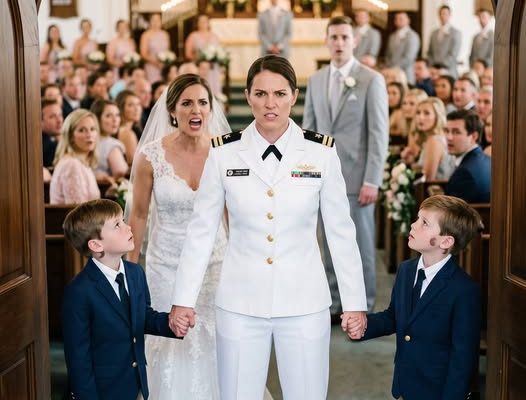
Eight years ago, my ex threw me out while expecting because his girlfriend lied that I was unfaithful. Today, I walked into his second wedding in my Navy dress blues with our seven-year-old twin sons. When his bride sneered and asked if I rented them as ring bearers, my son stepped forward: “We just came to see Grandpa Walter’s picture.” And then she noticed the matching birthmarks behind their ears.

PART 1: THE THREAT BEFORE THE SECOND WEDDING

Eight years after my ex-husband threw me out of his family’s house in Charleston while I was eight weeks pregnant, I returned for his second wedding.
I didn’t come in a white dress. I came in my Navy Service Dress Blues, proudly wearing the Lieutenant Commander stripes I had earned after transitioning to the Navy Reserve.
My name is Jenna Reyes. I’m 34. I’m a Navy Reserve Officer and a civilian logistics contractor at Naval Station Norfolk. My black SUV stopped in front of St. Michael’s Church, and two little boys in matching navy blazers jumped out before I could open the door.
Milo and Micah. Seven years old. Twins.
“Remember what we talked about?” I whispered.
“Don’t touch anything and don’t call him Dad unless he earns it,” Milo said, fixing his little tie exactly the way his grandfather Walter taught him over FaceTime.
Three weeks earlier, Walter Whitaker — my ex-father-in-law — had called me from hospice. He could barely breathe.
“Jenna-girl, check the safety deposit box at the bank in Norfolk. I left something for the boys. And don’t let Cole get married without seeing their faces first. He needs to see his own scar.”
“What scar?”
“You’ll know.”
When Walter died last month, Cole didn’t call me. Tiffany did.
Tiffany Lang. The woman who waited for my marriage to crack. She sent me a text with a photo of her engagement ring on Cole’s family dining table — my old dining table.
Please don’t make a scene at our wedding. Cole has moved on. You should too.
I didn’t answer. I just folded two certified birth certificates, two court-admissible DNA reports, and a sworn affidavit into a sealed envelope and put it in my coat pocket.
When we walked up the church steps, Tiffany was waiting at the door in a white mermaid dress, blocking the entrance like she owned the building.
“Well,” she said loudly enough for the guests inside to hear, “I suppose the Navy doesn’t teach shame or timing.”
She looked at my boys.
“And who are these supposed to be? Ring bearers you rented?”
Micah squeezed my hand. Milo — the older by four minutes — stepped forward.
“We came to see Grandpa Walter’s picture,” he said clearly. “Mom said he would be here.”
Tiffany’s smile froze.
Because both of my sons have the same crescent-shaped birthmark behind their left ear. The exact same mark Cole has. The exact same mark Walter had. A mark that only shows up in Whitaker men.
And Tiffany knew it.
PART 2: THE TWO BOYS IN NAVY BLAZERS
Inside, 150 guests in pastel turned to stare. My dark blue uniform with gold buttons and ribbons stood out sharply. My sons’ little blazers were almost identical. In a sea of blush and sage, we looked like a military delegation that had taken a wrong turn.
Cole was at the altar in a light gray suit, holding Tiffany’s hands. When he saw me, his hands dropped.
The organ stopped.
“Jenna?”
I didn’t walk down the aisle. I stopped halfway, where Walter’s memorial photo sat on a small table — as per tradition for a family member who had just passed.
Milo placed a small Matchbox tugboat next to it. Walter had been a tugboat captain before he built the shipping company.
“He said you would know what it means,” Milo told the photo.
Cole came down the three steps, slowly, like he was approaching unexploded ordnance.
“What is this, Jenna?”
I looked at him. Eight years ago, he gave me ten minutes to defend myself. He believed Tiffany’s story that I had been with another man at a hotel in Savannah the same weekend I was actually on official active-duty military orders in Norfolk.
“You gave me ten minutes eight years ago,” I said quietly, so only he could hear. “Today I’m giving you two minutes to look at their faces.”
Cole stared at Milo, then Micah. Same blue eyes as his. Same cowlick he hates. Same birthmark.
Tiffany rushed down the aisle, her train tangling.
“Cole, don’t! She’s doing this for money. She wants a claim on the company!”
I lifted the sealed envelope from my pocket.
“No,” I said. “I came because Walter asked me to. And because my sons deserved to honor their grandfather, even if it’s just in a photograph.”
Cole’s hand was shaking when he took the envelope.
PART 3: THE ENVELOPE
He opened it right there, in front of the altar.
First page: Two certified long-form birth certificates issued by the Commonwealth of Virginia. Mother: Jenna Reyes. Father: Cole Whitaker. I had legally listed him years ago, but because I never filed a formal child-support petition through the courts back then, no official court summons had ever reached him.
Second and third pages: Two accredited, court-certified DNA reports. 99.99% probability of paternity. Swabs taken three months ago when Walter arranged for a mobile phlebotomist to meet us in Norfolk.
Cole’s breath caught.
“Twins?”
“Seven years old. You threw me out when I was eight weeks pregnant. You never asked if the baby was yours. You asked if I had been at the Hartley Hotel that Friday.”
Tiffany grabbed his arm. “It’s fake! She bought a fake lab test!”
“Be quiet,” Cole said. It was the first time I’d ever heard him tell her to be quiet.
He pulled out the next page. A sworn, notarized affidavit from the former night manager of the Hartley Hotel, obtained by Walter’s private investigator.
I, Marcus Bell, solemnly swear that on July 14th, 2017, Ms. Tiffany Lang paid me $500 cash to state that I saw Ms. Jenna Reyes enter Room 312. In truth, Ms. Reyes was never on property that night. Military duty logs prove she was at Naval Station Norfolk. Ms. Lang was the one who booked and stayed in Room 312.
Cole turned slowly toward Tiffany.
“You paid him.”
“I did it for us!” she cried out, her composure cracking. “She was always away on deployment! You needed someone who was actually here!”
“No,” I said. “You stole his chance to be a father. And you robbed my sons of a grandfather who loved them.”
The papers slipped from Cole’s hands.
He dropped to his knees right there on the white aisle runner, staring at Milo and Micah.
“My boys…” he whispered.
Milo stepped slightly in front of his brother.
“Don’t touch our mom,” he said quietly, exactly the way Walter told him to say it. “And don’t touch our grandfather’s boat.”

PART 4: THE THINGS WALTER KNEW

As the tension reached its peak, two men in business suits stepped quietly through the back doors of the church.
They weren’t interrupters sent to make a dramatic arrest at the altar — they were process servers who had been tracking Tiffany to ensure she received formal service before leaving the state for her honeymoon.
One of them approached her calmly and handed her a thick legal folder.
“Tiffany Lang. You are officially served with a civil lawsuit and a federal grand jury subpoena regarding wire fraud and embezzlement from Whitaker Shipping.”
Tiffany stared at the documents, her face draining of all color. Walter hadn’t just discovered her lies; he had quietly filed a formal audit with federal forensic accountants before he died. The wedding dress she wore was purchased with funds siphoned from company accounts.
Overwhelmed and humiliated as whispered shock spread through the pews, Tiffany turned and fled out the side exit, her long train dragging on the stone floor.
Cole remained on his knees.
I reached into my uniform coat and pulled out the last item. Not a legal document.
A bundle of Christmas cards, tied with faded blue twine. Seven of them. Each containing a savings bond receipt and a handwritten note.
For Milo & Micah — Year 1 — From Grandpa Walter — Don’t tell Cole yet. Let him see your faces first when the time is right.
Year 2 — Tell them the story about the tugboat.
Year 5 — I established two irrevocable 529 education trusts under my personal estate. Not the company. No one can touch them. Not even Tiffany.
Cole read them one by one, his shoulders shaking as tears hit the paper.
“He knew,” I said softly. “He found out three years ago when he caught Tiffany altering company ledger entries. He hired his own investigator, confirmed the DNA, and reached out to my Navy Reserve unit address. He asked me to wait until after he passed, because he wanted you to face the truth without anyone left to hide behind.”
I turned to my sons.
“Say hi to Grandpa Walter.”
Milo and Micah walked to Walter’s photo and saluted — standing straight, heels together, exactly the way I had drilled them.
“Hi, Grandpa Walter,” Micah whispered. “We brought your boat back.”
I raised my right hand and rendered a crisp, sharp military salute to Walter’s portrait.
Then I turned to leave. Cole scrambled up, taking a desperate step toward us.
“Jenna, please. Let’s sit down with lawyers… let’s fix this. I’ll settle everything, I’ll give you whatever you want — just let me be in their lives.”
I stopped at the heavy wooden church doors, holding my sons’ hands.
“You don’t become a father just because you finally recognize your own features in a mirror,” I said. “A father stays when things get difficult. A father searches for the truth instead of believing a convenient lie. My sons already had a grandfather who protected them. They don’t need you.”

PART 5: THE WORDS HE WANTED SPOKEN ALOUD

Three years later, sunlight spread across the dock behind our small home in Annapolis.
Milo and Micah were tying cleat hitches on the dock line — knots Walter had taught them over video calls before he entered hospice. Inside my home office, my Navy Service Dress Blue uniform hung neatly in the closet, complete with my Lieutenant Commander insignia.
My phone chimed with an update from my family law attorney in Charleston. The criminal case against Tiffany had concluded with a guilty plea for corporate wire fraud. Cole had spent the last three years trying to stabilize his family business while his court petitions for shared custody were repeatedly denied; the family court judge cited his eight years of abandonment, the boys’ established life in Maryland, and the strong stability of our family unit.
Cole’s last letter, forwarded through his attorney, contained no legal threats. Only two old childhood photos of himself at seven — the exact age Milo and Micah are now — and a short note:
Did they receive the birthday tugboats sent through Walter’s trust account?
I didn’t burn it. I placed it neatly inside their childhood memory box.
Marcus — a retired Marine Corps Officer who became my husband last year and who had spent countless hours teaching the boys real nautical discipline — walked out onto the deck and stood beside me.
“You built a fortress out of the truth,” he said, placing a warm hand on my shoulder.
I looked out at my sons — confident, secure, working together on the dock like seasoned young sailors.
Eight years ago, I was forced out of a Charleston estate with a single duffel bag, an eight-week ultrasound scan, and an unverified accusation.
That day at St. Michael’s, Cole thought he was walking into his new future.
Instead, two seven-year-old boys in navy blazers walked down his aisle and brought the past into the light.
And this time, I didn’t need to say a word to defend my honor.
My sons did it for me, just by standing there with his face.
Eight years ago, my ex threw me out while expecting because his girlfriend lied that I was unfaithful. Today, I walked into his second wedding in my Navy dress blues with our seven-year-old twin sons. When his bride sneered and asked if I rented them as ring bearers, my son stepped forward: “We just came to see Grandpa Walter’s picture.” And then she noticed the matching birthmarks behind their ears. Read More

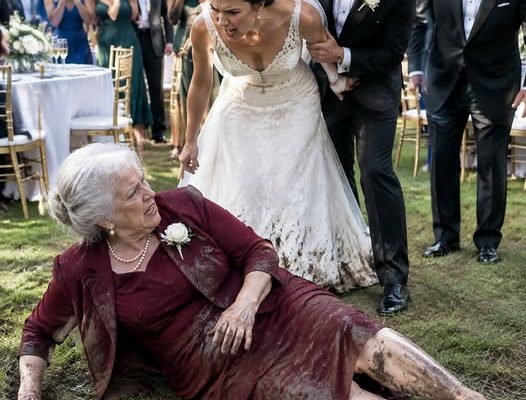
At my son’s lavish wedding, his bride shoved my wife into the mud while two hundred guests watched. My son saw everything—and immediately tried to call it an accident. I didn’t argue or raise my voice. I simply took the microphone, pulled the final $84,000 payment from my jacket, and announced that the celebration they had expected me to finance was over.

Part 1: The Shove That Ended the Celebration

At my son Ethan’s wedding, his bride placed both hands on my wife’s shoulders and shoved her into the mud.

Two hundred guests at Briarwood Estate fell silent as Helen landed beside the ceremony lawn. A caterer dropped a tray, but Ethan only stepped toward me and whispered, “Dad, stop.”

I ignored him. Taking the microphone, I told the crowd I had planned to welcome Camille into our family and speak about love. Instead, everyone had just watched her humiliate the woman who had loved Ethan his entire life.

Camille folded her arms. “This is insane.”

I removed an envelope from my jacket. Inside was an $84,000 cashier’s check covering the reception’s remaining balance—venue, food, band, flowers, bar, photography, transportation, and guest accommodations.

Three months earlier, Camille had asked Helen to increase the flower budget. When Helen said we would consider it, Camille accused us of acting poor and said we should never have offered to host the wedding.

Ethan denied it.

“Your mother cried in the laundry room that night,” I told him. “You heard her, and you did nothing.”

His silence answered for him.

I held up the envelope. “This payment was supposed to reach the venue manager after dinner. It won’t.”

Camille’s confidence vanished. “You can’t do that.”

“I already have.”

Her father, Charles Bennett, asked whether the vendors had been paid. I explained that I had covered every deposit and would pay for services already delivered, but there would be no extended bar, extra catering, upgraded transportation, or honeymoon transfer from my family.

Ethan lowered his voice. “Dad, you’re embarrassing us.”

I looked at the son who had once cried over injured birds and wondered whether he had disappeared entirely.

“No. You embarrassed yourself when you chose laughter over your mother.”

Camille ordered Julia Marsh, the venue manager, to continue the reception. Julia refused, explaining that Mrs. Whitaker had been injured and service should pause.

Camille’s voice sharpened. “Mrs. Whitaker? That’s me now.”

From the edge of the lawn, my wife finally spoke.

“No,” Helen said, standing in her mud-stained dress. “You are not me.”

Part 2: The Truth Everyone Recorded

Ethan approached his mother and insisted Camille had only been joking. He claimed Helen had slipped after being barely touched.

A guest near the back interrupted. “I recorded it.”

Another person raised a phone. “So did I.”

Ethan stopped. Charles turned toward his daughter and demanded that she deny deliberately pushing Helen. Camille looked to Ethan for protection, but he lowered his eyes.

That was all Charles needed.

“I warned both of you,” he said. “Humiliation is not humor. Cruelty in private eventually becomes cruelty in public.”

Helen reached for my hand. Only then did Ethan truly look at her ruined dress, disheveled hair, and mud-covered arms.

“Mom…”

She raised one hand.

“Not here. Don’t apologize because people are watching, the money stopped, or Camille’s father is angry. When you can tell the truth without an audience, you know where we live.”

She turned to me. “Robert, take me home.”

Camille protested that we could not leave because it would ruin everything.

Helen looked back calmly. “No, dear. You already did.”

Guests quietly opened a path for us. Charles joined us near the exit, apologized to Helen, and offered to reimburse everything I had paid.

“Let the deposits remain the cost of a lesson,” I said.

He glanced toward Camille and Ethan arguing beside the untouched cake. “Some lessons cost more than money.”

We sat silently in the car, watching the glowing reception tent from a distance.

“Do you think we lost him?” Helen whispered.

I could not answer immediately. Our son was alive and reachable, yet he had chosen distance when his mother needed him.

“He has to decide whether he wants to be found.”

By noon the next day, videos of the shove had spread through half the guest list. By evening, Camille’s story had collapsed under the weight of too many recordings and years of private cruelty finally becoming visible.

Part 3: What an Apology Could Not Erase

Three days later, Ethan came to our house alone. Helen asked whether Camille had sent him or whether he had returned because I stopped payment.

When he answered no to both questions, she allowed him inside.

Standing among the family photographs of his childhood, Ethan finally confessed.

“I saw Camille push you. I knew exactly what happened, but I called it an accident because I didn’t want the wedding to fall apart.”

Helen studied him. “Did you think I should fall apart instead?”

Ethan covered his face. “Yes.”

It was the first completely honest word he had spoken.

Helen told him contempt would never enter our home again. He could not ask me for money while treating respect as optional, and he could not seek comfort from his mother if he remained silent when she was humiliated.

“I’m sorry, Mom.”

Her eyes filled, but she did not offer easy forgiveness.

“I hear you. Now live differently.”

The marriage was legally valid, but the reception ended early. Half the guests left before dinner, the band packed up by nine, and the cake was never cut. Charles paid the staff, while Camille spent the night alone at a hotel.

By autumn, Ethan filed for separation. Afterward, he visited every Sunday—not for money or rescue, but to repair what he could. Helen sometimes cooked with him and sometimes kept the visits brief. Trust returned slowly and unevenly.

One year after the wedding, Ethan arrived carrying a garment bag. Inside was Helen’s blue dress, professionally cleaned and restored. A faint shadow of mud remained near the hem.

“I know this doesn’t fix anything,” he said.

Helen touched the fabric.

“No,” she replied. “But it tells me you remember.”

At my son’s lavish wedding, his bride shoved my wife into the mud while two hundred guests watched. My son saw everything—and immediately tried to call it an accident. I didn’t argue or raise my voice. I simply took the microphone, pulled the final $84,000 payment from my jacket, and announced that the celebration they had expected me to finance was over. Read More

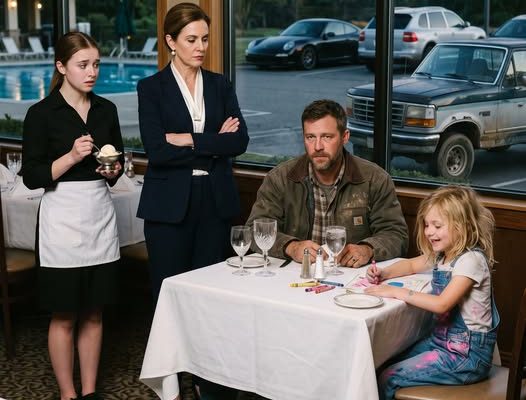
“Daddy, did we wear the wrong clothes?” My seven-year-old daughter whispered those words after the country club manager told us to leave. We had come for dinner at her late mother’s favorite table. Instead, the manager looked at my work boots and suggested McDonald’s. I reassured my daughter, then sent one quiet message. The manager called security—without realizing whose name was on her employment contract.

PART 1: THE TABLE THEY NEEDED

The manager waited until my daughter opened her crayons before telling us we would have to leave.

Lily looked up at her, then down at her paint-stained overalls.

“Daddy, did we wear the wrong clothes?”

We had spent the afternoon helping paint a house for a family who needed one. Before entering Callahan Hills Country Club, I had scrubbed the mud from my steel-toe boots and washed Lily’s hands in the truck with water from a bottle.

My jacket was faded. Her overalls had yellow paint on one knee. But we were clean, we had a reservation, and I had promised her dinner at table seventeen.

Her mother’s table.

Sarah had managed events here for six years before cancer took her two years ago. Whenever I came straight from a construction site, she seated us beside the pool.

“Chicken first,” she would tell Lily. “Then vanilla ice cream.”

We had not returned since her memorial.

That evening, Elena greeted us at the host stand. She recognized Lily immediately.

“You’ve gotten so tall.”

Lily smiled and held up seven fingers.

Elena’s expression softened when I asked whether table seventeen was available.

“I saved it when I saw your reservation, Mr. Callahan.”

She seated us, took our order, and brought Lily an extra napkin for her crayons.

Then the manager arrived.

Her name badge read PATRICIA STONE — GENERAL MANAGER.

“I’m afraid there’s been a seating error,” she said. “This area is reserved for our premium members.”

“Our reservation includes this area.”

She glanced at my jacket.

“We also maintain certain presentation standards.”

Across the room, a man in muddy golf shoes stretched his legs beneath a table. Patricia had passed him without a word.

“Could you show me the policy?” I asked.

Her smile tightened.

“Perhaps our takeaway menu would be more suitable.”

That was when Lily asked about our clothes.

I turned toward her immediately.

“No, sweetheart. You haven’t done anything wrong.”

Patricia leaned closer.

“There’s a McDonald’s two lights down. Your daughter might feel more comfortable there.”

Lily began putting her crayons away.

I rested my hand gently over hers.

“You don’t have to pack up.”

Then I took out my phone and opened a message Mark Davies had sent that afternoon.

Rachel and I will be in the upstairs office finishing the complaint review. Call if you need us.

I typed:

Please come to pool dining. Table seventeen. There’s something you need to see.

PART 2: THE PEOPLE SHE EXPECTED TO STAY QUIET

Elena returned carrying our meals.

Patricia stepped into her path.

“Those orders were supposed to be canceled.”

Elena looked from her to me.

“Their reservation is valid. I checked it myself.”

“We need this table for the Whitaker party.”

“They’re booked in the garden room.”

For a moment, Patricia said nothing.

Then she lowered her voice.

“Elena. Kitchen. Now.”

Lily’s fingers tightened around mine.

I crouched beside her chair.

“This is a grown-up problem. It isn’t because of you, and you don’t need to fix it.”

She nodded, but her eyes had filled.

From the kitchen doorway, someone called her name.

Nora, the pastry chef, stood there with a dish towel over her shoulder. She had made Lily’s birthday cakes when Sarah was alive.

“Is that my sprinkle inspector?”

Lily gave a small, uncertain smile.

I asked Nora whether Lily could eat at the little staff table beside the open dessert counter. It was only a few steps away, where I could see her without making her listen to every word.

“Of course,” Nora said.

I carried Lily’s plate over, helped her settle, and promised I would be right there.

When I returned, Patricia folded her arms.

“Thank you for finally being reasonable.”

“I moved my daughter away from this conversation. I haven’t agreed to leave.”

Elena stood beside the service station, holding our bill.

Patricia pointed toward the kitchen.

“Clock out. We’ll discuss your conduct tomorrow.”

“Her conduct?” I asked.

“This is an internal matter.”

My phone vibrated.

Mark had sent a short summary, followed by a message.

Coming downstairs now.

The review concerned nineteen complaints over eight weeks. Members reported being turned away from half-empty dining rooms, losing reserved golf times, and receiving charges they could not explain.

Several employees had described instructions to discourage diners who did not fit Patricia’s preferred image.

I looked up.

“Elena, have you been told to quote long waits to members dressed like me, even when tables are available?”

She glanced at Patricia.

That glance answered before she did.

“Yes,” she said quietly.

Patricia moved toward her.

“You are not authorized to discuss management decisions with a guest.”

“Then discuss them with me.”

Mark Davies stood at the entrance with Rachel Lin, our corporate counsel.

Patricia straightened.

“Mr. Davies. I was just handling a member issue.”

“I can see that.”

His eyes moved to me.

“Jack, is Lily all right?”

Patricia looked between us.

“You know each other?”

Mark paused.

“Patricia, this is Jack Callahan. He founded Callahan Hospitality.”

Her expression changed.

I watched her make the connection: my surname, the company name on her contract, the man whose photograph she had apparently never bothered to learn.

“Your company owns the club,” she said.

“Yes.”

Three years earlier, I had bought it when it was close to bankruptcy. After Sarah died, I stepped away from public events and delegated daily operations so I could raise Lily.

Elena knew me as Sarah’s husband. Most employees hired since the acquisition had never met me at all.

Patricia looked toward table seventeen.

“Why didn’t you say so?”

“Would you have treated my daughter differently?”

She opened her mouth.

Then closed it.

PART 3: WHAT THE RECORDS SHOWED

A security officer arrived carrying a radio.

“Ms. Stone? You requested assistance with a guest?”

Mark answered before she could.

“There’s no guest to remove. Please remain nearby while we finish a management meeting.”

I glanced toward the dessert counter. Lily was eating her chicken while Nora listened to something she was saying about yellow paint.

Then I turned back to Patricia.

“We’ll continue upstairs.”

She nodded quickly, relieved to leave the dining room.

Before following Mark, I stopped beside Lily.

“I need ten minutes upstairs. Are you comfortable staying with Nora?”

“Can I finish my picture?”

“Absolutely.”

In the office, Patricia sat opposite Rachel and smoothed her blazer.

“I wish someone had told me this was an inspection.”

“It wasn’t,” I said. “I came here to have dinner with my daughter.”

Rachel placed a folder on the desk.

“The review was already underway. Several members contacted corporate directly after their complaints here went unanswered.”

Patricia leaned back.

“People complain when standards improve.”

Rachel opened the first report.

“These members were told their reserved tee times had been canceled because of maintenance. The course remained open. Their places were reassigned to guests you sponsored.”

“Scheduling adjustments happen.”

“Repeatedly. Without the original members’ agreement.”

Mark placed another document beside it.

The club had a discretionary budget for resolving service complaints. Patricia had approved dozens of complimentary meals under that category.

But several members named on the records confirmed they had not visited on those dates.

Matching checks and bar reservations showed meals going to Patricia’s acquaintances instead.

“Your account approved these,” Rachel said. “We’ve asked you twice for the supporting records. You haven’t provided them.”

Patricia’s gaze shifted toward me.

“Jack, you understand hospitality. Sometimes relationships require flexibility.”

“Was that flexibility available to the members you sent away?”

She did not answer.

Mark explained that his team had also found inaccurate figures in the reports used to calculate her performance bonus. Those findings still required a full accounting review.

The treatment I had witnessed downstairs needed no further interpretation.

I turned to Mark.

“Patricia will not be returning to the floor as manager. Complete the separation process with Rachel. Preserve the records and continue the review.”

Patricia stood.

“You’re ending my career over a dinner?”

“I’m ending your employment here because of the decisions you made while responsible for other people.”

Rachel explained what would happen next. Patricia would receive the documentation, have an opportunity to respond to the financial findings, and arrange collection of her remaining belongings.

I left them to finish.

Downstairs, Elena was standing beside the service station, still wearing her apron but holding her handbag.

“Should I go?” she asked.

“Do you want to finish your shift?”

She nodded.

“Then put your bag away. You’re not being punished for honoring a reservation.”

Her shoulders dropped with relief.

When I reached Lily, she held up her picture.

Three people sat at a table beside a blue swimming pool.

I recognized myself, Lily, and Sarah.

“Nora said Mommy liked this table too,” she told me.

I sat down before answering.

“She did.”

PART 4: THE WORK AFTER THE APOLOGY

I apologized to Lily on the drive home.

She looked puzzled.

“You didn’t say the mean thing.”

“No. But you came with me, and it was my job to make sure you felt safe.”

She considered that.

“Elena was nice.”

“She was.”

“Even before that lady knew you were the boss.”

I looked at her in the rearview mirror.

“That’s the part that matters.”

The following morning, I met with the staff.

I told them what would change immediately and what still needed investigation. Then I asked questions and listened.

Once people believed they could speak without losing shifts, the details came quickly.

A host had been instructed to mark unwanted reservations as cancellations. A groundskeeper had been blamed for course closures that never occurred. Servers had stopped reporting problems because Patricia punished whoever brought them to her.

I had delegated management. I had also allowed too much information to reach me through the same person employees feared.

That had to change.

Over the next three weeks, corporate reviewed the complaints and corrected the records. Employees received money they had been wrongly denied, and affected members received direct explanations and appropriate reimbursements.

We created a reporting channel outside the club’s management team.

We also rewrote the dining policy in plain language. Clean work clothes were welcome in the casual pool restaurant. Any genuine dress requirements elsewhere had to be published and applied consistently.

Choosing the next manager took longer.

Elena had worked at the club for five years, first coordinating banquets with Sarah and later training servers and supervising dining shifts. Before joining us, she had managed a small hotel restaurant.

Under Patricia, she had lost most of those responsibilities after repeatedly challenging questionable instructions.

When Mark suggested an outside candidate, I asked him to interview Elena too.

“Not because she helped Lily,” I said. “Because we should know what she can do.”

She went through the same interviews and budgeting exercise as the other candidates. We appointed her acting manager with support from an experienced regional director and reviewed her progress over six months.

She earned the permanent position.

Members began returning. Employees recommended friends for open jobs again. Complaints that once disappeared into an office were answered.

The financial review continued separately. It was slower and less dramatic than the confrontation, but the records mattered more than anything said in anger that evening.

I kept closer contact with the club without trying to run every shift.

And, little by little, Lily stopped asking whether her clothes were good enough before we went somewhere new.

PART 5: TABLE SEVENTEEN

Six months later, we returned for dinner.

It was raining again.

I wore the same jacket, and Lily carried the same box of crayons, though several were now broken and the yellow was nearly gone.

Elena met us near the entrance.

“Table seventeen?”

Lily nodded.

We had just ordered when another family arrived: two parents and two little boys, all wearing clothes marked with paint.

The father hesitated at the host stand.

“We have a reservation. Under Mercer.”

The host checked the screen.

“Of course. Would you prefer a booth or a table by the pool?”

No glance at their shoes. No pause to decide what kind of people they might be.

One of the boys asked whether they served ice cream.

Lily turned toward me, smiling.

“They should get vanilla.”

“After dinner,” I said.

She rolled her eyes.

Across the room, Elena noticed a server struggling with a tray. She took two plates, helped deliver the order, and returned to greeting a member.

Nobody stiffened when she walked past.

I thought about Sarah then—how she remembered birthdays, kept spare crayons at the desk, and noticed the people who looked uncertain in a room.

For a long time, returning here had felt like walking into the space she left behind.

That evening, it felt like finding something she had taught us to keep.

Lily slid her drawing across the table.

This one showed the pool, our dinner plates, and a bowl of ice cream much larger than either of us.

“You forgot something,” I said.

She frowned.

“What?”

“Your chicken.”

She groaned exactly as she had when Sarah said it.

I laughed, and for once the memory did not arrive with a weight I had to hide.

Outside, rain shimmered beneath the pool lights. Inside, the Mercer boys argued quietly over which dessert to share, and their parents relaxed into their seats.

Nobody needed me to stand up or make a call.

Lily reached for another crayon.

And this time, table seventeen was just a table.

That was exactly what it should have been.

“Daddy, did we wear the wrong clothes?” My seven-year-old daughter whispered those words after the country club manager told us to leave. We had come for dinner at her late mother’s favorite table. Instead, the manager looked at my work boots and suggested McDonald’s. I reassured my daughter, then sent one quiet message. The manager called security—without realizing whose name was on her employment contract. Read More

I thought rescuing my niece from my brother’s mansion would end the nightmare. Instead, investigators uncovered seven secret recorders, forged birth records, a vanished mother, and a detective secretly selling our location. Every answer exposed another betrayal. The deeper I searched, the clearer it became that Lily had been trapped inside a conspiracy built long before she was born—and someone was still watching us.

Part 1: The Christmas Whisper

At Christmas dinner, I heard my sister-in-law, Rebecca, warn my five-year-old niece, Lily, that if she repeated “lies” about her father, strangers would take her away forever.

I had driven four hours from Chicago to my brother Adrian’s mansion in Lake Forest. Adrian ran a powerful cybersecurity firm, while I directed documentaries about corruption. We had barely spoken in eight months, but nothing prepared me for Lily standing rigid beside the table, terrified to sit.

“It hurts,” she whispered.

Adrian kept carving dinner. “She’s learning that crying gets attention.”

Throughout the meal, Lily flinched whenever he raised his voice. Years of interviewing frightened witnesses had taught me to notice silence, rehearsed answers, and eyes that avoided every adult in the room.

Later, Lily followed me into the kitchen, clutching a stuffed rabbit.

“Uncle Nathan, would you believe me?”

I knelt beside her. “Always.”

With trembling hands, she revealed bruises hidden beneath her sleeves and explained that her father entered her bedroom at night and hurt her. When she told Rebecca, her mother called her a liar and threatened her into silence.

The truth nearly knocked me off balance, but I kept my voice steady.

“You did nothing wrong. None of this is your fault.”

“Will you help me?”

“I promise.”

Rebecca called sharply from the dining room, and Lily hurried away. I returned to the table, smiled when expected, and made no accusation. Adrian understood security systems, evidence, and digital trails; Rebecca cared obsessively about appearances. If I confronted them without legal and medical support, they could hide Lily and summon expensive attorneys before sunrise.

When I left, I held Lily longer than usual. “Soon, little bird. Hold on.”

During the drive home, I called my investigative partner, Jordan Blake. By 1:00 a.m., we were sitting over cold coffee, preparing to contact child-protection authorities, a pediatric trauma physician, and an attorney.

I had spent years exposing powerful men who buried evidence and purchased silence.

Now I would need every skill I possessed to protect a child from my own brother—and I had no idea that Adrian was only one piece of a much darker conspiracy.

Part 2: The Recorders Beneath the Table

By sunrise, I had contacted the state hotline, Dr. Maya Chen, and a child-protection attorney. Investigator Olivia Grant classified the report as urgent and warned me not to alert Adrian.

Hours later, Adrian called and casually asked whether Lily had told me anything. Soon afterward, he texted that they were taking her to Wisconsin for a “reset.”

Then Lily secretly called.

“Daddy says we’re going away. I don’t want to go.”

Before I could reassure her, Adrian entered her room and the call ended. Officers reached the house minutes later, separating Lily from Adrian and Rebecca. At the hospital, doctors documented injuries from different periods while trained specialists interviewed her.

Lily was temporarily placed with me that night. She ran into my arms and whispered, “You came.”

Investigators found an audio recorder beneath her dining chair and discovered several security cameras had been removed shortly before police arrived. Someone had warned Adrian. The next day, an anonymous number sent me a photograph of my apartment building with the message: You should have stayed out of it.

A search of Adrian’s home and company uncovered seven hidden recorders. He had secretly captured private conversations involving clients, employees, and relatives, apparently collecting information for leverage.

Deleted files revealed suspicious payments between Rebecca and Adrian’s chief operating officer, Gavin Pierce—Lily’s godfather. Lily casually mentioned that “Uncle Gavin” visited when Adrian was absent.

Then an anonymous sender delivered a seven-second recording of Gavin telling Rebecca, “Adrian can never discover Lily is mine.”

Adrian was arrested for illegal surveillance, obstruction, and evidence tampering. Gavin disappeared, leaving his car at an airport garage.

The investigation appeared to confirm my worst assumptions until Lily drew a faceless man and quietly said, “Daddy isn’t the man who hurt me. Daddy was trying to discover who did.”

Soon afterward, police recovered Gavin’s encrypted file titled Lily—Custody. It contained a hospital record identifying Lily’s biological mother.

The woman named on that document was not Rebecca.

Part 3: The Mother Erased From History

The record named Claire Dawson, an early engineer at Adrian’s company who had helped create the encryption system that made him wealthy. Six years earlier, Claire had vanished three weeks before Lily’s public birth announcement. Later versions of the company website had erased her entirely.

An old photograph showed Adrian beside Claire holding a newborn. A recovered video captured Claire warning him, “If you take my daughter, I’ll expose everything.”

When I confronted Adrian through a monitored video call, he admitted Claire was Lily’s mother. He had loved her, but he was not Lily’s biological father.

Claire had discovered Gavin selling confidential information and building a blackmail network inside the company. After threatening to contact federal authorities, she disappeared. Months later, she contacted Adrian, explaining that she had secretly given birth and believed Gavin was hunting her.

Rebecca could not have children, so she and Adrian took Lily using forged hospital and identity records. Adrian called it protection, but eventually admitted he had also been protecting himself and his company.

Months before Christmas, Lily began having nightmares about a tall man visiting upstairs. Documents disappeared from Adrian’s locked office, and someone repeatedly disabled his indoor cameras. That was why he hid recorders throughout the house.

He had never contacted police because years earlier, he had concealed Gavin’s first illegal data sale to save the company from collapse. That decision allowed Gavin to control him through increasingly serious crimes.

Adrian also claimed his cold behavior at dinner was meant to convince whoever was monitoring the family that he did not believe Lily.

It did not excuse his cruelty or silence.

But it meant the man who harmed Lily might still have access to the house.

Part 4: The Man With the Black Ring

The decisive evidence came from Maria Torres, Adrian’s former housekeeper. She told investigators that Gavin frequently entered the mansion while Adrian was away, sometimes using his own key.

Maria once found Lily crying outside her bedroom while Gavin walked downstairs. When she questioned Rebecca, she was fired the next day.

During a carefully conducted forensic interview, Lily remembered a distinctive black ring with a silver line. Gavin wore that exact ring. She identified him without coaching.

Gavin was charged in connection with crimes against Lily, along with surveillance, financial, and conspiracy offenses. Adrian remained jailed for his own crimes, while Rebecca was charged with obstruction and child endangerment for dismissing Lily’s disclosures and frightening her into silence.

Media companies offered me enormous sums for exclusive access. I refused every request.

“This story belongs to Lily,” I told Jordan.

Then Claire walked into a police station in Vermont.

DNA confirmed she was Lily’s biological mother. When we met, I demanded to know why she had remained hidden for six years. Claire said she believed disappearing was the only way to keep her daughter alive. She had expected to return within months, but every attempt allowed Gavin to find another trace of her.

Claire admitted Gavin believed Lily was his child and had become obsessed with controlling them both. Adrian and Rebecca had been the hiding place she thought Gavin would never suspect.

Before Claire could explain further, Olivia entered the room with alarming news: someone had accessed Lily’s confidential temporary address.

We moved Lily before sunset, telling her we were taking a winter vacation.

Someone inside law enforcement had been protecting Gavin all along.

Part 5: The Detective Who Sold Them Out

Only nine people had accessed Lily’s protected address. The leak led investigators to Detective Victor Shaw—the same officer who had sat in my kitchen and pretended to help us.

For years, Victor had received payments through Gavin’s shell companies. He warned Gavin about investigations, tracked Claire, searched confidential databases, and alerted him before officers entered Adrian’s home.

Victor was arrested, but one mystery remained: who had anonymously sent the recordings, hospital document, and photograph?

The answer was Maria. Before being fired, she had taken a backup drive from Adrian’s utility cabinet. Terrified, she remained silent until the investigation became public, then anonymously guided us toward the truth.

The custody proceedings focused not on what each adult wanted, but on what Lily needed. Claire began supervised visits without demanding to be called her mother. They colored birds, shared blueberry pancakes, and slowly built trust.

Adrian pleaded guilty to surveillance, financial crimes, obstruction, and falsifying Lily’s identity. In his only public statement, he admitted that love could not erase the damage caused by cowardice.

Rebecca eventually confessed she had suspected Gavin. She saw him leaving the upstairs hallway and found Lily crying, but feared exposing him would destroy Adrian’s company and reveal Lily’s illegal custody arrangement.

“I thought I was protecting the family,” she insisted.

The court-appointed guardian replied, “You protected the appearance of a family.”

Gavin’s files exposed judges, executives, attorneys, politicians, and officers involved in a massive surveillance and blackmail network. Meanwhile, Lily remained with me while Claire entered a gradual reunification program.

One morning, Lily asked Claire, “Are you my mommy?”

Claire answered carefully, “I gave birth to you, but I haven’t earned the chance to be your mommy yet.”

Lily handed her a whisk. “Then you can practice.”

Two weeks later, DNA produced another shock.

Gavin was not Lily’s biological father.

Part 6: The Father Who Never Knew

Claire remembered another early company engineer named Owen Brooks. They had briefly been together before she returned to Gavin, and she had never known which relationship resulted in her pregnancy.

DNA confirmed Owen was Lily’s biological father.

When investigators contacted him, his first questions were not about custody or legal rights.

“Is she safe? Does she know I exist? What does she need?”

Owen met Lily gradually. She criticized how he cut sandwiches, taught him to draw rabbits, and listened while he explained magnets. With professional support, Lily eventually learned that Claire had given birth to her, Owen was her biological father, and Adrian and Rebecca had raised her.

Her greatest concern was simpler.

“Does Uncle Nathan still get to be Uncle Nathan?”

“Forever, if you want.”

She frowned. “You’re already my uncle.”

Gavin was eventually convicted of crimes involving Lily, surveillance, extortion, and conspiracy. Victor was convicted as well, and their network collapsed. Adrian’s company was dissolved, with his fortune consumed by restitution, seizures, and legal costs.

The court allowed Adrian carefully supervised written contact. His first letter contained no excuses. He apologized for failing to listen and reminded Lily that she had caused none of the family’s destruction.

Lily sent him a drawing of a purple bird.

One year after Christmas, our unusual family gathered at a snowy park. Claire walked beside Lily, Owen carried hot chocolate, Jordan complained about the cold, and I pulled the sled.

For the first time, Lily’s laughter sounded completely free.

Three months later, Adrian requested a prison visit. He handed me an envelope our late father had given him thirty years earlier.

My name was written across it.

Part 7: The Letter Our Father Left Behind

The letter revealed that our father had once worked with Claire’s father, Henry Dawson, on early security software. Henry discovered their employer was secretly selling customer information and chose to expose it.

Our father, afraid of losing his career and failing his young family, signed a nondisclosure agreement and walked away. Henry lost everything and later died, while our father carried the guilt for the rest of his life.

He had warned Adrian that courage sometimes meant losing what you built rather than becoming what you hated.

Adrian hired Claire partly because she was Henry’s daughter. But when she uncovered corruption inside his own company, Adrian repeated our father’s mistake and chose security over truth.

The envelope also contained documents for a modest trust intended to fund legal assistance for whistleblowers. Adrian had ignored it, but I was named successor trustee.

Using the remaining assets, we created the Dawson-Cole Advocacy Fund. It provided attorneys, secure housing, trauma-informed care, and independent technical experts for people threatened by powerful institutions.

Jordan became investigative director. Olivia later joined the advisory board, Maria supported affected families, Owen developed secure communication tools, and Claire advised clients on digital safety.

Lily’s life gradually became ordinary: school concerts, soccer, missing teeth, science fairs, and terrible ideas involving twelve hamsters. At eight, she spontaneously called Claire “Mom.” Later, after falling from her bicycle, she called Owen “Dad.”

At nine, Lily chose to forgive Adrian while keeping firm boundaries.

“Forgiving someone doesn’t mean pretending they didn’t do it,” she explained.

When she was fifteen, she decided to make a school documentary about family. She wanted to interview every person connected to her story, including Adrian.

Her opening question to me was simple:

“Uncle Nathan, when did you know you were my family?”

I remembered a frightened child clutching a rabbit in a Christmas kitchen.

“The moment you asked whether I would believe you.”

Part 8: The People Who Stayed

Lily titled her film The People Who Stayed. It won no prizes, but it became the most important documentary I had ever watched.

During his interview, Adrian admitted that he had loved Lily but protected his company, marriage, and reputation when her safety threatened them.

His message to parents was direct:

“Believe the child before you protect the life you built.”

Adrian was released when Lily was sixteen and began teaching cybersecurity ethics at a nonprofit program. Their relationship remained careful and limited. Rebecca moved away, and Lily answered only some of her letters. Distance became their healthiest form of peace.

On Lily’s eighteenth birthday, she announced she had been accepted into Northwestern to study journalism and documentary media. Years later, she created a film about Henry Dawson and our father—two ordinary men facing the same moral choice and choosing differently.

At the premiere, Lily narrated, “Families inherit names, money, traditions, and sometimes silence. But silence does not have to be inherited forever.”

When a reporter asked what she would change about her childhood, Lily answered:

“I would change what happened. I wouldn’t change who believed me afterward.”

Thirty years after that first Christmas, Lily brought her five-year-old daughter, Emma, to my home. Emma climbed onto a wooden chair and complained that it was uncomfortable.

For one brief second, Lily froze.

Then she calmly asked, “What would make it better?”

“A cushion.”

We brought one, and Emma immediately demanded blueberry pancakes.

Later, Emma said Lily had told her I saved her. I explained that Claire returned, Owen learned to be a father, Jordan stayed, Maria found the courage to speak, and many others helped.

“But your mother did the hardest part,” I said. “She told the truth.”

Emma hugged Lily. “Then I think you saved yourself.”

Lily’s eyes filled with tears.

That was the real ending—not prison, revenge, money, or a courtroom victory. A child once threatened into silence had raised a daughter who knew she was allowed to speak.

Real safety had never been silence.

It was knowing that when you finally spoke, someone would listen.

I thought rescuing my niece from my brother’s mansion would end the nightmare. Instead, investigators uncovered seven secret recorders, forged birth records, a vanished mother, and a detective secretly selling our location. Every answer exposed another betrayal. The deeper I searched, the clearer it became that Lily had been trapped inside a conspiracy built long before she was born—and someone was still watching us. Read More

He thought he was walking down the aisle to trap a lonely widow and take her home. He didn’t know I had heard every word of his FaceTime call the night before—where he laughed with his mother about dumping me after stealing my children’s inheritance. Today, he expects a naive bride. Instead, I’m standing at the altar with my attorney, the police, and a recording that will ruin his life.

Part 1: The Call He Forgot to End

My name is Natalie Warren. At forty-three, I was raising three children: my son, Mason, and my twin nieces, Ava and Sophie, whom I had raised as daughters since my sister Rebecca died. Life had been difficult, but after four years with Colin Reeves, I believed happiness had finally found us.
Colin seemed to love the children. He attended school events, helped with homework, and often said he hoped they would someday call him Dad. I never questioned his intentions—until the day before our wedding.
He FaceTimed me from his mother’s house to confirm a final detail.
“Blush or red?” he asked, holding up two table runners.
“Blush. It matches the flowers.”
“Perfect. Hold on—Mom’s calling me.”
The screen went dark, but the call remained connected. Then I heard his mother, Judith.
“Did you get her to sign it?”
Colin laughed. “Almost. She’s nervous about paperwork, but after the wedding, she’ll do anything I ask. With those kids, she’s desperate for stability.”
My hand tightened around the phone.
“Once we’re married, I’ll get the house and her savings,” he continued. “Then I can dump her. She disgusts me.”
They laughed together.
I ended the call without revealing what I had heard. For several minutes, I sat frozen, replaying every kind gesture and every document Colin had recently urged me to sign. His affection for my children had not been love. It had been leverage.
The heartbreak was immediate, but beneath it, anger took hold. Colin and Judith believed I was lonely, grateful, and easy to control. They thought marriage would give him access to the home my parents had left me, the savings I had built over twenty years, and the security meant for my children.
They believed they had already won.
I called a family law attorney, Laura Bennett, and then the wedding planner.
“I need to change tomorrow’s ceremony,” I said.
That night, while Colin prepared to trap me, I prepared my answer. The next morning, I put on my wedding gown, studied myself in the mirror, and smiled.
He was expecting a bride. He had no idea I was bringing witnesses.

Part 2: The Ceremony I Rewrote

Colin greeted me at the venue like a devoted groom, while Judith watched from the front row with a satisfied smile. The first sign that something had changed was the empty chair beside the altar. A black folder rested on it.
Mason walked me down the aisle, with Ava and Sophie following behind us. Before the vows, Reverend Parker announced a family acknowledgment. Colin relaxed, apparently expecting something sentimental.
Ava spoke first. “Mom taught us that family is built on what people do when no one is watching.”
Sophie continued. “She taught us never to stay somewhere simply because starting over feels frightening.”
Then Mason looked directly at Colin. “And she taught us that love should never require control.”
Mason handed three envelopes to the reverend. I turned toward the guests and explained that my home, savings, investments, and insurance policies had been built over decades to protect my children.
“This morning, I transferred the house into a family trust for Mason, Ava, and Sophie. I also changed every beneficiary so my assets will pass directly to them.”
Judith immediately stood. “You are marrying Colin! Your finances should become part of the marriage!”
“Why does protecting my children bother you?” I asked.
Colin gripped my elbow and demanded a private conversation. When I pulled away, his pleasant expression vanished.

Part 3: The Traps Exposed

When Colin refused to sign the prenuptial agreement presented by attorney Laura Bennett, the room fell dead silent.
“I’m not signing that,” Colin snapped. “It’s an insult.”
“Then there will be no wedding,” I replied, removing my veil and setting it on the empty chair.
Colin tried to lower his voice and grab my arm. “Natalie, what is wrong with you? Can we talk privately? I love you and the kids.”
“You loved my house and my savings,” I said, stepping back. “Did you forget that you failed to disconnect our FaceTime call yesterday after asking about the table runners?”
Colin’s face drained of color. I signaled the sound technician, and through the speakers, the automated call recording stored on my home system echoed through the venue: “Once we’re married, I’ll get the house and her savings. Then I can dump her. She disgusts me.”
Judith’s laughter over the speaker caused the entire room to gasp in disgust. Judith stood up, trying to defend him. “He was just joking under stress! Natalie, you’re forty-three with three kids. Do you think it’s easy finding a man willing to shoulder that burden?”
“You don’t need to worry about me, Mrs. Reeves,” I replied coldly. “You should worry about your son.”
Laura Bennett stepped forward, opening her leather briefcase. “Last night, after receiving an urgent call from Ms. Warren, our firm performed an expedited audit of Mr. Reeves’s financial background. The results are deeply concerning.”
Laura presented the records:
  1. A History of Fraud: Eleven years ago, Colin was sued for defrauding a woman named Hannah Blake of $120,000. He later persuaded his former fiancée, Olivia Hayes, to refinance her inherited home before abandoning her when investments failed.
  2. An $850,000 Commercial Loan Guarantee: The document Colin had asked me to sign the previous week—under the guise of an insurance update—was actually a personal guarantee for a high-risk property development loan, backed entirely by my assets and credit.
“You have no capital of your own,” Laura told Colin. “You intended to secure your debts with Natalie’s home and savings.”
Colin gritted his teeth, his charming demeanor completely vanishing. “So what? You think you’re free, Natalie? It’s too late!”
He sneered triumphantly. “Three months ago, that document you signed for the kitchen renovation? I attached it to a loan application. A $400,000 lien was registered against your property with the County Land Records last month. Even without this wedding, your house is securing my debt!”
Judith smiled slyly, and the guests began whispering nervously.
Laura simply closed her file with a calm smile.
“Thank you for confessing,” Laura said. “We reviewed that county filing last night. The lien includes a notary stamp, but Natalie confirmed she never appeared before a notary public to verify her identity. Early this morning, we filed an emergency complaint for Notary Fraud and Financial Misconduct.”
The heavy doors at the back of the venue opened.
Two police officers entered alongside Financial Crimes Investigator Adrian Cole. They hadn’t arrived by chance; they had been waiting in the parking lot for thirty minutes, waiting for Laura to confirm Colin’s presence and explicit admission of guilt.
“Colin Reeves,” Inspector Cole announced, displaying an arrest warrant. “You are under arrest for notary fraud, grand larceny, and financial fraud.”
Handcuffs clicked onto Colin’s wrists. Judith rushed forward, panicking. “There’s been a mistake! Natalie, tell them to stop!”
“Mrs. Reeves,” Inspector Cole warned, “our investigation into Colin began four months ago following reports filed by Olivia Hayes. The emergency evidence Natalie provided this morning was the final piece needed to execute this warrant immediately.”
As officers escorted them away, Colin glared at me with pure hatred. “You set a trap for me!”
“I didn’t trap you,” I said quietly. “You walked into a trap created by your own greed.”

Part 4: The Truth Behind the Shadows

After the doors closed, the emotional toll of the past twenty-four hours caught up with me, and I collapsed beneath the wedding arch. Mason caught me while Ava and Sophie wrapped their arms around us.
“I’m sorry I brought him into our lives,” I sobbed.
“You didn’t know,” Ava whispered. “He fooled all of us.”
“You protected us,” Mason said firmly. “Now it’s our turn to protect you.”
My uncle stepped up to the microphone, breaking the heavy silence. “The food, the band, and the cake are all paid for. Today we aren’t having a wedding—we are celebrating Natalie’s freedom!”
The room erupted into applause. Mason walked over to the wedding cake and pulled the groom figurine off the top, tossing it into the trash to cheers from the guests.
Hours later, as the reception wound down, I sat barefoot on a garden bench. Laura joined me, holding a photograph recovered from a hard drive seized from Colin’s home.
“Natalie, there is something else you need to see,” Laura said, her expression grim.
I took the old photograph. It showed a younger Colin standing beside Olivia Hayes. But standing beside Judith in the corner of the frame was a woman I recognized instantly: Monica Vale.
I stared in disbelief. “Monica? What was she doing there?”
Monica Vale had been my late sister Rebecca’s closest friend. After Rebecca died, Monica became the executor of the trust created for Ava and Sophie. Within two years, nearly half the inheritance vanished through failed investments, after which Monica abruptly resigned and cut all contact with our family.
No one outside our family was supposed to know about that inheritance. Yet this photo—taken eight years ago—proved that Monica, Judith, and Colin had known each other long before Colin’s supposedly chance encounter with me at a charity dinner.
“His target was never just your home or your savings,” Laura said gently. “He targeted your family because he already knew what you had.”
My phone rang from an unknown number. I answered and put it on speaker.
“Natalie Warren?” a woman’s voice asked, tired but firm. “This is Olivia Hayes. I just heard Colin was arrested.”
“Hello, Olivia. Thank you for speaking to the authorities,” I said. “I’m looking at a photograph of you, Colin, and Monica Vale right now.”
Silence stretched across the line before Olivia sighed bitterly. “So you’re starting to put it together. Natalie, Colin wasn’t searching for your house after he met you. He targeted your family years ago.”
“What do you mean?” My heart pounded against my ribs.
Olivia dropped her voice, revealing a truth that reshaped everything:
“Years ago, Monica Vale brought Colin into your sister’s life. Colin didn’t arrive after Rebecca died… Colin was with Rebecca the night she died.”

Part 5: The Final Reckoning

Olivia’s words chilled me to the bone. Every piece of the past eight years reshuffled into a terrifying reality: my sister’s death had not been an accident, but the tragic climax of a calculated scheme.
Less than forty-eight hours after the failed ceremony, Laura and Inspector Cole summoned me to the precinct. With Olivia’s cooperation and evidence seized from Colin’s home, the truth finally surfaced.
Eight years ago, drowning in gambling debts, Monica Vale had conspired with Colin and Judith to exploit Rebecca’s wealth. Posing as an investment consultant, Colin had persuaded my sister to transfer a large portion of her funds into a shell company. When Rebecca grew suspicious and threatened to go to the police, a sudden gas leak caused a catastrophic fire at her home, taking her life.
Following her death, Monica assumed control of the trust, funneled the remaining assets to Colin, and resigned to cover her tracks. But their greed was insatiable. Knowing I had taken in the children and held the family estate, Colin patiently waited four years before orchestrating his “chance” meeting with me, playing the devoted partner to claim the rest of the Warren legacy.
Within the week, an emergency warrant was issued for Monica Vale, who was intercepted at the airport attempting to flee the country.
Colin’s downfall unraveled the entire enterprise. Faced with overwhelming evidence of fraud, forgery, and conspiracy in connection with Rebecca’s death, Colin was sentenced to life imprisonment without parole. Judith received fifteen years for conspiracy and obstruction of justice, while Monica Vale was sentenced to twenty years in federal prison.
The court formally voided the fraudulent $400,000 lien against my property and froze Colin’s hidden accounts, restoring the stolen inheritance to Ava and Sophie.
One year later.
Golden autumn sunlight filtered through the windows of our home. In the living room, Mason—now a college freshman—was helping his sisters organize their schoolbooks. On the wall hung a framed photograph of the four of us laughing together at our “freedom party.”
I stood on the balcony, holding a warm cup of coffee. My phone buzzed with a message from Laura: “All legal transfers restoring Rebecca’s trust to Ava and Sophie are officially complete. You and your children are fully protected.”
I smiled, looking out at the garden where my sister had once planted roses. Colin and his mother had believed my love for my children and my desire for stability were weaknesses to be exploited. They were wrong. That love was the very thing that gave me the strength to shatter their trap and finally bring justice to my sister.
“Mom, breakfast is ready!” Mason called from inside.
“Coming,” I replied, feeling a deep, quiet peace. The storm had passed, and for the first time in years, our family was truly safe.
He thought he was walking down the aisle to trap a lonely widow and take her home. He didn’t know I had heard every word of his FaceTime call the night before—where he laughed with his mother about dumping me after stealing my children’s inheritance. Today, he expects a naive bride. Instead, I’m standing at the altar with my attorney, the police, and a recording that will ruin his life. Read More

After a decade of being excluded from family vacations for being “too boring and broke,” I bought a Bahamas beachfront villa. When my sister demanded a stay, I smiled: “Sorry, only interesting people are invited.”

Whenever people ask why I never join family vacations, I usually shrug and say group trips just aren’t my thing.

That explanation is easier than telling the truth.

My name is Blake.

I’m thirty-five.

And for nearly ten years, I was the person my family somehow forgot to include.

The one missing from the flight itinerary.

The one who received a cheap souvenir keychain afterward while everyone else came home with tans, photographs, and jokes I didn’t understand.

It hadn’t always been that way.

But once I stopped asking for help, stopped pretending to enjoy things I couldn’t afford, and started living more simply, the invitations slowly disappeared.

According to my family, I was too quiet.

Too broke.

Too boring.

Not worth buying another ticket for.

And for longer than I want to admit, I believed them.

At first, it didn’t hurt as much because I was barely keeping my head above water anyway.

I was freelancing in tech support, taking whatever odd work I could find, and renting a tiny one-bedroom apartment above a laundromat.

The walls were so thin I could hear conversations from the next unit.

Everything smelled faintly like detergent.

I had ambitions.

But back then, they seemed impossibly far away.

So when my sister Leah posted photos from Italy—her husband Max holding wine, their two children wearing matching linen outfits, my parents smiling over gelato—I simply tapped “like” and kept scrolling.

I told myself they would invite me next time.

They didn’t.

The moment I really understood the pattern came about three years later.

My mother was turning sixty, and the family had planned a Caribbean cruise.

All-inclusive.

Spa.

Activities for the kids.

Everything.

I didn’t hear about it from my parents.

I heard about it from my cousin Jamie.

When I casually mentioned the trip to Mom, she said,

“Oh, honey, we just assumed you wouldn’t be comfortable spending that kind of money.”

That was it.

No invitation.

No conversation.

No chance for me to decide for myself.

They had simply decided I didn’t belong.

I wish I could say I challenged her.

I didn’t.

I laughed awkwardly and said,

“No worries.”

Then I spent the week they were cruising through the Caribbean watching videos about repairing MacBooks so I could make enough money for rent.

At night, I lay awake wondering whether my family would ever see me as anything other than the unsuccessful one.

I wasn’t reckless.

I wasn’t irresponsible.

I didn’t cause drama.

I just wasn’t making much money.

Apparently, that was enough to make me invisible.

Leah was especially talented at reminding me where I stood.

She would say things like,

“It’s such a shame you never travel, Blake. You’d really benefit from seeing more of the world.”

Or,

“You should save up and take a trip sometime. It’s so good for your mental health.”

This from a woman who hadn’t worked full-time in years because Max’s income covered everything.

Leah could make an insult sound like advice.

At one Thanksgiving dinner, she pulled out her phone and showed everyone photographs from another vacation.

Then she looked at me and said,

“We did think about inviting you, but Max figured you were probably too busy with… what is it you do again? Internet stuff?”

I smiled politely.

Then I went to the kitchen.

My father followed.

“You know your sister doesn’t mean anything by it,” he told me.

“She just lives in a different world. Don’t take it personally.”

But it was personal.

Every time.

They weren’t excluding me because of logistics.

They were excluding me because they didn’t see value in having me there.

And when that judgment comes from the people who are supposed to love you without conditions, it leaves a mark.

Year after year, the pattern continued.

New destinations.

New family photos.

New explanations for why I wasn’t included.

Once, Leah became furious in the family group chat because I forgot her youngest child’s birthday.

I had been working a double shift, and my phone had died.

She ended her message with,

“Maybe if you actually showed up for your family, you’d get invited more.”

That sentence stayed with me.

So eventually, I stopped trying.

I didn’t disappear physically.

I still answered Mom’s occasional messages.

I showed up for some holidays.

I attended birthdays when I was invited.

But emotionally, I checked out.

I stopped trying to convince them I mattered.

Instead, I focused on work.

I taught myself front-end development.

Then backend systems.

Then cybersecurity.

I started freelancing for small companies.

Then startups.

Then larger clients.

Progress was painfully slow.

But it was mine.

Around year seven, things started changing.

One client referred me to another.

A travel startup I worked with suddenly exploded.

That led to more referrals.

By year nine, I had built a legitimate company.

I had employees.

A remote team.

Stable clients.

And more financial freedom than I had ever imagined.

I told no one in my family.

Not because I was planning revenge.

I simply wanted one part of my life that belonged only to me.

Something untouched by their expectations.

Then Leah posted another photograph.

She and Max were standing with their children outside a luxury villa in Santorini.

The caption said:

One last trip before school starts again. Life’s too short not to treat yourself.

Normally, I would have scrolled past.

That night, something changed.

I wasn’t jealous.

I was tired.

Tired of being underestimated.

Tired of being treated like the dull brother who had nothing interesting to offer.

So I opened my laptop.

I started browsing oceanfront homes.

First Bali.

Then Italy.

Then the Bahamas.

And eventually, I found it.

A modern two-bedroom villa directly on the beach.

Floor-to-ceiling glass.

Private sand.

Ocean stretching beyond the windows.

The price was enormous.

But for the first time in my life, enormous didn’t mean impossible.

The following week, I flew out to see it.

Standing barefoot on that beach, watching waves move toward me, I realized something.

I wasn’t thinking about Leah.

Or my parents.

Or proving anything.

I was thinking about silence.

Coffee in the morning.

Working with the sound of the ocean outside.

Peace.

Two days later, I bought it.

I told nobody.

For months, the villa remained my secret.

I furnished it slowly.

Hired local people to help maintain it.

Worked remotely whenever I stayed there.

I kept my old apartment back home too.

But the villa meant something different.

It represented everything my family had decided I would never become.

Successful.

Interesting.

Adventurous.

Independent.

And the best part was that I didn’t need them to acknowledge it.

Then Leah found out.

Of course she did.

She discovered it in the way Leah discovered most things.

By snooping.

Then pretending she had stumbled onto the information by accident.

One night, while I was deep into debugging a security project, I saw that she had left me a voicemail.

I played it.

“Blake, hey! Max’s coworker just got back from the Bahamas and says he met some guy named Blake who bought a beachfront villa and works in tech. You wouldn’t happen to be that Blake, would you? Call me.”

I stared at my computer screen.

I knew exactly what was coming next.

The following morning, she sent three messages before nine.

Blake, you didn’t tell me you bought a villa!

That’s amazing. We’re so proud of you. That must have cost a fortune.

Then:

We definitely have to visit. The kids would love it. We were already talking about somewhere tropical this summer.

That last message bothered me.

It wasn’t curiosity.

It was preparation.

I replied:

Yeah, I bought a place. Still getting settled. Hope you’re doing well.

Short.

Polite.

No invitation.

Ten minutes later, Mom called.

“Leah just told me about your place in the Bahamas. Why didn’t you tell us?”

I already knew where the conversation was headed.

“What exactly was I supposed to say?” I asked. “You’ve all been pretty clear over the years about what you think of me. I wanted something that was just mine.”

“You’re being dramatic,” she said quickly. “No one ever said you weren’t part of the family.”

“Then why was I never invited anywhere?”

“Well, money was tight.”

“For me. Not for everyone else.”

There was a pause.

Then she said,

“We’re family, Blake. I just wish you’d shared it.”

That word had started sounding cheap to me.

Family seemed to matter whenever they wanted access to something.

By that evening, the family group chat was full of congratulations.

Knew you had it in you.

Look at Mr. Secret Millionaire.

Guess somebody got lucky.

The jokes all carried the same assumption.

I was still the old Blake.

The underdog who had somehow stumbled into success.

Then Leah sent the message I had been waiting for.

We’re thinking July for the Bahamas. The kids are off school and Max can take time off. We’ll pay for our own flights, obviously. We just need somewhere to stay. Can we reserve the villa?

Not:

Would that be okay?

Not:

Would you mind?

Can we reserve it?

As though my private home were suddenly a family hotel.

I didn’t reply.

A day passed.

Then another.

On the third day, Leah called.

“Hey! You disappeared.”

“Busy.”

She laughed.

“You and your work. Anyway, the kids are really excited. I already showed them pictures and told them we might stay at Uncle Blake’s house.”

“You already told them?”

“Well, yeah. I figured it wouldn’t be a problem. You don’t even live there all year.”

I let the silence sit between us.

Then I said,

“You know what’s funny? For years, you acted like I wasn’t interesting enough to travel with. Now I own somewhere you want to visit and suddenly I matter.”

She sighed.

“Blake, don’t be like that. We love you. We just didn’t think you liked traveling.”

“Or maybe I couldn’t afford it and nobody bothered asking.”

“Why are you dragging up the past?”

“Because the past is why the answer is no.”

Silence.

“What?”

“The villa isn’t available.”

“You’re joking.”

“I’m not.”

“You’re seriously telling your nieces they can’t stay at your house?”

“You told them they could stay there. I didn’t.”

Her tone changed immediately.

“You’re being unbelievably selfish. You finally get something nice and suddenly you don’t want to share it with your family after everything we’ve done for you.”

I laughed.

“What exactly have you done for me?”

“That’s not fair.”

“You mocked me. You excluded me. You treated me like I was embarrassing because I wasn’t rich enough for you.”

She hung up.

The family reaction started almost immediately.

Mom called.

Then Dad.

Both told me to be the bigger person.

Dad said,

“Leah doesn’t mean harm. She’s just used to doing things a certain way.”

“Exactly,” I said. “She’s used to getting whatever she wants.”

Three days later, Leah escalated.

She posted a photograph online with a caption:

When your own brother owns a villa in the Bahamas and refuses to share it with family. Guess we’ll have to settle for a resort. Some people forget who loved them before they had money.

She didn’t tag me.

She didn’t need to.

The comments poured in.

That’s terrible.

Money changes people.

His loss.

Never forget where you came from.

I watched Leah rewrite the story in real time.

She was the loving sister.

I was the selfish brother who had become arrogant after finding success.

I didn’t respond.

At first.

But then her version started spreading beyond the family.

One afternoon, I walked into my regular café and noticed the barista acting strangely.

Normally, Maya joked with me.

That day she barely spoke.

Later, I saw why.

Someone from high school had commented beneath Leah’s post:

Isn’t this Blake the guy who works in tech? Always thought he was nice. Sad that success changed him.

Then someone else added that I hadn’t helped them with a website years earlier.

Suddenly, people who barely knew me were constructing an entire personality based on Leah’s version of events.

That was when I understood.

This wasn’t about the villa anymore.

Leah wanted control of the story.

She wanted to remain the generous sister while I stayed the bitter, awkward brother.

And if I refused to play that part, she would simply rewrite events until everyone believed I did.

I still didn’t respond publicly.

But silence no longer felt strong.

It felt like surrender.

Then Mom invited me to dinner.

I almost declined.

I went anyway.

Before we even reached the second course, she sighed and said,

“Blake, I really wish you’d reconsider.”

“We’re doing this now?”

“She’s your sister.”

“She’s a bully.”

“She’s family.”

I put down my glass.

“Then maybe family should stop treating me like I’m disposable.”

Mom told me Leah was embarrassed.

I corrected her.

“She’s angry because for once she can’t control me.”

Dad cleared his throat.

“You’ve changed.”

That hurt more than I expected.

“You mean I finally started defending myself?”

“No,” he said. “You used to be kind. Humble. Now you’re cold.”

I left that evening without shouting.

Without slamming the door.

But something inside me changed.

For years, I thought becoming successful would finally make them respect me.

Instead, I realized they would only approve of me if I continued accepting the role they had assigned me.

So I stopped responding.

Stopped answering calls.

Stopped explaining myself.

And poured myself back into work.

I expanded my company.

Hired more people.

Rebuilt my website.

Improved systems.

Worked because it was the only place where I still felt completely in control.

Then I received a message from a woman named Alyssa.

She was a travel writer.

She had stayed at a neighboring villa in the Bahamas and heard about my property through Louise, the local caretaker I employed.

She wanted to feature the villa.

At first, I hesitated.

The last thing I wanted was more attention.

But she wasn’t trying to expose anything.

She simply liked the place and wanted to know the story behind it.

So I agreed.

She flew out.

Spent several days photographing the villa.

Interviewed me about my work.

My journey.

Why I chose the Bahamas.

I never mentioned Leah.

I didn’t mention the family conflict.

The article focused on rebuilding quietly.

She titled it:

The Quiet Builder: How One Man Created His Dream Home by Saying No to the Noise.

The piece spread.

Not explosively.

But enough.

Tech communities shared it.

Travel pages shared it.

People began reaching out.

Former classmates messaged me.

Clients mentioned the article during meetings.

Even Maya printed a copy and taped it near the register at the café.

For the first time, people were seeing a version of me that hadn’t been written by Leah.

And that changed something.

Maybe revenge wasn’t necessary.

Maybe living well without apologizing was enough.

Then Leah texted.

Nice article. Didn’t realize we were pretending the rest of the family is just noise now.

Another message followed.

Dad says you’re making us look bad.

Then:

Guess you’re too famous to come to his birthday.

This time, I replied.

The villa isn’t a reward. It’s a boundary. I didn’t create the distance between us. I just stopped pretending it didn’t hurt.

She didn’t answer.

A few months later, I began living at the villa most of the time.

What was supposed to be temporary became something I didn’t want to leave.

I started running again.

Reading again.

Cooking.

Learning drone photography.

Waking up without guilt-filled texts was surprisingly healing.

Then Leah crossed a line I never expected.

One morning, Louise called.

His voice sounded uneasy.

“Mr. Blake, your sister came here.”

I sat up.

“What?”

“She arrived with her husband. They said you told them they could stay.”

I went completely still.

“They flew to the Bahamas?”

“Yes. She had screenshots.”

My stomach tightened.

Louise explained that Leah had shown him printed messages supposedly from me.

Of course you can come anytime.

Make yourselves at home.

Your vacation too.

The messages were fake.

Even the wording didn’t sound like me.

Louise refused to let them through the gate.

Max yelled.

Leah argued.

Eventually, they left.

When Louise sent me photographs of the screenshots, something inside me finally snapped.

Leah had crossed an ocean and tried to enter my private home using fabricated messages.

This was no longer about being inconsiderate.

She was trying to force herself into a part of my life I had explicitly closed to her.

I didn’t want revenge.

I wanted truth.

I wanted my name back.

So I contacted Alyssa again.

This time, I told her I wanted to write something more personal.

She warned me.

“This could create more conflict.”

“The conflict already exists.”

Together, we developed a follow-up story.

Not an attack on Leah.

A story about being the family scapegoat.

Being left behind.

Being treated as less important because you didn’t fit the family image.

I shared old emails.

Messages.

Voicemails.

Examples of the small exclusions that had accumulated over years.

At the same time, I strengthened the villa’s privacy.

Louise and I created a formal guest approval system.

No one entered without authorization.

The gate code changed.

Security cameras were updated.

Louise joked that I should build a moat.

I told him the gate would be enough.

I also built a simple website for the property.

I named the villa Casa Horizonte.

The site included photos.

Information about the home.

Sustainability features.

And a short personal essay titled:

For the Ones They Leave Behind.

The central message was simple.

The best response to exclusion isn’t retaliation.

It’s refusing to disappear.

Alyssa’s follow-up article was published soon after.

Its title:

Rewriting the Role: What Happens When the Black Sheep Builds a Castle?

It wasn’t sensational.

It was reflective.

It explored family power, reputation, and what happens when someone stops accepting the role others assigned them.

One quote from me received particular attention:

“You can only stay invisible for so long before you either disappear completely or finally speak.”

Within two days, Leah messaged me.

You’re making me look like a monster. What is wrong with you?

I didn’t answer.

That weekend, Louise called again.

“She came back.”

“Leah?”

“Alone this time.”

He told me she had stood outside the gate staring toward the villa.

She didn’t argue.

Didn’t shout.

Just stood there.

I didn’t ask what she looked like.

By then, the villa wasn’t really the point.

She couldn’t enter my space anymore.

She couldn’t twist access into entitlement.

The boundary existed whether she liked it or not.

Three days later, she sent one final message.

So this is what you wanted? To humiliate me and make yourself the victim? Congratulations, Blake. You win.

There was still no apology.

No acknowledgment.

Only blame.

And strangely, it didn’t hurt anymore.

I never replied.

The article continued spreading.

People discussed it online.

Podcasts referenced it.

Therapists and writers shared it when talking about family scapegoating and boundaries.

Emails started arriving.

Some from strangers.

Some from relatives.

One cousin wrote:

I’m sorry I never stood up for you. I didn’t understand what was happening.

Another aunt said:

The villa is beautiful, but your peace seems even more valuable. If we ever reconnect, I hope it can happen on your terms.

That phrase stayed with me.

On my terms.

For most of my life, every family interaction happened on theirs.

Their rules.

Their invitations.

Their version of me.

Now that had changed.

Then something happened that surprised me.

Leah and Max separated.

I didn’t hear it directly from either of them.

The news slowly filtered through relatives.

Apparently, Max had grown exhausted by Leah’s obsession with appearances, competition, and control.

Someone told me he had finally said to her,

“If this is how you treat your own brother, how long before you start treating me the same way?”

I didn’t celebrate.

I didn’t need to.

The situation had collapsed without my involvement.

Later that summer, Dad called.

His voice sounded different.

“I read your story,” he said.

I waited.

“I didn’t know how much of that you went through.”

Silence.

Then he added,

“I should have known.”

For once, he didn’t defend Leah.

Didn’t tell me to let things go.

Didn’t ask me to keep the peace.

He simply admitted it.

“Thank you for saying that,” I replied.

“I don’t expect everything to go back to normal,” he said. “But I’d like to be in your life again. Not as a mediator. Not as someone trying to fix things. Just as your dad.”

I told him I would think about it.

And I meant it.

Some relationships can be rebuilt.

But only after the old version is allowed to end.

There was one final chapter.

A documentary channel reached out after reading the articles.

They wanted to film a short piece about the villa and my story.

At first, I refused.

I had no interest in becoming publicly recognizable.

Then I thought about every quiet person who had been treated like the disposable sibling.

Every child who sat at dinner while another sibling was praised.

Every adult who had been told they were too boring, too poor, too awkward, too different to belong.

So I agreed.

The crew filmed for two days.

Walking along the beach.

Working at my laptop.

Cooking.

Flying the drone.

Nothing dramatic.

Just my life.

During the final interview, we sat outside as the sun dropped toward the ocean.

The interviewer asked,

“If your sister were watching this, what would you want her to understand?”

I thought for a moment.

Then I said,

“Peace is something people earn access to. And when someone repeatedly disrupts yours, you don’t owe them unlimited chances to come back in.”

That clip spread widely.

People shared their own stories beneath it.

Stories about siblings.

Parents.

Family roles.

Boundaries.

Leah never contacted me again.

Not after the documentary.

Not after the original article reached a much larger audience.

Not after I appeared on a podcast about rebuilding life after exclusion.

Maybe she finally had nothing left to say.

Or maybe she had simply run out of versions of me she could control.

These days, I still spend most of my time at the villa.

I still run my company.

I swim in the mornings.

Walk the beach in the evenings.

Sometimes friends visit.

Sometimes I work late.

Sometimes I do absolutely nothing.

And every once in a while, I remember the message that started the entire conflict.

We’re thinking July for the Bahamas trip.

It still makes me smile.

Because the answer never really changed.

The villa was never closed to family because I hated them.

It was closed to anyone who believed access to my life was something they were entitled to.

I didn’t push Leah out of my world.

I simply stopped holding the door open while she treated me like I didn’t belong in hers.

After a decade of being excluded from family vacations for being “too boring and broke,” I bought a Bahamas beachfront villa. When my sister demanded a stay, I smiled: “Sorry, only interesting people are invited.” Read More


“This resort caters to successful people,” Mom said. My sister added, “Certainly not warehouse workers.” I stayed quiet. Then the general manager came over: “Ms. Williams, we need your explicit approval for your family’s reservation today.”

The transmission in my worn, seven-year-old Honda Civic gave off a miserable little whine as I eased into the visitor parking area at Azure Heights Resort.

Even from across the lot, I immediately recognized my mother’s black Mercedes and my older sister’s white BMW.

Both were parked proudly in the VIP valet section, gleaming under the sharp mountain sunlight like trophies.

Azure Heights stretched across fifteen acres of pristine lakefront property.

Stone.

Glass.

Water.

The resort had been designed to blend into the landscape rather than compete with it, with native river rock, soaring windows, and uninterrupted views of the deep blue lake below.

I had chosen this exact location for our annual family weekend with extraordinary care.

Every detail had been intentional.

“Well, look who actually made it.”

My sister Vanessa’s voice floated across the gravel before I had even closed my car door.

She stood near the entrance in oversized sunglasses, wearing the smug little smile she had perfected over most of her adult life.

“We were taking bets,” she continued. “I honestly thought that thing would break down before you reached the mountain.”

I opened the trunk.

The hinges complained loudly as I pulled out a plain canvas overnight bag.

“Traffic leaving the city was awful,” I said evenly.

Vanessa raised an eyebrow.

“You mean traffic leaving the warehouse district.”

I ignored that.

Then my mother appeared beside her.

Patricia Williams never simply walked into a place.

She arrived as if cameras were waiting.

She adjusted a pair of expensive tortoiseshell sunglasses and looked slowly from my car to my clothes.

“I’m surprised you managed the fuel cost, Maya.”

Her voice carried that familiar combination of concern and insult.

I gave her a small smile.

“I survive somehow.”

Vanessa slipped her arm through Mom’s.

“Don’t worry about the rooms. Mother and I already checked into the Premier Suites.”

She looked toward me.

“I’m sure they have something simpler somewhere. Maybe near the service corridor.”

A valet approached in a crisp uniform and held out his hand.

I dropped my scratched plastic key fob into his palm.

For half a second, his eyes moved toward the Honda.

Then toward the line of luxury cars surrounding it.

He recovered quickly.

Professional.

But I had seen the reaction.

Mom was already walking toward the entrance.

“We’ll need separate charges, of course,” she called casually.

Then she looked back at me.

“I wouldn’t want you worrying about splitting restaurant or spa expenses with us. This weekend is supposed to celebrate success.”

I said nothing.

The enormous glass entrance doors opened.

And the moment I stepped into the lobby, I felt the same quiet surge of satisfaction I had felt the first time I saw the completed building.

The ceiling rose dramatically overhead.

Massive reclaimed timber beams crossed the space.

A four-sided stone fireplace stood in the center of the lobby, casting warm light across the slate floor.

The entire western wall was glass.

Beyond it, the lake stretched toward the mountains.

Every brass fixture.

Every lighting angle.

Every piece of stone.

Every curve in the reception desk.

It looked exactly the way I had imagined it three years earlier.

“Beautiful, isn’t it?”

Vanessa slowly turned in a circle.

Her heels clicked against the floor.

“This, Maya, is what actual achievement looks like.”

She smiled.

“Not wearing fluorescent safety gear and punching a clock at some warehouse.”

I let my gaze move across the lobby.

“I’m glad both of you are doing well.”

Mom stopped to adjust her scarf.

“Are you?”

Her expression shifted into theatrical concern.

“Because every time I see you, you look more exhausted.”

She sighed.

“I warned you years ago. You insisted on chasing unrealistic ideas instead of building a sensible life.”

I already knew what was coming next.

“You should have married Richard.”

There it was.

“His dental practice is opening another location.”

“Mom, I never wanted Richard.”

“What you wanted was to be difficult.”

Her tone sharpened immediately.

“And look where that has left you.”

She gestured toward Vanessa.

“Your sister sells luxury property worth millions.”

Then toward herself.

“I run a successful consulting business.”

Finally, she looked at me.

“And you spend your days moving boxes around some industrial building.”

I almost smiled.

Almost.

A resort attendant passed carrying a silver tray of champagne.

Vanessa stopped him.

She lifted three crystal glasses.

One went to Mom.

She kept another.

Then, after a tiny pause, she kept the third as well.

She gave me an exaggerated look of sympathy.

“Oh, sorry, Maya. I forgot.”

She took a sip.

“You probably don’t want to deal with the tipping expected around here.”

I looked at the tray.

“The champagne is complimentary.”

Vanessa laughed.

“Even better.”

She lifted her glass toward me.

“Free has always suited your budget.”

It wasn’t said with anger.

That would have been easier.

Vanessa said it casually.

As if my supposed failure were simply a fact everyone had accepted years ago.

We continued toward reception.

Behind the desk stood a young woman in a perfectly tailored uniform.

Her brass name badge read:

JESSICA.

Mom straightened immediately.

I knew that posture.

She was preparing to request upgrades, special treatment, and probably a late checkout before Jessica even had the chance to greet her.

Vanessa stood beside her, still holding her champagne.

Both of them looked entirely comfortable.

Entirely certain of their place in the world.

And entirely certain of mine.

I stayed several steps behind them.

Quiet.

Watching.

Because the strange thing was, every insult they had made since I arrived depended on one assumption.

That I was the least successful person in the family.

That I had barely managed to afford this weekend.

That I had chosen this resort because I wanted one brief glimpse of the kind of life they believed belonged to people like them.

They had no idea why I knew the lobby so well.

No idea why I noticed every architectural detail.

No idea why the staff near the entrance had already recognized me and were carefully pretending not to.

And they certainly had no idea why I had selected Azure Heights for this particular family gathering.

Mom stepped up to Jessica’s desk.

Vanessa adjusted her sunglasses.

And I felt that familiar heat building quietly in my stomach.

Not anger.

Anticipation.

Because the performance was almost over.

And once it ended, neither of them would ever look at me the same way again.

“This resort caters to successful people,” Mom said. My sister added, “Certainly not warehouse workers.” I stayed quiet. Then the general manager came over: “Ms. Williams, we need your explicit approval for your family’s reservation today.” Read More

My mother told me, “This resort is for successful people,” and my sister added, “Not warehouse workers.” I remained completely silent. Moments later, the general manager approached: “Ms. Williams, we need your authorization for your family’s reservation today.”

The transmission in my worn, seven-year-old Honda Civic gave off a miserable little whine as I eased into the visitor parking area at Azure Heights Resort.

Even from across the lot, I immediately recognized my mother’s black Mercedes and my older sister’s white BMW.

Both were parked proudly in the VIP valet section, gleaming under the sharp mountain sunlight like trophies.

Azure Heights stretched across fifteen acres of pristine lakefront property.

Stone.

Glass.

Water.

The resort had been designed to blend into the landscape rather than compete with it, with native river rock, soaring windows, and uninterrupted views of the deep blue lake below.

I had chosen this exact location for our annual family weekend with extraordinary care.

Every detail had been intentional.

“Well, look who actually made it.”

My sister Vanessa’s voice floated across the gravel before I had even closed my car door.

She stood near the entrance in oversized sunglasses, wearing the smug little smile she had perfected over most of her adult life.

“We were taking bets,” she continued. “I honestly thought that thing would break down before you reached the mountain.”

I opened the trunk.

The hinges complained loudly as I pulled out a plain canvas overnight bag.

“Traffic leaving the city was awful,” I said evenly.

Vanessa raised an eyebrow.

“You mean traffic leaving the warehouse district.”

I ignored that.

Then my mother appeared beside her.

Patricia Williams never simply walked into a place.

She arrived as if cameras were waiting.

She adjusted a pair of expensive tortoiseshell sunglasses and looked slowly from my car to my clothes.

“I’m surprised you managed the fuel cost, Maya.”

Her voice carried that familiar combination of concern and insult.

I gave her a small smile.

“I survive somehow.”

Vanessa slipped her arm through Mom’s.

“Don’t worry about the rooms. Mother and I already checked into the Premier Suites.”

She looked toward me.

“I’m sure they have something simpler somewhere. Maybe near the service corridor.”

A valet approached in a crisp uniform and held out his hand.

I dropped my scratched plastic key fob into his palm.

For half a second, his eyes moved toward the Honda.

Then toward the line of luxury cars surrounding it.

He recovered quickly.

Professional.

But I had seen the reaction.

Mom was already walking toward the entrance.

“We’ll need separate charges, of course,” she called casually.

Then she looked back at me.

“I wouldn’t want you worrying about splitting restaurant or spa expenses with us. This weekend is supposed to celebrate success.”

I said nothing.

The enormous glass entrance doors opened.

And the moment I stepped into the lobby, I felt the same quiet surge of satisfaction I had felt the first time I saw the completed building.

The ceiling rose dramatically overhead.

Massive reclaimed timber beams crossed the space.

A four-sided stone fireplace stood in the center of the lobby, casting warm light across the slate floor.

The entire western wall was glass.

Beyond it, the lake stretched toward the mountains.

Every brass fixture.

Every lighting angle.

Every piece of stone.

Every curve in the reception desk.

It looked exactly the way I had imagined it three years earlier.

“Beautiful, isn’t it?”

Vanessa slowly turned in a circle.

Her heels clicked against the floor.

“This, Maya, is what actual achievement looks like.”

She smiled.

“Not wearing fluorescent safety gear and punching a clock at some warehouse.”

I let my gaze move across the lobby.

“I’m glad both of you are doing well.”

Mom stopped to adjust her scarf.

“Are you?”

Her expression shifted into theatrical concern.

“Because every time I see you, you look more exhausted.”

She sighed.

“I warned you years ago. You insisted on chasing unrealistic ideas instead of building a sensible life.”

I already knew what was coming next.

“You should have married Richard.”

There it was.

“His dental practice is opening another location.”

“Mom, I never wanted Richard.”

“What you wanted was to be difficult.”

Her tone sharpened immediately.

“And look where that has left you.”

She gestured toward Vanessa.

“Your sister sells luxury property worth millions.”

Then toward herself.

“I run a successful consulting business.”

Finally, she looked at me.

“And you spend your days moving boxes around some industrial building.”

I almost smiled.

Almost.

A resort attendant passed carrying a silver tray of champagne.

Vanessa stopped him.

She lifted three crystal glasses.

One went to Mom.

She kept another.

Then, after a tiny pause, she kept the third as well.

She gave me an exaggerated look of sympathy.

“Oh, sorry, Maya. I forgot.”

She took a sip.

“You probably don’t want to deal with the tipping expected around here.”

I looked at the tray.

“The champagne is complimentary.”

Vanessa laughed.

“Even better.”

She lifted her glass toward me.

“Free has always suited your budget.”

It wasn’t said with anger.

That would have been easier.

Vanessa said it casually.

As if my supposed failure were simply a fact everyone had accepted years ago.

We continued toward reception.

Behind the desk stood a young woman in a perfectly tailored uniform.

Her brass name badge read:

JESSICA.

Mom straightened immediately.

I knew that posture.

She was preparing to request upgrades, special treatment, and probably a late checkout before Jessica even had the chance to greet her.

Vanessa stood beside her, still holding her champagne.

Both of them looked entirely comfortable.

Entirely certain of their place in the world.

And entirely certain of mine.

I stayed several steps behind them.

Quiet.

Watching.

Because the strange thing was, every insult they had made since I arrived depended on one assumption.

That I was the least successful person in the family.

That I had barely managed to afford this weekend.

That I had chosen this resort because I wanted one brief glimpse of the kind of life they believed belonged to people like them.

They had no idea why I knew the lobby so well.

No idea why I noticed every architectural detail.

No idea why the staff near the entrance had already recognized me and were carefully pretending not to.

And they certainly had no idea why I had selected Azure Heights for this particular family gathering.

Mom stepped up to Jessica’s desk.

Vanessa adjusted her sunglasses.

And I felt that familiar heat building quietly in my stomach.

Not anger.

Anticipation.

Because the performance was almost over.

And once it ended, neither of them would ever look at me the same way again.

My mother told me, “This resort is for successful people,” and my sister added, “Not warehouse workers.” I remained completely silent. Moments later, the general manager approached: “Ms. Williams, we need your authorization for your family’s reservation today.” Read More

“This resort is meant for successful people,” my mother snapped. My sister sneered, “Not warehouse workers.” I held my tongue. Moments later, the general manager walked up to me: “Ms. Williams, we need your final approval for your family’s stay today.”

The transmission in my worn, seven-year-old Honda Civic gave off a miserable little whine as I eased into the visitor parking area at Azure Heights Resort.

Even from across the lot, I immediately recognized my mother’s black Mercedes and my older sister’s white BMW.

Both were parked proudly in the VIP valet section, gleaming under the sharp mountain sunlight like trophies.

Azure Heights stretched across fifteen acres of pristine lakefront property.

Stone.

Glass.

Water.

The resort had been designed to blend into the landscape rather than compete with it, with native river rock, soaring windows, and uninterrupted views of the deep blue lake below.

I had chosen this exact location for our annual family weekend with extraordinary care.

Every detail had been intentional.

“Well, look who actually made it.”

My sister Vanessa’s voice floated across the gravel before I had even closed my car door.

She stood near the entrance in oversized sunglasses, wearing the smug little smile she had perfected over most of her adult life.

“We were taking bets,” she continued. “I honestly thought that thing would break down before you reached the mountain.”

I opened the trunk.

The hinges complained loudly as I pulled out a plain canvas overnight bag.

“Traffic leaving the city was awful,” I said evenly.

Vanessa raised an eyebrow.

“You mean traffic leaving the warehouse district.”

I ignored that.

Then my mother appeared beside her.

Patricia Williams never simply walked into a place.

She arrived as if cameras were waiting.

She adjusted a pair of expensive tortoiseshell sunglasses and looked slowly from my car to my clothes.

“I’m surprised you managed the fuel cost, Maya.”

Her voice carried that familiar combination of concern and insult.

I gave her a small smile.

“I survive somehow.”

Vanessa slipped her arm through Mom’s.

“Don’t worry about the rooms. Mother and I already checked into the Premier Suites.”

She looked toward me.

“I’m sure they have something simpler somewhere. Maybe near the service corridor.”

A valet approached in a crisp uniform and held out his hand.

I dropped my scratched plastic key fob into his palm.

For half a second, his eyes moved toward the Honda.

Then toward the line of luxury cars surrounding it.

He recovered quickly.

Professional.

But I had seen the reaction.

Mom was already walking toward the entrance.

“We’ll need separate charges, of course,” she called casually.

Then she looked back at me.

“I wouldn’t want you worrying about splitting restaurant or spa expenses with us. This weekend is supposed to celebrate success.”

I said nothing.

The enormous glass entrance doors opened.

And the moment I stepped into the lobby, I felt the same quiet surge of satisfaction I had felt the first time I saw the completed building.

The ceiling rose dramatically overhead.

Massive reclaimed timber beams crossed the space.

A four-sided stone fireplace stood in the center of the lobby, casting warm light across the slate floor.

The entire western wall was glass.

Beyond it, the lake stretched toward the mountains.

Every brass fixture.

Every lighting angle.

Every piece of stone.

Every curve in the reception desk.

It looked exactly the way I had imagined it three years earlier.

“Beautiful, isn’t it?”

Vanessa slowly turned in a circle.

Her heels clicked against the floor.

“This, Maya, is what actual achievement looks like.”

She smiled.

“Not wearing fluorescent safety gear and punching a clock at some warehouse.”

I let my gaze move across the lobby.

“I’m glad both of you are doing well.”

Mom stopped to adjust her scarf.

“Are you?”

Her expression shifted into theatrical concern.

“Because every time I see you, you look more exhausted.”

She sighed.

“I warned you years ago. You insisted on chasing unrealistic ideas instead of building a sensible life.”

I already knew what was coming next.

“You should have married Richard.”

There it was.

“His dental practice is opening another location.”

“Mom, I never wanted Richard.”

“What you wanted was to be difficult.”

Her tone sharpened immediately.

“And look where that has left you.”

She gestured toward Vanessa.

“Your sister sells luxury property worth millions.”

Then toward herself.

“I run a successful consulting business.”

Finally, she looked at me.

“And you spend your days moving boxes around some industrial building.”

I almost smiled.

Almost.

A resort attendant passed carrying a silver tray of champagne.

Vanessa stopped him.

She lifted three crystal glasses.

One went to Mom.

She kept another.

Then, after a tiny pause, she kept the third as well.

She gave me an exaggerated look of sympathy.

“Oh, sorry, Maya. I forgot.”

She took a sip.

“You probably don’t want to deal with the tipping expected around here.”

I looked at the tray.

“The champagne is complimentary.”

Vanessa laughed.

“Even better.”

She lifted her glass toward me.

“Free has always suited your budget.”

It wasn’t said with anger.

That would have been easier.

Vanessa said it casually.

As if my supposed failure were simply a fact everyone had accepted years ago.

We continued toward reception.

Behind the desk stood a young woman in a perfectly tailored uniform.

Her brass name badge read:

JESSICA.

Mom straightened immediately.

I knew that posture.

She was preparing to request upgrades, special treatment, and probably a late checkout before Jessica even had the chance to greet her.

Vanessa stood beside her, still holding her champagne.

Both of them looked entirely comfortable.

Entirely certain of their place in the world.

And entirely certain of mine.

I stayed several steps behind them.

Quiet.

Watching.

Because the strange thing was, every insult they had made since I arrived depended on one assumption.

That I was the least successful person in the family.

That I had barely managed to afford this weekend.

That I had chosen this resort because I wanted one brief glimpse of the kind of life they believed belonged to people like them.

They had no idea why I knew the lobby so well.

No idea why I noticed every architectural detail.

No idea why the staff near the entrance had already recognized me and were carefully pretending not to.

And they certainly had no idea why I had selected Azure Heights for this particular family gathering.

Mom stepped up to Jessica’s desk.

Vanessa adjusted her sunglasses.

And I felt that familiar heat building quietly in my stomach.

Not anger.

Anticipation.

Because the performance was almost over.

And once it ended, neither of them would ever look at me the same way again.

“This resort is meant for successful people,” my mother snapped. My sister sneered, “Not warehouse workers.” I held my tongue. Moments later, the general manager walked up to me: “Ms. Williams, we need your final approval for your family’s stay today.” Read More
error: Content is protected !!