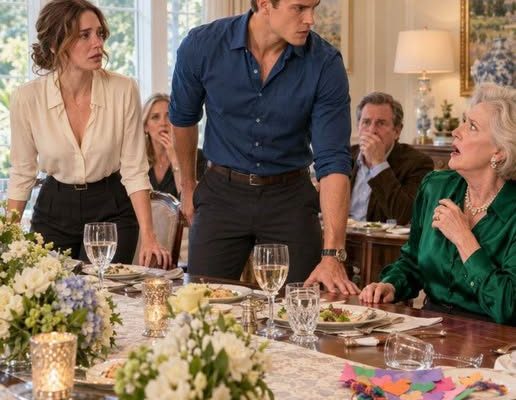
Young Restaurant Manager Tried to Kick Me Out Because of My “Cheap Clothes” – She Had No Idea What Would Happen 10 Minutes Later

It was a scorching day, and at 62, I couldn’t fight the heat. So I stepped into a fancy restaurant to cool off. But before I could sit down, a young manager sized me up and mocked me for my “cheap clothes.” She nearly kicked me out… not knowing who I was or who was about to walk through the door.

My name’s Betsy. I’m 62, and some days I wonder how I got here so fast. My husband’s been gone three years and my son even longer… a drunk driver took him when he was just 28. Most mornings I wake up to silence so thick it feels like drowning.

That Tuesday started like any other. The weatherman had warned about the heat, but I needed my blood pressure medication, so I walked the six blocks to Miller’s Pharmacy.

By the time I was heading home, the sun felt like a furnace against my back. My cotton dress clung to my skin, and those old sandals my husband David always said to throw out suddenly felt like they were made of lead.

I stopped on Oak Street, my vision swimming a little. The heat was getting intense. That’s when I saw Romano’s — a fancy restaurant with big windows and what looked like blessed air conditioning.

I figured I’d step in and cool off… maybe sip a glass of water. Or even a small coffee. One of those creamy ones youngsters like, with the little swirl on top. I don’t know what it’s called, but it looks warm and soft and just… nice.

I pushed through the glass doors, and the cool air hit me like salvation. The place was almost empty… maybe three tables occupied the whole dining room.

I just needed to sit for a few minutes, drink something, then I’d be on my way.

But before I could even catch my breath, this young woman appeared in front of me. She couldn’t have been older than 25, all sharp edges and designer clothes. Her eyes swept over me like I was something unpleasant she’d stepped on.

“Excuse me?!” she hissed, her voice dripping with disdain. “I don’t think you understand what kind of establishment this is.”

“I’m sorry?”

“We have standards here, lady. A dress code. This isn’t a charity stop for hobos!” She crossed her arms, blocking my path further into the restaurant. “And we’re completely booked for the afternoon.”

I glanced around at the sea of empty tables. “I just need to sit for a moment, dear. It’s very hot outside, and I’m not feeling well—”

“Look, lady.” Her voice got louder, and I noticed a few diners turning to stare. “Our cheapest coffee is $15. Our water is filtered and costs $5. I’m trying to save you some embarrassment here.”

The words hit me like a slap. I felt my cheeks burn, but not from the heat anymore. “I CAN afford a cup of coffee.”

She laughed. “In THOSE clothes? With THAT purse?” She pointed at my worn canvas bag, the one I’d carried for years because David had given it to me. “I don’t think so! You need to leave. Now.”

My hands started shaking… not from weakness, but from heartbreak and anger. “Young lady, I’m asking for basic human decency…”

“Security!” she called out, even though I could see there wasn’t any security in sight. “We have a situation here!”

That’s when I heard another voice. Calm, clear… the kind that turns your heart before your head can catch up. “Alison, what in God’s name is going on?”

A woman emerged from the back office, and even in my rattled state, I could see she commanded respect. She was maybe 40, with graying hair and clothes that whispered money rather than shouted it. Her eyes were sharp but kind.

The young manager immediately transformed, her voice turning whiny and defensive. “Mom, I was just handling a situation. This woman came in here making demands, saying she’d cause trouble if we didn’t serve her for free!”

“That’s not what happened,” I protested.

The older woman’s eyes met mine, and something flickered across her face. Recognition? She stepped closer, studying my face with an intensity that made me uncomfortable. “You look… like someone I…” She paused. “What’s your name?”

“Betsy.”

The change in her was immediate and startling. The color drained from her face like someone had pulled a plug. Her hand flew to her mouth, and her eyes filled with more tears.

“Miss Betsy? From Jefferson Elementary? Oh my God!!”

I stood still, but my mind started pulling threads. Jefferson Elementary. I’d taught there for 32 years before retiring. I stared at her, willing something in my brain to light up.

“I’m sorry, I don’t—”

“It’s me!” Tears were streaming down her cheeks now, not caring who saw. “Tanya. You used to call me ‘Little Tanny.’ I was in your fifth-grade class.”

And then it hit me like lightning. Little Tanya. The quiet girl with the too-big clothes and the sadness that seemed too heavy for such small shoulders.

“Tanya?” I breathed her name like a prayer.

She nodded, crying openly now. “You probably don’t remember me. I was just one of hundreds of kids—”

“You lived with the Hendersons,” I said, the memories flooding back. “You used to stay after school because you said it was quieter there than home. You loved to read but never had books.”

Her sob caught in her throat. “You remember.”

How could I forget? Tanya had been one of those kids who haunted me… the ones who made me pack extra granola bars in my desk drawer and keep a spare sweater in my closet. She’d been shuffled between foster homes, never staying anywhere long enough to make friends or feel safe.

“You used to eat lunch alone,” I continued, my voice breaking. “So I started eating in your classroom. You’d help me grade papers.”

“You made me feel like I mattered,” she whispered. “Like I was worth something.”

Alison was staring at us both like we’d lost our minds. “Mom, what’s happening? Who is this woman?”

Tanya turned to her daughter, her face hard as stone. “This woman is the reason you have everything you take for granted. Miss Betsy didn’t just teach me math and reading… she taught me that I deserved kindness and respect.”

She looked back at me, her eyes fierce with emotion. “You brought me books from your own collection. You bought me a winter coat when the Hendersons wouldn’t. You wrote letters to my caseworker when I wasn’t being treated well.”

I remembered everything now. Sweet, scared Tanya who’d blossomed under a little attention. Who’d started speaking up in class, making friends… believing in herself.

“You were adopted. The Johnsons, right? They moved you to Riverside.”

“Best thing that ever happened to me,” she said, wiping her eyes. “But it broke my heart to leave your class.”

Tanya turned back to her daughter, and her voice was ice-cold. “Alison, you just humiliated the woman who saved my life. Who taught me that kindness matters more than anything else in this world.”

Alison’s face had gone from confused to mortified. “Mom, I didn’t know—”

“That’s exactly the problem! You didn’t know, and you didn’t care to find out. You saw someone you thought was beneath you and decided to treat them like garbage.”

I watched the young lady crumble as the reality of what she’d done sank in. Part of me wanted to feel sorry for her, but mostly I felt tired… tired of people who thought money and fancy clothes were all that mattered.

“Alison, go to the kitchen,” Tanya said, her voice deadly quiet. “You’ll be washing dishes for the rest of the week. Maybe that’ll teach you what honest work looks like.”

“But Mom..?”

“Now.”

Alison slunk away, her head down, her designer heels clicking against the floor like a countdown.

Tanya turned back to me, her professional composure completely gone. “Miss Betsy, I’m so sorry. I raised her better than this, I swear I did.”

“Kids make mistakes, dear. Even grown-up kids.”

“This wasn’t a mistake. This was cruelty.” She took my hands in hers. “Please, let me make this right. Have dinner with me tonight? As my guest? I want to hear about your life and catch up properly.”

I looked around the restaurant, at the staff pretending not to watch, and the fancy decor that suddenly seemed less intimidating. “I’d like that.”


That evening, I came back to Romano’s wearing the same cotton dress and old sandals. But this time, Tanya herself seated me at the best table by the window. She sat across from me, and we talked for hours.

She told me about her life — the Johnsons had loved her, put her through college, and helped her start the restaurant. She’d built a successful business, married a good man, and had three beautiful children.

And through it all, Tanya never forgot the teacher who’d shown her what kindness looked like.

I shared my story — losing David to cancer, then Michael in that awful accident. And the kind of loneliness that doesn’t show up loud, but settles in quietly and refuses to leave.

“I think about you often,” she said as we shared dessert. “I tell my kids stories about the teacher who changed my life. I never thought I’d see you again.”

“Life has a funny way of surprising us, dear.”

Tanya leaned forward, her eyes bright with an idea that made her look like that eager fifth-grader again. “Miss Betsy, I have a proposition for you. Alison’s siblings are eight and 10 now. My husband and I both work long hours, and they’re with babysitters most of the time.”

“Would you consider being their nanny? Not just watching them, but being their teacher too. And show them what you showed me… that kindness is the most important thing we can give each other?”

I stared at her, my heart doing something it hadn’t done in years: filling with hope.

“I’m 62, Tanya. I’m not sure I have the energy for two active children.”

“You’d have all the energy in the world,” she said, reaching across to squeeze my hand. “Because you’d be doing what you were born to do… making kids feel like they matter.”

Six months later, I wake up every morning to the sound of laughter instead of silence. Tanya’s little ones, Sally and Alex, have filled my world with purpose again. I help them with homework, read them stories, and teach them that how you treat people says everything about who you are.

Alison apologized to me properly a few weeks after that terrible day. She’s working her way back up in the restaurant, but more importantly, she’s learning to see people instead of just looking at their clothes or their bank account.

It took 27 years, but the little girl I helped in fifth grade grew up to save me right back. And isn’t that just the most beautiful thing about this messy, complicated, wonderful life? The love and kindness we give comes back to us, sometimes when we need it most.

Young Restaurant Manager Tried to Kick Me Out Because of My “Cheap Clothes” – She Had No Idea What Would Happen 10 Minutes Later Read More

Young Restaurant Manager Tried to Kick Me Out Because of My “Cheap Clothes” – She Had No Idea What Would Happen 10 Minutes Later

It was a scorching day, and at 62, I couldn’t fight the heat. So I stepped into a fancy restaurant to cool off. But before I could sit down, a young manager sized me up and mocked me for my “cheap clothes.” She nearly kicked me out… not knowing who I was or who was about to walk through the door.

My name’s Betsy. I’m 62, and some days I wonder how I got here so fast. My husband’s been gone three years and my son even longer… a drunk driver took him when he was just 28. Most mornings I wake up to silence so thick it feels like drowning.

That Tuesday started like any other. The weatherman had warned about the heat, but I needed my blood pressure medication, so I walked the six blocks to Miller’s Pharmacy.

By the time I was heading home, the sun felt like a furnace against my back. My cotton dress clung to my skin, and those old sandals my husband David always said to throw out suddenly felt like they were made of lead.

I stopped on Oak Street, my vision swimming a little. The heat was getting intense. That’s when I saw Romano’s — a fancy restaurant with big windows and what looked like blessed air conditioning.

I figured I’d step in and cool off… maybe sip a glass of water. Or even a small coffee. One of those creamy ones youngsters like, with the little swirl on top. I don’t know what it’s called, but it looks warm and soft and just… nice.

I pushed through the glass doors, and the cool air hit me like salvation. The place was almost empty… maybe three tables occupied the whole dining room.

I just needed to sit for a few minutes, drink something, then I’d be on my way.

But before I could even catch my breath, this young woman appeared in front of me. She couldn’t have been older than 25, all sharp edges and designer clothes. Her eyes swept over me like I was something unpleasant she’d stepped on.

“Excuse me?!” she hissed, her voice dripping with disdain. “I don’t think you understand what kind of establishment this is.”

“I’m sorry?”

“We have standards here, lady. A dress code. This isn’t a charity stop for hobos!” She crossed her arms, blocking my path further into the restaurant. “And we’re completely booked for the afternoon.”

I glanced around at the sea of empty tables. “I just need to sit for a moment, dear. It’s very hot outside, and I’m not feeling well—”

“Look, lady.” Her voice got louder, and I noticed a few diners turning to stare. “Our cheapest coffee is $15. Our water is filtered and costs $5. I’m trying to save you some embarrassment here.”

The words hit me like a slap. I felt my cheeks burn, but not from the heat anymore. “I CAN afford a cup of coffee.”

She laughed. “In THOSE clothes? With THAT purse?” She pointed at my worn canvas bag, the one I’d carried for years because David had given it to me. “I don’t think so! You need to leave. Now.”

My hands started shaking… not from weakness, but from heartbreak and anger. “Young lady, I’m asking for basic human decency…”

“Security!” she called out, even though I could see there wasn’t any security in sight. “We have a situation here!”

That’s when I heard another voice. Calm, clear… the kind that turns your heart before your head can catch up. “Alison, what in God’s name is going on?”

A woman emerged from the back office, and even in my rattled state, I could see she commanded respect. She was maybe 40, with graying hair and clothes that whispered money rather than shouted it. Her eyes were sharp but kind.

The young manager immediately transformed, her voice turning whiny and defensive. “Mom, I was just handling a situation. This woman came in here making demands, saying she’d cause trouble if we didn’t serve her for free!”

“That’s not what happened,” I protested.

The older woman’s eyes met mine, and something flickered across her face. Recognition? She stepped closer, studying my face with an intensity that made me uncomfortable. “You look… like someone I…” She paused. “What’s your name?”

“Betsy.”

The change in her was immediate and startling. The color drained from her face like someone had pulled a plug. Her hand flew to her mouth, and her eyes filled with more tears.

“Miss Betsy? From Jefferson Elementary? Oh my God!!”

I stood still, but my mind started pulling threads. Jefferson Elementary. I’d taught there for 32 years before retiring. I stared at her, willing something in my brain to light up.

“I’m sorry, I don’t—”

“It’s me!” Tears were streaming down her cheeks now, not caring who saw. “Tanya. You used to call me ‘Little Tanny.’ I was in your fifth-grade class.”

And then it hit me like lightning. Little Tanya. The quiet girl with the too-big clothes and the sadness that seemed too heavy for such small shoulders.

“Tanya?” I breathed her name like a prayer.

She nodded, crying openly now. “You probably don’t remember me. I was just one of hundreds of kids—”

“You lived with the Hendersons,” I said, the memories flooding back. “You used to stay after school because you said it was quieter there than home. You loved to read but never had books.”

Her sob caught in her throat. “You remember.”

How could I forget? Tanya had been one of those kids who haunted me… the ones who made me pack extra granola bars in my desk drawer and keep a spare sweater in my closet. She’d been shuffled between foster homes, never staying anywhere long enough to make friends or feel safe.

“You used to eat lunch alone,” I continued, my voice breaking. “So I started eating in your classroom. You’d help me grade papers.”

“You made me feel like I mattered,” she whispered. “Like I was worth something.”

Alison was staring at us both like we’d lost our minds. “Mom, what’s happening? Who is this woman?”

Tanya turned to her daughter, her face hard as stone. “This woman is the reason you have everything you take for granted. Miss Betsy didn’t just teach me math and reading… she taught me that I deserved kindness and respect.”

She looked back at me, her eyes fierce with emotion. “You brought me books from your own collection. You bought me a winter coat when the Hendersons wouldn’t. You wrote letters to my caseworker when I wasn’t being treated well.”

I remembered everything now. Sweet, scared Tanya who’d blossomed under a little attention. Who’d started speaking up in class, making friends… believing in herself.

“You were adopted. The Johnsons, right? They moved you to Riverside.”

“Best thing that ever happened to me,” she said, wiping her eyes. “But it broke my heart to leave your class.”

Tanya turned back to her daughter, and her voice was ice-cold. “Alison, you just humiliated the woman who saved my life. Who taught me that kindness matters more than anything else in this world.”

Alison’s face had gone from confused to mortified. “Mom, I didn’t know—”

“That’s exactly the problem! You didn’t know, and you didn’t care to find out. You saw someone you thought was beneath you and decided to treat them like garbage.”

I watched the young lady crumble as the reality of what she’d done sank in. Part of me wanted to feel sorry for her, but mostly I felt tired… tired of people who thought money and fancy clothes were all that mattered.

“Alison, go to the kitchen,” Tanya said, her voice deadly quiet. “You’ll be washing dishes for the rest of the week. Maybe that’ll teach you what honest work looks like.”

“But Mom..?”

“Now.”

Alison slunk away, her head down, her designer heels clicking against the floor like a countdown.

Tanya turned back to me, her professional composure completely gone. “Miss Betsy, I’m so sorry. I raised her better than this, I swear I did.”

“Kids make mistakes, dear. Even grown-up kids.”

“This wasn’t a mistake. This was cruelty.” She took my hands in hers. “Please, let me make this right. Have dinner with me tonight? As my guest? I want to hear about your life and catch up properly.”

I looked around the restaurant, at the staff pretending not to watch, and the fancy decor that suddenly seemed less intimidating. “I’d like that.”


That evening, I came back to Romano’s wearing the same cotton dress and old sandals. But this time, Tanya herself seated me at the best table by the window. She sat across from me, and we talked for hours.

She told me about her life — the Johnsons had loved her, put her through college, and helped her start the restaurant. She’d built a successful business, married a good man, and had three beautiful children.

And through it all, Tanya never forgot the teacher who’d shown her what kindness looked like.

I shared my story — losing David to cancer, then Michael in that awful accident. And the kind of loneliness that doesn’t show up loud, but settles in quietly and refuses to leave.

“I think about you often,” she said as we shared dessert. “I tell my kids stories about the teacher who changed my life. I never thought I’d see you again.”

“Life has a funny way of surprising us, dear.”

Tanya leaned forward, her eyes bright with an idea that made her look like that eager fifth-grader again. “Miss Betsy, I have a proposition for you. Alison’s siblings are eight and 10 now. My husband and I both work long hours, and they’re with babysitters most of the time.”

“Would you consider being their nanny? Not just watching them, but being their teacher too. And show them what you showed me… that kindness is the most important thing we can give each other?”

I stared at her, my heart doing something it hadn’t done in years: filling with hope.

“I’m 62, Tanya. I’m not sure I have the energy for two active children.”

“You’d have all the energy in the world,” she said, reaching across to squeeze my hand. “Because you’d be doing what you were born to do… making kids feel like they matter.”

Six months later, I wake up every morning to the sound of laughter instead of silence. Tanya’s little ones, Sally and Alex, have filled my world with purpose again. I help them with homework, read them stories, and teach them that how you treat people says everything about who you are.

Alison apologized to me properly a few weeks after that terrible day. She’s working her way back up in the restaurant, but more importantly, she’s learning to see people instead of just looking at their clothes or their bank account.

It took 27 years, but the little girl I helped in fifth grade grew up to save me right back. And isn’t that just the most beautiful thing about this messy, complicated, wonderful life? The love and kindness we give comes back to us, sometimes when we need it most.

Young Restaurant Manager Tried to Kick Me Out Because of My “Cheap Clothes” – She Had No Idea What Would Happen 10 Minutes Later Read More

Young Restaurant Manager Tried to Kick Me Out Because of My “Cheap Clothes” – She Had No Idea What Would Happen 10 Minutes Later

It was a scorching day, and at 62, I couldn’t fight the heat. So I stepped into a fancy restaurant to cool off. But before I could sit down, a young manager sized me up and mocked me for my “cheap clothes.” She nearly kicked me out… not knowing who I was or who was about to walk through the door.

My name’s Betsy. I’m 62, and some days I wonder how I got here so fast. My husband’s been gone three years and my son even longer… a drunk driver took him when he was just 28. Most mornings I wake up to silence so thick it feels like drowning.

That Tuesday started like any other. The weatherman had warned about the heat, but I needed my blood pressure medication, so I walked the six blocks to Miller’s Pharmacy.

By the time I was heading home, the sun felt like a furnace against my back. My cotton dress clung to my skin, and those old sandals my husband David always said to throw out suddenly felt like they were made of lead.

I stopped on Oak Street, my vision swimming a little. The heat was getting intense. That’s when I saw Romano’s — a fancy restaurant with big windows and what looked like blessed air conditioning.

I figured I’d step in and cool off… maybe sip a glass of water. Or even a small coffee. One of those creamy ones youngsters like, with the little swirl on top. I don’t know what it’s called, but it looks warm and soft and just… nice.

I pushed through the glass doors, and the cool air hit me like salvation. The place was almost empty… maybe three tables occupied the whole dining room.

I just needed to sit for a few minutes, drink something, then I’d be on my way.

But before I could even catch my breath, this young woman appeared in front of me. She couldn’t have been older than 25, all sharp edges and designer clothes. Her eyes swept over me like I was something unpleasant she’d stepped on.

“Excuse me?!” she hissed, her voice dripping with disdain. “I don’t think you understand what kind of establishment this is.”

“I’m sorry?”

“We have standards here, lady. A dress code. This isn’t a charity stop for hobos!” She crossed her arms, blocking my path further into the restaurant. “And we’re completely booked for the afternoon.”

I glanced around at the sea of empty tables. “I just need to sit for a moment, dear. It’s very hot outside, and I’m not feeling well—”

“Look, lady.” Her voice got louder, and I noticed a few diners turning to stare. “Our cheapest coffee is $15. Our water is filtered and costs $5. I’m trying to save you some embarrassment here.”

The words hit me like a slap. I felt my cheeks burn, but not from the heat anymore. “I CAN afford a cup of coffee.”

She laughed. “In THOSE clothes? With THAT purse?” She pointed at my worn canvas bag, the one I’d carried for years because David had given it to me. “I don’t think so! You need to leave. Now.”

My hands started shaking… not from weakness, but from heartbreak and anger. “Young lady, I’m asking for basic human decency…”

“Security!” she called out, even though I could see there wasn’t any security in sight. “We have a situation here!”

That’s when I heard another voice. Calm, clear… the kind that turns your heart before your head can catch up. “Alison, what in God’s name is going on?”

A woman emerged from the back office, and even in my rattled state, I could see she commanded respect. She was maybe 40, with graying hair and clothes that whispered money rather than shouted it. Her eyes were sharp but kind.

The young manager immediately transformed, her voice turning whiny and defensive. “Mom, I was just handling a situation. This woman came in here making demands, saying she’d cause trouble if we didn’t serve her for free!”

“That’s not what happened,” I protested.

The older woman’s eyes met mine, and something flickered across her face. Recognition? She stepped closer, studying my face with an intensity that made me uncomfortable. “You look… like someone I…” She paused. “What’s your name?”

“Betsy.”

The change in her was immediate and startling. The color drained from her face like someone had pulled a plug. Her hand flew to her mouth, and her eyes filled with more tears.

“Miss Betsy? From Jefferson Elementary? Oh my God!!”

I stood still, but my mind started pulling threads. Jefferson Elementary. I’d taught there for 32 years before retiring. I stared at her, willing something in my brain to light up.

“I’m sorry, I don’t—”

“It’s me!” Tears were streaming down her cheeks now, not caring who saw. “Tanya. You used to call me ‘Little Tanny.’ I was in your fifth-grade class.”

And then it hit me like lightning. Little Tanya. The quiet girl with the too-big clothes and the sadness that seemed too heavy for such small shoulders.

“Tanya?” I breathed her name like a prayer.

She nodded, crying openly now. “You probably don’t remember me. I was just one of hundreds of kids—”

“You lived with the Hendersons,” I said, the memories flooding back. “You used to stay after school because you said it was quieter there than home. You loved to read but never had books.”

Her sob caught in her throat. “You remember.”

How could I forget? Tanya had been one of those kids who haunted me… the ones who made me pack extra granola bars in my desk drawer and keep a spare sweater in my closet. She’d been shuffled between foster homes, never staying anywhere long enough to make friends or feel safe.

“You used to eat lunch alone,” I continued, my voice breaking. “So I started eating in your classroom. You’d help me grade papers.”

“You made me feel like I mattered,” she whispered. “Like I was worth something.”

Alison was staring at us both like we’d lost our minds. “Mom, what’s happening? Who is this woman?”

Tanya turned to her daughter, her face hard as stone. “This woman is the reason you have everything you take for granted. Miss Betsy didn’t just teach me math and reading… she taught me that I deserved kindness and respect.”

She looked back at me, her eyes fierce with emotion. “You brought me books from your own collection. You bought me a winter coat when the Hendersons wouldn’t. You wrote letters to my caseworker when I wasn’t being treated well.”

I remembered everything now. Sweet, scared Tanya who’d blossomed under a little attention. Who’d started speaking up in class, making friends… believing in herself.

“You were adopted. The Johnsons, right? They moved you to Riverside.”

“Best thing that ever happened to me,” she said, wiping her eyes. “But it broke my heart to leave your class.”

Tanya turned back to her daughter, and her voice was ice-cold. “Alison, you just humiliated the woman who saved my life. Who taught me that kindness matters more than anything else in this world.”

Alison’s face had gone from confused to mortified. “Mom, I didn’t know—”

“That’s exactly the problem! You didn’t know, and you didn’t care to find out. You saw someone you thought was beneath you and decided to treat them like garbage.”

I watched the young lady crumble as the reality of what she’d done sank in. Part of me wanted to feel sorry for her, but mostly I felt tired… tired of people who thought money and fancy clothes were all that mattered.

“Alison, go to the kitchen,” Tanya said, her voice deadly quiet. “You’ll be washing dishes for the rest of the week. Maybe that’ll teach you what honest work looks like.”

“But Mom..?”

“Now.”

Alison slunk away, her head down, her designer heels clicking against the floor like a countdown.

Tanya turned back to me, her professional composure completely gone. “Miss Betsy, I’m so sorry. I raised her better than this, I swear I did.”

“Kids make mistakes, dear. Even grown-up kids.”

“This wasn’t a mistake. This was cruelty.” She took my hands in hers. “Please, let me make this right. Have dinner with me tonight? As my guest? I want to hear about your life and catch up properly.”

I looked around the restaurant, at the staff pretending not to watch, and the fancy decor that suddenly seemed less intimidating. “I’d like that.”


That evening, I came back to Romano’s wearing the same cotton dress and old sandals. But this time, Tanya herself seated me at the best table by the window. She sat across from me, and we talked for hours.

She told me about her life — the Johnsons had loved her, put her through college, and helped her start the restaurant. She’d built a successful business, married a good man, and had three beautiful children.

And through it all, Tanya never forgot the teacher who’d shown her what kindness looked like.

I shared my story — losing David to cancer, then Michael in that awful accident. And the kind of loneliness that doesn’t show up loud, but settles in quietly and refuses to leave.

“I think about you often,” she said as we shared dessert. “I tell my kids stories about the teacher who changed my life. I never thought I’d see you again.”

“Life has a funny way of surprising us, dear.”

Tanya leaned forward, her eyes bright with an idea that made her look like that eager fifth-grader again. “Miss Betsy, I have a proposition for you. Alison’s siblings are eight and 10 now. My husband and I both work long hours, and they’re with babysitters most of the time.”

“Would you consider being their nanny? Not just watching them, but being their teacher too. And show them what you showed me… that kindness is the most important thing we can give each other?”

I stared at her, my heart doing something it hadn’t done in years: filling with hope.

“I’m 62, Tanya. I’m not sure I have the energy for two active children.”

“You’d have all the energy in the world,” she said, reaching across to squeeze my hand. “Because you’d be doing what you were born to do… making kids feel like they matter.”

Six months later, I wake up every morning to the sound of laughter instead of silence. Tanya’s little ones, Sally and Alex, have filled my world with purpose again. I help them with homework, read them stories, and teach them that how you treat people says everything about who you are.

Alison apologized to me properly a few weeks after that terrible day. She’s working her way back up in the restaurant, but more importantly, she’s learning to see people instead of just looking at their clothes or their bank account.

It took 27 years, but the little girl I helped in fifth grade grew up to save me right back. And isn’t that just the most beautiful thing about this messy, complicated, wonderful life? The love and kindness we give comes back to us, sometimes when we need it most.

Young Restaurant Manager Tried to Kick Me Out Because of My “Cheap Clothes” – She Had No Idea What Would Happen 10 Minutes Later Read More

My Husband Filed for Divorce Right After I Inherited My Mom’s Fortune – He Thought He Hit the Jackpot, but My Mom Outsmarted Him

When my mother died and left me her entire fortune, my husband Peter suddenly became the most caring and supportive man on earth. But when I wouldn’t let him spend my inheritance, he decided he didn’t want to live with me anymore. What happened next was something that turned his world upside down.

I always knew my mom was sharp. She was always one step ahead of everyone around her, and could read people like open books. But I didn’t realize just how far ahead she’d planned until after she was gone, and her final chess move left everyone speechless.

My relationship with Mom had been complicated in her last few years. There was a distance between us that I couldn’t quite bridge, no matter how hard I tried. Part of the problem was that she never really approved of my husband, Peter. She never said it directly, but her feelings were crystal clear in other ways.

During our visits, Mom would go quiet whenever Peter talked about his big plans or future dreams. She’d raise her eyebrows when he mentioned needing money for this project or that investment opportunity.

Her questions always sounded more like statements, like she already knew the answers and didn’t like what she’d discovered.

“Mom, why can’t you just be happy for me?” I asked her once after a particularly tense dinner.

“I am happy when you’re truly happy, sweetheart,” she replied carefully. “I just want to make sure you’re seeing the whole picture.”

“He’s not perfect, but he’s who I chose,” I told her, feeling defensive. “Can’t you just accept that?”

She didn’t argue with me. She just gave me a look that made me feel like she could see moves on a chess board that I couldn’t even imagine. It was frustrating and comforting at the same time.

“I love you, Alice,” was all she said. “More than you know.”

I thought she was being overprotective. Maybe even controlling. I figured all mothers struggled to let their daughters make their own choices, especially when those choices weren’t perfect.

When Mom died suddenly from a heart attack, I was completely devastated. The grief hit me harder than I’d expected. We had so many unfinished conversations. Too much space between us that would never be filled now.

I regretted every argument and every time I’d chosen Peter’s feelings over spending time with her.

But then, just a few weeks after the funeral, Mom’s lawyer called me with life-changing news.

“Your mother left you everything, Alice,” he said gently. “The house, her retirement accounts, and her savings. It’s quite substantial.”

I was stunned. Mom had been comfortable, but I’d never realized she was wealthy. The total inheritance was over $400,000.

Honestly, I’d never imagined having this much money.

But what surprised me the most wasn’t just this insane amount of money I was about to get. It was how Peter reacted to this news.

At first, he seemed genuinely supportive and caring.

“Your mom always knew how strong you were,” he said. “She wanted to make sure you’d be taken care of. You deserve this, babe.”

But then, he started suggesting ways to spend the money I would get.

Still, I thought he was trying to help me process everything and plan for our future together.

“Babe, you know what we should do?” he said one morning over breakfast. “Maybe it’s time we traded in your old car for a new one. You deserve to drive something nice.”

“My car runs fine, Peter,” I said. “I don’t need a new one right now.”

“But with the inheritance, we could afford something really good. A BMW, maybe? Or that Mercedes you always admired?”

Something about his eagerness made me uncomfortable, but I pushed the feeling aside. Maybe he really was just trying to take care of me.

Then came the vacation suggestions.

“I found this amazing beach house we could rent for the entire summer,” Peter announced a few days later. “Just the two of us. Doesn’t that sound perfect? We could both take time off work and just relax.”

“That sounds expensive,” I said carefully.

“So what? You can afford it now. We should enjoy life while we can.”

Next came the housing ideas.

“We should think about moving, Alice,” he said during dinner one evening. “You’ve always hated this cramped kitchen. Let’s find a house that actually makes you happy. Something with a big yard, maybe a pool.”

Each suggestion sounded reasonable on the surface, but something felt wrong about his approach. There was a hunger in his eyes when he talked about spending the money.

“Peter, I need time to think about all this,” I told him. “It’s a lot of money, and I want to be smart about it.”

“Smart about it?” he asked with raised eyebrows. “Alice, this is our chance to finally live the life we’ve always wanted. Why are you being so hesitant?”

“Because it’s not ‘our’ money, Peter. It’s mine. My mother left it to me.”

The words came out harsher than I intended, but they were true. And the look on Peter’s face told me everything I needed to know about what he’d been thinking.

That’s when his whole attitude changed completely.

The sweet, supportive husband disappeared overnight.

Peter stopped bringing me coffee in the morning. He stopped asking how my day went. The compliments about how strong I was and how much I deserved the inheritance completely dried up.

He started sleeping in the guest room, claiming he wanted to “give me space to process everything” and didn’t want to “intrude on my grief.”

But I knew the truth. Peter was angry that I wouldn’t let him spend my mother’s money.

I had no idea that his anger was silently brewing up a storm inside his head. A storm that would turn our lives upside down.

The explosion came exactly three weeks after we’d learned about the inheritance. Peter walked into the kitchen where I was making dinner and dropped his bombshell with no warning.

“I think we should separate,” he said flatly.

I set down my wooden spoon and turned to face him. His expression was cold, like he was talking to a stranger instead of his wife of eight years.

“Separate?” I repeated.

“This isn’t working anymore, Alice. We want different things. You’ve changed since your mother died.”

“I’ve changed?” I almost laughed. “Peter, you’ve been treating me like a bank account for the past month.”

“That’s not fair,” he snapped. “I was trying to help us build a better life together. But you’re too selfish to share anything.”

“Selfish?” Now I was getting angry. “My mother just died, and all you can think about is spending her money!”

“Well, maybe if we divorce, we’ll both be happier,” he said with a shrug.

I stared at him for a long moment. The man I’d defended to my mother was exactly who she thought he was, and I never once listened to her.

That thought shattered my heart into a million pieces.

“Okay,” I said calmly. “But there’s something you should know first.”

Peter’s eyebrows shot up. He’d expected me to beg or cry or fight for our marriage.

“What?” he asked suspiciously.

I walked to our home office and pulled out a folder from the safe. It had documents from my mother’s lawyer that I’d barely glanced at during my grief.

Now I understood why Mom’s lawyer had insisted I read everything carefully.

I returned to the kitchen and slid the folder across the counter to Peter.

“Go ahead,” I said. “Read the highlighted section.”

Peter opened the folder and found my mother’s handwritten addendum to her will. Official, notarized, and dated two years before her death.

His face went pale as he read the words aloud.

“If my daughter is married at the time of my passing, she will not receive access to any inheritance unless and until she is legally divorced. No spouse or third party may claim or access any portion of my estate.”

“You mean…” his voice cracked slightly, “if we divorce, you get the money?”

“Every single penny,” I confirmed. “But if we stayed married, neither of us would see a dime. The entire inheritance would go to charity instead.”

Peter stared at the paper like it had personally betrayed him.

“Your mother planned this,” he whispered. “She…”

“She sure did. Two years ago, actually. Right around the time you started asking her for loans, remember?”

We filed for divorce the following month. There were no arguments or apologies. No attempts to save our marriage. Our divorce was quiet, but it involved a lot of paperwork.

Once everything was done and I got everything Mom had left for me, I renovated her old house and moved in. I also took those solo trips to Italy and Greece that I used to daydream about.

Meanwhile, Peter is probably still trying to figure out how everything went so wrong for him.

But I already know the answer.

Mom saw his true nature long before I did. She knew exactly what would happen when money entered the picture. And she made sure I’d be protected when that moment came.

Thanks, Mom. You saved me in more ways than one.

My Husband Filed for Divorce Right After I Inherited My Mom’s Fortune – He Thought He Hit the Jackpot, but My Mom Outsmarted Him Read More

My Husband Filed for Divorce Right After I Inherited My Mom’s Fortune – He Thought He Hit the Jackpot, but My Mom Outsmarted Him

When my mother died and left me her entire fortune, my husband Peter suddenly became the most caring and supportive man on earth. But when I wouldn’t let him spend my inheritance, he decided he didn’t want to live with me anymore. What happened next was something that turned his world upside down.

I always knew my mom was sharp. She was always one step ahead of everyone around her, and could read people like open books. But I didn’t realize just how far ahead she’d planned until after she was gone, and her final chess move left everyone speechless.

My relationship with Mom had been complicated in her last few years. There was a distance between us that I couldn’t quite bridge, no matter how hard I tried. Part of the problem was that she never really approved of my husband, Peter. She never said it directly, but her feelings were crystal clear in other ways.

During our visits, Mom would go quiet whenever Peter talked about his big plans or future dreams. She’d raise her eyebrows when he mentioned needing money for this project or that investment opportunity.

Her questions always sounded more like statements, like she already knew the answers and didn’t like what she’d discovered.

“Mom, why can’t you just be happy for me?” I asked her once after a particularly tense dinner.

“I am happy when you’re truly happy, sweetheart,” she replied carefully. “I just want to make sure you’re seeing the whole picture.”

“He’s not perfect, but he’s who I chose,” I told her, feeling defensive. “Can’t you just accept that?”

She didn’t argue with me. She just gave me a look that made me feel like she could see moves on a chess board that I couldn’t even imagine. It was frustrating and comforting at the same time.

“I love you, Alice,” was all she said. “More than you know.”

I thought she was being overprotective. Maybe even controlling. I figured all mothers struggled to let their daughters make their own choices, especially when those choices weren’t perfect.

When Mom died suddenly from a heart attack, I was completely devastated. The grief hit me harder than I’d expected. We had so many unfinished conversations. Too much space between us that would never be filled now.

I regretted every argument and every time I’d chosen Peter’s feelings over spending time with her.

But then, just a few weeks after the funeral, Mom’s lawyer called me with life-changing news.

“Your mother left you everything, Alice,” he said gently. “The house, her retirement accounts, and her savings. It’s quite substantial.”

I was stunned. Mom had been comfortable, but I’d never realized she was wealthy. The total inheritance was over $400,000.

Honestly, I’d never imagined having this much money.

But what surprised me the most wasn’t just this insane amount of money I was about to get. It was how Peter reacted to this news.

At first, he seemed genuinely supportive and caring.

“Your mom always knew how strong you were,” he said. “She wanted to make sure you’d be taken care of. You deserve this, babe.”

But then, he started suggesting ways to spend the money I would get.

Still, I thought he was trying to help me process everything and plan for our future together.

“Babe, you know what we should do?” he said one morning over breakfast. “Maybe it’s time we traded in your old car for a new one. You deserve to drive something nice.”

“My car runs fine, Peter,” I said. “I don’t need a new one right now.”

“But with the inheritance, we could afford something really good. A BMW, maybe? Or that Mercedes you always admired?”

Something about his eagerness made me uncomfortable, but I pushed the feeling aside. Maybe he really was just trying to take care of me.

Then came the vacation suggestions.

“I found this amazing beach house we could rent for the entire summer,” Peter announced a few days later. “Just the two of us. Doesn’t that sound perfect? We could both take time off work and just relax.”

“That sounds expensive,” I said carefully.

“So what? You can afford it now. We should enjoy life while we can.”

Next came the housing ideas.

“We should think about moving, Alice,” he said during dinner one evening. “You’ve always hated this cramped kitchen. Let’s find a house that actually makes you happy. Something with a big yard, maybe a pool.”

Each suggestion sounded reasonable on the surface, but something felt wrong about his approach. There was a hunger in his eyes when he talked about spending the money.

“Peter, I need time to think about all this,” I told him. “It’s a lot of money, and I want to be smart about it.”

“Smart about it?” he asked with raised eyebrows. “Alice, this is our chance to finally live the life we’ve always wanted. Why are you being so hesitant?”

“Because it’s not ‘our’ money, Peter. It’s mine. My mother left it to me.”

The words came out harsher than I intended, but they were true. And the look on Peter’s face told me everything I needed to know about what he’d been thinking.

That’s when his whole attitude changed completely.

The sweet, supportive husband disappeared overnight.

Peter stopped bringing me coffee in the morning. He stopped asking how my day went. The compliments about how strong I was and how much I deserved the inheritance completely dried up.

He started sleeping in the guest room, claiming he wanted to “give me space to process everything” and didn’t want to “intrude on my grief.”

But I knew the truth. Peter was angry that I wouldn’t let him spend my mother’s money.

I had no idea that his anger was silently brewing up a storm inside his head. A storm that would turn our lives upside down.

The explosion came exactly three weeks after we’d learned about the inheritance. Peter walked into the kitchen where I was making dinner and dropped his bombshell with no warning.

“I think we should separate,” he said flatly.

I set down my wooden spoon and turned to face him. His expression was cold, like he was talking to a stranger instead of his wife of eight years.

“Separate?” I repeated.

“This isn’t working anymore, Alice. We want different things. You’ve changed since your mother died.”

“I’ve changed?” I almost laughed. “Peter, you’ve been treating me like a bank account for the past month.”

“That’s not fair,” he snapped. “I was trying to help us build a better life together. But you’re too selfish to share anything.”

“Selfish?” Now I was getting angry. “My mother just died, and all you can think about is spending her money!”

“Well, maybe if we divorce, we’ll both be happier,” he said with a shrug.

I stared at him for a long moment. The man I’d defended to my mother was exactly who she thought he was, and I never once listened to her.

That thought shattered my heart into a million pieces.

“Okay,” I said calmly. “But there’s something you should know first.”

Peter’s eyebrows shot up. He’d expected me to beg or cry or fight for our marriage.

“What?” he asked suspiciously.

I walked to our home office and pulled out a folder from the safe. It had documents from my mother’s lawyer that I’d barely glanced at during my grief.

Now I understood why Mom’s lawyer had insisted I read everything carefully.

I returned to the kitchen and slid the folder across the counter to Peter.

“Go ahead,” I said. “Read the highlighted section.”

Peter opened the folder and found my mother’s handwritten addendum to her will. Official, notarized, and dated two years before her death.

His face went pale as he read the words aloud.

“If my daughter is married at the time of my passing, she will not receive access to any inheritance unless and until she is legally divorced. No spouse or third party may claim or access any portion of my estate.”

“You mean…” his voice cracked slightly, “if we divorce, you get the money?”

“Every single penny,” I confirmed. “But if we stayed married, neither of us would see a dime. The entire inheritance would go to charity instead.”

Peter stared at the paper like it had personally betrayed him.

“Your mother planned this,” he whispered. “She…”

“She sure did. Two years ago, actually. Right around the time you started asking her for loans, remember?”

We filed for divorce the following month. There were no arguments or apologies. No attempts to save our marriage. Our divorce was quiet, but it involved a lot of paperwork.

Once everything was done and I got everything Mom had left for me, I renovated her old house and moved in. I also took those solo trips to Italy and Greece that I used to daydream about.

Meanwhile, Peter is probably still trying to figure out how everything went so wrong for him.

But I already know the answer.

Mom saw his true nature long before I did. She knew exactly what would happen when money entered the picture. And she made sure I’d be protected when that moment came.

Thanks, Mom. You saved me in more ways than one.

My Husband Filed for Divorce Right After I Inherited My Mom’s Fortune – He Thought He Hit the Jackpot, but My Mom Outsmarted Him Read More

My Husband Filed for Divorce Right After I Inherited My Mom’s Fortune – He Thought He Hit the Jackpot, but My Mom Outsmarted Him

When my mother died and left me her entire fortune, my husband Peter suddenly became the most caring and supportive man on earth. But when I wouldn’t let him spend my inheritance, he decided he didn’t want to live with me anymore. What happened next was something that turned his world upside down.

I always knew my mom was sharp. She was always one step ahead of everyone around her, and could read people like open books. But I didn’t realize just how far ahead she’d planned until after she was gone, and her final chess move left everyone speechless.

My relationship with Mom had been complicated in her last few years. There was a distance between us that I couldn’t quite bridge, no matter how hard I tried. Part of the problem was that she never really approved of my husband, Peter. She never said it directly, but her feelings were crystal clear in other ways.

During our visits, Mom would go quiet whenever Peter talked about his big plans or future dreams. She’d raise her eyebrows when he mentioned needing money for this project or that investment opportunity.

Her questions always sounded more like statements, like she already knew the answers and didn’t like what she’d discovered.

“Mom, why can’t you just be happy for me?” I asked her once after a particularly tense dinner.

“I am happy when you’re truly happy, sweetheart,” she replied carefully. “I just want to make sure you’re seeing the whole picture.”

“He’s not perfect, but he’s who I chose,” I told her, feeling defensive. “Can’t you just accept that?”

She didn’t argue with me. She just gave me a look that made me feel like she could see moves on a chess board that I couldn’t even imagine. It was frustrating and comforting at the same time.

“I love you, Alice,” was all she said. “More than you know.”

I thought she was being overprotective. Maybe even controlling. I figured all mothers struggled to let their daughters make their own choices, especially when those choices weren’t perfect.

When Mom died suddenly from a heart attack, I was completely devastated. The grief hit me harder than I’d expected. We had so many unfinished conversations. Too much space between us that would never be filled now.

I regretted every argument and every time I’d chosen Peter’s feelings over spending time with her.

But then, just a few weeks after the funeral, Mom’s lawyer called me with life-changing news.

“Your mother left you everything, Alice,” he said gently. “The house, her retirement accounts, and her savings. It’s quite substantial.”

I was stunned. Mom had been comfortable, but I’d never realized she was wealthy. The total inheritance was over $400,000.

Honestly, I’d never imagined having this much money.

But what surprised me the most wasn’t just this insane amount of money I was about to get. It was how Peter reacted to this news.

At first, he seemed genuinely supportive and caring.

“Your mom always knew how strong you were,” he said. “She wanted to make sure you’d be taken care of. You deserve this, babe.”

But then, he started suggesting ways to spend the money I would get.

Still, I thought he was trying to help me process everything and plan for our future together.

“Babe, you know what we should do?” he said one morning over breakfast. “Maybe it’s time we traded in your old car for a new one. You deserve to drive something nice.”

“My car runs fine, Peter,” I said. “I don’t need a new one right now.”

“But with the inheritance, we could afford something really good. A BMW, maybe? Or that Mercedes you always admired?”

Something about his eagerness made me uncomfortable, but I pushed the feeling aside. Maybe he really was just trying to take care of me.

Then came the vacation suggestions.

“I found this amazing beach house we could rent for the entire summer,” Peter announced a few days later. “Just the two of us. Doesn’t that sound perfect? We could both take time off work and just relax.”

“That sounds expensive,” I said carefully.

“So what? You can afford it now. We should enjoy life while we can.”

Next came the housing ideas.

“We should think about moving, Alice,” he said during dinner one evening. “You’ve always hated this cramped kitchen. Let’s find a house that actually makes you happy. Something with a big yard, maybe a pool.”

Each suggestion sounded reasonable on the surface, but something felt wrong about his approach. There was a hunger in his eyes when he talked about spending the money.

“Peter, I need time to think about all this,” I told him. “It’s a lot of money, and I want to be smart about it.”

“Smart about it?” he asked with raised eyebrows. “Alice, this is our chance to finally live the life we’ve always wanted. Why are you being so hesitant?”

“Because it’s not ‘our’ money, Peter. It’s mine. My mother left it to me.”

The words came out harsher than I intended, but they were true. And the look on Peter’s face told me everything I needed to know about what he’d been thinking.

That’s when his whole attitude changed completely.

The sweet, supportive husband disappeared overnight.

Peter stopped bringing me coffee in the morning. He stopped asking how my day went. The compliments about how strong I was and how much I deserved the inheritance completely dried up.

He started sleeping in the guest room, claiming he wanted to “give me space to process everything” and didn’t want to “intrude on my grief.”

But I knew the truth. Peter was angry that I wouldn’t let him spend my mother’s money.

I had no idea that his anger was silently brewing up a storm inside his head. A storm that would turn our lives upside down.

The explosion came exactly three weeks after we’d learned about the inheritance. Peter walked into the kitchen where I was making dinner and dropped his bombshell with no warning.

“I think we should separate,” he said flatly.

I set down my wooden spoon and turned to face him. His expression was cold, like he was talking to a stranger instead of his wife of eight years.

“Separate?” I repeated.

“This isn’t working anymore, Alice. We want different things. You’ve changed since your mother died.”

“I’ve changed?” I almost laughed. “Peter, you’ve been treating me like a bank account for the past month.”

“That’s not fair,” he snapped. “I was trying to help us build a better life together. But you’re too selfish to share anything.”

“Selfish?” Now I was getting angry. “My mother just died, and all you can think about is spending her money!”

“Well, maybe if we divorce, we’ll both be happier,” he said with a shrug.

I stared at him for a long moment. The man I’d defended to my mother was exactly who she thought he was, and I never once listened to her.

That thought shattered my heart into a million pieces.

“Okay,” I said calmly. “But there’s something you should know first.”

Peter’s eyebrows shot up. He’d expected me to beg or cry or fight for our marriage.

“What?” he asked suspiciously.

I walked to our home office and pulled out a folder from the safe. It had documents from my mother’s lawyer that I’d barely glanced at during my grief.

Now I understood why Mom’s lawyer had insisted I read everything carefully.

I returned to the kitchen and slid the folder across the counter to Peter.

“Go ahead,” I said. “Read the highlighted section.”

Peter opened the folder and found my mother’s handwritten addendum to her will. Official, notarized, and dated two years before her death.

His face went pale as he read the words aloud.

“If my daughter is married at the time of my passing, she will not receive access to any inheritance unless and until she is legally divorced. No spouse or third party may claim or access any portion of my estate.”

“You mean…” his voice cracked slightly, “if we divorce, you get the money?”

“Every single penny,” I confirmed. “But if we stayed married, neither of us would see a dime. The entire inheritance would go to charity instead.”

Peter stared at the paper like it had personally betrayed him.

“Your mother planned this,” he whispered. “She…”

“She sure did. Two years ago, actually. Right around the time you started asking her for loans, remember?”

We filed for divorce the following month. There were no arguments or apologies. No attempts to save our marriage. Our divorce was quiet, but it involved a lot of paperwork.

Once everything was done and I got everything Mom had left for me, I renovated her old house and moved in. I also took those solo trips to Italy and Greece that I used to daydream about.

Meanwhile, Peter is probably still trying to figure out how everything went so wrong for him.

But I already know the answer.

Mom saw his true nature long before I did. She knew exactly what would happen when money entered the picture. And she made sure I’d be protected when that moment came.

Thanks, Mom. You saved me in more ways than one.

My Husband Filed for Divorce Right After I Inherited My Mom’s Fortune – He Thought He Hit the Jackpot, but My Mom Outsmarted Him Read More

My Husband Filed for Divorce Right After I Inherited My Mom’s Fortune – He Thought He Hit the Jackpot, but My Mom Outsmarted Him

When my mother died and left me her entire fortune, my husband Peter suddenly became the most caring and supportive man on earth. But when I wouldn’t let him spend my inheritance, he decided he didn’t want to live with me anymore. What happened next was something that turned his world upside down.

I always knew my mom was sharp. She was always one step ahead of everyone around her, and could read people like open books. But I didn’t realize just how far ahead she’d planned until after she was gone, and her final chess move left everyone speechless.

My relationship with Mom had been complicated in her last few years. There was a distance between us that I couldn’t quite bridge, no matter how hard I tried. Part of the problem was that she never really approved of my husband, Peter. She never said it directly, but her feelings were crystal clear in other ways.

During our visits, Mom would go quiet whenever Peter talked about his big plans or future dreams. She’d raise her eyebrows when he mentioned needing money for this project or that investment opportunity.

Her questions always sounded more like statements, like she already knew the answers and didn’t like what she’d discovered.

“Mom, why can’t you just be happy for me?” I asked her once after a particularly tense dinner.

“I am happy when you’re truly happy, sweetheart,” she replied carefully. “I just want to make sure you’re seeing the whole picture.”

“He’s not perfect, but he’s who I chose,” I told her, feeling defensive. “Can’t you just accept that?”

She didn’t argue with me. She just gave me a look that made me feel like she could see moves on a chess board that I couldn’t even imagine. It was frustrating and comforting at the same time.

“I love you, Alice,” was all she said. “More than you know.”

I thought she was being overprotective. Maybe even controlling. I figured all mothers struggled to let their daughters make their own choices, especially when those choices weren’t perfect.

When Mom died suddenly from a heart attack, I was completely devastated. The grief hit me harder than I’d expected. We had so many unfinished conversations. Too much space between us that would never be filled now.

I regretted every argument and every time I’d chosen Peter’s feelings over spending time with her.

But then, just a few weeks after the funeral, Mom’s lawyer called me with life-changing news.

“Your mother left you everything, Alice,” he said gently. “The house, her retirement accounts, and her savings. It’s quite substantial.”

I was stunned. Mom had been comfortable, but I’d never realized she was wealthy. The total inheritance was over $400,000.

Honestly, I’d never imagined having this much money.

But what surprised me the most wasn’t just this insane amount of money I was about to get. It was how Peter reacted to this news.

At first, he seemed genuinely supportive and caring.

“Your mom always knew how strong you were,” he said. “She wanted to make sure you’d be taken care of. You deserve this, babe.”

But then, he started suggesting ways to spend the money I would get.

Still, I thought he was trying to help me process everything and plan for our future together.

“Babe, you know what we should do?” he said one morning over breakfast. “Maybe it’s time we traded in your old car for a new one. You deserve to drive something nice.”

“My car runs fine, Peter,” I said. “I don’t need a new one right now.”

“But with the inheritance, we could afford something really good. A BMW, maybe? Or that Mercedes you always admired?”

Something about his eagerness made me uncomfortable, but I pushed the feeling aside. Maybe he really was just trying to take care of me.

Then came the vacation suggestions.

“I found this amazing beach house we could rent for the entire summer,” Peter announced a few days later. “Just the two of us. Doesn’t that sound perfect? We could both take time off work and just relax.”

“That sounds expensive,” I said carefully.

“So what? You can afford it now. We should enjoy life while we can.”

Next came the housing ideas.

“We should think about moving, Alice,” he said during dinner one evening. “You’ve always hated this cramped kitchen. Let’s find a house that actually makes you happy. Something with a big yard, maybe a pool.”

Each suggestion sounded reasonable on the surface, but something felt wrong about his approach. There was a hunger in his eyes when he talked about spending the money.

“Peter, I need time to think about all this,” I told him. “It’s a lot of money, and I want to be smart about it.”

“Smart about it?” he asked with raised eyebrows. “Alice, this is our chance to finally live the life we’ve always wanted. Why are you being so hesitant?”

“Because it’s not ‘our’ money, Peter. It’s mine. My mother left it to me.”

The words came out harsher than I intended, but they were true. And the look on Peter’s face told me everything I needed to know about what he’d been thinking.

That’s when his whole attitude changed completely.

The sweet, supportive husband disappeared overnight.

Peter stopped bringing me coffee in the morning. He stopped asking how my day went. The compliments about how strong I was and how much I deserved the inheritance completely dried up.

He started sleeping in the guest room, claiming he wanted to “give me space to process everything” and didn’t want to “intrude on my grief.”

But I knew the truth. Peter was angry that I wouldn’t let him spend my mother’s money.

I had no idea that his anger was silently brewing up a storm inside his head. A storm that would turn our lives upside down.

The explosion came exactly three weeks after we’d learned about the inheritance. Peter walked into the kitchen where I was making dinner and dropped his bombshell with no warning.

“I think we should separate,” he said flatly.

I set down my wooden spoon and turned to face him. His expression was cold, like he was talking to a stranger instead of his wife of eight years.

“Separate?” I repeated.

“This isn’t working anymore, Alice. We want different things. You’ve changed since your mother died.”

“I’ve changed?” I almost laughed. “Peter, you’ve been treating me like a bank account for the past month.”

“That’s not fair,” he snapped. “I was trying to help us build a better life together. But you’re too selfish to share anything.”

“Selfish?” Now I was getting angry. “My mother just died, and all you can think about is spending her money!”

“Well, maybe if we divorce, we’ll both be happier,” he said with a shrug.

I stared at him for a long moment. The man I’d defended to my mother was exactly who she thought he was, and I never once listened to her.

That thought shattered my heart into a million pieces.

“Okay,” I said calmly. “But there’s something you should know first.”

Peter’s eyebrows shot up. He’d expected me to beg or cry or fight for our marriage.

“What?” he asked suspiciously.

I walked to our home office and pulled out a folder from the safe. It had documents from my mother’s lawyer that I’d barely glanced at during my grief.

Now I understood why Mom’s lawyer had insisted I read everything carefully.

I returned to the kitchen and slid the folder across the counter to Peter.

“Go ahead,” I said. “Read the highlighted section.”

Peter opened the folder and found my mother’s handwritten addendum to her will. Official, notarized, and dated two years before her death.

His face went pale as he read the words aloud.

“If my daughter is married at the time of my passing, she will not receive access to any inheritance unless and until she is legally divorced. No spouse or third party may claim or access any portion of my estate.”

“You mean…” his voice cracked slightly, “if we divorce, you get the money?”

“Every single penny,” I confirmed. “But if we stayed married, neither of us would see a dime. The entire inheritance would go to charity instead.”

Peter stared at the paper like it had personally betrayed him.

“Your mother planned this,” he whispered. “She…”

“She sure did. Two years ago, actually. Right around the time you started asking her for loans, remember?”

We filed for divorce the following month. There were no arguments or apologies. No attempts to save our marriage. Our divorce was quiet, but it involved a lot of paperwork.

Once everything was done and I got everything Mom had left for me, I renovated her old house and moved in. I also took those solo trips to Italy and Greece that I used to daydream about.

Meanwhile, Peter is probably still trying to figure out how everything went so wrong for him.

But I already know the answer.

Mom saw his true nature long before I did. She knew exactly what would happen when money entered the picture. And she made sure I’d be protected when that moment came.

Thanks, Mom. You saved me in more ways than one.

My Husband Filed for Divorce Right After I Inherited My Mom’s Fortune – He Thought He Hit the Jackpot, but My Mom Outsmarted Him Read More

My Husband Filed for Divorce Right After I Inherited My Mom’s Fortune – He Thought He Hit the Jackpot, but My Mom Outsmarted Him

When my mother died and left me her entire fortune, my husband Peter suddenly became the most caring and supportive man on earth. But when I wouldn’t let him spend my inheritance, he decided he didn’t want to live with me anymore. What happened next was something that turned his world upside down.

I always knew my mom was sharp. She was always one step ahead of everyone around her, and could read people like open books. But I didn’t realize just how far ahead she’d planned until after she was gone, and her final chess move left everyone speechless.

My relationship with Mom had been complicated in her last few years. There was a distance between us that I couldn’t quite bridge, no matter how hard I tried. Part of the problem was that she never really approved of my husband, Peter. She never said it directly, but her feelings were crystal clear in other ways.

During our visits, Mom would go quiet whenever Peter talked about his big plans or future dreams. She’d raise her eyebrows when he mentioned needing money for this project or that investment opportunity.

Her questions always sounded more like statements, like she already knew the answers and didn’t like what she’d discovered.

“Mom, why can’t you just be happy for me?” I asked her once after a particularly tense dinner.

“I am happy when you’re truly happy, sweetheart,” she replied carefully. “I just want to make sure you’re seeing the whole picture.”

“He’s not perfect, but he’s who I chose,” I told her, feeling defensive. “Can’t you just accept that?”

She didn’t argue with me. She just gave me a look that made me feel like she could see moves on a chess board that I couldn’t even imagine. It was frustrating and comforting at the same time.

“I love you, Alice,” was all she said. “More than you know.”

I thought she was being overprotective. Maybe even controlling. I figured all mothers struggled to let their daughters make their own choices, especially when those choices weren’t perfect.

When Mom died suddenly from a heart attack, I was completely devastated. The grief hit me harder than I’d expected. We had so many unfinished conversations. Too much space between us that would never be filled now.

I regretted every argument and every time I’d chosen Peter’s feelings over spending time with her.

But then, just a few weeks after the funeral, Mom’s lawyer called me with life-changing news.

“Your mother left you everything, Alice,” he said gently. “The house, her retirement accounts, and her savings. It’s quite substantial.”

I was stunned. Mom had been comfortable, but I’d never realized she was wealthy. The total inheritance was over $400,000.

Honestly, I’d never imagined having this much money.

But what surprised me the most wasn’t just this insane amount of money I was about to get. It was how Peter reacted to this news.

At first, he seemed genuinely supportive and caring.

“Your mom always knew how strong you were,” he said. “She wanted to make sure you’d be taken care of. You deserve this, babe.”

But then, he started suggesting ways to spend the money I would get.

Still, I thought he was trying to help me process everything and plan for our future together.

“Babe, you know what we should do?” he said one morning over breakfast. “Maybe it’s time we traded in your old car for a new one. You deserve to drive something nice.”

“My car runs fine, Peter,” I said. “I don’t need a new one right now.”

“But with the inheritance, we could afford something really good. A BMW, maybe? Or that Mercedes you always admired?”

Something about his eagerness made me uncomfortable, but I pushed the feeling aside. Maybe he really was just trying to take care of me.

Then came the vacation suggestions.

“I found this amazing beach house we could rent for the entire summer,” Peter announced a few days later. “Just the two of us. Doesn’t that sound perfect? We could both take time off work and just relax.”

“That sounds expensive,” I said carefully.

“So what? You can afford it now. We should enjoy life while we can.”

Next came the housing ideas.

“We should think about moving, Alice,” he said during dinner one evening. “You’ve always hated this cramped kitchen. Let’s find a house that actually makes you happy. Something with a big yard, maybe a pool.”

Each suggestion sounded reasonable on the surface, but something felt wrong about his approach. There was a hunger in his eyes when he talked about spending the money.

“Peter, I need time to think about all this,” I told him. “It’s a lot of money, and I want to be smart about it.”

“Smart about it?” he asked with raised eyebrows. “Alice, this is our chance to finally live the life we’ve always wanted. Why are you being so hesitant?”

“Because it’s not ‘our’ money, Peter. It’s mine. My mother left it to me.”

The words came out harsher than I intended, but they were true. And the look on Peter’s face told me everything I needed to know about what he’d been thinking.

That’s when his whole attitude changed completely.

The sweet, supportive husband disappeared overnight.

Peter stopped bringing me coffee in the morning. He stopped asking how my day went. The compliments about how strong I was and how much I deserved the inheritance completely dried up.

He started sleeping in the guest room, claiming he wanted to “give me space to process everything” and didn’t want to “intrude on my grief.”

But I knew the truth. Peter was angry that I wouldn’t let him spend my mother’s money.

I had no idea that his anger was silently brewing up a storm inside his head. A storm that would turn our lives upside down.

The explosion came exactly three weeks after we’d learned about the inheritance. Peter walked into the kitchen where I was making dinner and dropped his bombshell with no warning.

“I think we should separate,” he said flatly.

I set down my wooden spoon and turned to face him. His expression was cold, like he was talking to a stranger instead of his wife of eight years.

“Separate?” I repeated.

“This isn’t working anymore, Alice. We want different things. You’ve changed since your mother died.”

“I’ve changed?” I almost laughed. “Peter, you’ve been treating me like a bank account for the past month.”

“That’s not fair,” he snapped. “I was trying to help us build a better life together. But you’re too selfish to share anything.”

“Selfish?” Now I was getting angry. “My mother just died, and all you can think about is spending her money!”

“Well, maybe if we divorce, we’ll both be happier,” he said with a shrug.

I stared at him for a long moment. The man I’d defended to my mother was exactly who she thought he was, and I never once listened to her.

That thought shattered my heart into a million pieces.

“Okay,” I said calmly. “But there’s something you should know first.”

Peter’s eyebrows shot up. He’d expected me to beg or cry or fight for our marriage.

“What?” he asked suspiciously.

I walked to our home office and pulled out a folder from the safe. It had documents from my mother’s lawyer that I’d barely glanced at during my grief.

Now I understood why Mom’s lawyer had insisted I read everything carefully.

I returned to the kitchen and slid the folder across the counter to Peter.

“Go ahead,” I said. “Read the highlighted section.”

Peter opened the folder and found my mother’s handwritten addendum to her will. Official, notarized, and dated two years before her death.

His face went pale as he read the words aloud.

“If my daughter is married at the time of my passing, she will not receive access to any inheritance unless and until she is legally divorced. No spouse or third party may claim or access any portion of my estate.”

“You mean…” his voice cracked slightly, “if we divorce, you get the money?”

“Every single penny,” I confirmed. “But if we stayed married, neither of us would see a dime. The entire inheritance would go to charity instead.”

Peter stared at the paper like it had personally betrayed him.

“Your mother planned this,” he whispered. “She…”

“She sure did. Two years ago, actually. Right around the time you started asking her for loans, remember?”

We filed for divorce the following month. There were no arguments or apologies. No attempts to save our marriage. Our divorce was quiet, but it involved a lot of paperwork.

Once everything was done and I got everything Mom had left for me, I renovated her old house and moved in. I also took those solo trips to Italy and Greece that I used to daydream about.

Meanwhile, Peter is probably still trying to figure out how everything went so wrong for him.

But I already know the answer.

Mom saw his true nature long before I did. She knew exactly what would happen when money entered the picture. And she made sure I’d be protected when that moment came.

Thanks, Mom. You saved me in more ways than one.

My Husband Filed for Divorce Right After I Inherited My Mom’s Fortune – He Thought He Hit the Jackpot, but My Mom Outsmarted Him Read More

My Husband Filed for Divorce Right After I Inherited My Mom’s Fortune – He Thought He Hit the Jackpot, but My Mom Outsmarted Him

When my mother died and left me her entire fortune, my husband Peter suddenly became the most caring and supportive man on earth. But when I wouldn’t let him spend my inheritance, he decided he didn’t want to live with me anymore. What happened next was something that turned his world upside down.

I always knew my mom was sharp. She was always one step ahead of everyone around her, and could read people like open books. But I didn’t realize just how far ahead she’d planned until after she was gone, and her final chess move left everyone speechless.

My relationship with Mom had been complicated in her last few years. There was a distance between us that I couldn’t quite bridge, no matter how hard I tried. Part of the problem was that she never really approved of my husband, Peter. She never said it directly, but her feelings were crystal clear in other ways.

During our visits, Mom would go quiet whenever Peter talked about his big plans or future dreams. She’d raise her eyebrows when he mentioned needing money for this project or that investment opportunity.

Her questions always sounded more like statements, like she already knew the answers and didn’t like what she’d discovered.

“Mom, why can’t you just be happy for me?” I asked her once after a particularly tense dinner.

“I am happy when you’re truly happy, sweetheart,” she replied carefully. “I just want to make sure you’re seeing the whole picture.”

“He’s not perfect, but he’s who I chose,” I told her, feeling defensive. “Can’t you just accept that?”

She didn’t argue with me. She just gave me a look that made me feel like she could see moves on a chess board that I couldn’t even imagine. It was frustrating and comforting at the same time.

“I love you, Alice,” was all she said. “More than you know.”

I thought she was being overprotective. Maybe even controlling. I figured all mothers struggled to let their daughters make their own choices, especially when those choices weren’t perfect.

When Mom died suddenly from a heart attack, I was completely devastated. The grief hit me harder than I’d expected. We had so many unfinished conversations. Too much space between us that would never be filled now.

I regretted every argument and every time I’d chosen Peter’s feelings over spending time with her.

But then, just a few weeks after the funeral, Mom’s lawyer called me with life-changing news.

“Your mother left you everything, Alice,” he said gently. “The house, her retirement accounts, and her savings. It’s quite substantial.”

I was stunned. Mom had been comfortable, but I’d never realized she was wealthy. The total inheritance was over $400,000.

Honestly, I’d never imagined having this much money.

But what surprised me the most wasn’t just this insane amount of money I was about to get. It was how Peter reacted to this news.

At first, he seemed genuinely supportive and caring.

“Your mom always knew how strong you were,” he said. “She wanted to make sure you’d be taken care of. You deserve this, babe.”

But then, he started suggesting ways to spend the money I would get.

Still, I thought he was trying to help me process everything and plan for our future together.

“Babe, you know what we should do?” he said one morning over breakfast. “Maybe it’s time we traded in your old car for a new one. You deserve to drive something nice.”

“My car runs fine, Peter,” I said. “I don’t need a new one right now.”

“But with the inheritance, we could afford something really good. A BMW, maybe? Or that Mercedes you always admired?”

Something about his eagerness made me uncomfortable, but I pushed the feeling aside. Maybe he really was just trying to take care of me.

Then came the vacation suggestions.

“I found this amazing beach house we could rent for the entire summer,” Peter announced a few days later. “Just the two of us. Doesn’t that sound perfect? We could both take time off work and just relax.”

“That sounds expensive,” I said carefully.

“So what? You can afford it now. We should enjoy life while we can.”

Next came the housing ideas.

“We should think about moving, Alice,” he said during dinner one evening. “You’ve always hated this cramped kitchen. Let’s find a house that actually makes you happy. Something with a big yard, maybe a pool.”

Each suggestion sounded reasonable on the surface, but something felt wrong about his approach. There was a hunger in his eyes when he talked about spending the money.

“Peter, I need time to think about all this,” I told him. “It’s a lot of money, and I want to be smart about it.”

“Smart about it?” he asked with raised eyebrows. “Alice, this is our chance to finally live the life we’ve always wanted. Why are you being so hesitant?”

“Because it’s not ‘our’ money, Peter. It’s mine. My mother left it to me.”

The words came out harsher than I intended, but they were true. And the look on Peter’s face told me everything I needed to know about what he’d been thinking.

That’s when his whole attitude changed completely.

The sweet, supportive husband disappeared overnight.

Peter stopped bringing me coffee in the morning. He stopped asking how my day went. The compliments about how strong I was and how much I deserved the inheritance completely dried up.

He started sleeping in the guest room, claiming he wanted to “give me space to process everything” and didn’t want to “intrude on my grief.”

But I knew the truth. Peter was angry that I wouldn’t let him spend my mother’s money.

I had no idea that his anger was silently brewing up a storm inside his head. A storm that would turn our lives upside down.

The explosion came exactly three weeks after we’d learned about the inheritance. Peter walked into the kitchen where I was making dinner and dropped his bombshell with no warning.

“I think we should separate,” he said flatly.

I set down my wooden spoon and turned to face him. His expression was cold, like he was talking to a stranger instead of his wife of eight years.

“Separate?” I repeated.

“This isn’t working anymore, Alice. We want different things. You’ve changed since your mother died.”

“I’ve changed?” I almost laughed. “Peter, you’ve been treating me like a bank account for the past month.”

“That’s not fair,” he snapped. “I was trying to help us build a better life together. But you’re too selfish to share anything.”

“Selfish?” Now I was getting angry. “My mother just died, and all you can think about is spending her money!”

“Well, maybe if we divorce, we’ll both be happier,” he said with a shrug.

I stared at him for a long moment. The man I’d defended to my mother was exactly who she thought he was, and I never once listened to her.

That thought shattered my heart into a million pieces.

“Okay,” I said calmly. “But there’s something you should know first.”

Peter’s eyebrows shot up. He’d expected me to beg or cry or fight for our marriage.

“What?” he asked suspiciously.

I walked to our home office and pulled out a folder from the safe. It had documents from my mother’s lawyer that I’d barely glanced at during my grief.

Now I understood why Mom’s lawyer had insisted I read everything carefully.

I returned to the kitchen and slid the folder across the counter to Peter.

“Go ahead,” I said. “Read the highlighted section.”

Peter opened the folder and found my mother’s handwritten addendum to her will. Official, notarized, and dated two years before her death.

His face went pale as he read the words aloud.

“If my daughter is married at the time of my passing, she will not receive access to any inheritance unless and until she is legally divorced. No spouse or third party may claim or access any portion of my estate.”

“You mean…” his voice cracked slightly, “if we divorce, you get the money?”

“Every single penny,” I confirmed. “But if we stayed married, neither of us would see a dime. The entire inheritance would go to charity instead.”

Peter stared at the paper like it had personally betrayed him.

“Your mother planned this,” he whispered. “She…”

“She sure did. Two years ago, actually. Right around the time you started asking her for loans, remember?”

We filed for divorce the following month. There were no arguments or apologies. No attempts to save our marriage. Our divorce was quiet, but it involved a lot of paperwork.

Once everything was done and I got everything Mom had left for me, I renovated her old house and moved in. I also took those solo trips to Italy and Greece that I used to daydream about.

Meanwhile, Peter is probably still trying to figure out how everything went so wrong for him.

But I already know the answer.

Mom saw his true nature long before I did. She knew exactly what would happen when money entered the picture. And she made sure I’d be protected when that moment came.

Thanks, Mom. You saved me in more ways than one.

My Husband Filed for Divorce Right After I Inherited My Mom’s Fortune – He Thought He Hit the Jackpot, but My Mom Outsmarted Him Read More

My Husband Filed for Divorce Right After I Inherited My Mom’s Fortune – He Thought He Hit the Jackpot, but My Mom Outsmarted Him

When my mother died and left me her entire fortune, my husband Peter suddenly became the most caring and supportive man on earth. But when I wouldn’t let him spend my inheritance, he decided he didn’t want to live with me anymore. What happened next was something that turned his world upside down.

I always knew my mom was sharp. She was always one step ahead of everyone around her, and could read people like open books. But I didn’t realize just how far ahead she’d planned until after she was gone, and her final chess move left everyone speechless.

My relationship with Mom had been complicated in her last few years. There was a distance between us that I couldn’t quite bridge, no matter how hard I tried. Part of the problem was that she never really approved of my husband, Peter. She never said it directly, but her feelings were crystal clear in other ways.

During our visits, Mom would go quiet whenever Peter talked about his big plans or future dreams. She’d raise her eyebrows when he mentioned needing money for this project or that investment opportunity.

Her questions always sounded more like statements, like she already knew the answers and didn’t like what she’d discovered.

“Mom, why can’t you just be happy for me?” I asked her once after a particularly tense dinner.

“I am happy when you’re truly happy, sweetheart,” she replied carefully. “I just want to make sure you’re seeing the whole picture.”

“He’s not perfect, but he’s who I chose,” I told her, feeling defensive. “Can’t you just accept that?”

She didn’t argue with me. She just gave me a look that made me feel like she could see moves on a chess board that I couldn’t even imagine. It was frustrating and comforting at the same time.

“I love you, Alice,” was all she said. “More than you know.”

I thought she was being overprotective. Maybe even controlling. I figured all mothers struggled to let their daughters make their own choices, especially when those choices weren’t perfect.

When Mom died suddenly from a heart attack, I was completely devastated. The grief hit me harder than I’d expected. We had so many unfinished conversations. Too much space between us that would never be filled now.

I regretted every argument and every time I’d chosen Peter’s feelings over spending time with her.

But then, just a few weeks after the funeral, Mom’s lawyer called me with life-changing news.

“Your mother left you everything, Alice,” he said gently. “The house, her retirement accounts, and her savings. It’s quite substantial.”

I was stunned. Mom had been comfortable, but I’d never realized she was wealthy. The total inheritance was over $400,000.

Honestly, I’d never imagined having this much money.

But what surprised me the most wasn’t just this insane amount of money I was about to get. It was how Peter reacted to this news.

At first, he seemed genuinely supportive and caring.

“Your mom always knew how strong you were,” he said. “She wanted to make sure you’d be taken care of. You deserve this, babe.”

But then, he started suggesting ways to spend the money I would get.

Still, I thought he was trying to help me process everything and plan for our future together.

“Babe, you know what we should do?” he said one morning over breakfast. “Maybe it’s time we traded in your old car for a new one. You deserve to drive something nice.”

“My car runs fine, Peter,” I said. “I don’t need a new one right now.”

“But with the inheritance, we could afford something really good. A BMW, maybe? Or that Mercedes you always admired?”

Something about his eagerness made me uncomfortable, but I pushed the feeling aside. Maybe he really was just trying to take care of me.

Then came the vacation suggestions.

“I found this amazing beach house we could rent for the entire summer,” Peter announced a few days later. “Just the two of us. Doesn’t that sound perfect? We could both take time off work and just relax.”

“That sounds expensive,” I said carefully.

“So what? You can afford it now. We should enjoy life while we can.”

Next came the housing ideas.

“We should think about moving, Alice,” he said during dinner one evening. “You’ve always hated this cramped kitchen. Let’s find a house that actually makes you happy. Something with a big yard, maybe a pool.”

Each suggestion sounded reasonable on the surface, but something felt wrong about his approach. There was a hunger in his eyes when he talked about spending the money.

“Peter, I need time to think about all this,” I told him. “It’s a lot of money, and I want to be smart about it.”

“Smart about it?” he asked with raised eyebrows. “Alice, this is our chance to finally live the life we’ve always wanted. Why are you being so hesitant?”

“Because it’s not ‘our’ money, Peter. It’s mine. My mother left it to me.”

The words came out harsher than I intended, but they were true. And the look on Peter’s face told me everything I needed to know about what he’d been thinking.

That’s when his whole attitude changed completely.

The sweet, supportive husband disappeared overnight.

Peter stopped bringing me coffee in the morning. He stopped asking how my day went. The compliments about how strong I was and how much I deserved the inheritance completely dried up.

He started sleeping in the guest room, claiming he wanted to “give me space to process everything” and didn’t want to “intrude on my grief.”

But I knew the truth. Peter was angry that I wouldn’t let him spend my mother’s money.

I had no idea that his anger was silently brewing up a storm inside his head. A storm that would turn our lives upside down.

The explosion came exactly three weeks after we’d learned about the inheritance. Peter walked into the kitchen where I was making dinner and dropped his bombshell with no warning.

“I think we should separate,” he said flatly.

I set down my wooden spoon and turned to face him. His expression was cold, like he was talking to a stranger instead of his wife of eight years.

“Separate?” I repeated.

“This isn’t working anymore, Alice. We want different things. You’ve changed since your mother died.”

“I’ve changed?” I almost laughed. “Peter, you’ve been treating me like a bank account for the past month.”

“That’s not fair,” he snapped. “I was trying to help us build a better life together. But you’re too selfish to share anything.”

“Selfish?” Now I was getting angry. “My mother just died, and all you can think about is spending her money!”

“Well, maybe if we divorce, we’ll both be happier,” he said with a shrug.

I stared at him for a long moment. The man I’d defended to my mother was exactly who she thought he was, and I never once listened to her.

That thought shattered my heart into a million pieces.

“Okay,” I said calmly. “But there’s something you should know first.”

Peter’s eyebrows shot up. He’d expected me to beg or cry or fight for our marriage.

“What?” he asked suspiciously.

I walked to our home office and pulled out a folder from the safe. It had documents from my mother’s lawyer that I’d barely glanced at during my grief.

Now I understood why Mom’s lawyer had insisted I read everything carefully.

I returned to the kitchen and slid the folder across the counter to Peter.

“Go ahead,” I said. “Read the highlighted section.”

Peter opened the folder and found my mother’s handwritten addendum to her will. Official, notarized, and dated two years before her death.

His face went pale as he read the words aloud.

“If my daughter is married at the time of my passing, she will not receive access to any inheritance unless and until she is legally divorced. No spouse or third party may claim or access any portion of my estate.”

“You mean…” his voice cracked slightly, “if we divorce, you get the money?”

“Every single penny,” I confirmed. “But if we stayed married, neither of us would see a dime. The entire inheritance would go to charity instead.”

Peter stared at the paper like it had personally betrayed him.

“Your mother planned this,” he whispered. “She…”

“She sure did. Two years ago, actually. Right around the time you started asking her for loans, remember?”

We filed for divorce the following month. There were no arguments or apologies. No attempts to save our marriage. Our divorce was quiet, but it involved a lot of paperwork.

Once everything was done and I got everything Mom had left for me, I renovated her old house and moved in. I also took those solo trips to Italy and Greece that I used to daydream about.

Meanwhile, Peter is probably still trying to figure out how everything went so wrong for him.

But I already know the answer.

Mom saw his true nature long before I did. She knew exactly what would happen when money entered the picture. And she made sure I’d be protected when that moment came.

Thanks, Mom. You saved me in more ways than one.

My Husband Filed for Divorce Right After I Inherited My Mom’s Fortune – He Thought He Hit the Jackpot, but My Mom Outsmarted Him Read More