
After a decade of being left out of family vacations for being “too boring and broke,” I bought a Bahamas beachfront villa. When my sister demanded a visit, I smiled: “Sorry, only interesting people are invited.”

Whenever people ask why I never join family vacations, I usually shrug and say group trips just aren’t my thing.

That explanation is easier than telling the truth.

My name is Blake.

I’m thirty-five.

And for nearly ten years, I was the person my family somehow forgot to include.

The one missing from the flight itinerary.

The one who received a cheap souvenir keychain afterward while everyone else came home with tans, photographs, and jokes I didn’t understand.

It hadn’t always been that way.

But once I stopped asking for help, stopped pretending to enjoy things I couldn’t afford, and started living more simply, the invitations slowly disappeared.

According to my family, I was too quiet.

Too broke.

Too boring.

Not worth buying another ticket for.

And for longer than I want to admit, I believed them.

At first, it didn’t hurt as much because I was barely keeping my head above water anyway.

I was freelancing in tech support, taking whatever odd work I could find, and renting a tiny one-bedroom apartment above a laundromat.

The walls were so thin I could hear conversations from the next unit.

Everything smelled faintly like detergent.

I had ambitions.

But back then, they seemed impossibly far away.

So when my sister Leah posted photos from Italy—her husband Max holding wine, their two children wearing matching linen outfits, my parents smiling over gelato—I simply tapped “like” and kept scrolling.

I told myself they would invite me next time.

They didn’t.

The moment I really understood the pattern came about three years later.

My mother was turning sixty, and the family had planned a Caribbean cruise.

All-inclusive.

Spa.

Activities for the kids.

Everything.

I didn’t hear about it from my parents.

I heard about it from my cousin Jamie.

When I casually mentioned the trip to Mom, she said,

“Oh, honey, we just assumed you wouldn’t be comfortable spending that kind of money.”

That was it.

No invitation.

No conversation.

No chance for me to decide for myself.

They had simply decided I didn’t belong.

I wish I could say I challenged her.

I didn’t.

I laughed awkwardly and said,

“No worries.”

Then I spent the week they were cruising through the Caribbean watching videos about repairing MacBooks so I could make enough money for rent.

At night, I lay awake wondering whether my family would ever see me as anything other than the unsuccessful one.

I wasn’t reckless.

I wasn’t irresponsible.

I didn’t cause drama.

I just wasn’t making much money.

Apparently, that was enough to make me invisible.

Leah was especially talented at reminding me where I stood.

She would say things like,

“It’s such a shame you never travel, Blake. You’d really benefit from seeing more of the world.”

Or,

“You should save up and take a trip sometime. It’s so good for your mental health.”

This from a woman who hadn’t worked full-time in years because Max’s income covered everything.

Leah could make an insult sound like advice.

At one Thanksgiving dinner, she pulled out her phone and showed everyone photographs from another vacation.

Then she looked at me and said,

“We did think about inviting you, but Max figured you were probably too busy with… what is it you do again? Internet stuff?”

I smiled politely.

Then I went to the kitchen.

My father followed.

“You know your sister doesn’t mean anything by it,” he told me.

“She just lives in a different world. Don’t take it personally.”

But it was personal.

Every time.

They weren’t excluding me because of logistics.

They were excluding me because they didn’t see value in having me there.

And when that judgment comes from the people who are supposed to love you without conditions, it leaves a mark.

Year after year, the pattern continued.

New destinations.

New family photos.

New explanations for why I wasn’t included.

Once, Leah became furious in the family group chat because I forgot her youngest child’s birthday.

I had been working a double shift, and my phone had died.

She ended her message with,

“Maybe if you actually showed up for your family, you’d get invited more.”

That sentence stayed with me.

So eventually, I stopped trying.

I didn’t disappear physically.

I still answered Mom’s occasional messages.

I showed up for some holidays.

I attended birthdays when I was invited.

But emotionally, I checked out.

I stopped trying to convince them I mattered.

Instead, I focused on work.

I taught myself front-end development.

Then backend systems.

Then cybersecurity.

I started freelancing for small companies.

Then startups.

Then larger clients.

Progress was painfully slow.

But it was mine.

Around year seven, things started changing.

One client referred me to another.

A travel startup I worked with suddenly exploded.

That led to more referrals.

By year nine, I had built a legitimate company.

I had employees.

A remote team.

Stable clients.

And more financial freedom than I had ever imagined.

I told no one in my family.

Not because I was planning revenge.

I simply wanted one part of my life that belonged only to me.

Something untouched by their expectations.

Then Leah posted another photograph.

She and Max were standing with their children outside a luxury villa in Santorini.

The caption said:

One last trip before school starts again. Life’s too short not to treat yourself.

Normally, I would have scrolled past.

That night, something changed.

I wasn’t jealous.

I was tired.

Tired of being underestimated.

Tired of being treated like the dull brother who had nothing interesting to offer.

So I opened my laptop.

I started browsing oceanfront homes.

First Bali.

Then Italy.

Then the Bahamas.

And eventually, I found it.

A modern two-bedroom villa directly on the beach.

Floor-to-ceiling glass.

Private sand.

Ocean stretching beyond the windows.

The price was enormous.

But for the first time in my life, enormous didn’t mean impossible.

The following week, I flew out to see it.

Standing barefoot on that beach, watching waves move toward me, I realized something.

I wasn’t thinking about Leah.

Or my parents.

Or proving anything.

I was thinking about silence.

Coffee in the morning.

Working with the sound of the ocean outside.

Peace.

Two days later, I bought it.

I told nobody.

For months, the villa remained my secret.

I furnished it slowly.

Hired local people to help maintain it.

Worked remotely whenever I stayed there.

I kept my old apartment back home too.

But the villa meant something different.

It represented everything my family had decided I would never become.

Successful.

Interesting.

Adventurous.

Independent.

And the best part was that I didn’t need them to acknowledge it.

Then Leah found out.

Of course she did.

She discovered it in the way Leah discovered most things.

By snooping.

Then pretending she had stumbled onto the information by accident.

One night, while I was deep into debugging a security project, I saw that she had left me a voicemail.

I played it.

“Blake, hey! Max’s coworker just got back from the Bahamas and says he met some guy named Blake who bought a beachfront villa and works in tech. You wouldn’t happen to be that Blake, would you? Call me.”

I stared at my computer screen.

I knew exactly what was coming next.

The following morning, she sent three messages before nine.

Blake, you didn’t tell me you bought a villa!

That’s amazing. We’re so proud of you. That must have cost a fortune.

Then:

We definitely have to visit. The kids would love it. We were already talking about somewhere tropical this summer.

That last message bothered me.

It wasn’t curiosity.

It was preparation.

I replied:

Yeah, I bought a place. Still getting settled. Hope you’re doing well.

Short.

Polite.

No invitation.

Ten minutes later, Mom called.

“Leah just told me about your place in the Bahamas. Why didn’t you tell us?”

I already knew where the conversation was headed.

“What exactly was I supposed to say?” I asked. “You’ve all been pretty clear over the years about what you think of me. I wanted something that was just mine.”

“You’re being dramatic,” she said quickly. “No one ever said you weren’t part of the family.”

“Then why was I never invited anywhere?”

“Well, money was tight.”

“For me. Not for everyone else.”

There was a pause.

Then she said,

“We’re family, Blake. I just wish you’d shared it.”

That word had started sounding cheap to me.

Family seemed to matter whenever they wanted access to something.

By that evening, the family group chat was full of congratulations.

Knew you had it in you.

Look at Mr. Secret Millionaire.

Guess somebody got lucky.

The jokes all carried the same assumption.

I was still the old Blake.

The underdog who had somehow stumbled into success.

Then Leah sent the message I had been waiting for.

We’re thinking July for the Bahamas. The kids are off school and Max can take time off. We’ll pay for our own flights, obviously. We just need somewhere to stay. Can we reserve the villa?

Not:

Would that be okay?

Not:

Would you mind?

Can we reserve it?

As though my private home were suddenly a family hotel.

I didn’t reply.

A day passed.

Then another.

On the third day, Leah called.

“Hey! You disappeared.”

“Busy.”

She laughed.

“You and your work. Anyway, the kids are really excited. I already showed them pictures and told them we might stay at Uncle Blake’s house.”

“You already told them?”

“Well, yeah. I figured it wouldn’t be a problem. You don’t even live there all year.”

I let the silence sit between us.

Then I said,

“You know what’s funny? For years, you acted like I wasn’t interesting enough to travel with. Now I own somewhere you want to visit and suddenly I matter.”

She sighed.

“Blake, don’t be like that. We love you. We just didn’t think you liked traveling.”

“Or maybe I couldn’t afford it and nobody bothered asking.”

“Why are you dragging up the past?”

“Because the past is why the answer is no.”

Silence.

“What?”

“The villa isn’t available.”

“You’re joking.”

“I’m not.”

“You’re seriously telling your nieces they can’t stay at your house?”

“You told them they could stay there. I didn’t.”

Her tone changed immediately.

“You’re being unbelievably selfish. You finally get something nice and suddenly you don’t want to share it with your family after everything we’ve done for you.”

I laughed.

“What exactly have you done for me?”

“That’s not fair.”

“You mocked me. You excluded me. You treated me like I was embarrassing because I wasn’t rich enough for you.”

She hung up.

The family reaction started almost immediately.

Mom called.

Then Dad.

Both told me to be the bigger person.

Dad said,

“Leah doesn’t mean harm. She’s just used to doing things a certain way.”

“Exactly,” I said. “She’s used to getting whatever she wants.”

Three days later, Leah escalated.

She posted a photograph online with a caption:

When your own brother owns a villa in the Bahamas and refuses to share it with family. Guess we’ll have to settle for a resort. Some people forget who loved them before they had money.

She didn’t tag me.

She didn’t need to.

The comments poured in.

That’s terrible.

Money changes people.

His loss.

Never forget where you came from.

I watched Leah rewrite the story in real time.

She was the loving sister.

I was the selfish brother who had become arrogant after finding success.

I didn’t respond.

At first.

But then her version started spreading beyond the family.

One afternoon, I walked into my regular café and noticed the barista acting strangely.

Normally, Maya joked with me.

That day she barely spoke.

Later, I saw why.

Someone from high school had commented beneath Leah’s post:

Isn’t this Blake the guy who works in tech? Always thought he was nice. Sad that success changed him.

Then someone else added that I hadn’t helped them with a website years earlier.

Suddenly, people who barely knew me were constructing an entire personality based on Leah’s version of events.

That was when I understood.

This wasn’t about the villa anymore.

Leah wanted control of the story.

She wanted to remain the generous sister while I stayed the bitter, awkward brother.

And if I refused to play that part, she would simply rewrite events until everyone believed I did.

I still didn’t respond publicly.

But silence no longer felt strong.

It felt like surrender.

Then Mom invited me to dinner.

I almost declined.

I went anyway.

Before we even reached the second course, she sighed and said,

“Blake, I really wish you’d reconsider.”

“We’re doing this now?”

“She’s your sister.”

“She’s a bully.”

“She’s family.”

I put down my glass.

“Then maybe family should stop treating me like I’m disposable.”

Mom told me Leah was embarrassed.

I corrected her.

“She’s angry because for once she can’t control me.”

Dad cleared his throat.

“You’ve changed.”

That hurt more than I expected.

“You mean I finally started defending myself?”

“No,” he said. “You used to be kind. Humble. Now you’re cold.”

I left that evening without shouting.

Without slamming the door.

But something inside me changed.

For years, I thought becoming successful would finally make them respect me.

Instead, I realized they would only approve of me if I continued accepting the role they had assigned me.

So I stopped responding.

Stopped answering calls.

Stopped explaining myself.

And poured myself back into work.

I expanded my company.

Hired more people.

Rebuilt my website.

Improved systems.

Worked because it was the only place where I still felt completely in control.

Then I received a message from a woman named Alyssa.

She was a travel writer.

She had stayed at a neighboring villa in the Bahamas and heard about my property through Louise, the local caretaker I employed.

She wanted to feature the villa.

At first, I hesitated.

The last thing I wanted was more attention.

But she wasn’t trying to expose anything.

She simply liked the place and wanted to know the story behind it.

So I agreed.

She flew out.

Spent several days photographing the villa.

Interviewed me about my work.

My journey.

Why I chose the Bahamas.

I never mentioned Leah.

I didn’t mention the family conflict.

The article focused on rebuilding quietly.

She titled it:

The Quiet Builder: How One Man Created His Dream Home by Saying No to the Noise.

The piece spread.

Not explosively.

But enough.

Tech communities shared it.

Travel pages shared it.

People began reaching out.

Former classmates messaged me.

Clients mentioned the article during meetings.

Even Maya printed a copy and taped it near the register at the café.

For the first time, people were seeing a version of me that hadn’t been written by Leah.

And that changed something.

Maybe revenge wasn’t necessary.

Maybe living well without apologizing was enough.

Then Leah texted.

Nice article. Didn’t realize we were pretending the rest of the family is just noise now.

Another message followed.

Dad says you’re making us look bad.

Then:

Guess you’re too famous to come to his birthday.

This time, I replied.

The villa isn’t a reward. It’s a boundary. I didn’t create the distance between us. I just stopped pretending it didn’t hurt.

She didn’t answer.

A few months later, I began living at the villa most of the time.

What was supposed to be temporary became something I didn’t want to leave.

I started running again.

Reading again.

Cooking.

Learning drone photography.

Waking up without guilt-filled texts was surprisingly healing.

Then Leah crossed a line I never expected.

One morning, Louise called.

His voice sounded uneasy.

“Mr. Blake, your sister came here.”

I sat up.

“What?”

“She arrived with her husband. They said you told them they could stay.”

I went completely still.

“They flew to the Bahamas?”

“Yes. She had screenshots.”

My stomach tightened.

Louise explained that Leah had shown him printed messages supposedly from me.

Of course you can come anytime.

Make yourselves at home.

Your vacation too.

The messages were fake.

Even the wording didn’t sound like me.

Louise refused to let them through the gate.

Max yelled.

Leah argued.

Eventually, they left.

When Louise sent me photographs of the screenshots, something inside me finally snapped.

Leah had crossed an ocean and tried to enter my private home using fabricated messages.

This was no longer about being inconsiderate.

She was trying to force herself into a part of my life I had explicitly closed to her.

I didn’t want revenge.

I wanted truth.

I wanted my name back.

So I contacted Alyssa again.

This time, I told her I wanted to write something more personal.

She warned me.

“This could create more conflict.”

“The conflict already exists.”

Together, we developed a follow-up story.

Not an attack on Leah.

A story about being the family scapegoat.

Being left behind.

Being treated as less important because you didn’t fit the family image.

I shared old emails.

Messages.

Voicemails.

Examples of the small exclusions that had accumulated over years.

At the same time, I strengthened the villa’s privacy.

Louise and I created a formal guest approval system.

No one entered without authorization.

The gate code changed.

Security cameras were updated.

Louise joked that I should build a moat.

I told him the gate would be enough.

I also built a simple website for the property.

I named the villa Casa Horizonte.

The site included photos.

Information about the home.

Sustainability features.

And a short personal essay titled:

For the Ones They Leave Behind.

The central message was simple.

The best response to exclusion isn’t retaliation.

It’s refusing to disappear.

Alyssa’s follow-up article was published soon after.

Its title:

Rewriting the Role: What Happens When the Black Sheep Builds a Castle?

It wasn’t sensational.

It was reflective.

It explored family power, reputation, and what happens when someone stops accepting the role others assigned them.

One quote from me received particular attention:

“You can only stay invisible for so long before you either disappear completely or finally speak.”

Within two days, Leah messaged me.

You’re making me look like a monster. What is wrong with you?

I didn’t answer.

That weekend, Louise called again.

“She came back.”

“Leah?”

“Alone this time.”

He told me she had stood outside the gate staring toward the villa.

She didn’t argue.

Didn’t shout.

Just stood there.

I didn’t ask what she looked like.

By then, the villa wasn’t really the point.

She couldn’t enter my space anymore.

She couldn’t twist access into entitlement.

The boundary existed whether she liked it or not.

Three days later, she sent one final message.

So this is what you wanted? To humiliate me and make yourself the victim? Congratulations, Blake. You win.

There was still no apology.

No acknowledgment.

Only blame.

And strangely, it didn’t hurt anymore.

I never replied.

The article continued spreading.

People discussed it online.

Podcasts referenced it.

Therapists and writers shared it when talking about family scapegoating and boundaries.

Emails started arriving.

Some from strangers.

Some from relatives.

One cousin wrote:

I’m sorry I never stood up for you. I didn’t understand what was happening.

Another aunt said:

The villa is beautiful, but your peace seems even more valuable. If we ever reconnect, I hope it can happen on your terms.

That phrase stayed with me.

On my terms.

For most of my life, every family interaction happened on theirs.

Their rules.

Their invitations.

Their version of me.

Now that had changed.

Then something happened that surprised me.

Leah and Max separated.

I didn’t hear it directly from either of them.

The news slowly filtered through relatives.

Apparently, Max had grown exhausted by Leah’s obsession with appearances, competition, and control.

Someone told me he had finally said to her,

“If this is how you treat your own brother, how long before you start treating me the same way?”

I didn’t celebrate.

I didn’t need to.

The situation had collapsed without my involvement.

Later that summer, Dad called.

His voice sounded different.

“I read your story,” he said.

I waited.

“I didn’t know how much of that you went through.”

Silence.

Then he added,

“I should have known.”

For once, he didn’t defend Leah.

Didn’t tell me to let things go.

Didn’t ask me to keep the peace.

He simply admitted it.

“Thank you for saying that,” I replied.

“I don’t expect everything to go back to normal,” he said. “But I’d like to be in your life again. Not as a mediator. Not as someone trying to fix things. Just as your dad.”

I told him I would think about it.

And I meant it.

Some relationships can be rebuilt.

But only after the old version is allowed to end.

There was one final chapter.

A documentary channel reached out after reading the articles.

They wanted to film a short piece about the villa and my story.

At first, I refused.

I had no interest in becoming publicly recognizable.

Then I thought about every quiet person who had been treated like the disposable sibling.

Every child who sat at dinner while another sibling was praised.

Every adult who had been told they were too boring, too poor, too awkward, too different to belong.

So I agreed.

The crew filmed for two days.

Walking along the beach.

Working at my laptop.

Cooking.

Flying the drone.

Nothing dramatic.

Just my life.

During the final interview, we sat outside as the sun dropped toward the ocean.

The interviewer asked,

“If your sister were watching this, what would you want her to understand?”

I thought for a moment.

Then I said,

“Peace is something people earn access to. And when someone repeatedly disrupts yours, you don’t owe them unlimited chances to come back in.”

That clip spread widely.

People shared their own stories beneath it.

Stories about siblings.

Parents.

Family roles.

Boundaries.

Leah never contacted me again.

Not after the documentary.

Not after the original article reached a much larger audience.

Not after I appeared on a podcast about rebuilding life after exclusion.

Maybe she finally had nothing left to say.

Or maybe she had simply run out of versions of me she could control.

These days, I still spend most of my time at the villa.

I still run my company.

I swim in the mornings.

Walk the beach in the evenings.

Sometimes friends visit.

Sometimes I work late.

Sometimes I do absolutely nothing.

And every once in a while, I remember the message that started the entire conflict.

We’re thinking July for the Bahamas trip.

It still makes me smile.

Because the answer never really changed.

The villa was never closed to family because I hated them.

It was closed to anyone who believed access to my life was something they were entitled to.

I didn’t push Leah out of my world.

I simply stopped holding the door open while she treated me like I didn’t belong in hers.

After a decade of being left out of family vacations for being “too boring and broke,” I bought a Bahamas beachfront villa. When my sister demanded a visit, I smiled: “Sorry, only interesting people are invited.” Read More
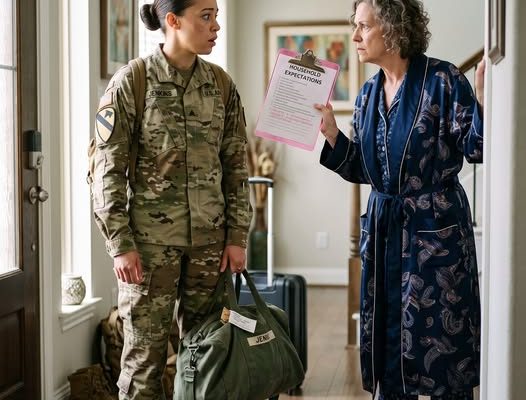
For ten years, my family excluded me from trips for being “too boring and broke.” Then I bought a Bahamas beachfront villa, and when my sister demanded to stay, I smiled: “Sorry, only interesting people are invited.”

Whenever people ask why I never join family vacations, I usually shrug and say group trips just aren’t my thing.

That explanation is easier than telling the truth.

My name is Blake.

I’m thirty-five.

And for nearly ten years, I was the person my family somehow forgot to include.

The one missing from the flight itinerary.

The one who received a cheap souvenir keychain afterward while everyone else came home with tans, photographs, and jokes I didn’t understand.

It hadn’t always been that way.

But once I stopped asking for help, stopped pretending to enjoy things I couldn’t afford, and started living more simply, the invitations slowly disappeared.

According to my family, I was too quiet.

Too broke.

Too boring.

Not worth buying another ticket for.

And for longer than I want to admit, I believed them.

At first, it didn’t hurt as much because I was barely keeping my head above water anyway.

I was freelancing in tech support, taking whatever odd work I could find, and renting a tiny one-bedroom apartment above a laundromat.

The walls were so thin I could hear conversations from the next unit.

Everything smelled faintly like detergent.

I had ambitions.

But back then, they seemed impossibly far away.

So when my sister Leah posted photos from Italy—her husband Max holding wine, their two children wearing matching linen outfits, my parents smiling over gelato—I simply tapped “like” and kept scrolling.

I told myself they would invite me next time.

They didn’t.

The moment I really understood the pattern came about three years later.

My mother was turning sixty, and the family had planned a Caribbean cruise.

All-inclusive.

Spa.

Activities for the kids.

Everything.

I didn’t hear about it from my parents.

I heard about it from my cousin Jamie.

When I casually mentioned the trip to Mom, she said,

“Oh, honey, we just assumed you wouldn’t be comfortable spending that kind of money.”

That was it.

No invitation.

No conversation.

No chance for me to decide for myself.

They had simply decided I didn’t belong.

I wish I could say I challenged her.

I didn’t.

I laughed awkwardly and said,

“No worries.”

Then I spent the week they were cruising through the Caribbean watching videos about repairing MacBooks so I could make enough money for rent.

At night, I lay awake wondering whether my family would ever see me as anything other than the unsuccessful one.

I wasn’t reckless.

I wasn’t irresponsible.

I didn’t cause drama.

I just wasn’t making much money.

Apparently, that was enough to make me invisible.

Leah was especially talented at reminding me where I stood.

She would say things like,

“It’s such a shame you never travel, Blake. You’d really benefit from seeing more of the world.”

Or,

“You should save up and take a trip sometime. It’s so good for your mental health.”

This from a woman who hadn’t worked full-time in years because Max’s income covered everything.

Leah could make an insult sound like advice.

At one Thanksgiving dinner, she pulled out her phone and showed everyone photographs from another vacation.

Then she looked at me and said,

“We did think about inviting you, but Max figured you were probably too busy with… what is it you do again? Internet stuff?”

I smiled politely.

Then I went to the kitchen.

My father followed.

“You know your sister doesn’t mean anything by it,” he told me.

“She just lives in a different world. Don’t take it personally.”

But it was personal.

Every time.

They weren’t excluding me because of logistics.

They were excluding me because they didn’t see value in having me there.

And when that judgment comes from the people who are supposed to love you without conditions, it leaves a mark.

Year after year, the pattern continued.

New destinations.

New family photos.

New explanations for why I wasn’t included.

Once, Leah became furious in the family group chat because I forgot her youngest child’s birthday.

I had been working a double shift, and my phone had died.

She ended her message with,

“Maybe if you actually showed up for your family, you’d get invited more.”

That sentence stayed with me.

So eventually, I stopped trying.

I didn’t disappear physically.

I still answered Mom’s occasional messages.

I showed up for some holidays.

I attended birthdays when I was invited.

But emotionally, I checked out.

I stopped trying to convince them I mattered.

Instead, I focused on work.

I taught myself front-end development.

Then backend systems.

Then cybersecurity.

I started freelancing for small companies.

Then startups.

Then larger clients.

Progress was painfully slow.

But it was mine.

Around year seven, things started changing.

One client referred me to another.

A travel startup I worked with suddenly exploded.

That led to more referrals.

By year nine, I had built a legitimate company.

I had employees.

A remote team.

Stable clients.

And more financial freedom than I had ever imagined.

I told no one in my family.

Not because I was planning revenge.

I simply wanted one part of my life that belonged only to me.

Something untouched by their expectations.

Then Leah posted another photograph.

She and Max were standing with their children outside a luxury villa in Santorini.

The caption said:

One last trip before school starts again. Life’s too short not to treat yourself.

Normally, I would have scrolled past.

That night, something changed.

I wasn’t jealous.

I was tired.

Tired of being underestimated.

Tired of being treated like the dull brother who had nothing interesting to offer.

So I opened my laptop.

I started browsing oceanfront homes.

First Bali.

Then Italy.

Then the Bahamas.

And eventually, I found it.

A modern two-bedroom villa directly on the beach.

Floor-to-ceiling glass.

Private sand.

Ocean stretching beyond the windows.

The price was enormous.

But for the first time in my life, enormous didn’t mean impossible.

The following week, I flew out to see it.

Standing barefoot on that beach, watching waves move toward me, I realized something.

I wasn’t thinking about Leah.

Or my parents.

Or proving anything.

I was thinking about silence.

Coffee in the morning.

Working with the sound of the ocean outside.

Peace.

Two days later, I bought it.

I told nobody.

For months, the villa remained my secret.

I furnished it slowly.

Hired local people to help maintain it.

Worked remotely whenever I stayed there.

I kept my old apartment back home too.

But the villa meant something different.

It represented everything my family had decided I would never become.

Successful.

Interesting.

Adventurous.

Independent.

And the best part was that I didn’t need them to acknowledge it.

Then Leah found out.

Of course she did.

She discovered it in the way Leah discovered most things.

By snooping.

Then pretending she had stumbled onto the information by accident.

One night, while I was deep into debugging a security project, I saw that she had left me a voicemail.

I played it.

“Blake, hey! Max’s coworker just got back from the Bahamas and says he met some guy named Blake who bought a beachfront villa and works in tech. You wouldn’t happen to be that Blake, would you? Call me.”

I stared at my computer screen.

I knew exactly what was coming next.

The following morning, she sent three messages before nine.

Blake, you didn’t tell me you bought a villa!

That’s amazing. We’re so proud of you. That must have cost a fortune.

Then:

We definitely have to visit. The kids would love it. We were already talking about somewhere tropical this summer.

That last message bothered me.

It wasn’t curiosity.

It was preparation.

I replied:

Yeah, I bought a place. Still getting settled. Hope you’re doing well.

Short.

Polite.

No invitation.

Ten minutes later, Mom called.

“Leah just told me about your place in the Bahamas. Why didn’t you tell us?”

I already knew where the conversation was headed.

“What exactly was I supposed to say?” I asked. “You’ve all been pretty clear over the years about what you think of me. I wanted something that was just mine.”

“You’re being dramatic,” she said quickly. “No one ever said you weren’t part of the family.”

“Then why was I never invited anywhere?”

“Well, money was tight.”

“For me. Not for everyone else.”

There was a pause.

Then she said,

“We’re family, Blake. I just wish you’d shared it.”

That word had started sounding cheap to me.

Family seemed to matter whenever they wanted access to something.

By that evening, the family group chat was full of congratulations.

Knew you had it in you.

Look at Mr. Secret Millionaire.

Guess somebody got lucky.

The jokes all carried the same assumption.

I was still the old Blake.

The underdog who had somehow stumbled into success.

Then Leah sent the message I had been waiting for.

We’re thinking July for the Bahamas. The kids are off school and Max can take time off. We’ll pay for our own flights, obviously. We just need somewhere to stay. Can we reserve the villa?

Not:

Would that be okay?

Not:

Would you mind?

Can we reserve it?

As though my private home were suddenly a family hotel.

I didn’t reply.

A day passed.

Then another.

On the third day, Leah called.

“Hey! You disappeared.”

“Busy.”

She laughed.

“You and your work. Anyway, the kids are really excited. I already showed them pictures and told them we might stay at Uncle Blake’s house.”

“You already told them?”

“Well, yeah. I figured it wouldn’t be a problem. You don’t even live there all year.”

I let the silence sit between us.

Then I said,

“You know what’s funny? For years, you acted like I wasn’t interesting enough to travel with. Now I own somewhere you want to visit and suddenly I matter.”

She sighed.

“Blake, don’t be like that. We love you. We just didn’t think you liked traveling.”

“Or maybe I couldn’t afford it and nobody bothered asking.”

“Why are you dragging up the past?”

“Because the past is why the answer is no.”

Silence.

“What?”

“The villa isn’t available.”

“You’re joking.”

“I’m not.”

“You’re seriously telling your nieces they can’t stay at your house?”

“You told them they could stay there. I didn’t.”

Her tone changed immediately.

“You’re being unbelievably selfish. You finally get something nice and suddenly you don’t want to share it with your family after everything we’ve done for you.”

I laughed.

“What exactly have you done for me?”

“That’s not fair.”

“You mocked me. You excluded me. You treated me like I was embarrassing because I wasn’t rich enough for you.”

She hung up.

The family reaction started almost immediately.

Mom called.

Then Dad.

Both told me to be the bigger person.

Dad said,

“Leah doesn’t mean harm. She’s just used to doing things a certain way.”

“Exactly,” I said. “She’s used to getting whatever she wants.”

Three days later, Leah escalated.

She posted a photograph online with a caption:

When your own brother owns a villa in the Bahamas and refuses to share it with family. Guess we’ll have to settle for a resort. Some people forget who loved them before they had money.

She didn’t tag me.

She didn’t need to.

The comments poured in.

That’s terrible.

Money changes people.

His loss.

Never forget where you came from.

I watched Leah rewrite the story in real time.

She was the loving sister.

I was the selfish brother who had become arrogant after finding success.

I didn’t respond.

At first.

But then her version started spreading beyond the family.

One afternoon, I walked into my regular café and noticed the barista acting strangely.

Normally, Maya joked with me.

That day she barely spoke.

Later, I saw why.

Someone from high school had commented beneath Leah’s post:

Isn’t this Blake the guy who works in tech? Always thought he was nice. Sad that success changed him.

Then someone else added that I hadn’t helped them with a website years earlier.

Suddenly, people who barely knew me were constructing an entire personality based on Leah’s version of events.

That was when I understood.

This wasn’t about the villa anymore.

Leah wanted control of the story.

She wanted to remain the generous sister while I stayed the bitter, awkward brother.

And if I refused to play that part, she would simply rewrite events until everyone believed I did.

I still didn’t respond publicly.

But silence no longer felt strong.

It felt like surrender.

Then Mom invited me to dinner.

I almost declined.

I went anyway.

Before we even reached the second course, she sighed and said,

“Blake, I really wish you’d reconsider.”

“We’re doing this now?”

“She’s your sister.”

“She’s a bully.”

“She’s family.”

I put down my glass.

“Then maybe family should stop treating me like I’m disposable.”

Mom told me Leah was embarrassed.

I corrected her.

“She’s angry because for once she can’t control me.”

Dad cleared his throat.

“You’ve changed.”

That hurt more than I expected.

“You mean I finally started defending myself?”

“No,” he said. “You used to be kind. Humble. Now you’re cold.”

I left that evening without shouting.

Without slamming the door.

But something inside me changed.

For years, I thought becoming successful would finally make them respect me.

Instead, I realized they would only approve of me if I continued accepting the role they had assigned me.

So I stopped responding.

Stopped answering calls.

Stopped explaining myself.

And poured myself back into work.

I expanded my company.

Hired more people.

Rebuilt my website.

Improved systems.

Worked because it was the only place where I still felt completely in control.

Then I received a message from a woman named Alyssa.

She was a travel writer.

She had stayed at a neighboring villa in the Bahamas and heard about my property through Louise, the local caretaker I employed.

She wanted to feature the villa.

At first, I hesitated.

The last thing I wanted was more attention.

But she wasn’t trying to expose anything.

She simply liked the place and wanted to know the story behind it.

So I agreed.

She flew out.

Spent several days photographing the villa.

Interviewed me about my work.

My journey.

Why I chose the Bahamas.

I never mentioned Leah.

I didn’t mention the family conflict.

The article focused on rebuilding quietly.

She titled it:

The Quiet Builder: How One Man Created His Dream Home by Saying No to the Noise.

The piece spread.

Not explosively.

But enough.

Tech communities shared it.

Travel pages shared it.

People began reaching out.

Former classmates messaged me.

Clients mentioned the article during meetings.

Even Maya printed a copy and taped it near the register at the café.

For the first time, people were seeing a version of me that hadn’t been written by Leah.

And that changed something.

Maybe revenge wasn’t necessary.

Maybe living well without apologizing was enough.

Then Leah texted.

Nice article. Didn’t realize we were pretending the rest of the family is just noise now.

Another message followed.

Dad says you’re making us look bad.

Then:

Guess you’re too famous to come to his birthday.

This time, I replied.

The villa isn’t a reward. It’s a boundary. I didn’t create the distance between us. I just stopped pretending it didn’t hurt.

She didn’t answer.

A few months later, I began living at the villa most of the time.

What was supposed to be temporary became something I didn’t want to leave.

I started running again.

Reading again.

Cooking.

Learning drone photography.

Waking up without guilt-filled texts was surprisingly healing.

Then Leah crossed a line I never expected.

One morning, Louise called.

His voice sounded uneasy.

“Mr. Blake, your sister came here.”

I sat up.

“What?”

“She arrived with her husband. They said you told them they could stay.”

I went completely still.

“They flew to the Bahamas?”

“Yes. She had screenshots.”

My stomach tightened.

Louise explained that Leah had shown him printed messages supposedly from me.

Of course you can come anytime.

Make yourselves at home.

Your vacation too.

The messages were fake.

Even the wording didn’t sound like me.

Louise refused to let them through the gate.

Max yelled.

Leah argued.

Eventually, they left.

When Louise sent me photographs of the screenshots, something inside me finally snapped.

Leah had crossed an ocean and tried to enter my private home using fabricated messages.

This was no longer about being inconsiderate.

She was trying to force herself into a part of my life I had explicitly closed to her.

I didn’t want revenge.

I wanted truth.

I wanted my name back.

So I contacted Alyssa again.

This time, I told her I wanted to write something more personal.

She warned me.

“This could create more conflict.”

“The conflict already exists.”

Together, we developed a follow-up story.

Not an attack on Leah.

A story about being the family scapegoat.

Being left behind.

Being treated as less important because you didn’t fit the family image.

I shared old emails.

Messages.

Voicemails.

Examples of the small exclusions that had accumulated over years.

At the same time, I strengthened the villa’s privacy.

Louise and I created a formal guest approval system.

No one entered without authorization.

The gate code changed.

Security cameras were updated.

Louise joked that I should build a moat.

I told him the gate would be enough.

I also built a simple website for the property.

I named the villa Casa Horizonte.

The site included photos.

Information about the home.

Sustainability features.

And a short personal essay titled:

For the Ones They Leave Behind.

The central message was simple.

The best response to exclusion isn’t retaliation.

It’s refusing to disappear.

Alyssa’s follow-up article was published soon after.

Its title:

Rewriting the Role: What Happens When the Black Sheep Builds a Castle?

It wasn’t sensational.

It was reflective.

It explored family power, reputation, and what happens when someone stops accepting the role others assigned them.

One quote from me received particular attention:

“You can only stay invisible for so long before you either disappear completely or finally speak.”

Within two days, Leah messaged me.

You’re making me look like a monster. What is wrong with you?

I didn’t answer.

That weekend, Louise called again.

“She came back.”

“Leah?”

“Alone this time.”

He told me she had stood outside the gate staring toward the villa.

She didn’t argue.

Didn’t shout.

Just stood there.

I didn’t ask what she looked like.

By then, the villa wasn’t really the point.

She couldn’t enter my space anymore.

She couldn’t twist access into entitlement.

The boundary existed whether she liked it or not.

Three days later, she sent one final message.

So this is what you wanted? To humiliate me and make yourself the victim? Congratulations, Blake. You win.

There was still no apology.

No acknowledgment.

Only blame.

And strangely, it didn’t hurt anymore.

I never replied.

The article continued spreading.

People discussed it online.

Podcasts referenced it.

Therapists and writers shared it when talking about family scapegoating and boundaries.

Emails started arriving.

Some from strangers.

Some from relatives.

One cousin wrote:

I’m sorry I never stood up for you. I didn’t understand what was happening.

Another aunt said:

The villa is beautiful, but your peace seems even more valuable. If we ever reconnect, I hope it can happen on your terms.

That phrase stayed with me.

On my terms.

For most of my life, every family interaction happened on theirs.

Their rules.

Their invitations.

Their version of me.

Now that had changed.

Then something happened that surprised me.

Leah and Max separated.

I didn’t hear it directly from either of them.

The news slowly filtered through relatives.

Apparently, Max had grown exhausted by Leah’s obsession with appearances, competition, and control.

Someone told me he had finally said to her,

“If this is how you treat your own brother, how long before you start treating me the same way?”

I didn’t celebrate.

I didn’t need to.

The situation had collapsed without my involvement.

Later that summer, Dad called.

His voice sounded different.

“I read your story,” he said.

I waited.

“I didn’t know how much of that you went through.”

Silence.

Then he added,

“I should have known.”

For once, he didn’t defend Leah.

Didn’t tell me to let things go.

Didn’t ask me to keep the peace.

He simply admitted it.

“Thank you for saying that,” I replied.

“I don’t expect everything to go back to normal,” he said. “But I’d like to be in your life again. Not as a mediator. Not as someone trying to fix things. Just as your dad.”

I told him I would think about it.

And I meant it.

Some relationships can be rebuilt.

But only after the old version is allowed to end.

There was one final chapter.

A documentary channel reached out after reading the articles.

They wanted to film a short piece about the villa and my story.

At first, I refused.

I had no interest in becoming publicly recognizable.

Then I thought about every quiet person who had been treated like the disposable sibling.

Every child who sat at dinner while another sibling was praised.

Every adult who had been told they were too boring, too poor, too awkward, too different to belong.

So I agreed.

The crew filmed for two days.

Walking along the beach.

Working at my laptop.

Cooking.

Flying the drone.

Nothing dramatic.

Just my life.

During the final interview, we sat outside as the sun dropped toward the ocean.

The interviewer asked,

“If your sister were watching this, what would you want her to understand?”

I thought for a moment.

Then I said,

“Peace is something people earn access to. And when someone repeatedly disrupts yours, you don’t owe them unlimited chances to come back in.”

That clip spread widely.

People shared their own stories beneath it.

Stories about siblings.

Parents.

Family roles.

Boundaries.

Leah never contacted me again.

Not after the documentary.

Not after the original article reached a much larger audience.

Not after I appeared on a podcast about rebuilding life after exclusion.

Maybe she finally had nothing left to say.

Or maybe she had simply run out of versions of me she could control.

These days, I still spend most of my time at the villa.

I still run my company.

I swim in the mornings.

Walk the beach in the evenings.

Sometimes friends visit.

Sometimes I work late.

Sometimes I do absolutely nothing.

And every once in a while, I remember the message that started the entire conflict.

We’re thinking July for the Bahamas trip.

It still makes me smile.

Because the answer never really changed.

The villa was never closed to family because I hated them.

It was closed to anyone who believed access to my life was something they were entitled to.

I didn’t push Leah out of my world.

I simply stopped holding the door open while she treated me like I didn’t belong in hers.

For ten years, my family excluded me from trips for being “too boring and broke.” Then I bought a Bahamas beachfront villa, and when my sister demanded to stay, I smiled: “Sorry, only interesting people are invited.” Read More

After being excluded from family vacations for 10 years for being “too boring and broke,” I bought a beachfront villa in the Bahamas. When my sister demanded a stay, I smiled and replied, “Sorry, only interesting people are invited.”

Whenever people ask why I never join family vacations, I usually shrug and say group trips just aren’t my thing.

That explanation is easier than telling the truth.

My name is Blake.

I’m thirty-five.

And for nearly ten years, I was the person my family somehow forgot to include.

The one missing from the flight itinerary.

The one who received a cheap souvenir keychain afterward while everyone else came home with tans, photographs, and jokes I didn’t understand.

It hadn’t always been that way.

But once I stopped asking for help, stopped pretending to enjoy things I couldn’t afford, and started living more simply, the invitations slowly disappeared.

According to my family, I was too quiet.

Too broke.

Too boring.

Not worth buying another ticket for.

And for longer than I want to admit, I believed them.

At first, it didn’t hurt as much because I was barely keeping my head above water anyway.

I was freelancing in tech support, taking whatever odd work I could find, and renting a tiny one-bedroom apartment above a laundromat.

The walls were so thin I could hear conversations from the next unit.

Everything smelled faintly like detergent.

I had ambitions.

But back then, they seemed impossibly far away.

So when my sister Leah posted photos from Italy—her husband Max holding wine, their two children wearing matching linen outfits, my parents smiling over gelato—I simply tapped “like” and kept scrolling.

I told myself they would invite me next time.

They didn’t.

The moment I really understood the pattern came about three years later.

My mother was turning sixty, and the family had planned a Caribbean cruise.

All-inclusive.

Spa.

Activities for the kids.

Everything.

I didn’t hear about it from my parents.

I heard about it from my cousin Jamie.

When I casually mentioned the trip to Mom, she said,

“Oh, honey, we just assumed you wouldn’t be comfortable spending that kind of money.”

That was it.

No invitation.

No conversation.

No chance for me to decide for myself.

They had simply decided I didn’t belong.

I wish I could say I challenged her.

I didn’t.

I laughed awkwardly and said,

“No worries.”

Then I spent the week they were cruising through the Caribbean watching videos about repairing MacBooks so I could make enough money for rent.

At night, I lay awake wondering whether my family would ever see me as anything other than the unsuccessful one.

I wasn’t reckless.

I wasn’t irresponsible.

I didn’t cause drama.

I just wasn’t making much money.

Apparently, that was enough to make me invisible.

Leah was especially talented at reminding me where I stood.

She would say things like,

“It’s such a shame you never travel, Blake. You’d really benefit from seeing more of the world.”

Or,

“You should save up and take a trip sometime. It’s so good for your mental health.”

This from a woman who hadn’t worked full-time in years because Max’s income covered everything.

Leah could make an insult sound like advice.

At one Thanksgiving dinner, she pulled out her phone and showed everyone photographs from another vacation.

Then she looked at me and said,

“We did think about inviting you, but Max figured you were probably too busy with… what is it you do again? Internet stuff?”

I smiled politely.

Then I went to the kitchen.

My father followed.

“You know your sister doesn’t mean anything by it,” he told me.

“She just lives in a different world. Don’t take it personally.”

But it was personal.

Every time.

They weren’t excluding me because of logistics.

They were excluding me because they didn’t see value in having me there.

And when that judgment comes from the people who are supposed to love you without conditions, it leaves a mark.

Year after year, the pattern continued.

New destinations.

New family photos.

New explanations for why I wasn’t included.

Once, Leah became furious in the family group chat because I forgot her youngest child’s birthday.

I had been working a double shift, and my phone had died.

She ended her message with,

“Maybe if you actually showed up for your family, you’d get invited more.”

That sentence stayed with me.

So eventually, I stopped trying.

I didn’t disappear physically.

I still answered Mom’s occasional messages.

I showed up for some holidays.

I attended birthdays when I was invited.

But emotionally, I checked out.

I stopped trying to convince them I mattered.

Instead, I focused on work.

I taught myself front-end development.

Then backend systems.

Then cybersecurity.

I started freelancing for small companies.

Then startups.

Then larger clients.

Progress was painfully slow.

But it was mine.

Around year seven, things started changing.

One client referred me to another.

A travel startup I worked with suddenly exploded.

That led to more referrals.

By year nine, I had built a legitimate company.

I had employees.

A remote team.

Stable clients.

And more financial freedom than I had ever imagined.

I told no one in my family.

Not because I was planning revenge.

I simply wanted one part of my life that belonged only to me.

Something untouched by their expectations.

Then Leah posted another photograph.

She and Max were standing with their children outside a luxury villa in Santorini.

The caption said:

One last trip before school starts again. Life’s too short not to treat yourself.

Normally, I would have scrolled past.

That night, something changed.

I wasn’t jealous.

I was tired.

Tired of being underestimated.

Tired of being treated like the dull brother who had nothing interesting to offer.

So I opened my laptop.

I started browsing oceanfront homes.

First Bali.

Then Italy.

Then the Bahamas.

And eventually, I found it.

A modern two-bedroom villa directly on the beach.

Floor-to-ceiling glass.

Private sand.

Ocean stretching beyond the windows.

The price was enormous.

But for the first time in my life, enormous didn’t mean impossible.

The following week, I flew out to see it.

Standing barefoot on that beach, watching waves move toward me, I realized something.

I wasn’t thinking about Leah.

Or my parents.

Or proving anything.

I was thinking about silence.

Coffee in the morning.

Working with the sound of the ocean outside.

Peace.

Two days later, I bought it.

I told nobody.

For months, the villa remained my secret.

I furnished it slowly.

Hired local people to help maintain it.

Worked remotely whenever I stayed there.

I kept my old apartment back home too.

But the villa meant something different.

It represented everything my family had decided I would never become.

Successful.

Interesting.

Adventurous.

Independent.

And the best part was that I didn’t need them to acknowledge it.

Then Leah found out.

Of course she did.

She discovered it in the way Leah discovered most things.

By snooping.

Then pretending she had stumbled onto the information by accident.

One night, while I was deep into debugging a security project, I saw that she had left me a voicemail.

I played it.

“Blake, hey! Max’s coworker just got back from the Bahamas and says he met some guy named Blake who bought a beachfront villa and works in tech. You wouldn’t happen to be that Blake, would you? Call me.”

I stared at my computer screen.

I knew exactly what was coming next.

The following morning, she sent three messages before nine.

Blake, you didn’t tell me you bought a villa!

That’s amazing. We’re so proud of you. That must have cost a fortune.

Then:

We definitely have to visit. The kids would love it. We were already talking about somewhere tropical this summer.

That last message bothered me.

It wasn’t curiosity.

It was preparation.

I replied:

Yeah, I bought a place. Still getting settled. Hope you’re doing well.

Short.

Polite.

No invitation.

Ten minutes later, Mom called.

“Leah just told me about your place in the Bahamas. Why didn’t you tell us?”

I already knew where the conversation was headed.

“What exactly was I supposed to say?” I asked. “You’ve all been pretty clear over the years about what you think of me. I wanted something that was just mine.”

“You’re being dramatic,” she said quickly. “No one ever said you weren’t part of the family.”

“Then why was I never invited anywhere?”

“Well, money was tight.”

“For me. Not for everyone else.”

There was a pause.

Then she said,

“We’re family, Blake. I just wish you’d shared it.”

That word had started sounding cheap to me.

Family seemed to matter whenever they wanted access to something.

By that evening, the family group chat was full of congratulations.

Knew you had it in you.

Look at Mr. Secret Millionaire.

Guess somebody got lucky.

The jokes all carried the same assumption.

I was still the old Blake.

The underdog who had somehow stumbled into success.

Then Leah sent the message I had been waiting for.

We’re thinking July for the Bahamas. The kids are off school and Max can take time off. We’ll pay for our own flights, obviously. We just need somewhere to stay. Can we reserve the villa?

Not:

Would that be okay?

Not:

Would you mind?

Can we reserve it?

As though my private home were suddenly a family hotel.

I didn’t reply.

A day passed.

Then another.

On the third day, Leah called.

“Hey! You disappeared.”

“Busy.”

She laughed.

“You and your work. Anyway, the kids are really excited. I already showed them pictures and told them we might stay at Uncle Blake’s house.”

“You already told them?”

“Well, yeah. I figured it wouldn’t be a problem. You don’t even live there all year.”

I let the silence sit between us.

Then I said,

“You know what’s funny? For years, you acted like I wasn’t interesting enough to travel with. Now I own somewhere you want to visit and suddenly I matter.”

She sighed.

“Blake, don’t be like that. We love you. We just didn’t think you liked traveling.”

“Or maybe I couldn’t afford it and nobody bothered asking.”

“Why are you dragging up the past?”

“Because the past is why the answer is no.”

Silence.

“What?”

“The villa isn’t available.”

“You’re joking.”

“I’m not.”

“You’re seriously telling your nieces they can’t stay at your house?”

“You told them they could stay there. I didn’t.”

Her tone changed immediately.

“You’re being unbelievably selfish. You finally get something nice and suddenly you don’t want to share it with your family after everything we’ve done for you.”

I laughed.

“What exactly have you done for me?”

“That’s not fair.”

“You mocked me. You excluded me. You treated me like I was embarrassing because I wasn’t rich enough for you.”

She hung up.

The family reaction started almost immediately.

Mom called.

Then Dad.

Both told me to be the bigger person.

Dad said,

“Leah doesn’t mean harm. She’s just used to doing things a certain way.”

“Exactly,” I said. “She’s used to getting whatever she wants.”

Three days later, Leah escalated.

She posted a photograph online with a caption:

When your own brother owns a villa in the Bahamas and refuses to share it with family. Guess we’ll have to settle for a resort. Some people forget who loved them before they had money.

She didn’t tag me.

She didn’t need to.

The comments poured in.

That’s terrible.

Money changes people.

His loss.

Never forget where you came from.

I watched Leah rewrite the story in real time.

She was the loving sister.

I was the selfish brother who had become arrogant after finding success.

I didn’t respond.

At first.

But then her version started spreading beyond the family.

One afternoon, I walked into my regular café and noticed the barista acting strangely.

Normally, Maya joked with me.

That day she barely spoke.

Later, I saw why.

Someone from high school had commented beneath Leah’s post:

Isn’t this Blake the guy who works in tech? Always thought he was nice. Sad that success changed him.

Then someone else added that I hadn’t helped them with a website years earlier.

Suddenly, people who barely knew me were constructing an entire personality based on Leah’s version of events.

That was when I understood.

This wasn’t about the villa anymore.

Leah wanted control of the story.

She wanted to remain the generous sister while I stayed the bitter, awkward brother.

And if I refused to play that part, she would simply rewrite events until everyone believed I did.

I still didn’t respond publicly.

But silence no longer felt strong.

It felt like surrender.

Then Mom invited me to dinner.

I almost declined.

I went anyway.

Before we even reached the second course, she sighed and said,

“Blake, I really wish you’d reconsider.”

“We’re doing this now?”

“She’s your sister.”

“She’s a bully.”

“She’s family.”

I put down my glass.

“Then maybe family should stop treating me like I’m disposable.”

Mom told me Leah was embarrassed.

I corrected her.

“She’s angry because for once she can’t control me.”

Dad cleared his throat.

“You’ve changed.”

That hurt more than I expected.

“You mean I finally started defending myself?”

“No,” he said. “You used to be kind. Humble. Now you’re cold.”

I left that evening without shouting.

Without slamming the door.

But something inside me changed.

For years, I thought becoming successful would finally make them respect me.

Instead, I realized they would only approve of me if I continued accepting the role they had assigned me.

So I stopped responding.

Stopped answering calls.

Stopped explaining myself.

And poured myself back into work.

I expanded my company.

Hired more people.

Rebuilt my website.

Improved systems.

Worked because it was the only place where I still felt completely in control.

Then I received a message from a woman named Alyssa.

She was a travel writer.

She had stayed at a neighboring villa in the Bahamas and heard about my property through Louise, the local caretaker I employed.

She wanted to feature the villa.

At first, I hesitated.

The last thing I wanted was more attention.

But she wasn’t trying to expose anything.

She simply liked the place and wanted to know the story behind it.

So I agreed.

She flew out.

Spent several days photographing the villa.

Interviewed me about my work.

My journey.

Why I chose the Bahamas.

I never mentioned Leah.

I didn’t mention the family conflict.

The article focused on rebuilding quietly.

She titled it:

The Quiet Builder: How One Man Created His Dream Home by Saying No to the Noise.

The piece spread.

Not explosively.

But enough.

Tech communities shared it.

Travel pages shared it.

People began reaching out.

Former classmates messaged me.

Clients mentioned the article during meetings.

Even Maya printed a copy and taped it near the register at the café.

For the first time, people were seeing a version of me that hadn’t been written by Leah.

And that changed something.

Maybe revenge wasn’t necessary.

Maybe living well without apologizing was enough.

Then Leah texted.

Nice article. Didn’t realize we were pretending the rest of the family is just noise now.

Another message followed.

Dad says you’re making us look bad.

Then:

Guess you’re too famous to come to his birthday.

This time, I replied.

The villa isn’t a reward. It’s a boundary. I didn’t create the distance between us. I just stopped pretending it didn’t hurt.

She didn’t answer.

A few months later, I began living at the villa most of the time.

What was supposed to be temporary became something I didn’t want to leave.

I started running again.

Reading again.

Cooking.

Learning drone photography.

Waking up without guilt-filled texts was surprisingly healing.

Then Leah crossed a line I never expected.

One morning, Louise called.

His voice sounded uneasy.

“Mr. Blake, your sister came here.”

I sat up.

“What?”

“She arrived with her husband. They said you told them they could stay.”

I went completely still.

“They flew to the Bahamas?”

“Yes. She had screenshots.”

My stomach tightened.

Louise explained that Leah had shown him printed messages supposedly from me.

Of course you can come anytime.

Make yourselves at home.

Your vacation too.

The messages were fake.

Even the wording didn’t sound like me.

Louise refused to let them through the gate.

Max yelled.

Leah argued.

Eventually, they left.

When Louise sent me photographs of the screenshots, something inside me finally snapped.

Leah had crossed an ocean and tried to enter my private home using fabricated messages.

This was no longer about being inconsiderate.

She was trying to force herself into a part of my life I had explicitly closed to her.

I didn’t want revenge.

I wanted truth.

I wanted my name back.

So I contacted Alyssa again.

This time, I told her I wanted to write something more personal.

She warned me.

“This could create more conflict.”

“The conflict already exists.”

Together, we developed a follow-up story.

Not an attack on Leah.

A story about being the family scapegoat.

Being left behind.

Being treated as less important because you didn’t fit the family image.

I shared old emails.

Messages.

Voicemails.

Examples of the small exclusions that had accumulated over years.

At the same time, I strengthened the villa’s privacy.

Louise and I created a formal guest approval system.

No one entered without authorization.

The gate code changed.

Security cameras were updated.

Louise joked that I should build a moat.

I told him the gate would be enough.

I also built a simple website for the property.

I named the villa Casa Horizonte.

The site included photos.

Information about the home.

Sustainability features.

And a short personal essay titled:

For the Ones They Leave Behind.

The central message was simple.

The best response to exclusion isn’t retaliation.

It’s refusing to disappear.

Alyssa’s follow-up article was published soon after.

Its title:

Rewriting the Role: What Happens When the Black Sheep Builds a Castle?

It wasn’t sensational.

It was reflective.

It explored family power, reputation, and what happens when someone stops accepting the role others assigned them.

One quote from me received particular attention:

“You can only stay invisible for so long before you either disappear completely or finally speak.”

Within two days, Leah messaged me.

You’re making me look like a monster. What is wrong with you?

I didn’t answer.

That weekend, Louise called again.

“She came back.”

“Leah?”

“Alone this time.”

He told me she had stood outside the gate staring toward the villa.

She didn’t argue.

Didn’t shout.

Just stood there.

I didn’t ask what she looked like.

By then, the villa wasn’t really the point.

She couldn’t enter my space anymore.

She couldn’t twist access into entitlement.

The boundary existed whether she liked it or not.

Three days later, she sent one final message.

So this is what you wanted? To humiliate me and make yourself the victim? Congratulations, Blake. You win.

There was still no apology.

No acknowledgment.

Only blame.

And strangely, it didn’t hurt anymore.

I never replied.

The article continued spreading.

People discussed it online.

Podcasts referenced it.

Therapists and writers shared it when talking about family scapegoating and boundaries.

Emails started arriving.

Some from strangers.

Some from relatives.

One cousin wrote:

I’m sorry I never stood up for you. I didn’t understand what was happening.

Another aunt said:

The villa is beautiful, but your peace seems even more valuable. If we ever reconnect, I hope it can happen on your terms.

That phrase stayed with me.

On my terms.

For most of my life, every family interaction happened on theirs.

Their rules.

Their invitations.

Their version of me.

Now that had changed.

Then something happened that surprised me.

Leah and Max separated.

I didn’t hear it directly from either of them.

The news slowly filtered through relatives.

Apparently, Max had grown exhausted by Leah’s obsession with appearances, competition, and control.

Someone told me he had finally said to her,

“If this is how you treat your own brother, how long before you start treating me the same way?”

I didn’t celebrate.

I didn’t need to.

The situation had collapsed without my involvement.

Later that summer, Dad called.

His voice sounded different.

“I read your story,” he said.

I waited.

“I didn’t know how much of that you went through.”

Silence.

Then he added,

“I should have known.”

For once, he didn’t defend Leah.

Didn’t tell me to let things go.

Didn’t ask me to keep the peace.

He simply admitted it.

“Thank you for saying that,” I replied.

“I don’t expect everything to go back to normal,” he said. “But I’d like to be in your life again. Not as a mediator. Not as someone trying to fix things. Just as your dad.”

I told him I would think about it.

And I meant it.

Some relationships can be rebuilt.

But only after the old version is allowed to end.

There was one final chapter.

A documentary channel reached out after reading the articles.

They wanted to film a short piece about the villa and my story.

At first, I refused.

I had no interest in becoming publicly recognizable.

Then I thought about every quiet person who had been treated like the disposable sibling.

Every child who sat at dinner while another sibling was praised.

Every adult who had been told they were too boring, too poor, too awkward, too different to belong.

So I agreed.

The crew filmed for two days.

Walking along the beach.

Working at my laptop.

Cooking.

Flying the drone.

Nothing dramatic.

Just my life.

During the final interview, we sat outside as the sun dropped toward the ocean.

The interviewer asked,

“If your sister were watching this, what would you want her to understand?”

I thought for a moment.

Then I said,

“Peace is something people earn access to. And when someone repeatedly disrupts yours, you don’t owe them unlimited chances to come back in.”

That clip spread widely.

People shared their own stories beneath it.

Stories about siblings.

Parents.

Family roles.

Boundaries.

Leah never contacted me again.

Not after the documentary.

Not after the original article reached a much larger audience.

Not after I appeared on a podcast about rebuilding life after exclusion.

Maybe she finally had nothing left to say.

Or maybe she had simply run out of versions of me she could control.

These days, I still spend most of my time at the villa.

I still run my company.

I swim in the mornings.

Walk the beach in the evenings.

Sometimes friends visit.

Sometimes I work late.

Sometimes I do absolutely nothing.

And every once in a while, I remember the message that started the entire conflict.

We’re thinking July for the Bahamas trip.

It still makes me smile.

Because the answer never really changed.

The villa was never closed to family because I hated them.

It was closed to anyone who believed access to my life was something they were entitled to.

I didn’t push Leah out of my world.

I simply stopped holding the door open while she treated me like I didn’t belong in hers.

After being excluded from family vacations for 10 years for being “too boring and broke,” I bought a beachfront villa in the Bahamas. When my sister demanded a stay, I smiled and replied, “Sorry, only interesting people are invited.” Read More

After a decade of being excluded from family holidays for being “too boring and broke,” I purchased a Bahamas beachfront villa. When my sister demanded to stay, I smiled: “Sorry, only interesting people are invited.”

Whenever people ask why I never join family vacations, I usually shrug and say group trips just aren’t my thing.

That explanation is easier than telling the truth.

My name is Blake.

I’m thirty-five.

And for nearly ten years, I was the person my family somehow forgot to include.

The one missing from the flight itinerary.

The one who received a cheap souvenir keychain afterward while everyone else came home with tans, photographs, and jokes I didn’t understand.

It hadn’t always been that way.

But once I stopped asking for help, stopped pretending to enjoy things I couldn’t afford, and started living more simply, the invitations slowly disappeared.

According to my family, I was too quiet.

Too broke.

Too boring.

Not worth buying another ticket for.

And for longer than I want to admit, I believed them.

At first, it didn’t hurt as much because I was barely keeping my head above water anyway.

I was freelancing in tech support, taking whatever odd work I could find, and renting a tiny one-bedroom apartment above a laundromat.

The walls were so thin I could hear conversations from the next unit.

Everything smelled faintly like detergent.

I had ambitions.

But back then, they seemed impossibly far away.

So when my sister Leah posted photos from Italy—her husband Max holding wine, their two children wearing matching linen outfits, my parents smiling over gelato—I simply tapped “like” and kept scrolling.

I told myself they would invite me next time.

They didn’t.

The moment I really understood the pattern came about three years later.

My mother was turning sixty, and the family had planned a Caribbean cruise.

All-inclusive.

Spa.

Activities for the kids.

Everything.

I didn’t hear about it from my parents.

I heard about it from my cousin Jamie.

When I casually mentioned the trip to Mom, she said,

“Oh, honey, we just assumed you wouldn’t be comfortable spending that kind of money.”

That was it.

No invitation.

No conversation.

No chance for me to decide for myself.

They had simply decided I didn’t belong.

I wish I could say I challenged her.

I didn’t.

I laughed awkwardly and said,

“No worries.”

Then I spent the week they were cruising through the Caribbean watching videos about repairing MacBooks so I could make enough money for rent.

At night, I lay awake wondering whether my family would ever see me as anything other than the unsuccessful one.

I wasn’t reckless.

I wasn’t irresponsible.

I didn’t cause drama.

I just wasn’t making much money.

Apparently, that was enough to make me invisible.

Leah was especially talented at reminding me where I stood.

She would say things like,

“It’s such a shame you never travel, Blake. You’d really benefit from seeing more of the world.”

Or,

“You should save up and take a trip sometime. It’s so good for your mental health.”

This from a woman who hadn’t worked full-time in years because Max’s income covered everything.

Leah could make an insult sound like advice.

At one Thanksgiving dinner, she pulled out her phone and showed everyone photographs from another vacation.

Then she looked at me and said,

“We did think about inviting you, but Max figured you were probably too busy with… what is it you do again? Internet stuff?”

I smiled politely.

Then I went to the kitchen.

My father followed.

“You know your sister doesn’t mean anything by it,” he told me.

“She just lives in a different world. Don’t take it personally.”

But it was personal.

Every time.

They weren’t excluding me because of logistics.

They were excluding me because they didn’t see value in having me there.

And when that judgment comes from the people who are supposed to love you without conditions, it leaves a mark.

Year after year, the pattern continued.

New destinations.

New family photos.

New explanations for why I wasn’t included.

Once, Leah became furious in the family group chat because I forgot her youngest child’s birthday.

I had been working a double shift, and my phone had died.

She ended her message with,

“Maybe if you actually showed up for your family, you’d get invited more.”

That sentence stayed with me.

So eventually, I stopped trying.

I didn’t disappear physically.

I still answered Mom’s occasional messages.

I showed up for some holidays.

I attended birthdays when I was invited.

But emotionally, I checked out.

I stopped trying to convince them I mattered.

Instead, I focused on work.

I taught myself front-end development.

Then backend systems.

Then cybersecurity.

I started freelancing for small companies.

Then startups.

Then larger clients.

Progress was painfully slow.

But it was mine.

Around year seven, things started changing.

One client referred me to another.

A travel startup I worked with suddenly exploded.

That led to more referrals.

By year nine, I had built a legitimate company.

I had employees.

A remote team.

Stable clients.

And more financial freedom than I had ever imagined.

I told no one in my family.

Not because I was planning revenge.

I simply wanted one part of my life that belonged only to me.

Something untouched by their expectations.

Then Leah posted another photograph.

She and Max were standing with their children outside a luxury villa in Santorini.

The caption said:

One last trip before school starts again. Life’s too short not to treat yourself.

Normally, I would have scrolled past.

That night, something changed.

I wasn’t jealous.

I was tired.

Tired of being underestimated.

Tired of being treated like the dull brother who had nothing interesting to offer.

So I opened my laptop.

I started browsing oceanfront homes.

First Bali.

Then Italy.

Then the Bahamas.

And eventually, I found it.

A modern two-bedroom villa directly on the beach.

Floor-to-ceiling glass.

Private sand.

Ocean stretching beyond the windows.

The price was enormous.

But for the first time in my life, enormous didn’t mean impossible.

The following week, I flew out to see it.

Standing barefoot on that beach, watching waves move toward me, I realized something.

I wasn’t thinking about Leah.

Or my parents.

Or proving anything.

I was thinking about silence.

Coffee in the morning.

Working with the sound of the ocean outside.

Peace.

Two days later, I bought it.

I told nobody.

For months, the villa remained my secret.

I furnished it slowly.

Hired local people to help maintain it.

Worked remotely whenever I stayed there.

I kept my old apartment back home too.

But the villa meant something different.

It represented everything my family had decided I would never become.

Successful.

Interesting.

Adventurous.

Independent.

And the best part was that I didn’t need them to acknowledge it.

Then Leah found out.

Of course she did.

She discovered it in the way Leah discovered most things.

By snooping.

Then pretending she had stumbled onto the information by accident.

One night, while I was deep into debugging a security project, I saw that she had left me a voicemail.

I played it.

“Blake, hey! Max’s coworker just got back from the Bahamas and says he met some guy named Blake who bought a beachfront villa and works in tech. You wouldn’t happen to be that Blake, would you? Call me.”

I stared at my computer screen.

I knew exactly what was coming next.

The following morning, she sent three messages before nine.

Blake, you didn’t tell me you bought a villa!

That’s amazing. We’re so proud of you. That must have cost a fortune.

Then:

We definitely have to visit. The kids would love it. We were already talking about somewhere tropical this summer.

That last message bothered me.

It wasn’t curiosity.

It was preparation.

I replied:

Yeah, I bought a place. Still getting settled. Hope you’re doing well.

Short.

Polite.

No invitation.

Ten minutes later, Mom called.

“Leah just told me about your place in the Bahamas. Why didn’t you tell us?”

I already knew where the conversation was headed.

“What exactly was I supposed to say?” I asked. “You’ve all been pretty clear over the years about what you think of me. I wanted something that was just mine.”

“You’re being dramatic,” she said quickly. “No one ever said you weren’t part of the family.”

“Then why was I never invited anywhere?”

“Well, money was tight.”

“For me. Not for everyone else.”

There was a pause.

Then she said,

“We’re family, Blake. I just wish you’d shared it.”

That word had started sounding cheap to me.

Family seemed to matter whenever they wanted access to something.

By that evening, the family group chat was full of congratulations.

Knew you had it in you.

Look at Mr. Secret Millionaire.

Guess somebody got lucky.

The jokes all carried the same assumption.

I was still the old Blake.

The underdog who had somehow stumbled into success.

Then Leah sent the message I had been waiting for.

We’re thinking July for the Bahamas. The kids are off school and Max can take time off. We’ll pay for our own flights, obviously. We just need somewhere to stay. Can we reserve the villa?

Not:

Would that be okay?

Not:

Would you mind?

Can we reserve it?

As though my private home were suddenly a family hotel.

I didn’t reply.

A day passed.

Then another.

On the third day, Leah called.

“Hey! You disappeared.”

“Busy.”

She laughed.

“You and your work. Anyway, the kids are really excited. I already showed them pictures and told them we might stay at Uncle Blake’s house.”

“You already told them?”

“Well, yeah. I figured it wouldn’t be a problem. You don’t even live there all year.”

I let the silence sit between us.

Then I said,

“You know what’s funny? For years, you acted like I wasn’t interesting enough to travel with. Now I own somewhere you want to visit and suddenly I matter.”

She sighed.

“Blake, don’t be like that. We love you. We just didn’t think you liked traveling.”

“Or maybe I couldn’t afford it and nobody bothered asking.”

“Why are you dragging up the past?”

“Because the past is why the answer is no.”

Silence.

“What?”

“The villa isn’t available.”

“You’re joking.”

“I’m not.”

“You’re seriously telling your nieces they can’t stay at your house?”

“You told them they could stay there. I didn’t.”

Her tone changed immediately.

“You’re being unbelievably selfish. You finally get something nice and suddenly you don’t want to share it with your family after everything we’ve done for you.”

I laughed.

“What exactly have you done for me?”

“That’s not fair.”

“You mocked me. You excluded me. You treated me like I was embarrassing because I wasn’t rich enough for you.”

She hung up.

The family reaction started almost immediately.

Mom called.

Then Dad.

Both told me to be the bigger person.

Dad said,

“Leah doesn’t mean harm. She’s just used to doing things a certain way.”

“Exactly,” I said. “She’s used to getting whatever she wants.”

Three days later, Leah escalated.

She posted a photograph online with a caption:

When your own brother owns a villa in the Bahamas and refuses to share it with family. Guess we’ll have to settle for a resort. Some people forget who loved them before they had money.

She didn’t tag me.

She didn’t need to.

The comments poured in.

That’s terrible.

Money changes people.

His loss.

Never forget where you came from.

I watched Leah rewrite the story in real time.

She was the loving sister.

I was the selfish brother who had become arrogant after finding success.

I didn’t respond.

At first.

But then her version started spreading beyond the family.

One afternoon, I walked into my regular café and noticed the barista acting strangely.

Normally, Maya joked with me.

That day she barely spoke.

Later, I saw why.

Someone from high school had commented beneath Leah’s post:

Isn’t this Blake the guy who works in tech? Always thought he was nice. Sad that success changed him.

Then someone else added that I hadn’t helped them with a website years earlier.

Suddenly, people who barely knew me were constructing an entire personality based on Leah’s version of events.

That was when I understood.

This wasn’t about the villa anymore.

Leah wanted control of the story.

She wanted to remain the generous sister while I stayed the bitter, awkward brother.

And if I refused to play that part, she would simply rewrite events until everyone believed I did.

I still didn’t respond publicly.

But silence no longer felt strong.

It felt like surrender.

Then Mom invited me to dinner.

I almost declined.

I went anyway.

Before we even reached the second course, she sighed and said,

“Blake, I really wish you’d reconsider.”

“We’re doing this now?”

“She’s your sister.”

“She’s a bully.”

“She’s family.”

I put down my glass.

“Then maybe family should stop treating me like I’m disposable.”

Mom told me Leah was embarrassed.

I corrected her.

“She’s angry because for once she can’t control me.”

Dad cleared his throat.

“You’ve changed.”

That hurt more than I expected.

“You mean I finally started defending myself?”

“No,” he said. “You used to be kind. Humble. Now you’re cold.”

I left that evening without shouting.

Without slamming the door.

But something inside me changed.

For years, I thought becoming successful would finally make them respect me.

Instead, I realized they would only approve of me if I continued accepting the role they had assigned me.

So I stopped responding.

Stopped answering calls.

Stopped explaining myself.

And poured myself back into work.

I expanded my company.

Hired more people.

Rebuilt my website.

Improved systems.

Worked because it was the only place where I still felt completely in control.

Then I received a message from a woman named Alyssa.

She was a travel writer.

She had stayed at a neighboring villa in the Bahamas and heard about my property through Louise, the local caretaker I employed.

She wanted to feature the villa.

At first, I hesitated.

The last thing I wanted was more attention.

But she wasn’t trying to expose anything.

She simply liked the place and wanted to know the story behind it.

So I agreed.

She flew out.

Spent several days photographing the villa.

Interviewed me about my work.

My journey.

Why I chose the Bahamas.

I never mentioned Leah.

I didn’t mention the family conflict.

The article focused on rebuilding quietly.

She titled it:

The Quiet Builder: How One Man Created His Dream Home by Saying No to the Noise.

The piece spread.

Not explosively.

But enough.

Tech communities shared it.

Travel pages shared it.

People began reaching out.

Former classmates messaged me.

Clients mentioned the article during meetings.

Even Maya printed a copy and taped it near the register at the café.

For the first time, people were seeing a version of me that hadn’t been written by Leah.

And that changed something.

Maybe revenge wasn’t necessary.

Maybe living well without apologizing was enough.

Then Leah texted.

Nice article. Didn’t realize we were pretending the rest of the family is just noise now.

Another message followed.

Dad says you’re making us look bad.

Then:

Guess you’re too famous to come to his birthday.

This time, I replied.

The villa isn’t a reward. It’s a boundary. I didn’t create the distance between us. I just stopped pretending it didn’t hurt.

She didn’t answer.

A few months later, I began living at the villa most of the time.

What was supposed to be temporary became something I didn’t want to leave.

I started running again.

Reading again.

Cooking.

Learning drone photography.

Waking up without guilt-filled texts was surprisingly healing.

Then Leah crossed a line I never expected.

One morning, Louise called.

His voice sounded uneasy.

“Mr. Blake, your sister came here.”

I sat up.

“What?”

“She arrived with her husband. They said you told them they could stay.”

I went completely still.

“They flew to the Bahamas?”

“Yes. She had screenshots.”

My stomach tightened.

Louise explained that Leah had shown him printed messages supposedly from me.

Of course you can come anytime.

Make yourselves at home.

Your vacation too.

The messages were fake.

Even the wording didn’t sound like me.

Louise refused to let them through the gate.

Max yelled.

Leah argued.

Eventually, they left.

When Louise sent me photographs of the screenshots, something inside me finally snapped.

Leah had crossed an ocean and tried to enter my private home using fabricated messages.

This was no longer about being inconsiderate.

She was trying to force herself into a part of my life I had explicitly closed to her.

I didn’t want revenge.

I wanted truth.

I wanted my name back.

So I contacted Alyssa again.

This time, I told her I wanted to write something more personal.

She warned me.

“This could create more conflict.”

“The conflict already exists.”

Together, we developed a follow-up story.

Not an attack on Leah.

A story about being the family scapegoat.

Being left behind.

Being treated as less important because you didn’t fit the family image.

I shared old emails.

Messages.

Voicemails.

Examples of the small exclusions that had accumulated over years.

At the same time, I strengthened the villa’s privacy.

Louise and I created a formal guest approval system.

No one entered without authorization.

The gate code changed.

Security cameras were updated.

Louise joked that I should build a moat.

I told him the gate would be enough.

I also built a simple website for the property.

I named the villa Casa Horizonte.

The site included photos.

Information about the home.

Sustainability features.

And a short personal essay titled:

For the Ones They Leave Behind.

The central message was simple.

The best response to exclusion isn’t retaliation.

It’s refusing to disappear.

Alyssa’s follow-up article was published soon after.

Its title:

Rewriting the Role: What Happens When the Black Sheep Builds a Castle?

It wasn’t sensational.

It was reflective.

It explored family power, reputation, and what happens when someone stops accepting the role others assigned them.

One quote from me received particular attention:

“You can only stay invisible for so long before you either disappear completely or finally speak.”

Within two days, Leah messaged me.

You’re making me look like a monster. What is wrong with you?

I didn’t answer.

That weekend, Louise called again.

“She came back.”

“Leah?”

“Alone this time.”

He told me she had stood outside the gate staring toward the villa.

She didn’t argue.

Didn’t shout.

Just stood there.

I didn’t ask what she looked like.

By then, the villa wasn’t really the point.

She couldn’t enter my space anymore.

She couldn’t twist access into entitlement.

The boundary existed whether she liked it or not.

Three days later, she sent one final message.

So this is what you wanted? To humiliate me and make yourself the victim? Congratulations, Blake. You win.

There was still no apology.

No acknowledgment.

Only blame.

And strangely, it didn’t hurt anymore.

I never replied.

The article continued spreading.

People discussed it online.

Podcasts referenced it.

Therapists and writers shared it when talking about family scapegoating and boundaries.

Emails started arriving.

Some from strangers.

Some from relatives.

One cousin wrote:

I’m sorry I never stood up for you. I didn’t understand what was happening.

Another aunt said:

The villa is beautiful, but your peace seems even more valuable. If we ever reconnect, I hope it can happen on your terms.

That phrase stayed with me.

On my terms.

For most of my life, every family interaction happened on theirs.

Their rules.

Their invitations.

Their version of me.

Now that had changed.

Then something happened that surprised me.

Leah and Max separated.

I didn’t hear it directly from either of them.

The news slowly filtered through relatives.

Apparently, Max had grown exhausted by Leah’s obsession with appearances, competition, and control.

Someone told me he had finally said to her,

“If this is how you treat your own brother, how long before you start treating me the same way?”

I didn’t celebrate.

I didn’t need to.

The situation had collapsed without my involvement.

Later that summer, Dad called.

His voice sounded different.

“I read your story,” he said.

I waited.

“I didn’t know how much of that you went through.”

Silence.

Then he added,

“I should have known.”

For once, he didn’t defend Leah.

Didn’t tell me to let things go.

Didn’t ask me to keep the peace.

He simply admitted it.

“Thank you for saying that,” I replied.

“I don’t expect everything to go back to normal,” he said. “But I’d like to be in your life again. Not as a mediator. Not as someone trying to fix things. Just as your dad.”

I told him I would think about it.

And I meant it.

Some relationships can be rebuilt.

But only after the old version is allowed to end.

There was one final chapter.

A documentary channel reached out after reading the articles.

They wanted to film a short piece about the villa and my story.

At first, I refused.

I had no interest in becoming publicly recognizable.

Then I thought about every quiet person who had been treated like the disposable sibling.

Every child who sat at dinner while another sibling was praised.

Every adult who had been told they were too boring, too poor, too awkward, too different to belong.

So I agreed.

The crew filmed for two days.

Walking along the beach.

Working at my laptop.

Cooking.

Flying the drone.

Nothing dramatic.

Just my life.

During the final interview, we sat outside as the sun dropped toward the ocean.

The interviewer asked,

“If your sister were watching this, what would you want her to understand?”

I thought for a moment.

Then I said,

“Peace is something people earn access to. And when someone repeatedly disrupts yours, you don’t owe them unlimited chances to come back in.”

That clip spread widely.

People shared their own stories beneath it.

Stories about siblings.

Parents.

Family roles.

Boundaries.

Leah never contacted me again.

Not after the documentary.

Not after the original article reached a much larger audience.

Not after I appeared on a podcast about rebuilding life after exclusion.

Maybe she finally had nothing left to say.

Or maybe she had simply run out of versions of me she could control.

These days, I still spend most of my time at the villa.

I still run my company.

I swim in the mornings.

Walk the beach in the evenings.

Sometimes friends visit.

Sometimes I work late.

Sometimes I do absolutely nothing.

And every once in a while, I remember the message that started the entire conflict.

We’re thinking July for the Bahamas trip.

It still makes me smile.

Because the answer never really changed.

The villa was never closed to family because I hated them.

It was closed to anyone who believed access to my life was something they were entitled to.

I didn’t push Leah out of my world.

I simply stopped holding the door open while she treated me like I didn’t belong in hers.

After a decade of being excluded from family holidays for being “too boring and broke,” I purchased a Bahamas beachfront villa. When my sister demanded to stay, I smiled: “Sorry, only interesting people are invited.” Read More

Excluded from family vacations for ten years because I was “too boring and broke,” I eventually bought a beachfront villa in the Bahamas. When my sister demanded a stay, I smiled: “Sorry, only interesting people are invited.”

Whenever people ask why I never join family vacations, I usually shrug and say group trips just aren’t my thing.

That explanation is easier than telling the truth.

My name is Blake.

I’m thirty-five.

And for nearly ten years, I was the person my family somehow forgot to include.

The one missing from the flight itinerary.

The one who received a cheap souvenir keychain afterward while everyone else came home with tans, photographs, and jokes I didn’t understand.

It hadn’t always been that way.

But once I stopped asking for help, stopped pretending to enjoy things I couldn’t afford, and started living more simply, the invitations slowly disappeared.

According to my family, I was too quiet.

Too broke.

Too boring.

Not worth buying another ticket for.

And for longer than I want to admit, I believed them.

At first, it didn’t hurt as much because I was barely keeping my head above water anyway.

I was freelancing in tech support, taking whatever odd work I could find, and renting a tiny one-bedroom apartment above a laundromat.

The walls were so thin I could hear conversations from the next unit.

Everything smelled faintly like detergent.

I had ambitions.

But back then, they seemed impossibly far away.

So when my sister Leah posted photos from Italy—her husband Max holding wine, their two children wearing matching linen outfits, my parents smiling over gelato—I simply tapped “like” and kept scrolling.

I told myself they would invite me next time.

They didn’t.

The moment I really understood the pattern came about three years later.

My mother was turning sixty, and the family had planned a Caribbean cruise.

All-inclusive.

Spa.

Activities for the kids.

Everything.

I didn’t hear about it from my parents.

I heard about it from my cousin Jamie.

When I casually mentioned the trip to Mom, she said,

“Oh, honey, we just assumed you wouldn’t be comfortable spending that kind of money.”

That was it.

No invitation.

No conversation.

No chance for me to decide for myself.

They had simply decided I didn’t belong.

I wish I could say I challenged her.

I didn’t.

I laughed awkwardly and said,

“No worries.”

Then I spent the week they were cruising through the Caribbean watching videos about repairing MacBooks so I could make enough money for rent.

At night, I lay awake wondering whether my family would ever see me as anything other than the unsuccessful one.

I wasn’t reckless.

I wasn’t irresponsible.

I didn’t cause drama.

I just wasn’t making much money.

Apparently, that was enough to make me invisible.

Leah was especially talented at reminding me where I stood.

She would say things like,

“It’s such a shame you never travel, Blake. You’d really benefit from seeing more of the world.”

Or,

“You should save up and take a trip sometime. It’s so good for your mental health.”

This from a woman who hadn’t worked full-time in years because Max’s income covered everything.

Leah could make an insult sound like advice.

At one Thanksgiving dinner, she pulled out her phone and showed everyone photographs from another vacation.

Then she looked at me and said,

“We did think about inviting you, but Max figured you were probably too busy with… what is it you do again? Internet stuff?”

I smiled politely.

Then I went to the kitchen.

My father followed.

“You know your sister doesn’t mean anything by it,” he told me.

“She just lives in a different world. Don’t take it personally.”

But it was personal.

Every time.

They weren’t excluding me because of logistics.

They were excluding me because they didn’t see value in having me there.

And when that judgment comes from the people who are supposed to love you without conditions, it leaves a mark.

Year after year, the pattern continued.

New destinations.

New family photos.

New explanations for why I wasn’t included.

Once, Leah became furious in the family group chat because I forgot her youngest child’s birthday.

I had been working a double shift, and my phone had died.

She ended her message with,

“Maybe if you actually showed up for your family, you’d get invited more.”

That sentence stayed with me.

So eventually, I stopped trying.

I didn’t disappear physically.

I still answered Mom’s occasional messages.

I showed up for some holidays.

I attended birthdays when I was invited.

But emotionally, I checked out.

I stopped trying to convince them I mattered.

Instead, I focused on work.

I taught myself front-end development.

Then backend systems.

Then cybersecurity.

I started freelancing for small companies.

Then startups.

Then larger clients.

Progress was painfully slow.

But it was mine.

Around year seven, things started changing.

One client referred me to another.

A travel startup I worked with suddenly exploded.

That led to more referrals.

By year nine, I had built a legitimate company.

I had employees.

A remote team.

Stable clients.

And more financial freedom than I had ever imagined.

I told no one in my family.

Not because I was planning revenge.

I simply wanted one part of my life that belonged only to me.

Something untouched by their expectations.

Then Leah posted another photograph.

She and Max were standing with their children outside a luxury villa in Santorini.

The caption said:

One last trip before school starts again. Life’s too short not to treat yourself.

Normally, I would have scrolled past.

That night, something changed.

I wasn’t jealous.

I was tired.

Tired of being underestimated.

Tired of being treated like the dull brother who had nothing interesting to offer.

So I opened my laptop.

I started browsing oceanfront homes.

First Bali.

Then Italy.

Then the Bahamas.

And eventually, I found it.

A modern two-bedroom villa directly on the beach.

Floor-to-ceiling glass.

Private sand.

Ocean stretching beyond the windows.

The price was enormous.

But for the first time in my life, enormous didn’t mean impossible.

The following week, I flew out to see it.

Standing barefoot on that beach, watching waves move toward me, I realized something.

I wasn’t thinking about Leah.

Or my parents.

Or proving anything.

I was thinking about silence.

Coffee in the morning.

Working with the sound of the ocean outside.

Peace.

Two days later, I bought it.

I told nobody.

For months, the villa remained my secret.

I furnished it slowly.

Hired local people to help maintain it.

Worked remotely whenever I stayed there.

I kept my old apartment back home too.

But the villa meant something different.

It represented everything my family had decided I would never become.

Successful.

Interesting.

Adventurous.

Independent.

And the best part was that I didn’t need them to acknowledge it.

Then Leah found out.

Of course she did.

She discovered it in the way Leah discovered most things.

By snooping.

Then pretending she had stumbled onto the information by accident.

One night, while I was deep into debugging a security project, I saw that she had left me a voicemail.

I played it.

“Blake, hey! Max’s coworker just got back from the Bahamas and says he met some guy named Blake who bought a beachfront villa and works in tech. You wouldn’t happen to be that Blake, would you? Call me.”

I stared at my computer screen.

I knew exactly what was coming next.

The following morning, she sent three messages before nine.

Blake, you didn’t tell me you bought a villa!

That’s amazing. We’re so proud of you. That must have cost a fortune.

Then:

We definitely have to visit. The kids would love it. We were already talking about somewhere tropical this summer.

That last message bothered me.

It wasn’t curiosity.

It was preparation.

I replied:

Yeah, I bought a place. Still getting settled. Hope you’re doing well.

Short.

Polite.

No invitation.

Ten minutes later, Mom called.

“Leah just told me about your place in the Bahamas. Why didn’t you tell us?”

I already knew where the conversation was headed.

“What exactly was I supposed to say?” I asked. “You’ve all been pretty clear over the years about what you think of me. I wanted something that was just mine.”

“You’re being dramatic,” she said quickly. “No one ever said you weren’t part of the family.”

“Then why was I never invited anywhere?”

“Well, money was tight.”

“For me. Not for everyone else.”

There was a pause.

Then she said,

“We’re family, Blake. I just wish you’d shared it.”

That word had started sounding cheap to me.

Family seemed to matter whenever they wanted access to something.

By that evening, the family group chat was full of congratulations.

Knew you had it in you.

Look at Mr. Secret Millionaire.

Guess somebody got lucky.

The jokes all carried the same assumption.

I was still the old Blake.

The underdog who had somehow stumbled into success.

Then Leah sent the message I had been waiting for.

We’re thinking July for the Bahamas. The kids are off school and Max can take time off. We’ll pay for our own flights, obviously. We just need somewhere to stay. Can we reserve the villa?

Not:

Would that be okay?

Not:

Would you mind?

Can we reserve it?

As though my private home were suddenly a family hotel.

I didn’t reply.

A day passed.

Then another.

On the third day, Leah called.

“Hey! You disappeared.”

“Busy.”

She laughed.

“You and your work. Anyway, the kids are really excited. I already showed them pictures and told them we might stay at Uncle Blake’s house.”

“You already told them?”

“Well, yeah. I figured it wouldn’t be a problem. You don’t even live there all year.”

I let the silence sit between us.

Then I said,

“You know what’s funny? For years, you acted like I wasn’t interesting enough to travel with. Now I own somewhere you want to visit and suddenly I matter.”

She sighed.

“Blake, don’t be like that. We love you. We just didn’t think you liked traveling.”

“Or maybe I couldn’t afford it and nobody bothered asking.”

“Why are you dragging up the past?”

“Because the past is why the answer is no.”

Silence.

“What?”

“The villa isn’t available.”

“You’re joking.”

“I’m not.”

“You’re seriously telling your nieces they can’t stay at your house?”

“You told them they could stay there. I didn’t.”

Her tone changed immediately.

“You’re being unbelievably selfish. You finally get something nice and suddenly you don’t want to share it with your family after everything we’ve done for you.”

I laughed.

“What exactly have you done for me?”

“That’s not fair.”

“You mocked me. You excluded me. You treated me like I was embarrassing because I wasn’t rich enough for you.”

She hung up.

The family reaction started almost immediately.

Mom called.

Then Dad.

Both told me to be the bigger person.

Dad said,

“Leah doesn’t mean harm. She’s just used to doing things a certain way.”

“Exactly,” I said. “She’s used to getting whatever she wants.”

Three days later, Leah escalated.

She posted a photograph online with a caption:

When your own brother owns a villa in the Bahamas and refuses to share it with family. Guess we’ll have to settle for a resort. Some people forget who loved them before they had money.

She didn’t tag me.

She didn’t need to.

The comments poured in.

That’s terrible.

Money changes people.

His loss.

Never forget where you came from.

I watched Leah rewrite the story in real time.

She was the loving sister.

I was the selfish brother who had become arrogant after finding success.

I didn’t respond.

At first.

But then her version started spreading beyond the family.

One afternoon, I walked into my regular café and noticed the barista acting strangely.

Normally, Maya joked with me.

That day she barely spoke.

Later, I saw why.

Someone from high school had commented beneath Leah’s post:

Isn’t this Blake the guy who works in tech? Always thought he was nice. Sad that success changed him.

Then someone else added that I hadn’t helped them with a website years earlier.

Suddenly, people who barely knew me were constructing an entire personality based on Leah’s version of events.

That was when I understood.

This wasn’t about the villa anymore.

Leah wanted control of the story.

She wanted to remain the generous sister while I stayed the bitter, awkward brother.

And if I refused to play that part, she would simply rewrite events until everyone believed I did.

I still didn’t respond publicly.

But silence no longer felt strong.

It felt like surrender.

Then Mom invited me to dinner.

I almost declined.

I went anyway.

Before we even reached the second course, she sighed and said,

“Blake, I really wish you’d reconsider.”

“We’re doing this now?”

“She’s your sister.”

“She’s a bully.”

“She’s family.”

I put down my glass.

“Then maybe family should stop treating me like I’m disposable.”

Mom told me Leah was embarrassed.

I corrected her.

“She’s angry because for once she can’t control me.”

Dad cleared his throat.

“You’ve changed.”

That hurt more than I expected.

“You mean I finally started defending myself?”

“No,” he said. “You used to be kind. Humble. Now you’re cold.”

I left that evening without shouting.

Without slamming the door.

But something inside me changed.

For years, I thought becoming successful would finally make them respect me.

Instead, I realized they would only approve of me if I continued accepting the role they had assigned me.

So I stopped responding.

Stopped answering calls.

Stopped explaining myself.

And poured myself back into work.

I expanded my company.

Hired more people.

Rebuilt my website.

Improved systems.

Worked because it was the only place where I still felt completely in control.

Then I received a message from a woman named Alyssa.

She was a travel writer.

She had stayed at a neighboring villa in the Bahamas and heard about my property through Louise, the local caretaker I employed.

She wanted to feature the villa.

At first, I hesitated.

The last thing I wanted was more attention.

But she wasn’t trying to expose anything.

She simply liked the place and wanted to know the story behind it.

So I agreed.

She flew out.

Spent several days photographing the villa.

Interviewed me about my work.

My journey.

Why I chose the Bahamas.

I never mentioned Leah.

I didn’t mention the family conflict.

The article focused on rebuilding quietly.

She titled it:

The Quiet Builder: How One Man Created His Dream Home by Saying No to the Noise.

The piece spread.

Not explosively.

But enough.

Tech communities shared it.

Travel pages shared it.

People began reaching out.

Former classmates messaged me.

Clients mentioned the article during meetings.

Even Maya printed a copy and taped it near the register at the café.

For the first time, people were seeing a version of me that hadn’t been written by Leah.

And that changed something.

Maybe revenge wasn’t necessary.

Maybe living well without apologizing was enough.

Then Leah texted.

Nice article. Didn’t realize we were pretending the rest of the family is just noise now.

Another message followed.

Dad says you’re making us look bad.

Then:

Guess you’re too famous to come to his birthday.

This time, I replied.

The villa isn’t a reward. It’s a boundary. I didn’t create the distance between us. I just stopped pretending it didn’t hurt.

She didn’t answer.

A few months later, I began living at the villa most of the time.

What was supposed to be temporary became something I didn’t want to leave.

I started running again.

Reading again.

Cooking.

Learning drone photography.

Waking up without guilt-filled texts was surprisingly healing.

Then Leah crossed a line I never expected.

One morning, Louise called.

His voice sounded uneasy.

“Mr. Blake, your sister came here.”

I sat up.

“What?”

“She arrived with her husband. They said you told them they could stay.”

I went completely still.

“They flew to the Bahamas?”

“Yes. She had screenshots.”

My stomach tightened.

Louise explained that Leah had shown him printed messages supposedly from me.

Of course you can come anytime.

Make yourselves at home.

Your vacation too.

The messages were fake.

Even the wording didn’t sound like me.

Louise refused to let them through the gate.

Max yelled.

Leah argued.

Eventually, they left.

When Louise sent me photographs of the screenshots, something inside me finally snapped.

Leah had crossed an ocean and tried to enter my private home using fabricated messages.

This was no longer about being inconsiderate.

She was trying to force herself into a part of my life I had explicitly closed to her.

I didn’t want revenge.

I wanted truth.

I wanted my name back.

So I contacted Alyssa again.

This time, I told her I wanted to write something more personal.

She warned me.

“This could create more conflict.”

“The conflict already exists.”

Together, we developed a follow-up story.

Not an attack on Leah.

A story about being the family scapegoat.

Being left behind.

Being treated as less important because you didn’t fit the family image.

I shared old emails.

Messages.

Voicemails.

Examples of the small exclusions that had accumulated over years.

At the same time, I strengthened the villa’s privacy.

Louise and I created a formal guest approval system.

No one entered without authorization.

The gate code changed.

Security cameras were updated.

Louise joked that I should build a moat.

I told him the gate would be enough.

I also built a simple website for the property.

I named the villa Casa Horizonte.

The site included photos.

Information about the home.

Sustainability features.

And a short personal essay titled:

For the Ones They Leave Behind.

The central message was simple.

The best response to exclusion isn’t retaliation.

It’s refusing to disappear.

Alyssa’s follow-up article was published soon after.

Its title:

Rewriting the Role: What Happens When the Black Sheep Builds a Castle?

It wasn’t sensational.

It was reflective.

It explored family power, reputation, and what happens when someone stops accepting the role others assigned them.

One quote from me received particular attention:

“You can only stay invisible for so long before you either disappear completely or finally speak.”

Within two days, Leah messaged me.

You’re making me look like a monster. What is wrong with you?

I didn’t answer.

That weekend, Louise called again.

“She came back.”

“Leah?”

“Alone this time.”

He told me she had stood outside the gate staring toward the villa.

She didn’t argue.

Didn’t shout.

Just stood there.

I didn’t ask what she looked like.

By then, the villa wasn’t really the point.

She couldn’t enter my space anymore.

She couldn’t twist access into entitlement.

The boundary existed whether she liked it or not.

Three days later, she sent one final message.

So this is what you wanted? To humiliate me and make yourself the victim? Congratulations, Blake. You win.

There was still no apology.

No acknowledgment.

Only blame.

And strangely, it didn’t hurt anymore.

I never replied.

The article continued spreading.

People discussed it online.

Podcasts referenced it.

Therapists and writers shared it when talking about family scapegoating and boundaries.

Emails started arriving.

Some from strangers.

Some from relatives.

One cousin wrote:

I’m sorry I never stood up for you. I didn’t understand what was happening.

Another aunt said:

The villa is beautiful, but your peace seems even more valuable. If we ever reconnect, I hope it can happen on your terms.

That phrase stayed with me.

On my terms.

For most of my life, every family interaction happened on theirs.

Their rules.

Their invitations.

Their version of me.

Now that had changed.

Then something happened that surprised me.

Leah and Max separated.

I didn’t hear it directly from either of them.

The news slowly filtered through relatives.

Apparently, Max had grown exhausted by Leah’s obsession with appearances, competition, and control.

Someone told me he had finally said to her,

“If this is how you treat your own brother, how long before you start treating me the same way?”

I didn’t celebrate.

I didn’t need to.

The situation had collapsed without my involvement.

Later that summer, Dad called.

His voice sounded different.

“I read your story,” he said.

I waited.

“I didn’t know how much of that you went through.”

Silence.

Then he added,

“I should have known.”

For once, he didn’t defend Leah.

Didn’t tell me to let things go.

Didn’t ask me to keep the peace.

He simply admitted it.

“Thank you for saying that,” I replied.

“I don’t expect everything to go back to normal,” he said. “But I’d like to be in your life again. Not as a mediator. Not as someone trying to fix things. Just as your dad.”

I told him I would think about it.

And I meant it.

Some relationships can be rebuilt.

But only after the old version is allowed to end.

There was one final chapter.

A documentary channel reached out after reading the articles.

They wanted to film a short piece about the villa and my story.

At first, I refused.

I had no interest in becoming publicly recognizable.

Then I thought about every quiet person who had been treated like the disposable sibling.

Every child who sat at dinner while another sibling was praised.

Every adult who had been told they were too boring, too poor, too awkward, too different to belong.

So I agreed.

The crew filmed for two days.

Walking along the beach.

Working at my laptop.

Cooking.

Flying the drone.

Nothing dramatic.

Just my life.

During the final interview, we sat outside as the sun dropped toward the ocean.

The interviewer asked,

“If your sister were watching this, what would you want her to understand?”

I thought for a moment.

Then I said,

“Peace is something people earn access to. And when someone repeatedly disrupts yours, you don’t owe them unlimited chances to come back in.”

That clip spread widely.

People shared their own stories beneath it.

Stories about siblings.

Parents.

Family roles.

Boundaries.

Leah never contacted me again.

Not after the documentary.

Not after the original article reached a much larger audience.

Not after I appeared on a podcast about rebuilding life after exclusion.

Maybe she finally had nothing left to say.

Or maybe she had simply run out of versions of me she could control.

These days, I still spend most of my time at the villa.

I still run my company.

I swim in the mornings.

Walk the beach in the evenings.

Sometimes friends visit.

Sometimes I work late.

Sometimes I do absolutely nothing.

And every once in a while, I remember the message that started the entire conflict.

We’re thinking July for the Bahamas trip.

It still makes me smile.

Because the answer never really changed.

The villa was never closed to family because I hated them.

It was closed to anyone who believed access to my life was something they were entitled to.

I didn’t push Leah out of my world.

I simply stopped holding the door open while she treated me like I didn’t belong in hers.

Excluded from family vacations for ten years because I was “too boring and broke,” I eventually bought a beachfront villa in the Bahamas. When my sister demanded a stay, I smiled: “Sorry, only interesting people are invited.” Read More

After ten years of being left out of family trips for being “too boring and broke,” I bought a beachfront villa in the Bahamas. When my sister demanded to stay, I smiled and said, “Sorry, only interesting people are invited.”

Whenever people ask why I never join family vacations, I usually shrug and say group trips just aren’t my thing.

That explanation is easier than telling the truth.

My name is Blake.

I’m thirty-five.

And for nearly ten years, I was the person my family somehow forgot to include.

The one missing from the flight itinerary.

The one who received a cheap souvenir keychain afterward while everyone else came home with tans, photographs, and jokes I didn’t understand.

It hadn’t always been that way.

But once I stopped asking for help, stopped pretending to enjoy things I couldn’t afford, and started living more simply, the invitations slowly disappeared.

According to my family, I was too quiet.

Too broke.

Too boring.

Not worth buying another ticket for.

And for longer than I want to admit, I believed them.

At first, it didn’t hurt as much because I was barely keeping my head above water anyway.

I was freelancing in tech support, taking whatever odd work I could find, and renting a tiny one-bedroom apartment above a laundromat.

The walls were so thin I could hear conversations from the next unit.

Everything smelled faintly like detergent.

I had ambitions.

But back then, they seemed impossibly far away.

So when my sister Leah posted photos from Italy—her husband Max holding wine, their two children wearing matching linen outfits, my parents smiling over gelato—I simply tapped “like” and kept scrolling.

I told myself they would invite me next time.

They didn’t.

The moment I really understood the pattern came about three years later.

My mother was turning sixty, and the family had planned a Caribbean cruise.

All-inclusive.

Spa.

Activities for the kids.

Everything.

I didn’t hear about it from my parents.

I heard about it from my cousin Jamie.

When I casually mentioned the trip to Mom, she said,

“Oh, honey, we just assumed you wouldn’t be comfortable spending that kind of money.”

That was it.

No invitation.

No conversation.

No chance for me to decide for myself.

They had simply decided I didn’t belong.

I wish I could say I challenged her.

I didn’t.

I laughed awkwardly and said,

“No worries.”

Then I spent the week they were cruising through the Caribbean watching videos about repairing MacBooks so I could make enough money for rent.

At night, I lay awake wondering whether my family would ever see me as anything other than the unsuccessful one.

I wasn’t reckless.

I wasn’t irresponsible.

I didn’t cause drama.

I just wasn’t making much money.

Apparently, that was enough to make me invisible.

Leah was especially talented at reminding me where I stood.

She would say things like,

“It’s such a shame you never travel, Blake. You’d really benefit from seeing more of the world.”

Or,

“You should save up and take a trip sometime. It’s so good for your mental health.”

This from a woman who hadn’t worked full-time in years because Max’s income covered everything.

Leah could make an insult sound like advice.

At one Thanksgiving dinner, she pulled out her phone and showed everyone photographs from another vacation.

Then she looked at me and said,

“We did think about inviting you, but Max figured you were probably too busy with… what is it you do again? Internet stuff?”

I smiled politely.

Then I went to the kitchen.

My father followed.

“You know your sister doesn’t mean anything by it,” he told me.

“She just lives in a different world. Don’t take it personally.”

But it was personal.

Every time.

They weren’t excluding me because of logistics.

They were excluding me because they didn’t see value in having me there.

And when that judgment comes from the people who are supposed to love you without conditions, it leaves a mark.

Year after year, the pattern continued.

New destinations.

New family photos.

New explanations for why I wasn’t included.

Once, Leah became furious in the family group chat because I forgot her youngest child’s birthday.

I had been working a double shift, and my phone had died.

She ended her message with,

“Maybe if you actually showed up for your family, you’d get invited more.”

That sentence stayed with me.

So eventually, I stopped trying.

I didn’t disappear physically.

I still answered Mom’s occasional messages.

I showed up for some holidays.

I attended birthdays when I was invited.

But emotionally, I checked out.

I stopped trying to convince them I mattered.

Instead, I focused on work.

I taught myself front-end development.

Then backend systems.

Then cybersecurity.

I started freelancing for small companies.

Then startups.

Then larger clients.

Progress was painfully slow.

But it was mine.

Around year seven, things started changing.

One client referred me to another.

A travel startup I worked with suddenly exploded.

That led to more referrals.

By year nine, I had built a legitimate company.

I had employees.

A remote team.

Stable clients.

And more financial freedom than I had ever imagined.

I told no one in my family.

Not because I was planning revenge.

I simply wanted one part of my life that belonged only to me.

Something untouched by their expectations.

Then Leah posted another photograph.

She and Max were standing with their children outside a luxury villa in Santorini.

The caption said:

One last trip before school starts again. Life’s too short not to treat yourself.

Normally, I would have scrolled past.

That night, something changed.

I wasn’t jealous.

I was tired.

Tired of being underestimated.

Tired of being treated like the dull brother who had nothing interesting to offer.

So I opened my laptop.

I started browsing oceanfront homes.

First Bali.

Then Italy.

Then the Bahamas.

And eventually, I found it.

A modern two-bedroom villa directly on the beach.

Floor-to-ceiling glass.

Private sand.

Ocean stretching beyond the windows.

The price was enormous.

But for the first time in my life, enormous didn’t mean impossible.

The following week, I flew out to see it.

Standing barefoot on that beach, watching waves move toward me, I realized something.

I wasn’t thinking about Leah.

Or my parents.

Or proving anything.

I was thinking about silence.

Coffee in the morning.

Working with the sound of the ocean outside.

Peace.

Two days later, I bought it.

I told nobody.

For months, the villa remained my secret.

I furnished it slowly.

Hired local people to help maintain it.

Worked remotely whenever I stayed there.

I kept my old apartment back home too.

But the villa meant something different.

It represented everything my family had decided I would never become.

Successful.

Interesting.

Adventurous.

Independent.

And the best part was that I didn’t need them to acknowledge it.

Then Leah found out.

Of course she did.

She discovered it in the way Leah discovered most things.

By snooping.

Then pretending she had stumbled onto the information by accident.

One night, while I was deep into debugging a security project, I saw that she had left me a voicemail.

I played it.

“Blake, hey! Max’s coworker just got back from the Bahamas and says he met some guy named Blake who bought a beachfront villa and works in tech. You wouldn’t happen to be that Blake, would you? Call me.”

I stared at my computer screen.

I knew exactly what was coming next.

The following morning, she sent three messages before nine.

Blake, you didn’t tell me you bought a villa!

That’s amazing. We’re so proud of you. That must have cost a fortune.

Then:

We definitely have to visit. The kids would love it. We were already talking about somewhere tropical this summer.

That last message bothered me.

It wasn’t curiosity.

It was preparation.

I replied:

Yeah, I bought a place. Still getting settled. Hope you’re doing well.

Short.

Polite.

No invitation.

Ten minutes later, Mom called.

“Leah just told me about your place in the Bahamas. Why didn’t you tell us?”

I already knew where the conversation was headed.

“What exactly was I supposed to say?” I asked. “You’ve all been pretty clear over the years about what you think of me. I wanted something that was just mine.”

“You’re being dramatic,” she said quickly. “No one ever said you weren’t part of the family.”

“Then why was I never invited anywhere?”

“Well, money was tight.”

“For me. Not for everyone else.”

There was a pause.

Then she said,

“We’re family, Blake. I just wish you’d shared it.”

That word had started sounding cheap to me.

Family seemed to matter whenever they wanted access to something.

By that evening, the family group chat was full of congratulations.

Knew you had it in you.

Look at Mr. Secret Millionaire.

Guess somebody got lucky.

The jokes all carried the same assumption.

I was still the old Blake.

The underdog who had somehow stumbled into success.

Then Leah sent the message I had been waiting for.

We’re thinking July for the Bahamas. The kids are off school and Max can take time off. We’ll pay for our own flights, obviously. We just need somewhere to stay. Can we reserve the villa?

Not:

Would that be okay?

Not:

Would you mind?

Can we reserve it?

As though my private home were suddenly a family hotel.

I didn’t reply.

A day passed.

Then another.

On the third day, Leah called.

“Hey! You disappeared.”

“Busy.”

She laughed.

“You and your work. Anyway, the kids are really excited. I already showed them pictures and told them we might stay at Uncle Blake’s house.”

“You already told them?”

“Well, yeah. I figured it wouldn’t be a problem. You don’t even live there all year.”

I let the silence sit between us.

Then I said,

“You know what’s funny? For years, you acted like I wasn’t interesting enough to travel with. Now I own somewhere you want to visit and suddenly I matter.”

She sighed.

“Blake, don’t be like that. We love you. We just didn’t think you liked traveling.”

“Or maybe I couldn’t afford it and nobody bothered asking.”

“Why are you dragging up the past?”

“Because the past is why the answer is no.”

Silence.

“What?”

“The villa isn’t available.”

“You’re joking.”

“I’m not.”

“You’re seriously telling your nieces they can’t stay at your house?”

“You told them they could stay there. I didn’t.”

Her tone changed immediately.

“You’re being unbelievably selfish. You finally get something nice and suddenly you don’t want to share it with your family after everything we’ve done for you.”

I laughed.

“What exactly have you done for me?”

“That’s not fair.”

“You mocked me. You excluded me. You treated me like I was embarrassing because I wasn’t rich enough for you.”

She hung up.

The family reaction started almost immediately.

Mom called.

Then Dad.

Both told me to be the bigger person.

Dad said,

“Leah doesn’t mean harm. She’s just used to doing things a certain way.”

“Exactly,” I said. “She’s used to getting whatever she wants.”

Three days later, Leah escalated.

She posted a photograph online with a caption:

When your own brother owns a villa in the Bahamas and refuses to share it with family. Guess we’ll have to settle for a resort. Some people forget who loved them before they had money.

She didn’t tag me.

She didn’t need to.

The comments poured in.

That’s terrible.

Money changes people.

His loss.

Never forget where you came from.

I watched Leah rewrite the story in real time.

She was the loving sister.

I was the selfish brother who had become arrogant after finding success.

I didn’t respond.

At first.

But then her version started spreading beyond the family.

One afternoon, I walked into my regular café and noticed the barista acting strangely.

Normally, Maya joked with me.

That day she barely spoke.

Later, I saw why.

Someone from high school had commented beneath Leah’s post:

Isn’t this Blake the guy who works in tech? Always thought he was nice. Sad that success changed him.

Then someone else added that I hadn’t helped them with a website years earlier.

Suddenly, people who barely knew me were constructing an entire personality based on Leah’s version of events.

That was when I understood.

This wasn’t about the villa anymore.

Leah wanted control of the story.

She wanted to remain the generous sister while I stayed the bitter, awkward brother.

And if I refused to play that part, she would simply rewrite events until everyone believed I did.

I still didn’t respond publicly.

But silence no longer felt strong.

It felt like surrender.

Then Mom invited me to dinner.

I almost declined.

I went anyway.

Before we even reached the second course, she sighed and said,

“Blake, I really wish you’d reconsider.”

“We’re doing this now?”

“She’s your sister.”

“She’s a bully.”

“She’s family.”

I put down my glass.

“Then maybe family should stop treating me like I’m disposable.”

Mom told me Leah was embarrassed.

I corrected her.

“She’s angry because for once she can’t control me.”

Dad cleared his throat.

“You’ve changed.”

That hurt more than I expected.

“You mean I finally started defending myself?”

“No,” he said. “You used to be kind. Humble. Now you’re cold.”

I left that evening without shouting.

Without slamming the door.

But something inside me changed.

For years, I thought becoming successful would finally make them respect me.

Instead, I realized they would only approve of me if I continued accepting the role they had assigned me.

So I stopped responding.

Stopped answering calls.

Stopped explaining myself.

And poured myself back into work.

I expanded my company.

Hired more people.

Rebuilt my website.

Improved systems.

Worked because it was the only place where I still felt completely in control.

Then I received a message from a woman named Alyssa.

She was a travel writer.

She had stayed at a neighboring villa in the Bahamas and heard about my property through Louise, the local caretaker I employed.

She wanted to feature the villa.

At first, I hesitated.

The last thing I wanted was more attention.

But she wasn’t trying to expose anything.

She simply liked the place and wanted to know the story behind it.

So I agreed.

She flew out.

Spent several days photographing the villa.

Interviewed me about my work.

My journey.

Why I chose the Bahamas.

I never mentioned Leah.

I didn’t mention the family conflict.

The article focused on rebuilding quietly.

She titled it:

The Quiet Builder: How One Man Created His Dream Home by Saying No to the Noise.

The piece spread.

Not explosively.

But enough.

Tech communities shared it.

Travel pages shared it.

People began reaching out.

Former classmates messaged me.

Clients mentioned the article during meetings.

Even Maya printed a copy and taped it near the register at the café.

For the first time, people were seeing a version of me that hadn’t been written by Leah.

And that changed something.

Maybe revenge wasn’t necessary.

Maybe living well without apologizing was enough.

Then Leah texted.

Nice article. Didn’t realize we were pretending the rest of the family is just noise now.

Another message followed.

Dad says you’re making us look bad.

Then:

Guess you’re too famous to come to his birthday.

This time, I replied.

The villa isn’t a reward. It’s a boundary. I didn’t create the distance between us. I just stopped pretending it didn’t hurt.

She didn’t answer.

A few months later, I began living at the villa most of the time.

What was supposed to be temporary became something I didn’t want to leave.

I started running again.

Reading again.

Cooking.

Learning drone photography.

Waking up without guilt-filled texts was surprisingly healing.

Then Leah crossed a line I never expected.

One morning, Louise called.

His voice sounded uneasy.

“Mr. Blake, your sister came here.”

I sat up.

“What?”

“She arrived with her husband. They said you told them they could stay.”

I went completely still.

“They flew to the Bahamas?”

“Yes. She had screenshots.”

My stomach tightened.

Louise explained that Leah had shown him printed messages supposedly from me.

Of course you can come anytime.

Make yourselves at home.

Your vacation too.

The messages were fake.

Even the wording didn’t sound like me.

Louise refused to let them through the gate.

Max yelled.

Leah argued.

Eventually, they left.

When Louise sent me photographs of the screenshots, something inside me finally snapped.

Leah had crossed an ocean and tried to enter my private home using fabricated messages.

This was no longer about being inconsiderate.

She was trying to force herself into a part of my life I had explicitly closed to her.

I didn’t want revenge.

I wanted truth.

I wanted my name back.

So I contacted Alyssa again.

This time, I told her I wanted to write something more personal.

She warned me.

“This could create more conflict.”

“The conflict already exists.”

Together, we developed a follow-up story.

Not an attack on Leah.

A story about being the family scapegoat.

Being left behind.

Being treated as less important because you didn’t fit the family image.

I shared old emails.

Messages.

Voicemails.

Examples of the small exclusions that had accumulated over years.

At the same time, I strengthened the villa’s privacy.

Louise and I created a formal guest approval system.

No one entered without authorization.

The gate code changed.

Security cameras were updated.

Louise joked that I should build a moat.

I told him the gate would be enough.

I also built a simple website for the property.

I named the villa Casa Horizonte.

The site included photos.

Information about the home.

Sustainability features.

And a short personal essay titled:

For the Ones They Leave Behind.

The central message was simple.

The best response to exclusion isn’t retaliation.

It’s refusing to disappear.

Alyssa’s follow-up article was published soon after.

Its title:

Rewriting the Role: What Happens When the Black Sheep Builds a Castle?

It wasn’t sensational.

It was reflective.

It explored family power, reputation, and what happens when someone stops accepting the role others assigned them.

One quote from me received particular attention:

“You can only stay invisible for so long before you either disappear completely or finally speak.”

Within two days, Leah messaged me.

You’re making me look like a monster. What is wrong with you?

I didn’t answer.

That weekend, Louise called again.

“She came back.”

“Leah?”

“Alone this time.”

He told me she had stood outside the gate staring toward the villa.

She didn’t argue.

Didn’t shout.

Just stood there.

I didn’t ask what she looked like.

By then, the villa wasn’t really the point.

She couldn’t enter my space anymore.

She couldn’t twist access into entitlement.

The boundary existed whether she liked it or not.

Three days later, she sent one final message.

So this is what you wanted? To humiliate me and make yourself the victim? Congratulations, Blake. You win.

There was still no apology.

No acknowledgment.

Only blame.

And strangely, it didn’t hurt anymore.

I never replied.

The article continued spreading.

People discussed it online.

Podcasts referenced it.

Therapists and writers shared it when talking about family scapegoating and boundaries.

Emails started arriving.

Some from strangers.

Some from relatives.

One cousin wrote:

I’m sorry I never stood up for you. I didn’t understand what was happening.

Another aunt said:

The villa is beautiful, but your peace seems even more valuable. If we ever reconnect, I hope it can happen on your terms.

That phrase stayed with me.

On my terms.

For most of my life, every family interaction happened on theirs.

Their rules.

Their invitations.

Their version of me.

Now that had changed.

Then something happened that surprised me.

Leah and Max separated.

I didn’t hear it directly from either of them.

The news slowly filtered through relatives.

Apparently, Max had grown exhausted by Leah’s obsession with appearances, competition, and control.

Someone told me he had finally said to her,

“If this is how you treat your own brother, how long before you start treating me the same way?”

I didn’t celebrate.

I didn’t need to.

The situation had collapsed without my involvement.

Later that summer, Dad called.

His voice sounded different.

“I read your story,” he said.

I waited.

“I didn’t know how much of that you went through.”

Silence.

Then he added,

“I should have known.”

For once, he didn’t defend Leah.

Didn’t tell me to let things go.

Didn’t ask me to keep the peace.

He simply admitted it.

“Thank you for saying that,” I replied.

“I don’t expect everything to go back to normal,” he said. “But I’d like to be in your life again. Not as a mediator. Not as someone trying to fix things. Just as your dad.”

I told him I would think about it.

And I meant it.

Some relationships can be rebuilt.

But only after the old version is allowed to end.

There was one final chapter.

A documentary channel reached out after reading the articles.

They wanted to film a short piece about the villa and my story.

At first, I refused.

I had no interest in becoming publicly recognizable.

Then I thought about every quiet person who had been treated like the disposable sibling.

Every child who sat at dinner while another sibling was praised.

Every adult who had been told they were too boring, too poor, too awkward, too different to belong.

So I agreed.

The crew filmed for two days.

Walking along the beach.

Working at my laptop.

Cooking.

Flying the drone.

Nothing dramatic.

Just my life.

During the final interview, we sat outside as the sun dropped toward the ocean.

The interviewer asked,

“If your sister were watching this, what would you want her to understand?”

I thought for a moment.

Then I said,

“Peace is something people earn access to. And when someone repeatedly disrupts yours, you don’t owe them unlimited chances to come back in.”

That clip spread widely.

People shared their own stories beneath it.

Stories about siblings.

Parents.

Family roles.

Boundaries.

Leah never contacted me again.

Not after the documentary.

Not after the original article reached a much larger audience.

Not after I appeared on a podcast about rebuilding life after exclusion.

Maybe she finally had nothing left to say.

Or maybe she had simply run out of versions of me she could control.

These days, I still spend most of my time at the villa.

I still run my company.

I swim in the mornings.

Walk the beach in the evenings.

Sometimes friends visit.

Sometimes I work late.

Sometimes I do absolutely nothing.

And every once in a while, I remember the message that started the entire conflict.

We’re thinking July for the Bahamas trip.

It still makes me smile.

Because the answer never really changed.

The villa was never closed to family because I hated them.

It was closed to anyone who believed access to my life was something they were entitled to.

I didn’t push Leah out of my world.

I simply stopped holding the door open while she treated me like I didn’t belong in hers.

After ten years of being left out of family trips for being “too boring and broke,” I bought a beachfront villa in the Bahamas. When my sister demanded to stay, I smiled and said, “Sorry, only interesting people are invited.” Read More

After a decade of being excluded from family vacations for being “too boring and broke,” I bought a Bahamas beachfront villa. When my sister demanded a stay, I smiled: “Sorry, only interesting people are invited.”

Whenever people ask why I never join family vacations, I usually shrug and say group trips just aren’t my thing.

That explanation is easier than telling the truth.

My name is Blake.

I’m thirty-five.

And for nearly ten years, I was the person my family somehow forgot to include.

The one missing from the flight itinerary.

The one who received a cheap souvenir keychain afterward while everyone else came home with tans, photographs, and jokes I didn’t understand.

It hadn’t always been that way.

But once I stopped asking for help, stopped pretending to enjoy things I couldn’t afford, and started living more simply, the invitations slowly disappeared.

According to my family, I was too quiet.

Too broke.

Too boring.

Not worth buying another ticket for.

And for longer than I want to admit, I believed them.

At first, it didn’t hurt as much because I was barely keeping my head above water anyway.

I was freelancing in tech support, taking whatever odd work I could find, and renting a tiny one-bedroom apartment above a laundromat.

The walls were so thin I could hear conversations from the next unit.

Everything smelled faintly like detergent.

I had ambitions.

But back then, they seemed impossibly far away.

So when my sister Leah posted photos from Italy—her husband Max holding wine, their two children wearing matching linen outfits, my parents smiling over gelato—I simply tapped “like” and kept scrolling.

I told myself they would invite me next time.

They didn’t.

The moment I really understood the pattern came about three years later.

My mother was turning sixty, and the family had planned a Caribbean cruise.

All-inclusive.

Spa.

Activities for the kids.

Everything.

I didn’t hear about it from my parents.

I heard about it from my cousin Jamie.

When I casually mentioned the trip to Mom, she said,

“Oh, honey, we just assumed you wouldn’t be comfortable spending that kind of money.”

That was it.

No invitation.

No conversation.

No chance for me to decide for myself.

They had simply decided I didn’t belong.

I wish I could say I challenged her.

I didn’t.

I laughed awkwardly and said,

“No worries.”

Then I spent the week they were cruising through the Caribbean watching videos about repairing MacBooks so I could make enough money for rent.

At night, I lay awake wondering whether my family would ever see me as anything other than the unsuccessful one.

I wasn’t reckless.

I wasn’t irresponsible.

I didn’t cause drama.

I just wasn’t making much money.

Apparently, that was enough to make me invisible.

Leah was especially talented at reminding me where I stood.

She would say things like,

“It’s such a shame you never travel, Blake. You’d really benefit from seeing more of the world.”

Or,

“You should save up and take a trip sometime. It’s so good for your mental health.”

This from a woman who hadn’t worked full-time in years because Max’s income covered everything.

Leah could make an insult sound like advice.

At one Thanksgiving dinner, she pulled out her phone and showed everyone photographs from another vacation.

Then she looked at me and said,

“We did think about inviting you, but Max figured you were probably too busy with… what is it you do again? Internet stuff?”

I smiled politely.

Then I went to the kitchen.

My father followed.

“You know your sister doesn’t mean anything by it,” he told me.

“She just lives in a different world. Don’t take it personally.”

But it was personal.

Every time.

They weren’t excluding me because of logistics.

They were excluding me because they didn’t see value in having me there.

And when that judgment comes from the people who are supposed to love you without conditions, it leaves a mark.

Year after year, the pattern continued.

New destinations.

New family photos.

New explanations for why I wasn’t included.

Once, Leah became furious in the family group chat because I forgot her youngest child’s birthday.

I had been working a double shift, and my phone had died.

She ended her message with,

“Maybe if you actually showed up for your family, you’d get invited more.”

That sentence stayed with me.

So eventually, I stopped trying.

I didn’t disappear physically.

I still answered Mom’s occasional messages.

I showed up for some holidays.

I attended birthdays when I was invited.

But emotionally, I checked out.

I stopped trying to convince them I mattered.

Instead, I focused on work.

I taught myself front-end development.

Then backend systems.

Then cybersecurity.

I started freelancing for small companies.

Then startups.

Then larger clients.

Progress was painfully slow.

But it was mine.

Around year seven, things started changing.

One client referred me to another.

A travel startup I worked with suddenly exploded.

That led to more referrals.

By year nine, I had built a legitimate company.

I had employees.

A remote team.

Stable clients.

And more financial freedom than I had ever imagined.

I told no one in my family.

Not because I was planning revenge.

I simply wanted one part of my life that belonged only to me.

Something untouched by their expectations.

Then Leah posted another photograph.

She and Max were standing with their children outside a luxury villa in Santorini.

The caption said:

One last trip before school starts again. Life’s too short not to treat yourself.

Normally, I would have scrolled past.

That night, something changed.

I wasn’t jealous.

I was tired.

Tired of being underestimated.

Tired of being treated like the dull brother who had nothing interesting to offer.

So I opened my laptop.

I started browsing oceanfront homes.

First Bali.

Then Italy.

Then the Bahamas.

And eventually, I found it.

A modern two-bedroom villa directly on the beach.

Floor-to-ceiling glass.

Private sand.

Ocean stretching beyond the windows.

The price was enormous.

But for the first time in my life, enormous didn’t mean impossible.

The following week, I flew out to see it.

Standing barefoot on that beach, watching waves move toward me, I realized something.

I wasn’t thinking about Leah.

Or my parents.

Or proving anything.

I was thinking about silence.

Coffee in the morning.

Working with the sound of the ocean outside.

Peace.

Two days later, I bought it.

I told nobody.

For months, the villa remained my secret.

I furnished it slowly.

Hired local people to help maintain it.

Worked remotely whenever I stayed there.

I kept my old apartment back home too.

But the villa meant something different.

It represented everything my family had decided I would never become.

Successful.

Interesting.

Adventurous.

Independent.

And the best part was that I didn’t need them to acknowledge it.

Then Leah found out.

Of course she did.

She discovered it in the way Leah discovered most things.

By snooping.

Then pretending she had stumbled onto the information by accident.

One night, while I was deep into debugging a security project, I saw that she had left me a voicemail.

I played it.

“Blake, hey! Max’s coworker just got back from the Bahamas and says he met some guy named Blake who bought a beachfront villa and works in tech. You wouldn’t happen to be that Blake, would you? Call me.”

I stared at my computer screen.

I knew exactly what was coming next.

The following morning, she sent three messages before nine.

Blake, you didn’t tell me you bought a villa!

That’s amazing. We’re so proud of you. That must have cost a fortune.

Then:

We definitely have to visit. The kids would love it. We were already talking about somewhere tropical this summer.

That last message bothered me.

It wasn’t curiosity.

It was preparation.

I replied:

Yeah, I bought a place. Still getting settled. Hope you’re doing well.

Short.

Polite.

No invitation.

Ten minutes later, Mom called.

“Leah just told me about your place in the Bahamas. Why didn’t you tell us?”

I already knew where the conversation was headed.

“What exactly was I supposed to say?” I asked. “You’ve all been pretty clear over the years about what you think of me. I wanted something that was just mine.”

“You’re being dramatic,” she said quickly. “No one ever said you weren’t part of the family.”

“Then why was I never invited anywhere?”

“Well, money was tight.”

“For me. Not for everyone else.”

There was a pause.

Then she said,

“We’re family, Blake. I just wish you’d shared it.”

That word had started sounding cheap to me.

Family seemed to matter whenever they wanted access to something.

By that evening, the family group chat was full of congratulations.

Knew you had it in you.

Look at Mr. Secret Millionaire.

Guess somebody got lucky.

The jokes all carried the same assumption.

I was still the old Blake.

The underdog who had somehow stumbled into success.

Then Leah sent the message I had been waiting for.

We’re thinking July for the Bahamas. The kids are off school and Max can take time off. We’ll pay for our own flights, obviously. We just need somewhere to stay. Can we reserve the villa?

Not:

Would that be okay?

Not:

Would you mind?

Can we reserve it?

As though my private home were suddenly a family hotel.

I didn’t reply.

A day passed.

Then another.

On the third day, Leah called.

“Hey! You disappeared.”

“Busy.”

She laughed.

“You and your work. Anyway, the kids are really excited. I already showed them pictures and told them we might stay at Uncle Blake’s house.”

“You already told them?”

“Well, yeah. I figured it wouldn’t be a problem. You don’t even live there all year.”

I let the silence sit between us.

Then I said,

“You know what’s funny? For years, you acted like I wasn’t interesting enough to travel with. Now I own somewhere you want to visit and suddenly I matter.”

She sighed.

“Blake, don’t be like that. We love you. We just didn’t think you liked traveling.”

“Or maybe I couldn’t afford it and nobody bothered asking.”

“Why are you dragging up the past?”

“Because the past is why the answer is no.”

Silence.

“What?”

“The villa isn’t available.”

“You’re joking.”

“I’m not.”

“You’re seriously telling your nieces they can’t stay at your house?”

“You told them they could stay there. I didn’t.”

Her tone changed immediately.

“You’re being unbelievably selfish. You finally get something nice and suddenly you don’t want to share it with your family after everything we’ve done for you.”

I laughed.

“What exactly have you done for me?”

“That’s not fair.”

“You mocked me. You excluded me. You treated me like I was embarrassing because I wasn’t rich enough for you.”

She hung up.

The family reaction started almost immediately.

Mom called.

Then Dad.

Both told me to be the bigger person.

Dad said,

“Leah doesn’t mean harm. She’s just used to doing things a certain way.”

“Exactly,” I said. “She’s used to getting whatever she wants.”

Three days later, Leah escalated.

She posted a photograph online with a caption:

When your own brother owns a villa in the Bahamas and refuses to share it with family. Guess we’ll have to settle for a resort. Some people forget who loved them before they had money.

She didn’t tag me.

She didn’t need to.

The comments poured in.

That’s terrible.

Money changes people.

His loss.

Never forget where you came from.

I watched Leah rewrite the story in real time.

She was the loving sister.

I was the selfish brother who had become arrogant after finding success.

I didn’t respond.

At first.

But then her version started spreading beyond the family.

One afternoon, I walked into my regular café and noticed the barista acting strangely.

Normally, Maya joked with me.

That day she barely spoke.

Later, I saw why.

Someone from high school had commented beneath Leah’s post:

Isn’t this Blake the guy who works in tech? Always thought he was nice. Sad that success changed him.

Then someone else added that I hadn’t helped them with a website years earlier.

Suddenly, people who barely knew me were constructing an entire personality based on Leah’s version of events.

That was when I understood.

This wasn’t about the villa anymore.

Leah wanted control of the story.

She wanted to remain the generous sister while I stayed the bitter, awkward brother.

And if I refused to play that part, she would simply rewrite events until everyone believed I did.

I still didn’t respond publicly.

But silence no longer felt strong.

It felt like surrender.

Then Mom invited me to dinner.

I almost declined.

I went anyway.

Before we even reached the second course, she sighed and said,

“Blake, I really wish you’d reconsider.”

“We’re doing this now?”

“She’s your sister.”

“She’s a bully.”

“She’s family.”

I put down my glass.

“Then maybe family should stop treating me like I’m disposable.”

Mom told me Leah was embarrassed.

I corrected her.

“She’s angry because for once she can’t control me.”

Dad cleared his throat.

“You’ve changed.”

That hurt more than I expected.

“You mean I finally started defending myself?”

“No,” he said. “You used to be kind. Humble. Now you’re cold.”

I left that evening without shouting.

Without slamming the door.

But something inside me changed.

For years, I thought becoming successful would finally make them respect me.

Instead, I realized they would only approve of me if I continued accepting the role they had assigned me.

So I stopped responding.

Stopped answering calls.

Stopped explaining myself.

And poured myself back into work.

I expanded my company.

Hired more people.

Rebuilt my website.

Improved systems.

Worked because it was the only place where I still felt completely in control.

Then I received a message from a woman named Alyssa.

She was a travel writer.

She had stayed at a neighboring villa in the Bahamas and heard about my property through Louise, the local caretaker I employed.

She wanted to feature the villa.

At first, I hesitated.

The last thing I wanted was more attention.

But she wasn’t trying to expose anything.

She simply liked the place and wanted to know the story behind it.

So I agreed.

She flew out.

Spent several days photographing the villa.

Interviewed me about my work.

My journey.

Why I chose the Bahamas.

I never mentioned Leah.

I didn’t mention the family conflict.

The article focused on rebuilding quietly.

She titled it:

The Quiet Builder: How One Man Created His Dream Home by Saying No to the Noise.

The piece spread.

Not explosively.

But enough.

Tech communities shared it.

Travel pages shared it.

People began reaching out.

Former classmates messaged me.

Clients mentioned the article during meetings.

Even Maya printed a copy and taped it near the register at the café.

For the first time, people were seeing a version of me that hadn’t been written by Leah.

And that changed something.

Maybe revenge wasn’t necessary.

Maybe living well without apologizing was enough.

Then Leah texted.

Nice article. Didn’t realize we were pretending the rest of the family is just noise now.

Another message followed.

Dad says you’re making us look bad.

Then:

Guess you’re too famous to come to his birthday.

This time, I replied.

The villa isn’t a reward. It’s a boundary. I didn’t create the distance between us. I just stopped pretending it didn’t hurt.

She didn’t answer.

A few months later, I began living at the villa most of the time.

What was supposed to be temporary became something I didn’t want to leave.

I started running again.

Reading again.

Cooking.

Learning drone photography.

Waking up without guilt-filled texts was surprisingly healing.

Then Leah crossed a line I never expected.

One morning, Louise called.

His voice sounded uneasy.

“Mr. Blake, your sister came here.”

I sat up.

“What?”

“She arrived with her husband. They said you told them they could stay.”

I went completely still.

“They flew to the Bahamas?”

“Yes. She had screenshots.”

My stomach tightened.

Louise explained that Leah had shown him printed messages supposedly from me.

Of course you can come anytime.

Make yourselves at home.

Your vacation too.

The messages were fake.

Even the wording didn’t sound like me.

Louise refused to let them through the gate.

Max yelled.

Leah argued.

Eventually, they left.

When Louise sent me photographs of the screenshots, something inside me finally snapped.

Leah had crossed an ocean and tried to enter my private home using fabricated messages.

This was no longer about being inconsiderate.

She was trying to force herself into a part of my life I had explicitly closed to her.

I didn’t want revenge.

I wanted truth.

I wanted my name back.

So I contacted Alyssa again.

This time, I told her I wanted to write something more personal.

She warned me.

“This could create more conflict.”

“The conflict already exists.”

Together, we developed a follow-up story.

Not an attack on Leah.

A story about being the family scapegoat.

Being left behind.

Being treated as less important because you didn’t fit the family image.

I shared old emails.

Messages.

Voicemails.

Examples of the small exclusions that had accumulated over years.

At the same time, I strengthened the villa’s privacy.

Louise and I created a formal guest approval system.

No one entered without authorization.

The gate code changed.

Security cameras were updated.

Louise joked that I should build a moat.

I told him the gate would be enough.

I also built a simple website for the property.

I named the villa Casa Horizonte.

The site included photos.

Information about the home.

Sustainability features.

And a short personal essay titled:

For the Ones They Leave Behind.

The central message was simple.

The best response to exclusion isn’t retaliation.

It’s refusing to disappear.

Alyssa’s follow-up article was published soon after.

Its title:

Rewriting the Role: What Happens When the Black Sheep Builds a Castle?

It wasn’t sensational.

It was reflective.

It explored family power, reputation, and what happens when someone stops accepting the role others assigned them.

One quote from me received particular attention:

“You can only stay invisible for so long before you either disappear completely or finally speak.”

Within two days, Leah messaged me.

You’re making me look like a monster. What is wrong with you?

I didn’t answer.

That weekend, Louise called again.

“She came back.”

“Leah?”

“Alone this time.”

He told me she had stood outside the gate staring toward the villa.

She didn’t argue.

Didn’t shout.

Just stood there.

I didn’t ask what she looked like.

By then, the villa wasn’t really the point.

She couldn’t enter my space anymore.

She couldn’t twist access into entitlement.

The boundary existed whether she liked it or not.

Three days later, she sent one final message.

So this is what you wanted? To humiliate me and make yourself the victim? Congratulations, Blake. You win.

There was still no apology.

No acknowledgment.

Only blame.

And strangely, it didn’t hurt anymore.

I never replied.

The article continued spreading.

People discussed it online.

Podcasts referenced it.

Therapists and writers shared it when talking about family scapegoating and boundaries.

Emails started arriving.

Some from strangers.

Some from relatives.

One cousin wrote:

I’m sorry I never stood up for you. I didn’t understand what was happening.

Another aunt said:

The villa is beautiful, but your peace seems even more valuable. If we ever reconnect, I hope it can happen on your terms.

That phrase stayed with me.

On my terms.

For most of my life, every family interaction happened on theirs.

Their rules.

Their invitations.

Their version of me.

Now that had changed.

Then something happened that surprised me.

Leah and Max separated.

I didn’t hear it directly from either of them.

The news slowly filtered through relatives.

Apparently, Max had grown exhausted by Leah’s obsession with appearances, competition, and control.

Someone told me he had finally said to her,

“If this is how you treat your own brother, how long before you start treating me the same way?”

I didn’t celebrate.

I didn’t need to.

The situation had collapsed without my involvement.

Later that summer, Dad called.

His voice sounded different.

“I read your story,” he said.

I waited.

“I didn’t know how much of that you went through.”

Silence.

Then he added,

“I should have known.”

For once, he didn’t defend Leah.

Didn’t tell me to let things go.

Didn’t ask me to keep the peace.

He simply admitted it.

“Thank you for saying that,” I replied.

“I don’t expect everything to go back to normal,” he said. “But I’d like to be in your life again. Not as a mediator. Not as someone trying to fix things. Just as your dad.”

I told him I would think about it.

And I meant it.

Some relationships can be rebuilt.

But only after the old version is allowed to end.

There was one final chapter.

A documentary channel reached out after reading the articles.

They wanted to film a short piece about the villa and my story.

At first, I refused.

I had no interest in becoming publicly recognizable.

Then I thought about every quiet person who had been treated like the disposable sibling.

Every child who sat at dinner while another sibling was praised.

Every adult who had been told they were too boring, too poor, too awkward, too different to belong.

So I agreed.

The crew filmed for two days.

Walking along the beach.

Working at my laptop.

Cooking.

Flying the drone.

Nothing dramatic.

Just my life.

During the final interview, we sat outside as the sun dropped toward the ocean.

The interviewer asked,

“If your sister were watching this, what would you want her to understand?”

I thought for a moment.

Then I said,

“Peace is something people earn access to. And when someone repeatedly disrupts yours, you don’t owe them unlimited chances to come back in.”

That clip spread widely.

People shared their own stories beneath it.

Stories about siblings.

Parents.

Family roles.

Boundaries.

Leah never contacted me again.

Not after the documentary.

Not after the original article reached a much larger audience.

Not after I appeared on a podcast about rebuilding life after exclusion.

Maybe she finally had nothing left to say.

Or maybe she had simply run out of versions of me she could control.

These days, I still spend most of my time at the villa.

I still run my company.

I swim in the mornings.

Walk the beach in the evenings.

Sometimes friends visit.

Sometimes I work late.

Sometimes I do absolutely nothing.

And every once in a while, I remember the message that started the entire conflict.

We’re thinking July for the Bahamas trip.

It still makes me smile.

Because the answer never really changed.

The villa was never closed to family because I hated them.

It was closed to anyone who believed access to my life was something they were entitled to.

I didn’t push Leah out of my world.

I simply stopped holding the door open while she treated me like I didn’t belong in hers.

After a decade of being excluded from family vacations for being “too boring and broke,” I bought a Bahamas beachfront villa. When my sister demanded a stay, I smiled: “Sorry, only interesting people are invited.” Read More

After eight months in Alaska paying off my home, I returned to find strangers in my bedroom, an Airbnb bill from my brother, and shocking documents waiting for my signature.

PART 1: THE RULES WAITING AT HOME

At two in the morning, I stood on my own front porch with a suitcase beside me and a key that no longer fit the lock. Above the doorbell, someone had taped a laminated sign.

WELCOME. CHECK-IN AT 3 P.M. CHECK-OUT AT 11 A.M.

My name is Maya Torres. I was thirty-two, a travel ER nurse, and I had just spent fourteen hours getting from Anchorage to Austin through delayed flights and a long airport connection.

For eight months, I had worked extra shifts to make the final payments on this house. During my last week in Alaska, I paid off the remaining mortgage balance.

All the way home, I had pictured my bedroom, my mother’s quilt, and one full night without an alarm.

Instead, I called my older brother.

“Jason. Why doesn’t my key work?”

There was a pause, followed by rustling.

“We changed the lock. The old one was sticking.”

“And the check-in sign?”

“Just come inside. I’ll explain.”

He texted me a code. I entered it, heard the bolt slide back, and pushed open the door.

The living room smelled of vanilla diffuser. My father’s landscape photographs were gone, replaced by three prints that said LIVE LAUGH LOVE.

On the refrigerator, four magnets held another laminated sheet.

GUEST RULES FOR MAYA

Clean the kitchen before 8 a.m.
Do not use the primary bathroom.
Monthly household contribution: $1,200.
Keep noise down after 9 p.m.

My sister-in-law, Chloe, appeared in the hallway wearing my navy robe and carrying my favorite blue mug.

“You’re early,” she said.

“I told Jason Tuesday night.”

“We thought you meant Wednesday.”

I looked toward my bedroom. A small suitcase stood just inside the partly open door, and someone I had never met coughed behind it.

“Who’s in my room?”

Chloe lowered her voice.

“A couple from Dallas. They check out tomorrow.”

For a moment, I could only stare at her.

Then Jason came down the hallway, fastening the belt of his bathrobe.

“Before you get upset, let me explain.”

PART 2: THE ROOM THEY LEFT ME

Four months earlier, Jason had called to say their lease was ending and the apartment they expected to move into had fallen through. He, Chloe, and their baby needed somewhere to stay.

“A week,” he had promised. “Maybe two.”

I had offered them the guest room. When the apartment search dragged on, I let them remain until I returned, provided they paid their own expenses and looked after the house.

Every Sunday, Jason video-called me from the kitchen. Every Sunday, he said everything was fine.

Now he stood beneath my hallway light and explained that Chloe had started renting out my bedroom.

“We needed money for a deposit,” he said. “The room was empty. It seemed wasteful.”

“So you advertised my house without asking me.”

“Only the primary suite,” Chloe said. “We’ve been very careful.”

I pointed at the refrigerator.

“And you’re charging me twelve hundred dollars to live here?”

“Utilities. Supplies. Running a household costs money.”

“I know. I’ve been paying for this one.”

Jason rubbed his face.

“Can we do this tomorrow? There are people sleeping.”

That stopped me. Two strangers had paid for a room they probably believed Jason and Chloe had the right to offer.

I would not drag them into an argument at two in the morning.

“Where did you put my things?”

Chloe gestured toward the office.

My desk had been pushed against the wall. A narrow bed stood beneath the window, covered with a floral comforter I did not recognize.

A paper label on the door read MAYA’S ROOM.

They had prepared a place for me. Just not the place I owned.

Jason followed me down the hall.

“Don’t make any decisions while you’re exhausted.”

“You made plenty while I was gone.”

His expression hardened.

“If you put us on the street with a baby, I’ll call Mom. I’ll tell her exactly what you did.”

Our mother lived in a small senior apartment across town. Jason knew she worried about him, and he had spent years turning that worry into an argument no one was allowed to win.

“Go to bed, Jason.”

I closed the office door before he could answer.

For several minutes, I sat beside my suitcase and listened to the unfamiliar sounds of my house. Then I opened my laptop.

PART 3: WHAT MY MONEY HAD PAID FOR

Before leaving for Alaska, I had set aside $12,400 in a separate account for property taxes, insurance, and urgent repairs.

When Jason moved in, I gave him access to a debit card linked to that account. The arrangement was simple: he could pay for necessary household expenses, but anything unusual required a call.

I had checked the balance early in the assignment. Then work grew busier, and I accepted his assurances that nothing needed my attention.

Now the balance was $890.12.

Some payments were legitimate. Others were not.

Furniture. Bedding. Beauty products. A truck payment. Several transfers to Chloe.

Then I found a $1,900 payment with a memo that read:

FOWLER — RENTAL BUSINESS CONSULTATION.

I downloaded the statements and locked the debit card through my banking app. After sending a message to the bank requesting a review of the transactions, I turned toward the printer on my old desk.

A stack of paper sat in its output tray.

The first page was an inventory of guest towels. Beneath it was a rental-income worksheet with my address at the top.

Jason had listed himself and Chloe as the operators.

I lifted the remaining pages.

There was a proposed ownership-transfer document bearing my full name, followed by a financing worksheet. A yellow note had been clipped to the front.

Discuss adding Jason to title. Estimated cash-out target: $90,000. Owner signature required.

I read it twice.

It was not proof that anything had already happened. It was proof they had been discussing something much larger than renting out a bedroom.

I photographed every page and returned the stack exactly as I had found it.

Then I emailed Martin Cole, the attorney who had handled the transfer when my father sold me the house three years earlier. Dad had given me a generous price; I had financed the remaining amount in my own name.

The subject line was simple.

URGENT: Documents concerning my house that I did not authorize.

By then, my hands were shaking too badly to type another sentence.

I attached the photographs and bank statements, locked the office door, and lay down without unpacking.

I slept for less than two hours.

PART 4: THE SIGNATURE THEY WERE WAITING FOR

At seven, I walked into the kitchen and made coffee.

Jason came downstairs a few minutes later.

“You’ll need to clear the kitchen before the guests want breakfast.”

I set his laminated rules beside my mug.

“No.”

He looked at me as though I had answered in another language.

“Maya, we have a routine.”

“Then you should have arranged it around the person who owns the house.”

Chloe appeared behind him.

“We’re trying to keep things pleasant.”

I turned my laptop toward them. The bank statement filled the screen.

“Then explain the truck payment.”

Jason looked down.

Chloe answered first.

“We were going to put everything back.”

“With the rental income?”

“Eventually.”

“Where is that money?”

Neither answered.

My phone rang. Martin’s name appeared on the screen, and I carried it into the office.

He had read my email. He told me not to sign anything, to preserve the records, and to avoid making promises or threats while he reviewed the situation.

“What about the financing worksheet?” I asked.

“It shows a proposal. We need to establish what was submitted, to whom, and what they were told.”

With my permission, he contacted the consultant identified on the paperwork. I sent a separate written message confirming that I had authorized neither a transfer nor financing against the property.

For the first time since arriving home, I felt that someone else understood why I was frightened.

At eleven, the couple from Dallas carried their suitcases into the hall.

I introduced myself and explained that I owned the house and had not approved the rental arrangement. The woman looked at Jason, then back at me.

“We had no idea.”

“I understand. This isn’t your fault.”

They left quietly. Once their car pulled away, Chloe began stripping the bed.

That afternoon, Martin called again. The consultant had confirmed receiving an initial inquiry from Jason but said no completed loan application had been submitted through him.

He had also forwarded the email exchange after Martin established that I was the owner whose authorization was being discussed.

One message was from Jason.

Maya gets back Tuesday. We’ll explain that adding me makes the rental business easier. She’ll be tired, so Chloe thinks it’s better to keep the conversation simple.

I sat very still.

They had not merely hoped I would let them stay. They had planned how to approach me when I was least able to question them.

An hour later, Jason knocked on the office door with the papers in his hand.

“There’s some business paperwork we should go over.”

I looked at the signature tabs Chloe had added.

“Martin has already seen it.”

Jason stopped moving.

“You called a lawyer?”

“Yes.”

“Over family?”

“Over my name on documents I didn’t ask anyone to prepare.”

He lowered the papers.

There was no apology. Only a long silence while he worked out what I knew.

PART 5: WHAT LEAVING ACTUALLY LOOKED LIKE

They did not move out that afternoon.

There were arguments, closed doors, and three calls from my mother before dinner. On the first, she asked why Jason thought I was throwing her grandson into the street.

I told her about the guests. Then the bank account. Then the proposed transfer.

She was quiet for so long that I checked whether the call had dropped.

“Mom?”

“He told me you were upset about towels.”

I closed my eyes.

“It isn’t about towels.”

“No,” she said. “I can hear that.”

Martin helped put the next steps in writing. Jason and Chloe agreed to leave by Sunday, remove their rental listing, and cancel the future reservations they had accepted.

I stayed in my own bedroom during those days. They stayed in the guest room.

We spoke only when necessary.

Chloe sent screenshots showing the listing had been removed and the upcoming bookings canceled. Jason packed the things they had bought, while I made an inventory of what belonged to me.

The missing photographs were in the garage behind a stack of artificial plants.

My mother’s quilt was folded in a laundry basket beneath spare guest bedding. I carried it inside, checked the stitching, and called her.

“I found the quilt.”

“Bring it over if it needs mending.”

That nearly undid me.

On Sunday, my father’s old friend, Mr. Lawson, came to help me move the desk back into the office. He had known us since we were children, and I was grateful for another familiar person in the house.

He did not pretend to have authority over anyone. He carried boxes, stayed nearby, and helped keep the afternoon from becoming another shouting match.

Jason and Chloe had arranged to stay with a friend while they looked for somewhere permanent.

Before leaving, Jason stood in the doorway holding his son.

“You really couldn’t give us another chance?”

I looked at the baby, asleep against his shoulder.

“I gave you a place to stay. I gave you access to money for emergencies. You decided that meant you could make decisions about everything I owned.”

His jaw tightened.

“We were going to pay it back.”

“Then send Martin the records so we can work out what you owe.”

He glanced behind me, perhaps expecting me to soften.

I did not.

Chloe carried the last bag to the car. Jason placed the keys on the entry table and followed her.

I watched until the car reached the end of the street.

Then I closed the door.

PART 6: THE KEY I KEPT

Getting them out did not put everything right.

There were accounts to secure, charges to review, and rental income Jason still needed to account for. Martin continued handling the correspondence, and I stopped answering messages that began with accusations and ended with requests.

Once they had moved out, a locksmith replaced the exterior locks and removed the keypad from my bedroom door.

I took down the check-in sign myself.

That evening, my mother came over carrying soup and a small sewing tin. She sat on my bed, found a loose seam in the quilt, and repaired it while I put clean sheets on the mattress.

“Your father would have been furious,” she said.

“With me?”

She looked up.

“Maya. No.”

I had not realized how badly I needed to hear that.

Before she left, she paused beside the entry table.

“You don’t have to give me a key,” she said. “I can call.”

I hugged her.

The following afternoon, I restored my father’s photographs to the living room wall. Behind one frame, he had written the date and the name of the place where he had taken the picture.

I traced his handwriting with my thumb.

When he sold me the house, he had put the keys in my palm and said, “You can help people without handing over every room.”

At twenty-nine, I had smiled because I thought he was talking about furniture and overnight guests.

Now I understood how much of my life I had spent making room for Jason, then apologizing when I needed any space myself.

I sat on the porch until the light began to fade.

There was no check-in sign beside the door. No printed list waiting on the refrigerator. No one inside calculating what my exhaustion might persuade me to sign.

My mother’s quilt lay across my bed, and my blue mug was beside the sink.

The financial mess would take longer. So would the hurt.

But when I went inside that evening, I turned my own key in the lock.

And I knew exactly who had permission to enter.

After eight months in Alaska paying off my home, I returned to find strangers in my bedroom, an Airbnb bill from my brother, and shocking documents waiting for my signature. Read More

After eight months in Alaska paying off my home, I returned to find strangers in my bedroom, an Airbnb bill from my brother, and shocking documents waiting for my signature.

PART 1: THE RULES WAITING AT HOME

At two in the morning, I stood on my own front porch with a suitcase beside me and a key that no longer fit the lock. Above the doorbell, someone had taped a laminated sign.

WELCOME. CHECK-IN AT 3 P.M. CHECK-OUT AT 11 A.M.

My name is Maya Torres. I was thirty-two, a travel ER nurse, and I had just spent fourteen hours getting from Anchorage to Austin through delayed flights and a long airport connection.

For eight months, I had worked extra shifts to make the final payments on this house. During my last week in Alaska, I paid off the remaining mortgage balance.

All the way home, I had pictured my bedroom, my mother’s quilt, and one full night without an alarm.

Instead, I called my older brother.

“Jason. Why doesn’t my key work?”

There was a pause, followed by rustling.

“We changed the lock. The old one was sticking.”

“And the check-in sign?”

“Just come inside. I’ll explain.”

He texted me a code. I entered it, heard the bolt slide back, and pushed open the door.

The living room smelled of vanilla diffuser. My father’s landscape photographs were gone, replaced by three prints that said LIVE LAUGH LOVE.

On the refrigerator, four magnets held another laminated sheet.

GUEST RULES FOR MAYA

Clean the kitchen before 8 a.m.
Do not use the primary bathroom.
Monthly household contribution: $1,200.
Keep noise down after 9 p.m.

My sister-in-law, Chloe, appeared in the hallway wearing my navy robe and carrying my favorite blue mug.

“You’re early,” she said.

“I told Jason Tuesday night.”

“We thought you meant Wednesday.”

I looked toward my bedroom. A small suitcase stood just inside the partly open door, and someone I had never met coughed behind it.

“Who’s in my room?”

Chloe lowered her voice.

“A couple from Dallas. They check out tomorrow.”

For a moment, I could only stare at her.

Then Jason came down the hallway, fastening the belt of his bathrobe.

“Before you get upset, let me explain.”

PART 2: THE ROOM THEY LEFT ME

Four months earlier, Jason had called to say their lease was ending and the apartment they expected to move into had fallen through. He, Chloe, and their baby needed somewhere to stay.

“A week,” he had promised. “Maybe two.”

I had offered them the guest room. When the apartment search dragged on, I let them remain until I returned, provided they paid their own expenses and looked after the house.

Every Sunday, Jason video-called me from the kitchen. Every Sunday, he said everything was fine.

Now he stood beneath my hallway light and explained that Chloe had started renting out my bedroom.

“We needed money for a deposit,” he said. “The room was empty. It seemed wasteful.”

“So you advertised my house without asking me.”

“Only the primary suite,” Chloe said. “We’ve been very careful.”

I pointed at the refrigerator.

“And you’re charging me twelve hundred dollars to live here?”

“Utilities. Supplies. Running a household costs money.”

“I know. I’ve been paying for this one.”

Jason rubbed his face.

“Can we do this tomorrow? There are people sleeping.”

That stopped me. Two strangers had paid for a room they probably believed Jason and Chloe had the right to offer.

I would not drag them into an argument at two in the morning.

“Where did you put my things?”

Chloe gestured toward the office.

My desk had been pushed against the wall. A narrow bed stood beneath the window, covered with a floral comforter I did not recognize.

A paper label on the door read MAYA’S ROOM.

They had prepared a place for me. Just not the place I owned.

Jason followed me down the hall.

“Don’t make any decisions while you’re exhausted.”

“You made plenty while I was gone.”

His expression hardened.

“If you put us on the street with a baby, I’ll call Mom. I’ll tell her exactly what you did.”

Our mother lived in a small senior apartment across town. Jason knew she worried about him, and he had spent years turning that worry into an argument no one was allowed to win.

“Go to bed, Jason.”

I closed the office door before he could answer.

For several minutes, I sat beside my suitcase and listened to the unfamiliar sounds of my house. Then I opened my laptop.

PART 3: WHAT MY MONEY HAD PAID FOR

Before leaving for Alaska, I had set aside $12,400 in a separate account for property taxes, insurance, and urgent repairs.

When Jason moved in, I gave him access to a debit card linked to that account. The arrangement was simple: he could pay for necessary household expenses, but anything unusual required a call.

I had checked the balance early in the assignment. Then work grew busier, and I accepted his assurances that nothing needed my attention.

Now the balance was $890.12.

Some payments were legitimate. Others were not.

Furniture. Bedding. Beauty products. A truck payment. Several transfers to Chloe.

Then I found a $1,900 payment with a memo that read:

FOWLER — RENTAL BUSINESS CONSULTATION.

I downloaded the statements and locked the debit card through my banking app. After sending a message to the bank requesting a review of the transactions, I turned toward the printer on my old desk.

A stack of paper sat in its output tray.

The first page was an inventory of guest towels. Beneath it was a rental-income worksheet with my address at the top.

Jason had listed himself and Chloe as the operators.

I lifted the remaining pages.

There was a proposed ownership-transfer document bearing my full name, followed by a financing worksheet. A yellow note had been clipped to the front.

Discuss adding Jason to title. Estimated cash-out target: $90,000. Owner signature required.

I read it twice.

It was not proof that anything had already happened. It was proof they had been discussing something much larger than renting out a bedroom.

I photographed every page and returned the stack exactly as I had found it.

Then I emailed Martin Cole, the attorney who had handled the transfer when my father sold me the house three years earlier. Dad had given me a generous price; I had financed the remaining amount in my own name.

The subject line was simple.

URGENT: Documents concerning my house that I did not authorize.

By then, my hands were shaking too badly to type another sentence.

I attached the photographs and bank statements, locked the office door, and lay down without unpacking.

I slept for less than two hours.

PART 4: THE SIGNATURE THEY WERE WAITING FOR

At seven, I walked into the kitchen and made coffee.

Jason came downstairs a few minutes later.

“You’ll need to clear the kitchen before the guests want breakfast.”

I set his laminated rules beside my mug.

“No.”

He looked at me as though I had answered in another language.

“Maya, we have a routine.”

“Then you should have arranged it around the person who owns the house.”

Chloe appeared behind him.

“We’re trying to keep things pleasant.”

I turned my laptop toward them. The bank statement filled the screen.

“Then explain the truck payment.”

Jason looked down.

Chloe answered first.

“We were going to put everything back.”

“With the rental income?”

“Eventually.”

“Where is that money?”

Neither answered.

My phone rang. Martin’s name appeared on the screen, and I carried it into the office.

He had read my email. He told me not to sign anything, to preserve the records, and to avoid making promises or threats while he reviewed the situation.

“What about the financing worksheet?” I asked.

“It shows a proposal. We need to establish what was submitted, to whom, and what they were told.”

With my permission, he contacted the consultant identified on the paperwork. I sent a separate written message confirming that I had authorized neither a transfer nor financing against the property.

For the first time since arriving home, I felt that someone else understood why I was frightened.

At eleven, the couple from Dallas carried their suitcases into the hall.

I introduced myself and explained that I owned the house and had not approved the rental arrangement. The woman looked at Jason, then back at me.

“We had no idea.”

“I understand. This isn’t your fault.”

They left quietly. Once their car pulled away, Chloe began stripping the bed.

That afternoon, Martin called again. The consultant had confirmed receiving an initial inquiry from Jason but said no completed loan application had been submitted through him.

He had also forwarded the email exchange after Martin established that I was the owner whose authorization was being discussed.

One message was from Jason.

Maya gets back Tuesday. We’ll explain that adding me makes the rental business easier. She’ll be tired, so Chloe thinks it’s better to keep the conversation simple.

I sat very still.

They had not merely hoped I would let them stay. They had planned how to approach me when I was least able to question them.

An hour later, Jason knocked on the office door with the papers in his hand.

“There’s some business paperwork we should go over.”

I looked at the signature tabs Chloe had added.

“Martin has already seen it.”

Jason stopped moving.

“You called a lawyer?”

“Yes.”

“Over family?”

“Over my name on documents I didn’t ask anyone to prepare.”

He lowered the papers.

There was no apology. Only a long silence while he worked out what I knew.

PART 5: WHAT LEAVING ACTUALLY LOOKED LIKE

They did not move out that afternoon.

There were arguments, closed doors, and three calls from my mother before dinner. On the first, she asked why Jason thought I was throwing her grandson into the street.

I told her about the guests. Then the bank account. Then the proposed transfer.

She was quiet for so long that I checked whether the call had dropped.

“Mom?”

“He told me you were upset about towels.”

I closed my eyes.

“It isn’t about towels.”

“No,” she said. “I can hear that.”

Martin helped put the next steps in writing. Jason and Chloe agreed to leave by Sunday, remove their rental listing, and cancel the future reservations they had accepted.

I stayed in my own bedroom during those days. They stayed in the guest room.

We spoke only when necessary.

Chloe sent screenshots showing the listing had been removed and the upcoming bookings canceled. Jason packed the things they had bought, while I made an inventory of what belonged to me.

The missing photographs were in the garage behind a stack of artificial plants.

My mother’s quilt was folded in a laundry basket beneath spare guest bedding. I carried it inside, checked the stitching, and called her.

“I found the quilt.”

“Bring it over if it needs mending.”

That nearly undid me.

On Sunday, my father’s old friend, Mr. Lawson, came to help me move the desk back into the office. He had known us since we were children, and I was grateful for another familiar person in the house.

He did not pretend to have authority over anyone. He carried boxes, stayed nearby, and helped keep the afternoon from becoming another shouting match.

Jason and Chloe had arranged to stay with a friend while they looked for somewhere permanent.

Before leaving, Jason stood in the doorway holding his son.

“You really couldn’t give us another chance?”

I looked at the baby, asleep against his shoulder.

“I gave you a place to stay. I gave you access to money for emergencies. You decided that meant you could make decisions about everything I owned.”

His jaw tightened.

“We were going to pay it back.”

“Then send Martin the records so we can work out what you owe.”

He glanced behind me, perhaps expecting me to soften.

I did not.

Chloe carried the last bag to the car. Jason placed the keys on the entry table and followed her.

I watched until the car reached the end of the street.

Then I closed the door.

PART 6: THE KEY I KEPT

Getting them out did not put everything right.

There were accounts to secure, charges to review, and rental income Jason still needed to account for. Martin continued handling the correspondence, and I stopped answering messages that began with accusations and ended with requests.

Once they had moved out, a locksmith replaced the exterior locks and removed the keypad from my bedroom door.

I took down the check-in sign myself.

That evening, my mother came over carrying soup and a small sewing tin. She sat on my bed, found a loose seam in the quilt, and repaired it while I put clean sheets on the mattress.

“Your father would have been furious,” she said.

“With me?”

She looked up.

“Maya. No.”

I had not realized how badly I needed to hear that.

Before she left, she paused beside the entry table.

“You don’t have to give me a key,” she said. “I can call.”

I hugged her.

The following afternoon, I restored my father’s photographs to the living room wall. Behind one frame, he had written the date and the name of the place where he had taken the picture.

I traced his handwriting with my thumb.

When he sold me the house, he had put the keys in my palm and said, “You can help people without handing over every room.”

At twenty-nine, I had smiled because I thought he was talking about furniture and overnight guests.

Now I understood how much of my life I had spent making room for Jason, then apologizing when I needed any space myself.

I sat on the porch until the light began to fade.

There was no check-in sign beside the door. No printed list waiting on the refrigerator. No one inside calculating what my exhaustion might persuade me to sign.

My mother’s quilt lay across my bed, and my blue mug was beside the sink.

The financial mess would take longer. So would the hurt.

But when I went inside that evening, I turned my own key in the lock.

And I knew exactly who had permission to enter.

After eight months in Alaska paying off my home, I returned to find strangers in my bedroom, an Airbnb bill from my brother, and shocking documents waiting for my signature. Read More

My Relatives Didn’t Want My Fiancée There, So I Canceled the Trip I Financed

My name is Caleb. I’m twenty-nine, and for most of my adult life, I’ve been the reliable one in my family.

Not the loudest.

Not the favorite.

Just dependable.

I’m the person who remembers birthdays, gives rides to the airport, covers dinner when someone forgot their wallet, and helps when rent is late or a car suddenly needs repairs.

I grew up believing family meant showing up for one another.

For a long time, I held onto that belief even when the effort seemed to go mostly one way.

Looking back, I think my family knew that.

And they relied on it.

I come from a large, complicated family—three sisters, two brothers, several divorces, endless group chats, and a mother who likes to think of herself as the peacekeeper even though she has often contributed to the tension.

Normally, I stayed out of the drama.

Then something shifted.

It didn’t happen with one huge argument.

It started with small things.

A strange tone.

A message left unanswered.

A pause that lasted a little too long.

And eventually, one decision that made me realize how my family truly saw me.

At the time, my fiancée Leah and I had been together for four years.

We had gotten engaged the previous fall.

Nothing elaborate.

No professional photographer.

No giant party.

Just the two of us walking through a park when I asked and she said yes.

We were planning a small wedding the following spring, but both of us were busy.

I worked in logistics.

Leah worked in early-childhood education.

So when I suggested that my whole family rent a beach house for a week on the North Carolina coast, everyone loved the idea.

Seven days near the ocean.

A large kitchen.

Five bedrooms.

A grill outside.

Plenty of room for everyone.

I volunteered to organize everything because that was what I usually did.

I found the house.

Managed the booking.

And because my credit card had the highest available limit, I paid the deposit.

Nobody forced me.

It simply seemed easier.

From the beginning, I made it clear that Leah was coming with me.

She had attended plenty of family events already.

Holidays.

Birthdays.

My niece’s kindergarten graduation.

She had always been polite and helpful.

Honestly, she handled my family’s chaos better than I did.

But not everyone had accepted her.

My older sister Paige was especially distant.

She smiled at Leah in person, then made little comments after she left.

My brother Jordan once joked that some women “move into a family pretty quickly” while Leah was sitting right there.

I called him out.

He laughed and said he was joking.

Leah rarely complained.

That almost made it worse.

She simply absorbed those moments and moved on.

I kept telling myself the beach trip might help.

Maybe a whole week together would finally make things easier.

Then, three days before we were supposed to leave, my phone started buzzing during a work meeting.

Paige.

Mom.

Jordan.

Several messages.

At first, I assumed something serious had happened.

Then I read Paige’s text.

“Quick thing about the trip. Call me.”

The next message said:

“We’ve been talking and think it would be better if Leah didn’t come. Nothing personal. We really want this to be blood family only.”

I stared at the screen.

Then I checked the rest of the messages.

Apparently, my family had held a discussion without me and decided my fiancée wasn’t family yet.

Mom tried to make it sound gentler.

“Caleb, honey, we love Leah. We just want this trip to be about family bonding. No plus-ones. Keep it simple.”

I called Paige.

She answered immediately.

“Hey! Did you see the messages?”

“What exactly is happening?”

She gave me a long explanation about keeping things less complicated.

Immediate family only.

“No girlfriends. No fiancées. Just us.”

“Leah is my fiancée,” I said. “She’s going to be my wife.”

There was a pause.

“Sure. Eventually. But technically she isn’t yet.”

Technically.

That word told me more than the rest of her explanation.

I ended the call before I said something I would regret.

When I walked into the living room, Leah looked up from the couch.

She already knew.

“They don’t want me there, do they?”

I sat beside her.

“They said they want only blood relatives.”

She stayed quiet for several seconds.

Then she gave me a small smile.

“Okay. I just won’t go.”

That response hurt more than anger would have.

She sounded like someone who had expected this.

That night, I couldn’t sleep.

I thought about the months of planning.

The deposit.

The fact that nobody had mentioned this once until three days before departure.

Then I remembered something important.

The reservation was in my name.

The deposit had been paid with my card.

And the remaining balance wasn’t due until check-in.

Apparently, my family believed they could exclude Leah while still enjoying the vacation I had organized and financed.

I didn’t yell.

I didn’t argue.

The next morning, I wrote two sentences in the family group chat:

“Understood about Leah. I’ll respect your decision. But I won’t be paying for the trip either.”

Then I put my phone down.

By breakfast, I had twenty-seven messages.

At first, they were confused.

“What does that mean?”

Then annoyed.

“You’re seriously canceling because of this?”

“Don’t be dramatic.”

“We already packed.”

Jordan wrote:

“Dude, you can’t do this to everyone.”

Paige insisted she had only been trying to keep the trip simple.

Then Mom sent the message that bothered me most.

“Caleb, you’ve always been level-headed. Don’t let Leah create a wedge between you and your family.”

Leah was sitting beside me with coffee.

She saw my expression.

“I’m the problem now?”

I handed her the phone.

She read through the messages without saying anything.

Finally she placed it down.

“I don’t want you to cancel because of me.”

“It’s not because of you.”

She looked at me.

“They don’t get to decide you’re not family and still expect me to finance their vacation.”

The messages became harsher.

I was accused of being manipulative.

Selfish.

Dramatic.

Jordan even wrote:

“Money doesn’t buy family.”

That almost made me laugh.

He still owed me nearly four thousand dollars from a loan he had conveniently stopped mentioning years earlier.

Instead of replying, I called the rental company.

I explained that I wanted to cancel.

The representative told me the deposit was nonrefundable, which I expected, but the remaining balance would not be charged.

Then she asked,

“Would you like to cancel completely or reschedule?”

I looked across the room at Leah.

“Actually,” I said, “can I move the reservation to the following week for two guests?”

Same house.

Same beach.

Same seven days.

Just Leah and me.

No family arguments.

No subtle insults.

No one expecting me to cover groceries.

No one pretending Leah was somehow less important because we hadn’t signed a marriage certificate yet.

A day later, I sent one screenshot to the group chat.

The revised reservation.

Different date.

Two guests.

My name.

Leah’s name.

The chat went silent.

Four hours later, Paige responded.

“So none of us are going? You canceled an entire family vacation over Leah?”

I didn’t reply.

Then Mom called.

I let it go to voicemail.

Her message was soft.

“Caleb, I wish you had come to me before doing something so final. Can’t we fix this?”

That was when it really clicked.

They weren’t upset that Leah had been hurt.

They were upset that my cooperation had stopped.

Two days before the original trip date, Jordan emailed me.

The subject line said:

“Can you just listen?”

He had contacted the rental company himself.

He tried to convince them that he was actually the organizer and that my card had merely been used for convenience.

He even offered to pay the balance.

The company refused because the reservation wasn’t in his name.

Jordan forwarded their response to me and wrote:

“Don’t let your pride ruin this. People took time off. The kids are excited. This was just a misunderstanding.”

A misunderstanding.

Three days before departure, they had told my fiancée she didn’t count as family.

Now it was a misunderstanding.

Then Paige called.

She didn’t bother with hello.

“I don’t know what you’re trying to prove.”

“I’m not proving anything.”

“You canceled the trip, ignored everyone, and now you’re acting like a victim.”

I stayed quiet.

Then she said,

“If Leah is this sensitive about one vacation, maybe that tells you something.”

I felt something inside me become very still.

“You told my fiancée she wasn’t family after I organized and paid for the trip.”

“Well, maybe next time make it clear that your participation depends on bringing your plus-one.”

My plus-one.

The woman I planned to marry.

I answered calmly.

“Don’t worry. There won’t be a next time.”

Then I ended the call.

For hours afterward, I thought about all the times I had covered restaurant bills.

Loaned money.

Changed my schedule.

Listened to family problems late at night.

Solved emergencies no one else wanted to deal with.

And how quickly all of that disappeared the moment I said no.

Then Jordan sent me a photograph.

My family was sitting on another beach.

Apparently, they had found a different place.

Everyone was smiling.

The caption said:

“Change of plans. Looks like we didn’t need you after all.”

I stared at it.

Oddly, I wasn’t angry.

I simply felt finished.

Leah walked into the room a few minutes later and noticed my face.

“What happened?”

Instead of explaining immediately, I took her hand.

“Come with me.”

We got into the car and drove north to a quiet stretch of coast.

No bags.

No plans.

Just us.

We sat in the sand while the sun moved lower over the water.

Eventually, I showed her everything.

The messages.

The photograph.

The caption.

Leah studied it.

“I’m not surprised.”

That hurt.

She looked at me.

“I wanted things to improve, Caleb. But they’ve treated me like this from the beginning.”

“I know.”

“Do you?”

I didn’t answer.

“Every time they pushed a boundary, you moved it,” she continued. “You were always scared they’d think you were selfish.”

She was right.

I had spent years being terrified of becoming the difficult family member.

So I became the convenient one instead.

That evening, I returned home and wrote one final message in the family chat.

“Glad you found another place. Hope you enjoy the trip.”

Then I left the group.

Nobody added me back.

For the next several days, there was silence.

It hurt more than I expected.

Not because I wanted another argument.

Because I finally understood how much of my identity had been built around being needed.

Without constant requests, problems, and family noise, I didn’t quite know who I was.

Leah helped without making a big production out of it.

She made ridiculous pancakes.

Suggested movie marathons.

Played cards with me.

Then one morning, she left a note on the kitchen counter before work.

It said:

“Let them go. You’ve got better things to build.”

I read that sentence several times.

Then I opened our beach-house reservation.

Instead of treating the trip as something left over from family drama, I started making it ours.

I added a special dinner.

A couples massage.

A sunset photography session.

I bought Leah a beach dress she had admired months earlier.

When she realized what I had planned, she cried.

Then joked that I was creating unrealistic expectations for our honeymoon.

But I understood why it mattered.

For once, she wasn’t being included as an afterthought.

She was the priority.

When our week finally arrived, we drove to the coast with the windows down and our phones mostly silent.

The house was even better than I remembered.

Large windows facing the ocean.

Warm wooden floors.

A kitchen overlooking the water.

That first evening, Leah danced barefoot through the living room.

We sat on the deck afterward and watched the tide.

No family politics.

No obligations.

Just peace.

During that week, we made our own routines.

Coffee walks in the morning.

Seafood pasta at night.

Cards.

Old movies.

Long conversations on the porch.

During the sunset photography session, Leah wore the dress I had bought her.

I watched her standing barefoot near the water and thought:

This is the family I want to build.

By the time we returned home, I wasn’t waiting for an apology anymore.

I began focusing on my own life.

I went back to the gym.

Ate better.

Revisited a business idea I had abandoned.

Then an old friend named Ben asked me to lunch.

He was expanding his company and needed someone who understood logistics.

Six months earlier, I probably would have declined because I was always afraid of taking on anything that might make me less available to family.

This time, I said yes.

That decision became the start of something new.

Then, just when life started feeling steady again, my family returned.

Not with an apology.

With a request.

My mother arrived at our house one afternoon holding a folder.

Leah and I had been installing shelves in the living room when Mom knocked.

I opened the door.

“Hi.”

“Hi, Caleb.”

She asked to come in.

I hesitated.

Then stepped aside.

We sat across from each other.

She made small talk first.

Said I looked healthy.

Mentioned seeing one of our beach photographs.

Then she finally reached into her bag.

“It’s about Grandma’s beach house.”

I frowned.

“What about it?”

Mom looked uncomfortable.

“She passed away last month.”

I stared at her.

Nobody had told me.

“She didn’t want a funeral,” Mom said quickly. “She wanted everything quiet.”

I let that sit for a moment.

Then she explained.

Grandma’s beach house was still legally complicated.

There was no updated formal will that clearly transferred the property.

But the family had discovered a handwritten letter.

“Who was it written to?”

Mom looked at me.

“You.”

I reached toward the folder.

She hesitated before giving it to me.

That hesitation told me there was more.

“The property taxes are overdue,” she said. “The house needs repairs. Everyone thinks selling is probably the smartest thing.”

There it was.

The real reason for the visit.

“And you need me for what?”

“Because the letter gives you a claim. We need someone to petition for the deed transfer.”

She still hadn’t apologized for the vacation.

She hadn’t asked how Leah was.

She needed paperwork.

Again.

I opened Grandma’s letter.

Her handwriting was unmistakable.

She wrote that she trusted me with the beach house because she believed I would care for it instead of immediately turning it into cash.

She said she wanted me to have it.

I read the letter three times.

Then looked at Mom.

“You want me to use this letter to get control of the property so everyone can sell it?”

“We’d split the money equally.”

“Even though Grandma specifically said she wanted me to have it?”

Mom hesitated.

“She was getting older.”

I almost laughed.

“She knew exactly what she was writing.”

Mom said nothing.

I finally told her,

“I’ll think about it.”

Relief crossed her face.

As she reached the door, I stopped her.

“Mom.”

She turned.

“If you needed my help, you could have called me before this.”

She looked down.

“I didn’t know what to say.”

“You didn’t have to fix everything,” I said. “You just had to not stay silent.”

After she left, Leah and I sat at the kitchen table with the letter between us.

“You’re not giving it to them, are you?” she asked.

“No.”

She exhaled.

“But I’m not rushing into anything either.”

The next week, I hired a local real-estate attorney.

I gave him the letter.

The property history.

Information about who had maintained the house.

He explained that without a clear will, the matter would need proper legal review.

But Grandma’s written statement of intent could be significant.

So we filed through the appropriate process and allowed the court to determine ownership.

While that happened, I began researching the property itself.

I had helped Grandma maintain it two summers earlier.

I knew it needed work.

But it was in an excellent location near the Carolina coast.

Private dock.

Walking distance to newer developments.

Good bones.

Instead of seeing an immediate sale, I saw possibility.

Jordan called.

I let it go to voicemail.

“Mom said you’re helping with the beach house. Great. We’ve been researching it and it may be worth more than we thought. If you can move things along quickly, we’ll make sure you get a bigger share.”

A bigger share.

Of the property Grandma had said she wanted me to have.

Then Paige texted.

“Caleb, I’ve thought about everything. Sorry if I was out of line about the vacation. Leah is great. Let’s move forward.”

The timing was almost impressive.

I didn’t answer either of them.

Instead, I looked into local regulations.

I learned that the property could potentially operate as a legal short-term rental after the proper permits and improvements.

That gave me an idea.

Not revenge.

A long-term plan.

If the property legally became mine, I could restore it.

Preserve it.

And turn it into something that generated ongoing income instead of selling Grandma’s home immediately.

The legal process took months.

Meanwhile, I worked.

Contractors inspected the house.

We repaired the deck.

Updated the roof.

Fixed the dock.

Reworked parts of the kitchen.

Restored the original hardwood floors.

Leah helped choose the interior design.

Warm coastal colors.

Simple furniture.

Comfortable rooms.

Nothing flashy.

Just thoughtful.

Eventually, the ownership matter was resolved in my favor.

Grandma’s letter, along with testimony from people who knew how involved I had been in helping her, carried significant weight.

The property legally became mine.

I informed the family through my attorney.

There was no dramatic speech.

Just a formal notice establishing ownership and requesting that nobody enter the property without permission.

Then Leah and I finished the renovation.

We photographed the house professionally and listed it as a vacation rental.

The first booking came within two days.

A few months later, weekends were filling months ahead.

The house wasn’t being sold.

It was being cared for.

And for the first time, I felt like I was honoring what Grandma actually wrote.

Then Jordan texted.

“Any chance we could use the beach house for a weekend in August? Mom and Paige were thinking it would be nice to go back like old times.”

I stared at the message.

Then I checked the booking calendar.

The weekend was available.

I replied:

“Sure. You can reserve it through the listing like anyone else.”

Then I sent the link.

Five minutes later:

“Wait. This is yours?”

I didn’t respond.

Another message arrived.

“You’re seriously charging family?”

Eventually, I answered.

“Grandma wanted someone to care for the house. I’ve repaired it, maintained it, and kept it operating. That’s what I’m doing.”

Mom messaged next.

She said she was disappointed.

She called everything that happened with the vacation a misunderstanding.

I wrote back:

“It was never just about one vacation. It was about years of being useful when someone needed money, planning, or help, but being easy to exclude when my feelings—or Leah’s—became inconvenient. This house isn’t punishment. It’s something I’m responsible for now.”

She didn’t respond.

For a while, the family stayed quiet.

And honestly, I was grateful.

My business partnership with Ben began growing.

We landed larger contracts.

Eventually, we hired a small team.

Leah and I got married at Grandma’s beach house.

Twenty guests.

Nothing extravagant.

Just close friends and people who had genuinely supported us.

Grandma’s handwritten letter was framed inside the house.

After the ceremony, Leah looked toward it.

“She would have been proud.”

I looked around at the renovated rooms, the ocean beyond the windows, and the people laughing on the deck.

“I think she would’ve been happy someone cared enough to keep it going.”

Over time, I stopped thinking of boundaries as punishment.

That had been my biggest mistake.

For years, I believed saying no meant I was rejecting my family.

Now I understood that a boundary simply tells people what access they have to your time, money, home, and energy.

Forgiveness didn’t require me to return to the old arrangement.

Love didn’t require unlimited access.

And family didn’t mean allowing the same pattern forever.

The beach house is usually booked months in advance now.

Leah and I still visit whenever there’s an open weekend.

Sometimes we sit on the deck after the last guests leave and watch the water.

It’s quiet.

Nothing dramatic.

And I like it that way.

I’m no longer the person who automatically says yes because I’m afraid someone will be disappointed.

I’m not the family wallet.

I’m not the automatic problem-solver.

I’m not the person everyone gets to exclude and then call when something needs fixing.

I’m Caleb.

I have a wife I love.

A business I helped build.

A home life that feels peaceful.

And a beach house my grandmother trusted me to care for.

For years, I thought keeping a family together meant never closing the door.

Now I understand something different.

Sometimes the healthiest thing you can do is decide who gets a key.

My Relatives Didn’t Want My Fiancée There, So I Canceled the Trip I Financed Read More