Four strong pallbearers nearly dropped the strangely heavy coffin, leading to a shocking discovery when the husband opened it.

At the funeral of a young woman, four strong men struggled to lift her coffin and nearly dropped it because of its strange weight. When her grief-stricken husband demanded that the coffin be opened immediately, what they found inside filled everyone present with horror. 😨

People had been gathering at the old city cemetery since early morning.

Gray clouds covered the sky, dampness hung in the air, and the relatives and friends of a young woman named Emilia slowly moved between the rows of gravestones.

She was only twenty-nine years old.

A few days earlier, she had died in a car accident on her way home. Doctors had fought for her life for several hours, but her injuries were too severe.

Emilia’s parents stood beside the closed coffin. Her husband, Daniel, was nearby.

He barely spoke to anyone and kept staring at the coffin. The ceremony lasted about an hour.

When the farewell came to an end, the priest said the final words of the prayer. Then it was time to lower the coffin into the grave.

Four funeral home workers approached and took hold of the handles.

One of the men gave the others a brief nod.

“Lift.”

They all tensed at once and tried to raise the coffin.

But within seconds, surprise appeared on their faces.

They managed to lift it only a few inches.

The men exchanged puzzled looks.

“What’s going on?”

“I don’t know.”

They tried again.

This time, they raised the coffin to about knee height.

The workers strained so hard that the muscles in their arms were visible even through the sleeves of their jackets.

“It’s too heavy.”

“That can’t be.”

“Careful…”

A few seconds later, they had to set it back down.

Quiet whispers spread through the crowd.

People began exchanging confused glances.

One of the workers wiped the sweat from his forehead.

“How much did she weigh?”

“About sixty kilograms,” one of the relatives replied.

The man frowned.

“Then I don’t understand this at all.”

Daniel stepped forward.

“What do you mean, you don’t understand?”

“The coffin is too heavy.”

“Too heavy for what?”

“For a woman of that weight.”

Emilia’s husband became visibly nervous.

“What, are you not strong enough? My wife only weighed sixty kilograms.”

“That’s not the problem, sir.”

“Then what is?”

The worker didn’t answer. He looked just as confused as everyone else.

A minute later, the men decided to try again. This time, they gathered their strength, adjusted their positions, and lifted the coffin together.

With enormous effort, they managed to keep it off the ground.

All four men’s faces turned red from the strain.

Slowly, they took several steps toward the grave.

Only a few meters remained.

But suddenly, one of the men stumbled.

The coffin tilted sharply.

The others tried to steady it, but the weight was too much.

A loud thud echoed across the cemetery as the coffin came heavily down onto the ground.

A frightened gasp swept through the crowd.

One of the workers stood there breathing heavily, staring at the coffin as though he were seeing it for the first time.

“This is impossible…”

“What’s impossible?”

“It weighs far more than it should.”

After hearing those words, Daniel suddenly fell silent.

For several seconds, he stared motionlessly at the coffin.

Then his expression changed.

He abruptly stepped forward.

“Open the coffin right now.”

Everyone froze.

“What?”

“Open it immediately!”

“Sir, that isn’t allowed…”

“Open it right now!”

The workers carefully removed the fastenings.

They slowly began lifting the lid.

Complete silence fell over the cemetery.

When the lid was fully opened, several people immediately recoiled because inside the coffin was… 😲😱

One of the workers turned pale.

Another covered his mouth with his hand.

Beneath Emilia’s body was a hidden compartment.

It had been constructed so carefully that it was almost impossible to notice from the outside.

Inside was a man.

His body was tightly wrapped in black plastic.

A sharp chemical smell immediately filled the air.

For several seconds, no one could say a word.

One of the funeral workers was the first to speak.

“My God…”

His voice trembled.

“There’s another body in there.”

A frightened murmur swept through the crowd.

People began backing away from the coffin.

Someone started crying.

Someone else pulled out a phone.

One of the relatives whispered,

“How is this even possible?”

The funeral home workers looked just as shocked as everyone else.

“We received the coffin already closed.”

“Everything was sealed.”

“The documents were in order.”

“We didn’t know anything.”

Daniel slowly sank to his knees beside the coffin.

He looked from his wife’s body to the horrifying discovery beneath her.

His face had gone pale.

“Who could have done this?”

No one knew the answer.

Within minutes, police arrived at the cemetery.

The area was immediately cordoned off, and the funeral was stopped.

Investigators began examining the documents, questioning employees of the funeral company, and tracing the coffin’s delivery route.

Several days later, something even more shocking was discovered.

The unidentified man was a former accountant for a major construction company.

He had disappeared without a trace several days earlier.

According to investigators, he had been preparing to hand prosecutors documents concerning large-scale financial fraud within the company.

After that, no one saw him again.

The investigation soon revealed that the coffin had been transported through a shell company registered using forged documents.

Investigators concluded that the criminals had taken advantage of Emilia’s family tragedy.

While her relatives were arranging the funeral and struggling with their devastating loss, someone had decided to use her burial to conceal the body of a man who could have become a key witness in a major case.

The criminals were convinced that no one would ever inspect the contents of a sealed coffin before burial.

They believed the grave would hide all the evidence forever.

Four strong pallbearers nearly dropped the strangely heavy coffin, leading to a shocking discovery when the husband opened it. Read More

The coffin was unnaturally heavy for the young woman, and when her husband forced it open, the contents horrified the entire crowd.

At the funeral of a young woman, four strong men struggled to lift her coffin and nearly dropped it because of its strange weight. When her grief-stricken husband demanded that the coffin be opened immediately, what they found inside filled everyone present with horror. 😨

People had been gathering at the old city cemetery since early morning.

Gray clouds covered the sky, dampness hung in the air, and the relatives and friends of a young woman named Emilia slowly moved between the rows of gravestones.

She was only twenty-nine years old.

A few days earlier, she had died in a car accident on her way home. Doctors had fought for her life for several hours, but her injuries were too severe.

Emilia’s parents stood beside the closed coffin. Her husband, Daniel, was nearby.

He barely spoke to anyone and kept staring at the coffin. The ceremony lasted about an hour.

When the farewell came to an end, the priest said the final words of the prayer. Then it was time to lower the coffin into the grave.

Four funeral home workers approached and took hold of the handles.

One of the men gave the others a brief nod.

“Lift.”

They all tensed at once and tried to raise the coffin.

But within seconds, surprise appeared on their faces.

They managed to lift it only a few inches.

The men exchanged puzzled looks.

“What’s going on?”

“I don’t know.”

They tried again.

This time, they raised the coffin to about knee height.

The workers strained so hard that the muscles in their arms were visible even through the sleeves of their jackets.

“It’s too heavy.”

“That can’t be.”

“Careful…”

A few seconds later, they had to set it back down.

Quiet whispers spread through the crowd.

People began exchanging confused glances.

One of the workers wiped the sweat from his forehead.

“How much did she weigh?”

“About sixty kilograms,” one of the relatives replied.

The man frowned.

“Then I don’t understand this at all.”

Daniel stepped forward.

“What do you mean, you don’t understand?”

“The coffin is too heavy.”

“Too heavy for what?”

“For a woman of that weight.”

Emilia’s husband became visibly nervous.

“What, are you not strong enough? My wife only weighed sixty kilograms.”

“That’s not the problem, sir.”

“Then what is?”

The worker didn’t answer. He looked just as confused as everyone else.

A minute later, the men decided to try again. This time, they gathered their strength, adjusted their positions, and lifted the coffin together.

With enormous effort, they managed to keep it off the ground.

All four men’s faces turned red from the strain.

Slowly, they took several steps toward the grave.

Only a few meters remained.

But suddenly, one of the men stumbled.

The coffin tilted sharply.

The others tried to steady it, but the weight was too much.

A loud thud echoed across the cemetery as the coffin came heavily down onto the ground.

A frightened gasp swept through the crowd.

One of the workers stood there breathing heavily, staring at the coffin as though he were seeing it for the first time.

“This is impossible…”

“What’s impossible?”

“It weighs far more than it should.”

After hearing those words, Daniel suddenly fell silent.

For several seconds, he stared motionlessly at the coffin.

Then his expression changed.

He abruptly stepped forward.

“Open the coffin right now.”

Everyone froze.

“What?”

“Open it immediately!”

“Sir, that isn’t allowed…”

“Open it right now!”

The workers carefully removed the fastenings.

They slowly began lifting the lid.

Complete silence fell over the cemetery.

When the lid was fully opened, several people immediately recoiled because inside the coffin was… 😲😱

One of the workers turned pale.

Another covered his mouth with his hand.

Beneath Emilia’s body was a hidden compartment.

It had been constructed so carefully that it was almost impossible to notice from the outside.

Inside was a man.

His body was tightly wrapped in black plastic.

A sharp chemical smell immediately filled the air.

For several seconds, no one could say a word.

One of the funeral workers was the first to speak.

“My God…”

His voice trembled.

“There’s another body in there.”

A frightened murmur swept through the crowd.

People began backing away from the coffin.

Someone started crying.

Someone else pulled out a phone.

One of the relatives whispered,

“How is this even possible?”

The funeral home workers looked just as shocked as everyone else.

“We received the coffin already closed.”

“Everything was sealed.”

“The documents were in order.”

“We didn’t know anything.”

Daniel slowly sank to his knees beside the coffin.

He looked from his wife’s body to the horrifying discovery beneath her.

His face had gone pale.

“Who could have done this?”

No one knew the answer.

Within minutes, police arrived at the cemetery.

The area was immediately cordoned off, and the funeral was stopped.

Investigators began examining the documents, questioning employees of the funeral company, and tracing the coffin’s delivery route.

Several days later, something even more shocking was discovered.

The unidentified man was a former accountant for a major construction company.

He had disappeared without a trace several days earlier.

According to investigators, he had been preparing to hand prosecutors documents concerning large-scale financial fraud within the company.

After that, no one saw him again.

The investigation soon revealed that the coffin had been transported through a shell company registered using forged documents.

Investigators concluded that the criminals had taken advantage of Emilia’s family tragedy.

While her relatives were arranging the funeral and struggling with their devastating loss, someone had decided to use her burial to conceal the body of a man who could have become a key witness in a major case.

The criminals were convinced that no one would ever inspect the contents of a sealed coffin before burial.

They believed the grave would hide all the evidence forever.

The coffin was unnaturally heavy for the young woman, and when her husband forced it open, the contents horrified the entire crowd. Read More

Four men could barely carry the young woman’s heavy coffin, and the husband’s demand to open it uncovered a terrifying truth.

At the funeral of a young woman, four strong men struggled to lift her coffin and nearly dropped it because of its strange weight. When her grief-stricken husband demanded that the coffin be opened immediately, what they found inside filled everyone present with horror. 😨

People had been gathering at the old city cemetery since early morning.

Gray clouds covered the sky, dampness hung in the air, and the relatives and friends of a young woman named Emilia slowly moved between the rows of gravestones.

She was only twenty-nine years old.

A few days earlier, she had died in a car accident on her way home. Doctors had fought for her life for several hours, but her injuries were too severe.

Emilia’s parents stood beside the closed coffin. Her husband, Daniel, was nearby.

He barely spoke to anyone and kept staring at the coffin. The ceremony lasted about an hour.

When the farewell came to an end, the priest said the final words of the prayer. Then it was time to lower the coffin into the grave.

Four funeral home workers approached and took hold of the handles.

One of the men gave the others a brief nod.

“Lift.”

They all tensed at once and tried to raise the coffin.

But within seconds, surprise appeared on their faces.

They managed to lift it only a few inches.

The men exchanged puzzled looks.

“What’s going on?”

“I don’t know.”

They tried again.

This time, they raised the coffin to about knee height.

The workers strained so hard that the muscles in their arms were visible even through the sleeves of their jackets.

“It’s too heavy.”

“That can’t be.”

“Careful…”

A few seconds later, they had to set it back down.

Quiet whispers spread through the crowd.

People began exchanging confused glances.

One of the workers wiped the sweat from his forehead.

“How much did she weigh?”

“About sixty kilograms,” one of the relatives replied.

The man frowned.

“Then I don’t understand this at all.”

Daniel stepped forward.

“What do you mean, you don’t understand?”

“The coffin is too heavy.”

“Too heavy for what?”

“For a woman of that weight.”

Emilia’s husband became visibly nervous.

“What, are you not strong enough? My wife only weighed sixty kilograms.”

“That’s not the problem, sir.”

“Then what is?”

The worker didn’t answer. He looked just as confused as everyone else.

A minute later, the men decided to try again. This time, they gathered their strength, adjusted their positions, and lifted the coffin together.

With enormous effort, they managed to keep it off the ground.

All four men’s faces turned red from the strain.

Slowly, they took several steps toward the grave.

Only a few meters remained.

But suddenly, one of the men stumbled.

The coffin tilted sharply.

The others tried to steady it, but the weight was too much.

A loud thud echoed across the cemetery as the coffin came heavily down onto the ground.

A frightened gasp swept through the crowd.

One of the workers stood there breathing heavily, staring at the coffin as though he were seeing it for the first time.

“This is impossible…”

“What’s impossible?”

“It weighs far more than it should.”

After hearing those words, Daniel suddenly fell silent.

For several seconds, he stared motionlessly at the coffin.

Then his expression changed.

He abruptly stepped forward.

“Open the coffin right now.”

Everyone froze.

“What?”

“Open it immediately!”

“Sir, that isn’t allowed…”

“Open it right now!”

The workers carefully removed the fastenings.

They slowly began lifting the lid.

Complete silence fell over the cemetery.

When the lid was fully opened, several people immediately recoiled because inside the coffin was… 😲😱

One of the workers turned pale.

Another covered his mouth with his hand.

Beneath Emilia’s body was a hidden compartment.

It had been constructed so carefully that it was almost impossible to notice from the outside.

Inside was a man.

His body was tightly wrapped in black plastic.

A sharp chemical smell immediately filled the air.

For several seconds, no one could say a word.

One of the funeral workers was the first to speak.

“My God…”

His voice trembled.

“There’s another body in there.”

A frightened murmur swept through the crowd.

People began backing away from the coffin.

Someone started crying.

Someone else pulled out a phone.

One of the relatives whispered,

“How is this even possible?”

The funeral home workers looked just as shocked as everyone else.

“We received the coffin already closed.”

“Everything was sealed.”

“The documents were in order.”

“We didn’t know anything.”

Daniel slowly sank to his knees beside the coffin.

He looked from his wife’s body to the horrifying discovery beneath her.

His face had gone pale.

“Who could have done this?”

No one knew the answer.

Within minutes, police arrived at the cemetery.

The area was immediately cordoned off, and the funeral was stopped.

Investigators began examining the documents, questioning employees of the funeral company, and tracing the coffin’s delivery route.

Several days later, something even more shocking was discovered.

The unidentified man was a former accountant for a major construction company.

He had disappeared without a trace several days earlier.

According to investigators, he had been preparing to hand prosecutors documents concerning large-scale financial fraud within the company.

After that, no one saw him again.

The investigation soon revealed that the coffin had been transported through a shell company registered using forged documents.

Investigators concluded that the criminals had taken advantage of Emilia’s family tragedy.

While her relatives were arranging the funeral and struggling with their devastating loss, someone had decided to use her burial to conceal the body of a man who could have become a key witness in a major case.

The criminals were convinced that no one would ever inspect the contents of a sealed coffin before burial.

They believed the grave would hide all the evidence forever.

Four men could barely carry the young woman’s heavy coffin, and the husband’s demand to open it uncovered a terrifying truth. Read More

At the young woman’s funeral, pallbearers struggled with the coffin’s unnatural weight, and opening it revealed a horrific discovery.

At the funeral of a young woman, four strong men struggled to lift her coffin and nearly dropped it because of its strange weight. When her grief-stricken husband demanded that the coffin be opened immediately, what they found inside filled everyone present with horror. 😨

People had been gathering at the old city cemetery since early morning.

Gray clouds covered the sky, dampness hung in the air, and the relatives and friends of a young woman named Emilia slowly moved between the rows of gravestones.

She was only twenty-nine years old.

A few days earlier, she had died in a car accident on her way home. Doctors had fought for her life for several hours, but her injuries were too severe.

Emilia’s parents stood beside the closed coffin. Her husband, Daniel, was nearby.

He barely spoke to anyone and kept staring at the coffin. The ceremony lasted about an hour.

When the farewell came to an end, the priest said the final words of the prayer. Then it was time to lower the coffin into the grave.

Four funeral home workers approached and took hold of the handles.

One of the men gave the others a brief nod.

“Lift.”

They all tensed at once and tried to raise the coffin.

But within seconds, surprise appeared on their faces.

They managed to lift it only a few inches.

The men exchanged puzzled looks.

“What’s going on?”

“I don’t know.”

They tried again.

This time, they raised the coffin to about knee height.

The workers strained so hard that the muscles in their arms were visible even through the sleeves of their jackets.

“It’s too heavy.”

“That can’t be.”

“Careful…”

A few seconds later, they had to set it back down.

Quiet whispers spread through the crowd.

People began exchanging confused glances.

One of the workers wiped the sweat from his forehead.

“How much did she weigh?”

“About sixty kilograms,” one of the relatives replied.

The man frowned.

“Then I don’t understand this at all.”

Daniel stepped forward.

“What do you mean, you don’t understand?”

“The coffin is too heavy.”

“Too heavy for what?”

“For a woman of that weight.”

Emilia’s husband became visibly nervous.

“What, are you not strong enough? My wife only weighed sixty kilograms.”

“That’s not the problem, sir.”

“Then what is?”

The worker didn’t answer. He looked just as confused as everyone else.

A minute later, the men decided to try again. This time, they gathered their strength, adjusted their positions, and lifted the coffin together.

With enormous effort, they managed to keep it off the ground.

All four men’s faces turned red from the strain.

Slowly, they took several steps toward the grave.

Only a few meters remained.

But suddenly, one of the men stumbled.

The coffin tilted sharply.

The others tried to steady it, but the weight was too much.

A loud thud echoed across the cemetery as the coffin came heavily down onto the ground.

A frightened gasp swept through the crowd.

One of the workers stood there breathing heavily, staring at the coffin as though he were seeing it for the first time.

“This is impossible…”

“What’s impossible?”

“It weighs far more than it should.”

After hearing those words, Daniel suddenly fell silent.

For several seconds, he stared motionlessly at the coffin.

Then his expression changed.

He abruptly stepped forward.

“Open the coffin right now.”

Everyone froze.

“What?”

“Open it immediately!”

“Sir, that isn’t allowed…”

“Open it right now!”

The workers carefully removed the fastenings.

They slowly began lifting the lid.

Complete silence fell over the cemetery.

When the lid was fully opened, several people immediately recoiled because inside the coffin was… 😲😱

One of the workers turned pale.

Another covered his mouth with his hand.

Beneath Emilia’s body was a hidden compartment.

It had been constructed so carefully that it was almost impossible to notice from the outside.

Inside was a man.

His body was tightly wrapped in black plastic.

A sharp chemical smell immediately filled the air.

For several seconds, no one could say a word.

One of the funeral workers was the first to speak.

“My God…”

His voice trembled.

“There’s another body in there.”

A frightened murmur swept through the crowd.

People began backing away from the coffin.

Someone started crying.

Someone else pulled out a phone.

One of the relatives whispered,

“How is this even possible?”

The funeral home workers looked just as shocked as everyone else.

“We received the coffin already closed.”

“Everything was sealed.”

“The documents were in order.”

“We didn’t know anything.”

Daniel slowly sank to his knees beside the coffin.

He looked from his wife’s body to the horrifying discovery beneath her.

His face had gone pale.

“Who could have done this?”

No one knew the answer.

Within minutes, police arrived at the cemetery.

The area was immediately cordoned off, and the funeral was stopped.

Investigators began examining the documents, questioning employees of the funeral company, and tracing the coffin’s delivery route.

Several days later, something even more shocking was discovered.

The unidentified man was a former accountant for a major construction company.

He had disappeared without a trace several days earlier.

According to investigators, he had been preparing to hand prosecutors documents concerning large-scale financial fraud within the company.

After that, no one saw him again.

The investigation soon revealed that the coffin had been transported through a shell company registered using forged documents.

Investigators concluded that the criminals had taken advantage of Emilia’s family tragedy.

While her relatives were arranging the funeral and struggling with their devastating loss, someone had decided to use her burial to conceal the body of a man who could have become a key witness in a major case.

The criminals were convinced that no one would ever inspect the contents of a sealed coffin before burial.

They believed the grave would hide all the evidence forever.

At the young woman’s funeral, pallbearers struggled with the coffin’s unnatural weight, and opening it revealed a horrific discovery. Read More

For twelve years, my hometown believed I abandoned my father, but an old veteran with my dad’s final letter revealed the truth at his memorial.

Part 1: The Memorial

My name is Rebecca Carter, and for twelve years, everyone in my hometown believed I had abandoned my family. My mother made sure of it.

On the morning of my father’s memorial, I sat in a hotel outside Willow Creek, Tennessee, staring at my Navy dress uniform. I knew my mother would despise it, but one of Dad’s final letters had said, “Rebecca, when they honor me, wear what you earned. Don’t wear it for them. Wear it for me.”

The First Baptist Church was packed with neighbors and veterans honoring Colonel Thomas Carter, a retired Army officer and respected community leader. To them, he was a hero; to me, he was the father who taught me to change a tire, added cinnamon to pancakes, and wrote whenever he could.

I had missed his funeral because six weeks earlier, an overseas attack had left me seriously injured and unconscious in a military hospital in Germany. My mother told no one. Instead, she claimed I had chosen the Navy over my family.

Conversations stopped when I entered the lobby. My sister Anna stared at me with tears in her eyes, but before she could speak, Elaine Carter stepped forward.

“You are not wearing that in here,” my mother said. “Your father’s memorial is not about you.”

I reminded her that Dad had wanted me there. She demanded I dress “appropriately,” accused me of disappearing, and told everyone he had waited for me until the end.

Dad knew the truth. He knew I had requested leave twice and been denied both times.

Before I could answer, an elderly veteran rose from the front row. “I’m Major William Hayes,” he announced. “Before anyone says another word against Rebecca, this church deserves the truth.”

Elaine tried to silence him, but Major Hayes removed a sealed letter from his jacket. He explained that Dad had asked him to speak if I returned in uniform, then confirmed my deployment, denied leave requests, and injuries overseas.

He unfolded the letter. “If my daughter enters that church in uniform, let her stand proud. She has carried wounds many of you cannot see and served with honor. Anyone who says she is unwelcome dishonors me.”

The church fell silent. Anna left our mother’s side and stood beside me. Then, one by one, every veteran rose.

They did not applaud. They simply stood.

Part 2: The Campaign Box

Major Hayes was not finished. He looked at me. “Rebecca, your father left you something else. Something Elaine begged me never to reveal.”

From his jacket, he removed a small brass key. My mother’s face went white.

Behind the altar stood Dad’s memorial display: his dress uniform, medals, folded flag, photographs, and ceremonial sword case. Major Hayes pressed the key against a hidden sensor. A panel opened beneath the display, revealing a cedar campaign box.

I recognized it instantly. Dad had carried that box through several assignments when Anna and I were children. It held letters, maps, photos, and personal items he never trusted to checked luggage.

Major Hayes placed it on the lectern and unlocked it. Inside were bundles of letters tied with green ribbon, a digital recorder, two sealed envelopes marked for me and Anna, a folder labeled CARTER SERVICE FOUNDATION, and dozens of unopened envelopes.

All addressed to Dad. All in my handwriting.

I stopped breathing. I knew those letters. I had sent them over the years from training, ships, bases, and windowless rooms where I could not discuss where I was or what I was doing. Some had been returned. Many had simply vanished.

Major Hayes lifted a bundle. “Thomas found these hidden in a locked cabinet six months before he died. Elaine had intercepted them before he could read them.”

My mother snapped, “That is a lie.”

“Your handwriting is on the notes attached to several envelopes.” He held up one yellow slip. Do not give this to Thomas. It upsets him. Another read: Return to sender if possible.

Anna looked at our mother. “You hid Rebecca’s letters?”

“I protected your father.”

“From what?”

“Disappointment.”

I finally understood. My mother had not only resented my absence. She resented Dad for being proud of it. He had helped me apply to the Naval Academy. He had told me fear did not mean stop. To my mother, every step I took away from Willow Creek felt like betrayal.

Major Hayes revealed more records: leave requests, emergency travel denials, and medical restrictions showing I had not chosen to miss Dad’s funeral.

Anna whispered, “Mom told me you declined military transport.”

“That never happened,” I said.

Then Major Hayes lifted the digital recorder. “Thomas anticipated this.”

He pressed play. Static filled the church speakers. Then my father’s voice entered the room. Older. Weaker. But unmistakable.

“If William is playing this, then Rebecca came home.”

My knees nearly gave way.

“Rebecca, I am sorry I did not understand sooner what was happening. Six months ago, I found your letters in a cabinet Elaine kept locked. I read every one. You wrote about training, loneliness, fear, and the people you could not save. You asked whether the maple tree survived the storm.” A faint laugh entered his voice. “It did.”

Tears blurred the altar.

“I confronted your mother. She said she was protecting me from disappointment. The truth is, she was punishing both of us because you chose a life she could not control.”

My mother shook her head. “No. Thomas never said that.”

His recorded voice continued. “Elaine, do not call my words confusion. William recorded this with my physician and attorney present. I knew exactly what I was saying.”

Dad had written to me through Major Hayes before his final hospitalization. He never mentioned the hidden letters because he wanted our final words to contain love, not accusation.

Then his voice came one last time. “Rebecca, you did not abandon me. You became exactly the person I hoped you would become. Your mother may never forgive you for leaving Willow Creek. That does not mean you did something wrong.”

He also announced the Colonel Thomas Carter Service Foundation, created to support young people from rural Tennessee entering military service, nursing, emergency response, and public service. He appointed me chair. Anna could serve as trustee if she chose.

My mother stepped forward. “No.”

Dad’s voice answered her from the recording. “Elaine believed the foundation should be managed through the church committee. I disagreed. Rebecca understands service without applause. She understands what duty costs.”

The final line broke me.

“My daughters, do not let my death become another weapon between you. Tell the truth. Protect each other when you can. Walk away when you must. Rebecca, wear the uniform.”

Then the recording ended.

Major Hayes saluted me. One by one, the veterans followed. Army. Navy. Air Force. Marine Corps.

I returned the salute with tears in my eyes.

Part 3: The Truth in the Church

Anna wrapped her arms around me, then pulled back when I flinched.

“You’re hurt.”

“I’m recovering.”

“Why didn’t you tell me?”

“I tried to call.”

Her eyes moved toward our mother.

“She changed her number last year,” Anna whispered. “She said you already had it.”

“I didn’t.”

Our mother looked cornered, not sorry.

“I was trying to hold this family together.”

Anna’s voice shook.

“You separated us.”

Mom insisted I had left.

“I served,” I said.

“You left me.”

The words came from a place older than Dad’s illness or the church.

I saw the kitchen again, the day I received my academy appointment, when Mom held the letter and asked why I wanted to escape her.

“You were my mother,” I said. “I was not supposed to remain small so you would feel safe.”

For the first time, she had no answer.

When the service finally began, Anna took my hand.

“You sit with me.”

Mom sat alone in the third row.

I sat beside Anna in the first.

Major Hayes sat on my other side.

When he invited me to speak, I had prepared nothing.

So I told the truth.

“For twelve years, many people here believed I had forgotten where I came from. I allowed that belief to remain because military service is difficult to explain when much of it cannot be discussed. I also believed private family pain should remain private.”

I looked at Dad’s campaign box.

“My father reminded us today that silence can protect dignity, but it can also protect a lie.”

I took a breath.

“I did not abandon my father. I wrote. I called. I requested leave. I tried to come home.”

Then I looked at the people who had repeated my mother’s story without asking me.

“I am not asking anyone to choose sides. I am asking you to be careful with stories that make one person a villain simply because the explanation is convenient.”

My voice broke.

“My father asked me to wear this uniform because he did not want me to arrive ashamed.”

I looked at his photograph.

“I am not ashamed, Dad.”

The congregation rose.

The applause began softly, then grew.

I did not feel victorious.

I felt exhausted, exposed, and deeply loved by a man who had prepared to defend me after death because he had not been sure he could do it in life.

Part 4: The Cabin and the Notebook

After the service, apologies came carefully.

A former teacher admitted she had believed I refused to come home. A neighbor confessed she repeated the story at church. Two veterans asked about my recovery without demanding details.

Later, Major Hayes handed me the cedar box.

“It belongs to you.”

Inside my envelope, Dad had written:

Rebecca,

I knew you loved me. I should have defended you sooner. Your mother loves you, but she often confused love with possession. Do not let her fear become your prison.

The foundation is not a reward. It is work. Accept it only if that work has meaning for you.

The cabin by Millstone Lake is yours. Your mother has the house for the rest of her life, but the cabin was always where you and I told the truth.

There is one last box beneath the floorboard near my desk.

Take William.

Love, Dad.

The cabin.

Dad and I had spent weekends there when I was in high school. It had one bedroom, weak internet, and a porch overlooking dark water.

Mom hated it.

Dad called it quiet.

He had left it to me, not as a fortune, but as a place where truth had always felt safe.

The next morning, Major Hayes drove me there because my doctor had not cleared me for long drives.

Inside, Dad’s coffee mug still sat beside the sink. His reading glasses rested on the desk.

Beneath the floorboard, we found a metal box.

Inside were copies of every letter Dad sent me through Major Hayes, medical records, the foundation charter, childhood photographs, and a notebook documenting the final year of his life.

One entry read:

March 4: Elaine said Rebecca did not call. Phone log shows blocked number. Asked her why. She said accidental.

Another read:

June 20: Confronted Elaine about cabinet. She said letters were upsetting. Told her this must stop.

The final entry was written shakily.

Rebecca will think she failed me.

She did not.

I closed the notebook.

For twelve years, my mother had controlled the story because Dad and I believed love should remain private.

She spoke publicly.

We wrote quietly.

In Willow Creek, the louder version became truth.

The memorial changed that.

Not for everyone.

Some still defended my mother. Some said grief caused her choices. Some said airing family matters in church was wrong.

But they had not objected when the lie was aired publicly for years.

Part 5: The Foundation

The foundation began operating the following spring.

Anna joined the board. Major Hayes served as vice chair. Pastor Collins helped create scholarship partnerships with local schools.

Our first awards went to four students: one entering nursing, one enlisting in the Air Force, one studying wildfire management, and one quiet girl from Willow Creek whose father had died when she was eleven.

After the ceremony, she asked why we had chosen her.

“Because you earned the opportunity,” I said.

“People keep saying I’m brave.”

“Are you?”

She thought about it.

“I’m scared.”

“Those things can exist together.”

Dad taught me that.

I passed it on.

Mom did not attend.

She sent letters accusing the foundation of using Dad’s name to shame her. I did not respond.

Months later, she called.

“I want my family back,” she said.

The sentence could have opened a door.

Then she added, “You need to correct what William said about me.”

“What part?”

“That I intercepted the letters.”

“You did.”

“I was protecting your father.”

“From knowing his daughter loved him?”

Nothing had changed.

“I won’t retract the truth,” I said.

“Then you’ve chosen the town’s admiration over your mother.”

“No. I chose not to lie.”

She hung up.

The old version of me would have called back. I would have explained until my voice failed. I would have offered some smaller falsehood just to keep peace.

This time, I did not.

Dad’s warning stayed with me.

Do not let her fear become your prison.

Part 6: The Letter That Came Later

A year passed before Mom truly apologized.

The first letters blamed illness, grief, and Major Hayes.

I answered none of them.

Then, eighteen months after the memorial, a fourth letter arrived.

Rebecca,

I hid your letters. I silenced calls. I told people you chose not to come home.

I did those things because every time your father spoke proudly of you, I heard proof that he had helped you leave me.

I wanted him to need me more than he missed you. I wanted Anna close, so I made your independence sound like betrayal.

When you were injured, I believed telling people would make them forgive you before I was ready to.

None of that was your fault.

I do not know how to repair what I did.

I am sorry.

There was no demand at the end.

No request that I call.

No accusation disguised as grief.

I read it several times, then placed it beside Dad’s notebook.

I did not forgive her immediately.

But for the first time, she had described the truth instead of defending herself from it.

We began with letters.

That felt right.

Months later, we spoke by phone. Ten minutes at first. Then twenty.

When she slipped into blame, I ended the call.

Gradually, she learned that access depended on respect.

Two years after the memorial, she visited the cabin.

She asked first.

Major Hayes and Anna were both there.

Mom stood on the porch, older than I remembered.

“I cannot change twelve years,” she said.

“No.”

“Do you believe I loved you?”

The question was harder than I expected.

“Yes,” I said. “But love did not make what you did safe.”

She nodded.

Maybe she understood.

Maybe she only understood enough to sit at Dad’s table without rewriting the past.

That was still something.

Part 7: Into the Light

My injuries changed my career.

I moved from operational assignments into training and strategic planning. At first, I considered it a failure.

Major Hayes reminded me that service does not end when a person stops standing closest to danger.

Eventually, I retired from active duty and accepted a civilian role helping military families through deployment, casualty notices, and emergency leave crises.

I knew what silence could do.

I knew how incomplete information could become poison inside frightened families.

I helped parents understand why a son could not call.

I helped spouses navigate emergency requests.

I told service members to preserve letters, name trusted contacts, and make expectations clear before crisis arrived.

Some lessons cost too much not to share.

Five years after Dad’s memorial, Major William Hayes died peacefully at home.

At his service, I wore my Navy uniform one final time.

His daughter asked me to speak.

I told the congregation that Major Hayes had carried my father’s truth when Dad could no longer carry it himself.

I told them courage is not always charging forward.

Sometimes courage is standing in a church and telling an old friend that her grief does not give her the right to destroy her daughter.

Mom attended.

When I walked to the lectern, she stood with the veterans.

Not because the past had disappeared.

Because she finally understood what the uniform meant.

After the service, she touched my sleeve.

“Your father would be proud.”

“He was,” I said.

She lowered her eyes.

“Yes.”

That single word contained years.

People in Willow Creek still tell the story of the day Major Hayes stood inside the church and defended Colonel Carter’s daughter.

They remember the silence.

The letter.

The recording.

The brass key.

Some versions make it sound like the whole town turned against my mother in one dramatic moment.

That is not exactly what happened.

Truth rarely transforms people that neatly.

What changed instantly was not the town’s loyalty.

It was my willingness to carry their judgment.

For twelve years, I thought I needed everyone to understand why I had been gone. I thought I needed my mother to admit I had not abandoned her. I thought I needed the town to recognize that service had cost me something too.

Then Dad’s voice filled the church.

Rebecca will think she failed me.

She did not.

Those words released me from a trial I had been attending in my own mind for years.

My mother believed the uniform represented the life that took me away.

My father understood it represented the life I had chosen with courage, sacrifice, and love.

I wore it for him.

And when Major Hayes handed me the brass key, I did not merely receive a box of letters.

I received my name back.

Not the daughter who abandoned everyone.

Not the selfish officer who stayed away from her father’s funeral.

Rebecca Carter.

Daughter.

Sister.

Officer.

Wounded veteran.

A woman who had loved her father across every mile placed between them.

The uniform did not make that true.

The truth had always been there.

The uniform only made me stand tall enough to stop apologizing for it.

For twelve years, my hometown believed I abandoned my father, but an old veteran with my dad’s final letter revealed the truth at his memorial. Read More

She accused her mother of being a burden over $100, but the next morning, a $260 million revelation uncovered a 30-year-old secret.

The number on the transaction slip was so large that Lucille Morrison had to read it three times before she could believe it.

$260,000,000.

Her fingers tightened around the paper.

Across the polished marble counter, her mother stood quietly in a navy dress, one hand resting on an old brown leather briefcase.

“Mom,” Lucille whispered. “What is this?”

Edna Morrison’s expression stayed calm.

Around them, First National Bank carried on with its usual Wednesday morning rhythm. Phones rang. Printers hummed. Customers waited in line. Near the entrance, a security guard laughed with a deliveryman.

But at Lucille’s station, everything seemed to stop.

“This can’t be yours,” Lucille said.

The words hurt Edna more than she expected.

Not because Lucille questioned the money.

Because of what the disbelief revealed.

Her daughter truly believed she could never own anything valuable.

Twenty-four hours earlier, Lucille had made that painfully clear.

The previous morning had started with coffee, sunlight, and a request for one hundred dollars.

Nothing more.

Edna stood beside the kitchen island in the suburban Ohio house where she had lived since her husband Harold died three years earlier.

Lucille was dressed for work in a charcoal blazer, white blouse, and tailored skirt. At thirty-seven, she had built the kind of life she liked others to notice—designer handbag, spotless SUV, expensive kitchen, carefully selected furniture.

Edna had never criticized it.

Most of Lucille’s childhood, she had wanted her daughter to have more than she did.

Sometimes Edna wondered if she had succeeded too well.

“Lucille,” she said gently, “could I borrow a hundred dollars until Tuesday?”

Lucille looked up from her phone.

“A hundred dollars?”

“Yes.”

“For what?”

“There’s a craft fair Saturday. Mrs. Bennett next door has a booth available. I thought I might take some of my quilts and embroidered table runners.”

Lucille stared at her.

“You need a hundred dollars to sell quilts?”

“For the booth fee and supplies. My Social Security deposit comes Tuesday. I’ll give it right back.”

Lucille slowly set down her coffee mug.

The sound against the counter was sharper than necessary.

“You’re serious?”

Edna’s smile faded.

“Yes.”

Then came a silence she would remember for the rest of her life.

Lucille folded her arms.

“You already live here for free.”

Edna blinked.

“I beg your pardon?”

“Food. Electricity. Water. Internet. Everything. And now you want spending money?”

“It isn’t spending money.”

“That’s not the point.”

Something tightened in Edna’s chest.

She had expected irritation.

Maybe a lecture about budgeting.

Perhaps a sarcastic comment.

But not this.

“Lucille, I said I would repay you Tuesday.”

Her daughter laughed once.

Not kindly.

“You’re sixty-two years old, Mom. If you want money, go get a job.”

Edna went still.

For a moment, she saw another kitchen.

A smaller one.

Cheap linoleum floors. A rattling refrigerator. Five-year-old Lucille coloring at the table while Edna counted quarters because payday was still two days away.

She remembered sewing until two in the morning.

Telling Harold she had already eaten when she hadn’t.

Making three chicken breasts last four nights.

Selling her grandmother’s bracelet so Lucille could go on a school trip to Washington.

“I worked,” Edna said quietly.

Lucille sighed.

“Years ago.”

Edna met her eyes.

“I worked very hard.”

“So does everyone.”

The words hit harder than Lucille seemed to know.

Lucille grabbed her purse.

“I spend forty hours a week at that bank dealing with people who don’t understand money. I come home exhausted. I shouldn’t have to worry about whether you have enough cash for hobbies.”

“Hobbies?”

“Yes, hobbies.”

Edna looked at the woman she had once carried sleeping from the car.

“I have never asked you for money before.”

“That isn’t the point.”

“What is the point?”

Lucille’s jaw tightened.

“The point is that being my mother doesn’t make you entitled to what I earn.”

Edna’s fingers closed around her wedding ring.

Harold had given it to her forty-one years earlier.

For the first time that morning, anger rose beneath the hurt.

“I never said I was entitled to anything.”

“Well, you act like everyone should take care of you.”

“Everyone?”

“You know what I mean.”

“No,” Edna said. “I don’t think I do.”

Lucille checked the clock.

She was already late.

Perhaps that was why she said what came next.

Maybe frustration loosened the ugliest thought inside her.

Or perhaps, Edna would later realize, it had always been there.

“You know what?” Lucille snapped. “Someone needs to tell you the truth. You’re acting like a leech.”

Edna’s face went blank.

Lucille continued.

“You live here for free, contribute practically nothing, and now you’re asking me for cash.”

A faint buzzing filled Edna’s ears.

“A leech?”

Lucille grabbed her keys.

“Call it whatever you want.”

Edna couldn’t speak for several seconds.

Then she said softly, “I see.”

Something in her voice made Lucille hesitate.

Only briefly.

“You can’t expect other people to support you forever.”

Then she walked out.

The front door slammed.

Edna remained by the kitchen island.

Outside, Lucille’s SUV started.

Seconds later, it disappeared down the street.

Only then did Edna cry.

Her bedroom was upstairs at the end of the hall.

Lucille called it the guest room.

Years earlier, it had been a playroom.

Edna sat on the edge of the bed and picked up Harold’s photograph from the nightstand.

He was smiling beside Lake Erie, the wind flattening his gray hair.

“What happened to our girl?” Edna whispered.

The room offered no answer.

Three years without Harold had taught her that grief changed shape but never really disappeared.

Some mornings she missed his voice.

Other days, his hands.

Sometimes something ridiculous—his loud sneezes or the way he left cabinet doors open.

That morning she missed his judgment.

Harold had always understood people.

Especially Lucille.

Shortly before he died, he had told Edna something she dismissed as the pessimism of a sick man.

“Never let Lucy know what we have until you know what she values.”

Edna had scolded him.

“She’s our daughter.”

“That’s why it matters.”

Now, after being called a leech over one hundred dollars, Edna finally understood.

She stood.

From the back of the closet, she pulled out an old leather briefcase.

Harold’s.

The brass lock clicked open.

Inside were documents Lucille had never seen.

Property deeds.

Investment statements.

Corporate certificates.

Trust records.

Letters from attorneys.

And beneath them, a sealed envelope.

Edna had read it only once.

On the front, in Harold’s handwriting, were four words:

FOR WHEN YOU KNOW.

She opened it.

Eddie, the letter began.

Harold was the only person who had ever called her that.

If you’re reading this again, then something has happened that made you see what I was afraid to say aloud.

Edna swallowed.

Money does not change character. It exposes character that already existed.

Her eyes moved lower.

Then she reached the paragraph she had tried for three years to forget.

Before you give Lucille access to the family trust, ask her for something small when she believes you have nothing.

Not thousands.

Not even hundreds.

Ask her for one hundred dollars.

Edna closed her eyes.

The previous day, Robert Jennings, the family’s longtime adviser, had called.

A provision in the Morrison Legacy Trust required Edna to make a final beneficiary decision before the end of the month.

For years, she had resisted Harold’s strange request.

Then that morning, she finally did it.

One hundred dollars.

Exactly as Harold had written.

Now she knew.

Edna folded the letter and called Robert.

He answered on the third ring.

“Mrs. Morrison?”

“Robert, I need to come to the bank tomorrow.”

His tone changed.

“Is something wrong?”

“Yes.”

“What happened?”

Edna looked toward the door.

“Lucille answered Harold’s question.”

Robert went silent.

Then he understood.

“Oh.”

“I want the transfer documents prepared.”

“Which accounts?”

“All of them.”

Another pause.

“Mrs. Morrison, we’re talking about approximately two hundred sixty million dollars.”

“I know.”

“May I ask where you want it moved?”

Edna looked at Harold’s photograph.

“Yes.”

She told him.

Robert didn’t speak for almost ten seconds.

“Are you certain?”

Edna wiped the last tear from her cheek.

“I have never been more certain.”

The next morning, Edna dressed carefully.

Navy dress.

Pearl earrings.

Low black heels.

Harold’s briefcase.

She took a taxi downtown.

First National occupied a twelve-story limestone-and-glass building.

Lucille had worked there nine years, rising from junior teller to senior personal banker.

She was proud of the promotion she expected that fall.

Edna knew because Lucille mentioned it constantly.

What Lucille didn’t know was that Robert Jennings had advised Edna and Harold since before she graduated high school.

He met Edna near the private banking offices.

At sixty-eight, Robert was tall, silver-haired, and so formal Harold used to joke that he probably wore a tie to bed.

That morning, however, he looked troubled.

“You can still change your mind.”

“I know.”

“Harold wrote that provision years ago.”

“I know.”

“People say cruel things.”

Edna looked through the glass wall toward the teller stations.

Lucille stood twenty yards away helping an elderly customer.

“You think I’m overreacting?”

“No.”

“Then what are you saying?”

Robert exhaled.

“I’m asking whether you want one terrible morning to decide the rest of your daughter’s life.”

Edna considered it.

Then answered.

“No.”

Robert looked surprised.

Edna continued.

“Her life will be decided by what she does after that terrible morning.”

Something softened in Robert’s face.

“That sounds more like you.”

For nearly two hours, they reviewed documents.

Then Robert placed the final transfer authorization in front of her.

“Once this is processed, reversing it would require approval from the receiving trustees.”

Edna picked up the pen.

“Good.”

She signed.

At eleven sixteen, they were done.

Edna returned the papers to the briefcase and walked into the main lobby.

Lucille looked up.

Her face tightened immediately.

“Mom?”

Edna approached.

“What are you doing here?”

“I came to complete some banking.”

Lucille lowered her voice.

“If this is about yesterday—”

“It isn’t.”

“I told you I don’t have time to argue at work.”

“I’m not here to argue.”

Edna placed the briefcase on the counter.

Lucille sighed.

“Then what do you need?”

Edna removed a transaction confirmation.

“This has already been authorized. Robert said you could print the final receipt.”

Lucille took the paper distractedly.

Then she saw the amount.

She froze.

$260,000,000.

The color drained from her face.

“This can’t be right.”

Edna said nothing.

“Mom?”

Lucille looked again.

“Where did you get two hundred sixty million dollars?”

Her voice rose.

Two employees nearby looked over.

Edna stayed calm.

“It belonged to your father and me.”

Lucille laughed nervously.

“No. Dad had retirement accounts. Investments. Maybe a few properties. Not—”

She tapped the document.

“Not this.”

“You never asked.”

Lucille stared.

“You lived in a three-bedroom ranch house.”

“We liked it.”

“You drove a twelve-year-old Buick.”

“It ran.”

“You clipped coupons!”

“Your father enjoyed coupons.”

“That doesn’t explain this!”

Edna leaned closer.

“Perhaps you should lower your voice.”

Lucille looked around.

People were watching.

She swallowed.

“What are you transferring?”

“Everything covered by the legacy account.”

“To where?”

Edna took the slip back.

“That is private.”

Lucille came around the counter.

“Mom, wait.”

Yesterday, Edna thought.

Yesterday you couldn’t leave the kitchen fast enough.

Now Lucille’s face was pale with panic.

“Please,” Lucille whispered. “We need to talk.”

Edna picked up the briefcase.

“Do we?”

“I didn’t know.”

Edna looked into her eyes.

“That is precisely the point.”

Lucille flinched.

“I was stressed yesterday.”

“You called me a leech.”

“I was angry.”

“You told me to get a job.”

“I didn’t mean it like that.”

“How else could you possibly mean it?”

Lucille’s eyes filled with tears.

“Mom, please.”

Then Robert appeared from the private corridor.

“Mrs. Morrison?”

He held another document.

“The final acknowledgment requires your signature.”

Lucille looked down the page.

Then stopped.

Beside the words Contingent Beneficiary was her name.

Lucille Anne Morrison.

Her mouth fell open.

“What is that?”

Nobody answered.

Lucille looked at Robert.

“What is that?”

Robert glanced at Edna.

“It’s your mother’s information to disclose.”

Lucille turned back.

“Mom?”

Edna’s shoulders felt suddenly tired.

“You were supposed to inherit it.”

Lucille went still.

“The money?”

“Yes.”

“All of it?”

“Eventually.”

A tear slipped down Lucille’s cheek.

“Then why are you transferring it?”

Edna looked at her for a long moment.

“Because your father left instructions.”

“What instructions?”

“To learn who you became before placing that kind of money in your hands.”

Lucille stared.

Edna continued.

“He believed wealth should go to someone who understood responsibility. He asked me to test you with something small.”

Lucille’s lips trembled.

“How small?”

Edna barely whispered the answer.

“One hundred dollars.”

Lucille nearly gasped.

“No.”

“Yes.”

“You’re saying yesterday was a test?”

“Yes.”

“That’s not fair!”

Several people turned.

Lucille lowered her voice.

“You tricked me.”

“I asked to borrow money and promised to repay it.”

“You made me think you needed it.”

“I did need it.”

“You had millions!”

“And you believed I had nothing.”

Lucille wiped at her face.

“This is insane.”

Edna nodded slightly.

“You are entitled to think so.”

“You’re taking away two hundred sixty million dollars because I didn’t lend you one hundred?”

“No.”

Edna’s voice hardened.

“I am changing what happens to two hundred sixty million dollars because you humiliated your widowed mother over one hundred.”

Lucille stepped back.

Fear replaced anger.

“Where is the money going?”

Edna didn’t answer.

“Charity?”

Silence.

“A foundation?”

Edna looked at Robert.

Robert handed her the document.

Lucille reached for it.

“Let me see.”

Edna pulled it back.

“No.”

“I’m your daughter!”

“Yesterday that relationship did not entitle me to one hundred dollars.”

Lucille’s face crumpled.

That sentence finally reached her.

“I’m sorry.”

Edna waited.

Lucille’s shoulders started shaking.

“I’m sorry, Mom.”

For the first time, the apology sounded genuine.

But consequences, Edna knew, were not cruelty.

Sometimes they were the only language regret understood.

She signed the document.

Lucille covered her mouth.

“Mom, don’t.”

The pen moved across the page.

“Please.”

Edna completed her signature.

Lucille whispered, “It’s too late?”

Edna looked at her.

“Yes.”

Then Lucille asked the question she should have asked years ago.

“What did Dad actually do?”

Edna paused.

“What do you mean?”

“To make that much money.”

Robert’s expression changed.

Edna noticed.

So did Lucille.

“What?” Lucille said.

Robert cleared his throat.

“Perhaps we should continue this conversation privately.”

They went to a second-floor conference room with floor-to-ceiling windows overlooking downtown.

Lucille sat at one end of a walnut table, eyes red.

Edna sat opposite.

Robert remained standing.

For a few moments, no one spoke.

Finally Lucille said, “I always thought Dad made some good investments.”

“He did,” Edna said.

“And the technology company?”

Edna rested her fingers on Harold’s briefcase.

“You knew about that?”

“Dad once told me he helped start a software company before I was born. I assumed he sold his shares.”

“He did.”

Lucille shook her head.

“But not for this much.”

“The shares grew.”

“What company?”

“Meridian Systems.”

Lucille stared.

Even people outside technology knew Meridian.

It had started in industrial automation in the 1980s before becoming one of the largest data-security firms in the country.

“My father helped start Meridian Systems?”

“Yes.”

“Why would he hide that?”

“He didn’t think it mattered.”

Lucille laughed bitterly.

“Two hundred sixty million dollars didn’t matter?”

“To Harold?”

Edna almost smiled.

“No.”

Robert opened the briefcase.

“Mrs. Morrison, perhaps now is the time.”

Edna looked at him.

“I’m not sure.”

Lucille leaned forward.

“Time for what?”

Robert withdrew another envelope.

Unlike Harold’s letter, this one bore an attorney’s embossed seal.

Lucille stared.

“Mom?”

Edna hesitated.

There were truths she had protected for decades.

Not from shame.

Because love had once required silence.

Harold had made her promise.

Until that morning, she had kept it.

But Harold was gone.

Perhaps Lucille needed to understand what she had dismissed when she called her mother useless.

Edna nodded to Robert.

He slid the envelope across the table.

“This was to be opened only after the beneficiary decision,” he said.

Lucille looked confused.

“Whose decision?”

“Your mother’s.”

Edna broke the seal.

Inside was a letter and several yellowing photocopies.

The first document bore the Meridian Systems logo.

The date was April 18, 1987.

Lucille leaned closer.

“What am I looking at?”

“A patent assignment,” Robert said.

“For what?”

“The core routing technology that made Meridian commercially viable.”

Lucille scanned the page.

At the bottom were three names.

Harold Morrison.

Daniel Mercer.

And a third.

Lucille stopped breathing.

Edna Louise Morrison.

She looked up.

“What?”

Edna said nothing.

Lucille read it again.

“No.”

Her finger moved across the page.

“Why is your name here?”

Edna looked out the window.

Thirty-nine years vanished.

She saw herself at twenty-three, seated at a kitchen table covered with graph paper, circuit diagrams, and half-empty coffee cups.

She heard Harold saying, You solved it.

She remembered laughing because she hadn’t believed him.

Lucille’s voice shook.

“Mom?”

Edna turned back.

“Your father didn’t create Meridian’s first routing system.”

Lucille frowned.

“Then who did?”

Edna met her eyes.

“I did.”

Lucille laughed.

Not because it was funny.

Because it seemed impossible.

“You?”

“Yes.”

“But you were a seamstress.”

“Later.”

“You never went to engineering school.”

“No.”

“How could—”

“Because intelligence is not issued with a diploma.”

Lucille stopped talking.

Edna continued.

“My father repaired factory machinery. I grew up taking motors apart beside him. By sixteen, I could rebuild relay panels. At twenty-one, I was writing control sequences for machines using library books because no company would hire me to do anything except clerical work.”

Lucille stared.

“Dad always said he was the technical one.”

“No. Your father always said we built things together.”

Lucille searched her memory.

Edna could almost see old moments rearranging themselves in her mind.

Photographs.

Boxes of diagrams.

Harold asking Edna questions at dinner that Lucille never understood.

Edna continued.

“Daniel Mercer had money. Harold had sales ability. I had the architecture.”

“Why didn’t anyone know?”

Edna smiled sadly.

“Because in 1987, when Harold and Daniel walked into a room with investors, people listened.”

She paused.

“When I walked into the same room, they asked if I could bring coffee.”

Lucille looked down.

“So Dad took credit?”

“No.”

Edna answered sharply.

“Your father never stole anything from me.”

Her tone softened.

“He hated it. But we needed funding. So publicly, he became chief technical officer. Privately, my ownership was protected through agreements.”

“Then why did you leave?”

Edna looked directly at Lucille.

“Because of you.”

Lucille went silent.

“You were born premature,” Edna said. “You had breathing problems for almost two years. Doctors told us you needed constant care.”

Lucille’s eyes widened.

She had heard pieces of the story.

Never all of it.

“Meridian was beginning to grow,” Edna continued. “Harold offered to leave. I told him no.”

“Why?”

“Because if he left, the company would collapse.”

Edna smiled faintly.

“And because I wanted to be with my baby.”

Lucille’s mouth trembled.

“So you gave up the company?”

“I gave up a job.”

“Mom—”

“I did not give up my life.”

Edna leaned forward.

“Do you understand the difference?”

Lucille cried silently.

“My life was not wasted because I raised you.”

Edna’s voice cracked for the first time.

“But hearing you tell me to get a job as though I had never done anything in my life… that hurt more than losing the money ever could.”

Lucille covered her face.

Robert quietly left and closed the door.

For several minutes, only Lucille’s sobbing filled the room.

Finally she whispered, “I didn’t know.”

Edna looked at her.

“No.”

“I swear, Mom, I didn’t know.”

“That is still not the point.”

Lucille lowered her hands.

“What is?”

Tears filled Edna’s eyes.

“You should not need someone to be secretly wealthy before you decide they deserve dignity.”

Lucille stared at her mother.

Nothing she could say could answer that.

When they returned home that evening, the huge kitchen looked different.

Nothing had changed.

Yet everything had.

Lucille entered first.

Edna followed.

The same granite counter stood between them.

The same coffee mug from yesterday sat in the dishwasher.

Lucille set down her purse carefully.

“Do you own this house?”

Edna stopped.

“What?”

Lucille laughed weakly.

“At this point, I feel like I should ask.”

Edna almost smiled.

“No.”

Lucille exhaled.

Then Edna added, “Technically, the Morrison Property Trust owns it.”

Lucille’s mouth opened.

“What?”

“You wanted this house eight years ago. Your bank wouldn’t approve the mortgage amount.”

Lucille slowly sat.

“You told me Dad knew someone at the lender.”

“He did.”

“Did you buy this house?”

“We provided the down payment.”

“The down payment was eighty thousand dollars.”

“Yes.”

Lucille closed her eyes.

“And when I refinanced?”

“We guaranteed it.”

“Oh God.”

Edna pulled out a chair.

“You paid most of the mortgage yourself.”

“That’s not the point.”

Edna raised an eyebrow.

Lucille gave a broken laugh.

“I suppose I deserved that.”

Neither spoke for a while.

Finally Lucille asked, “Where did the money go?”

Edna knew what she meant.

“The transfer.”

“Yes.”

Edna folded her hands.

“The Morrison Second Start Foundation.”

Lucille frowned.

“What does it do?”

“It will provide grants, housing assistance, training, and startup funding to people over fifty-five who are trying to rebuild after losing a spouse, a job, a home, or a marriage.”

Lucille looked away.

“People like you?”

“People who are treated like they have nothing left to contribute.”

Lucille nodded.

“And I’m out of the trust.”

“Yes.”

“All of it?”

“All of it.”

Lucille swallowed.

Then she said something Edna didn’t expect.

“Good.”

Edna looked at her.

“I mean it.”

Lucille wiped her eyes.

“If I had learned about that money yesterday morning, I would have thought I deserved it.”

Her voice broke.

“I don’t want to be that person.”

Edna studied her.

Words were easy after millions had already disappeared.

“What happens now?” Lucille asked.

“That depends.”

“On what?”

“You.”

Lucille nodded slowly.

“I assume you’re moving out.”

“Yes.”

“When?”

“Friday.”

Lucille’s eyes filled again.

“Where will you go?”

Edna smiled.

“Apparently, people with two hundred sixty million dollars are allowed to rent apartments.”

Lucille laughed through her tears.

Then she grew serious.

“I’m sorry.”

Edna said nothing.

“I know saying it doesn’t fix anything.”

“No.”

“But I’m going to keep saying it until I figure out how to prove it.”

For the first time since the kitchen confrontation, something inside Edna loosened.

Not healed.

Not yet.

But loosened.

Three months passed.

Edna moved into a small condominium near the river.

Not a mansion.

Not a penthouse.

Two bedrooms, a balcony, and enough sunlight for her sewing table.

She still clipped coupons.

She still drove her old Buick.

And every Saturday morning, she sold quilts at local craft fairs.

The first booth cost exactly one hundred dollars.

Mrs. Bennett helped her set up.

By noon, Edna had sold three quilts.

At twelve-thirty, someone approached carrying two coffees.

Lucille.

Edna looked up.

Her daughter seemed different.

No expensive handbag.

No immaculate banker’s jacket.

Jeans. Sneakers. Hair loosely tied behind her head.

“Peace offering?” Lucille asked, holding up a cup.

Edna took it.

“Thank you.”

Lucille looked at the quilts.

“These are beautiful.”

“You used to hate the yellow one.”

“I was twelve.”

“You said it looked like mustard exploded.”

Lucille laughed.

“I was an idiot at twelve too.”

The word too hung between them.

Neither mentioned it.

Lucille helped at the booth all afternoon.

At closing, she handed Edna a stack of cash.

“You made seven hundred and forty dollars.”

“Not bad.”

“Not bad?”

Lucille smiled.

“You just had a thirty-seven-year-old banker doing unpaid retail labor.”

Edna looked at her.

“I thought bankers didn’t work weekends.”

“I resigned.”

Edna froze.

“When?”

“Yesterday.”

“Why?”

Lucille looked across the emptying fairground.

“I kept thinking about what you said.”

“What did I say?”

“That I shouldn’t need someone to be wealthy before I decide they deserve dignity.”

She took a breath.

“There’s an opening at a nonprofit credit counseling center. It pays less.”

“How much less?”

Lucille grimaced.

“A lot.”

Edna laughed.

“But I think I might actually help people.”

Edna studied her daughter.

“Do you want my approval?”

“Yes.”

“Then you have it.”

Lucille’s eyes shone.

“But not because you resigned.”

Lucille waited.

“Because you made the decision without knowing whether it would earn you anything.”

Lucille nodded.

“I’m learning.”

“Yes,” Edna said.

“You are.”

A year later, the Morrison Second Start Foundation opened its first community center.

Hundreds attended.

Robert Jennings sat in the front row.

Mrs. Bennett cried through most of the speeches.

Local reporters came because the foundation had already awarded more than twelve million dollars in grants.

But no one knew the full story behind it.

Edna preferred it that way.

Backstage before the ceremony, she adjusted the sleeve of her navy dress.

Lucille entered carrying a small box.

“What’s that?”

“A gift.”

“I told you not to buy me anything.”

“It cost less than a hundred dollars.”

Edna smiled.

“That’s suspiciously specific.”

Lucille handed over the box.

Inside was a framed piece of yellowing graph paper.

Edna stopped breathing.

Across it were handwritten numbers, routing diagrams, and logic sequences.

Her own handwriting.

The original Meridian design.

“Where did you find this?”

“Robert had it in the archive.”

Edna touched the glass.

At the bottom, a small metal plate read:

EDNA L. MORRISON — ORIGINAL SYSTEM ARCHITECT, 1987

Edna’s eyes filled.

“Lucille…”

“There’s more.”

Her daughter handed her a letter.

“What is this?”

“Harold’s last sealed document.”

Edna frowned.

“I thought we opened everything.”

“So did Robert.”

“Where was it?”

“Inside the original Meridian corporate archive. The transfer triggered a records review.”

Edna opened the envelope.

Harold’s handwriting greeted her.

Eddie,

If this letter reaches you, then you finally moved the money.

Edna smiled through tears.

I know you well enough to know you probably gave most of it away.

She laughed.

Lucille leaned closer.

Edna kept reading.

Then her expression changed.

There is one thing I never told you.

Her hand tightened.

Lucille noticed.

“What?”

Edna kept reading.

Daniel and I did not merely preserve your original ownership.

After Meridian’s first major sale, I quietly purchased every remaining disputed founder share and placed them into a separate trust.

Edna stopped.

“What?”

Lucille leaned forward.

“Keep reading.”

Edna’s heartbeat quickened.

You always believed the $260 million legacy account represented everything left from Meridian.

It did not.

Edna looked up.

Lucille was smiling through tears.

“No.”

“Yes.”

“How much?”

“Keep reading.”

Edna’s hands trembled.

The legacy account was created for Lucille.

Your ownership was never part of it.

Edna could barely breathe.

The next page held a statement prepared six months before Harold died.

She looked at the number.

Then again.

$1,143,800,000.

More than one billion dollars.

Edna slowly sat down.

“I don’t understand.”

Lucille knelt beside her.

Robert appeared in the doorway.

“I think I can explain,” he said.

Edna stared at him.

“You knew?”

“Not until three weeks ago.”

Robert entered.

“Harold separated the assets decades ago. The $260 million trust was always intended as Lucille’s inheritance.”

Edna looked at the page.

“And this?”

Robert smiled.

“This belongs to the original inventor.”

Edna shook her head.

“No.”

“Yes.”

“I transferred everything.”

“No.”

Robert crouched beside her.

“You transferred everything you thought you had.”

Silence filled the room.

Edna stared at Harold’s letter.

One paragraph remained.

She read it.

You spent your whole life letting people believe I built what you created.

You never complained when I received the applause.

You never corrected people when they called you simply my wife.

You stepped away from the company to save our daughter’s life, then spent decades sewing, budgeting, cooking, caring, and making everyone around you believe your sacrifices were ordinary.

They were not.

Edna pressed a hand over her mouth.

The final lines blurred through her tears.

I could not make the world give you back the years.

But I could make sure the work was finally returned to the person who created it.

The company was never my greatest achievement, Eddie.

Loving you was.

Edna lowered the letter.

For a long moment, no one spoke.

Then Lucille began to cry.

Not quietly.

She wrapped both arms around her mother.

“I called you a leech.”

Edna closed her eyes.

“I know.”

“You built everything.”

“No.”

Lucille pulled back.

“You did.”

Edna touched her daughter’s cheek.

“No, sweetheart.”

Lucille waited.

Edna looked through the curtain toward the auditorium, where hundreds of people who had lost jobs, spouses, savings, confidence, and years were waiting for the foundation doors to open.

“I built a machine.”

She smiled.

“Then your father and I built a family.”

Her eyes returned to Lucille.

“What we build next matters more.”

Lucille nodded.

Robert wiped his glasses.

“So,” he said, trying to sound professional, “I suppose we should discuss what you want to do with approximately one-point-one billion dollars.”

Edna laughed.

The sound surprised all three of them.

She stood.

“No.”

Robert blinked.

“No?”

“Not today.”

“But there are investment considerations, tax implications—”

“Robert.”

He stopped.

“I have a ribbon to cut.”

Edna walked toward the stage entrance.

Lucille followed.

Just before stepping through the curtain, Edna turned.

“Oh, Robert?”

“Yes?”

“Monday morning.”

“Certainly.”

“I want another transfer prepared.”

Robert stared.

“How large?”

Edna smiled.

Lucille laughed beside her.

And for one perfect second, Edna could almost hear Harold laughing too.

“Let’s start,” she said, “with another hundred dollars.”

Then she walked onto the stage.

The crowd rose.

Lucille stood in the wings, applauding harder than anyone.

And behind Edna hung the foundation’s simple motto, chosen from a sentence Harold had once written in the margin of an old notebook:

A person’s worth is never measured by what they have in their account, but by what they are willing to give when they believe no one is watching.

She accused her mother of being a burden over $100, but the next morning, a $260 million revelation uncovered a 30-year-old secret. Read More

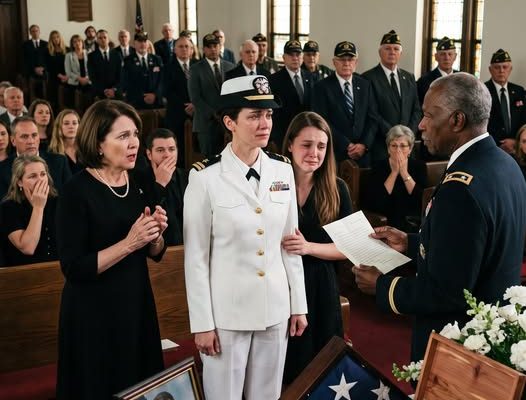
My mother-in-law brought 38 friends to my restaurant and told them to order expensive items, intending to leave me with the bill.

My mother-in-law arrived at my restaurant with 38 friends and announced, “Order the most expensive things. I’m treating everyone today,” even though she knew she had no intention of paying. Instead of throwing them out, I turned to the manager and said, “Serve them everything.” Three hours later, when she saw the $23,289 bill and the folder I set on the table, her smile disappeared.

“Come in, ladies, don’t be shy. My daughter-in-law’s restaurant is practically family. Today we are eating like queens, and I am paying for everything!”

My mother-in-law’s booming voice carried across the dining room at 1:30 in the afternoon, just as my restaurant was packed with customers. Behind Beatrice walked thirty-eight perfectly groomed women with expensive handbags, strong perfume, and the confidence of people certain someone else would cover the bill.

Gavin, my head manager, hurried toward me looking panicked.

“Camilla, they do not have a reservation, and every single table is completely occupied. Should I tell them that we cannot accommodate such a large group right now?”

I glanced toward Beatrice, who was already pulling a “reserved” sign from a large table and directing the busboys to push several chairs together.

“No, Gavin,” I replied calmly. “Take care of them.”

Gavin stared at me in disbelief.

“To all thirty-nine of them?”

“To all of them, and make sure you give them exactly what they ask for.”

He clearly didn’t understand my choice, and neither did anyone else in the building. But I knew that this would be the last day Beatrice walked into my restaurant believing she owned something she had never helped create.

I built Lumina, my fine-dining restaurant in San Diego, after years of relentless work as a line cook, sous-chef, and eventually executive chef. I saved every penny for the initial investment, chose the commercial ovens myself, hired the staff, developed seasonal menus, and spent sleepless nights calculating food costs.

Lucas, my husband, had never invested a single dollar of his own money in the business.

Beatrice still told everyone a completely different story.

“My son set her up in business, you know,” she would boast proudly to her social circle. “Camilla just handles the cooking.”

For years, she walked in without reservations, ordered prime steaks, fresh seafood, expensive desserts, and fine wine, then left without paying a cent. Whenever I complained, Lucas always gave me the same infuriating excuse.

“She is my mother, Camilla,” he would say with a shrug. “Besides, she gives you free publicity, so do not be so dramatic over a few thousand dollars.”

My biggest mistake was tolerating it for far too long.

But that Friday afternoon, Beatrice decided to test the absolute limit of my patience.

“I want the most expensive tasting menu for everyone here,” she demanded loudly to the server. “And open the reserve bottles of wine from the cellar, so make sure nothing cheap touches this table.”

Her friends applauded her generosity.

“How incredibly generous you are, Beatrice!”

“Well, that is the beauty of having a luxury restaurant in the family,” she replied, glancing over at me with a triumphant smirk.

A banquet of that size could easily cost more than twenty thousand dollars.

Gavin approached me again in the hallway, visibly concerned.

“Camilla, we can still put a stop to this right now before it goes any further.”

“No, Gavin, let them order and serve everything they want.”

Beatrice settled at the head of the private dining room and immediately began playing hostess. Plates of pan-seared scallops, fresh tuna tartare, artisan flatbreads, prime ribeyes, rich sauces, and our finest vintage wines soon covered the table.

I even carried over one of our best reserve bottles and poured it myself.

Beatrice watched me condescendingly as I filled the crystal glasses.

“Just look at that, ladies,” she announced to the crowd. “The great executive chef also knows how to wait on tables when required.”

Several women snickered behind their napkins.

“She cooks wonderfully,” one woman remarked quietly, “but she seems a bit too simple for someone who runs a place like this.”

Beatrice took a slow sip of wine before answering.

“Camilla has always been like this, but she is excellent at her labor, which is why you keep her around.”

My hand tightened around the bottle, but I forced myself to smile.

Then one of her wealthy friends leaned forward with a sudden question.

“And where is Lucas today? I have not seen him around in a very long time.”

Beatrice leaned closer eagerly, as if she were about to share the most exciting gossip of the year.

“My son is doing better than ever, and he even has a lovely young woman on the side who adores him.”

The entire table went silent.

I froze behind her chair.

Beatrice laughed loudly at their shocked expressions.

“Oh, do not make those faces, because Camilla is never home anyway since she lives in this kitchen, and besides, Lucas knows how to enjoy his life.”

Another woman looked around the lavish room.

“And with what money is he funding all this fun?”

Beatrice raised her glass confidently.

“With money from this restaurant, of course, because in the end, it all stays right here in the family.”

I stood behind her without moving.

For the previous three months, I had been secretly investigating unexplained withdrawals from my business account. I had found receipts for luxury hotels, designer gifts, wire transfers, and huge personal debts Lucas had never explained.

But until that exact moment, I hadn’t understood something even worse.

Beatrice knew about her son’s affair.

And she knew exactly where the stolen money came from.

As I stood pouring wine for thirty-eight smug women, a plan began forming in my mind—one that would finally destroy the pathetic lie I had lived with for years.

PART 2

I returned to the kitchen without saying a word.

“Did you hear the terrible things she was saying out there?” Gavin asked me with deep indignation.

“I heard every single word, Gavin.”

“Then why on earth are we still serving them our finest food?”

I turned toward the kitchen window and looked into the private dining room.

“Because I want Beatrice to take legal and financial responsibility for every single word she speaks today.”

Three months earlier, I had noticed unusual transfers leaving the restaurant account without my authorization. When receipts from luxury hotels and jewelry stores began appearing, Lucas claimed he knew nothing about them.

Instead of confronting him immediately, I quietly collected screenshots, bank statements, and tax records.

Just three days before Beatrice’s surprise banquet, I found overdue loan notices hidden inside his coat pocket totaling nearly forty thousand dollars.

That was when I realized Lucas wasn’t only spending money on a mistress.

He was drowning in personal debt.

Worse, my corporate lawyer had recently uncovered documents Lucas had secretly drafted in an attempt to trick me into giving up my majority share of the business.

A simple signature couldn’t legally hand him the company, but his intention was obvious.

He wanted to use my successful restaurant as a financial lifeline to rescue himself.

That was when I knew my marriage was over.

I filed for divorce immediately.

That very morning, my attorney had handed me the certified copy of the final divorce decree.

Lucas didn’t know yet because he assumed I would forgive him, just as I always had.

Meanwhile, Beatrice continued celebrating lavishly in the dining room for nearly three hours, ordering extra rounds of expensive wine, additional courses, gourmet coffee, and our most costly desserts.

“Do not be stingy, girls,” she repeated loudly. “It is my treat today!”

The final bill reached an astonishing $23,289.

Just when I thought her arrogance had reached its limit, Beatrice called me back to her table.

Beside the empty wine glasses sat a thick Manila folder.

“Sign these right here, Camilla,” she ordered bluntly.

I opened the folder and skimmed the first few pages.

I immediately recognized the fraudulent business-transfer documents Lucas had prepared.

“What is the meaning of this, Beatrice?”

She frowned at me impatiently.

“Do not play dumb with me, Camilla. The ownership of the restaurant will be transferred to Lucas so he can handle the important business decisions, and you will simply continue working here in the kitchen.”

Several of her friends nodded in agreement.

“A man can certainly make a business grow much faster,” one of them commented smugly.

Beatrice smiled warmly at her.

“Exactly. Camilla cooks, Lucas manages, and that way the whole family is taken care of.”

Something cold and final settled inside me.

For years, these people had called me family whenever they wanted free meals, money, or my silence.

Now they were trying to take the business I had built through years of exhausting work just to rescue my cheating husband.

“I will review these papers later,” I said calmly.

Beatrice mistook my quiet tone for fear.

“Perfect. When you bring the final bill, make sure you hand everything back to me fully signed.”

I went straight to my private office and printed the full itemized receipt.

The paper seemed endless, listing tasting menus for thirty-nine people, reserve wine bottles, imported cheeses, artisan desserts, and premium coffees.

Total: $23,289.

I placed the bill neatly on a polished silver tray.

Underneath it, I slipped three things: the certified divorce decree, copies of the unauthorized bank transfers, and clear photographs of Lucas entering a boutique hotel with his mistress.

When the women finally began gathering their designer purses, I stepped into the dining room.

“Just a moment, please, ladies, because we still need to settle the final account.”

Beatrice burst into a loud laugh.

“What on earth are you talking about, Camilla?”

I presented the silver tray directly to her.

Her arrogant smile disappeared the moment she saw the final number.

“You have completely lost your mind! You know very well that I am not paying this!”

“You stated multiple times in front of everyone that you were inviting the entire room today.”

“That was obviously just a figure of speech! Tell Lucas to handle this bill!”

“That sounds like an excellent idea, so please go ahead and call him right now.”

Beatrice pulled out her phone with a triumphant sneer.

“With great pleasure!”

She immediately put the call on speakerphone, clearly hoping to humiliate me in front of all thirty-eight friends.

Lucas answered after several nervous rings.

“Hello? Mom?”

“Son, I am at the restaurant right now, and your crazy wife is trying to charge me $23,289! Tell her immediately to stop playing games and sign the transfer documents to hand the business over to you!”

A heavy silence followed on the other end.

Even Beatrice stopped smirking.

Finally, Lucas spoke in a shaky voice.

“Mom… what on earth did you just do?”

PART 3

“What do you mean, ‘What did I do?’” Beatrice snapped into the phone. “I brought my friends here just like I told you I would to help promote our restaurant!”

Lucas exhaled sharply, struggling to catch his breath.

“Mom, it is not our restaurant.”

Beatrice froze in the middle of the crowded room.

“Stop joking around with me, Lucas.”

“I am not joking! I never put a single dollar into that business! The restaurant belongs entirely to Camilla!”

The surrounding women began exchanging confused, uncomfortable glances.

Beatrice tightened her grip on the phone until her knuckles turned white.

“But you prepared the legal transfer documents!”

“Yes, I drafted them myself, but Camilla never agreed to sign anything over to me!”

A wealthy woman sitting near Beatrice leaned closer.

“So why on earth did you tell us this luxury establishment was practically yours already?”

Beatrice pretended not to hear her and spoke frantically into the phone.

“Lucas, explain to them right now that you are taking out loans to save this restaurant because it is going bankrupt!”

Another uncomfortable silence followed.

“Mom… that is a lie, too.”

The color vanished from Beatrice’s face.

“What did you say?”

“The restaurant is not bankrupt, and it never was!”

Nobody in the private room dared take another sip.

Lucas continued talking nervously over speakerphone, slowly unraveling his own lies.

“I had massive personal debts, Mom! I needed money desperately, which is why I took funds directly from the commercial account!”

“How much money?” Beatrice demanded, her voice cracking.

“A lot…”

I stepped forward and spoke directly into the call.

“It was nearly forty thousand dollars in unauthorized transfers and personal expenses, all of which are documented.”

Lucas went silent.

One of Beatrice’s closest friends stood up.

“And what about that young girl you were boasting about earlier, Beatrice?”

Beatrice glared at her, but Lucas was already trapped.

“Yes, there was someone else,” Lucas confessed miserably. “Part of the money went toward luxury hotel rooms, expensive gifts, and trips.”

A shocked murmur moved through the room.

Beatrice seemed unable to process that her own son was destroying her entire false image in less than five minutes.

“You lied to me, Lucas,” she whispered in disbelief.

“I needed you to pressure Camilla into giving me control of the business! I thought if I gained legal access, I could use the restaurant’s revenue to fix my debts!”

One of the prominent socialites rose from her chair.

“Beatrice, you explicitly told all of us that your son was the sole owner of this venue!”

“I was only repeating what he explained to me!” Beatrice shouted back defensively.

“You also promised that you were paying for this entire banquet!” another woman added angrily, picking up the massive bill. “Who is going to pay for all this expensive food and wine now?”

Beatrice looked desperately toward the exit.

I stepped calmly into her path.

“The person who organized the event, placed the massive orders, and publicly announced that they were treating everyone should be held legally responsible. If you believe Lucas should cover it, you are welcome to work that out with him.”

Beatrice lifted the phone again.

“Lucas, pay this bill right now!”

“I cannot, Mom.”

“What do you mean you cannot?”

“I do not have any money left!”

The call ended as Lucas hung up.

Nobody moved for several seconds.

The room was suffocatingly quiet.

I calmly lifted the receipt from the silver tray, exposing the legal documents beneath it.

“There is something else you all should know,” I said clearly.

I handed Beatrice the certified copy of the court ruling.

“As of this morning, the final decree was signed. Lucas and I are officially divorced, and we are no longer husband and wife.”

Beatrice blinked rapidly as she stared at the seal.

“That… that cannot be real.”

“It is entirely real, Beatrice. Legally speaking, we are no longer related in any way, and even if we were, that would never give your family the right to walk into my business, consume thousands of dollars in high-end goods, and leave without paying.”

Beatrice looked down at the documents, then at her furious friends, and finally toward the glass doors.

“Camilla, please… we are family. Do not do this to me.”

“When you referred to me as nothing more than a simple servant in front of thirty-eight people today, were we family then?”

She opened her mouth, but nothing came out.

“When Lucas was stealing funds from my company account to finance his mistress, were we family then?”

Silence.

“When you brought legal papers to force me out of my own business, were we family?”

Beatrice’s friends began stepping away from her, clearly distancing themselves from the situation.

“I only came today because Beatrice assured us everything was taken care of!” one woman declared loudly.

“Me too!” another chimed in. “I am certainly not getting dragged into legal trouble because of her family’s lies!”

Beatrice began crying in real panic.

“My son deceived me, too!”

“You can explain your side of the story to the proper authorities,” I replied firmly. “But the outstanding debt for this meal remains unpaid.”

Gavin walked up beside me.

“Should I call security, Camilla?”

“Just to keep the peace, Gavin. Nobody is going to be harmed, but if anyone refuses to pay their portion or attempts to leave without providing full identification, please dial the police immediately.”

Once Beatrice realized I wouldn’t back down, she started begging desperately.

“Just write it off as advertising, Camilla! This restaurant makes so much money, so twenty thousand dollars is not going to ruin you!”

Her plea confirmed everything I had always believed about how she viewed me.

My endless hours of work meant nothing to her.

The fresh ingredients, my employees’ wages, and my skill meant nothing either.

She simply believed I could work harder and replace whatever she took for her convenience.

“No,” I said coldly.

Beatrice buried her face in her hands.

Within minutes, her friends began arguing among themselves, demanding she settle the bill or insisting they would only pay for what they personally consumed.

The admiration surrounding her all afternoon dissolved into resentment.

In the end, we had to call the local police when Beatrice refused to cooperate and several women tried to push past the host stand.

I gave the officers the master receipt, detailed order logs, and high-definition security footage showing Beatrice placing the orders.

The police took formal statements and collected identification from everyone present.

I never raised my voice or demanded that anyone be dragged away in handcuffs.

There was no need for a dramatic scene.

I simply wanted Beatrice to learn that the word “family” was not a blank check to steal from me.

After several women paid their individual shares and others signed formal police acknowledgments of the debt, the dining room finally emptied.

Gavin shook his head in absolute disbelief.

“I have truly never witnessed anything like that in my entire career.”

“Neither have I, Gavin.”

Later that evening, while the kitchen crew deep-cleaned the line, the investigating detective called me.

Beatrice was claiming at the station that she had genuinely believed her son would cover the bill.

While I explained the financial history to the detective, a heavy knock sounded at my office door.

It was Lucas.

He entered wearing a wrinkled suit, pale and completely broken.

“Did you really report my mother to the police, Camilla?”

“Your mother hosted an extravagant banquet that cost over twenty-three thousand dollars and then refused to pay for it.”

Lucas began pacing across the hardwood floor.

“She is completely insane! Why on earth did you let her order so much food?”

“Because she is a grown adult who publicly announced to dozens of witnesses that she was paying for the entire party.”

Lucas gripped his hair tightly, panic filling his face.

“This is going to ruin me even further!”

I stared at him in disbelief.

He didn’t ask whether his mother was okay.

He didn’t ask how I felt after everything that happened.

He was still entirely focused on himself.

“Why would her bill ruin you, Lucas?”

“Because the police are already auditing all the bank records and money transfers!”

“You mean the money you stole from my restaurant account?”

“It was not all spent on the other woman!” he blurted out defensively.

I stayed completely still and glanced toward my desk.

The detective was still connected on speakerphone.

“Then tell me where the rest of the stolen money went, Lucas.”

Lucas dropped heavily into an armchair and covered his face.

“I was sending more than half of it directly to my mother…”

The room suddenly felt colder.

“How much did you send her?”

“More than twenty thousand dollars…”

Gavin, who was wiping down the pass outside my office, stopped dead.

“Why were you sending her my business money?”

Lucas groaned without looking at me.

“For designer bags, expensive clothes, luxury trips, and hosting fancy lunches for her social friends! She kept saying that since your restaurant was making so much money, it was absurd that she had to live like an ordinary woman.”

“Did she know where that money was coming from?”

Lucas waited a long time before answering.

“Yes…”

“And did she know about your mistress the entire time?”

“Yes…”

“Since when?”

“Almost from the very beginning…”

“Why did she stay silent about it?”

He finally looked up at me with hollow eyes.

“Because she told me that as long as I kept giving her money, she would never tell you what I was doing.”

The humiliation I had carried for years suddenly became crystal-clear certainty.

Beatrice wasn’t merely an enabling mother protecting her selfish son.

She had knowingly accepted stolen funds to finance her fake social status, while Lucas paid her to keep quiet about his affair.

I picked up the phone from my desk.

“Did you get all of that, Detective?”

The officer’s voice came clearly through the speaker. He confirmed that he had recorded the entire admission and asked me to bring all supporting financial records to the station the next morning.

Lucas turned ghost-white.

“Were you on the phone with the police this whole time?”

“You walked into my office and started confessing voluntarily, Lucas. Nobody forced you to speak.”

He reached for one final desperate argument.

“We were married, Camilla! That money belonged to me, too!”

I pulled the corporate charter documents from my desk drawer.

“That was not money from a personal checking account, Lucas. That was corporate capital used to pay employee wages, food suppliers, taxes, and daily operations. Being married to me never gave you the legal right to secretly transfer company funds into your mother’s personal account.”

For the first time, Lucas had nothing left to say.

The legal proceedings, bank audits, and police investigations that followed over the next few months were long and exhausting.

My corporate attorney successfully proved that Lumina operated as an independent limited liability company and that Lucas held no equity or legal authority over its finances.

The financial trail clearly connected every unauthorized transfer to Beatrice’s personal accounts.

Lucas tried to negotiate a settlement, offering to waive any future claims against the business if I agreed to drop the fraud charges and forgive his mother’s banquet bill.

My lawyer’s answer was immediate and final:

“You cannot offer as a concession something that never belonged to you in the first place.”

To settle her huge debts and avoid severe legal prosecution for criminal fraud, Beatrice was forced to sell her prized suburban townhouse, losing the main status symbol she had used for decades to impress her wealthy friends.

Predictably, every one of those thirty-eight “friends” abandoned her after the scandal broke.

Lucas lost his luxurious lifestyle, his marriage, and his access to my business.

I didn’t celebrate their financial collapse because I had never wanted to destroy them.

I only wanted to reclaim what belonged to me and close a painful chapter of my life.

Two months later, my attorney entered Lumina carrying a large leather briefcase and handed me the final settlement decree.

“All stolen funds have been officially recovered, Camilla, and every asset dispute is fully closed.”

I signed the final line and looked at the silver tray resting on my desk.

It no longer carried divorce papers, bank statements, or evidence of affair trips.

It was simply a clean silver tray again.

That evening, an elderly couple who had been loyal customers since my first week in business came through the front doors and took their favorite table in the corner.

I cooked their dinner myself, serving roasted corn bisque, pan-seared ribeye with an artisan cocoa sauce, and a rich chocolate torte.

When they finished, I carried their check over on the silver tray.

The husband placed his credit card down without hesitation, offering fair payment for a wonderful meal and work well done.

His wife looked up at me with a warm smile.

“Camilla, my dear, you look entirely different tonight.”

“Different how?” I asked curiously.

“You look so peaceful. In the past, you always smiled, but it felt as though you were constantly waiting for someone to walk through that door and attack you.”

I glanced toward the entrance.

For years, I had lived with the constant fear of hearing Beatrice’s booming voice demanding free food, special treatment, or respect she had never earned.

That fear was finally gone.

“I think I finally learned that standing up for what belongs to me does not make me a bad person.”

The woman smiled brightly.

“Then make sure you never forget it.”

After saying goodnight, I walked back into the brightly lit kitchen.

Gavin was organizing the fresh prep lists for the morning while the line cooks sang along with the radio and scrubbed the stainless-steel counters.

Everything felt normal.

That quiet normality was exactly what I had fought so hard to protect.

I raised my hands and studied them—the small scar on my index finger from an old knife slip and the hardened skin earned from years of handling scorching pans.

Those hands had spent thousands of exhausting hours building Lumina from nothing.

Lucas and Beatrice had foolishly believed that calling me “family” gave them the right to take away everything those hands had built.

They were wrong.

Family is not a word that gives anyone the right to humiliate, rob, or exploit you, and loving someone never gives them permission to destroy your life.

I was the last person to leave the building that night.

I switched off the main dining lights, locked the heavy glass doors, and turned the key in the deadbolt.

For the first time in my life, the sharp click of the lock brought no anxiety.

Only pure peace.

Tomorrow morning, I would turn on the stoves again and cook for people who understood that behind every dish was real effort, knowledge, and respect.

My restaurant was still standing.

My team was still beside me.

And I was finally free.

My mother-in-law brought 38 friends to my restaurant and told them to order expensive items, intending to leave me with the bill. Read More

My sister relegated me to the couch for the trip, and my mom dismissed my feelings over money.

At the beach house, my sister dropped her bags in the largest bedroom and announced, “We already voted. You get the couch. Mom, Todd, and I are taking the bedrooms.”

Then my mother crossed her arms and added,

“You didn’t really contribute anyway.”

I stared at them.

I had booked the house.

Paid the entire rental.

Put the utilities in my name.

And not one of them had given me a dollar.

But instead of arguing, I nodded.

“All right.”

Three minutes later, I made one phone call.

By that evening, they finally understood exactly whose vacation they had been enjoying.

My name is James. I’m twenty-nine, and for as long as I can remember, my family has spent one week every summer at the same beach house on the Carolina coast.

It wasn’t luxurious.

That was part of its charm.

The wooden floors creaked.

The porch wrapped around the house.

From the upper deck, you could watch the ocean stretch almost endlessly toward the horizon.

When I was a kid, my grandparents handled everything.

They booked the place.

Paid for it.

Bought the groceries.

Turned an ordinary rental into a family tradition.

After they passed away, we kept returning.

But somewhere along the way, the tradition changed.

What had once been about spending time together became an annual argument about who deserved what.

This year, I volunteered to organize everything.

I contacted the owner.

Signed the rental agreement.

Transferred the deposit.

Put the utilities under my name, just as the owner requested.

My mother, my sister Emily, and Emily’s husband Todd all promised they would reimburse me for their shares afterward.

I believed them.

Or at least I chose not to make an issue of it.

Then, two days before the trip, Emily texted.

“Money’s a little tight right now. We’ll make it up to you with groceries and stuff 🙂”

A few minutes later, Todd sent me a Venmo request.

Not money for the rental.

A request asking ME to send HIM money for beach snacks.

I actually stared at my phone for several seconds.

Mom said nothing.

She simply packed her giant sun hat, loaded her luggage into Emily’s SUV, and showed up for vacation as though every expense had magically taken care of itself.

I decided not to fight about it.

I could afford the rental.

What I wanted more than anything was one peaceful week.

A book.

Long walks near the water.

Maybe a few mornings where nobody needed anything from me.

That hope lasted approximately thirty minutes after my family arrived.

I had gotten there first.

I unlocked the house, carried in the groceries, checked the rooms, and made sure everything was working.

Then Emily’s SUV pulled into the driveway.

She came through the front door with sand still on her shoes and headed straight down the hallway.

“Ooh! Master bedroom is mine!”

She tossed her suitcase onto the biggest bed.

Todd followed her inside carrying beer while music blasted from a Bluetooth speaker.

Mom walked directly into the kitchen and began opening cabinets like she owned the place.

I followed them down the hall.

“Before everyone settles in, maybe we should figure out the bedrooms. We could rotate or something.”

Emily laughed.

“We already figured it out.”

I stopped.

“What?”

“Me, Todd, and Mom talked about it. We voted.”

She kicked off her shoes.

“You get the couch. We get the bedrooms.”

For a second, I honestly thought she was joking.

“You voted?”

“Yep.”

“And I wasn’t part of this vote?”

She shrugged.

“You’re one person. Todd and I are a couple. Mom’s older. It makes sense.”

Then she delivered the sentence that changed the entire trip.

“Besides, you didn’t really help pay for anything.”

I stared at her.

“What are you talking about? I paid the entire rental.”

Mom leaned against the doorway.

“Oh, James, don’t start being dramatic.”

“I’m being dramatic?”

“You don’t have children. You don’t have a mortgage. You have a good job. You can afford things like this.”

Todd opened a beer.

Then laughed.

“Come on, man. Be happy you’re even here. You could always stay in one of those business hotels you like with your laptop.”

Nobody seemed to notice the absurdity.

I had invited them.

I had signed the contract.

I had paid every dollar so far.

And now they were standing inside the house I had rented, telling me I was lucky they were allowing me to sleep on the couch.

The problem wasn’t even the bedroom.

I could sleep on a couch.

It was the entitlement.

The assumption that because I didn’t have children, my money somehow belonged to the family.

The idea that my time mattered less.

My comfort mattered less.

My contribution counted only when they needed something.

Normally, I would have argued.

Then Mom would accuse me of ruining the vacation.

Emily would cry or become angry.

Todd would make some sarcastic comment.

Eventually, I would apologize just to restore peace.

Not this time.

I nodded.

“All right.”

Emily smiled.

“See? Was that so difficult?”

I walked outside.

The salty breeze hit my face as soon as I stepped onto the porch.

I sat down for a moment and watched the waves.

Then I pulled out my phone.

And called the utility company.

The conversation lasted about three minutes.

I confirmed my identity.

Confirmed the address.

Then asked for the services under my account to be temporarily suspended.

The woman on the phone asked,

“When would you like that to begin?”

I looked through the window.

Emily was already spreading her things across the master bedroom.

“Now.”

I ended the call.

Then I walked back inside.

I sat on the couch—the couch they had so generously assigned to me—put in my earbuds, and pretended to scroll through my phone.

Nobody noticed anything at first.

Emily was in the bathroom taking mirror photos.

Todd was trying to connect his phone to the television.

Mom had poured herself wine.

Then Todd’s speaker stopped in the middle of a song.

He tapped it.

“Babe, Wi-Fi’s down.”

Emily leaned out of the bathroom.

“Did you enter the password correctly?”

“I didn’t even get a password screen.”

A moment later, the lights flickered.

Once.

Then everything went dark.

The refrigerator stopped humming.

The ceiling fan slowed.

Outside, the air-conditioning unit clicked off.

For several seconds, nobody said anything.

Then Mom looked at me.

“James, did you trip the breaker?”

“No.”

Todd walked to the thermostat and pressed several buttons.

“Nothing’s working.”

Emily emerged from the bathroom.

“My curling iron just died.”

Mom reached for her phone.

“I’ll contact the rental company.”

Then she frowned.

“The router is off too.”

I leaned back against the couch.

“Cell service around here is pretty bad without Wi-Fi.”

Emily stared at me.

“Did you do this?”

I gave her a calm look.

“Do what?”

“James.”

“Well, I did speak to someone about the utilities. They’re under my name.”

The room became completely silent.

Todd turned toward me.

“What do you mean, under your name?”

I stood.

Picked up my bag.

Then pulled the only physical set of keys from my pocket.

“I guess if I didn’t contribute anything, I probably shouldn’t be responsible for keeping everything running either.”

Mom immediately frowned.

“James, stop acting like a child.”

I looked at her.

“I paid for the rental. I paid the deposit. The utilities are mine. I bought most of the groceries. And after all of that, the three of you held a vote without me and decided I belonged on the couch.”

Emily rolled her eyes.

“It’s one week.”

“Exactly.”

I headed toward the door.

Mom followed me.

“Where are you going?”

“Somewhere with a bed.”

I stepped outside.

Behind me, Emily called,

“You can’t just leave us here!”

But I was already walking toward my car.

I started the engine.

Then I sat there for a few minutes.

I could see them moving around through the windows.

Todd walked onto the porch holding his phone in the air as though raising it another two feet might magically create a signal.

Emily went from room to room checking switches.

Mom stood near the doorway staring toward my car.

Then Emily marched barefoot down the driveway.

She knocked sharply against my window.

I lowered it.

“Okay,” she said. “You made your point. Turn everything back on.”

“Everything?”

“The electricity. Wi-Fi. AC. All of it.”

She sounded irritated rather than apologetic.

“Todd’s phone is dying. The food is getting warm. Mom has medication that needs to stay refrigerated.”

I nodded slowly.

“That sounds inconvenient.”

“James.”

“I’m just confused.”

“About what?”

“You said I didn’t contribute.”

Her mouth tightened.

“So why am I apparently responsible for every service in the house?”

She folded her arms.

“We gave you the couch. You’re acting ridiculous.”

“No.”

For once, my voice stayed completely calm.

“You decided everything without asking me. You mocked me after I reminded you I paid. Mom dismissed it because apparently having no children means my money doesn’t count. Todd laughed at me.”

I reached toward the passenger seat and picked up the rental folder.

I opened it.

“My name is on this contract.”

Emily looked at the pages.

“I paid the deposit. I’m the primary renter. Utilities are under my account.”

I held up the keys.

“And these are mine too.”

Her expression changed.

Maybe for the first time, she understood that this wasn’t the old family vacation where Grandma and Grandpa quietly paid for everything.

There was no invisible adult coming to solve it.

I was the person who had made the vacation possible.

And they had just treated me like an unwanted guest.

Emily stepped backward.

“You’re going to regret this.”

I almost laughed.

“I really don’t think I am.”

She stormed back toward the house.

I drove away.

Ten minutes inland, I found a small inn.

Nothing fancy.

Beige walls.

Old television.

View of a marsh instead of the ocean.

But it had air conditioning.

Hot water.

And most importantly, a queen-size bed that nobody had voted away from me.

My phone started buzzing almost immediately.

Mom called three times.

Emily called seven.

Todd texted:

“Bro, this isn’t funny. Mom’s freaking out.”

I turned the phone facedown.

This wasn’t actually about the couch.

Or electricity.

Or even money.

It had been building for years.

Emily still owed me money from a down payment I had helped her with three years earlier.

Todd once stayed at my place for a month and nearly doubled my electricity bill.

Mom had spent years choosing whatever kept Emily happy, even if that meant ignoring me.

Whenever the family needed help with taxes, technology, tuition, paperwork, money, or emergencies, they called James.

And James always answered.

But nobody ever seemed to wonder whether James needed anything.

I had spent years accepting the role.

Reliable.

Single.

Financially stable.

No children.

Therefore endlessly available.

That afternoon, I realized I was done.

Before the trip, I had also contacted the property owner.

I had explained that I was the person on the rental agreement and that other family members might arrive despite not contributing or being listed as authorized guests.

The owner reminded me that the property had occupancy and insurance requirements.

So I sent him a timestamped photograph of Emily’s SUV in the driveway.

Then I left the matter with him.

From my room at the inn, I opened the security-camera feed connected to the rental property.

The cameras had been included as part of the house’s safety system.

Emily was pacing through the living room.

Todd stood in the kitchen looking irritated.

Mom sat near the dining table, fanning herself.

The beach house looked less glamorous without music, Wi-Fi, or air conditioning.

Then headlights appeared.

A white SUV pulled into the driveway.

Property management.

A man stepped out carrying a clipboard.

I watched Emily open the door.

There was no audio, but her body language said enough.

The manager showed her paperwork.

Emily pointed toward the house.

Todd appeared and began talking with his hands.

Mom stood behind them looking increasingly uncomfortable.

Then the manager pointed toward the driveway.

Emily’s mouth fell open.

My phone buzzed.

A message from Mom:

“James, what did you do?”

I didn’t answer.

The guests weren’t listed on the rental agreement, and the situation violated the occupancy conditions the owner had explained to me.

They were given a short window to gather their belongings.

This time, there was no family vote.

No debate over who deserved which room.

Emily, Todd, and Mom dragged their suitcases toward the SUV while the property manager waited outside.

Emily apparently tried returning inside for something she had forgotten, only to discover her access had already been disabled.

Todd argued briefly with the manager.

It got him nowhere.

Then they climbed into Emily’s SUV.

The vehicle backed out.

And disappeared down the street.

I closed the camera app.

For the first time that day, I took a long breath.

The following morning, I drove back to the beach house.

The sun was just rising over the water.

I restored the services before arriving.

When I unlocked the door, cool air greeted me.

The refrigerator hummed.

No music blasted from a speaker.

Nobody shouted from the bedroom.

Nobody told me where I was allowed to sleep.

I made coffee and walked barefoot onto the porch.

The ocean was calm.

For the first time in years, so was I.

Then the messages started.

Mom:

“We’re back in the city. I hope you’re happy.”

Emily:

“We had to get a motel. Todd is furious. We are definitely talking about this at Thanksgiving.”

Todd:

“Very mature. Wait until the rest of the family hears what you did.”

I didn’t answer.

Instead, I opened another conversation.

My cousin Lily.

Lily had always been different.

She brought soup when I was sick.

She showed up for my graduation even when the rest of my family skipped it because Emily had a dance recital.

She never acted like kindness was a transaction.

I texted:

“Beach house is suddenly very quiet. Want to come down for a couple days? I seem to have three extra bedrooms.”

She replied almost immediately.

“Seriously? YES. I desperately need a break.”

Then:

“I’ll bring wine and pastries.”

I smiled.

“Bring Max too.”

Max was her ridiculous golden retriever.

“Big porch. Plenty of room.”

“See you by dinner.”

I put my phone down.

Then I walked through the house.

Emily had left a pair of designer sandals.

Todd had forgotten his Bluetooth speaker.

Mom’s knitting bag was still sitting on a chair.

Apparently, being told to pack quickly had made everyone less organized than usual.

I placed everything in one cardboard box.

Taped it shut.

Then wrote across the top:

RETURNED TO SENDER.

I left the box in the garage.

If they wanted their belongings, they could ask.

Politely.

Lily arrived that evening with food, wine, and Max hanging his enormous golden head out the car window.

The next few days were exactly what I had originally wanted.

We grilled.

Walked along the beach.

Watched movies.

Read on the porch.

Nobody competed for bedrooms.

Nobody calculated who deserved what.

Nobody reminded me how fortunate I was to be included in something I had paid for.

On the third evening, Lily and I sat beneath the stars.

Finally, she looked over.

“So… are you going to explain why Emily has spent the entire week posting dramatic quotes about betrayal and fake family?”

I started laughing.

Really laughing.

For the first time in a long time.

Then I told her everything.

The unpaid rental.

The vote.

The couch.

The utilities.

The property manager.

By the time I finished, Lily had tears in her eyes from laughing.

“James.”

She wiped her face.

“That might be the greatest thing you’ve ever done.”

“I just couldn’t keep doing it.”

Her smile faded slightly.

“I know.”

“They pushed too far.”

“Maybe.”

She looked toward the ocean.

“Or maybe you finally stopped letting them.”

We sat quietly for a while.

Then I said,

“I might skip Thanksgiving.”

Lily smiled.

“Good.”

I looked over.

“What?”

“Let’s go to Italy instead.”

I laughed.

“You, me, and Max?”

“Obviously Max.”

“Deal.”

By the end of the week, I cleaned the beach house from top to bottom.

Honestly, I left it in better condition than I had found it.

I contacted the owner and told him everything was ready for checkout.

He thanked me for handling the situation responsibly and even offered me a discount if I wanted to return the following summer.

Maybe I will.

I still love that house.

I still love the memories of my grandparents sitting on the porch.

The tradition itself was never the problem.

The problem was believing that keeping a family tradition alive meant tolerating people who didn’t respect me.

For years, I thought family meant automatically making room.

Giving people the better bedroom.

Paying when they couldn’t—or wouldn’t.

Fixing whatever went wrong.

Staying quiet because confronting them would “ruin the mood.”

That week taught me something different.

Family isn’t just the people connected to you by blood.

It’s the people who respect your effort.

Who contribute instead of simply taking.

Who make room for you the same way you make room for them.

And from now on, those are the only people getting a bedroom in my beach house.

Everyone else can find their own couch.

My sister relegated me to the couch for the trip, and my mom dismissed my feelings over money. Read More

When my sister announced I was stuck on the sofa, my mom shrugged and pointed out who paid for the house.

At the beach house, my sister dropped her bags in the largest bedroom and announced, “We already voted. You get the couch. Mom, Todd, and I are taking the bedrooms.”

Then my mother crossed her arms and added,

“You didn’t really contribute anyway.”

I stared at them.

I had booked the house.

Paid the entire rental.

Put the utilities in my name.

And not one of them had given me a dollar.

But instead of arguing, I nodded.

“All right.”

Three minutes later, I made one phone call.

By that evening, they finally understood exactly whose vacation they had been enjoying.

My name is James. I’m twenty-nine, and for as long as I can remember, my family has spent one week every summer at the same beach house on the Carolina coast.

It wasn’t luxurious.

That was part of its charm.

The wooden floors creaked.

The porch wrapped around the house.

From the upper deck, you could watch the ocean stretch almost endlessly toward the horizon.

When I was a kid, my grandparents handled everything.

They booked the place.

Paid for it.

Bought the groceries.

Turned an ordinary rental into a family tradition.

After they passed away, we kept returning.

But somewhere along the way, the tradition changed.

What had once been about spending time together became an annual argument about who deserved what.

This year, I volunteered to organize everything.

I contacted the owner.

Signed the rental agreement.

Transferred the deposit.

Put the utilities under my name, just as the owner requested.

My mother, my sister Emily, and Emily’s husband Todd all promised they would reimburse me for their shares afterward.

I believed them.

Or at least I chose not to make an issue of it.

Then, two days before the trip, Emily texted.

“Money’s a little tight right now. We’ll make it up to you with groceries and stuff 🙂”

A few minutes later, Todd sent me a Venmo request.

Not money for the rental.

A request asking ME to send HIM money for beach snacks.

I actually stared at my phone for several seconds.

Mom said nothing.

She simply packed her giant sun hat, loaded her luggage into Emily’s SUV, and showed up for vacation as though every expense had magically taken care of itself.

I decided not to fight about it.

I could afford the rental.

What I wanted more than anything was one peaceful week.

A book.

Long walks near the water.

Maybe a few mornings where nobody needed anything from me.

That hope lasted approximately thirty minutes after my family arrived.

I had gotten there first.

I unlocked the house, carried in the groceries, checked the rooms, and made sure everything was working.

Then Emily’s SUV pulled into the driveway.

She came through the front door with sand still on her shoes and headed straight down the hallway.

“Ooh! Master bedroom is mine!”

She tossed her suitcase onto the biggest bed.

Todd followed her inside carrying beer while music blasted from a Bluetooth speaker.

Mom walked directly into the kitchen and began opening cabinets like she owned the place.

I followed them down the hall.

“Before everyone settles in, maybe we should figure out the bedrooms. We could rotate or something.”

Emily laughed.

“We already figured it out.”

I stopped.

“What?”

“Me, Todd, and Mom talked about it. We voted.”

She kicked off her shoes.

“You get the couch. We get the bedrooms.”

For a second, I honestly thought she was joking.

“You voted?”

“Yep.”

“And I wasn’t part of this vote?”

She shrugged.

“You’re one person. Todd and I are a couple. Mom’s older. It makes sense.”

Then she delivered the sentence that changed the entire trip.

“Besides, you didn’t really help pay for anything.”

I stared at her.

“What are you talking about? I paid the entire rental.”

Mom leaned against the doorway.

“Oh, James, don’t start being dramatic.”

“I’m being dramatic?”

“You don’t have children. You don’t have a mortgage. You have a good job. You can afford things like this.”

Todd opened a beer.

Then laughed.

“Come on, man. Be happy you’re even here. You could always stay in one of those business hotels you like with your laptop.”

Nobody seemed to notice the absurdity.

I had invited them.

I had signed the contract.

I had paid every dollar so far.

And now they were standing inside the house I had rented, telling me I was lucky they were allowing me to sleep on the couch.

The problem wasn’t even the bedroom.

I could sleep on a couch.

It was the entitlement.

The assumption that because I didn’t have children, my money somehow belonged to the family.

The idea that my time mattered less.

My comfort mattered less.

My contribution counted only when they needed something.

Normally, I would have argued.

Then Mom would accuse me of ruining the vacation.

Emily would cry or become angry.

Todd would make some sarcastic comment.

Eventually, I would apologize just to restore peace.

Not this time.

I nodded.

“All right.”

Emily smiled.

“See? Was that so difficult?”

I walked outside.

The salty breeze hit my face as soon as I stepped onto the porch.

I sat down for a moment and watched the waves.

Then I pulled out my phone.

And called the utility company.

The conversation lasted about three minutes.

I confirmed my identity.

Confirmed the address.

Then asked for the services under my account to be temporarily suspended.

The woman on the phone asked,

“When would you like that to begin?”

I looked through the window.

Emily was already spreading her things across the master bedroom.

“Now.”

I ended the call.

Then I walked back inside.

I sat on the couch—the couch they had so generously assigned to me—put in my earbuds, and pretended to scroll through my phone.

Nobody noticed anything at first.

Emily was in the bathroom taking mirror photos.

Todd was trying to connect his phone to the television.

Mom had poured herself wine.

Then Todd’s speaker stopped in the middle of a song.

He tapped it.

“Babe, Wi-Fi’s down.”

Emily leaned out of the bathroom.

“Did you enter the password correctly?”

“I didn’t even get a password screen.”

A moment later, the lights flickered.

Once.

Then everything went dark.

The refrigerator stopped humming.

The ceiling fan slowed.

Outside, the air-conditioning unit clicked off.

For several seconds, nobody said anything.

Then Mom looked at me.

“James, did you trip the breaker?”

“No.”

Todd walked to the thermostat and pressed several buttons.

“Nothing’s working.”

Emily emerged from the bathroom.

“My curling iron just died.”

Mom reached for her phone.

“I’ll contact the rental company.”

Then she frowned.

“The router is off too.”

I leaned back against the couch.

“Cell service around here is pretty bad without Wi-Fi.”

Emily stared at me.

“Did you do this?”

I gave her a calm look.

“Do what?”

“James.”

“Well, I did speak to someone about the utilities. They’re under my name.”

The room became completely silent.

Todd turned toward me.

“What do you mean, under your name?”

I stood.

Picked up my bag.

Then pulled the only physical set of keys from my pocket.

“I guess if I didn’t contribute anything, I probably shouldn’t be responsible for keeping everything running either.”

Mom immediately frowned.

“James, stop acting like a child.”

I looked at her.

“I paid for the rental. I paid the deposit. The utilities are mine. I bought most of the groceries. And after all of that, the three of you held a vote without me and decided I belonged on the couch.”

Emily rolled her eyes.

“It’s one week.”

“Exactly.”

I headed toward the door.

Mom followed me.

“Where are you going?”

“Somewhere with a bed.”

I stepped outside.

Behind me, Emily called,

“You can’t just leave us here!”

But I was already walking toward my car.

I started the engine.

Then I sat there for a few minutes.

I could see them moving around through the windows.

Todd walked onto the porch holding his phone in the air as though raising it another two feet might magically create a signal.

Emily went from room to room checking switches.

Mom stood near the doorway staring toward my car.

Then Emily marched barefoot down the driveway.

She knocked sharply against my window.

I lowered it.

“Okay,” she said. “You made your point. Turn everything back on.”

“Everything?”

“The electricity. Wi-Fi. AC. All of it.”

She sounded irritated rather than apologetic.

“Todd’s phone is dying. The food is getting warm. Mom has medication that needs to stay refrigerated.”

I nodded slowly.

“That sounds inconvenient.”

“James.”

“I’m just confused.”

“About what?”

“You said I didn’t contribute.”

Her mouth tightened.

“So why am I apparently responsible for every service in the house?”

She folded her arms.

“We gave you the couch. You’re acting ridiculous.”

“No.”

For once, my voice stayed completely calm.

“You decided everything without asking me. You mocked me after I reminded you I paid. Mom dismissed it because apparently having no children means my money doesn’t count. Todd laughed at me.”

I reached toward the passenger seat and picked up the rental folder.

I opened it.

“My name is on this contract.”

Emily looked at the pages.

“I paid the deposit. I’m the primary renter. Utilities are under my account.”

I held up the keys.

“And these are mine too.”

Her expression changed.

Maybe for the first time, she understood that this wasn’t the old family vacation where Grandma and Grandpa quietly paid for everything.

There was no invisible adult coming to solve it.

I was the person who had made the vacation possible.

And they had just treated me like an unwanted guest.

Emily stepped backward.

“You’re going to regret this.”

I almost laughed.

“I really don’t think I am.”

She stormed back toward the house.

I drove away.

Ten minutes inland, I found a small inn.

Nothing fancy.

Beige walls.

Old television.

View of a marsh instead of the ocean.

But it had air conditioning.

Hot water.

And most importantly, a queen-size bed that nobody had voted away from me.

My phone started buzzing almost immediately.

Mom called three times.

Emily called seven.

Todd texted:

“Bro, this isn’t funny. Mom’s freaking out.”

I turned the phone facedown.

This wasn’t actually about the couch.

Or electricity.

Or even money.

It had been building for years.

Emily still owed me money from a down payment I had helped her with three years earlier.

Todd once stayed at my place for a month and nearly doubled my electricity bill.

Mom had spent years choosing whatever kept Emily happy, even if that meant ignoring me.

Whenever the family needed help with taxes, technology, tuition, paperwork, money, or emergencies, they called James.

And James always answered.

But nobody ever seemed to wonder whether James needed anything.

I had spent years accepting the role.

Reliable.

Single.

Financially stable.

No children.

Therefore endlessly available.

That afternoon, I realized I was done.

Before the trip, I had also contacted the property owner.

I had explained that I was the person on the rental agreement and that other family members might arrive despite not contributing or being listed as authorized guests.

The owner reminded me that the property had occupancy and insurance requirements.

So I sent him a timestamped photograph of Emily’s SUV in the driveway.

Then I left the matter with him.

From my room at the inn, I opened the security-camera feed connected to the rental property.

The cameras had been included as part of the house’s safety system.

Emily was pacing through the living room.

Todd stood in the kitchen looking irritated.

Mom sat near the dining table, fanning herself.

The beach house looked less glamorous without music, Wi-Fi, or air conditioning.

Then headlights appeared.

A white SUV pulled into the driveway.

Property management.

A man stepped out carrying a clipboard.

I watched Emily open the door.

There was no audio, but her body language said enough.

The manager showed her paperwork.

Emily pointed toward the house.

Todd appeared and began talking with his hands.

Mom stood behind them looking increasingly uncomfortable.

Then the manager pointed toward the driveway.

Emily’s mouth fell open.

My phone buzzed.

A message from Mom:

“James, what did you do?”

I didn’t answer.

The guests weren’t listed on the rental agreement, and the situation violated the occupancy conditions the owner had explained to me.

They were given a short window to gather their belongings.

This time, there was no family vote.

No debate over who deserved which room.

Emily, Todd, and Mom dragged their suitcases toward the SUV while the property manager waited outside.

Emily apparently tried returning inside for something she had forgotten, only to discover her access had already been disabled.

Todd argued briefly with the manager.

It got him nowhere.

Then they climbed into Emily’s SUV.

The vehicle backed out.

And disappeared down the street.

I closed the camera app.

For the first time that day, I took a long breath.

The following morning, I drove back to the beach house.

The sun was just rising over the water.

I restored the services before arriving.

When I unlocked the door, cool air greeted me.

The refrigerator hummed.

No music blasted from a speaker.

Nobody shouted from the bedroom.

Nobody told me where I was allowed to sleep.

I made coffee and walked barefoot onto the porch.

The ocean was calm.

For the first time in years, so was I.

Then the messages started.

Mom:

“We’re back in the city. I hope you’re happy.”

Emily:

“We had to get a motel. Todd is furious. We are definitely talking about this at Thanksgiving.”

Todd:

“Very mature. Wait until the rest of the family hears what you did.”

I didn’t answer.

Instead, I opened another conversation.

My cousin Lily.

Lily had always been different.

She brought soup when I was sick.

She showed up for my graduation even when the rest of my family skipped it because Emily had a dance recital.

She never acted like kindness was a transaction.

I texted:

“Beach house is suddenly very quiet. Want to come down for a couple days? I seem to have three extra bedrooms.”

She replied almost immediately.

“Seriously? YES. I desperately need a break.”

Then:

“I’ll bring wine and pastries.”

I smiled.

“Bring Max too.”

Max was her ridiculous golden retriever.

“Big porch. Plenty of room.”

“See you by dinner.”

I put my phone down.

Then I walked through the house.

Emily had left a pair of designer sandals.

Todd had forgotten his Bluetooth speaker.

Mom’s knitting bag was still sitting on a chair.

Apparently, being told to pack quickly had made everyone less organized than usual.

I placed everything in one cardboard box.

Taped it shut.

Then wrote across the top:

RETURNED TO SENDER.

I left the box in the garage.

If they wanted their belongings, they could ask.

Politely.

Lily arrived that evening with food, wine, and Max hanging his enormous golden head out the car window.

The next few days were exactly what I had originally wanted.

We grilled.

Walked along the beach.

Watched movies.

Read on the porch.

Nobody competed for bedrooms.

Nobody calculated who deserved what.

Nobody reminded me how fortunate I was to be included in something I had paid for.

On the third evening, Lily and I sat beneath the stars.

Finally, she looked over.

“So… are you going to explain why Emily has spent the entire week posting dramatic quotes about betrayal and fake family?”

I started laughing.

Really laughing.

For the first time in a long time.

Then I told her everything.

The unpaid rental.

The vote.

The couch.

The utilities.

The property manager.

By the time I finished, Lily had tears in her eyes from laughing.

“James.”

She wiped her face.

“That might be the greatest thing you’ve ever done.”

“I just couldn’t keep doing it.”

Her smile faded slightly.

“I know.”

“They pushed too far.”

“Maybe.”

She looked toward the ocean.

“Or maybe you finally stopped letting them.”

We sat quietly for a while.

Then I said,

“I might skip Thanksgiving.”

Lily smiled.

“Good.”

I looked over.

“What?”

“Let’s go to Italy instead.”

I laughed.

“You, me, and Max?”

“Obviously Max.”

“Deal.”

By the end of the week, I cleaned the beach house from top to bottom.

Honestly, I left it in better condition than I had found it.

I contacted the owner and told him everything was ready for checkout.

He thanked me for handling the situation responsibly and even offered me a discount if I wanted to return the following summer.

Maybe I will.

I still love that house.

I still love the memories of my grandparents sitting on the porch.

The tradition itself was never the problem.

The problem was believing that keeping a family tradition alive meant tolerating people who didn’t respect me.

For years, I thought family meant automatically making room.

Giving people the better bedroom.

Paying when they couldn’t—or wouldn’t.

Fixing whatever went wrong.

Staying quiet because confronting them would “ruin the mood.”

That week taught me something different.

Family isn’t just the people connected to you by blood.

It’s the people who respect your effort.

Who contribute instead of simply taking.

Who make room for you the same way you make room for them.

And from now on, those are the only people getting a bedroom in my beach house.

Everyone else can find their own couch.

When my sister announced I was stuck on the sofa, my mom shrugged and pointed out who paid for the house. Read More

My family voted me onto the beach house couch, with my mom agreeing I hadn’t paid enough to earn a room.

At the beach house, my sister dropped her bags in the largest bedroom and announced, “We already voted. You get the couch. Mom, Todd, and I are taking the bedrooms.”

Then my mother crossed her arms and added,

“You didn’t really contribute anyway.”

I stared at them.

I had booked the house.

Paid the entire rental.

Put the utilities in my name.

And not one of them had given me a dollar.

But instead of arguing, I nodded.

“All right.”

Three minutes later, I made one phone call.

By that evening, they finally understood exactly whose vacation they had been enjoying.

My name is James. I’m twenty-nine, and for as long as I can remember, my family has spent one week every summer at the same beach house on the Carolina coast.

It wasn’t luxurious.

That was part of its charm.

The wooden floors creaked.

The porch wrapped around the house.

From the upper deck, you could watch the ocean stretch almost endlessly toward the horizon.

When I was a kid, my grandparents handled everything.

They booked the place.

Paid for it.

Bought the groceries.

Turned an ordinary rental into a family tradition.

After they passed away, we kept returning.

But somewhere along the way, the tradition changed.

What had once been about spending time together became an annual argument about who deserved what.

This year, I volunteered to organize everything.

I contacted the owner.

Signed the rental agreement.

Transferred the deposit.

Put the utilities under my name, just as the owner requested.

My mother, my sister Emily, and Emily’s husband Todd all promised they would reimburse me for their shares afterward.

I believed them.

Or at least I chose not to make an issue of it.

Then, two days before the trip, Emily texted.

“Money’s a little tight right now. We’ll make it up to you with groceries and stuff 🙂”

A few minutes later, Todd sent me a Venmo request.

Not money for the rental.

A request asking ME to send HIM money for beach snacks.

I actually stared at my phone for several seconds.

Mom said nothing.

She simply packed her giant sun hat, loaded her luggage into Emily’s SUV, and showed up for vacation as though every expense had magically taken care of itself.

I decided not to fight about it.

I could afford the rental.

What I wanted more than anything was one peaceful week.

A book.

Long walks near the water.

Maybe a few mornings where nobody needed anything from me.

That hope lasted approximately thirty minutes after my family arrived.

I had gotten there first.

I unlocked the house, carried in the groceries, checked the rooms, and made sure everything was working.

Then Emily’s SUV pulled into the driveway.

She came through the front door with sand still on her shoes and headed straight down the hallway.

“Ooh! Master bedroom is mine!”

She tossed her suitcase onto the biggest bed.

Todd followed her inside carrying beer while music blasted from a Bluetooth speaker.

Mom walked directly into the kitchen and began opening cabinets like she owned the place.

I followed them down the hall.

“Before everyone settles in, maybe we should figure out the bedrooms. We could rotate or something.”

Emily laughed.

“We already figured it out.”

I stopped.

“What?”

“Me, Todd, and Mom talked about it. We voted.”

She kicked off her shoes.

“You get the couch. We get the bedrooms.”

For a second, I honestly thought she was joking.

“You voted?”

“Yep.”

“And I wasn’t part of this vote?”

She shrugged.

“You’re one person. Todd and I are a couple. Mom’s older. It makes sense.”

Then she delivered the sentence that changed the entire trip.

“Besides, you didn’t really help pay for anything.”

I stared at her.

“What are you talking about? I paid the entire rental.”

Mom leaned against the doorway.

“Oh, James, don’t start being dramatic.”

“I’m being dramatic?”

“You don’t have children. You don’t have a mortgage. You have a good job. You can afford things like this.”

Todd opened a beer.

Then laughed.

“Come on, man. Be happy you’re even here. You could always stay in one of those business hotels you like with your laptop.”

Nobody seemed to notice the absurdity.

I had invited them.

I had signed the contract.

I had paid every dollar so far.

And now they were standing inside the house I had rented, telling me I was lucky they were allowing me to sleep on the couch.

The problem wasn’t even the bedroom.

I could sleep on a couch.

It was the entitlement.

The assumption that because I didn’t have children, my money somehow belonged to the family.

The idea that my time mattered less.

My comfort mattered less.

My contribution counted only when they needed something.

Normally, I would have argued.

Then Mom would accuse me of ruining the vacation.

Emily would cry or become angry.

Todd would make some sarcastic comment.

Eventually, I would apologize just to restore peace.

Not this time.

I nodded.

“All right.”

Emily smiled.

“See? Was that so difficult?”

I walked outside.

The salty breeze hit my face as soon as I stepped onto the porch.

I sat down for a moment and watched the waves.

Then I pulled out my phone.

And called the utility company.

The conversation lasted about three minutes.

I confirmed my identity.

Confirmed the address.

Then asked for the services under my account to be temporarily suspended.

The woman on the phone asked,

“When would you like that to begin?”

I looked through the window.

Emily was already spreading her things across the master bedroom.

“Now.”

I ended the call.

Then I walked back inside.

I sat on the couch—the couch they had so generously assigned to me—put in my earbuds, and pretended to scroll through my phone.

Nobody noticed anything at first.

Emily was in the bathroom taking mirror photos.

Todd was trying to connect his phone to the television.

Mom had poured herself wine.

Then Todd’s speaker stopped in the middle of a song.

He tapped it.

“Babe, Wi-Fi’s down.”

Emily leaned out of the bathroom.

“Did you enter the password correctly?”

“I didn’t even get a password screen.”

A moment later, the lights flickered.

Once.

Then everything went dark.

The refrigerator stopped humming.

The ceiling fan slowed.

Outside, the air-conditioning unit clicked off.

For several seconds, nobody said anything.

Then Mom looked at me.

“James, did you trip the breaker?”

“No.”

Todd walked to the thermostat and pressed several buttons.

“Nothing’s working.”

Emily emerged from the bathroom.

“My curling iron just died.”

Mom reached for her phone.

“I’ll contact the rental company.”

Then she frowned.

“The router is off too.”

I leaned back against the couch.

“Cell service around here is pretty bad without Wi-Fi.”

Emily stared at me.

“Did you do this?”

I gave her a calm look.

“Do what?”

“James.”

“Well, I did speak to someone about the utilities. They’re under my name.”

The room became completely silent.

Todd turned toward me.

“What do you mean, under your name?”

I stood.

Picked up my bag.

Then pulled the only physical set of keys from my pocket.

“I guess if I didn’t contribute anything, I probably shouldn’t be responsible for keeping everything running either.”

Mom immediately frowned.

“James, stop acting like a child.”

I looked at her.

“I paid for the rental. I paid the deposit. The utilities are mine. I bought most of the groceries. And after all of that, the three of you held a vote without me and decided I belonged on the couch.”

Emily rolled her eyes.

“It’s one week.”

“Exactly.”

I headed toward the door.

Mom followed me.

“Where are you going?”

“Somewhere with a bed.”

I stepped outside.

Behind me, Emily called,

“You can’t just leave us here!”

But I was already walking toward my car.

I started the engine.

Then I sat there for a few minutes.

I could see them moving around through the windows.

Todd walked onto the porch holding his phone in the air as though raising it another two feet might magically create a signal.

Emily went from room to room checking switches.

Mom stood near the doorway staring toward my car.

Then Emily marched barefoot down the driveway.

She knocked sharply against my window.

I lowered it.

“Okay,” she said. “You made your point. Turn everything back on.”

“Everything?”

“The electricity. Wi-Fi. AC. All of it.”

She sounded irritated rather than apologetic.

“Todd’s phone is dying. The food is getting warm. Mom has medication that needs to stay refrigerated.”

I nodded slowly.

“That sounds inconvenient.”

“James.”

“I’m just confused.”

“About what?”

“You said I didn’t contribute.”

Her mouth tightened.

“So why am I apparently responsible for every service in the house?”

She folded her arms.

“We gave you the couch. You’re acting ridiculous.”

“No.”

For once, my voice stayed completely calm.

“You decided everything without asking me. You mocked me after I reminded you I paid. Mom dismissed it because apparently having no children means my money doesn’t count. Todd laughed at me.”

I reached toward the passenger seat and picked up the rental folder.

I opened it.

“My name is on this contract.”

Emily looked at the pages.

“I paid the deposit. I’m the primary renter. Utilities are under my account.”

I held up the keys.

“And these are mine too.”

Her expression changed.

Maybe for the first time, she understood that this wasn’t the old family vacation where Grandma and Grandpa quietly paid for everything.

There was no invisible adult coming to solve it.

I was the person who had made the vacation possible.

And they had just treated me like an unwanted guest.

Emily stepped backward.

“You’re going to regret this.”

I almost laughed.

“I really don’t think I am.”

She stormed back toward the house.

I drove away.

Ten minutes inland, I found a small inn.

Nothing fancy.

Beige walls.

Old television.

View of a marsh instead of the ocean.

But it had air conditioning.

Hot water.

And most importantly, a queen-size bed that nobody had voted away from me.

My phone started buzzing almost immediately.

Mom called three times.

Emily called seven.

Todd texted:

“Bro, this isn’t funny. Mom’s freaking out.”

I turned the phone facedown.

This wasn’t actually about the couch.

Or electricity.

Or even money.

It had been building for years.

Emily still owed me money from a down payment I had helped her with three years earlier.

Todd once stayed at my place for a month and nearly doubled my electricity bill.

Mom had spent years choosing whatever kept Emily happy, even if that meant ignoring me.

Whenever the family needed help with taxes, technology, tuition, paperwork, money, or emergencies, they called James.

And James always answered.

But nobody ever seemed to wonder whether James needed anything.

I had spent years accepting the role.

Reliable.

Single.

Financially stable.

No children.

Therefore endlessly available.

That afternoon, I realized I was done.

Before the trip, I had also contacted the property owner.

I had explained that I was the person on the rental agreement and that other family members might arrive despite not contributing or being listed as authorized guests.

The owner reminded me that the property had occupancy and insurance requirements.

So I sent him a timestamped photograph of Emily’s SUV in the driveway.

Then I left the matter with him.

From my room at the inn, I opened the security-camera feed connected to the rental property.

The cameras had been included as part of the house’s safety system.

Emily was pacing through the living room.

Todd stood in the kitchen looking irritated.

Mom sat near the dining table, fanning herself.

The beach house looked less glamorous without music, Wi-Fi, or air conditioning.

Then headlights appeared.

A white SUV pulled into the driveway.

Property management.

A man stepped out carrying a clipboard.

I watched Emily open the door.

There was no audio, but her body language said enough.

The manager showed her paperwork.

Emily pointed toward the house.

Todd appeared and began talking with his hands.

Mom stood behind them looking increasingly uncomfortable.

Then the manager pointed toward the driveway.

Emily’s mouth fell open.

My phone buzzed.

A message from Mom:

“James, what did you do?”

I didn’t answer.

The guests weren’t listed on the rental agreement, and the situation violated the occupancy conditions the owner had explained to me.

They were given a short window to gather their belongings.

This time, there was no family vote.

No debate over who deserved which room.

Emily, Todd, and Mom dragged their suitcases toward the SUV while the property manager waited outside.

Emily apparently tried returning inside for something she had forgotten, only to discover her access had already been disabled.

Todd argued briefly with the manager.

It got him nowhere.

Then they climbed into Emily’s SUV.

The vehicle backed out.

And disappeared down the street.

I closed the camera app.

For the first time that day, I took a long breath.

The following morning, I drove back to the beach house.

The sun was just rising over the water.

I restored the services before arriving.

When I unlocked the door, cool air greeted me.

The refrigerator hummed.

No music blasted from a speaker.

Nobody shouted from the bedroom.

Nobody told me where I was allowed to sleep.

I made coffee and walked barefoot onto the porch.

The ocean was calm.

For the first time in years, so was I.

Then the messages started.

Mom:

“We’re back in the city. I hope you’re happy.”

Emily:

“We had to get a motel. Todd is furious. We are definitely talking about this at Thanksgiving.”

Todd:

“Very mature. Wait until the rest of the family hears what you did.”

I didn’t answer.

Instead, I opened another conversation.

My cousin Lily.

Lily had always been different.

She brought soup when I was sick.

She showed up for my graduation even when the rest of my family skipped it because Emily had a dance recital.

She never acted like kindness was a transaction.

I texted:

“Beach house is suddenly very quiet. Want to come down for a couple days? I seem to have three extra bedrooms.”

She replied almost immediately.

“Seriously? YES. I desperately need a break.”

Then:

“I’ll bring wine and pastries.”

I smiled.

“Bring Max too.”

Max was her ridiculous golden retriever.

“Big porch. Plenty of room.”

“See you by dinner.”

I put my phone down.

Then I walked through the house.

Emily had left a pair of designer sandals.

Todd had forgotten his Bluetooth speaker.

Mom’s knitting bag was still sitting on a chair.

Apparently, being told to pack quickly had made everyone less organized than usual.

I placed everything in one cardboard box.

Taped it shut.

Then wrote across the top:

RETURNED TO SENDER.

I left the box in the garage.

If they wanted their belongings, they could ask.

Politely.

Lily arrived that evening with food, wine, and Max hanging his enormous golden head out the car window.

The next few days were exactly what I had originally wanted.

We grilled.

Walked along the beach.

Watched movies.

Read on the porch.

Nobody competed for bedrooms.

Nobody calculated who deserved what.

Nobody reminded me how fortunate I was to be included in something I had paid for.

On the third evening, Lily and I sat beneath the stars.

Finally, she looked over.

“So… are you going to explain why Emily has spent the entire week posting dramatic quotes about betrayal and fake family?”

I started laughing.

Really laughing.

For the first time in a long time.

Then I told her everything.

The unpaid rental.

The vote.

The couch.

The utilities.

The property manager.

By the time I finished, Lily had tears in her eyes from laughing.

“James.”

She wiped her face.

“That might be the greatest thing you’ve ever done.”

“I just couldn’t keep doing it.”

Her smile faded slightly.

“I know.”

“They pushed too far.”

“Maybe.”

She looked toward the ocean.

“Or maybe you finally stopped letting them.”

We sat quietly for a while.

Then I said,

“I might skip Thanksgiving.”

Lily smiled.

“Good.”

I looked over.

“What?”

“Let’s go to Italy instead.”

I laughed.

“You, me, and Max?”

“Obviously Max.”

“Deal.”

By the end of the week, I cleaned the beach house from top to bottom.

Honestly, I left it in better condition than I had found it.

I contacted the owner and told him everything was ready for checkout.

He thanked me for handling the situation responsibly and even offered me a discount if I wanted to return the following summer.

Maybe I will.

I still love that house.

I still love the memories of my grandparents sitting on the porch.

The tradition itself was never the problem.

The problem was believing that keeping a family tradition alive meant tolerating people who didn’t respect me.

For years, I thought family meant automatically making room.

Giving people the better bedroom.

Paying when they couldn’t—or wouldn’t.

Fixing whatever went wrong.

Staying quiet because confronting them would “ruin the mood.”

That week taught me something different.

Family isn’t just the people connected to you by blood.

It’s the people who respect your effort.

Who contribute instead of simply taking.

Who make room for you the same way you make room for them.

And from now on, those are the only people getting a bedroom in my beach house.

Everyone else can find their own couch.

My family voted me onto the beach house couch, with my mom agreeing I hadn’t paid enough to earn a room. Read More