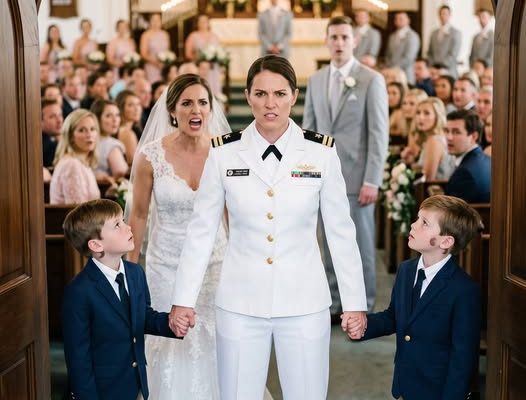
A major shift in our three-year family structure backfired completely the moment I took total control of my financial future.

The night my husband threw me out, the rain was falling so hard the street shimmered like black glass. He didn’t even allow me to take an umbrella.

“Three years,” Adrian said, standing in the doorway of the house I had paid half the mortgage for. “Three completely wasted years, Mara. No child. No legacy. Nothing.”

Behind him, his mother smiled calmly over the edge of her teacup.

His new woman, Celeste, lounged against the staircase wearing my silk robe.

My silk robe.

I stared at the suitcase Adrian had packed for me. Two sweaters. One pair of shoes. My grandmother’s photograph with a crack running across her face.

“That’s all?” I asked quietly.

Adrian’s mouth curled. “You should be thankful I’m not demanding compensation.”

“For what?”

“For wasting my youth.”

His mother laughed softly. “Don’t make a scene, dear. Women like you age terribly when they cry.”

I didn’t cry.

That seemed to bother them more than anything else.

Adrian stepped closer and lowered his voice. “The allowance ends tonight. The accounts are frozen. My attorney will contact you. Sign quietly, and maybe I’ll leave you enough money to rent a room somewhere.”

“You froze my accounts?”

“Our accounts,” he corrected.

Celeste lifted her hand, flashing the diamond ring I had once discovered hidden inside Adrian’s desk drawer. “Don’t worry. I’ll give him children.”

Those words hit harder than the freezing rain.

For three years, I endured injections, surgeries, tests, whispers. Adrian never once agreed to take a fertility test himself. His mother insisted real men never needed to prove anything.

I picked up the suitcase slowly.

“You’re making a mistake,” I told him.

Adrian laughed. “No, Mara. I finally fixed one.”

Then the door slammed shut.

I stood there in the rain until headlights swept across me.

From the neighboring porch, a man’s voice cut through the storm. “You’ll catch pneumonia before you catch justice.”

I turned.

The neighbor watched me beneath the yellow porch light. Everyone called him Captain Hayes, the lonely veteran living in the old brick house next door. He walked with a cane, rarely spoke to anyone, and strange black cars visited his home at midnight.

His face carried scars. His eyes were calm and cold like winter steel.

“I don’t need pity,” I said.

“Good,” he replied evenly. “I don’t offer pity.”

Then he opened his front door.

“I offer contracts.”

I stared at him.

He glanced toward Adrian’s brightly lit windows.

“Come inside, Mrs. Vale,” he said quietly. “Your husband just declared war on the wrong woman.”

For the first time that night, I smiled.

“My name is Mara,” I said.

“And mine,” he answered, “is not Hayes.”….

Part 2

Inside the veteran’s house, there were no dusty military medals, no faded family photographs, no cheap furniture.

There were surveillance screens.

Wall safes.

A private elevator.

A medical-grade refrigerator humming behind locked glass.

I should have run immediately.

Instead, I sat dripping wet at his kitchen table while he placed a towel beside me as neatly as evidence in a courtroom.

“You know what Adrian did,” I said quietly.

“I know far more than that.” He slid a thick folder across the table. “I know he moved marital assets through three shell corporations. I know his mother forged your signature on fertility clinic consent forms. I know Celeste was receiving company money long before she officially became his mistress.”

My fingers went numb.

“How?”

The old man’s expression never changed. “Because your husband tried to buy my land last year. When I refused, he sent men to intimidate me.”

“And?”

“They apologized.”

I opened the folder.

Bank transfers. Property documents. Fertility clinic records. And a medical report Adrian had hidden from me.

Male factor infertility: severe.

My breath stopped.

“He knew,” I whispered.

“Yes.”

“All those injections. All those nights I blamed myself.”

Captain Hayes remained silent. Somehow, that silence felt kinder than comfort.

Then he made the strange offer.

“I run a foundation,” he said. “Veterans. Orphans. Medical research. I need someone with discipline, discretion, and nothing left to fear. Take the position. Salary, housing, legal protection. In return, you stop thinking like a victim.”

A sharp, broken laugh escaped me. “That’s your offer?”

“No.” He opened another file. “That’s merely the beginning. You froze embryos three years ago before your first surgery. Adrian signed the consent forms, then buried the paperwork after learning his own fertility results. Legally, the embryos belong to you.”

The room tilted around me.

“My embryos?”

“Your embryos.”

Six weeks later, I was living in the guest wing of his estate under a different name.

Three months later, I was directing the public health division of the Hayes Foundation.

Five months later, Adrian sued me for “fraudulent abandonment” and accused me of stealing from him.

He looked smug arriving at court in charcoal gray, Celeste hanging from his arm while his mother stood behind him like a crowned serpent.

“You look exhausted, Mara,” he said outside the courthouse. “Poverty suits you.”

I touched the sleeve of my plain black coat. “Does it?”

Celeste’s gaze drifted toward my stomach.

Not visible yet.

Not enough.

Adrian leaned closer. “You should have signed quietly. Now I’ll destroy whatever pride you still have left.”

I looked past him at his lawyer. Then toward the cameras gathered outside the courthouse doors.

“You always loved having an audience,” I said calmly.

His mother smiled. “Poor girl. Still pretending she has cards left to play.”

That afternoon, Captain Hayes brought me to a private clinic occupying the top floor of a hospital with no name on its entrance.

Doctors I recognized from magazine covers greeted him with the respect reserved for royalty.

One had delivered a prime minister’s child.

Another pioneered fetal surgery.

A famous silver-haired obstetrician shook my hand warmly. “Mrs. Vale, we’re going to take excellent care of you and the twins.”

Twins.

I covered my mouth with both hands.

Captain Hayes stood beside me, his cane silent against the marble floor.

For the first time in months, my composure shattered.

“Why are you helping me?” I asked him.

He looked through the tall glass windows toward the city below.

“Because Adrian Vale destroys people and calls it business. Because I once had a daughter. Because you remind me of someone who deserved backup and never got it.”

That same night, I signed one final document.

Not a divorce surrender.

A counterclaim.

Fraud. Asset concealment. Medical coercion. Defamation. Emotional abuse. Corporate embezzlement.

At the bottom of the paperwork, the attorney listed one name as lead witness.

General Elias Thorn.

The most decorated intelligence commander of his generation.

The billionaire founder behind the Hayes Foundation.

The lonely veteran next door.

Part 3

The final hearing overflowed with spectators.

Adrian arrived smiling confidently.

Celeste wore white.

His mother wore pearls.

They expected a quiet execution.

Mine.

Their attorney stood first, smooth as oil. “Your Honor, Mrs. Vale manipulated my client, abandoned the marriage, and fabricated these accusations for financial gain.”

Adrian lowered his head like a wounded saint.

I remained perfectly still.

My attorney, Diana Cross, adjusted a single sheet of paper in front of her. She was small, elegant, and carried the presence of a loaded weapon.

“Mr. Vale,” she said calmly, “did you tell your wife that you were medically infertile?”

Adrian blinked. “That’s private.”

“Did you tell her?”

“No.”

“Did you knowingly allow her to undergo unnecessary procedures while understanding the primary fertility issue was yours?”

His jaw tightened. “Doctors make mistakes.”

Diana pressed a remote.

The courtroom screen lit up with Adrian’s medical report.

Gasps rippled across the room.

His mother went pale instantly.

Celeste stared at him like she no longer recognized him.

Diana continued smoothly. “Did you freeze Mrs. Vale’s access to accounts containing her inheritance?”

“Our finances were complicated.”

Another click.

Bank records filled the screen.

“Did you transfer two point four million dollars through companies controlled by your mother?”

His mother rose suddenly. “This is outrageous.”

The judge said coldly, “Sit down.”

Then the clinic recordings played.

His mother’s voice echoed through the courtroom: “Don’t show Mara the male fertility report. She’s easier to control when she thinks she’s defective.”

Celeste whispered shakily, “Adrian?”

He said nothing.

Diana turned calmly toward the judge. “One more matter, Your Honor.”

The courtroom doors opened.

Captain Hayes entered wearing a dark suit, cane in hand, medals gleaming against his chest.

The atmosphere changed before he even spoke.

Reporters stood up.

Adrian stared.

No arrogance now.

Only fear.

Diana asked, “Please state your legal name for the court.”

His voice remained calm. “General Elias Alexander Thorn.”

Adrian’s attorney dropped his pen.

General Thorn looked directly at Adrian. “Mr. Vale attempted to extort my foundation, bribe my staff, and intimidate me into selling protected medical property. He also diverted charitable donor funds from his company into personal expenses.”

“That’s a lie,” Adrian snapped.

General Thorn lifted his cane slightly.

Diana clicked the remote again.

Emails. Videos. Payment records. Security footage showing Adrian’s men outside Thorn’s property.

The color drained from Adrian’s face until he looked carved from ash.

Then the judge asked the question that destroyed him completely.

“Mr. Vale, are you aware these documents have already been referred to federal investigators?”

Adrian sat down slowly like all the bones had been removed from his body.

The divorce was granted entirely on my terms.

The house was awarded to me, then immediately seized during Adrian’s asset freeze.

His company collapsed under federal investigation.

His mother was charged with fraud and forgery.

Celeste sold her diamond ring to pay legal bills, then sold stories to tabloids until Adrian desperately sued her too — and lost that as well.

As for Adrian, he attempted one final performance outside the courthouse.

“Mara,” he shouted, pushing through reporters. “You can’t do this to me. We were family.”

I stopped walking.

The crowd fell silent.

I turned just enough for him to see my stomach beneath my coat, rounded and unmistakable.

His eyes widened.

“You’re pregnant?”

“With twins.”

His mouth opened, but no sound came out.

“They’re mine,” I said calmly. “Legally, biologically, completely mine. The children you told me I was too broken to have.”

He looked past me toward General Thorn standing beside the black car.

“You,” Adrian whispered. “You did this?”

The general’s faint smile barely appeared. “No. You did. I simply gave her a better battlefield.”

Six months later, I watched the sunrise from the nursery balcony, one baby sleeping against my chest while the other curled peacefully in his crib.

The neighboring house was no longer lonely. It was filled with music, nurses, laughter, and a retired general pretending not to cry whenever the twins wrapped tiny fingers around his hand.

My foundation expanded into three cities.

Women came to us carrying bruised hearts, hidden paperwork, frozen bank accounts, and trembling voices.

I taught them exactly what I learned standing in the rain.

Stay calm.

Save evidence.

Choose allies carefully.

Then strike where the truth cuts deepest.

One afternoon, a news alert showed Adrian being escorted into court in handcuffs.

I turned it off before the babies woke up.

The past had finally fallen silent.

And inside that silence, I was no longer abandoned.

I was free.

A major shift in our three-year family structure backfired completely the moment I took total control of my financial future. Read More

He expected me to struggle after a sudden transition out of our shared home, until my next professional move stopped his expectations in their tracks.

The night my husband threw me out, the rain was falling so hard the street shimmered like black glass. He didn’t even allow me to take an umbrella.

“Three years,” Adrian said, standing in the doorway of the house I had paid half the mortgage for. “Three completely wasted years, Mara. No child. No legacy. Nothing.”

Behind him, his mother smiled calmly over the edge of her teacup.

His new woman, Celeste, lounged against the staircase wearing my silk robe.

My silk robe.

I stared at the suitcase Adrian had packed for me. Two sweaters. One pair of shoes. My grandmother’s photograph with a crack running across her face.

“That’s all?” I asked quietly.

Adrian’s mouth curled. “You should be thankful I’m not demanding compensation.”

“For what?”

“For wasting my youth.”

His mother laughed softly. “Don’t make a scene, dear. Women like you age terribly when they cry.”

I didn’t cry.

That seemed to bother them more than anything else.

Adrian stepped closer and lowered his voice. “The allowance ends tonight. The accounts are frozen. My attorney will contact you. Sign quietly, and maybe I’ll leave you enough money to rent a room somewhere.”

“You froze my accounts?”

“Our accounts,” he corrected.

Celeste lifted her hand, flashing the diamond ring I had once discovered hidden inside Adrian’s desk drawer. “Don’t worry. I’ll give him children.”

Those words hit harder than the freezing rain.

For three years, I endured injections, surgeries, tests, whispers. Adrian never once agreed to take a fertility test himself. His mother insisted real men never needed to prove anything.

I picked up the suitcase slowly.

“You’re making a mistake,” I told him.

Adrian laughed. “No, Mara. I finally fixed one.”

Then the door slammed shut.

I stood there in the rain until headlights swept across me.

From the neighboring porch, a man’s voice cut through the storm. “You’ll catch pneumonia before you catch justice.”

I turned.

The neighbor watched me beneath the yellow porch light. Everyone called him Captain Hayes, the lonely veteran living in the old brick house next door. He walked with a cane, rarely spoke to anyone, and strange black cars visited his home at midnight.

His face carried scars. His eyes were calm and cold like winter steel.

“I don’t need pity,” I said.

“Good,” he replied evenly. “I don’t offer pity.”

Then he opened his front door.

“I offer contracts.”

I stared at him.

He glanced toward Adrian’s brightly lit windows.

“Come inside, Mrs. Vale,” he said quietly. “Your husband just declared war on the wrong woman.”

For the first time that night, I smiled.

“My name is Mara,” I said.

“And mine,” he answered, “is not Hayes.”….

Part 2

Inside the veteran’s house, there were no dusty military medals, no faded family photographs, no cheap furniture.

There were surveillance screens.

Wall safes.

A private elevator.

A medical-grade refrigerator humming behind locked glass.

I should have run immediately.

Instead, I sat dripping wet at his kitchen table while he placed a towel beside me as neatly as evidence in a courtroom.

“You know what Adrian did,” I said quietly.

“I know far more than that.” He slid a thick folder across the table. “I know he moved marital assets through three shell corporations. I know his mother forged your signature on fertility clinic consent forms. I know Celeste was receiving company money long before she officially became his mistress.”

My fingers went numb.

“How?”

The old man’s expression never changed. “Because your husband tried to buy my land last year. When I refused, he sent men to intimidate me.”

“And?”

“They apologized.”

I opened the folder.

Bank transfers. Property documents. Fertility clinic records. And a medical report Adrian had hidden from me.

Male factor infertility: severe.

My breath stopped.

“He knew,” I whispered.

“Yes.”

“All those injections. All those nights I blamed myself.”

Captain Hayes remained silent. Somehow, that silence felt kinder than comfort.

Then he made the strange offer.

“I run a foundation,” he said. “Veterans. Orphans. Medical research. I need someone with discipline, discretion, and nothing left to fear. Take the position. Salary, housing, legal protection. In return, you stop thinking like a victim.”

A sharp, broken laugh escaped me. “That’s your offer?”

“No.” He opened another file. “That’s merely the beginning. You froze embryos three years ago before your first surgery. Adrian signed the consent forms, then buried the paperwork after learning his own fertility results. Legally, the embryos belong to you.”

The room tilted around me.

“My embryos?”

“Your embryos.”

Six weeks later, I was living in the guest wing of his estate under a different name.

Three months later, I was directing the public health division of the Hayes Foundation.

Five months later, Adrian sued me for “fraudulent abandonment” and accused me of stealing from him.

He looked smug arriving at court in charcoal gray, Celeste hanging from his arm while his mother stood behind him like a crowned serpent.

“You look exhausted, Mara,” he said outside the courthouse. “Poverty suits you.”

I touched the sleeve of my plain black coat. “Does it?”

Celeste’s gaze drifted toward my stomach.

Not visible yet.

Not enough.

Adrian leaned closer. “You should have signed quietly. Now I’ll destroy whatever pride you still have left.”

I looked past him at his lawyer. Then toward the cameras gathered outside the courthouse doors.

“You always loved having an audience,” I said calmly.

His mother smiled. “Poor girl. Still pretending she has cards left to play.”

That afternoon, Captain Hayes brought me to a private clinic occupying the top floor of a hospital with no name on its entrance.

Doctors I recognized from magazine covers greeted him with the respect reserved for royalty.

One had delivered a prime minister’s child.

Another pioneered fetal surgery.

A famous silver-haired obstetrician shook my hand warmly. “Mrs. Vale, we’re going to take excellent care of you and the twins.”

Twins.

I covered my mouth with both hands.

Captain Hayes stood beside me, his cane silent against the marble floor.

For the first time in months, my composure shattered.

“Why are you helping me?” I asked him.

He looked through the tall glass windows toward the city below.

“Because Adrian Vale destroys people and calls it business. Because I once had a daughter. Because you remind me of someone who deserved backup and never got it.”

That same night, I signed one final document.

Not a divorce surrender.

A counterclaim.

Fraud. Asset concealment. Medical coercion. Defamation. Emotional abuse. Corporate embezzlement.

At the bottom of the paperwork, the attorney listed one name as lead witness.

General Elias Thorn.

The most decorated intelligence commander of his generation.

The billionaire founder behind the Hayes Foundation.

The lonely veteran next door.

Part 3

The final hearing overflowed with spectators.

Adrian arrived smiling confidently.

Celeste wore white.

His mother wore pearls.

They expected a quiet execution.

Mine.

Their attorney stood first, smooth as oil. “Your Honor, Mrs. Vale manipulated my client, abandoned the marriage, and fabricated these accusations for financial gain.”

Adrian lowered his head like a wounded saint.

I remained perfectly still.

My attorney, Diana Cross, adjusted a single sheet of paper in front of her. She was small, elegant, and carried the presence of a loaded weapon.

“Mr. Vale,” she said calmly, “did you tell your wife that you were medically infertile?”

Adrian blinked. “That’s private.”

“Did you tell her?”

“No.”

“Did you knowingly allow her to undergo unnecessary procedures while understanding the primary fertility issue was yours?”

His jaw tightened. “Doctors make mistakes.”

Diana pressed a remote.

The courtroom screen lit up with Adrian’s medical report.

Gasps rippled across the room.

His mother went pale instantly.

Celeste stared at him like she no longer recognized him.

Diana continued smoothly. “Did you freeze Mrs. Vale’s access to accounts containing her inheritance?”

“Our finances were complicated.”

Another click.

Bank records filled the screen.

“Did you transfer two point four million dollars through companies controlled by your mother?”

His mother rose suddenly. “This is outrageous.”

The judge said coldly, “Sit down.”

Then the clinic recordings played.

His mother’s voice echoed through the courtroom: “Don’t show Mara the male fertility report. She’s easier to control when she thinks she’s defective.”

Celeste whispered shakily, “Adrian?”

He said nothing.

Diana turned calmly toward the judge. “One more matter, Your Honor.”

The courtroom doors opened.

Captain Hayes entered wearing a dark suit, cane in hand, medals gleaming against his chest.

The atmosphere changed before he even spoke.

Reporters stood up.

Adrian stared.

No arrogance now.

Only fear.

Diana asked, “Please state your legal name for the court.”

His voice remained calm. “General Elias Alexander Thorn.”

Adrian’s attorney dropped his pen.

General Thorn looked directly at Adrian. “Mr. Vale attempted to extort my foundation, bribe my staff, and intimidate me into selling protected medical property. He also diverted charitable donor funds from his company into personal expenses.”

“That’s a lie,” Adrian snapped.

General Thorn lifted his cane slightly.

Diana clicked the remote again.

Emails. Videos. Payment records. Security footage showing Adrian’s men outside Thorn’s property.

The color drained from Adrian’s face until he looked carved from ash.

Then the judge asked the question that destroyed him completely.

“Mr. Vale, are you aware these documents have already been referred to federal investigators?”

Adrian sat down slowly like all the bones had been removed from his body.

The divorce was granted entirely on my terms.

The house was awarded to me, then immediately seized during Adrian’s asset freeze.

His company collapsed under federal investigation.

His mother was charged with fraud and forgery.

Celeste sold her diamond ring to pay legal bills, then sold stories to tabloids until Adrian desperately sued her too — and lost that as well.

As for Adrian, he attempted one final performance outside the courthouse.

“Mara,” he shouted, pushing through reporters. “You can’t do this to me. We were family.”

I stopped walking.

The crowd fell silent.

I turned just enough for him to see my stomach beneath my coat, rounded and unmistakable.

His eyes widened.

“You’re pregnant?”

“With twins.”

His mouth opened, but no sound came out.

“They’re mine,” I said calmly. “Legally, biologically, completely mine. The children you told me I was too broken to have.”

He looked past me toward General Thorn standing beside the black car.

“You,” Adrian whispered. “You did this?”

The general’s faint smile barely appeared. “No. You did. I simply gave her a better battlefield.”

Six months later, I watched the sunrise from the nursery balcony, one baby sleeping against my chest while the other curled peacefully in his crib.

The neighboring house was no longer lonely. It was filled with music, nurses, laughter, and a retired general pretending not to cry whenever the twins wrapped tiny fingers around his hand.

My foundation expanded into three cities.

Women came to us carrying bruised hearts, hidden paperwork, frozen bank accounts, and trembling voices.

I taught them exactly what I learned standing in the rain.

Stay calm.

Save evidence.

Choose allies carefully.

Then strike where the truth cuts deepest.

One afternoon, a news alert showed Adrian being escorted into court in handcuffs.

I turned it off before the babies woke up.

The past had finally fallen silent.

And inside that silence, I was no longer abandoned.

I was free.

He expected me to struggle after a sudden transition out of our shared home, until my next professional move stopped his expectations in their tracks. Read More

My former partner tried to abruptly alter my living and financial arrangements, leading to an independent move that brought the real story to light.

The night my husband threw me out, the rain was falling so hard the street shimmered like black glass. He didn’t even allow me to take an umbrella.

“Three years,” Adrian said, standing in the doorway of the house I had paid half the mortgage for. “Three completely wasted years, Mara. No child. No legacy. Nothing.”

Behind him, his mother smiled calmly over the edge of her teacup.

His new woman, Celeste, lounged against the staircase wearing my silk robe.

My silk robe.

I stared at the suitcase Adrian had packed for me. Two sweaters. One pair of shoes. My grandmother’s photograph with a crack running across her face.

“That’s all?” I asked quietly.

Adrian’s mouth curled. “You should be thankful I’m not demanding compensation.”

“For what?”

“For wasting my youth.”

His mother laughed softly. “Don’t make a scene, dear. Women like you age terribly when they cry.”

I didn’t cry.

That seemed to bother them more than anything else.

Adrian stepped closer and lowered his voice. “The allowance ends tonight. The accounts are frozen. My attorney will contact you. Sign quietly, and maybe I’ll leave you enough money to rent a room somewhere.”

“You froze my accounts?”

“Our accounts,” he corrected.

Celeste lifted her hand, flashing the diamond ring I had once discovered hidden inside Adrian’s desk drawer. “Don’t worry. I’ll give him children.”

Those words hit harder than the freezing rain.

For three years, I endured injections, surgeries, tests, whispers. Adrian never once agreed to take a fertility test himself. His mother insisted real men never needed to prove anything.

I picked up the suitcase slowly.

“You’re making a mistake,” I told him.

Adrian laughed. “No, Mara. I finally fixed one.”

Then the door slammed shut.

I stood there in the rain until headlights swept across me.

From the neighboring porch, a man’s voice cut through the storm. “You’ll catch pneumonia before you catch justice.”

I turned.

The neighbor watched me beneath the yellow porch light. Everyone called him Captain Hayes, the lonely veteran living in the old brick house next door. He walked with a cane, rarely spoke to anyone, and strange black cars visited his home at midnight.

His face carried scars. His eyes were calm and cold like winter steel.

“I don’t need pity,” I said.

“Good,” he replied evenly. “I don’t offer pity.”

Then he opened his front door.

“I offer contracts.”

I stared at him.

He glanced toward Adrian’s brightly lit windows.

“Come inside, Mrs. Vale,” he said quietly. “Your husband just declared war on the wrong woman.”

For the first time that night, I smiled.

“My name is Mara,” I said.

“And mine,” he answered, “is not Hayes.”….

Part 2

Inside the veteran’s house, there were no dusty military medals, no faded family photographs, no cheap furniture.

There were surveillance screens.

Wall safes.

A private elevator.

A medical-grade refrigerator humming behind locked glass.

I should have run immediately.

Instead, I sat dripping wet at his kitchen table while he placed a towel beside me as neatly as evidence in a courtroom.

“You know what Adrian did,” I said quietly.

“I know far more than that.” He slid a thick folder across the table. “I know he moved marital assets through three shell corporations. I know his mother forged your signature on fertility clinic consent forms. I know Celeste was receiving company money long before she officially became his mistress.”

My fingers went numb.

“How?”

The old man’s expression never changed. “Because your husband tried to buy my land last year. When I refused, he sent men to intimidate me.”

“And?”

“They apologized.”

I opened the folder.

Bank transfers. Property documents. Fertility clinic records. And a medical report Adrian had hidden from me.

Male factor infertility: severe.

My breath stopped.

“He knew,” I whispered.

“Yes.”

“All those injections. All those nights I blamed myself.”

Captain Hayes remained silent. Somehow, that silence felt kinder than comfort.

Then he made the strange offer.

“I run a foundation,” he said. “Veterans. Orphans. Medical research. I need someone with discipline, discretion, and nothing left to fear. Take the position. Salary, housing, legal protection. In return, you stop thinking like a victim.”

A sharp, broken laugh escaped me. “That’s your offer?”

“No.” He opened another file. “That’s merely the beginning. You froze embryos three years ago before your first surgery. Adrian signed the consent forms, then buried the paperwork after learning his own fertility results. Legally, the embryos belong to you.”

The room tilted around me.

“My embryos?”

“Your embryos.”

Six weeks later, I was living in the guest wing of his estate under a different name.

Three months later, I was directing the public health division of the Hayes Foundation.

Five months later, Adrian sued me for “fraudulent abandonment” and accused me of stealing from him.

He looked smug arriving at court in charcoal gray, Celeste hanging from his arm while his mother stood behind him like a crowned serpent.

“You look exhausted, Mara,” he said outside the courthouse. “Poverty suits you.”

I touched the sleeve of my plain black coat. “Does it?”

Celeste’s gaze drifted toward my stomach.

Not visible yet.

Not enough.

Adrian leaned closer. “You should have signed quietly. Now I’ll destroy whatever pride you still have left.”

I looked past him at his lawyer. Then toward the cameras gathered outside the courthouse doors.

“You always loved having an audience,” I said calmly.

His mother smiled. “Poor girl. Still pretending she has cards left to play.”

That afternoon, Captain Hayes brought me to a private clinic occupying the top floor of a hospital with no name on its entrance.

Doctors I recognized from magazine covers greeted him with the respect reserved for royalty.

One had delivered a prime minister’s child.

Another pioneered fetal surgery.

A famous silver-haired obstetrician shook my hand warmly. “Mrs. Vale, we’re going to take excellent care of you and the twins.”

Twins.

I covered my mouth with both hands.

Captain Hayes stood beside me, his cane silent against the marble floor.

For the first time in months, my composure shattered.

“Why are you helping me?” I asked him.

He looked through the tall glass windows toward the city below.

“Because Adrian Vale destroys people and calls it business. Because I once had a daughter. Because you remind me of someone who deserved backup and never got it.”

That same night, I signed one final document.

Not a divorce surrender.

A counterclaim.

Fraud. Asset concealment. Medical coercion. Defamation. Emotional abuse. Corporate embezzlement.

At the bottom of the paperwork, the attorney listed one name as lead witness.

General Elias Thorn.

The most decorated intelligence commander of his generation.

The billionaire founder behind the Hayes Foundation.

The lonely veteran next door.

Part 3

The final hearing overflowed with spectators.

Adrian arrived smiling confidently.

Celeste wore white.

His mother wore pearls.

They expected a quiet execution.

Mine.

Their attorney stood first, smooth as oil. “Your Honor, Mrs. Vale manipulated my client, abandoned the marriage, and fabricated these accusations for financial gain.”

Adrian lowered his head like a wounded saint.

I remained perfectly still.

My attorney, Diana Cross, adjusted a single sheet of paper in front of her. She was small, elegant, and carried the presence of a loaded weapon.

“Mr. Vale,” she said calmly, “did you tell your wife that you were medically infertile?”

Adrian blinked. “That’s private.”

“Did you tell her?”

“No.”

“Did you knowingly allow her to undergo unnecessary procedures while understanding the primary fertility issue was yours?”

His jaw tightened. “Doctors make mistakes.”

Diana pressed a remote.

The courtroom screen lit up with Adrian’s medical report.

Gasps rippled across the room.

His mother went pale instantly.

Celeste stared at him like she no longer recognized him.

Diana continued smoothly. “Did you freeze Mrs. Vale’s access to accounts containing her inheritance?”

“Our finances were complicated.”

Another click.

Bank records filled the screen.

“Did you transfer two point four million dollars through companies controlled by your mother?”

His mother rose suddenly. “This is outrageous.”

The judge said coldly, “Sit down.”

Then the clinic recordings played.

His mother’s voice echoed through the courtroom: “Don’t show Mara the male fertility report. She’s easier to control when she thinks she’s defective.”

Celeste whispered shakily, “Adrian?”

He said nothing.

Diana turned calmly toward the judge. “One more matter, Your Honor.”

The courtroom doors opened.

Captain Hayes entered wearing a dark suit, cane in hand, medals gleaming against his chest.

The atmosphere changed before he even spoke.

Reporters stood up.

Adrian stared.

No arrogance now.

Only fear.

Diana asked, “Please state your legal name for the court.”

His voice remained calm. “General Elias Alexander Thorn.”

Adrian’s attorney dropped his pen.

General Thorn looked directly at Adrian. “Mr. Vale attempted to extort my foundation, bribe my staff, and intimidate me into selling protected medical property. He also diverted charitable donor funds from his company into personal expenses.”

“That’s a lie,” Adrian snapped.

General Thorn lifted his cane slightly.

Diana clicked the remote again.

Emails. Videos. Payment records. Security footage showing Adrian’s men outside Thorn’s property.

The color drained from Adrian’s face until he looked carved from ash.

Then the judge asked the question that destroyed him completely.

“Mr. Vale, are you aware these documents have already been referred to federal investigators?”

Adrian sat down slowly like all the bones had been removed from his body.

The divorce was granted entirely on my terms.

The house was awarded to me, then immediately seized during Adrian’s asset freeze.

His company collapsed under federal investigation.

His mother was charged with fraud and forgery.

Celeste sold her diamond ring to pay legal bills, then sold stories to tabloids until Adrian desperately sued her too — and lost that as well.

As for Adrian, he attempted one final performance outside the courthouse.

“Mara,” he shouted, pushing through reporters. “You can’t do this to me. We were family.”

I stopped walking.

The crowd fell silent.

I turned just enough for him to see my stomach beneath my coat, rounded and unmistakable.

His eyes widened.

“You’re pregnant?”

“With twins.”

His mouth opened, but no sound came out.

“They’re mine,” I said calmly. “Legally, biologically, completely mine. The children you told me I was too broken to have.”

He looked past me toward General Thorn standing beside the black car.

“You,” Adrian whispered. “You did this?”

The general’s faint smile barely appeared. “No. You did. I simply gave her a better battlefield.”

Six months later, I watched the sunrise from the nursery balcony, one baby sleeping against my chest while the other curled peacefully in his crib.

The neighboring house was no longer lonely. It was filled with music, nurses, laughter, and a retired general pretending not to cry whenever the twins wrapped tiny fingers around his hand.

My foundation expanded into three cities.

Women came to us carrying bruised hearts, hidden paperwork, frozen bank accounts, and trembling voices.

I taught them exactly what I learned standing in the rain.

Stay calm.

Save evidence.

Choose allies carefully.

Then strike where the truth cuts deepest.

One afternoon, a news alert showed Adrian being escorted into court in handcuffs.

I turned it off before the babies woke up.

The past had finally fallen silent.

And inside that silence, I was no longer abandoned.

I was free.

My former partner tried to abruptly alter my living and financial arrangements, leading to an independent move that brought the real story to light. Read More

They assumed a sudden lack of financial coordination would leave me with no options, completely unprepared for the reality check that followed.

The night my husband threw me out, the rain was falling so hard the street shimmered like black glass. He didn’t even allow me to take an umbrella.

“Three years,” Adrian said, standing in the doorway of the house I had paid half the mortgage for. “Three completely wasted years, Mara. No child. No legacy. Nothing.”

Behind him, his mother smiled calmly over the edge of her teacup.

His new woman, Celeste, lounged against the staircase wearing my silk robe.

My silk robe.

I stared at the suitcase Adrian had packed for me. Two sweaters. One pair of shoes. My grandmother’s photograph with a crack running across her face.

“That’s all?” I asked quietly.

Adrian’s mouth curled. “You should be thankful I’m not demanding compensation.”

“For what?”

“For wasting my youth.”

His mother laughed softly. “Don’t make a scene, dear. Women like you age terribly when they cry.”

I didn’t cry.

That seemed to bother them more than anything else.

Adrian stepped closer and lowered his voice. “The allowance ends tonight. The accounts are frozen. My attorney will contact you. Sign quietly, and maybe I’ll leave you enough money to rent a room somewhere.”

“You froze my accounts?”

“Our accounts,” he corrected.

Celeste lifted her hand, flashing the diamond ring I had once discovered hidden inside Adrian’s desk drawer. “Don’t worry. I’ll give him children.”

Those words hit harder than the freezing rain.

For three years, I endured injections, surgeries, tests, whispers. Adrian never once agreed to take a fertility test himself. His mother insisted real men never needed to prove anything.

I picked up the suitcase slowly.

“You’re making a mistake,” I told him.

Adrian laughed. “No, Mara. I finally fixed one.”

Then the door slammed shut.

I stood there in the rain until headlights swept across me.

From the neighboring porch, a man’s voice cut through the storm. “You’ll catch pneumonia before you catch justice.”

I turned.

The neighbor watched me beneath the yellow porch light. Everyone called him Captain Hayes, the lonely veteran living in the old brick house next door. He walked with a cane, rarely spoke to anyone, and strange black cars visited his home at midnight.

His face carried scars. His eyes were calm and cold like winter steel.

“I don’t need pity,” I said.

“Good,” he replied evenly. “I don’t offer pity.”

Then he opened his front door.

“I offer contracts.”

I stared at him.

He glanced toward Adrian’s brightly lit windows.

“Come inside, Mrs. Vale,” he said quietly. “Your husband just declared war on the wrong woman.”

For the first time that night, I smiled.

“My name is Mara,” I said.

“And mine,” he answered, “is not Hayes.”….

Part 2

Inside the veteran’s house, there were no dusty military medals, no faded family photographs, no cheap furniture.

There were surveillance screens.

Wall safes.

A private elevator.

A medical-grade refrigerator humming behind locked glass.

I should have run immediately.

Instead, I sat dripping wet at his kitchen table while he placed a towel beside me as neatly as evidence in a courtroom.

“You know what Adrian did,” I said quietly.

“I know far more than that.” He slid a thick folder across the table. “I know he moved marital assets through three shell corporations. I know his mother forged your signature on fertility clinic consent forms. I know Celeste was receiving company money long before she officially became his mistress.”

My fingers went numb.

“How?”

The old man’s expression never changed. “Because your husband tried to buy my land last year. When I refused, he sent men to intimidate me.”

“And?”

“They apologized.”

I opened the folder.

Bank transfers. Property documents. Fertility clinic records. And a medical report Adrian had hidden from me.

Male factor infertility: severe.

My breath stopped.

“He knew,” I whispered.

“Yes.”

“All those injections. All those nights I blamed myself.”

Captain Hayes remained silent. Somehow, that silence felt kinder than comfort.

Then he made the strange offer.

“I run a foundation,” he said. “Veterans. Orphans. Medical research. I need someone with discipline, discretion, and nothing left to fear. Take the position. Salary, housing, legal protection. In return, you stop thinking like a victim.”

A sharp, broken laugh escaped me. “That’s your offer?”

“No.” He opened another file. “That’s merely the beginning. You froze embryos three years ago before your first surgery. Adrian signed the consent forms, then buried the paperwork after learning his own fertility results. Legally, the embryos belong to you.”

The room tilted around me.

“My embryos?”

“Your embryos.”

Six weeks later, I was living in the guest wing of his estate under a different name.

Three months later, I was directing the public health division of the Hayes Foundation.

Five months later, Adrian sued me for “fraudulent abandonment” and accused me of stealing from him.

He looked smug arriving at court in charcoal gray, Celeste hanging from his arm while his mother stood behind him like a crowned serpent.

“You look exhausted, Mara,” he said outside the courthouse. “Poverty suits you.”

I touched the sleeve of my plain black coat. “Does it?”

Celeste’s gaze drifted toward my stomach.

Not visible yet.

Not enough.

Adrian leaned closer. “You should have signed quietly. Now I’ll destroy whatever pride you still have left.”

I looked past him at his lawyer. Then toward the cameras gathered outside the courthouse doors.

“You always loved having an audience,” I said calmly.

His mother smiled. “Poor girl. Still pretending she has cards left to play.”

That afternoon, Captain Hayes brought me to a private clinic occupying the top floor of a hospital with no name on its entrance.

Doctors I recognized from magazine covers greeted him with the respect reserved for royalty.

One had delivered a prime minister’s child.

Another pioneered fetal surgery.

A famous silver-haired obstetrician shook my hand warmly. “Mrs. Vale, we’re going to take excellent care of you and the twins.”

Twins.

I covered my mouth with both hands.

Captain Hayes stood beside me, his cane silent against the marble floor.

For the first time in months, my composure shattered.

“Why are you helping me?” I asked him.

He looked through the tall glass windows toward the city below.

“Because Adrian Vale destroys people and calls it business. Because I once had a daughter. Because you remind me of someone who deserved backup and never got it.”

That same night, I signed one final document.

Not a divorce surrender.

A counterclaim.

Fraud. Asset concealment. Medical coercion. Defamation. Emotional abuse. Corporate embezzlement.

At the bottom of the paperwork, the attorney listed one name as lead witness.

General Elias Thorn.

The most decorated intelligence commander of his generation.

The billionaire founder behind the Hayes Foundation.

The lonely veteran next door.

Part 3

The final hearing overflowed with spectators.

Adrian arrived smiling confidently.

Celeste wore white.

His mother wore pearls.

They expected a quiet execution.

Mine.

Their attorney stood first, smooth as oil. “Your Honor, Mrs. Vale manipulated my client, abandoned the marriage, and fabricated these accusations for financial gain.”

Adrian lowered his head like a wounded saint.

I remained perfectly still.

My attorney, Diana Cross, adjusted a single sheet of paper in front of her. She was small, elegant, and carried the presence of a loaded weapon.

“Mr. Vale,” she said calmly, “did you tell your wife that you were medically infertile?”

Adrian blinked. “That’s private.”

“Did you tell her?”

“No.”

“Did you knowingly allow her to undergo unnecessary procedures while understanding the primary fertility issue was yours?”

His jaw tightened. “Doctors make mistakes.”

Diana pressed a remote.

The courtroom screen lit up with Adrian’s medical report.

Gasps rippled across the room.

His mother went pale instantly.

Celeste stared at him like she no longer recognized him.

Diana continued smoothly. “Did you freeze Mrs. Vale’s access to accounts containing her inheritance?”

“Our finances were complicated.”

Another click.

Bank records filled the screen.

“Did you transfer two point four million dollars through companies controlled by your mother?”

His mother rose suddenly. “This is outrageous.”

The judge said coldly, “Sit down.”

Then the clinic recordings played.

His mother’s voice echoed through the courtroom: “Don’t show Mara the male fertility report. She’s easier to control when she thinks she’s defective.”

Celeste whispered shakily, “Adrian?”

He said nothing.

Diana turned calmly toward the judge. “One more matter, Your Honor.”

The courtroom doors opened.

Captain Hayes entered wearing a dark suit, cane in hand, medals gleaming against his chest.

The atmosphere changed before he even spoke.

Reporters stood up.

Adrian stared.

No arrogance now.

Only fear.

Diana asked, “Please state your legal name for the court.”

His voice remained calm. “General Elias Alexander Thorn.”

Adrian’s attorney dropped his pen.

General Thorn looked directly at Adrian. “Mr. Vale attempted to extort my foundation, bribe my staff, and intimidate me into selling protected medical property. He also diverted charitable donor funds from his company into personal expenses.”

“That’s a lie,” Adrian snapped.

General Thorn lifted his cane slightly.

Diana clicked the remote again.

Emails. Videos. Payment records. Security footage showing Adrian’s men outside Thorn’s property.

The color drained from Adrian’s face until he looked carved from ash.

Then the judge asked the question that destroyed him completely.

“Mr. Vale, are you aware these documents have already been referred to federal investigators?”

Adrian sat down slowly like all the bones had been removed from his body.

The divorce was granted entirely on my terms.

The house was awarded to me, then immediately seized during Adrian’s asset freeze.

His company collapsed under federal investigation.

His mother was charged with fraud and forgery.

Celeste sold her diamond ring to pay legal bills, then sold stories to tabloids until Adrian desperately sued her too — and lost that as well.

As for Adrian, he attempted one final performance outside the courthouse.

“Mara,” he shouted, pushing through reporters. “You can’t do this to me. We were family.”

I stopped walking.

The crowd fell silent.

I turned just enough for him to see my stomach beneath my coat, rounded and unmistakable.

His eyes widened.

“You’re pregnant?”

“With twins.”

His mouth opened, but no sound came out.

“They’re mine,” I said calmly. “Legally, biologically, completely mine. The children you told me I was too broken to have.”

He looked past me toward General Thorn standing beside the black car.

“You,” Adrian whispered. “You did this?”

The general’s faint smile barely appeared. “No. You did. I simply gave her a better battlefield.”

Six months later, I watched the sunrise from the nursery balcony, one baby sleeping against my chest while the other curled peacefully in his crib.

The neighboring house was no longer lonely. It was filled with music, nurses, laughter, and a retired general pretending not to cry whenever the twins wrapped tiny fingers around his hand.

My foundation expanded into three cities.

Women came to us carrying bruised hearts, hidden paperwork, frozen bank accounts, and trembling voices.

I taught them exactly what I learned standing in the rain.

Stay calm.

Save evidence.

Choose allies carefully.

Then strike where the truth cuts deepest.

One afternoon, a news alert showed Adrian being escorted into court in handcuffs.

I turned it off before the babies woke up.

The past had finally fallen silent.

And inside that silence, I was no longer abandoned.

I was free.

They assumed a sudden lack of financial coordination would leave me with no options, completely unprepared for the reality check that followed. Read More

A sudden change in my three-year domestic timeline prompted a strategic decision that turned the tables completely.

The night my husband threw me out, the rain was falling so hard the street shimmered like black glass. He didn’t even allow me to take an umbrella.

“Three years,” Adrian said, standing in the doorway of the house I had paid half the mortgage for. “Three completely wasted years, Mara. No child. No legacy. Nothing.”

Behind him, his mother smiled calmly over the edge of her teacup.

His new woman, Celeste, lounged against the staircase wearing my silk robe.

My silk robe.

I stared at the suitcase Adrian had packed for me. Two sweaters. One pair of shoes. My grandmother’s photograph with a crack running across her face.

“That’s all?” I asked quietly.

Adrian’s mouth curled. “You should be thankful I’m not demanding compensation.”

“For what?”

“For wasting my youth.”

His mother laughed softly. “Don’t make a scene, dear. Women like you age terribly when they cry.”

I didn’t cry.

That seemed to bother them more than anything else.

Adrian stepped closer and lowered his voice. “The allowance ends tonight. The accounts are frozen. My attorney will contact you. Sign quietly, and maybe I’ll leave you enough money to rent a room somewhere.”

“You froze my accounts?”

“Our accounts,” he corrected.

Celeste lifted her hand, flashing the diamond ring I had once discovered hidden inside Adrian’s desk drawer. “Don’t worry. I’ll give him children.”

Those words hit harder than the freezing rain.

For three years, I endured injections, surgeries, tests, whispers. Adrian never once agreed to take a fertility test himself. His mother insisted real men never needed to prove anything.

I picked up the suitcase slowly.

“You’re making a mistake,” I told him.

Adrian laughed. “No, Mara. I finally fixed one.”

Then the door slammed shut.

I stood there in the rain until headlights swept across me.

From the neighboring porch, a man’s voice cut through the storm. “You’ll catch pneumonia before you catch justice.”

I turned.

The neighbor watched me beneath the yellow porch light. Everyone called him Captain Hayes, the lonely veteran living in the old brick house next door. He walked with a cane, rarely spoke to anyone, and strange black cars visited his home at midnight.

His face carried scars. His eyes were calm and cold like winter steel.

“I don’t need pity,” I said.

“Good,” he replied evenly. “I don’t offer pity.”

Then he opened his front door.

“I offer contracts.”

I stared at him.

He glanced toward Adrian’s brightly lit windows.

“Come inside, Mrs. Vale,” he said quietly. “Your husband just declared war on the wrong woman.”

For the first time that night, I smiled.

“My name is Mara,” I said.

“And mine,” he answered, “is not Hayes.”….

Part 2

Inside the veteran’s house, there were no dusty military medals, no faded family photographs, no cheap furniture.

There were surveillance screens.

Wall safes.

A private elevator.

A medical-grade refrigerator humming behind locked glass.

I should have run immediately.

Instead, I sat dripping wet at his kitchen table while he placed a towel beside me as neatly as evidence in a courtroom.

“You know what Adrian did,” I said quietly.

“I know far more than that.” He slid a thick folder across the table. “I know he moved marital assets through three shell corporations. I know his mother forged your signature on fertility clinic consent forms. I know Celeste was receiving company money long before she officially became his mistress.”

My fingers went numb.

“How?”

The old man’s expression never changed. “Because your husband tried to buy my land last year. When I refused, he sent men to intimidate me.”

“And?”

“They apologized.”

I opened the folder.

Bank transfers. Property documents. Fertility clinic records. And a medical report Adrian had hidden from me.

Male factor infertility: severe.

My breath stopped.

“He knew,” I whispered.

“Yes.”

“All those injections. All those nights I blamed myself.”

Captain Hayes remained silent. Somehow, that silence felt kinder than comfort.

Then he made the strange offer.

“I run a foundation,” he said. “Veterans. Orphans. Medical research. I need someone with discipline, discretion, and nothing left to fear. Take the position. Salary, housing, legal protection. In return, you stop thinking like a victim.”

A sharp, broken laugh escaped me. “That’s your offer?”

“No.” He opened another file. “That’s merely the beginning. You froze embryos three years ago before your first surgery. Adrian signed the consent forms, then buried the paperwork after learning his own fertility results. Legally, the embryos belong to you.”

The room tilted around me.

“My embryos?”

“Your embryos.”

Six weeks later, I was living in the guest wing of his estate under a different name.

Three months later, I was directing the public health division of the Hayes Foundation.

Five months later, Adrian sued me for “fraudulent abandonment” and accused me of stealing from him.

He looked smug arriving at court in charcoal gray, Celeste hanging from his arm while his mother stood behind him like a crowned serpent.

“You look exhausted, Mara,” he said outside the courthouse. “Poverty suits you.”

I touched the sleeve of my plain black coat. “Does it?”

Celeste’s gaze drifted toward my stomach.

Not visible yet.

Not enough.

Adrian leaned closer. “You should have signed quietly. Now I’ll destroy whatever pride you still have left.”

I looked past him at his lawyer. Then toward the cameras gathered outside the courthouse doors.

“You always loved having an audience,” I said calmly.

His mother smiled. “Poor girl. Still pretending she has cards left to play.”

That afternoon, Captain Hayes brought me to a private clinic occupying the top floor of a hospital with no name on its entrance.

Doctors I recognized from magazine covers greeted him with the respect reserved for royalty.

One had delivered a prime minister’s child.

Another pioneered fetal surgery.

A famous silver-haired obstetrician shook my hand warmly. “Mrs. Vale, we’re going to take excellent care of you and the twins.”

Twins.

I covered my mouth with both hands.

Captain Hayes stood beside me, his cane silent against the marble floor.

For the first time in months, my composure shattered.

“Why are you helping me?” I asked him.

He looked through the tall glass windows toward the city below.

“Because Adrian Vale destroys people and calls it business. Because I once had a daughter. Because you remind me of someone who deserved backup and never got it.”

That same night, I signed one final document.

Not a divorce surrender.

A counterclaim.

Fraud. Asset concealment. Medical coercion. Defamation. Emotional abuse. Corporate embezzlement.

At the bottom of the paperwork, the attorney listed one name as lead witness.

General Elias Thorn.

The most decorated intelligence commander of his generation.

The billionaire founder behind the Hayes Foundation.

The lonely veteran next door.

Part 3

The final hearing overflowed with spectators.

Adrian arrived smiling confidently.

Celeste wore white.

His mother wore pearls.

They expected a quiet execution.

Mine.

Their attorney stood first, smooth as oil. “Your Honor, Mrs. Vale manipulated my client, abandoned the marriage, and fabricated these accusations for financial gain.”

Adrian lowered his head like a wounded saint.

I remained perfectly still.

My attorney, Diana Cross, adjusted a single sheet of paper in front of her. She was small, elegant, and carried the presence of a loaded weapon.

“Mr. Vale,” she said calmly, “did you tell your wife that you were medically infertile?”

Adrian blinked. “That’s private.”

“Did you tell her?”

“No.”

“Did you knowingly allow her to undergo unnecessary procedures while understanding the primary fertility issue was yours?”

His jaw tightened. “Doctors make mistakes.”

Diana pressed a remote.

The courtroom screen lit up with Adrian’s medical report.

Gasps rippled across the room.

His mother went pale instantly.

Celeste stared at him like she no longer recognized him.

Diana continued smoothly. “Did you freeze Mrs. Vale’s access to accounts containing her inheritance?”

“Our finances were complicated.”

Another click.

Bank records filled the screen.

“Did you transfer two point four million dollars through companies controlled by your mother?”

His mother rose suddenly. “This is outrageous.”

The judge said coldly, “Sit down.”

Then the clinic recordings played.

His mother’s voice echoed through the courtroom: “Don’t show Mara the male fertility report. She’s easier to control when she thinks she’s defective.”

Celeste whispered shakily, “Adrian?”

He said nothing.

Diana turned calmly toward the judge. “One more matter, Your Honor.”

The courtroom doors opened.

Captain Hayes entered wearing a dark suit, cane in hand, medals gleaming against his chest.

The atmosphere changed before he even spoke.

Reporters stood up.

Adrian stared.

No arrogance now.

Only fear.

Diana asked, “Please state your legal name for the court.”

His voice remained calm. “General Elias Alexander Thorn.”

Adrian’s attorney dropped his pen.

General Thorn looked directly at Adrian. “Mr. Vale attempted to extort my foundation, bribe my staff, and intimidate me into selling protected medical property. He also diverted charitable donor funds from his company into personal expenses.”

“That’s a lie,” Adrian snapped.

General Thorn lifted his cane slightly.

Diana clicked the remote again.

Emails. Videos. Payment records. Security footage showing Adrian’s men outside Thorn’s property.

The color drained from Adrian’s face until he looked carved from ash.

Then the judge asked the question that destroyed him completely.

“Mr. Vale, are you aware these documents have already been referred to federal investigators?”

Adrian sat down slowly like all the bones had been removed from his body.

The divorce was granted entirely on my terms.

The house was awarded to me, then immediately seized during Adrian’s asset freeze.

His company collapsed under federal investigation.

His mother was charged with fraud and forgery.

Celeste sold her diamond ring to pay legal bills, then sold stories to tabloids until Adrian desperately sued her too — and lost that as well.

As for Adrian, he attempted one final performance outside the courthouse.

“Mara,” he shouted, pushing through reporters. “You can’t do this to me. We were family.”

I stopped walking.

The crowd fell silent.

I turned just enough for him to see my stomach beneath my coat, rounded and unmistakable.

His eyes widened.

“You’re pregnant?”

“With twins.”

His mouth opened, but no sound came out.

“They’re mine,” I said calmly. “Legally, biologically, completely mine. The children you told me I was too broken to have.”

He looked past me toward General Thorn standing beside the black car.

“You,” Adrian whispered. “You did this?”

The general’s faint smile barely appeared. “No. You did. I simply gave her a better battlefield.”

Six months later, I watched the sunrise from the nursery balcony, one baby sleeping against my chest while the other curled peacefully in his crib.

The neighboring house was no longer lonely. It was filled with music, nurses, laughter, and a retired general pretending not to cry whenever the twins wrapped tiny fingers around his hand.

My foundation expanded into three cities.

Women came to us carrying bruised hearts, hidden paperwork, frozen bank accounts, and trembling voices.

I taught them exactly what I learned standing in the rain.

Stay calm.

Save evidence.

Choose allies carefully.

Then strike where the truth cuts deepest.

One afternoon, a news alert showed Adrian being escorted into court in handcuffs.

I turned it off before the babies woke up.

The past had finally fallen silent.

And inside that silence, I was no longer abandoned.

I was free.

A sudden change in my three-year domestic timeline prompted a strategic decision that turned the tables completely. Read More

He thought leaving me to handle our shared living situation alone would stall my progress, walking straight into a situation he couldn’t control.

The night my husband threw me out, the rain was falling so hard the street shimmered like black glass. He didn’t even allow me to take an umbrella.

“Three years,” Adrian said, standing in the doorway of the house I had paid half the mortgage for. “Three completely wasted years, Mara. No child. No legacy. Nothing.”

Behind him, his mother smiled calmly over the edge of her teacup.

His new woman, Celeste, lounged against the staircase wearing my silk robe.

My silk robe.

I stared at the suitcase Adrian had packed for me. Two sweaters. One pair of shoes. My grandmother’s photograph with a crack running across her face.

“That’s all?” I asked quietly.

Adrian’s mouth curled. “You should be thankful I’m not demanding compensation.”

“For what?”

“For wasting my youth.”

His mother laughed softly. “Don’t make a scene, dear. Women like you age terribly when they cry.”

I didn’t cry.

That seemed to bother them more than anything else.

Adrian stepped closer and lowered his voice. “The allowance ends tonight. The accounts are frozen. My attorney will contact you. Sign quietly, and maybe I’ll leave you enough money to rent a room somewhere.”

“You froze my accounts?”

“Our accounts,” he corrected.

Celeste lifted her hand, flashing the diamond ring I had once discovered hidden inside Adrian’s desk drawer. “Don’t worry. I’ll give him children.”

Those words hit harder than the freezing rain.

For three years, I endured injections, surgeries, tests, whispers. Adrian never once agreed to take a fertility test himself. His mother insisted real men never needed to prove anything.

I picked up the suitcase slowly.

“You’re making a mistake,” I told him.

Adrian laughed. “No, Mara. I finally fixed one.”

Then the door slammed shut.

I stood there in the rain until headlights swept across me.

From the neighboring porch, a man’s voice cut through the storm. “You’ll catch pneumonia before you catch justice.”

I turned.

The neighbor watched me beneath the yellow porch light. Everyone called him Captain Hayes, the lonely veteran living in the old brick house next door. He walked with a cane, rarely spoke to anyone, and strange black cars visited his home at midnight.

His face carried scars. His eyes were calm and cold like winter steel.

“I don’t need pity,” I said.

“Good,” he replied evenly. “I don’t offer pity.”

Then he opened his front door.

“I offer contracts.”

I stared at him.

He glanced toward Adrian’s brightly lit windows.

“Come inside, Mrs. Vale,” he said quietly. “Your husband just declared war on the wrong woman.”

For the first time that night, I smiled.

“My name is Mara,” I said.

“And mine,” he answered, “is not Hayes.”….

Part 2

Inside the veteran’s house, there were no dusty military medals, no faded family photographs, no cheap furniture.

There were surveillance screens.

Wall safes.

A private elevator.

A medical-grade refrigerator humming behind locked glass.

I should have run immediately.

Instead, I sat dripping wet at his kitchen table while he placed a towel beside me as neatly as evidence in a courtroom.

“You know what Adrian did,” I said quietly.

“I know far more than that.” He slid a thick folder across the table. “I know he moved marital assets through three shell corporations. I know his mother forged your signature on fertility clinic consent forms. I know Celeste was receiving company money long before she officially became his mistress.”

My fingers went numb.

“How?”

The old man’s expression never changed. “Because your husband tried to buy my land last year. When I refused, he sent men to intimidate me.”

“And?”

“They apologized.”

I opened the folder.

Bank transfers. Property documents. Fertility clinic records. And a medical report Adrian had hidden from me.

Male factor infertility: severe.

My breath stopped.

“He knew,” I whispered.

“Yes.”

“All those injections. All those nights I blamed myself.”

Captain Hayes remained silent. Somehow, that silence felt kinder than comfort.

Then he made the strange offer.

“I run a foundation,” he said. “Veterans. Orphans. Medical research. I need someone with discipline, discretion, and nothing left to fear. Take the position. Salary, housing, legal protection. In return, you stop thinking like a victim.”

A sharp, broken laugh escaped me. “That’s your offer?”

“No.” He opened another file. “That’s merely the beginning. You froze embryos three years ago before your first surgery. Adrian signed the consent forms, then buried the paperwork after learning his own fertility results. Legally, the embryos belong to you.”

The room tilted around me.

“My embryos?”

“Your embryos.”

Six weeks later, I was living in the guest wing of his estate under a different name.

Three months later, I was directing the public health division of the Hayes Foundation.

Five months later, Adrian sued me for “fraudulent abandonment” and accused me of stealing from him.

He looked smug arriving at court in charcoal gray, Celeste hanging from his arm while his mother stood behind him like a crowned serpent.

“You look exhausted, Mara,” he said outside the courthouse. “Poverty suits you.”

I touched the sleeve of my plain black coat. “Does it?”

Celeste’s gaze drifted toward my stomach.

Not visible yet.

Not enough.

Adrian leaned closer. “You should have signed quietly. Now I’ll destroy whatever pride you still have left.”

I looked past him at his lawyer. Then toward the cameras gathered outside the courthouse doors.

“You always loved having an audience,” I said calmly.

His mother smiled. “Poor girl. Still pretending she has cards left to play.”

That afternoon, Captain Hayes brought me to a private clinic occupying the top floor of a hospital with no name on its entrance.

Doctors I recognized from magazine covers greeted him with the respect reserved for royalty.

One had delivered a prime minister’s child.

Another pioneered fetal surgery.

A famous silver-haired obstetrician shook my hand warmly. “Mrs. Vale, we’re going to take excellent care of you and the twins.”

Twins.

I covered my mouth with both hands.

Captain Hayes stood beside me, his cane silent against the marble floor.

For the first time in months, my composure shattered.

“Why are you helping me?” I asked him.

He looked through the tall glass windows toward the city below.

“Because Adrian Vale destroys people and calls it business. Because I once had a daughter. Because you remind me of someone who deserved backup and never got it.”

That same night, I signed one final document.

Not a divorce surrender.

A counterclaim.

Fraud. Asset concealment. Medical coercion. Defamation. Emotional abuse. Corporate embezzlement.

At the bottom of the paperwork, the attorney listed one name as lead witness.

General Elias Thorn.

The most decorated intelligence commander of his generation.

The billionaire founder behind the Hayes Foundation.

The lonely veteran next door.

Part 3

The final hearing overflowed with spectators.

Adrian arrived smiling confidently.

Celeste wore white.

His mother wore pearls.

They expected a quiet execution.

Mine.

Their attorney stood first, smooth as oil. “Your Honor, Mrs. Vale manipulated my client, abandoned the marriage, and fabricated these accusations for financial gain.”

Adrian lowered his head like a wounded saint.

I remained perfectly still.

My attorney, Diana Cross, adjusted a single sheet of paper in front of her. She was small, elegant, and carried the presence of a loaded weapon.

“Mr. Vale,” she said calmly, “did you tell your wife that you were medically infertile?”

Adrian blinked. “That’s private.”

“Did you tell her?”

“No.”

“Did you knowingly allow her to undergo unnecessary procedures while understanding the primary fertility issue was yours?”

His jaw tightened. “Doctors make mistakes.”

Diana pressed a remote.

The courtroom screen lit up with Adrian’s medical report.

Gasps rippled across the room.

His mother went pale instantly.

Celeste stared at him like she no longer recognized him.

Diana continued smoothly. “Did you freeze Mrs. Vale’s access to accounts containing her inheritance?”

“Our finances were complicated.”

Another click.

Bank records filled the screen.

“Did you transfer two point four million dollars through companies controlled by your mother?”

His mother rose suddenly. “This is outrageous.”

The judge said coldly, “Sit down.”

Then the clinic recordings played.

His mother’s voice echoed through the courtroom: “Don’t show Mara the male fertility report. She’s easier to control when she thinks she’s defective.”

Celeste whispered shakily, “Adrian?”

He said nothing.

Diana turned calmly toward the judge. “One more matter, Your Honor.”

The courtroom doors opened.

Captain Hayes entered wearing a dark suit, cane in hand, medals gleaming against his chest.

The atmosphere changed before he even spoke.

Reporters stood up.

Adrian stared.

No arrogance now.

Only fear.

Diana asked, “Please state your legal name for the court.”

His voice remained calm. “General Elias Alexander Thorn.”

Adrian’s attorney dropped his pen.

General Thorn looked directly at Adrian. “Mr. Vale attempted to extort my foundation, bribe my staff, and intimidate me into selling protected medical property. He also diverted charitable donor funds from his company into personal expenses.”

“That’s a lie,” Adrian snapped.

General Thorn lifted his cane slightly.

Diana clicked the remote again.

Emails. Videos. Payment records. Security footage showing Adrian’s men outside Thorn’s property.

The color drained from Adrian’s face until he looked carved from ash.

Then the judge asked the question that destroyed him completely.

“Mr. Vale, are you aware these documents have already been referred to federal investigators?”

Adrian sat down slowly like all the bones had been removed from his body.

The divorce was granted entirely on my terms.

The house was awarded to me, then immediately seized during Adrian’s asset freeze.

His company collapsed under federal investigation.

His mother was charged with fraud and forgery.

Celeste sold her diamond ring to pay legal bills, then sold stories to tabloids until Adrian desperately sued her too — and lost that as well.

As for Adrian, he attempted one final performance outside the courthouse.

“Mara,” he shouted, pushing through reporters. “You can’t do this to me. We were family.”

I stopped walking.

The crowd fell silent.

I turned just enough for him to see my stomach beneath my coat, rounded and unmistakable.

His eyes widened.

“You’re pregnant?”

“With twins.”

His mouth opened, but no sound came out.

“They’re mine,” I said calmly. “Legally, biologically, completely mine. The children you told me I was too broken to have.”

He looked past me toward General Thorn standing beside the black car.

“You,” Adrian whispered. “You did this?”

The general’s faint smile barely appeared. “No. You did. I simply gave her a better battlefield.”

Six months later, I watched the sunrise from the nursery balcony, one baby sleeping against my chest while the other curled peacefully in his crib.

The neighboring house was no longer lonely. It was filled with music, nurses, laughter, and a retired general pretending not to cry whenever the twins wrapped tiny fingers around his hand.

My foundation expanded into three cities.

Women came to us carrying bruised hearts, hidden paperwork, frozen bank accounts, and trembling voices.

I taught them exactly what I learned standing in the rain.

Stay calm.

Save evidence.

Choose allies carefully.

Then strike where the truth cuts deepest.

One afternoon, a news alert showed Adrian being escorted into court in handcuffs.

I turned it off before the babies woke up.

The past had finally fallen silent.

And inside that silence, I was no longer abandoned.

I was free.

He thought leaving me to handle our shared living situation alone would stall my progress, walking straight into a situation he couldn’t control. Read More

My former partner decided to end our three-year arrangement and stop all financial support, completely unaware of the comeback I was about to make.

The night my husband threw me out, the rain was falling so hard the street shimmered like black glass. He didn’t even allow me to take an umbrella.

“Three years,” Adrian said, standing in the doorway of the house I had paid half the mortgage for. “Three completely wasted years, Mara. No child. No legacy. Nothing.”

Behind him, his mother smiled calmly over the edge of her teacup.

His new woman, Celeste, lounged against the staircase wearing my silk robe.

My silk robe.

I stared at the suitcase Adrian had packed for me. Two sweaters. One pair of shoes. My grandmother’s photograph with a crack running across her face.

“That’s all?” I asked quietly.

Adrian’s mouth curled. “You should be thankful I’m not demanding compensation.”

“For what?”

“For wasting my youth.”

His mother laughed softly. “Don’t make a scene, dear. Women like you age terribly when they cry.”

I didn’t cry.

That seemed to bother them more than anything else.

Adrian stepped closer and lowered his voice. “The allowance ends tonight. The accounts are frozen. My attorney will contact you. Sign quietly, and maybe I’ll leave you enough money to rent a room somewhere.”

“You froze my accounts?”

“Our accounts,” he corrected.

Celeste lifted her hand, flashing the diamond ring I had once discovered hidden inside Adrian’s desk drawer. “Don’t worry. I’ll give him children.”

Those words hit harder than the freezing rain.

For three years, I endured injections, surgeries, tests, whispers. Adrian never once agreed to take a fertility test himself. His mother insisted real men never needed to prove anything.

I picked up the suitcase slowly.

“You’re making a mistake,” I told him.

Adrian laughed. “No, Mara. I finally fixed one.”

Then the door slammed shut.

I stood there in the rain until headlights swept across me.

From the neighboring porch, a man’s voice cut through the storm. “You’ll catch pneumonia before you catch justice.”

I turned.

The neighbor watched me beneath the yellow porch light. Everyone called him Captain Hayes, the lonely veteran living in the old brick house next door. He walked with a cane, rarely spoke to anyone, and strange black cars visited his home at midnight.

His face carried scars. His eyes were calm and cold like winter steel.

“I don’t need pity,” I said.

“Good,” he replied evenly. “I don’t offer pity.”

Then he opened his front door.

“I offer contracts.”

I stared at him.

He glanced toward Adrian’s brightly lit windows.

“Come inside, Mrs. Vale,” he said quietly. “Your husband just declared war on the wrong woman.”

For the first time that night, I smiled.

“My name is Mara,” I said.

“And mine,” he answered, “is not Hayes.”….

Part 2

Inside the veteran’s house, there were no dusty military medals, no faded family photographs, no cheap furniture.

There were surveillance screens.

Wall safes.

A private elevator.

A medical-grade refrigerator humming behind locked glass.

I should have run immediately.

Instead, I sat dripping wet at his kitchen table while he placed a towel beside me as neatly as evidence in a courtroom.

“You know what Adrian did,” I said quietly.

“I know far more than that.” He slid a thick folder across the table. “I know he moved marital assets through three shell corporations. I know his mother forged your signature on fertility clinic consent forms. I know Celeste was receiving company money long before she officially became his mistress.”

My fingers went numb.

“How?”

The old man’s expression never changed. “Because your husband tried to buy my land last year. When I refused, he sent men to intimidate me.”

“And?”

“They apologized.”

I opened the folder.

Bank transfers. Property documents. Fertility clinic records. And a medical report Adrian had hidden from me.

Male factor infertility: severe.

My breath stopped.

“He knew,” I whispered.

“Yes.”

“All those injections. All those nights I blamed myself.”

Captain Hayes remained silent. Somehow, that silence felt kinder than comfort.

Then he made the strange offer.

“I run a foundation,” he said. “Veterans. Orphans. Medical research. I need someone with discipline, discretion, and nothing left to fear. Take the position. Salary, housing, legal protection. In return, you stop thinking like a victim.”

A sharp, broken laugh escaped me. “That’s your offer?”

“No.” He opened another file. “That’s merely the beginning. You froze embryos three years ago before your first surgery. Adrian signed the consent forms, then buried the paperwork after learning his own fertility results. Legally, the embryos belong to you.”

The room tilted around me.

“My embryos?”

“Your embryos.”

Six weeks later, I was living in the guest wing of his estate under a different name.

Three months later, I was directing the public health division of the Hayes Foundation.

Five months later, Adrian sued me for “fraudulent abandonment” and accused me of stealing from him.

He looked smug arriving at court in charcoal gray, Celeste hanging from his arm while his mother stood behind him like a crowned serpent.

“You look exhausted, Mara,” he said outside the courthouse. “Poverty suits you.”

I touched the sleeve of my plain black coat. “Does it?”

Celeste’s gaze drifted toward my stomach.

Not visible yet.

Not enough.

Adrian leaned closer. “You should have signed quietly. Now I’ll destroy whatever pride you still have left.”

I looked past him at his lawyer. Then toward the cameras gathered outside the courthouse doors.

“You always loved having an audience,” I said calmly.

His mother smiled. “Poor girl. Still pretending she has cards left to play.”

That afternoon, Captain Hayes brought me to a private clinic occupying the top floor of a hospital with no name on its entrance.

Doctors I recognized from magazine covers greeted him with the respect reserved for royalty.

One had delivered a prime minister’s child.

Another pioneered fetal surgery.

A famous silver-haired obstetrician shook my hand warmly. “Mrs. Vale, we’re going to take excellent care of you and the twins.”

Twins.

I covered my mouth with both hands.

Captain Hayes stood beside me, his cane silent against the marble floor.

For the first time in months, my composure shattered.

“Why are you helping me?” I asked him.

He looked through the tall glass windows toward the city below.

“Because Adrian Vale destroys people and calls it business. Because I once had a daughter. Because you remind me of someone who deserved backup and never got it.”

That same night, I signed one final document.

Not a divorce surrender.

A counterclaim.

Fraud. Asset concealment. Medical coercion. Defamation. Emotional abuse. Corporate embezzlement.

At the bottom of the paperwork, the attorney listed one name as lead witness.

General Elias Thorn.

The most decorated intelligence commander of his generation.

The billionaire founder behind the Hayes Foundation.

The lonely veteran next door.

Part 3

The final hearing overflowed with spectators.

Adrian arrived smiling confidently.

Celeste wore white.

His mother wore pearls.

They expected a quiet execution.

Mine.

Their attorney stood first, smooth as oil. “Your Honor, Mrs. Vale manipulated my client, abandoned the marriage, and fabricated these accusations for financial gain.”

Adrian lowered his head like a wounded saint.

I remained perfectly still.

My attorney, Diana Cross, adjusted a single sheet of paper in front of her. She was small, elegant, and carried the presence of a loaded weapon.

“Mr. Vale,” she said calmly, “did you tell your wife that you were medically infertile?”

Adrian blinked. “That’s private.”

“Did you tell her?”

“No.”

“Did you knowingly allow her to undergo unnecessary procedures while understanding the primary fertility issue was yours?”

His jaw tightened. “Doctors make mistakes.”

Diana pressed a remote.

The courtroom screen lit up with Adrian’s medical report.

Gasps rippled across the room.

His mother went pale instantly.

Celeste stared at him like she no longer recognized him.

Diana continued smoothly. “Did you freeze Mrs. Vale’s access to accounts containing her inheritance?”

“Our finances were complicated.”

Another click.

Bank records filled the screen.

“Did you transfer two point four million dollars through companies controlled by your mother?”

His mother rose suddenly. “This is outrageous.”

The judge said coldly, “Sit down.”

Then the clinic recordings played.

His mother’s voice echoed through the courtroom: “Don’t show Mara the male fertility report. She’s easier to control when she thinks she’s defective.”

Celeste whispered shakily, “Adrian?”

He said nothing.

Diana turned calmly toward the judge. “One more matter, Your Honor.”

The courtroom doors opened.

Captain Hayes entered wearing a dark suit, cane in hand, medals gleaming against his chest.

The atmosphere changed before he even spoke.

Reporters stood up.

Adrian stared.

No arrogance now.

Only fear.

Diana asked, “Please state your legal name for the court.”

His voice remained calm. “General Elias Alexander Thorn.”

Adrian’s attorney dropped his pen.

General Thorn looked directly at Adrian. “Mr. Vale attempted to extort my foundation, bribe my staff, and intimidate me into selling protected medical property. He also diverted charitable donor funds from his company into personal expenses.”

“That’s a lie,” Adrian snapped.

General Thorn lifted his cane slightly.

Diana clicked the remote again.

Emails. Videos. Payment records. Security footage showing Adrian’s men outside Thorn’s property.

The color drained from Adrian’s face until he looked carved from ash.

Then the judge asked the question that destroyed him completely.

“Mr. Vale, are you aware these documents have already been referred to federal investigators?”

Adrian sat down slowly like all the bones had been removed from his body.

The divorce was granted entirely on my terms.

The house was awarded to me, then immediately seized during Adrian’s asset freeze.

His company collapsed under federal investigation.

His mother was charged with fraud and forgery.

Celeste sold her diamond ring to pay legal bills, then sold stories to tabloids until Adrian desperately sued her too — and lost that as well.

As for Adrian, he attempted one final performance outside the courthouse.

“Mara,” he shouted, pushing through reporters. “You can’t do this to me. We were family.”

I stopped walking.

The crowd fell silent.

I turned just enough for him to see my stomach beneath my coat, rounded and unmistakable.

His eyes widened.

“You’re pregnant?”

“With twins.”

His mouth opened, but no sound came out.

“They’re mine,” I said calmly. “Legally, biologically, completely mine. The children you told me I was too broken to have.”

He looked past me toward General Thorn standing beside the black car.

“You,” Adrian whispered. “You did this?”

The general’s faint smile barely appeared. “No. You did. I simply gave her a better battlefield.”

Six months later, I watched the sunrise from the nursery balcony, one baby sleeping against my chest while the other curled peacefully in his crib.

The neighboring house was no longer lonely. It was filled with music, nurses, laughter, and a retired general pretending not to cry whenever the twins wrapped tiny fingers around his hand.

My foundation expanded into three cities.

Women came to us carrying bruised hearts, hidden paperwork, frozen bank accounts, and trembling voices.

I taught them exactly what I learned standing in the rain.

Stay calm.

Save evidence.

Choose allies carefully.

Then strike where the truth cuts deepest.

One afternoon, a news alert showed Adrian being escorted into court in handcuffs.

I turned it off before the babies woke up.

The past had finally fallen silent.

And inside that silence, I was no longer abandoned.

I was free.

My former partner decided to end our three-year arrangement and stop all financial support, completely unaware of the comeback I was about to make. Read More

They expected a seamless transition after their sudden announcement, only to find our entire shared asset script completely rewritten.

The soup struck my scalp like boiling fire. For one frozen moment, the entire Hawthorne family dinner table fell silent—then my mother-in-law laughed.

Not an uncomfortable laugh. Not shock.

A sharp, delighted little sound full of cruelty.

I sat motionless while broth slid down my face, dripped from my eyelashes, and soaked into the collar of the blue dress I had ironed that morning because Daniel liked “a wife who made an effort.”

Daniel stood above me, one hand still wrapped around the porcelain soup bowl.

“You’ve got ten minutes to get out,” he said coldly.

His sister Marcy covered her mouth, but amusement gleamed in her eyes. His father stared down into his wineglass as though the dark liquid might rescue him. And Evelyn Hawthorne, queen of the dining room, leaned back elegantly in her chair and dabbed her lips with a napkin.

“Don’t cry, Claire,” she said smoothly. “It makes you look common.”

The skin along my hairline burned. Beneath the table, my hands trembled once.

Then they stopped.

Daniel mistook my silence for surrender. He always had. For three years, he confused patience with stupidity, kindness with weakness, and my quiet business calls with “little office nonsense.” He told his family I was lucky he married me. Lucky to live in his home. Lucky to sit at their table.

Tonight was supposed to be my final humiliation.

The roast sat untouched in the center of the table. Candles flickered softly. Rain tapped against the tall windows behind him.

A perfect stage.

Daniel smiled again. “I said move.”

I picked up the linen napkin beside my plate and slowly wiped soup from my eyes. Carefully. Calmly.

Evelyn laughed once more. “Look at her. Still pretending to be graceful.”

I opened my handbag.

Daniel’s smile tightened. “What are you doing?”

“Packing light,” I replied.

I removed the first folder.

Then the second.

Then a sealed envelope stamped with a bright red legal mark.

The papers landed sharply against the polished table.

Marcy leaned forward. “What is that?”

I rested one hand over the documents, still calm, still dripping with soup.

Daniel’s eyes flicked toward the first page. I watched the color drain from his face before he fully realized why.

Then I looked up at him.

“You’re right,” I said softly. “Ten minutes is enough.”

Outside, the rain hit harder against the windows.

Nobody laughed anymore.

Because printed across the first page, beneath Daniel Hawthorne’s name, was the one word he feared most.

Fraud….

Part 2

Daniel lunged toward the papers, but I pulled them back with two fingers.

“Careful,” I said calmly. “Those are copies.”

His jaw tightened violently. “You pathetic little—”

“Finish that sentence,” I interrupted, “and I’ll add intimidation to the complaint.”

Evelyn rose slowly from her chair, pearls gleaming around her throat. “Complaint? Against my son? In my house?”

“Your house?” I turned toward her. “Interesting wording.”

Her smile sharpened instantly. “Daniel owns this property.”

“No,” I replied. “Daniel mortgaged this property.”

Marcy blinked. “What?”

Daniel slammed his hand against the table. “Shut up, Claire.”

I didn’t.

For years, I quietly handled the books for my own consulting company while Daniel mocked me as “the little admin.” For years, I watched strange numbers flow through Hawthorne Development, his family business. Vendor payments disappearing into shell accounts. Renovation funds vanishing. Investor money redirected into personal expenses.

At first, I convinced myself I was imagining things.

Then Daniel started demanding I sign joint tax returns without reading them.

That was when I started reading everything.

Evelyn’s face turned ghostly white. “You wouldn’t understand business.”

“I understand wire transfers,” I said. “I understand forged signatures. I understand Daniel used my identity to secure a loan. And I understand Evelyn Hawthorne signed as a witness.”

The room suddenly felt much smaller.

Daniel glanced at his mother, then back toward me. Panic battled arrogance in his face and lost.

“You have no proof,” he snapped.

I smiled faintly. “You said the same thing last month when I asked why my signature appeared on a bank form dated while I was in Boston.”

Marcy whispered nervously, “Daniel?”

He barked back, “Stay out of it.”

I opened the sealed envelope and spread out photographs. Bank statements. Printed emails. Copies of checks. A notarized affidavit from Daniel’s former accountant, Mr. Pell, who called me two weeks ago at midnight, drunk, terrified, and finally willing to talk.

Evelyn snatched one sheet from the table. Her eyes skimmed it once.

Then she slapped me.

My face snapped sideways. The burn from the soup collided with the sting of her diamond ring.

Daniel laughed, relieved by the violence. “There she is. The real Claire. Still sitting there like a beaten dog.”

Slowly, I turned back toward him.

“Thank you,” I said.

“For what?” Evelyn spat.

I touched my burning cheek. “For doing that in front of witnesses.”

A soft vibration buzzed from the centerpiece arrangement.

Marcy looked downward. “Is that… your phone?”

“No,” I answered.

Daniel followed my gaze toward the black recording pen clipped beneath the flowers.

His mouth opened slightly.

Outside, headlights swept across the rain-soaked driveway.

I stood slowly, pulling my wet hair away from my face. “That would be Mr. Pell. And my attorney.”

Daniel whispered, “You planned this.”

“No,” I said calmly. “You planned this dinner. I planned to survive it.”

The doorbell rang.

Evelyn gripped the edge of the table, suddenly looking very old.

And Daniel, who had just ordered me out of his life, finally realized he had invited the wrong woman into war.

Part 3

Daniel moved first, lunging toward the centerpiece.

I caught his wrist instantly.

He stared at my hand like I had grown claws.

“Don’t,” I said quietly.

He shoved me backward. “This is my family. My company. My house.”

Before I could answer, the dining room doors opened.

My attorney, Nora Vale, stepped inside wearing a charcoal coat with rain still glistening on her shoulders, a leather case tucked beneath one arm. Behind her stood Mr. Pell, pale and trembling while clutching a folder against his chest. Two officers entered behind them.

Evelyn’s voice rose sharply. “You cannot come in here!”

Nora calmly held up a document. “Mrs. Hawthorne, this is a court order preserving all records and electronic devices connected to the Hawthorne Development fraud investigation.”

Daniel stepped backward. “This is insane.”

“No,” Mr. Pell said weakly, his voice shaking. “Insane was letting you force me to bury those transfers.”

Daniel spun toward him. “You drunk old rat.”

Mr. Pell flinched, then looked toward me. “I’m sorry, Claire.”

I nodded once.

Not forgiveness.

Not yet.

But acknowledgment.

Nora opened her leather case and placed another thick stack of papers onto the table. “Daniel Hawthorne, you have been served with divorce papers, a civil claim for identity theft and financial abuse, and notice of an immediate asset freeze pending investigation.”

Marcy gasped. “Asset freeze?”

“Yes,” Nora replied smoothly. “Including company accounts, personal accounts, and this residence.”

Evelyn’s composure shattered completely. “You cannot freeze my home!”

I looked directly at her. “It was never only your home. You used it as collateral in a fraudulent loan under my name.”

Daniel turned toward me, eyes bloodshot. “You think you’ll get rich from this? You think anyone will believe poor little Claire?”

Nora smiled with surgical precision. “Mrs. Hawthorne is not poor.”

Silence.

Daniel frowned. “What?”

I reached into my handbag one final time and removed a slim business card. Then I placed it beside his wineglass.

Claire Vale Whitman. Forensic Financial Consultant.

Daniel stared at it silently.

Nora said calmly, “My client has spent the last eight years helping prosecutors trace hidden assets in major corporate fraud cases. Your mistake was believing her silence meant ignorance.”

Evelyn slowly lowered herself into her chair.

I stepped closer to Daniel. My dress was ruined. My scalp throbbed painfully. My cheek burned.

But my voice never shook.

“You poured soup on my head because you thought I had nothing,” I said. “No family here. No power. No escape. You believed humiliation would keep me quiet.”

Daniel swallowed hard.

“I was quiet,” I continued, “because I was listening.”

One of the officers asked Daniel to come with him for questioning.

He refused.

Then he shouted.

Then he grabbed Nora’s documents and threw them violently across the room.

That was enough.

The officers seized his arms. Evelyn screamed his name. Marcy buried her face in her hands crying. Mr. Pell stared down at the floor. Nora calmly gathered the scattered papers without a trace of emotion.

As they escorted Daniel past me, he leaned close and hissed, “You’ll regret this.”

I glanced toward the clock hanging on the wall.

Ten minutes had passed.

“No,” I replied softly. “I’m already gone.”

Six months later, the Hawthorne house had new locks, new owners, and no portrait of Evelyn hanging above the fireplace.

Daniel pleaded guilty to fraud and identity theft. Evelyn avoided prison by testifying against her own son, then lost the company she had spent her entire life poisoning. Marcy married quietly and stopped using the Hawthorne surname altogether.

As for me, I moved into a sunlit apartment overlooking the river. I wore my hair short for a while because of the scar near my temple.

I liked it.

It made me look awake.

On Sundays, I cooked soup in a small white kitchen with the windows open wide.

I ate it slowly.

And every spoonful tasted like freedom.

They expected a seamless transition after their sudden announcement, only to find our entire shared asset script completely rewritten. Read More

I made a bold independent decision right after leaving the dining room, changing the entire game before the night was over.

The soup struck my scalp like boiling fire. For one frozen moment, the entire Hawthorne family dinner table fell silent—then my mother-in-law laughed.

Not an uncomfortable laugh. Not shock.

A sharp, delighted little sound full of cruelty.

I sat motionless while broth slid down my face, dripped from my eyelashes, and soaked into the collar of the blue dress I had ironed that morning because Daniel liked “a wife who made an effort.”

Daniel stood above me, one hand still wrapped around the porcelain soup bowl.

“You’ve got ten minutes to get out,” he said coldly.

His sister Marcy covered her mouth, but amusement gleamed in her eyes. His father stared down into his wineglass as though the dark liquid might rescue him. And Evelyn Hawthorne, queen of the dining room, leaned back elegantly in her chair and dabbed her lips with a napkin.

“Don’t cry, Claire,” she said smoothly. “It makes you look common.”

The skin along my hairline burned. Beneath the table, my hands trembled once.

Then they stopped.

Daniel mistook my silence for surrender. He always had. For three years, he confused patience with stupidity, kindness with weakness, and my quiet business calls with “little office nonsense.” He told his family I was lucky he married me. Lucky to live in his home. Lucky to sit at their table.

Tonight was supposed to be my final humiliation.

The roast sat untouched in the center of the table. Candles flickered softly. Rain tapped against the tall windows behind him.

A perfect stage.

Daniel smiled again. “I said move.”

I picked up the linen napkin beside my plate and slowly wiped soup from my eyes. Carefully. Calmly.

Evelyn laughed once more. “Look at her. Still pretending to be graceful.”

I opened my handbag.

Daniel’s smile tightened. “What are you doing?”

“Packing light,” I replied.

I removed the first folder.

Then the second.

Then a sealed envelope stamped with a bright red legal mark.

The papers landed sharply against the polished table.

Marcy leaned forward. “What is that?”

I rested one hand over the documents, still calm, still dripping with soup.

Daniel’s eyes flicked toward the first page. I watched the color drain from his face before he fully realized why.

Then I looked up at him.

“You’re right,” I said softly. “Ten minutes is enough.”

Outside, the rain hit harder against the windows.

Nobody laughed anymore.

Because printed across the first page, beneath Daniel Hawthorne’s name, was the one word he feared most.

Fraud….

Part 2

Daniel lunged toward the papers, but I pulled them back with two fingers.

“Careful,” I said calmly. “Those are copies.”

His jaw tightened violently. “You pathetic little—”

“Finish that sentence,” I interrupted, “and I’ll add intimidation to the complaint.”

Evelyn rose slowly from her chair, pearls gleaming around her throat. “Complaint? Against my son? In my house?”

“Your house?” I turned toward her. “Interesting wording.”

Her smile sharpened instantly. “Daniel owns this property.”

“No,” I replied. “Daniel mortgaged this property.”

Marcy blinked. “What?”

Daniel slammed his hand against the table. “Shut up, Claire.”

I didn’t.

For years, I quietly handled the books for my own consulting company while Daniel mocked me as “the little admin.” For years, I watched strange numbers flow through Hawthorne Development, his family business. Vendor payments disappearing into shell accounts. Renovation funds vanishing. Investor money redirected into personal expenses.

At first, I convinced myself I was imagining things.

Then Daniel started demanding I sign joint tax returns without reading them.

That was when I started reading everything.

Evelyn’s face turned ghostly white. “You wouldn’t understand business.”

“I understand wire transfers,” I said. “I understand forged signatures. I understand Daniel used my identity to secure a loan. And I understand Evelyn Hawthorne signed as a witness.”

The room suddenly felt much smaller.

Daniel glanced at his mother, then back toward me. Panic battled arrogance in his face and lost.

“You have no proof,” he snapped.

I smiled faintly. “You said the same thing last month when I asked why my signature appeared on a bank form dated while I was in Boston.”

Marcy whispered nervously, “Daniel?”

He barked back, “Stay out of it.”

I opened the sealed envelope and spread out photographs. Bank statements. Printed emails. Copies of checks. A notarized affidavit from Daniel’s former accountant, Mr. Pell, who called me two weeks ago at midnight, drunk, terrified, and finally willing to talk.

Evelyn snatched one sheet from the table. Her eyes skimmed it once.

Then she slapped me.

My face snapped sideways. The burn from the soup collided with the sting of her diamond ring.

Daniel laughed, relieved by the violence. “There she is. The real Claire. Still sitting there like a beaten dog.”

Slowly, I turned back toward him.

“Thank you,” I said.

“For what?” Evelyn spat.

I touched my burning cheek. “For doing that in front of witnesses.”

A soft vibration buzzed from the centerpiece arrangement.

Marcy looked downward. “Is that… your phone?”

“No,” I answered.

Daniel followed my gaze toward the black recording pen clipped beneath the flowers.

His mouth opened slightly.

Outside, headlights swept across the rain-soaked driveway.

I stood slowly, pulling my wet hair away from my face. “That would be Mr. Pell. And my attorney.”

Daniel whispered, “You planned this.”

“No,” I said calmly. “You planned this dinner. I planned to survive it.”

The doorbell rang.

Evelyn gripped the edge of the table, suddenly looking very old.

And Daniel, who had just ordered me out of his life, finally realized he had invited the wrong woman into war.

Part 3

Daniel moved first, lunging toward the centerpiece.

I caught his wrist instantly.

He stared at my hand like I had grown claws.

“Don’t,” I said quietly.

He shoved me backward. “This is my family. My company. My house.”

Before I could answer, the dining room doors opened.

My attorney, Nora Vale, stepped inside wearing a charcoal coat with rain still glistening on her shoulders, a leather case tucked beneath one arm. Behind her stood Mr. Pell, pale and trembling while clutching a folder against his chest. Two officers entered behind them.

Evelyn’s voice rose sharply. “You cannot come in here!”

Nora calmly held up a document. “Mrs. Hawthorne, this is a court order preserving all records and electronic devices connected to the Hawthorne Development fraud investigation.”

Daniel stepped backward. “This is insane.”

“No,” Mr. Pell said weakly, his voice shaking. “Insane was letting you force me to bury those transfers.”

Daniel spun toward him. “You drunk old rat.”

Mr. Pell flinched, then looked toward me. “I’m sorry, Claire.”

I nodded once.

Not forgiveness.

Not yet.

But acknowledgment.

Nora opened her leather case and placed another thick stack of papers onto the table. “Daniel Hawthorne, you have been served with divorce papers, a civil claim for identity theft and financial abuse, and notice of an immediate asset freeze pending investigation.”

Marcy gasped. “Asset freeze?”

“Yes,” Nora replied smoothly. “Including company accounts, personal accounts, and this residence.”

Evelyn’s composure shattered completely. “You cannot freeze my home!”

I looked directly at her. “It was never only your home. You used it as collateral in a fraudulent loan under my name.”

Daniel turned toward me, eyes bloodshot. “You think you’ll get rich from this? You think anyone will believe poor little Claire?”

Nora smiled with surgical precision. “Mrs. Hawthorne is not poor.”

Silence.

Daniel frowned. “What?”

I reached into my handbag one final time and removed a slim business card. Then I placed it beside his wineglass.

Claire Vale Whitman. Forensic Financial Consultant.

Daniel stared at it silently.

Nora said calmly, “My client has spent the last eight years helping prosecutors trace hidden assets in major corporate fraud cases. Your mistake was believing her silence meant ignorance.”

Evelyn slowly lowered herself into her chair.

I stepped closer to Daniel. My dress was ruined. My scalp throbbed painfully. My cheek burned.

But my voice never shook.

“You poured soup on my head because you thought I had nothing,” I said. “No family here. No power. No escape. You believed humiliation would keep me quiet.”

Daniel swallowed hard.

“I was quiet,” I continued, “because I was listening.”

One of the officers asked Daniel to come with him for questioning.

He refused.

Then he shouted.

Then he grabbed Nora’s documents and threw them violently across the room.

That was enough.

The officers seized his arms. Evelyn screamed his name. Marcy buried her face in her hands crying. Mr. Pell stared down at the floor. Nora calmly gathered the scattered papers without a trace of emotion.

As they escorted Daniel past me, he leaned close and hissed, “You’ll regret this.”

I glanced toward the clock hanging on the wall.

Ten minutes had passed.

“No,” I replied softly. “I’m already gone.”

Six months later, the Hawthorne house had new locks, new owners, and no portrait of Evelyn hanging above the fireplace.

Daniel pleaded guilty to fraud and identity theft. Evelyn avoided prison by testifying against her own son, then lost the company she had spent her entire life poisoning. Marcy married quietly and stopped using the Hawthorne surname altogether.

As for me, I moved into a sunlit apartment overlooking the river. I wore my hair short for a while because of the scar near my temple.

I liked it.

It made me look awake.

On Sundays, I cooked soup in a small white kitchen with the windows open wide.

I ate it slowly.

And every spoonful tasted like freedom.

I made a bold independent decision right after leaving the dining room, changing the entire game before the night was over. Read More

An unexpected coordination between my partner and his mother forced a defining conversation that altered our dynamic forever.

The soup struck my scalp like boiling fire. For one frozen moment, the entire Hawthorne family dinner table fell silent—then my mother-in-law laughed.

Not an uncomfortable laugh. Not shock.

A sharp, delighted little sound full of cruelty.

I sat motionless while broth slid down my face, dripped from my eyelashes, and soaked into the collar of the blue dress I had ironed that morning because Daniel liked “a wife who made an effort.”

Daniel stood above me, one hand still wrapped around the porcelain soup bowl.

“You’ve got ten minutes to get out,” he said coldly.

His sister Marcy covered her mouth, but amusement gleamed in her eyes. His father stared down into his wineglass as though the dark liquid might rescue him. And Evelyn Hawthorne, queen of the dining room, leaned back elegantly in her chair and dabbed her lips with a napkin.

“Don’t cry, Claire,” she said smoothly. “It makes you look common.”

The skin along my hairline burned. Beneath the table, my hands trembled once.

Then they stopped.

Daniel mistook my silence for surrender. He always had. For three years, he confused patience with stupidity, kindness with weakness, and my quiet business calls with “little office nonsense.” He told his family I was lucky he married me. Lucky to live in his home. Lucky to sit at their table.

Tonight was supposed to be my final humiliation.

The roast sat untouched in the center of the table. Candles flickered softly. Rain tapped against the tall windows behind him.

A perfect stage.

Daniel smiled again. “I said move.”

I picked up the linen napkin beside my plate and slowly wiped soup from my eyes. Carefully. Calmly.

Evelyn laughed once more. “Look at her. Still pretending to be graceful.”

I opened my handbag.

Daniel’s smile tightened. “What are you doing?”

“Packing light,” I replied.

I removed the first folder.

Then the second.

Then a sealed envelope stamped with a bright red legal mark.

The papers landed sharply against the polished table.

Marcy leaned forward. “What is that?”

I rested one hand over the documents, still calm, still dripping with soup.

Daniel’s eyes flicked toward the first page. I watched the color drain from his face before he fully realized why.

Then I looked up at him.

“You’re right,” I said softly. “Ten minutes is enough.”

Outside, the rain hit harder against the windows.

Nobody laughed anymore.

Because printed across the first page, beneath Daniel Hawthorne’s name, was the one word he feared most.

Fraud….

Part 2

Daniel lunged toward the papers, but I pulled them back with two fingers.

“Careful,” I said calmly. “Those are copies.”

His jaw tightened violently. “You pathetic little—”

“Finish that sentence,” I interrupted, “and I’ll add intimidation to the complaint.”

Evelyn rose slowly from her chair, pearls gleaming around her throat. “Complaint? Against my son? In my house?”

“Your house?” I turned toward her. “Interesting wording.”

Her smile sharpened instantly. “Daniel owns this property.”

“No,” I replied. “Daniel mortgaged this property.”

Marcy blinked. “What?”

Daniel slammed his hand against the table. “Shut up, Claire.”

I didn’t.

For years, I quietly handled the books for my own consulting company while Daniel mocked me as “the little admin.” For years, I watched strange numbers flow through Hawthorne Development, his family business. Vendor payments disappearing into shell accounts. Renovation funds vanishing. Investor money redirected into personal expenses.

At first, I convinced myself I was imagining things.

Then Daniel started demanding I sign joint tax returns without reading them.

That was when I started reading everything.

Evelyn’s face turned ghostly white. “You wouldn’t understand business.”

“I understand wire transfers,” I said. “I understand forged signatures. I understand Daniel used my identity to secure a loan. And I understand Evelyn Hawthorne signed as a witness.”

The room suddenly felt much smaller.

Daniel glanced at his mother, then back toward me. Panic battled arrogance in his face and lost.

“You have no proof,” he snapped.

I smiled faintly. “You said the same thing last month when I asked why my signature appeared on a bank form dated while I was in Boston.”

Marcy whispered nervously, “Daniel?”

He barked back, “Stay out of it.”

I opened the sealed envelope and spread out photographs. Bank statements. Printed emails. Copies of checks. A notarized affidavit from Daniel’s former accountant, Mr. Pell, who called me two weeks ago at midnight, drunk, terrified, and finally willing to talk.

Evelyn snatched one sheet from the table. Her eyes skimmed it once.

Then she slapped me.

My face snapped sideways. The burn from the soup collided with the sting of her diamond ring.

Daniel laughed, relieved by the violence. “There she is. The real Claire. Still sitting there like a beaten dog.”

Slowly, I turned back toward him.

“Thank you,” I said.

“For what?” Evelyn spat.

I touched my burning cheek. “For doing that in front of witnesses.”

A soft vibration buzzed from the centerpiece arrangement.

Marcy looked downward. “Is that… your phone?”

“No,” I answered.

Daniel followed my gaze toward the black recording pen clipped beneath the flowers.

His mouth opened slightly.

Outside, headlights swept across the rain-soaked driveway.

I stood slowly, pulling my wet hair away from my face. “That would be Mr. Pell. And my attorney.”

Daniel whispered, “You planned this.”

“No,” I said calmly. “You planned this dinner. I planned to survive it.”

The doorbell rang.

Evelyn gripped the edge of the table, suddenly looking very old.

And Daniel, who had just ordered me out of his life, finally realized he had invited the wrong woman into war.

Part 3

Daniel moved first, lunging toward the centerpiece.

I caught his wrist instantly.

He stared at my hand like I had grown claws.

“Don’t,” I said quietly.

He shoved me backward. “This is my family. My company. My house.”

Before I could answer, the dining room doors opened.

My attorney, Nora Vale, stepped inside wearing a charcoal coat with rain still glistening on her shoulders, a leather case tucked beneath one arm. Behind her stood Mr. Pell, pale and trembling while clutching a folder against his chest. Two officers entered behind them.

Evelyn’s voice rose sharply. “You cannot come in here!”

Nora calmly held up a document. “Mrs. Hawthorne, this is a court order preserving all records and electronic devices connected to the Hawthorne Development fraud investigation.”

Daniel stepped backward. “This is insane.”

“No,” Mr. Pell said weakly, his voice shaking. “Insane was letting you force me to bury those transfers.”

Daniel spun toward him. “You drunk old rat.”

Mr. Pell flinched, then looked toward me. “I’m sorry, Claire.”

I nodded once.

Not forgiveness.

Not yet.

But acknowledgment.

Nora opened her leather case and placed another thick stack of papers onto the table. “Daniel Hawthorne, you have been served with divorce papers, a civil claim for identity theft and financial abuse, and notice of an immediate asset freeze pending investigation.”

Marcy gasped. “Asset freeze?”

“Yes,” Nora replied smoothly. “Including company accounts, personal accounts, and this residence.”

Evelyn’s composure shattered completely. “You cannot freeze my home!”

I looked directly at her. “It was never only your home. You used it as collateral in a fraudulent loan under my name.”

Daniel turned toward me, eyes bloodshot. “You think you’ll get rich from this? You think anyone will believe poor little Claire?”

Nora smiled with surgical precision. “Mrs. Hawthorne is not poor.”

Silence.

Daniel frowned. “What?”

I reached into my handbag one final time and removed a slim business card. Then I placed it beside his wineglass.

Claire Vale Whitman. Forensic Financial Consultant.

Daniel stared at it silently.

Nora said calmly, “My client has spent the last eight years helping prosecutors trace hidden assets in major corporate fraud cases. Your mistake was believing her silence meant ignorance.”

Evelyn slowly lowered herself into her chair.

I stepped closer to Daniel. My dress was ruined. My scalp throbbed painfully. My cheek burned.

But my voice never shook.

“You poured soup on my head because you thought I had nothing,” I said. “No family here. No power. No escape. You believed humiliation would keep me quiet.”

Daniel swallowed hard.

“I was quiet,” I continued, “because I was listening.”

One of the officers asked Daniel to come with him for questioning.

He refused.

Then he shouted.

Then he grabbed Nora’s documents and threw them violently across the room.

That was enough.

The officers seized his arms. Evelyn screamed his name. Marcy buried her face in her hands crying. Mr. Pell stared down at the floor. Nora calmly gathered the scattered papers without a trace of emotion.

As they escorted Daniel past me, he leaned close and hissed, “You’ll regret this.”

I glanced toward the clock hanging on the wall.

Ten minutes had passed.

“No,” I replied softly. “I’m already gone.”

Six months later, the Hawthorne house had new locks, new owners, and no portrait of Evelyn hanging above the fireplace.

Daniel pleaded guilty to fraud and identity theft. Evelyn avoided prison by testifying against her own son, then lost the company she had spent her entire life poisoning. Marcy married quietly and stopped using the Hawthorne surname altogether.

As for me, I moved into a sunlit apartment overlooking the river. I wore my hair short for a while because of the scar near my temple.

I liked it.

It made me look awake.

On Sundays, I cooked soup in a small white kitchen with the windows open wide.

I ate it slowly.

And every spoonful tasted like freedom.

An unexpected coordination between my partner and his mother forced a defining conversation that altered our dynamic forever. Read More