When hospital security escorted my mother out of the building, her smug, arrogant expression turned into complete panic.

Part 1 – My Newborn Was on a Ventilator, but My Mother Wanted Me at My Sister’s Gender Reveal

Three days after an emergency C-section, my newborn daughter Rosalie was lying in the NICU on a ventilator because her lungs were not ready to work on their own. While I sat beside her incubator wondering whether she would keep improving, my mother texted me about my sister Courtney’s gender reveal and ordered me to bring dessert as though nothing happening inside that hospital mattered.

Rosalie had arrived six weeks early at only four pounds, two ounces. I had seen her for seconds before the medical team rushed her away, and by the time I reached the NICU, tubes covered her tiny face while a machine breathed for her.

My six-year-old daughter, Brooklyn, stayed beside me whenever she could. She watched every nurse who approached her sister and whispered through the incubator wall as though speaking too loudly might somehow disturb her.

“Hi, Rosie. I’m your big sister.”

That afternoon, my phone buzzed three times. The messages were from my mother.

“Gender reveal is at 5 tomorrow.”

“Bring the chocolate mousse cake from Molina’s.”

“Don’t show up empty-handed and useless like last time.”

Before Rosalie’s premature birth, I had planned to attend Courtney’s party and help with everything. In my family, Courtney was usually the person being celebrated while I was expected to make things easier, but I assumed even my mother would understand that this time was different.

I typed back.

“I’m at the hospital with Rosalie. She’s still on the ventilator. I can’t come tomorrow.”

Her response arrived almost immediately.

“Priorities. Show up or stay out of our lives.”

Then my father joined in.

“Your sister’s day is more important than your drama. Don’t ruin this for her.”

Courtney followed with her own message.

“Always making everything about yourself.”

I stared at the three responses while a ventilator breathed for my newborn daughter a few feet away. Brooklyn noticed my shaking hand and asked whether Grandma was coming to see Rosalie, but I could not bring myself to explain why she apparently cared more about a party.

“She’s busy helping Aunt Courtney.”

I blocked all three numbers.

When Kevin returned from the cafeteria, I showed him the messages. He read them quietly before putting my phone aside and telling me I did not have to deal with any of them that night.

Hours later, our nurse Gloria brought the first hopeful news we had received all day. Rosalie’s numbers were improving, and if that continued, the doctors might begin discussing reducing her ventilator support within several days.

Then Gloria stopped at the door.

“The front desk says an older woman with silver hair is asking about the baby. She says she’s the grandmother.”

Every muscle in my body tightened.

“She is not authorized. Do not let her in.”

Gloria promised to update the visitor log. Twenty minutes passed without an argument in the hallway, and eventually Kevin checked outside and told me my mother seemed to have left.

That should have reassured me.

It didn’t.

My mother had never accepted the word no easily.

Sometime after two in the morning, exhaustion finally pulled me to sleep beside Rosalie’s incubator. When I woke, the machines were still running normally, and for a moment I believed the night had passed without anything happening.

Then Brooklyn woke beside me.

Her face immediately filled with fear.

“Mom…”

“What is it, pumpkin?”

She clutched her blanket.

“Grandma came here last night.”

I felt my stomach tighten.

“What do you mean?”

“The door made a little sound, and I woke up. I pretended I was asleep because I didn’t want her to make me leave.”

I forced myself not to put words into Brooklyn’s mouth.

“What did Grandma do?”

“She looked at you first. Then she went to Rosalie’s bed.”

Brooklyn stared toward the ventilator.

“She looked at the machine…”

Then my six-year-old stopped talking.

And the fear on her face told me that whatever my mother had done next was something Brooklyn had been lying awake all morning afraid to tell me.

Part 2 – My Six-Year-Old Saw Grandma Standing Beside the Ventilator

Brooklyn kept staring at the machine beside Rosalie’s incubator, and I could see how carefully she was choosing her words. I wanted answers immediately, but frightening her with my own panic would only make it harder for her to tell me what she remembered.

“What happened after Grandma went to Rosalie’s bed?”

Brooklyn pulled the blanket tighter around herself.

“She looked at the machine, and then she touched something.”

My heart started pounding, but I kept my voice steady.

“What did she touch?”

“I don’t know. The tube thing. Then the machine started making a different noise.”

I pressed the call button immediately.

Gloria entered moments later, and I told her exactly what Brooklyn had said without adding my own conclusions. Her expression changed when she heard that an unauthorized visitor might have approached Rosalie’s equipment during the night.

Kevin returned while Gloria was checking the ventilator and tubing. When I explained what Brooklyn had witnessed, he looked toward the door and asked the question already running through my mind.

“How did her mother get in here?”

Gloria did not speculate. She contacted the charge nurse, asked that the visitor records be reviewed, and told us the medical team would examine Rosalie’s chart for any unusual changes during the night.

Brooklyn reached for my hand.

“Am I in trouble?”

“No, baby. You did nothing wrong.”

“I didn’t stop Grandma.”

The guilt in her voice hurt almost as much as what she had described.

“You’re six years old. It was never your job to stop an adult.”

Brooklyn’s eyes filled with tears.

“I was scared she’d see me.”

I pulled her close carefully, still feeling the pain from my C-section. My daughter had spent the night pretending to sleep because an adult she once trusted had made her afraid inside the one place where she should have felt protected.

Kevin crouched beside us.

“You did exactly what you needed to do. You stayed safe.”

A short time later, the charge nurse came into the room. She confirmed that my mother had been denied entry at the front desk earlier that night, which meant Brooklyn’s account raised an obvious question: if she had later entered the NICU, someone needed to determine how she got past the restriction.

Then the medical review revealed something else.

Rosalie’s ventilator had registered an alarm during the period Brooklyn described.

My stomach dropped.

“What kind of alarm?”

The nurse explained that they still needed to review the records before determining what caused it. Rosalie had stabilized quickly, and nothing they had seen yet proved that anyone had deliberately interfered with her equipment.

That distinction mattered.

I was furious, but I was not going to turn Brooklyn’s memory into something she had not actually said. She saw Grandma approach the incubator, touch something near the tubing, and then heard the machine change; everything beyond that needed to be established by people who understood the equipment and could review the hospital records.

Kevin took my phone and checked the blocked-call notifications.

My mother had tried repeatedly to contact me overnight.

Then he found a voicemail.

I put it on speaker.

“You’re really going to keep me away from my own granddaughter because you’re angry about Courtney’s party? Stop being ridiculous. I came all this way to remind you that this family does not revolve around you.”

Brooklyn immediately recognized the voice.

“That’s what Grandma was wearing when she came in. She had her long coat.”

Kevin saved the message.

The charge nurse asked us not to contact my mother while the hospital reviewed what happened. Security was being notified, access records would be checked, and Rosalie’s care remained the immediate priority.

Then Gloria returned with another update.

There was a camera covering part of the corridor outside the NICU.

If my mother had entered after being denied access, the footage might show when she arrived and how she got inside.

For the first time since Brooklyn spoke, I felt as though we might get an answer that did not depend entirely on asking a frightened six-year-old to remember more.

But before security could return with the footage, my phone displayed a new voicemail notification.

It was from my father.

I listened to the first few seconds and felt Kevin’s expression change beside me.

“Your mother told us what happened at the hospital,” he said. “Before you start accusing her of anything, you need to understand why she went into that room.”

I stopped the recording.

My mother had not merely admitted to my father that she had gotten inside.

She had apparently already given him an explanation for what she did beside Rosalie’s incubator.

And whatever that explanation was, my father thought I needed to hear it before I saw the security footage.

Part 3 – The Security Footage Revealed How My Mother Got Into the NICU

I did not finish my father’s voicemail because I wanted the hospital to establish what happened before my family supplied another explanation. My mother had already been denied access, Brooklyn said she later entered the room and approached Rosalie’s ventilator, and the machine had registered an alarm during the same period, so there were now facts that could be checked without forcing my six-year-old to keep reliving what frightened her.

Security arrived with the charge nurse less than an hour later. They explained that the cameras did not cover the inside of Rosalie’s room, but footage from the corridor could establish whether my mother had returned after being denied entry and how she reached an area she was never authorized to enter.

The recording showed my mother leaving the main desk shortly after Gloria warned us she had arrived. Nearly an hour later, however, another camera captured her returning through a different corridor and following closely behind a group of visitors as they passed through a secured doorway.

Kevin stared at the screen.

“So she knew she wasn’t allowed inside.”

The security officer remained careful.

“The footage confirms she entered an area after being denied access. We still need to determine exactly what happened afterward.”

A later clip showed my mother approaching Rosalie’s room shortly after two in the morning. She remained inside for several minutes before leaving quickly, and the timestamp closely matched the ventilator alarm recorded in Rosalie’s chart.

I looked at Brooklyn.

She was telling the truth.

My daughter had woken in the darkness, recognized her grandmother, and stayed motionless beneath her blanket because she was afraid of being noticed. Whatever happened beside the incubator, Brooklyn had carried that fear alone until morning.

The hospital began a formal review while a respiratory specialist examined the ventilator records. She explained that an alarm alone could have several causes, so nobody was going to claim deliberate interference without evidence.

That was exactly what I wanted.

I did not need the worst possible interpretation.

I needed the truth.

Then I finished listening to my father’s voicemail.

“Your mother told us what happened at the hospital. She went into the room because she thought you were keeping the baby from the family. She says she only wanted to see Rosalie and touched the tubing because she thought something looked wrong.”

Kevin shook his head.

“She thought something looked wrong, so she touched medical equipment?”

My father continued.

“She didn’t mean any harm. Don’t turn this into another attack on your mother.”

There it was again.

My newborn was on a ventilator, my mother had bypassed a visitor restriction and approached equipment she had no permission to touch, yet somehow my reaction was already becoming the family problem.

I saved the voicemail.

A few hours later, the respiratory specialist returned with the most important update. The ventilator data showed a brief disruption consistent with the alarm Brooklyn remembered, but Rosalie had stabilized quickly after staff responded.

I felt sick.

“Could someone touching the tubing have caused it?”

“It’s possible, but the records alone cannot tell us exactly what a person did.”

That answer was enough for me.

My mother had no medical reason to be beside Rosalie’s equipment in the first place.

Kevin and I requested that her visitor restriction be strengthened and that no relative outside our approved list receive information about Rosalie. The hospital agreed while continuing its internal review.

That afternoon, Brooklyn sat beside the incubator again.

“Mommy, is Grandma mad at me?”

“No.”

“But I told you.”

“You were supposed to tell me.”

She looked uncertain.

“Even when it’s family?”

I squeezed her hand.

“Especially when something makes you scared or feels wrong.”

For years, I had protected my mother’s image because admitting what she was really like seemed more painful than making excuses. Now my six-year-old was teaching me what that silence could cost.

Then Kevin’s phone rang.

It was Courtney.

He almost ignored it, but I asked him to answer on speaker.

My sister was crying.

“I need to tell you something about Mom.”

I waited.

Courtney took a shaky breath.

“She didn’t go to the hospital just because you blocked her.”

My stomach tightened.

“What are you talking about?”

“She was furious about the gender reveal, but before she left, she said she was going to make you understand what happens when you choose that baby over this family.”

Kevin and I looked at each other.

Then Courtney added the part that changed everything.

“And I think Dad knew she was going.”

My mother’s visit had already stopped looking like an impulsive attempt by an emotional grandmother to see her newborn granddaughter.

Now I had to find out whether my parents had discussed what she planned to do before she ever entered the NICU.

Part 4 – Courtney Admitted My Parents Had Discussed the NICU Before My Mother Ever Arrived

Courtney’s confession changed the way I understood my mother’s visit. Until then, there was still a possibility that she had driven to the hospital in anger and made a reckless decision after being denied access, but my sister was now telling me that both our parents had discussed Rosalie before my mother ever left for the NICU.

“What exactly did Mom say?”

Courtney hesitated.

“She kept saying you were using Rosalie to punish everyone because you didn’t want to come to my gender reveal.”

“My newborn is on a ventilator.”

“I know.”

For once, Courtney did not defend herself.

She admitted that after receiving my message, Mom became furious because I had refused her in front of the rest of the family. Dad agreed that I was being dramatic, and instead of reminding her that I had undergone emergency surgery three days earlier, he encouraged her to confront me.

“Did Dad know she was coming here?”

“Yes.”

Kevin’s jaw tightened beside me.

“What did they expect her to do?”

Courtney said she did not know exactly, but she remembered Mom saying that I needed to be reminded that having a sick baby did not give me permission to disrespect the family. Dad told her to handle it however she needed to, then promised he would support her if I caused another scene.

I saved the call.

Courtney began crying.

“I didn’t know she would go near Rosalie’s equipment.”

“Neither did Brooklyn.”

My sister became quiet.

“My six-year-old daughter watched Mom beside the ventilator while Kevin and I were asleep.”

Courtney whispered that she was sorry, but I was no longer interested in apologies that required me to make everyone else feel better. My priority was Rosalie’s safety and making sure Brooklyn understood she had done nothing wrong by telling me what she witnessed.

Later that afternoon, hospital security informed us that my mother would not be permitted back into the restricted area. The incident had also been formally documented, including her unauthorized entry, the timing of the ventilator alarm, and Brooklyn’s account.

The medical staff remained careful about what could actually be proven. Nobody could say from the available records precisely what my mother had done to the tubing, but they could confirm she had no authorization to enter the room or touch Rosalie’s equipment.

That distinction mattered to me.

I did not need to invent something worse than the truth.

The truth was already enough.

That evening, Rosalie remained stable. Gloria even told us her numbers continued moving in the right direction, although the doctors were not ready to make promises about when she could breathe without assistance.

Brooklyn sat beside me drawing a picture for her sister.

“Mommy?”

“Yes, baby?”

“Are we still a family if Grandma is mad at us?”

I looked at Kevin, then at Rosalie inside the incubator.

“Yes. Family isn’t only Grandma and Grandpa.”

Brooklyn considered that before adding Kevin, Rosalie, and herself to the picture.

Then she drew me beside them.

For the first time, I realized how much of my adult life had been spent believing my parents could decide whether I belonged. My mother’s message—show up or stay out of our lives—had worked because she expected exclusion to frighten me back into obedience.

It did not anymore.

The following morning, Rosalie’s doctor gave us the news we had been waiting for. If her progress continued, they could soon begin reducing some of the ventilator support and see whether her lungs were ready to do more work independently.

I was holding Brooklyn when my phone displayed a voicemail notification from an unfamiliar number.

Kevin played it beside me.

My mother’s voice came through.

“You’ve told everyone your version. Now I’m going to tell mine.”

She claimed she had already spoken to people about what happened and intended to prove I was twisting an innocent grandmother’s visit into something sinister. Then she said one final thing before the recording ended.

“You should ask Courtney what she left out.”

I immediately looked at Kevin.

Courtney had already admitted our parents discussed the hospital before Mom arrived.

But apparently, there was still something my sister had not told me.

And when I called Courtney back, the first words out of her mouth made me realize my mother was right about one thing.

There was another part of that night I still did not know.

Part 5 – Courtney’s Final Confession Changed What I Thought My Mother Had Come to the NICU to Do

Courtney was silent for several seconds after answering my call, and I immediately knew my mother had been telling the truth about one thing: my sister had left something out. She had already admitted our parents discussed confronting me before Mom came to the hospital, but there had been another conversation after I blocked their numbers that Courtney had been too ashamed to tell me about.

“Mom wasn’t only angry because you missed my gender reveal.”

I tightened my grip on the phone.

“Then why did she come?”

Courtney explained that Mom saw my decision to stay with Rosalie as another example of me choosing Kevin and my daughters over the family. After I blocked everyone, she apparently became determined to prove that I could not simply shut her out whenever I disagreed with her.

“She said she was going to make you listen.”

“Did she say anything about Rosalie?”

Courtney hesitated.

“She said if you were so obsessed with sitting beside that machine, she would go there herself.”

That sentence made Kevin look toward the incubator.

Courtney insisted she never heard Mom say she intended to harm Rosalie or interfere with the ventilator. What she did hear was Dad encouraging her to confront me and promising they would support each other afterward if I accused Mom of crossing a line.

That explained their behavior the following morning.

Before I even knew my mother had entered the NICU, my parents had already begun building the argument that I was dramatic, selfish, and twisting an innocent visit into something malicious.

“I should have warned you,” Courtney whispered.

“Yes. You should have.”

For once, I did not soften the truth to make my sister comfortable.

Courtney apologized for her messages about the gender reveal and admitted she had spent years accepting our family’s pattern because being the favored daughter benefited her. I appreciated that she finally acknowledged it, but I told her an apology would not automatically restore trust.

The hospital’s review eventually established what could and could not be proven. My mother had knowingly bypassed a visitor restriction, entered Rosalie’s room while we slept, approached her incubator, and was present around the time the ventilator registered an alarm.

What the available evidence could not establish was exactly what she intended when she touched something near the tubing.

I accepted that uncertainty.

I did not need to transform what happened into something more dramatic to justify protecting my children. An adult who had already been told she could not enter had secretly approached my medically fragile newborn’s equipment, and my six-year-old had been frightened enough to pretend she was asleep.

That was enough.

My parents continued trying to contact us through other relatives, but Kevin and I stopped participating in arguments about whether Mom “meant well.” We kept the hospital restrictions in place and made decisions based on what gave Brooklyn and Rosalie the safest, calmest environment.

Several days later, the doctors began gradually reducing Rosalie’s ventilator support.

I stood beside her incubator with Kevin while Brooklyn watched from her chair.

“Is Rosie getting better?”

“She’s trying really hard.”

Brooklyn smiled.

“I knew she could do it.”

Progress came slowly, but Rosalie continued improving. Each small change felt enormous, and for the first time since her birth, I began allowing myself to imagine carrying her outside the hospital.

One afternoon, Brooklyn climbed onto the chair beside me.

“Mommy?”

“Yes?”

“Are you mad I told you about Grandma?”

I turned toward her immediately.

“No. I’m glad you told me.”

“Even though she’s your mom?”

I took her hand.

“Especially then. If an adult does something that scares you or feels wrong, you can always tell me. You never have to protect someone just because they’re family.”

Brooklyn nodded and leaned against me.

That was when I realized how different I wanted her childhood to be from mine.

I had spent years protecting my mother’s image, explaining away her cruelty, and believing that keeping the family together required someone to absorb whatever everyone else refused to confront. Brooklyn had broken that pattern simply by telling the truth about what she saw.

Weeks later, Rosalie was finally strong enough to leave the NICU.

Kevin carried our bags while I held her against my chest, and Brooklyn walked beside me proudly announcing to every nurse who smiled at us that she was Rosalie’s big sister.

My mother was not waiting outside.

Neither were my father or Courtney.

For once, their absence did not feel like rejection.

It felt peaceful.

My mother had once texted that I needed to choose my priorities.

Standing outside the hospital with one daughter holding my hand and the other sleeping safely against my chest, I realized she had accidentally given me the easiest decision of my life.

I chose my children.

And unlike the family I grew up trying desperately to please, I would never make them wonder whether they had to earn the right to be chosen.

When hospital security escorted my mother out of the building, her smug, arrogant expression turned into complete panic. Read More

My mother tried to drag me away from my critically ill newborn, bringing her toxic family demands to a sudden stop.

Part 1 – My Newborn Was on a Ventilator, but My Mother Wanted Me at My Sister’s Gender Reveal

Three days after an emergency C-section, my newborn daughter Rosalie was lying in the NICU on a ventilator because her lungs were not ready to work on their own. While I sat beside her incubator wondering whether she would keep improving, my mother texted me about my sister Courtney’s gender reveal and ordered me to bring dessert as though nothing happening inside that hospital mattered.

Rosalie had arrived six weeks early at only four pounds, two ounces. I had seen her for seconds before the medical team rushed her away, and by the time I reached the NICU, tubes covered her tiny face while a machine breathed for her.

My six-year-old daughter, Brooklyn, stayed beside me whenever she could. She watched every nurse who approached her sister and whispered through the incubator wall as though speaking too loudly might somehow disturb her.

“Hi, Rosie. I’m your big sister.”

That afternoon, my phone buzzed three times. The messages were from my mother.

“Gender reveal is at 5 tomorrow.”

“Bring the chocolate mousse cake from Molina’s.”

“Don’t show up empty-handed and useless like last time.”

Before Rosalie’s premature birth, I had planned to attend Courtney’s party and help with everything. In my family, Courtney was usually the person being celebrated while I was expected to make things easier, but I assumed even my mother would understand that this time was different.

I typed back.

“I’m at the hospital with Rosalie. She’s still on the ventilator. I can’t come tomorrow.”

Her response arrived almost immediately.

“Priorities. Show up or stay out of our lives.”

Then my father joined in.

“Your sister’s day is more important than your drama. Don’t ruin this for her.”

Courtney followed with her own message.

“Always making everything about yourself.”

I stared at the three responses while a ventilator breathed for my newborn daughter a few feet away. Brooklyn noticed my shaking hand and asked whether Grandma was coming to see Rosalie, but I could not bring myself to explain why she apparently cared more about a party.

“She’s busy helping Aunt Courtney.”

I blocked all three numbers.

When Kevin returned from the cafeteria, I showed him the messages. He read them quietly before putting my phone aside and telling me I did not have to deal with any of them that night.

Hours later, our nurse Gloria brought the first hopeful news we had received all day. Rosalie’s numbers were improving, and if that continued, the doctors might begin discussing reducing her ventilator support within several days.

Then Gloria stopped at the door.

“The front desk says an older woman with silver hair is asking about the baby. She says she’s the grandmother.”

Every muscle in my body tightened.

“She is not authorized. Do not let her in.”

Gloria promised to update the visitor log. Twenty minutes passed without an argument in the hallway, and eventually Kevin checked outside and told me my mother seemed to have left.

That should have reassured me.

It didn’t.

My mother had never accepted the word no easily.

Sometime after two in the morning, exhaustion finally pulled me to sleep beside Rosalie’s incubator. When I woke, the machines were still running normally, and for a moment I believed the night had passed without anything happening.

Then Brooklyn woke beside me.

Her face immediately filled with fear.

“Mom…”

“What is it, pumpkin?”

She clutched her blanket.

“Grandma came here last night.”

I felt my stomach tighten.

“What do you mean?”

“The door made a little sound, and I woke up. I pretended I was asleep because I didn’t want her to make me leave.”

I forced myself not to put words into Brooklyn’s mouth.

“What did Grandma do?”

“She looked at you first. Then she went to Rosalie’s bed.”

Brooklyn stared toward the ventilator.

“She looked at the machine…”

Then my six-year-old stopped talking.

And the fear on her face told me that whatever my mother had done next was something Brooklyn had been lying awake all morning afraid to tell me.

Part 2 – My Six-Year-Old Saw Grandma Standing Beside the Ventilator

Brooklyn kept staring at the machine beside Rosalie’s incubator, and I could see how carefully she was choosing her words. I wanted answers immediately, but frightening her with my own panic would only make it harder for her to tell me what she remembered.

“What happened after Grandma went to Rosalie’s bed?”

Brooklyn pulled the blanket tighter around herself.

“She looked at the machine, and then she touched something.”

My heart started pounding, but I kept my voice steady.

“What did she touch?”

“I don’t know. The tube thing. Then the machine started making a different noise.”

I pressed the call button immediately.

Gloria entered moments later, and I told her exactly what Brooklyn had said without adding my own conclusions. Her expression changed when she heard that an unauthorized visitor might have approached Rosalie’s equipment during the night.

Kevin returned while Gloria was checking the ventilator and tubing. When I explained what Brooklyn had witnessed, he looked toward the door and asked the question already running through my mind.

“How did her mother get in here?”

Gloria did not speculate. She contacted the charge nurse, asked that the visitor records be reviewed, and told us the medical team would examine Rosalie’s chart for any unusual changes during the night.

Brooklyn reached for my hand.

“Am I in trouble?”

“No, baby. You did nothing wrong.”

“I didn’t stop Grandma.”

The guilt in her voice hurt almost as much as what she had described.

“You’re six years old. It was never your job to stop an adult.”

Brooklyn’s eyes filled with tears.

“I was scared she’d see me.”

I pulled her close carefully, still feeling the pain from my C-section. My daughter had spent the night pretending to sleep because an adult she once trusted had made her afraid inside the one place where she should have felt protected.

Kevin crouched beside us.

“You did exactly what you needed to do. You stayed safe.”

A short time later, the charge nurse came into the room. She confirmed that my mother had been denied entry at the front desk earlier that night, which meant Brooklyn’s account raised an obvious question: if she had later entered the NICU, someone needed to determine how she got past the restriction.

Then the medical review revealed something else.

Rosalie’s ventilator had registered an alarm during the period Brooklyn described.

My stomach dropped.

“What kind of alarm?”

The nurse explained that they still needed to review the records before determining what caused it. Rosalie had stabilized quickly, and nothing they had seen yet proved that anyone had deliberately interfered with her equipment.

That distinction mattered.

I was furious, but I was not going to turn Brooklyn’s memory into something she had not actually said. She saw Grandma approach the incubator, touch something near the tubing, and then heard the machine change; everything beyond that needed to be established by people who understood the equipment and could review the hospital records.

Kevin took my phone and checked the blocked-call notifications.

My mother had tried repeatedly to contact me overnight.

Then he found a voicemail.

I put it on speaker.

“You’re really going to keep me away from my own granddaughter because you’re angry about Courtney’s party? Stop being ridiculous. I came all this way to remind you that this family does not revolve around you.”

Brooklyn immediately recognized the voice.

“That’s what Grandma was wearing when she came in. She had her long coat.”

Kevin saved the message.

The charge nurse asked us not to contact my mother while the hospital reviewed what happened. Security was being notified, access records would be checked, and Rosalie’s care remained the immediate priority.

Then Gloria returned with another update.

There was a camera covering part of the corridor outside the NICU.

If my mother had entered after being denied access, the footage might show when she arrived and how she got inside.

For the first time since Brooklyn spoke, I felt as though we might get an answer that did not depend entirely on asking a frightened six-year-old to remember more.

But before security could return with the footage, my phone displayed a new voicemail notification.

It was from my father.

I listened to the first few seconds and felt Kevin’s expression change beside me.

“Your mother told us what happened at the hospital,” he said. “Before you start accusing her of anything, you need to understand why she went into that room.”

I stopped the recording.

My mother had not merely admitted to my father that she had gotten inside.

She had apparently already given him an explanation for what she did beside Rosalie’s incubator.

And whatever that explanation was, my father thought I needed to hear it before I saw the security footage.

Part 3 – The Security Footage Revealed How My Mother Got Into the NICU

I did not finish my father’s voicemail because I wanted the hospital to establish what happened before my family supplied another explanation. My mother had already been denied access, Brooklyn said she later entered the room and approached Rosalie’s ventilator, and the machine had registered an alarm during the same period, so there were now facts that could be checked without forcing my six-year-old to keep reliving what frightened her.

Security arrived with the charge nurse less than an hour later. They explained that the cameras did not cover the inside of Rosalie’s room, but footage from the corridor could establish whether my mother had returned after being denied entry and how she reached an area she was never authorized to enter.

The recording showed my mother leaving the main desk shortly after Gloria warned us she had arrived. Nearly an hour later, however, another camera captured her returning through a different corridor and following closely behind a group of visitors as they passed through a secured doorway.

Kevin stared at the screen.

“So she knew she wasn’t allowed inside.”

The security officer remained careful.

“The footage confirms she entered an area after being denied access. We still need to determine exactly what happened afterward.”

A later clip showed my mother approaching Rosalie’s room shortly after two in the morning. She remained inside for several minutes before leaving quickly, and the timestamp closely matched the ventilator alarm recorded in Rosalie’s chart.

I looked at Brooklyn.

She was telling the truth.

My daughter had woken in the darkness, recognized her grandmother, and stayed motionless beneath her blanket because she was afraid of being noticed. Whatever happened beside the incubator, Brooklyn had carried that fear alone until morning.

The hospital began a formal review while a respiratory specialist examined the ventilator records. She explained that an alarm alone could have several causes, so nobody was going to claim deliberate interference without evidence.

That was exactly what I wanted.

I did not need the worst possible interpretation.

I needed the truth.

Then I finished listening to my father’s voicemail.

“Your mother told us what happened at the hospital. She went into the room because she thought you were keeping the baby from the family. She says she only wanted to see Rosalie and touched the tubing because she thought something looked wrong.”

Kevin shook his head.

“She thought something looked wrong, so she touched medical equipment?”

My father continued.

“She didn’t mean any harm. Don’t turn this into another attack on your mother.”

There it was again.

My newborn was on a ventilator, my mother had bypassed a visitor restriction and approached equipment she had no permission to touch, yet somehow my reaction was already becoming the family problem.

I saved the voicemail.

A few hours later, the respiratory specialist returned with the most important update. The ventilator data showed a brief disruption consistent with the alarm Brooklyn remembered, but Rosalie had stabilized quickly after staff responded.

I felt sick.

“Could someone touching the tubing have caused it?”

“It’s possible, but the records alone cannot tell us exactly what a person did.”

That answer was enough for me.

My mother had no medical reason to be beside Rosalie’s equipment in the first place.

Kevin and I requested that her visitor restriction be strengthened and that no relative outside our approved list receive information about Rosalie. The hospital agreed while continuing its internal review.

That afternoon, Brooklyn sat beside the incubator again.

“Mommy, is Grandma mad at me?”

“No.”

“But I told you.”

“You were supposed to tell me.”

She looked uncertain.

“Even when it’s family?”

I squeezed her hand.

“Especially when something makes you scared or feels wrong.”

For years, I had protected my mother’s image because admitting what she was really like seemed more painful than making excuses. Now my six-year-old was teaching me what that silence could cost.

Then Kevin’s phone rang.

It was Courtney.

He almost ignored it, but I asked him to answer on speaker.

My sister was crying.

“I need to tell you something about Mom.”

I waited.

Courtney took a shaky breath.

“She didn’t go to the hospital just because you blocked her.”

My stomach tightened.

“What are you talking about?”

“She was furious about the gender reveal, but before she left, she said she was going to make you understand what happens when you choose that baby over this family.”

Kevin and I looked at each other.

Then Courtney added the part that changed everything.

“And I think Dad knew she was going.”

My mother’s visit had already stopped looking like an impulsive attempt by an emotional grandmother to see her newborn granddaughter.

Now I had to find out whether my parents had discussed what she planned to do before she ever entered the NICU.

Part 4 – Courtney Admitted My Parents Had Discussed the NICU Before My Mother Ever Arrived

Courtney’s confession changed the way I understood my mother’s visit. Until then, there was still a possibility that she had driven to the hospital in anger and made a reckless decision after being denied access, but my sister was now telling me that both our parents had discussed Rosalie before my mother ever left for the NICU.

“What exactly did Mom say?”

Courtney hesitated.

“She kept saying you were using Rosalie to punish everyone because you didn’t want to come to my gender reveal.”

“My newborn is on a ventilator.”

“I know.”

For once, Courtney did not defend herself.

She admitted that after receiving my message, Mom became furious because I had refused her in front of the rest of the family. Dad agreed that I was being dramatic, and instead of reminding her that I had undergone emergency surgery three days earlier, he encouraged her to confront me.

“Did Dad know she was coming here?”

“Yes.”

Kevin’s jaw tightened beside me.

“What did they expect her to do?”

Courtney said she did not know exactly, but she remembered Mom saying that I needed to be reminded that having a sick baby did not give me permission to disrespect the family. Dad told her to handle it however she needed to, then promised he would support her if I caused another scene.

I saved the call.

Courtney began crying.

“I didn’t know she would go near Rosalie’s equipment.”

“Neither did Brooklyn.”

My sister became quiet.

“My six-year-old daughter watched Mom beside the ventilator while Kevin and I were asleep.”

Courtney whispered that she was sorry, but I was no longer interested in apologies that required me to make everyone else feel better. My priority was Rosalie’s safety and making sure Brooklyn understood she had done nothing wrong by telling me what she witnessed.

Later that afternoon, hospital security informed us that my mother would not be permitted back into the restricted area. The incident had also been formally documented, including her unauthorized entry, the timing of the ventilator alarm, and Brooklyn’s account.

The medical staff remained careful about what could actually be proven. Nobody could say from the available records precisely what my mother had done to the tubing, but they could confirm she had no authorization to enter the room or touch Rosalie’s equipment.

That distinction mattered to me.

I did not need to invent something worse than the truth.

The truth was already enough.

That evening, Rosalie remained stable. Gloria even told us her numbers continued moving in the right direction, although the doctors were not ready to make promises about when she could breathe without assistance.

Brooklyn sat beside me drawing a picture for her sister.

“Mommy?”

“Yes, baby?”

“Are we still a family if Grandma is mad at us?”

I looked at Kevin, then at Rosalie inside the incubator.

“Yes. Family isn’t only Grandma and Grandpa.”

Brooklyn considered that before adding Kevin, Rosalie, and herself to the picture.

Then she drew me beside them.

For the first time, I realized how much of my adult life had been spent believing my parents could decide whether I belonged. My mother’s message—show up or stay out of our lives—had worked because she expected exclusion to frighten me back into obedience.

It did not anymore.

The following morning, Rosalie’s doctor gave us the news we had been waiting for. If her progress continued, they could soon begin reducing some of the ventilator support and see whether her lungs were ready to do more work independently.

I was holding Brooklyn when my phone displayed a voicemail notification from an unfamiliar number.

Kevin played it beside me.

My mother’s voice came through.

“You’ve told everyone your version. Now I’m going to tell mine.”

She claimed she had already spoken to people about what happened and intended to prove I was twisting an innocent grandmother’s visit into something sinister. Then she said one final thing before the recording ended.

“You should ask Courtney what she left out.”

I immediately looked at Kevin.

Courtney had already admitted our parents discussed the hospital before Mom arrived.

But apparently, there was still something my sister had not told me.

And when I called Courtney back, the first words out of her mouth made me realize my mother was right about one thing.

There was another part of that night I still did not know.

Part 5 – Courtney’s Final Confession Changed What I Thought My Mother Had Come to the NICU to Do

Courtney was silent for several seconds after answering my call, and I immediately knew my mother had been telling the truth about one thing: my sister had left something out. She had already admitted our parents discussed confronting me before Mom came to the hospital, but there had been another conversation after I blocked their numbers that Courtney had been too ashamed to tell me about.

“Mom wasn’t only angry because you missed my gender reveal.”

I tightened my grip on the phone.

“Then why did she come?”

Courtney explained that Mom saw my decision to stay with Rosalie as another example of me choosing Kevin and my daughters over the family. After I blocked everyone, she apparently became determined to prove that I could not simply shut her out whenever I disagreed with her.

“She said she was going to make you listen.”

“Did she say anything about Rosalie?”

Courtney hesitated.

“She said if you were so obsessed with sitting beside that machine, she would go there herself.”

That sentence made Kevin look toward the incubator.

Courtney insisted she never heard Mom say she intended to harm Rosalie or interfere with the ventilator. What she did hear was Dad encouraging her to confront me and promising they would support each other afterward if I accused Mom of crossing a line.

That explained their behavior the following morning.

Before I even knew my mother had entered the NICU, my parents had already begun building the argument that I was dramatic, selfish, and twisting an innocent visit into something malicious.

“I should have warned you,” Courtney whispered.

“Yes. You should have.”

For once, I did not soften the truth to make my sister comfortable.

Courtney apologized for her messages about the gender reveal and admitted she had spent years accepting our family’s pattern because being the favored daughter benefited her. I appreciated that she finally acknowledged it, but I told her an apology would not automatically restore trust.

The hospital’s review eventually established what could and could not be proven. My mother had knowingly bypassed a visitor restriction, entered Rosalie’s room while we slept, approached her incubator, and was present around the time the ventilator registered an alarm.

What the available evidence could not establish was exactly what she intended when she touched something near the tubing.

I accepted that uncertainty.

I did not need to transform what happened into something more dramatic to justify protecting my children. An adult who had already been told she could not enter had secretly approached my medically fragile newborn’s equipment, and my six-year-old had been frightened enough to pretend she was asleep.

That was enough.

My parents continued trying to contact us through other relatives, but Kevin and I stopped participating in arguments about whether Mom “meant well.” We kept the hospital restrictions in place and made decisions based on what gave Brooklyn and Rosalie the safest, calmest environment.

Several days later, the doctors began gradually reducing Rosalie’s ventilator support.

I stood beside her incubator with Kevin while Brooklyn watched from her chair.

“Is Rosie getting better?”

“She’s trying really hard.”

Brooklyn smiled.

“I knew she could do it.”

Progress came slowly, but Rosalie continued improving. Each small change felt enormous, and for the first time since her birth, I began allowing myself to imagine carrying her outside the hospital.

One afternoon, Brooklyn climbed onto the chair beside me.

“Mommy?”

“Yes?”

“Are you mad I told you about Grandma?”

I turned toward her immediately.

“No. I’m glad you told me.”

“Even though she’s your mom?”

I took her hand.

“Especially then. If an adult does something that scares you or feels wrong, you can always tell me. You never have to protect someone just because they’re family.”

Brooklyn nodded and leaned against me.

That was when I realized how different I wanted her childhood to be from mine.

I had spent years protecting my mother’s image, explaining away her cruelty, and believing that keeping the family together required someone to absorb whatever everyone else refused to confront. Brooklyn had broken that pattern simply by telling the truth about what she saw.

Weeks later, Rosalie was finally strong enough to leave the NICU.

Kevin carried our bags while I held her against my chest, and Brooklyn walked beside me proudly announcing to every nurse who smiled at us that she was Rosalie’s big sister.

My mother was not waiting outside.

Neither were my father or Courtney.

For once, their absence did not feel like rejection.

It felt peaceful.

My mother had once texted that I needed to choose my priorities.

Standing outside the hospital with one daughter holding my hand and the other sleeping safely against my chest, I realized she had accidentally given me the easiest decision of my life.

I chose my children.

And unlike the family I grew up trying desperately to please, I would never make them wonder whether they had to earn the right to be chosen.

My mother tried to drag me away from my critically ill newborn, bringing her toxic family demands to a sudden stop. Read More

She thought she could sneak into the hospital while I slept, completely oblivious to what my six-year-old caught her doing.

Part 1 – My Newborn Was on a Ventilator, but My Mother Wanted Me at My Sister’s Gender Reveal

Three days after an emergency C-section, my newborn daughter Rosalie was lying in the NICU on a ventilator because her lungs were not ready to work on their own. While I sat beside her incubator wondering whether she would keep improving, my mother texted me about my sister Courtney’s gender reveal and ordered me to bring dessert as though nothing happening inside that hospital mattered.

Rosalie had arrived six weeks early at only four pounds, two ounces. I had seen her for seconds before the medical team rushed her away, and by the time I reached the NICU, tubes covered her tiny face while a machine breathed for her.

My six-year-old daughter, Brooklyn, stayed beside me whenever she could. She watched every nurse who approached her sister and whispered through the incubator wall as though speaking too loudly might somehow disturb her.

“Hi, Rosie. I’m your big sister.”

That afternoon, my phone buzzed three times. The messages were from my mother.

“Gender reveal is at 5 tomorrow.”

“Bring the chocolate mousse cake from Molina’s.”

“Don’t show up empty-handed and useless like last time.”

Before Rosalie’s premature birth, I had planned to attend Courtney’s party and help with everything. In my family, Courtney was usually the person being celebrated while I was expected to make things easier, but I assumed even my mother would understand that this time was different.

I typed back.

“I’m at the hospital with Rosalie. She’s still on the ventilator. I can’t come tomorrow.”

Her response arrived almost immediately.

“Priorities. Show up or stay out of our lives.”

Then my father joined in.

“Your sister’s day is more important than your drama. Don’t ruin this for her.”

Courtney followed with her own message.

“Always making everything about yourself.”

I stared at the three responses while a ventilator breathed for my newborn daughter a few feet away. Brooklyn noticed my shaking hand and asked whether Grandma was coming to see Rosalie, but I could not bring myself to explain why she apparently cared more about a party.

“She’s busy helping Aunt Courtney.”

I blocked all three numbers.

When Kevin returned from the cafeteria, I showed him the messages. He read them quietly before putting my phone aside and telling me I did not have to deal with any of them that night.

Hours later, our nurse Gloria brought the first hopeful news we had received all day. Rosalie’s numbers were improving, and if that continued, the doctors might begin discussing reducing her ventilator support within several days.

Then Gloria stopped at the door.

“The front desk says an older woman with silver hair is asking about the baby. She says she’s the grandmother.”

Every muscle in my body tightened.

“She is not authorized. Do not let her in.”

Gloria promised to update the visitor log. Twenty minutes passed without an argument in the hallway, and eventually Kevin checked outside and told me my mother seemed to have left.

That should have reassured me.

It didn’t.

My mother had never accepted the word no easily.

Sometime after two in the morning, exhaustion finally pulled me to sleep beside Rosalie’s incubator. When I woke, the machines were still running normally, and for a moment I believed the night had passed without anything happening.

Then Brooklyn woke beside me.

Her face immediately filled with fear.

“Mom…”

“What is it, pumpkin?”

She clutched her blanket.

“Grandma came here last night.”

I felt my stomach tighten.

“What do you mean?”

“The door made a little sound, and I woke up. I pretended I was asleep because I didn’t want her to make me leave.”

I forced myself not to put words into Brooklyn’s mouth.

“What did Grandma do?”

“She looked at you first. Then she went to Rosalie’s bed.”

Brooklyn stared toward the ventilator.

“She looked at the machine…”

Then my six-year-old stopped talking.

And the fear on her face told me that whatever my mother had done next was something Brooklyn had been lying awake all morning afraid to tell me.

Part 2 – My Six-Year-Old Saw Grandma Standing Beside the Ventilator

Brooklyn kept staring at the machine beside Rosalie’s incubator, and I could see how carefully she was choosing her words. I wanted answers immediately, but frightening her with my own panic would only make it harder for her to tell me what she remembered.

“What happened after Grandma went to Rosalie’s bed?”

Brooklyn pulled the blanket tighter around herself.

“She looked at the machine, and then she touched something.”

My heart started pounding, but I kept my voice steady.

“What did she touch?”

“I don’t know. The tube thing. Then the machine started making a different noise.”

I pressed the call button immediately.

Gloria entered moments later, and I told her exactly what Brooklyn had said without adding my own conclusions. Her expression changed when she heard that an unauthorized visitor might have approached Rosalie’s equipment during the night.

Kevin returned while Gloria was checking the ventilator and tubing. When I explained what Brooklyn had witnessed, he looked toward the door and asked the question already running through my mind.

“How did her mother get in here?”

Gloria did not speculate. She contacted the charge nurse, asked that the visitor records be reviewed, and told us the medical team would examine Rosalie’s chart for any unusual changes during the night.

Brooklyn reached for my hand.

“Am I in trouble?”

“No, baby. You did nothing wrong.”

“I didn’t stop Grandma.”

The guilt in her voice hurt almost as much as what she had described.

“You’re six years old. It was never your job to stop an adult.”

Brooklyn’s eyes filled with tears.

“I was scared she’d see me.”

I pulled her close carefully, still feeling the pain from my C-section. My daughter had spent the night pretending to sleep because an adult she once trusted had made her afraid inside the one place where she should have felt protected.

Kevin crouched beside us.

“You did exactly what you needed to do. You stayed safe.”

A short time later, the charge nurse came into the room. She confirmed that my mother had been denied entry at the front desk earlier that night, which meant Brooklyn’s account raised an obvious question: if she had later entered the NICU, someone needed to determine how she got past the restriction.

Then the medical review revealed something else.

Rosalie’s ventilator had registered an alarm during the period Brooklyn described.

My stomach dropped.

“What kind of alarm?”

The nurse explained that they still needed to review the records before determining what caused it. Rosalie had stabilized quickly, and nothing they had seen yet proved that anyone had deliberately interfered with her equipment.

That distinction mattered.

I was furious, but I was not going to turn Brooklyn’s memory into something she had not actually said. She saw Grandma approach the incubator, touch something near the tubing, and then heard the machine change; everything beyond that needed to be established by people who understood the equipment and could review the hospital records.

Kevin took my phone and checked the blocked-call notifications.

My mother had tried repeatedly to contact me overnight.

Then he found a voicemail.

I put it on speaker.

“You’re really going to keep me away from my own granddaughter because you’re angry about Courtney’s party? Stop being ridiculous. I came all this way to remind you that this family does not revolve around you.”

Brooklyn immediately recognized the voice.

“That’s what Grandma was wearing when she came in. She had her long coat.”

Kevin saved the message.

The charge nurse asked us not to contact my mother while the hospital reviewed what happened. Security was being notified, access records would be checked, and Rosalie’s care remained the immediate priority.

Then Gloria returned with another update.

There was a camera covering part of the corridor outside the NICU.

If my mother had entered after being denied access, the footage might show when she arrived and how she got inside.

For the first time since Brooklyn spoke, I felt as though we might get an answer that did not depend entirely on asking a frightened six-year-old to remember more.

But before security could return with the footage, my phone displayed a new voicemail notification.

It was from my father.

I listened to the first few seconds and felt Kevin’s expression change beside me.

“Your mother told us what happened at the hospital,” he said. “Before you start accusing her of anything, you need to understand why she went into that room.”

I stopped the recording.

My mother had not merely admitted to my father that she had gotten inside.

She had apparently already given him an explanation for what she did beside Rosalie’s incubator.

And whatever that explanation was, my father thought I needed to hear it before I saw the security footage.

Part 3 – The Security Footage Revealed How My Mother Got Into the NICU

I did not finish my father’s voicemail because I wanted the hospital to establish what happened before my family supplied another explanation. My mother had already been denied access, Brooklyn said she later entered the room and approached Rosalie’s ventilator, and the machine had registered an alarm during the same period, so there were now facts that could be checked without forcing my six-year-old to keep reliving what frightened her.

Security arrived with the charge nurse less than an hour later. They explained that the cameras did not cover the inside of Rosalie’s room, but footage from the corridor could establish whether my mother had returned after being denied entry and how she reached an area she was never authorized to enter.

The recording showed my mother leaving the main desk shortly after Gloria warned us she had arrived. Nearly an hour later, however, another camera captured her returning through a different corridor and following closely behind a group of visitors as they passed through a secured doorway.

Kevin stared at the screen.

“So she knew she wasn’t allowed inside.”

The security officer remained careful.

“The footage confirms she entered an area after being denied access. We still need to determine exactly what happened afterward.”

A later clip showed my mother approaching Rosalie’s room shortly after two in the morning. She remained inside for several minutes before leaving quickly, and the timestamp closely matched the ventilator alarm recorded in Rosalie’s chart.

I looked at Brooklyn.

She was telling the truth.

My daughter had woken in the darkness, recognized her grandmother, and stayed motionless beneath her blanket because she was afraid of being noticed. Whatever happened beside the incubator, Brooklyn had carried that fear alone until morning.

The hospital began a formal review while a respiratory specialist examined the ventilator records. She explained that an alarm alone could have several causes, so nobody was going to claim deliberate interference without evidence.

That was exactly what I wanted.

I did not need the worst possible interpretation.

I needed the truth.

Then I finished listening to my father’s voicemail.

“Your mother told us what happened at the hospital. She went into the room because she thought you were keeping the baby from the family. She says she only wanted to see Rosalie and touched the tubing because she thought something looked wrong.”

Kevin shook his head.

“She thought something looked wrong, so she touched medical equipment?”

My father continued.

“She didn’t mean any harm. Don’t turn this into another attack on your mother.”

There it was again.

My newborn was on a ventilator, my mother had bypassed a visitor restriction and approached equipment she had no permission to touch, yet somehow my reaction was already becoming the family problem.

I saved the voicemail.

A few hours later, the respiratory specialist returned with the most important update. The ventilator data showed a brief disruption consistent with the alarm Brooklyn remembered, but Rosalie had stabilized quickly after staff responded.

I felt sick.

“Could someone touching the tubing have caused it?”

“It’s possible, but the records alone cannot tell us exactly what a person did.”

That answer was enough for me.

My mother had no medical reason to be beside Rosalie’s equipment in the first place.

Kevin and I requested that her visitor restriction be strengthened and that no relative outside our approved list receive information about Rosalie. The hospital agreed while continuing its internal review.

That afternoon, Brooklyn sat beside the incubator again.

“Mommy, is Grandma mad at me?”

“No.”

“But I told you.”

“You were supposed to tell me.”

She looked uncertain.

“Even when it’s family?”

I squeezed her hand.

“Especially when something makes you scared or feels wrong.”

For years, I had protected my mother’s image because admitting what she was really like seemed more painful than making excuses. Now my six-year-old was teaching me what that silence could cost.

Then Kevin’s phone rang.

It was Courtney.

He almost ignored it, but I asked him to answer on speaker.

My sister was crying.

“I need to tell you something about Mom.”

I waited.

Courtney took a shaky breath.

“She didn’t go to the hospital just because you blocked her.”

My stomach tightened.

“What are you talking about?”

“She was furious about the gender reveal, but before she left, she said she was going to make you understand what happens when you choose that baby over this family.”

Kevin and I looked at each other.

Then Courtney added the part that changed everything.

“And I think Dad knew she was going.”

My mother’s visit had already stopped looking like an impulsive attempt by an emotional grandmother to see her newborn granddaughter.

Now I had to find out whether my parents had discussed what she planned to do before she ever entered the NICU.

Part 4 – Courtney Admitted My Parents Had Discussed the NICU Before My Mother Ever Arrived

Courtney’s confession changed the way I understood my mother’s visit. Until then, there was still a possibility that she had driven to the hospital in anger and made a reckless decision after being denied access, but my sister was now telling me that both our parents had discussed Rosalie before my mother ever left for the NICU.

“What exactly did Mom say?”

Courtney hesitated.

“She kept saying you were using Rosalie to punish everyone because you didn’t want to come to my gender reveal.”

“My newborn is on a ventilator.”

“I know.”

For once, Courtney did not defend herself.

She admitted that after receiving my message, Mom became furious because I had refused her in front of the rest of the family. Dad agreed that I was being dramatic, and instead of reminding her that I had undergone emergency surgery three days earlier, he encouraged her to confront me.

“Did Dad know she was coming here?”

“Yes.”

Kevin’s jaw tightened beside me.

“What did they expect her to do?”

Courtney said she did not know exactly, but she remembered Mom saying that I needed to be reminded that having a sick baby did not give me permission to disrespect the family. Dad told her to handle it however she needed to, then promised he would support her if I caused another scene.

I saved the call.

Courtney began crying.

“I didn’t know she would go near Rosalie’s equipment.”

“Neither did Brooklyn.”

My sister became quiet.

“My six-year-old daughter watched Mom beside the ventilator while Kevin and I were asleep.”

Courtney whispered that she was sorry, but I was no longer interested in apologies that required me to make everyone else feel better. My priority was Rosalie’s safety and making sure Brooklyn understood she had done nothing wrong by telling me what she witnessed.

Later that afternoon, hospital security informed us that my mother would not be permitted back into the restricted area. The incident had also been formally documented, including her unauthorized entry, the timing of the ventilator alarm, and Brooklyn’s account.

The medical staff remained careful about what could actually be proven. Nobody could say from the available records precisely what my mother had done to the tubing, but they could confirm she had no authorization to enter the room or touch Rosalie’s equipment.

That distinction mattered to me.

I did not need to invent something worse than the truth.

The truth was already enough.

That evening, Rosalie remained stable. Gloria even told us her numbers continued moving in the right direction, although the doctors were not ready to make promises about when she could breathe without assistance.

Brooklyn sat beside me drawing a picture for her sister.

“Mommy?”

“Yes, baby?”

“Are we still a family if Grandma is mad at us?”

I looked at Kevin, then at Rosalie inside the incubator.

“Yes. Family isn’t only Grandma and Grandpa.”

Brooklyn considered that before adding Kevin, Rosalie, and herself to the picture.

Then she drew me beside them.

For the first time, I realized how much of my adult life had been spent believing my parents could decide whether I belonged. My mother’s message—show up or stay out of our lives—had worked because she expected exclusion to frighten me back into obedience.

It did not anymore.

The following morning, Rosalie’s doctor gave us the news we had been waiting for. If her progress continued, they could soon begin reducing some of the ventilator support and see whether her lungs were ready to do more work independently.

I was holding Brooklyn when my phone displayed a voicemail notification from an unfamiliar number.

Kevin played it beside me.

My mother’s voice came through.

“You’ve told everyone your version. Now I’m going to tell mine.”

She claimed she had already spoken to people about what happened and intended to prove I was twisting an innocent grandmother’s visit into something sinister. Then she said one final thing before the recording ended.

“You should ask Courtney what she left out.”

I immediately looked at Kevin.

Courtney had already admitted our parents discussed the hospital before Mom arrived.

But apparently, there was still something my sister had not told me.

And when I called Courtney back, the first words out of her mouth made me realize my mother was right about one thing.

There was another part of that night I still did not know.

Part 5 – Courtney’s Final Confession Changed What I Thought My Mother Had Come to the NICU to Do

Courtney was silent for several seconds after answering my call, and I immediately knew my mother had been telling the truth about one thing: my sister had left something out. She had already admitted our parents discussed confronting me before Mom came to the hospital, but there had been another conversation after I blocked their numbers that Courtney had been too ashamed to tell me about.

“Mom wasn’t only angry because you missed my gender reveal.”

I tightened my grip on the phone.

“Then why did she come?”

Courtney explained that Mom saw my decision to stay with Rosalie as another example of me choosing Kevin and my daughters over the family. After I blocked everyone, she apparently became determined to prove that I could not simply shut her out whenever I disagreed with her.

“She said she was going to make you listen.”

“Did she say anything about Rosalie?”

Courtney hesitated.

“She said if you were so obsessed with sitting beside that machine, she would go there herself.”

That sentence made Kevin look toward the incubator.

Courtney insisted she never heard Mom say she intended to harm Rosalie or interfere with the ventilator. What she did hear was Dad encouraging her to confront me and promising they would support each other afterward if I accused Mom of crossing a line.

That explained their behavior the following morning.

Before I even knew my mother had entered the NICU, my parents had already begun building the argument that I was dramatic, selfish, and twisting an innocent visit into something malicious.

“I should have warned you,” Courtney whispered.

“Yes. You should have.”

For once, I did not soften the truth to make my sister comfortable.

Courtney apologized for her messages about the gender reveal and admitted she had spent years accepting our family’s pattern because being the favored daughter benefited her. I appreciated that she finally acknowledged it, but I told her an apology would not automatically restore trust.

The hospital’s review eventually established what could and could not be proven. My mother had knowingly bypassed a visitor restriction, entered Rosalie’s room while we slept, approached her incubator, and was present around the time the ventilator registered an alarm.

What the available evidence could not establish was exactly what she intended when she touched something near the tubing.

I accepted that uncertainty.

I did not need to transform what happened into something more dramatic to justify protecting my children. An adult who had already been told she could not enter had secretly approached my medically fragile newborn’s equipment, and my six-year-old had been frightened enough to pretend she was asleep.

That was enough.

My parents continued trying to contact us through other relatives, but Kevin and I stopped participating in arguments about whether Mom “meant well.” We kept the hospital restrictions in place and made decisions based on what gave Brooklyn and Rosalie the safest, calmest environment.

Several days later, the doctors began gradually reducing Rosalie’s ventilator support.

I stood beside her incubator with Kevin while Brooklyn watched from her chair.

“Is Rosie getting better?”

“She’s trying really hard.”

Brooklyn smiled.

“I knew she could do it.”

Progress came slowly, but Rosalie continued improving. Each small change felt enormous, and for the first time since her birth, I began allowing myself to imagine carrying her outside the hospital.

One afternoon, Brooklyn climbed onto the chair beside me.

“Mommy?”

“Yes?”

“Are you mad I told you about Grandma?”

I turned toward her immediately.

“No. I’m glad you told me.”

“Even though she’s your mom?”

I took her hand.

“Especially then. If an adult does something that scares you or feels wrong, you can always tell me. You never have to protect someone just because they’re family.”

Brooklyn nodded and leaned against me.

That was when I realized how different I wanted her childhood to be from mine.

I had spent years protecting my mother’s image, explaining away her cruelty, and believing that keeping the family together required someone to absorb whatever everyone else refused to confront. Brooklyn had broken that pattern simply by telling the truth about what she saw.

Weeks later, Rosalie was finally strong enough to leave the NICU.

Kevin carried our bags while I held her against my chest, and Brooklyn walked beside me proudly announcing to every nurse who smiled at us that she was Rosalie’s big sister.

My mother was not waiting outside.

Neither were my father or Courtney.

For once, their absence did not feel like rejection.

It felt peaceful.

My mother had once texted that I needed to choose my priorities.

Standing outside the hospital with one daughter holding my hand and the other sleeping safely against my chest, I realized she had accidentally given me the easiest decision of my life.

I chose my children.

And unlike the family I grew up trying desperately to please, I would never make them wonder whether they had to earn the right to be chosen.

She thought she could sneak into the hospital while I slept, completely oblivious to what my six-year-old caught her doing. Read More

When my mother walked into the NICU during my baby’s crisis, my 6-year-old’s quiet warning brought her scheme to a sudden halt.

Part 1 – My Newborn Was on a Ventilator, but My Mother Wanted Me at My Sister’s Gender Reveal

Three days after an emergency C-section, my newborn daughter Rosalie was lying in the NICU on a ventilator because her lungs were not ready to work on their own. While I sat beside her incubator wondering whether she would keep improving, my mother texted me about my sister Courtney’s gender reveal and ordered me to bring dessert as though nothing happening inside that hospital mattered.

Rosalie had arrived six weeks early at only four pounds, two ounces. I had seen her for seconds before the medical team rushed her away, and by the time I reached the NICU, tubes covered her tiny face while a machine breathed for her.

My six-year-old daughter, Brooklyn, stayed beside me whenever she could. She watched every nurse who approached her sister and whispered through the incubator wall as though speaking too loudly might somehow disturb her.

“Hi, Rosie. I’m your big sister.”

That afternoon, my phone buzzed three times. The messages were from my mother.

“Gender reveal is at 5 tomorrow.”

“Bring the chocolate mousse cake from Molina’s.”

“Don’t show up empty-handed and useless like last time.”

Before Rosalie’s premature birth, I had planned to attend Courtney’s party and help with everything. In my family, Courtney was usually the person being celebrated while I was expected to make things easier, but I assumed even my mother would understand that this time was different.

I typed back.

“I’m at the hospital with Rosalie. She’s still on the ventilator. I can’t come tomorrow.”

Her response arrived almost immediately.

“Priorities. Show up or stay out of our lives.”

Then my father joined in.

“Your sister’s day is more important than your drama. Don’t ruin this for her.”

Courtney followed with her own message.

“Always making everything about yourself.”

I stared at the three responses while a ventilator breathed for my newborn daughter a few feet away. Brooklyn noticed my shaking hand and asked whether Grandma was coming to see Rosalie, but I could not bring myself to explain why she apparently cared more about a party.

“She’s busy helping Aunt Courtney.”

I blocked all three numbers.

When Kevin returned from the cafeteria, I showed him the messages. He read them quietly before putting my phone aside and telling me I did not have to deal with any of them that night.

Hours later, our nurse Gloria brought the first hopeful news we had received all day. Rosalie’s numbers were improving, and if that continued, the doctors might begin discussing reducing her ventilator support within several days.

Then Gloria stopped at the door.

“The front desk says an older woman with silver hair is asking about the baby. She says she’s the grandmother.”

Every muscle in my body tightened.

“She is not authorized. Do not let her in.”

Gloria promised to update the visitor log. Twenty minutes passed without an argument in the hallway, and eventually Kevin checked outside and told me my mother seemed to have left.

That should have reassured me.

It didn’t.

My mother had never accepted the word no easily.

Sometime after two in the morning, exhaustion finally pulled me to sleep beside Rosalie’s incubator. When I woke, the machines were still running normally, and for a moment I believed the night had passed without anything happening.

Then Brooklyn woke beside me.

Her face immediately filled with fear.

“Mom…”

“What is it, pumpkin?”

She clutched her blanket.

“Grandma came here last night.”

I felt my stomach tighten.

“What do you mean?”

“The door made a little sound, and I woke up. I pretended I was asleep because I didn’t want her to make me leave.”

I forced myself not to put words into Brooklyn’s mouth.

“What did Grandma do?”

“She looked at you first. Then she went to Rosalie’s bed.”

Brooklyn stared toward the ventilator.

“She looked at the machine…”

Then my six-year-old stopped talking.

And the fear on her face told me that whatever my mother had done next was something Brooklyn had been lying awake all morning afraid to tell me.

Part 2 – My Six-Year-Old Saw Grandma Standing Beside the Ventilator

Brooklyn kept staring at the machine beside Rosalie’s incubator, and I could see how carefully she was choosing her words. I wanted answers immediately, but frightening her with my own panic would only make it harder for her to tell me what she remembered.

“What happened after Grandma went to Rosalie’s bed?”

Brooklyn pulled the blanket tighter around herself.

“She looked at the machine, and then she touched something.”

My heart started pounding, but I kept my voice steady.

“What did she touch?”

“I don’t know. The tube thing. Then the machine started making a different noise.”

I pressed the call button immediately.

Gloria entered moments later, and I told her exactly what Brooklyn had said without adding my own conclusions. Her expression changed when she heard that an unauthorized visitor might have approached Rosalie’s equipment during the night.

Kevin returned while Gloria was checking the ventilator and tubing. When I explained what Brooklyn had witnessed, he looked toward the door and asked the question already running through my mind.

“How did her mother get in here?”

Gloria did not speculate. She contacted the charge nurse, asked that the visitor records be reviewed, and told us the medical team would examine Rosalie’s chart for any unusual changes during the night.

Brooklyn reached for my hand.

“Am I in trouble?”

“No, baby. You did nothing wrong.”

“I didn’t stop Grandma.”

The guilt in her voice hurt almost as much as what she had described.

“You’re six years old. It was never your job to stop an adult.”

Brooklyn’s eyes filled with tears.

“I was scared she’d see me.”

I pulled her close carefully, still feeling the pain from my C-section. My daughter had spent the night pretending to sleep because an adult she once trusted had made her afraid inside the one place where she should have felt protected.

Kevin crouched beside us.

“You did exactly what you needed to do. You stayed safe.”

A short time later, the charge nurse came into the room. She confirmed that my mother had been denied entry at the front desk earlier that night, which meant Brooklyn’s account raised an obvious question: if she had later entered the NICU, someone needed to determine how she got past the restriction.

Then the medical review revealed something else.

Rosalie’s ventilator had registered an alarm during the period Brooklyn described.

My stomach dropped.

“What kind of alarm?”

The nurse explained that they still needed to review the records before determining what caused it. Rosalie had stabilized quickly, and nothing they had seen yet proved that anyone had deliberately interfered with her equipment.

That distinction mattered.

I was furious, but I was not going to turn Brooklyn’s memory into something she had not actually said. She saw Grandma approach the incubator, touch something near the tubing, and then heard the machine change; everything beyond that needed to be established by people who understood the equipment and could review the hospital records.

Kevin took my phone and checked the blocked-call notifications.

My mother had tried repeatedly to contact me overnight.

Then he found a voicemail.

I put it on speaker.

“You’re really going to keep me away from my own granddaughter because you’re angry about Courtney’s party? Stop being ridiculous. I came all this way to remind you that this family does not revolve around you.”

Brooklyn immediately recognized the voice.

“That’s what Grandma was wearing when she came in. She had her long coat.”

Kevin saved the message.

The charge nurse asked us not to contact my mother while the hospital reviewed what happened. Security was being notified, access records would be checked, and Rosalie’s care remained the immediate priority.

Then Gloria returned with another update.

There was a camera covering part of the corridor outside the NICU.

If my mother had entered after being denied access, the footage might show when she arrived and how she got inside.

For the first time since Brooklyn spoke, I felt as though we might get an answer that did not depend entirely on asking a frightened six-year-old to remember more.

But before security could return with the footage, my phone displayed a new voicemail notification.

It was from my father.

I listened to the first few seconds and felt Kevin’s expression change beside me.

“Your mother told us what happened at the hospital,” he said. “Before you start accusing her of anything, you need to understand why she went into that room.”

I stopped the recording.

My mother had not merely admitted to my father that she had gotten inside.

She had apparently already given him an explanation for what she did beside Rosalie’s incubator.

And whatever that explanation was, my father thought I needed to hear it before I saw the security footage.

Part 3 – The Security Footage Revealed How My Mother Got Into the NICU

I did not finish my father’s voicemail because I wanted the hospital to establish what happened before my family supplied another explanation. My mother had already been denied access, Brooklyn said she later entered the room and approached Rosalie’s ventilator, and the machine had registered an alarm during the same period, so there were now facts that could be checked without forcing my six-year-old to keep reliving what frightened her.

Security arrived with the charge nurse less than an hour later. They explained that the cameras did not cover the inside of Rosalie’s room, but footage from the corridor could establish whether my mother had returned after being denied entry and how she reached an area she was never authorized to enter.

The recording showed my mother leaving the main desk shortly after Gloria warned us she had arrived. Nearly an hour later, however, another camera captured her returning through a different corridor and following closely behind a group of visitors as they passed through a secured doorway.

Kevin stared at the screen.

“So she knew she wasn’t allowed inside.”

The security officer remained careful.

“The footage confirms she entered an area after being denied access. We still need to determine exactly what happened afterward.”

A later clip showed my mother approaching Rosalie’s room shortly after two in the morning. She remained inside for several minutes before leaving quickly, and the timestamp closely matched the ventilator alarm recorded in Rosalie’s chart.

I looked at Brooklyn.

She was telling the truth.

My daughter had woken in the darkness, recognized her grandmother, and stayed motionless beneath her blanket because she was afraid of being noticed. Whatever happened beside the incubator, Brooklyn had carried that fear alone until morning.

The hospital began a formal review while a respiratory specialist examined the ventilator records. She explained that an alarm alone could have several causes, so nobody was going to claim deliberate interference without evidence.

That was exactly what I wanted.

I did not need the worst possible interpretation.

I needed the truth.

Then I finished listening to my father’s voicemail.

“Your mother told us what happened at the hospital. She went into the room because she thought you were keeping the baby from the family. She says she only wanted to see Rosalie and touched the tubing because she thought something looked wrong.”

Kevin shook his head.

“She thought something looked wrong, so she touched medical equipment?”

My father continued.

“She didn’t mean any harm. Don’t turn this into another attack on your mother.”

There it was again.

My newborn was on a ventilator, my mother had bypassed a visitor restriction and approached equipment she had no permission to touch, yet somehow my reaction was already becoming the family problem.

I saved the voicemail.

A few hours later, the respiratory specialist returned with the most important update. The ventilator data showed a brief disruption consistent with the alarm Brooklyn remembered, but Rosalie had stabilized quickly after staff responded.

I felt sick.

“Could someone touching the tubing have caused it?”

“It’s possible, but the records alone cannot tell us exactly what a person did.”

That answer was enough for me.

My mother had no medical reason to be beside Rosalie’s equipment in the first place.

Kevin and I requested that her visitor restriction be strengthened and that no relative outside our approved list receive information about Rosalie. The hospital agreed while continuing its internal review.

That afternoon, Brooklyn sat beside the incubator again.

“Mommy, is Grandma mad at me?”

“No.”

“But I told you.”

“You were supposed to tell me.”

She looked uncertain.

“Even when it’s family?”

I squeezed her hand.

“Especially when something makes you scared or feels wrong.”

For years, I had protected my mother’s image because admitting what she was really like seemed more painful than making excuses. Now my six-year-old was teaching me what that silence could cost.

Then Kevin’s phone rang.

It was Courtney.

He almost ignored it, but I asked him to answer on speaker.

My sister was crying.

“I need to tell you something about Mom.”

I waited.

Courtney took a shaky breath.

“She didn’t go to the hospital just because you blocked her.”

My stomach tightened.

“What are you talking about?”

“She was furious about the gender reveal, but before she left, she said she was going to make you understand what happens when you choose that baby over this family.”

Kevin and I looked at each other.

Then Courtney added the part that changed everything.

“And I think Dad knew she was going.”

My mother’s visit had already stopped looking like an impulsive attempt by an emotional grandmother to see her newborn granddaughter.

Now I had to find out whether my parents had discussed what she planned to do before she ever entered the NICU.

Part 4 – Courtney Admitted My Parents Had Discussed the NICU Before My Mother Ever Arrived

Courtney’s confession changed the way I understood my mother’s visit. Until then, there was still a possibility that she had driven to the hospital in anger and made a reckless decision after being denied access, but my sister was now telling me that both our parents had discussed Rosalie before my mother ever left for the NICU.

“What exactly did Mom say?”

Courtney hesitated.

“She kept saying you were using Rosalie to punish everyone because you didn’t want to come to my gender reveal.”

“My newborn is on a ventilator.”

“I know.”

For once, Courtney did not defend herself.

She admitted that after receiving my message, Mom became furious because I had refused her in front of the rest of the family. Dad agreed that I was being dramatic, and instead of reminding her that I had undergone emergency surgery three days earlier, he encouraged her to confront me.

“Did Dad know she was coming here?”

“Yes.”

Kevin’s jaw tightened beside me.

“What did they expect her to do?”

Courtney said she did not know exactly, but she remembered Mom saying that I needed to be reminded that having a sick baby did not give me permission to disrespect the family. Dad told her to handle it however she needed to, then promised he would support her if I caused another scene.

I saved the call.

Courtney began crying.

“I didn’t know she would go near Rosalie’s equipment.”

“Neither did Brooklyn.”

My sister became quiet.

“My six-year-old daughter watched Mom beside the ventilator while Kevin and I were asleep.”

Courtney whispered that she was sorry, but I was no longer interested in apologies that required me to make everyone else feel better. My priority was Rosalie’s safety and making sure Brooklyn understood she had done nothing wrong by telling me what she witnessed.

Later that afternoon, hospital security informed us that my mother would not be permitted back into the restricted area. The incident had also been formally documented, including her unauthorized entry, the timing of the ventilator alarm, and Brooklyn’s account.

The medical staff remained careful about what could actually be proven. Nobody could say from the available records precisely what my mother had done to the tubing, but they could confirm she had no authorization to enter the room or touch Rosalie’s equipment.

That distinction mattered to me.

I did not need to invent something worse than the truth.

The truth was already enough.

That evening, Rosalie remained stable. Gloria even told us her numbers continued moving in the right direction, although the doctors were not ready to make promises about when she could breathe without assistance.

Brooklyn sat beside me drawing a picture for her sister.

“Mommy?”

“Yes, baby?”

“Are we still a family if Grandma is mad at us?”

I looked at Kevin, then at Rosalie inside the incubator.

“Yes. Family isn’t only Grandma and Grandpa.”

Brooklyn considered that before adding Kevin, Rosalie, and herself to the picture.

Then she drew me beside them.

For the first time, I realized how much of my adult life had been spent believing my parents could decide whether I belonged. My mother’s message—show up or stay out of our lives—had worked because she expected exclusion to frighten me back into obedience.

It did not anymore.

The following morning, Rosalie’s doctor gave us the news we had been waiting for. If her progress continued, they could soon begin reducing some of the ventilator support and see whether her lungs were ready to do more work independently.

I was holding Brooklyn when my phone displayed a voicemail notification from an unfamiliar number.

Kevin played it beside me.

My mother’s voice came through.

“You’ve told everyone your version. Now I’m going to tell mine.”

She claimed she had already spoken to people about what happened and intended to prove I was twisting an innocent grandmother’s visit into something sinister. Then she said one final thing before the recording ended.

“You should ask Courtney what she left out.”

I immediately looked at Kevin.

Courtney had already admitted our parents discussed the hospital before Mom arrived.

But apparently, there was still something my sister had not told me.

And when I called Courtney back, the first words out of her mouth made me realize my mother was right about one thing.

There was another part of that night I still did not know.

Part 5 – Courtney’s Final Confession Changed What I Thought My Mother Had Come to the NICU to Do

Courtney was silent for several seconds after answering my call, and I immediately knew my mother had been telling the truth about one thing: my sister had left something out. She had already admitted our parents discussed confronting me before Mom came to the hospital, but there had been another conversation after I blocked their numbers that Courtney had been too ashamed to tell me about.

“Mom wasn’t only angry because you missed my gender reveal.”

I tightened my grip on the phone.

“Then why did she come?”

Courtney explained that Mom saw my decision to stay with Rosalie as another example of me choosing Kevin and my daughters over the family. After I blocked everyone, she apparently became determined to prove that I could not simply shut her out whenever I disagreed with her.

“She said she was going to make you listen.”

“Did she say anything about Rosalie?”

Courtney hesitated.

“She said if you were so obsessed with sitting beside that machine, she would go there herself.”

That sentence made Kevin look toward the incubator.

Courtney insisted she never heard Mom say she intended to harm Rosalie or interfere with the ventilator. What she did hear was Dad encouraging her to confront me and promising they would support each other afterward if I accused Mom of crossing a line.

That explained their behavior the following morning.

Before I even knew my mother had entered the NICU, my parents had already begun building the argument that I was dramatic, selfish, and twisting an innocent visit into something malicious.

“I should have warned you,” Courtney whispered.

“Yes. You should have.”

For once, I did not soften the truth to make my sister comfortable.

Courtney apologized for her messages about the gender reveal and admitted she had spent years accepting our family’s pattern because being the favored daughter benefited her. I appreciated that she finally acknowledged it, but I told her an apology would not automatically restore trust.

The hospital’s review eventually established what could and could not be proven. My mother had knowingly bypassed a visitor restriction, entered Rosalie’s room while we slept, approached her incubator, and was present around the time the ventilator registered an alarm.

What the available evidence could not establish was exactly what she intended when she touched something near the tubing.

I accepted that uncertainty.

I did not need to transform what happened into something more dramatic to justify protecting my children. An adult who had already been told she could not enter had secretly approached my medically fragile newborn’s equipment, and my six-year-old had been frightened enough to pretend she was asleep.

That was enough.

My parents continued trying to contact us through other relatives, but Kevin and I stopped participating in arguments about whether Mom “meant well.” We kept the hospital restrictions in place and made decisions based on what gave Brooklyn and Rosalie the safest, calmest environment.

Several days later, the doctors began gradually reducing Rosalie’s ventilator support.

I stood beside her incubator with Kevin while Brooklyn watched from her chair.

“Is Rosie getting better?”

“She’s trying really hard.”

Brooklyn smiled.

“I knew she could do it.”

Progress came slowly, but Rosalie continued improving. Each small change felt enormous, and for the first time since her birth, I began allowing myself to imagine carrying her outside the hospital.

One afternoon, Brooklyn climbed onto the chair beside me.

“Mommy?”

“Yes?”

“Are you mad I told you about Grandma?”

I turned toward her immediately.

“No. I’m glad you told me.”

“Even though she’s your mom?”

I took her hand.

“Especially then. If an adult does something that scares you or feels wrong, you can always tell me. You never have to protect someone just because they’re family.”

Brooklyn nodded and leaned against me.

That was when I realized how different I wanted her childhood to be from mine.

I had spent years protecting my mother’s image, explaining away her cruelty, and believing that keeping the family together required someone to absorb whatever everyone else refused to confront. Brooklyn had broken that pattern simply by telling the truth about what she saw.

Weeks later, Rosalie was finally strong enough to leave the NICU.

Kevin carried our bags while I held her against my chest, and Brooklyn walked beside me proudly announcing to every nurse who smiled at us that she was Rosalie’s big sister.

My mother was not waiting outside.

Neither were my father or Courtney.

For once, their absence did not feel like rejection.

It felt peaceful.

My mother had once texted that I needed to choose my priorities.

Standing outside the hospital with one daughter holding my hand and the other sleeping safely against my chest, I realized she had accidentally given me the easiest decision of my life.

I chose my children.

And unlike the family I grew up trying desperately to please, I would never make them wonder whether they had to earn the right to be chosen.

When my mother walked into the NICU during my baby’s crisis, my 6-year-old’s quiet warning brought her scheme to a sudden halt. Read More

My mom demanded I bring dessert while my baby was in the NICU, setting off a hallway scene that ruined her daughter’s party.

Part 1 – My Newborn Was on a Ventilator, but My Mother Wanted Me at My Sister’s Gender Reveal

Three days after an emergency C-section, my newborn daughter Rosalie was lying in the NICU on a ventilator because her lungs were not ready to work on their own. While I sat beside her incubator wondering whether she would keep improving, my mother texted me about my sister Courtney’s gender reveal and ordered me to bring dessert as though nothing happening inside that hospital mattered.

Rosalie had arrived six weeks early at only four pounds, two ounces. I had seen her for seconds before the medical team rushed her away, and by the time I reached the NICU, tubes covered her tiny face while a machine breathed for her.

My six-year-old daughter, Brooklyn, stayed beside me whenever she could. She watched every nurse who approached her sister and whispered through the incubator wall as though speaking too loudly might somehow disturb her.

“Hi, Rosie. I’m your big sister.”

That afternoon, my phone buzzed three times. The messages were from my mother.

“Gender reveal is at 5 tomorrow.”

“Bring the chocolate mousse cake from Molina’s.”

“Don’t show up empty-handed and useless like last time.”

Before Rosalie’s premature birth, I had planned to attend Courtney’s party and help with everything. In my family, Courtney was usually the person being celebrated while I was expected to make things easier, but I assumed even my mother would understand that this time was different.

I typed back.

“I’m at the hospital with Rosalie. She’s still on the ventilator. I can’t come tomorrow.”

Her response arrived almost immediately.

“Priorities. Show up or stay out of our lives.”

Then my father joined in.

“Your sister’s day is more important than your drama. Don’t ruin this for her.”

Courtney followed with her own message.

“Always making everything about yourself.”

I stared at the three responses while a ventilator breathed for my newborn daughter a few feet away. Brooklyn noticed my shaking hand and asked whether Grandma was coming to see Rosalie, but I could not bring myself to explain why she apparently cared more about a party.

“She’s busy helping Aunt Courtney.”

I blocked all three numbers.

When Kevin returned from the cafeteria, I showed him the messages. He read them quietly before putting my phone aside and telling me I did not have to deal with any of them that night.

Hours later, our nurse Gloria brought the first hopeful news we had received all day. Rosalie’s numbers were improving, and if that continued, the doctors might begin discussing reducing her ventilator support within several days.

Then Gloria stopped at the door.

“The front desk says an older woman with silver hair is asking about the baby. She says she’s the grandmother.”

Every muscle in my body tightened.

“She is not authorized. Do not let her in.”

Gloria promised to update the visitor log. Twenty minutes passed without an argument in the hallway, and eventually Kevin checked outside and told me my mother seemed to have left.

That should have reassured me.

It didn’t.

My mother had never accepted the word no easily.

Sometime after two in the morning, exhaustion finally pulled me to sleep beside Rosalie’s incubator. When I woke, the machines were still running normally, and for a moment I believed the night had passed without anything happening.

Then Brooklyn woke beside me.

Her face immediately filled with fear.

“Mom…”

“What is it, pumpkin?”

She clutched her blanket.

“Grandma came here last night.”

I felt my stomach tighten.

“What do you mean?”

“The door made a little sound, and I woke up. I pretended I was asleep because I didn’t want her to make me leave.”

I forced myself not to put words into Brooklyn’s mouth.

“What did Grandma do?”

“She looked at you first. Then she went to Rosalie’s bed.”

Brooklyn stared toward the ventilator.

“She looked at the machine…”

Then my six-year-old stopped talking.

And the fear on her face told me that whatever my mother had done next was something Brooklyn had been lying awake all morning afraid to tell me.

Part 2 – My Six-Year-Old Saw Grandma Standing Beside the Ventilator

Brooklyn kept staring at the machine beside Rosalie’s incubator, and I could see how carefully she was choosing her words. I wanted answers immediately, but frightening her with my own panic would only make it harder for her to tell me what she remembered.

“What happened after Grandma went to Rosalie’s bed?”

Brooklyn pulled the blanket tighter around herself.

“She looked at the machine, and then she touched something.”

My heart started pounding, but I kept my voice steady.

“What did she touch?”

“I don’t know. The tube thing. Then the machine started making a different noise.”

I pressed the call button immediately.

Gloria entered moments later, and I told her exactly what Brooklyn had said without adding my own conclusions. Her expression changed when she heard that an unauthorized visitor might have approached Rosalie’s equipment during the night.

Kevin returned while Gloria was checking the ventilator and tubing. When I explained what Brooklyn had witnessed, he looked toward the door and asked the question already running through my mind.

“How did her mother get in here?”

Gloria did not speculate. She contacted the charge nurse, asked that the visitor records be reviewed, and told us the medical team would examine Rosalie’s chart for any unusual changes during the night.

Brooklyn reached for my hand.

“Am I in trouble?”

“No, baby. You did nothing wrong.”

“I didn’t stop Grandma.”

The guilt in her voice hurt almost as much as what she had described.

“You’re six years old. It was never your job to stop an adult.”

Brooklyn’s eyes filled with tears.

“I was scared she’d see me.”

I pulled her close carefully, still feeling the pain from my C-section. My daughter had spent the night pretending to sleep because an adult she once trusted had made her afraid inside the one place where she should have felt protected.

Kevin crouched beside us.

“You did exactly what you needed to do. You stayed safe.”

A short time later, the charge nurse came into the room. She confirmed that my mother had been denied entry at the front desk earlier that night, which meant Brooklyn’s account raised an obvious question: if she had later entered the NICU, someone needed to determine how she got past the restriction.

Then the medical review revealed something else.

Rosalie’s ventilator had registered an alarm during the period Brooklyn described.

My stomach dropped.

“What kind of alarm?”

The nurse explained that they still needed to review the records before determining what caused it. Rosalie had stabilized quickly, and nothing they had seen yet proved that anyone had deliberately interfered with her equipment.

That distinction mattered.

I was furious, but I was not going to turn Brooklyn’s memory into something she had not actually said. She saw Grandma approach the incubator, touch something near the tubing, and then heard the machine change; everything beyond that needed to be established by people who understood the equipment and could review the hospital records.

Kevin took my phone and checked the blocked-call notifications.

My mother had tried repeatedly to contact me overnight.

Then he found a voicemail.

I put it on speaker.

“You’re really going to keep me away from my own granddaughter because you’re angry about Courtney’s party? Stop being ridiculous. I came all this way to remind you that this family does not revolve around you.”

Brooklyn immediately recognized the voice.

“That’s what Grandma was wearing when she came in. She had her long coat.”

Kevin saved the message.

The charge nurse asked us not to contact my mother while the hospital reviewed what happened. Security was being notified, access records would be checked, and Rosalie’s care remained the immediate priority.

Then Gloria returned with another update.

There was a camera covering part of the corridor outside the NICU.

If my mother had entered after being denied access, the footage might show when she arrived and how she got inside.

For the first time since Brooklyn spoke, I felt as though we might get an answer that did not depend entirely on asking a frightened six-year-old to remember more.

But before security could return with the footage, my phone displayed a new voicemail notification.

It was from my father.

I listened to the first few seconds and felt Kevin’s expression change beside me.

“Your mother told us what happened at the hospital,” he said. “Before you start accusing her of anything, you need to understand why she went into that room.”

I stopped the recording.

My mother had not merely admitted to my father that she had gotten inside.

She had apparently already given him an explanation for what she did beside Rosalie’s incubator.

And whatever that explanation was, my father thought I needed to hear it before I saw the security footage.

Part 3 – The Security Footage Revealed How My Mother Got Into the NICU

I did not finish my father’s voicemail because I wanted the hospital to establish what happened before my family supplied another explanation. My mother had already been denied access, Brooklyn said she later entered the room and approached Rosalie’s ventilator, and the machine had registered an alarm during the same period, so there were now facts that could be checked without forcing my six-year-old to keep reliving what frightened her.

Security arrived with the charge nurse less than an hour later. They explained that the cameras did not cover the inside of Rosalie’s room, but footage from the corridor could establish whether my mother had returned after being denied entry and how she reached an area she was never authorized to enter.

The recording showed my mother leaving the main desk shortly after Gloria warned us she had arrived. Nearly an hour later, however, another camera captured her returning through a different corridor and following closely behind a group of visitors as they passed through a secured doorway.

Kevin stared at the screen.

“So she knew she wasn’t allowed inside.”

The security officer remained careful.

“The footage confirms she entered an area after being denied access. We still need to determine exactly what happened afterward.”

A later clip showed my mother approaching Rosalie’s room shortly after two in the morning. She remained inside for several minutes before leaving quickly, and the timestamp closely matched the ventilator alarm recorded in Rosalie’s chart.

I looked at Brooklyn.

She was telling the truth.

My daughter had woken in the darkness, recognized her grandmother, and stayed motionless beneath her blanket because she was afraid of being noticed. Whatever happened beside the incubator, Brooklyn had carried that fear alone until morning.

The hospital began a formal review while a respiratory specialist examined the ventilator records. She explained that an alarm alone could have several causes, so nobody was going to claim deliberate interference without evidence.

That was exactly what I wanted.

I did not need the worst possible interpretation.

I needed the truth.

Then I finished listening to my father’s voicemail.

“Your mother told us what happened at the hospital. She went into the room because she thought you were keeping the baby from the family. She says she only wanted to see Rosalie and touched the tubing because she thought something looked wrong.”

Kevin shook his head.

“She thought something looked wrong, so she touched medical equipment?”

My father continued.

“She didn’t mean any harm. Don’t turn this into another attack on your mother.”

There it was again.

My newborn was on a ventilator, my mother had bypassed a visitor restriction and approached equipment she had no permission to touch, yet somehow my reaction was already becoming the family problem.

I saved the voicemail.

A few hours later, the respiratory specialist returned with the most important update. The ventilator data showed a brief disruption consistent with the alarm Brooklyn remembered, but Rosalie had stabilized quickly after staff responded.

I felt sick.

“Could someone touching the tubing have caused it?”

“It’s possible, but the records alone cannot tell us exactly what a person did.”

That answer was enough for me.

My mother had no medical reason to be beside Rosalie’s equipment in the first place.

Kevin and I requested that her visitor restriction be strengthened and that no relative outside our approved list receive information about Rosalie. The hospital agreed while continuing its internal review.

That afternoon, Brooklyn sat beside the incubator again.

“Mommy, is Grandma mad at me?”

“No.”

“But I told you.”

“You were supposed to tell me.”

She looked uncertain.

“Even when it’s family?”

I squeezed her hand.

“Especially when something makes you scared or feels wrong.”

For years, I had protected my mother’s image because admitting what she was really like seemed more painful than making excuses. Now my six-year-old was teaching me what that silence could cost.

Then Kevin’s phone rang.

It was Courtney.

He almost ignored it, but I asked him to answer on speaker.

My sister was crying.

“I need to tell you something about Mom.”

I waited.

Courtney took a shaky breath.

“She didn’t go to the hospital just because you blocked her.”

My stomach tightened.

“What are you talking about?”

“She was furious about the gender reveal, but before she left, she said she was going to make you understand what happens when you choose that baby over this family.”

Kevin and I looked at each other.

Then Courtney added the part that changed everything.

“And I think Dad knew she was going.”

My mother’s visit had already stopped looking like an impulsive attempt by an emotional grandmother to see her newborn granddaughter.

Now I had to find out whether my parents had discussed what she planned to do before she ever entered the NICU.

Part 4 – Courtney Admitted My Parents Had Discussed the NICU Before My Mother Ever Arrived

Courtney’s confession changed the way I understood my mother’s visit. Until then, there was still a possibility that she had driven to the hospital in anger and made a reckless decision after being denied access, but my sister was now telling me that both our parents had discussed Rosalie before my mother ever left for the NICU.

“What exactly did Mom say?”

Courtney hesitated.

“She kept saying you were using Rosalie to punish everyone because you didn’t want to come to my gender reveal.”

“My newborn is on a ventilator.”

“I know.”

For once, Courtney did not defend herself.

She admitted that after receiving my message, Mom became furious because I had refused her in front of the rest of the family. Dad agreed that I was being dramatic, and instead of reminding her that I had undergone emergency surgery three days earlier, he encouraged her to confront me.

“Did Dad know she was coming here?”

“Yes.”

Kevin’s jaw tightened beside me.

“What did they expect her to do?”

Courtney said she did not know exactly, but she remembered Mom saying that I needed to be reminded that having a sick baby did not give me permission to disrespect the family. Dad told her to handle it however she needed to, then promised he would support her if I caused another scene.

I saved the call.

Courtney began crying.

“I didn’t know she would go near Rosalie’s equipment.”

“Neither did Brooklyn.”

My sister became quiet.

“My six-year-old daughter watched Mom beside the ventilator while Kevin and I were asleep.”

Courtney whispered that she was sorry, but I was no longer interested in apologies that required me to make everyone else feel better. My priority was Rosalie’s safety and making sure Brooklyn understood she had done nothing wrong by telling me what she witnessed.

Later that afternoon, hospital security informed us that my mother would not be permitted back into the restricted area. The incident had also been formally documented, including her unauthorized entry, the timing of the ventilator alarm, and Brooklyn’s account.

The medical staff remained careful about what could actually be proven. Nobody could say from the available records precisely what my mother had done to the tubing, but they could confirm she had no authorization to enter the room or touch Rosalie’s equipment.

That distinction mattered to me.

I did not need to invent something worse than the truth.

The truth was already enough.

That evening, Rosalie remained stable. Gloria even told us her numbers continued moving in the right direction, although the doctors were not ready to make promises about when she could breathe without assistance.

Brooklyn sat beside me drawing a picture for her sister.

“Mommy?”

“Yes, baby?”

“Are we still a family if Grandma is mad at us?”

I looked at Kevin, then at Rosalie inside the incubator.

“Yes. Family isn’t only Grandma and Grandpa.”

Brooklyn considered that before adding Kevin, Rosalie, and herself to the picture.

Then she drew me beside them.

For the first time, I realized how much of my adult life had been spent believing my parents could decide whether I belonged. My mother’s message—show up or stay out of our lives—had worked because she expected exclusion to frighten me back into obedience.

It did not anymore.

The following morning, Rosalie’s doctor gave us the news we had been waiting for. If her progress continued, they could soon begin reducing some of the ventilator support and see whether her lungs were ready to do more work independently.

I was holding Brooklyn when my phone displayed a voicemail notification from an unfamiliar number.

Kevin played it beside me.

My mother’s voice came through.

“You’ve told everyone your version. Now I’m going to tell mine.”

She claimed she had already spoken to people about what happened and intended to prove I was twisting an innocent grandmother’s visit into something sinister. Then she said one final thing before the recording ended.

“You should ask Courtney what she left out.”

I immediately looked at Kevin.

Courtney had already admitted our parents discussed the hospital before Mom arrived.

But apparently, there was still something my sister had not told me.

And when I called Courtney back, the first words out of her mouth made me realize my mother was right about one thing.

There was another part of that night I still did not know.

Part 5 – Courtney’s Final Confession Changed What I Thought My Mother Had Come to the NICU to Do

Courtney was silent for several seconds after answering my call, and I immediately knew my mother had been telling the truth about one thing: my sister had left something out. She had already admitted our parents discussed confronting me before Mom came to the hospital, but there had been another conversation after I blocked their numbers that Courtney had been too ashamed to tell me about.

“Mom wasn’t only angry because you missed my gender reveal.”

I tightened my grip on the phone.

“Then why did she come?”

Courtney explained that Mom saw my decision to stay with Rosalie as another example of me choosing Kevin and my daughters over the family. After I blocked everyone, she apparently became determined to prove that I could not simply shut her out whenever I disagreed with her.

“She said she was going to make you listen.”

“Did she say anything about Rosalie?”

Courtney hesitated.

“She said if you were so obsessed with sitting beside that machine, she would go there herself.”

That sentence made Kevin look toward the incubator.

Courtney insisted she never heard Mom say she intended to harm Rosalie or interfere with the ventilator. What she did hear was Dad encouraging her to confront me and promising they would support each other afterward if I accused Mom of crossing a line.

That explained their behavior the following morning.

Before I even knew my mother had entered the NICU, my parents had already begun building the argument that I was dramatic, selfish, and twisting an innocent visit into something malicious.

“I should have warned you,” Courtney whispered.

“Yes. You should have.”

For once, I did not soften the truth to make my sister comfortable.

Courtney apologized for her messages about the gender reveal and admitted she had spent years accepting our family’s pattern because being the favored daughter benefited her. I appreciated that she finally acknowledged it, but I told her an apology would not automatically restore trust.

The hospital’s review eventually established what could and could not be proven. My mother had knowingly bypassed a visitor restriction, entered Rosalie’s room while we slept, approached her incubator, and was present around the time the ventilator registered an alarm.

What the available evidence could not establish was exactly what she intended when she touched something near the tubing.

I accepted that uncertainty.

I did not need to transform what happened into something more dramatic to justify protecting my children. An adult who had already been told she could not enter had secretly approached my medically fragile newborn’s equipment, and my six-year-old had been frightened enough to pretend she was asleep.

That was enough.

My parents continued trying to contact us through other relatives, but Kevin and I stopped participating in arguments about whether Mom “meant well.” We kept the hospital restrictions in place and made decisions based on what gave Brooklyn and Rosalie the safest, calmest environment.

Several days later, the doctors began gradually reducing Rosalie’s ventilator support.

I stood beside her incubator with Kevin while Brooklyn watched from her chair.

“Is Rosie getting better?”

“She’s trying really hard.”

Brooklyn smiled.

“I knew she could do it.”

Progress came slowly, but Rosalie continued improving. Each small change felt enormous, and for the first time since her birth, I began allowing myself to imagine carrying her outside the hospital.

One afternoon, Brooklyn climbed onto the chair beside me.

“Mommy?”

“Yes?”

“Are you mad I told you about Grandma?”

I turned toward her immediately.

“No. I’m glad you told me.”

“Even though she’s your mom?”

I took her hand.

“Especially then. If an adult does something that scares you or feels wrong, you can always tell me. You never have to protect someone just because they’re family.”

Brooklyn nodded and leaned against me.

That was when I realized how different I wanted her childhood to be from mine.

I had spent years protecting my mother’s image, explaining away her cruelty, and believing that keeping the family together required someone to absorb whatever everyone else refused to confront. Brooklyn had broken that pattern simply by telling the truth about what she saw.

Weeks later, Rosalie was finally strong enough to leave the NICU.

Kevin carried our bags while I held her against my chest, and Brooklyn walked beside me proudly announcing to every nurse who smiled at us that she was Rosalie’s big sister.

My mother was not waiting outside.

Neither were my father or Courtney.

For once, their absence did not feel like rejection.

It felt peaceful.

My mother had once texted that I needed to choose my priorities.

Standing outside the hospital with one daughter holding my hand and the other sleeping safely against my chest, I realized she had accidentally given me the easiest decision of my life.

I chose my children.

And unlike the family I grew up trying desperately to please, I would never make them wonder whether they had to earn the right to be chosen.

My mom demanded I bring dessert while my baby was in the NICU, setting off a hallway scene that ruined her daughter’s party. Read More

My DIL glued my wife’s chair while my son laughed, setting off a seat swap that tore her gown in front of everyone.

The first time I truly understood how weak my son had become was at his wedding.

I was standing near the ballroom entrance when I saw Daniel keeping watch while his bride, Vanessa, squeezed super glue across the velvet chair reserved for his own mother.

My wife.

The woman who had spent nearly three decades sacrificing everything for him.

Daniel caught my reflection in a nearby mirror.

Instead of looking ashamed, he smiled.

Then he quietly said,

“Don’t spoil the joke, Dad.”

That was the moment something inside me changed.

For twenty-nine years, my wife Elena had given our son everything she could.

When Daniel struggled in school, she paid for tutors.

When his first business collapsed, she worked extra shifts to help him recover.

When he wanted to start again, she even agreed to mortgage our lake property so he would have enough capital.

Elena had never kept score.

She simply loved her son.

But ever since Daniel met Vanessa, he had started treating his mother like someone embarrassing he was required to tolerate.

Vanessa called Elena “country.”

She mocked the way she spoke.

Once, while standing near a group of bridesmaids, Vanessa said loudly enough for Elena to hear,

“Daniel’s mother thinks wearing pearls suddenly makes her sophisticated.”

The women around her laughed.

But the part I remembered most clearly was Daniel’s reaction.

He laughed too.

Vanessa’s insults were unpleasant.

Watching my own son enjoy them was worse.

Their wedding was being held at Hawthorne Hall, an elegant estate Vanessa believed Daniel had obtained through one of my wealthy acquaintances.

She had no idea I owned the property.

In fact, Vanessa knew very little about me at all.

She believed I was a retired accountant who spent most of his time gardening, comparing grocery prices, and living a quiet middle-class life.

I had never corrected her.

For more than thirty-five years, I had built a commercial real-estate business through a holding company that didn’t carry our family name.

Daniel knew we were comfortable financially.

What he didn’t know was exactly how much I controlled.

The house where he lived?

Mine.

The office building where his company operated?

Mine.

The trust that funded much of his lifestyle?

Also under my authority.

He had grown so accustomed to receiving help that he had apparently forgotten who was actually providing it.

I watched Vanessa finish spreading glue across Elena’s chair.

Then she stepped back and admired her work.

“Imagine when she tries to get up during the speeches,” she said.

Daniel covered his mouth to hide another laugh.

I waited.

They eventually left the room.

Only then did I walk over.

I didn’t clean the chair.

I switched it.

Vanessa’s chair replaced Elena’s.

Then I photographed everything.

The glue bottle.

The damaged seat.

The hallway.

And the security camera positioned above the service entrance.

Years of business disputes had taught me something important.

Anger attracts attention.

Evidence creates consequences.

I quietly told the venue manager to preserve every second of surveillance footage from that hallway.

Then I returned to the reception before Elena noticed I had disappeared.

Hours later, the ballroom looked magnificent.

Crystal chandeliers glowed overhead.

Music played.

Champagne moved from table to table.

Vanessa sat beside my son wearing the satisfied expression of someone who believed she had planned the perfect humiliation.

Then the master of ceremonies raised his microphone.

“Would the bride and groom please stand?”

Daniel rose.

Vanessa tried to follow.

A loud tearing sound cut through the music.

Her expression froze.

Part of the back of her expensive wedding gown remained glued to the chair.

Several seams ripped as she tried to stand.

Guests gasped.

Someone dropped a fork.

Vanessa immediately grabbed the tablecloth behind her and tried to cover herself.

Then her eyes found mine.

I lifted my glass.

She knew.

And I knew she knew.

What Vanessa didn’t understand was that the ruined dress was about to become the least important problem she faced that evening.

Vanessa disappeared upstairs with her bridesmaids.

Daniel followed her shortly afterward.

When he came back downstairs, his jaw was tight.

“You switched those chairs.”

I took a slow drink of water.

“Did I?”

“You embarrassed my wife.”

I glanced at Elena beside me.

She still didn’t understand why Vanessa’s dress had ripped.

I intended to keep it that way until I knew exactly how far this situation went.

“Interesting choice of words,” I said.

Daniel leaned toward me.

“You’re going to apologize.”

“No.”

His expression changed immediately.

Daniel was accustomed to me giving in whenever Elena begged me not to argue with him.

This time, I wasn’t interested.

Vanessa eventually returned wearing another dress.

She had changed clothes, but the fury on her face hadn’t disappeared.

During dinner, she suddenly picked up the microphone.

“Families can be complicated,” she began sweetly.

People turned toward her.

“Some relatives support your success.”

She paused.

“Others become jealous when their children move forward in life.”

Several guests glanced in our direction.

Daniel stared down at his plate.

Vanessa continued.

“Fortunately, Daniel and I are beginning a new chapter.”

She smiled.

“We’ll be moving into the Ridgemont house next month, and Daniel’s father has generously agreed to transfer the property to us.”

Elena immediately turned toward me.

I felt my expression harden.

I had agreed to let Daniel and Vanessa live at Ridgemont for one year.

I had never agreed to give them ownership.

Then Vanessa continued.

“And Daniel’s company will soon expand into the entire Westbridge building.”

That was when everything changed.

The Westbridge negotiation was confidential.

Only three people knew the space might become available.

Daniel.

My lawyer.

And me.

Vanessa should not have known anything about it.

Unless someone had been going through private documents.

I quietly excused myself and called my attorney, Marcus Hale.

“Stop everything scheduled for Monday.”

He paused.

“What specifically?”

“The Ridgemont paperwork. Daniel’s upcoming trust distribution. And the Westbridge lease.”

Marcus became quiet.

“You think something happened?”

“I think my son has forgotten who owns everything he’s promising away.”

Twenty minutes later, Marcus sent me the security records from my home office.

Daniel’s access code had opened my private study three nights earlier.

Elena and I had been out to dinner that evening.

Then Marcus sent the video.

Daniel entered first.

Vanessa followed.

She moved directly toward my desk and began photographing documents.

Trust statements.

Property information.

Preliminary transaction records.

Even paperwork connected to Hawthorne Hall.

They weren’t simply planning to embarrass Elena.

They were studying my assets.

Marcus then checked recent inquiries Daniel had made regarding his trust.

Two weeks earlier, Daniel had asked whether marriage could somehow accelerate his inheritance if something happened to both of his parents.

At the time, Marcus had assumed it was an awkward estate-planning question.

Now it sounded much more disturbing.

I forwarded every security clip to a separate private account.

Then I returned to the ballroom.

Vanessa was laughing with one arm wrapped around Daniel.

When she saw me, she raised her champagne glass.

“To new beginnings.”

I smiled.

“To consequences.”

Her smile weakened.

Around nine thirty, the MC announced the parent dances.

Daniel approached Elena and extended his hand.

The gesture looked less loving than obligatory.

Before Elena could stand, I touched her arm.

“Not tonight.”

Daniel frowned.

“Dad, don’t start something.”

“I’m not starting anything.”

I looked toward the entrance.

Marcus had just entered the ballroom carrying a slim black folder.

“I’m ending it.”

I asked the band to stop playing.

Conversation slowly disappeared.

Guests began turning toward me.

Daniel looked from Marcus to me.

“What is this?”

“The part of your wedding you didn’t arrange.”

Vanessa’s expression hardened.

I walked toward the microphone.

“I came here tonight expecting to celebrate my son and his new wife.”

The room was silent.

“Instead, I discovered they planned to celebrate by humiliating the woman who spent twenty-nine years raising him.”

Elena looked confused.

“Robert?”

I turned toward her.

“The glue that ruined Vanessa’s dress was originally placed on your chair.”

Elena’s face went completely pale.

Daniel immediately stepped forward.

“It was only a joke.”

Elena stared at him.

“A joke?”

Her voice sounded almost unfamiliar.

Vanessa rolled her eyes.

“Oh, please. Nobody was going to get hurt.”

“No,” I replied. “You simply wanted an older woman’s dress to tear apart in front of two hundred guests while everyone laughed.”

The room shifted uneasily.

Then Marcus connected his tablet to the ballroom display.

The first security recording appeared on the screen.

Vanessa was standing inside my private study.

She was photographing confidential documents.

Daniel stood by the door watching.

A wave of whispers spread through the ballroom.

Daniel moved toward the screen.

“Turn that off.”

I ignored him.

Another clip appeared.

Daniel was opening a locked filing cabinet.

Then I placed three documents on a nearby table.

“The Ridgemont property remains mine.”

Daniel stared at me.

“Your next trust distribution has been suspended under the misconduct provision you signed six years ago.”

His face lost color.

“And your company’s lease expires in sixty days.”

Daniel stepped closer.

“You can’t do that.”

“I already have.”

Vanessa suddenly turned toward him.

“You told me Ridgemont was ours.”

Then she looked back at me.

“You’re destroying your own son because of a chair?”

“No.”

I looked directly at her.

“The chair showed me what kind of people you had become.”

I gestured toward the screen.

“This finished the job.”

Marcus then explained what they apparently hadn’t considered.

Copying confidential property documents was already serious.

But Daniel had gone further.

Earlier that day, he had sent one of the photographed documents to a lender.

He had described Ridgemont as an asset that would soon belong to him.

It didn’t.

And that email gave us proof of exactly what he intended to do.

The consequences came quickly.

The following week, the lender canceled Daniel’s financing.

His business partners learned he had tried to pledge property he didn’t own.

They removed him from his role as managing director.

I also filed a civil action over the unauthorized access and misuse of my confidential documents.

Vanessa had already resigned from her own job.

She had apparently expected Daniel’s expansion to make them wealthy enough that she would no longer need to work.

Instead, she discovered that the expensive cars, luxury apartment, and enormous wedding bills were all attached to Daniel.

Their marriage survived four months.

Elena never once asked me to rescue him.

That was when I realized something inside her had finally changed.

For years, she had protected Daniel from every consequence.

Not anymore.

Six months later, Elena and I sold Hawthorne Hall.

We used part of the proceeds to create a scholarship in her name.

It supported women returning to school after spending years raising families.

On the opening night of the program, Elena stood beside me wearing a simple blue dress while the first recipients applauded.

She looked happier than I had seen her in years.

That evening, Daniel sent a message.

**Can we talk?**

Elena read it.

Then she handed me the phone.

“Not yet,” she said.

I didn’t delete the message.

Maybe one day she would answer.

Maybe she wouldn’t.

Because I had finally learned that forgiveness did not require surrendering your boundaries.

And being family did not give someone permission to betray you without consequences.

Outside, Elena slipped her hand into mine.

Behind us, the lights of the hall glowed through the windows.

Ahead, the road stretched quietly into the night.

And for the first time in a very long time, our lives felt quiet too.

My DIL glued my wife’s chair while my son laughed, setting off a seat swap that tore her gown in front of everyone. Read More

My son called 2 days before school saying he wasn’t coming home, setting off an overheard secret that ruined his dad.

Two days before seventh grade began, my twelve-year-old son called me and announced that he wasn’t coming home.

That alone would have terrified me.

But then Noah added something that made my stomach drop.

“Jessica’s better than you, Mom. We can finally be a real family here.”

And somewhere behind him, I heard his stepmother whispering.

My ex-husband, Matt, and I had been divorced for six years, and Noah had spent most of that time living with me.

Our home wasn’t glamorous, but it was ours.

Friday nights meant pizza.

Sunday mornings meant pancakes.

I slipped ridiculous yellow notes into his lunch bag, which he always claimed embarrassed him, although somehow he never threw them away.

That summer, we had spent weeks getting ready for middle school.

His new sneakers were sitting by the front door.

His notebooks were stacked neatly on his desk.

And I had even bought the cinnamon cereal he reminded me about twice.

Noah had spent the final two weeks of summer vacation at his father’s house with Matt and his wife, Jessica.

There had been nothing unusual about the visit.

He called me almost every evening.

Three days before school started, he even asked whether I had washed his favorite blue hoodie.

So when my phone rang that Saturday afternoon, I answered cheerfully.

“Hey, kiddo. You packed yet?”

Silence.

Then his voice came quietly through the phone.

“Mom…”

Something about his tone made me sit straighter.

“What happened?”

“I’m not coming home.”

For several seconds, I simply stared at the box of cereal sitting on the kitchen counter.

“What do you mean?”

“I want to stay with Dad.”

I genuinely thought I had misunderstood him.

“School starts Monday.”

“I know.”

“You were asking me about your hoodie three days ago.”

“I changed my mind.”

I forced myself to remain calm.

“All right. Then tell me what changed.”

There was another pause.

Then Noah said something I never expected.

“Jessica’s better, Mom.”

My fingers tightened around the phone.

“Better at what?”

“Everything.”

“Noah…”

“We can be a real family here.”

That sentence hurt more than I wanted to admit.

For six years, I had worked hard to make sure my son never believed our home was somehow incomplete just because his parents were divorced.

“Honey, did someone tell you that?”

“No.”

He answered much too quickly.

Then I heard Jessica’s voice in the background.

“Give me the phone, sweetheart.”

“Noah, wait—”

The phone rustled.

Then Jessica came on.

“Rachel.”

“Put Noah back on.”

“Please don’t make this more difficult than it needs to be.”

I froze.

“Make what difficult?”

“He wants to stay here.”

“Since when?”

“Since he realized he has another option. We’ve already started checking schools in our district.”

I stood so abruptly that my chair scraped loudly across the kitchen floor.

“You’ve been looking at schools without speaking to me?”

“Matt agrees.”

“Then let me talk to Matt.”

“He’s busy.”

“Jessica.”

“Noah needs stability.”

I looked across the kitchen at my son’s backpack.

“He already has stability.”

Jessica sighed.

“Not the kind I mean.”

Then she hung up.

I immediately called Matt.

He answered after several rings.

“Rachel.”

“What is going on?”

“Can you lower your voice?”

“No. Your wife just told me you’re planning to move Noah to another school.”

“It’s what he wants.”

“Since when?”

“He likes it here.”

“He liked living with me perfectly well three days ago.”

“Things change.”

“Not this much in seventy-two hours.”

Matt went silent.

“Put Noah on.”

“Not right now.”

“Why?”

“Because you’re upset, and I don’t want you pressuring him.”

My anger flared.

“I’m his mother.”

“And I’m his father.”

“Then explain what suddenly changed.”

“We’ll talk later.”

The call ended.

I stood in my kitchen for perhaps ten seconds before grabbing my keys.

Normally, I was the kind of person who planned everything.

Forms were completed the same day they arrived.

Vacations had schedules.

I even kept spare pencils in my glove compartment because Noah could somehow lose half a dozen in a week.

But that afternoon, I had only one thought.

Something was wrong.

Halfway to Matt’s house, I called Noah.

Voicemail.

At a red light, I sent him a message.

I’m close. Can you come outside?

His reply came almost immediately.

Please don’t make Dad mad, Mom.

I read those words three times.

Then I parked a short distance from Matt’s house and called him again.

“Bring Noah outside.”

“Rachel, you can’t just show up.”

“He just texted me asking me not to make you angry.”

Silence.

“What exactly does he think you’re going to do?”

“Nothing. He’s just sensitive.”

“Since when does a twelve-year-old have to manage your moods?”

“I’m hanging up.”

“Matt—”

The call ended.

I got out of my car.

By the time I reached the front walkway, I was furious enough to pound on the door.

Then I heard voices coming through an open window.

Jessica.

“You’ve complained for six years that you barely get to be his father.”

I stopped walking.

Matt answered sharply.

“That doesn’t mean you get to tell him Rachel’s house isn’t a real home or that she isn’t enough of a family.”

My breath caught.

Jessica replied, “I told him he deserves one home.”

“No. You told him what you needed him to believe.”

“I’m tired, Matt.”

“Keep your voice down.”

“I’m tired of every good weekend ending with you miserable because he leaves. I’m tired of organizing my life around your guilt.”

“So Noah is supposed to solve that?”

“Maybe if he lives here, you’ll finally stop acting like part of you is always somewhere else.”

There was a long silence.

Then Matt asked a question that made everything suddenly clear.

“Does Noah know that’s why you want him here?”

Jessica lowered her voice.

“I told him how much you need him.”

“You told him I fall apart when he leaves?”

“Because you do.”

“You made him responsible for me.”

“I’m trying to save our marriage.”

My hands began shaking.

I raised one hand, ready to knock.

Then I remembered Noah’s text.

Please don’t make Dad mad.

If I stormed inside furious, Jessica wouldn’t have to convince Noah that I was an angry mother trying to drag him away.

I would prove it for her.

So I lowered my hand.

And walked back to my car.

For the first time that afternoon, I stopped reacting.

I waited.

About fifteen minutes later, Matt came outside.

When he saw me standing near my car, he stopped.

“You heard us.”

“I heard enough.”

He rubbed both hands over his face.

“Rachel…”

“Does Noah know he’s apparently responsible for fixing your marriage?”

“Don’t say it like that.”

“How would you prefer I say it?”

“Nobody is using him.”

“He just told me you and Jessica are his ‘real family’ and I’m not.”

Matt looked away.

“Where did that come from?”

“He likes being here.”

“That wasn’t my question.”

“He likes having both of us around.”

“Matt, why does our son believe you’ll fall apart if he leaves?”

His jaw tightened.

“He’s sensitive.”

“I want to speak to him.”

Matt hesitated before nodding toward the side yard.

Noah was sitting alone on the patio steps.

I walked over and sat beside him.

“Did Jessica tell you your dad gets unhappy after you leave?”

His expression immediately hardened.

“So now you’re blaming her?”

“I’m asking you a question, sweetheart.”

“She cares about Dad.”

“I know.”

“And she cares about me.”

“I never said she didn’t.”

He finally looked at me.

“Dad needs me.”

My response came too quickly.

“Noah, you’re twelve. Your father doesn’t need you to fix his life.”

Something changed in his face.

“Maybe you don’t need me either.”

“That isn’t what I meant.”

“Just leave me alone.”

He stood and disappeared into the house.

I sat on those steps staring at the closed door.

I had been right about what was happening.

And somehow, I had still made everything worse.

So I went home.

But I wasn’t giving up.

I simply needed to ask a better question.

Later that evening, I went into Noah’s bedroom.

Inside one of his notebooks, I found an old yellow note I had written months earlier.

Don’t forget your math packet, genius.

I smiled despite everything.

Then I thought about the phrases Noah had repeated.

Real family.

Dad needs me.

One home.

Those weren’t Noah’s words.

Whenever my son felt overwhelmed, he often borrowed language from the adults around him.

And suddenly I realized something.

I had been asking the wrong question.

The following afternoon, I returned to Matt’s house.

This time, I hadn’t rehearsed an argument.

I found Noah sitting outside.

“Can I sit with you?”

He shrugged.

I sat beside him.

“I’m going to ask one question. Whatever your answer is, I promise I won’t argue.”

He looked suspicious.

“Okay.”

“What do you believe will happen to your dad if you come home with me?”

Noah stared at the ground.

“He’ll be alone again.”

“Jessica is there.”

“He gets really quiet when I leave.”

“Who told you that?”

He picked at the edge of his sneaker.

“Jessica.”

“What exactly did she say?”

“That Dad waits all week for me to come over. Then when I leave, he hardly talks.”

My heart sank.

“Did she say anything else?”

“She said maybe if I stayed here, Dad could finally be happy all the time.”

And there it was.

Jessica had never directly ordered Noah to stay.

Instead, she had created a simple equation in the mind of a twelve-year-old.

Dad is unhappy.

Noah can stay.

Therefore, Dad will be happy.

“I have to help him,” Noah whispered.

I turned toward him.

“You’re allowed to love your dad. You’re allowed to miss him. And you’re allowed to want more time with him.”

He looked at me.

“But you are not responsible for keeping him happy. Your father is an adult. His emotions are his responsibility.”

“Was Jessica lying?”

I almost said yes.

Instead, I chose my words carefully.

“I think Jessica told you things about your dad’s feelings that you should never have been asked to carry.”

“So Dad isn’t sad when I leave?”

“He probably is sometimes.”

His face dropped.

“And so am I,” I added. “I hate when you leave too. I miss you. The house feels quieter when you’re gone.”

He stared at me.

“But that is my feeling to manage, not yours.”

He was silent for a moment.

“So what am I supposed to do?”

“Be twelve.”

He almost smiled.

“Let the adults handle adult problems.”

Then he asked the question I had secretly been afraid of.

“What if I actually do want to spend more time with Dad?”

The easiest answer would have been no.

Instead, I said, “Then we talk about giving you more time with him.”

His eyebrows lifted.

“You’re not mad?”

“I’m angry about how all of this happened. But I’m not angry because you love your father.”

I stood.

“Come with me.”

“Where?”

“To talk to him. And this time, you don’t have to handle the conversation by yourself.”

Matt was standing in the driveway.

Jessica came outside when she saw us.

“We need to talk,” I said.

Jessica crossed her arms.

“I think we’ve already talked enough.”

“No. The adults have talked around Noah enough.”

I turned toward Matt.

“Noah believes that if he comes home with me, you’ll become miserable.”

Matt looked at our son.

“Buddy…”

“Did you know he thought that?” I asked.

Matt looked at me.

His hesitation answered the question.

Noah noticed too.

“Dad?”

Matt exhaled.

“Sometimes you ask me if I’m sad when you leave.”

“And what do you tell him?” I asked.

“That I miss him.”

“Did you ever correct Jessica after she made him believe staying here would make you happy?”

Matt said nothing.

Jessica stepped forward.

“I never told him he was responsible for Matt.”

“You told him his father shuts down after he leaves.”

“That’s true.”

“You told him living here could make his father happy.”

“I wanted one home, Rachel. One schedule. One family that wasn’t constantly waiting for another goodbye.”

“You had an adult problem,” I said calmly.

Her expression shifted.

“And you handed it to a child.”

“I was trying to save my marriage.”

“Then you discuss your marriage with your husband.”

I looked at Matt.

“And you allowed this.”

He stared at the pavement.

Finally, he said quietly, “Do you know what it feels like being the parent he leaves?”

“Yes.”

Matt looked up.

“Every fever you missed. Every first day of school. Every ordinary Tuesday when you weren’t there. I know exactly what it’s like.”

“That’s different.”

“No, Matt. The difference is that I never asked Noah to make me feel better about it.”

His face tightened.

“You didn’t only want more time with him,” I continued.

Matt looked at me.

“You wanted him to choose you.”

Noah turned toward his father.

Matt closed his eyes.

When he opened them again, he crouched in front of our son.

“Your mom is right.”

Noah swallowed.

“I love having you here. And yes, I hate when you leave. But that’s my feeling to deal with.”

“Then why didn’t you tell me?”

Matt looked ashamed.

“Because part of me liked believing you needed me.”

Noah stared at the ground.

I stepped closer.

“Look at me, Noah.”

He did.

“You didn’t cause any of this. You aren’t responsible for fixing your dad’s marriage to Jessica, and you aren’t responsible for fixing what happened between your dad and me.”

“What if someone gets upset about what I choose?”

“Then they’re allowed to be upset.”

I glanced at Matt.

“And they deal with those feelings themselves. That’s part of being an adult.”

Matt slowly nodded.

“So I don’t have to make anyone happy?” Noah asked.

“No.”

“You only have to tell us what you actually feel.”

For the first time all weekend, the tension disappeared from his shoulders.

“What happens now?”

“For now, school begins tomorrow. You stay at your current school, and we keep your routine the same.”

He nodded.

“And once everything settles down, if you still want more time with Dad, we’ll sit down and discuss it properly.”

Matt looked surprised.

So did Jessica.

Noah stared at me.

“Really? We can talk about it?”

“Absolutely.”

Then I looked at the other two adults.

“But decisions about where Noah lives will be discussed between adults first. Nobody uses him to solve anyone’s emotional problems.”

Matt nodded.

Jessica slowly lowered her arms.

“Okay.”

For the first time since that phone call, Noah looked genuinely relieved.

Before we left, Matt stopped him beside the car.

“I meant what I said.”

Noah turned around.

“You don’t have to stay here to prove you love me.”

Noah nodded.

Then we drove home.

For several minutes, he stared silently through the passenger window.

Finally, he spoke.

“Can we still have pizza on Friday?”

I kept my eyes on the road.

“Obviously.”

“And I can still see Dad more?”

“If that’s still what you want once everything calms down.”

He nodded.

A minute later, he reached over and turned up the radio.

Neither of us felt the need to say anything else.

Monday morning, Noah came downstairs wearing his new sneakers and carrying the backpack he had spent nearly an hour choosing.

He reached the front door and suddenly stopped.

“Aren’t you forgetting something?”

I looked around.

“Your lunch is already in your backpack.”

“The picture, Mom.”

I smiled and reached for my phone.

Before I could take it out, Noah opened his lunch bag.

Inside was another yellow note.

Seventh grade. Please don’t become unbearable.

He gave me an offended look.

“Seriously?”

“Extremely serious.”

He folded the note carefully and slipped it into his pocket.

Then he walked toward the front door.

“Okay,” he said. “Take the picture.”

I lifted my phone.

He stood there trying very hard not to smile.

For years, I believed protecting Noah meant keeping every ugly adult emotion away from him.

That weekend taught me something different.

Sometimes protecting your child doesn’t mean carrying every burden yourself.

Sometimes it means taking the burden out of their hands—and giving it back to the adults who created it.

My son called 2 days before school saying he wasn’t coming home, setting off an overheard secret that ruined his dad. Read More

My wife whispered that her lover gets my $82M once I die in 5 days, setting off a trust update that ruined her plan.

“You’re finally going to die, Jonathan. I’m so sick of pretending to love you.”

Jonathan Mercer opened his eyes just enough to make out his wife’s face hovering over his hospital bed.

Outside, heavy rain hammered the high-rise windows of St. Jude Medical Center in downtown Chicago. Inside the room, the heart monitor continued tapping out a faint, uneven rhythm.

Earlier that morning, Jonathan had overheard the cardiologist speaking quietly to a nurse outside his room, both of them believing he was asleep.

“Five days, maybe less,” the doctor had whispered. “The damage to his heart tissue is simply too extensive.”

Jonathan was fifty-six years old.

He owned a commercial furniture manufacturing plant in Milwaukee, a sprawling estate in Naperville, two luxury condos in downtown Chicago, and liquid accounts totaling more than $82 million.

He also had a wife sixteen years younger than him—elegant, attentive, and seemingly devoted.

At least, that was what he had believed for the past four years.

Victoria checked that the hospital door was completely closed before turning back toward him with a slow, chilling smile.

It wasn’t the frightened, loving expression she showed the nurses and doctors.

This smile was cold.

Triumphant.

Entirely without affection.

“Your factory, your properties, your stock portfolio… all of it will be mine,” she murmured. “Raymond and I have already picked out a place in Malibu. You worked your whole life like a dog, and we’re going to enjoy every last cent of it.”

Jonathan tried to speak, but only a dry, rasping sound escaped his throat.

“Don’t strain yourself,” Victoria said softly, leaning closer. “The digoxin did its job. In tiny doses, it helps a weak heart. In the wrong doses, it slowly destroys it. Remember those daily heart supplements I brought you every night? You never questioned anything. You trusted me far too much.”

The rhythm on the monitor accelerated.

Victoria placed one manicured hand on his chest, pretending to comfort him.

“Calm down, sweetheart. Don’t go dying on me before I finish saying goodbye.”

She pulled a compact from her handbag, touched up her lipstick, then kissed him lightly on the forehead.

“The funeral will be brief and private,” she added. “It would be ridiculous to waste good money on a dead man when I have a new Porsche to buy.”

When Victoria finally walked out, Jonathan stared at the ceiling as tears filled his eyes.

He wasn’t crying because he was afraid to die.

He was crying because every gentle touch, every embrace, and every whispered “I love you” from the past four years had apparently been nothing more than a calculated performance.

Minutes later, Lucas Bennett entered the room.

Lucas was a twenty-five-year-old hospital orderly who regularly went out of his way to help Jonathan without being asked. Dark circles beneath his eyes revealed how little sleep the young man got.

“Evening, Mr. Mercer,” Lucas said quietly as he adjusted the blanket. “Can I get you some water?”

Jonathan remembered hearing the nurses talk about him.

Lucas worked double shifts at the hospital and took additional night shifts loading delivery trucks because his fourteen-year-old sister, Chloe, had a severe congenital heart defect.

She desperately needed specialized reconstructive surgery.

The cost was $2.4 million.

For Lucas and his family, the amount was impossible.

“Come closer, Lucas,” Jonathan rasped. “I want to make you a proposal.”

Lucas frowned.

“Mr. Mercer, if this is about extra care—”

“I don’t do anything illegal, sir.”

“That is exactly why I chose you,” Jonathan said, forcing strength into his voice. “Call my attorney. Tomorrow morning, I am changing my will.”

Lucas stared at him as if the dying man had become delirious.

Then Jonathan unlocked his smartphone with a trembling thumb and showed him his banking portals, corporate documents, property deeds, and asset portfolios.

“I am leaving everything to you,” Jonathan said firmly. “In exchange, you save your sister’s life, and you use whatever remains to do something good in this world. My wife is murdering me. If my fortune goes to her, evil wins.”

Lucas stepped backward, stunned.

“Mr. Mercer, I don’t even know you.”

“I know enough about you,” Jonathan replied. “You work sixteen-hour days hauling linen and trash to pay for your sister’s medication. My wife poisoned me so she could buy a mansion on the coast. Tell me which one of you deserves to decide what happens to my life’s work.”

Lucas stood motionless for several seconds.

Finally, he pulled out his phone.

At ten o’clock the next morning, a man in a lab coat entered Jonathan’s hospital room, appearing to be another consulting specialist.

Inside his leather briefcase were a notarized estate protocol, a digital video recorder, and the documents that would destroy Victoria’s plans.

Jonathan took the pen in his shaking hand.

While his wife was drinking mimosas at a downtown hotel and celebrating his expected death, Jonathan signed papers neither Victoria nor her lover could possibly have anticipated.

PART 2

Jonathan’s longtime attorney, Samuel Thorne, had handled his personal and corporate legal affairs for twelve years.

To avoid raising suspicion with hospital staff or Victoria, Samuel arrived with a board-certified physician who formally confirmed that Jonathan was fully conscious, mentally coherent, and acting entirely of his own free will.

Sarah Vance, chief financial officer of Jonathan’s manufacturing company, and Harrison Vance, Jonathan’s trusted former business partner, also attended as witnesses.

Samuel read the asset schedule aloud.

The Milwaukee manufacturing plant.

The Naperville estate.

Two Chicago condos.

Vehicles.

Investment portfolios.

Cash accounts.

Estimated total value: $82.3 million.

“Everything is to be placed into a trust managed by and designated to Lucas Bennett,” Jonathan stated clearly. “Victoria receives nothing. If it is proven that she contributed to my death, turn this recording directly over to the State’s Attorney and the FBI.”

Lucas looked at Jonathan, overwhelmed.

Jonathan motioned toward the smartwatch sitting on his bedside table.

He had activated its audio recorder when Victoria leaned over him days earlier.

Her confession was there.

The digoxin.

Raymond.

The Malibu house.

Her plan to inherit everything.

Samuel copied the recording onto an encrypted flash drive, secured the revised estate documents, and promised that the evidence would be delivered to authorities immediately after Jonathan’s death.

Lucas tried once more to object.

Jonathan gripped the young man’s wrist with unexpected strength.

“You aren’t inheriting a fortune for luxury, Lucas,” he whispered. “You are inheriting a duty.”

Three days later, just before dawn, Jonathan Mercer died.

Victoria received the hospital call at 6:20 AM.

Raymond was sleeping beside her in the master bedroom of Jonathan’s Naperville home.

Victoria listened while the nurse offered solemn condolences.

Then she hung up.

A triumphant laugh escaped her.

“It’s done,” she said, pouring two glasses of champagne. “He’s gone.”

She arranged a quick, inexpensive memorial service.

In front of Jonathan’s factory managers and acquaintances, Victoria performed the role of grieving widow beneath a black lace veil.

Not one genuine tear fell.

As she scanned the funeral chapel, however, she noticed Lucas standing quietly near the back doors.

For reasons she couldn’t explain, unease flickered through her.

One week later, the formal reading of Jonathan’s estate took place at Samuel Thorne’s downtown law office.

Victoria arrived in a designer black dress with Raymond and an expensive probate attorney.

Lucas was already seated in the glass-walled conference room beside Sarah and Harrison.

Samuel opened a red leather binder.

“By express directive of the late Jonathan Mercer, executed six days prior to his passing, the entirety of his estate, assets, and corporate holdings pass exclusively to Mr. Lucas Bennett.”

Victoria stared at him.

For several seconds, she seemed unable to understand the sentence.

“To an orderly?!” she screamed, slamming both hands against the mahogany table. “I am his wife! This is an outrage! He was out of his mind!”

“The revised trust was executed following a full competency evaluation, a board-certified physician’s verification, and continuous video documentation,” Samuel replied coldly. “Furthermore, evidence exists that requires a formal criminal investigation into Mr. Mercer’s cause of death.”

Samuel pressed a button on his desk.

Victoria’s own voice poured from the conference-room speakers.

“I’m so sick of pretending to love you… The digoxin did its job… Raymond and I are going to enjoy every last cent of it.”

Raymond’s face turned white.

Victoria lunged toward the desk, but Harrison immediately stepped between her and the equipment.

“That recording is fake!” Victoria screamed. “It’s AI-generated!”

“The State Police and Medical Examiner’s office will determine that,” Samuel said calmly. “The hospital has already preserved forensic toxicology samples. Warrants concerning your pharmacy records, finances, and digital communications are being pursued.”

Victoria stormed from the office, her heels striking the marble floor.

In the parking garage, she grabbed Raymond by his jacket and shoved him against his sports car.

“You said he couldn’t possibly suspect anything!” she hissed.

“We can contest the trust,” Raymond stammered. “We hire litigators. We drag this out.”

“And if the toxicology comes back positive?”

Raymond looked through the windshield and spotted Lucas heading toward the elevators.

“Then we make the orderly sign a full waiver and walk away,” he whispered. “Or he doesn’t survive long enough to inherit anything.”

That night, Lucas sat beside Chloe’s hospital bed and told his sister she was finally going to receive the surgery she needed.

Chloe burst into tears and pressed her face against his shoulder.

For the first time in years, their mother spoke about the future without crying.

Six days later, however, Lucas was walking home after a graveyard shift when a black SUV stopped beside the curb.

Two masked men jumped out, dragged him into an alley, and assaulted him, leaving him badly injured on the cold pavement.

Before running back toward the vehicle, one of the men leaned over Lucas.

“Sign the estate renunciation papers tomorrow,” he warned. “Or next time, we visit your little sister’s hospital room.”

Lucas dragged himself toward the street and called 911.

As sirens sounded in the distance, his hand brushed against a cellphone lying on the pavement.

One of the attackers had dropped it during the struggle.

The screen was still illuminated.

A message from an unsaved number had just appeared:

“Make sure he gets the point tonight. If he still refuses to sign the waiver, you know what to do with the kid at the hospital.”

PART 3

Lucas woke in the trauma unit with his torso tightly bandaged.

Detective Sarah Miller of the Chicago Police Department sat beside his bed holding the recovered phone inside a clear evidence bag.

“The phone belonged to a low-level enforcer named Harrison Vance—no relation to Sarah Vance,” Detective Miller explained. “The device gave us location records, payment transfers, and encrypted message threads. Every trail leads directly to Raymond Rojas.”

Lucas winced as he tried to sit up.

“Detective, they threatened my sister.”

“We already have two plainclothes officers outside Chloe’s room,” Miller assured him. “Nobody gets near her. Now tell me everything from the beginning.”

Lucas explained Jonathan’s accusation, the audio recording, and the rewritten estate plan.

Detective Miller then revealed that the county coroner’s toxicology results had arrived.

Jonathan’s heart tissue contained lethal accumulated concentrations of digoxin.

This had not been a sudden medical mistake.

Investigators believed the poisoning had occurred systematically over an extended period.

By noon, search warrants were executed at Victoria’s Naperville residence, Raymond’s luxury apartment, and the private gym Raymond owned.

Inside Victoria’s master bathroom, investigators recovered six empty digoxin prescription bottles, forged prescription materials, and a handwritten journal recording dates, amounts, and Jonathan’s pulse rates.

Forensic specialists examining her laptop also recovered searches concerning heart toxicity, difficult-to-trace poisons, and inheritance law.

Raymond’s phone contained messages in which he and Victoria discussed selling Jonathan’s manufacturing plant, liquidating the stock portfolio, and relocating to California.

There were also messages written after the reading of the will.

“That damn orderly stole our life,” Victoria had written.

“It’s being handled,” Raymond replied.

Detective Miller showed Lucas another item recovered from Raymond’s cloud account.

It was a long-lens photograph of Chloe leaving her cardiology clinic two days earlier.

“They were watching your family,” Miller said. “Which means we’re not waiting.”

Victoria was arrested that afternoon while receiving a facial at an upscale Gold Coast spa.

“This is an outrageous mistake!” she screamed as officers restrained her. “My attorneys will have all of you fired!”

“You’re under arrest for first-degree murder, conspiracy to commit murder, and solicitation of aggravated assault,” Detective Miller told her as the handcuffs closed.

Raymond was captured at his gym.

He attempted to escape through a rear emergency exit, but two state troopers were waiting in the alley.

Inside his office locker, investigators discovered $18,000 in cash and a folder containing personal information about Lucas, his mother, and Chloe’s medical schedule.

Facing serious extortion and conspiracy charges, the two men hired to attack Lucas quickly agreed to cooperate with prosecutors.

They confirmed that Raymond had paid them $10,000 to assault Lucas and had told them to kidnap Chloe if Lucas refused to surrender the trust.

The legal proceedings lasted five exhausting months.

Victoria’s expensive defense team tried to suppress Jonathan’s recording.

They argued that Jonathan had been confused by medication and that Lucas manipulated a dying man for money.

But forensic audio analysis confirmed that the recording was authentic and unedited.

The physician who witnessed Jonathan sign the documents testified under oath that Jonathan had been lucid, articulate, and completely certain about what he wanted.

The notary’s video showed Jonathan clearly identifying his assets, explaining his motives, and signing the documents without coercion.

Sarah Vance, the company CFO, also produced financial records demonstrating that Victoria had transferred $400,000 from a shared account into a shell company linked to Raymond before Jonathan died.

During the trial, the courtroom gallery filled with hospital employees, reporters, and families of children with congenital heart conditions who had followed the case.

Victoria appeared each morning in carefully tailored clothing, her hair perfectly styled, refusing to look toward Lucas.

Raymond sat nearby, looking thin and frightened compared with the confident photographs investigators had recovered.

Then the prosecutor played Jonathan’s recording for the jury.

“You’re finally going to die, Jonathan.”

Victoria’s cold voice echoed through the silent courtroom.

Next came photographs of the prescription bottles.

The dosage journal.

The text messages concerning Lucas.

A toxicology expert testified that Jonathan’s death was not the result of a natural cardiac event but prolonged poisoning.

When Lucas took the stand, Victoria’s defense attorney tried to portray him as an opportunist.

“Mr. Bennett, didn’t Mr. Mercer offer you an enormous amount of money to accuse his wife?” the lawyer asked.

“No,” Lucas replied.

“He left you over $82 million. You benefited directly from his death, didn’t you?”

Lucas took a slow breath and met the attorney’s eyes.

“I would have benefited far more if Jonathan Mercer had lived. If he were alive today, he could have testified in this courtroom, taken back his company, and watched my sister leave the hospital after surgery. Money does not replace a human life.”

The defense attorney attempted to interrupt.

The judge allowed Lucas to continue.

“Mr. Mercer didn’t ask me to lie,” Lucas said. “He asked me not to let his murder reward the people responsible for it. I would have gladly gone back to scrubbing hospital floors for the rest of my life if it meant Jonathan didn’t have to die listening to his wife mock him while he lay helpless.”

Victoria suddenly jumped from her chair.

“You opportunistic little thief! That money was MINE!”

The judge slammed the gavel and ordered her restrained.

But the outburst spoke for itself.

Victoria didn’t say she loved Jonathan.

She didn’t say she was innocent.

Her first instinct was to claim the fortune.

Realizing the evidence against him was overwhelming, Raymond eventually agreed to cooperate with prosecutors.

On the witness stand, he testified that Victoria had initiated the poisoning plan, obtained the forged prescriptions, arranged the attack on Lucas, and helped choose the Malibu property.

Victoria glared at him from the defense table.

“You were in on it from day one!” she shouted. “You picked out the house!”

“Because you promised we’d never get caught!” Raymond yelled back.

Then prosecutors introduced their final piece of evidence.

A text message Victoria had sent the night before Jonathan died:

“He might pass tonight. If he drags it out past tomorrow, I’m doubling the dose.”

The jury deliberated for less than two hours.

Victoria Mercer was found guilty of first-degree murder for financial gain, criminal conspiracy, and solicitation of felony assault.

She received life in prison without the possibility of parole.

Raymond Rojas was convicted of murder conspiracy, attempted kidnapping, and extortion and received thirty-two years in state prison.

As Victoria was led from the courtroom in restraints, she turned toward Lucas.

“You took everything from me!”

Lucas looked at her with quiet pity.

“No, Victoria. You lost everything the moment you decided a man’s life was worth less than a house on the beach.”

The revised trust was upheld as completely valid.

Under the slayer rule, Victoria was legally barred from receiving any portion of Jonathan’s estate.

Six months later, Lucas officially assumed stewardship of Jonathan’s assets.

He didn’t celebrate.

The first major payment he authorized went to St. Jude Medical Center for Chloe’s complex reconstructive heart surgery.

The procedure had been scheduled to last six hours.

Complications stretched it to nearly nine.

Lucas paced the hospital corridors until he felt he had memorized every tile on the floor.

Their mother remained in the waiting room praying.

Finally, the chief pediatric surgeon walked through the doors, removed his surgical cap, and smiled.

“It was complicated, but she pulled through,” he said. “We repaired the defect. Her heart is beating strongly on its own.”

Lucas covered his face and cried.

For years, he had worked sixteen-hour days, sold his car, taken out crushing loans, and helped organize neighborhood fundraisers without ever coming close to the amount required for Chloe’s surgery.

Now his little sister was going to live because a dying man had transformed the final betrayal of his life into a legacy of hope.

During Chloe’s first night of recovery, she opened her eyes and reached for her brother’s hand.

She couldn’t speak through the oxygen mask.

Instead, she tapped a slow, steady rhythm against Lucas’s wrist.

Her recovery was difficult and lasted for months.

There was physical therapy.

Medication.

Follow-up appointments.

But three months later, Chloe walked out of the hospital under her own power.

Six months later, she returned to school.

A year later, she ran in a local 5K fun run.

Lucas waited at the finish line, tears filling his eyes as he wrapped his sister in a hug.

“I didn’t win first place,” Chloe said breathlessly, laughing.

“You finished,” Lucas replied. “That’s the only win that matters.”

Jonathan’s remaining fortune was enormous.

But Lucas never forgot his final instruction:

“Use what remains to do something good.”

Lucas sold the Naperville estate and one of the Chicago condos.

With part of the proceeds, he purchased a modest, comfortable home for his mother near the hospital.

He kept Jonathan’s Milwaukee furniture plant but established a profit-sharing program and guaranteed full health benefits for every employee.

Sarah Vance remained chief financial officer and helped Lucas oversee the company.

Using the investment portfolio, Lucas created the **Jonathan Mercer Pediatric Heart Foundation**, an endowment dedicated to fully funding life-saving cardiac procedures for children whose families could not afford treatment.

At first, some financial executives and board members viewed the former hospital orderly with skepticism.

Lucas still dressed simply.

He still used public transportation to attend board meetings.

Some advisers attempted to charge inflated management fees.

Sarah ended that quickly.

“Having a good heart doesn’t mean he’s naive,” she reminded them.

During its first year, the foundation paid for twelve pediatric heart surgeries.

Lucas visited every family in the hospital.

He listened to mothers who had sold furniture and fathers working three jobs just to keep their children alive.

In each story, he recognized the exhaustion his own family had endured.

In its second year, the foundation funded forty-five surgeries.

By its fifth year, more than three hundred children had received life-saving procedures.

Donations began arriving from regional business leaders, doctors, and ordinary people who had learned Jonathan’s story.

Workers at the Milwaukee factory organized an annual fundraising drive and mounted a brass plaque at the entrance:

**“In memory of Jonathan Mercer, who in his final hours decided that his legacy would save hundreds of lives.”**

Lucas also located Jonathan’s estranged son, Daniel.

Daniel lived in Seattle and had not spoken to his father for more than fifteen years because of a long-standing falling out.

Lucas wrote him a letter explaining what had happened and offered to return Jonathan’s journals, family photographs, and personal belongings.

Daniel flew to Chicago the following month.

He was thirty-six, quiet and reserved, with his father’s sharp jaw and serious eyes.

Standing inside the foundation headquarters, Daniel looked at a portrait of Jonathan hanging on the wall.

“I spent fifteen years being angry at him,” Daniel said softly. “I thought he cared more about building his business empire than being a father.”

“Maybe he did for a long time,” Lucas replied. “But at the very end, he tried to do something different.”

Daniel refused to challenge the trust.

He asked only for his father’s pocket watch and a wooden box containing letters Jonathan had written to him over the years but never sent.

After reading them, Daniel joined the foundation’s advisory board.

Every year, he contributed money toward pediatric heart care in his father’s memory.

Five years after Jonathan’s death, the Jonathan Mercer Pediatric Heart Foundation had helped save more than five hundred children.

The main hallway of the foundation’s headquarters was covered with framed photographs.

Children riding bicycles.

Teenagers holding high-school diplomas.

Infants sleeping peacefully in their mothers’ arms.

One afternoon, Chloe—now nineteen and thriving—walked into Lucas’s office carrying an official letter.

“I got accepted into pre-med,” she announced, her eyes shining. “I’m going to be a pediatric cardiologist.”

Lucas stood and pulled his sister into a tight embrace.

“Mr. Mercer would be incredibly proud of you,” he whispered.

“He’d be proud of you too,” Chloe replied.

That evening, Lucas sat alone in his office while rain tapped softly against the windows, reminding him of the night he had first sat beside Jonathan’s hospital bed.

A small framed photograph of Jonathan rested on his desk.

“We did it, Jonathan,” Lucas said quietly into the empty room. “Your life’s work didn’t buy a house on the beach. It bought time, surgeries, birthdays, and futures.”

For a moment, he thought about Victoria and Raymond sitting in prison after turning love into a weapon and illness into a financial opportunity.

But true justice was more than their punishment.

It was the sound of healthy children laughing in hospital hallways.

Jonathan Mercer had spent much of his life chasing wealth and, somewhere along the way, had lost his family.

But in his final act, he chose a different path.

He placed everything he had built into the hands of a stranger who understood the real value of a human life.

Jonathan’s fortune could not save his own heart.

In the end, however, it saved hundreds of others.

And that became the only inheritance that truly mattered.

My wife whispered that her lover gets my $82M once I die in 5 days, setting off a trust update that ruined her plan. Read More
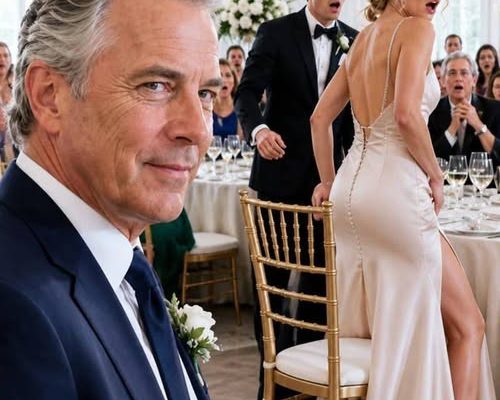
My ex ignored our twin sons for 13 years, setting off a stage reveal at the National Invitational that ruined his pride.

Part 1: How Dare You Come Here?

Thirteen years after my divorce, my ex-husband saw me outside one of the largest youth academic competitions in the state and looked at me as if I had trespassed into the life he built without us. His face changed, then he pushed through the crowd of parents and stopped a few feet away. “Claire?”

I had not heard Daniel Mercer say my name in person in more than a decade. Behind him stood Vanessa, the woman he had left me for, still polished and perfectly dressed. Beside them was a thirteen-year-old boy in an elite private-school blazer—their son, Lucas.

Daniel’s shock turned into anger. “What are you doing here?”

Vanessa stepped closer. “This is a private academic event.”

“It’s a statewide competition,” I said.

Daniel lowered his voice. “How dare you come here today?”

Several parents turned to stare. A few steps behind me stood my twin sons, Caleb and Noah. Daniel had not noticed them, or worse, had looked past them without realizing they were his.

“I’m here for my children.”

Daniel actually laughed. “Your children?”

His eyes flicked toward the boys for barely a second. Vanessa crossed her arms, beginning to understand something she did not want to say aloud.

“This weekend is important to Lucas,” Daniel said.

“So is it to Caleb and Noah.”

His expression hardened. “Claire, whatever resentment you still carry, don’t make today about the past.”

For a moment, I could hardly believe him. Thirteen years of missed birthdays, school concerts, fevers, homework, victories, and two boys growing into young men—and he thought I had driven three hours to chase him.

“I didn’t know you would be here,” I said quietly. “I’m not here for you.”

Then I turned to my sons. “Come on, boys. Registration closes in ten minutes.”

As we walked away, Caleb leaned close. “Mom, was that him?”

I nodded. “Yes.”

Noah glanced back. “Our father?”

“Yes.”

Neither boy said another word. But as we entered the auditorium, I realized Daniel had no idea what was about to happen.

Part 2: The Marriage He Left Behind

People think marriages end with shouting. Mine ended in silence.

Daniel and I had been married for six years. In the beginning, we were broke and happy, eating frozen pizza on the floor of a tiny apartment because we could not afford a dining table.

Then his career took off. Promotions, money, business dinners, weekend conferences, overseas trips. I was proud of him—so proud that I ignored the new password on his phone, the late-night messages, the expensive clothes, and the way he began criticizing things he used to love about me.

Then there was Vanessa.

She worked with him, and every time I saw her at company events, she was too friendly. I told myself I was insecure.

Around the same time, after nearly two years of trying, I learned I was pregnant. I waited to tell Daniel until my next appointment confirmed it.

There were two heartbeats.

Twins.

I drove home with the ultrasound picture beside me, smiling at every red light. I planned to cook his favorite dinner and place the photo inside a small box.

But Daniel was already sitting at the kitchen table with an envelope.

“There’s someone else,” he said.

“Vanessa?”

His silence answered.

Then he said the sentence that ended whatever hope I still had.

“Vanessa is pregnant.”

I placed my ultrasound on the table.

“I’m pregnant too.”

Daniel stared at it.

“Twins,” I said.

For one second, I saw shock, fear, maybe even happiness. Then it vanished.

He leaned back and covered his face.

“This can’t be happening.”

Those were the first words my children’s father said after learning they existed.

Part 3: Two Lives

For months, Daniel claimed he was confused. He said he had made mistakes, that he still cared about me, that he needed time.

But one question always ended the conversation.

“Are you leaving Vanessa?”

Eventually, he admitted the truth.

“No.”

Vanessa’s pregnancy was months ahead of mine, and Daniel had already moved into an apartment with her. He said he wanted to be responsible.

“Responsible to whom?” I asked.

He did not answer.

Then he said, “I can’t live two lives, Claire.”

I looked at him.

“You already created two.”

Mason was born first, and Daniel was there. When Caleb and Noah arrived four months later, he came to the hospital the following afternoon.

He stayed forty-seven minutes.

He held Caleb for five minutes and Noah for even less. Then his phone rang. Vanessa needed him. Lucas had a fever.

“I should go,” he said.

“You just got here.”

“I know. I’m sorry.”

That became Daniel’s specialty.

I’m sorry.

At three months, he visited twice. At six months, once. Their first birthday came with gifts, their second with a card, their third with a bank transfer and a text.

Eventually, everything came through lawyers and automatic payments. Daniel never fought for custody because he never asked for it.

I never blocked him from seeing the boys.

There was simply nothing to block.

He stopped coming.

By the time Caleb and Noah were five, Daniel was a photograph in a drawer, and I stopped waiting for him to become a man he clearly did not want to be.

Part 4: The Boys I Raised

Raising twins alone was not heroic. Most days, it was exhausting.

I worked, packed lunches, searched for missing library books, cleaned cereal from impossible places, and learned that two children can require six shoes while only knowing where three are.

Money was sometimes tight, but we were okay.

What mattered was that our home felt safe.

Caleb loved numbers. At six, he wanted to know why multiplication worked, not just how. By eight, he was solving logic puzzles meant for teenagers.

Noah loved building things—radios, model bridges, little machines made from broken toys. Once, when our toaster broke, I found him on the kitchen floor with a screwdriver.

“What are you doing?”

“Diagnosing it.”

“You’re ten.”

“That doesn’t mean the toaster knows.”

Neither boy thought he was extraordinary. They were simply curious.

I never pushed them to be first. I pushed them to finish what they started, thank their teachers, and treat losing as something they could survive.

When they eventually asked about Daniel, I told the truth without turning it into poison.

They were nine when Caleb asked, “Why doesn’t Dad visit?”

I sat between them on the couch.

“Your father made choices about how he wanted to live.”

“Because of us?” Noah asked.

“No,” I said firmly. “Adults sometimes make selfish choices. Those choices belong to the adults.”

Caleb stared at his hands.

“Does he have another kid?”

“Yes.”

“Lucas?”

I looked at him in surprise.

They had searched online.

Kids always find what adults think they have hidden.

“Does Lucas know about us?” Noah asked.

“I don’t know.”

That was the truth.

Part 5: The Competition

When the boys entered seventh grade, their science teacher encouraged them to join the school’s academic team.

Our middle school was not famous or wealthy. The team practiced in a classroom with mismatched chairs and a buzzer system held together with duct tape.

But their teacher believed in them.

They competed in math, science, literature, history, and logic. Caleb became their strongest mathematics competitor. Noah dominated science and engineering.

They started winning.

District.

Regional.

Then state qualifiers.

One evening, they came running through the front door.

“Mom! We made Nationals!”

The National Junior Scholars Invitational would be held at a university in Washington, D.C. Hundreds of students would compete in team rounds, individual challenges, timed exams, engineering demonstrations, and a championship quiz round.

I hugged them until they complained.

Then I spent two months figuring out how to pay for the trip.

Teachers organized fundraisers. A local engineering company sponsored part of the team. Parents sold cookies, washed cars, and ran raffles.

By spring, we had enough.

The boys never mentioned Lucas.

Neither did I.

So when we reached the university campus and I saw Daniel near the entrance, I genuinely thought my eyes were tricking me.

Then I saw Vanessa.

Then Lucas.

Then the banner.

National Junior Scholars Invitational.

And beneath it, listed among the sponsors:

The Mercer Foundation for Academic Excellence.

Of course.

Daniel had built a successful consulting company and, apparently, an image around supporting education.

The irony would have been funny if it had not been so sad.

Then Daniel saw me.

Then he stormed across the courtyard.

And then he said, “How dare you come here?”

Part 6: He Thought His Son Had Already Won

After registration, I thought Daniel would leave us alone.

I was wrong.

During the first break, Vanessa approached me near the refreshment table.

“Claire, I hope you understand why Daniel reacted that way.”

“I don’t.”

“This weekend means a lot to Lucas.”

“I’m sure it does.”

“He has been preparing for almost a year.”

“So have my sons.”

Her eyes moved toward Caleb and Noah. For the first time, she really studied them.

Caleb’s jaw.

Noah’s eyes.

Daniel’s smile when he was young.

Genetics can be inconvenient when people are trying to ignore the past.

Vanessa looked away.

“Lucas’s school is expected to win.”

“Good luck to him.”

She seemed annoyed that I would not argue.

“I just don’t want unnecessary drama.”

“Then we agree.”

I picked up my coffee.

“I came to watch my children compete. Whatever story you and Daniel have told yourselves for thirteen years is your business.”

Then I walked away.

The preliminary rounds began.

Lucas was good. He was intelligent, quick, and well prepared. None of the adults’ mistakes were his fault.

His school dominated literature and performed strongly in history.

Daniel sat near the front, applauding every time Lucas answered correctly.

I sat ten rows back with the Cedar Grove parents.

Our kids had no matching blazers, no professional coaches, no foundation carrying their father’s name.

But they were fearless.

Caleb won the individual mathematics semifinal by one point. Noah built a functioning water-filtration model in under twenty minutes and scored highest in engineering.

By Saturday evening, Cedar Grove ranked second overall.

Lucas’s academy was first.

The championship would be Sunday afternoon.

Part 7: The Final Round

At dinner that night, Caleb barely spoke.

“Nervous?” I asked.

“A little.”

Noah stabbed a french fry. “I hate that he’s here.”

I knew who he meant.

“Your father?”

Noah nodded. “He keeps watching us now.”

Caleb added, “I think he figured it out.”

“He knows who you are.”

“No,” Caleb said. “I mean he figured out we’re actually good.”

That broke my heart in a strange way.

Not because Caleb wanted Daniel’s approval, but because he had noticed Daniel’s surprise.

I placed my hands on the table.

“Tomorrow has nothing to do with him. You don’t have to prove he made a mistake. You don’t have to prove you deserved his attention. You don’t have to beat Lucas to make a point about this family.”

Noah frowned. “Then what are we supposed to do?”

“What you came here to do.”

Caleb smiled. “Win?”

“Do your best.”

Noah grinned. “So… win.”

“Eat your dinner.”

Sunday’s championship filled the main auditorium. Parents packed the seats, teachers lined the walls, cameras streamed online, and the top four schools sat onstage.

Before it began, Daniel walked past me and leaned down.

“I know those boys are Caleb and Noah.”

“Congratulations.”

“You could have told me.”

“Told you what?”

“That they were involved in this.”

I stared at him.

“You haven’t asked me a question about them in eleven years.”

“That’s not fair.”

“No, Daniel. Fair would have been them having a father.”

The lights dimmed.

I turned away.

“Go sit with your family.”

Part 8: Two Gold Medals

Cedar Grove fell behind early.

Then Noah answered three science questions in a row. Caleb solved a probability problem no other team even attempted.

With five questions left, the scores were tied.

Lucas buzzed first.

Correct.

His academy took the lead.

Cedar Grove answered the next question.

Tie again.

The third went unanswered.

Then Lucas buzzed on the fourth.

Wrong.

The penalty dropped his team five points behind.

Daniel covered his mouth with both hands.

Then came the final question.

A logic problem appeared on the screen. The moderator read it aloud.

Thirty seconds.

Twenty.

Ten.

Caleb leaned toward Noah.

Noah whispered something.

Caleb shook his head.

Five seconds.

Then Noah hit the buzzer.

“Cedar Grove.”

He answered.

The auditorium went silent.

The moderator looked down.

Then smiled.

“Correct.”

For one second, nobody moved.

Then the Cedar Grove section exploded.

Teachers jumped up. Parents screamed. I covered my face and cried.

My boys had done it.

Their public school with the broken buzzer system had won the national team championship.

But that was not the biggest surprise.

After the team awards, individual medals were announced.

The gold medal for mathematics went to Caleb Bennett.

Then science and engineering.

The gold medal went to Noah Bennett.

Two brothers.

Two golds.

One mother crying so hard she could barely see.

Across the aisle, Daniel’s face had turned a stunned red. Vanessa looked furious.

Neither of them clapped.

Lucas did.

That mattered to me.

Daniel stared at Caleb and Noah as if he were looking at thirteen years he had missed—first bicycles, school plays, lost teeth, exams, ordinary nights, and every small moment that builds a childhood.

Part 9: The Picture He Wanted

After the medals, Daniel stepped into the aisle.

For a second, I thought he was coming to me.

He wasn’t.

He was moving toward the stage.

“Daniel,” I said.

He stopped.

“I want a picture with them.”

I stared at him. “A picture?”

“They’re my sons.”

There it was.

Not I want to congratulate them.

Not I want to tell them I’m proud.

A picture.

Thirteen years of absence, and suddenly he wanted proof of connection.

Maybe for himself.

Maybe for his foundation.

Maybe because people were watching.

I did not know.

But Caleb had heard him. He walked down from the stage, medal still around his neck.

Daniel smiled nervously.

“Caleb. You were incredible up there.”

“Thank you.”

“I’m proud of you.”

Caleb looked at him for a long moment.

Then he said something I will remember forever.

“Mom is the one who should be proud. She was there for the work before there was a medal.”

No one spoke.

Noah joined us.

Daniel looked from one twin to the other. “I know I haven’t been around.”

Noah raised an eyebrow. “That’s one way to say it.”

“I made mistakes,” Daniel said.

“We know,” Caleb answered.

“I’d like a chance to explain.”

Noah glanced at his brother, then at me.

“Maybe someday.”

That was when I knew I had raised them well.

Not because they had won.

Because they did not humiliate him. They did not insult Lucas. They did not use victory as a weapon.

They simply refused to pretend thirteen years had not happened.

Part 10: The Brother They Never Knew

Before we left, someone called my name.

“Mrs. Bennett?”

I turned.

Lucas stood behind me without Daniel or Vanessa.

He looked nervous.

“Hi.”

“Hi, Lucas.”

He glanced toward the twins. “I wanted to congratulate them.”

“You can tell them yourself.”

He hesitated, then walked over.

For one awkward second, three boys stood facing one another, tied together by a history none of them had created.

Lucas spoke first.

“You guys were really good.”

Noah smiled. “You too.”

“I blew that second-to-last question.”

“I blew four in preliminaries,” Caleb said.

Lucas laughed, and the tension loosened.

Then he looked at me.

“My parents didn’t tell me much about you.”

“I figured.”

He looked back at the twins. “I knew Dad had been married before. I didn’t know…”

“That he had sons?” Caleb asked.

Lucas nodded.

That was another consequence Daniel had never considered.

His silence had not only deprived my sons of a father.

It had deprived three boys of knowing they were brothers.

Lucas looked embarrassed. “I’m sorry about how they acted.”

I touched his shoulder gently.

“You don’t have to carry their choices.”

Then Noah held out his hand.

“Still want to compare answers from the engineering round?”

Lucas smiled.

“Yeah.”

Five minutes later, all three boys were arguing cheerfully about a bridge-design problem.

I stood a few feet away and watched them.

Something inside me softened.

Not toward Daniel.

Not yet.

Maybe never in the way he wanted.

But toward the possibility that children could build something healthier from the wreckage adults left behind.

Part 11: What I Actually Won

Three days after we came home, Daniel called.

I almost did not answer.

Then I did.

“Claire.”

“What do you want?”

For once, he did not sound angry.

“I looked up their school. I found the article about their regional championship. I found Noah’s science fair project from last year and Caleb’s math league ranking.”

For thirteen years, all that information had existed.

He had simply never looked.

Daniel’s voice cracked. “I missed everything.”

“Yes.”

“I thought sending money meant I was doing what I was supposed to do.”

“No. It meant you were doing the easiest part.”

He did not argue.

Then he asked, “Do they hate me?”

It would have been easy to hurt him.

Instead, I told him the truth.

“They barely know you well enough to hate you.”

That hurt him more.

“What do I do?”

For the first time in thirteen years, Daniel asked the right question.

Not how to be forgiven.

Not how to get a picture.

What do I do?

“You start small. You don’t make promises. You don’t show up unexpectedly. You don’t expect them to call you Dad. And if they are not ready, you respect that.”

He was quiet.

Then he said, “Okay.”

There was no perfect ending. Daniel did not transform overnight. The boys did not suddenly spend weekends at his house. Vanessa and I did not become friends.

There were awkward dinners, canceled plans, resentment, and difficult conversations.

But months later, Daniel attended Noah’s science fair alone.

No photographer.

No foundation representative.

No expensive gift.

Just him, standing in the back of the gym with bad coffee.

When Noah finished presenting, Daniel walked over.

“That was impressive.”

Noah nodded. “Thanks.”

Then something small happened.

Noah began explaining his project.

Daniel listened.

That was all.

Ten minutes.

No dramatic hug.

No forgiveness speech.

Just a father finally listening to a son.

Sometimes healing begins so quietly that no one notices it.

People later assumed my favorite moment was watching Daniel and Vanessa realize my twins had won.

I’ll admit there was satisfaction in it.

But that was not what stayed with me.

What stayed with me happened back at the hotel, when the boys dropped their medals on the desk, ordered pizza, complained about dress shoes, lost a room key, and argued over who had answered more questions correctly.

Just my boys.

Not prodigies.

Not trophies.

Not proof that Daniel was wrong.

My sons.

That weekend did not prove my ex-husband had lost and I had won.

It proved something better.

Someone can walk away from you, underestimate you, and build another life as if yours stopped when they left.

But your life does not stop.

You keep going.

You raise the children.

You survive the ordinary days no one applauds.

And one day, you may realize that while someone else was busy protecting their image, you were building something real.

When the official photo arrived, I framed it.

Caleb on one side.

Noah on the other.

Two blue ribbons.

Two gold medals.

Me between them.

Daniel was not in the photograph.

Vanessa was not either.

And when I look at it now, I do not see revenge.

I see thirteen years of early mornings, late nights, sacrifice, laughter, fear, persistence, and love.

I see everything Daniel missed.

And everything we built anyway.

My ex ignored our twin sons for 13 years, setting off a stage reveal at the National Invitational that ruined his pride. Read More

My ex claimed my pregnancy was a lie for 8 years, setting off a snowy walk with 4 little boys that ruined his pride.

Part 1: The Christmas Invitation

Eight years after my divorce, my ex-husband invited me to Christmas dinner so I could watch him celebrate the perfect life he had built without me. He expected his “childless” ex-wife to arrive alone; instead, just before dinner, a military helicopter descended toward the snowy field beside his family’s Colorado estate.

When the door opened, I stepped out first.

Then four eight-year-old boys climbed down behind me.

The moment Major Nathan Caldwell saw their faces, his smile vanished.

But I am getting ahead of myself.

Three weeks earlier, I was sitting at my kitchen table in Colorado Springs when Nathan’s invitation appeared in my inbox.

The Caldwell Family Christmas Dinner.

The message was polite.

Amelia, my parents are hosting Christmas dinner this year. Since we’ve both moved on, I thought it might be nice to put the past behind us. My fiancée, Claire, will be there, along with the family. You’re welcome to join us. Nathan.

I stared at the screen.

Then I laughed.

Not because it was funny, but because I knew exactly what the invitation meant. Nathan had recently become engaged, and his parents were throwing a formal Christmas dinner to welcome Claire into the family.

He wanted me there as contrast.

Claire was beautiful, accomplished, charming, and apparently everything the Caldwells had ever wanted for him.

And then there was me.

Amelia Brooks.

The woman Nathan had once described during our divorce as someone who could not accept when something was over.

For years, he had let his relatives believe I remained lonely, bitter, and unable to move on. But the worst lie was not about me.

It was about the pregnancy he refused to believe.

Before the divorce was finalized, I told Nathan I was pregnant. He accused me of inventing a baby to make him stay. I offered medical paperwork. He refused to see it. I begged him to attend one appointment. He called it emotional manipulation.

Then came the ultrasound that changed my life.

Not one heartbeat.

Four.

Quadruplets.

I called Nathan.

He did not answer.

His attorney replied instead.

After that, I stopped begging a man to believe the truth.

Months later, four premature but determined boys were born: Oliver, Miles, Theo, and Jonah.

They became my whole world.

And Nathan knew none of it.

Part 2: Four Sons He Never Looked For

I had never hidden my sons because I was ashamed of them, and I had never spent eight years planning some dramatic Christmas revenge.

Life simply moved forward.

When the boys were babies, survival consumed everything. Feeding schedules covered the refrigerator. Medical appointments filled every calendar. Laundry never ended, and sleeping ninety minutes at a time felt like luxury.

My mother moved in for a while. My older brother, Ryan, helped whenever he could. Friends from the hospital brought food, and neighbors folded tiny clothes at my kitchen table.

Slowly, the boys grew.

Oliver became the quiet reader. Miles could take apart almost anything and usually put it back together. Theo was fearless, charming, and responsible for half the gray hairs on my head. Jonah was sensitive, funny, and always noticed sadness before anyone else did.

They looked unmistakably related.

Worse for Nathan, they looked unmistakably like him.

All four had his dark eyes, straight nose, crooked eyebrow, and stubborn expression. My brother once watched Miles press his lips together in irritation and nearly dropped his coffee.

“If Nathan ever needs a DNA test,” Ryan said, “he might be the only man alive who can save the lab fee.”

My sons always knew Nathan’s name. I never lied to them, but I never taught them to hate someone they had never met.

When Oliver saw the invitation on my laptop, he asked, “Does his family know about us?”

That question hurt.

“They know I told him I was pregnant.”

“That’s not what I asked.”

No.

It wasn’t.

I looked toward the living room, where his brothers were building a fortress from every cushion I owned.

“No,” I admitted. “I don’t think they know you were born.”

Oliver absorbed that quietly.

Then he said, “Maybe they should.”

Within minutes, all four boys were gathered around my laptop.

Theo frowned. “So he thinks Mom made up four whole people?”

Jonah corrected him. “Technically, he thinks she made up one.”

“That is not better,” Miles said.

Then Miles asked the question that changed everything.

“Can we go?”

I hesitated. “Why?”

He shrugged. “Because they’re our family too, right?”

That evening, I accepted Nathan’s invitation.

His reply came six minutes later.

Glad to hear it. I think this will be good for everyone.

I smiled.

He had absolutely no idea.

Part 3: The Helicopter in the Snow

The Caldwell estate looked exactly as I remembered it: stone walls, tall windows, dark timber beams, and Christmas lights wrapped around enormous pine trees. Fresh snow covered the ground, and smoke curled from the chimneys into the cold afternoon sky.

Inside, I knew everything would be perfect.

Nathan’s mother, Margaret, believed Christmas should look ready for a magazine photographer at any moment. There would be silver candlesticks, crystal glasses, a twelve-foot tree, and a dinner table large enough for three generations of Caldwells.

At 4:15 p.m., Nathan walked outside with several relatives to greet guests.

Later, Claire told me they had been talking about me.

Apparently, someone asked if I was really coming.

Nathan laughed.

“She said she is.”

“Alone?”

“Who else would she bring?”

Then they heard the helicopter.

At first, no one connected it to the dinner. Colorado Springs had enough military activity that aircraft overhead were normal.

But this helicopter was descending.

Snow lifted in spirals as it approached the authorized landing field beyond the property boundary. Margaret stepped onto the terrace.

“What in the world?”

The aircraft touched down.

A crew member stepped out first.

Then me.

I wore a cream winter coat, dark trousers, and the red scarf Jonah had chosen because he said Christmas required “at least one dramatic color.”

Then Oliver climbed down.

Then Miles.

Then Theo.

Then Jonah.

Four boys.

Four matching dark heads.

Four faces Nathan could not explain away.

For perhaps the first time in his adult life, Major Nathan Caldwell had nothing to say.

He stared at the boys.

Then at me.

Then back at them.

His face went pale.

Margaret lifted one hand to her mouth. Nathan’s father, Richard, whispered one word.

“No.”

I took my sons’ hands.

Together, we walked toward the house.

Part 4: Eight Years of Denial

Nathan met us halfway across the lawn.

“Amelia.”

It came out barely above a breath.

“Merry Christmas, Nathan.”

His eyes moved from one boy to the next.

“Who…”

He could not finish.

Theo whispered loudly to Miles, “This is more awkward than Mom said.”

“Theo.”

“Sorry.”

Nathan stared at me. “Are they…”

“Yes.”

His expression hardened automatically.

“No.”

I had expected shock, anger, maybe regret.

I should have known denial would arrive first.

“No?” I asked.

“This isn’t possible.”

Miles looked at him. “I’m pretty sure we’re possible.”

I placed a hand on his shoulder.

Nathan barely heard him.

“You told me you were pregnant.”

“I did.”

“You said one baby.”

“At the time, I thought it was one.”

His eyes widened. “Four?”

“Quadruplets.”

Margaret and Richard reached us then. Margaret stared at Oliver, then at Nathan, then back at Oliver.

“He looks exactly like you did at that age,” she whispered.

Richard stepped closer to Jonah.

“How old are you?”

“Eight.”

“When is your birthday?”

“August seventeenth.”

Richard turned toward his son. I watched the calculation happen in his face—the divorce, the dates, the pregnancy I had claimed, and Nathan’s certainty.

“Nathan…”

“I need to talk to Amelia privately.”

“No,” Oliver said.

Every adult turned toward him.

My oldest son stepped forward.

“You can talk to her. But if you’re talking about us, we’re staying.”

Something flickered across Nathan’s face.

Recognition, perhaps.

Because Nathan had always hated being excluded from conversations that concerned him.

Apparently, so did his son.

Claire approached quietly from behind the family. She was elegant, composed, and clearly unprepared for any of this.

“Maybe we should go inside,” she said gently. “The boys must be freezing.”

Jonah nodded immediately. “I can’t feel my toes.”

That broke the spell.

Margaret suddenly became a grandmother before anyone had officially given her permission.

“Oh! Of course. Please, come inside. All of you.”

She reached toward Jonah, stopped herself, and looked at me.

That hesitation mattered.

I nodded.

Jonah took her hand.

And Margaret Caldwell’s eyes filled with tears.

Part 5: Dinner With Four Missing Chairs

If you have never watched a formal family dinner reorganize itself around four unexpected eight-year-olds, I recommend it.

Within ten minutes, Margaret’s careful seating plan was useless. Four extra chairs appeared. Additional place settings were brought out. Theo discovered the Christmas crackers beside each plate and started negotiating for everyone else’s.

Miles found Richard’s antique model airplane collection.

Jonah complimented Margaret’s tree.

Oliver stayed close to me.

Nathan sat across from us and barely touched his food. His relatives kept looking from him to the boys.

Finally, Aunt Caroline set down her fork.

“Well, someone needs to say something.”

“Caroline,” Margaret warned.

“What? We have four children at this table nobody knew existed.”

Theo leaned toward Jonah. “I like her.”

I nearly choked on my water.

Caroline looked at me. “Amelia, did Nathan know?”

The room froze.

I answered carefully. “He knew I was pregnant before the divorce was finalized.”

Every eye shifted to Nathan.

Richard spoke first. “You told us she made it up.”

Nathan’s jaw tightened. “I believed she had.”

“You believed?”

“I was told there was a pregnancy after our marriage had already collapsed. Amelia wanted me to come back.”

“That is not what happened,” I said.

Nathan finally looked at me. “You called me repeatedly.”

“To ask you to attend a medical appointment.”

“You knew I was leaving.”

“I knew you had stopped listening.”

The room became painfully quiet.

I could feel my sons absorbing every word.

So I ended it.

“This conversation isn’t helping them.”

I turned to the boys. “Why don’t you check out the game room downstairs?”

Richard stood quickly. “It’s still there.”

Miles brightened. “Does it have foosball?”

“It does.”

“Pool table?”

“Yes.”

“Sir, you have my attention.”

Richard smiled despite himself and led them away. Margaret followed, claiming someone had to show them where she kept the Christmas cookies.

That left Nathan, Claire, and me.

For several seconds, no one spoke.

Then Nathan asked, “Why didn’t you tell me they were born?”

I stared at him.

“I did.”

Part 6: The Letter He Never Read

Nathan’s eyes narrowed. “No, you didn’t.”

“I sent a certified letter to your attorney after they were born. It included their birth records and a request for you to contact me if you wanted to establish paternity formally.”

He looked stunned.

“I never saw it.”

“That may be true. But it was delivered.”

I had kept copies. Not because I planned a confrontation eight years later, but because becoming the single mother of quadruplets teaches you to keep paperwork for everything.

“I also called the number I had for your unit family liaison,” I said. “I was told communication should continue through counsel because the divorce had just been finalized.”

For the first time that evening, the certainty left Nathan’s face.

Claire looked at him.

“You never checked?”

He did not answer.

She repeated it. “Nathan, after Amelia told you she was pregnant, you never checked whether she actually had a baby?”

“I thought…”

He stopped.

There was nowhere for the sentence to go.

Claire finished it for him.

“You thought you couldn’t possibly be wrong.”

That was the moment I started liking her.

Later, I found Nathan alone in his father’s study, surrounded by generations of Caldwell military history: portraits, medals, commendations, and his grandfather’s folded flag.

For the first time, he looked small beneath all of it.

“Amelia.”

“The boys are playing downstairs.”

He nodded. “Oliver beat my father at chess.”

“That sounds like Oliver.”

A faint smile appeared, then vanished.

“Are you sure they’re mine?”

I had known the question would come.

“Yes.”

“I want a DNA test.”

“You’re entitled to ask.”

His eyebrows rose, as if he expected a fight.

“I’m not offended, Nathan. DNA doesn’t frighten me. But understand something. You don’t get to demand proof and assume proof automatically gives you a relationship with them.”

“They’re my sons.”

“Biologically, yes.”

“That means something.”

“It means a great deal. But fatherhood is not a rank someone hands you because you passed a test.”

He looked away.

“They are eight years old,” I continued. “They have memories, fears, routines, favorite foods, and inside jokes. Oliver hates bananas. Miles sleeps with a screwdriver under his pillow because apparently that seems reasonable. Theo pretends he is not afraid of thunderstorms. Jonah cries at movies where dogs get lost.”

Despite everything, Nathan smiled.

Then his eyes filled.

“I have four sons.”

“Yes.”

“I missed everything.”

“Yes.”

That answer hurt him.

But I was done protecting him from the truth.

Part 7: Starting With a First Name

The DNA results came back after New Year’s.

The probability of Nathan’s paternity was greater than 99.99 percent.

No one was surprised.

Except perhaps Nathan, who stared at the report for several minutes before putting it down.

Our first real conversation afterward happened at my house. He arrived without his uniform, medals, or command voice. Just jeans, boots, and a nervous expression.

The boys were in the kitchen making pizza. Theo had flour in his hair. Miles was arguing that pepperoni distribution required mathematical fairness. Jonah was eating cheese straight from the bag.

Oliver noticed Nathan first.

“Hi.”

“Hi.”

An awkward silence followed.

Then Nathan said, “Could I talk to you guys?”

Four boys looked at me.

I nodded.

We moved into the living room. Nathan sat across from them, and for several seconds, the man who could brief senior officers without notes could not find one sentence.

Finally, he said, “I owe you an apology.”

The boys listened.

“Your mom told me about you before you were born. I didn’t believe her.”

Miles frowned. “Why?”

Nathan swallowed. “Because I was angry. And proud. And I thought I understood everything when I didn’t.”

Theo crossed his arms. “That was dumb.”

“Theo,” I said.

Nathan raised a hand. “No. He’s right.”

Theo immediately looked pleased.

Nathan continued. “I missed eight years because of a decision I made. That is not your mom’s fault. And it is not yours.”

Oliver asked, “Do you want to be our dad now?”

There it was.

The hardest question.

Nathan’s eyes filled again.

“Yes.”

Oliver studied him.

“But you don’t know us.”

“No.”

“And we don’t know you.”

“No.”

“So you can’t just suddenly be Dad.”

Nathan nodded slowly. “You’re right.”

The old Nathan would have defended himself.

Explained.

Commanded.

This man did none of those things.

He asked, “Could I start by being Nathan?”

Oliver looked at his brothers.

Miles shrugged.

Theo asked, “Can you throw a football?”

“Yes.”

“How far?”

“Pretty far.”

“Then I vote yes.”

Jonah sighed. “That’s not how voting works.”

“It is now.”

Oliver finally smiled.

“Okay. You can start as Nathan.”

And that was how it began.

Not with instant forgiveness.

Not with a perfect reunion.

With a first name.

Part 8: A New Kind of Family

There was one more person whose life had been overturned that Christmas.

Claire.

A week after the DNA results, she asked to meet me for coffee. I expected discomfort, maybe defensiveness.

Instead, she sat across from me and said, “I need you to know I had no idea.”

“I know.”

“Nathan told me there had been a pregnancy claim during your divorce. He said it wasn’t real.”

“That’s what he believed.”

Claire shook her head. “That’s what he chose to believe.”

Again, I liked her.

I asked the question I had been avoiding.

“Are you still getting married?”

She looked through the window.

“We postponed the wedding.”

“This isn’t because he has children,” she said quickly. “I always wanted a family.”

“Then why?”

“Because I need to know the man I marry can admit when he is wrong before eight years pass.”

That was fair.

Over the next months, Claire did not disappear. She did not compete with me or demand the boys call her anything. She simply showed up when invited.

She learned Oliver loved astronomy. She helped Miles build a model rocket. She taught Theo a card game he became obsessed with. She discovered Jonah loved baking, and together they made enough cupcakes to feed the neighborhood.

Slowly, something unexpected formed.

Not the family any of us would have designed.

But a family nonetheless.

Margaret became the most enthusiastic grandmother in Colorado and tried to recover eight missing Christmases in three months.

The first time she arrived with twenty-seven wrapped gifts, I stopped her at the door.

“Margaret.”

“I missed eight birthdays.”

“You cannot fix that with a department store.”

“I know.”

Then she held up a smaller package.

“These are photo albums. I thought the boys could choose pictures from each year, and I could make four copies.”

That was different.

I let her in.

Richard took the boys fishing. The first trip lasted forty-five minutes because Theo fell into the lake. The second went better.

Nathan’s relationship with the boys grew slowly. There were setbacks. He missed one school performance because duty called, and Oliver barely spoke to him for a week.

Old Nathan would have explained why everyone needed to understand.

New Nathan sat beside Oliver and said, “I know why you’re disappointed.”

Another time, Nathan tried to discipline Miles during a visit.

Miles shouted, “You’re not my real dad!”

The words devastated him.

But he did not leave.

He did not retaliate.

He said, “I understand why it feels that way. I’m still going to care about you.”

Eventually, the boys began calling him Dad.

Not at the same time.

Oliver was last.

Nearly two years after that Christmas, Nathan drove him home from a science competition during a snowstorm. When they reached my driveway, Oliver climbed out, then leaned back through the open door.

“Thanks, Dad.”

Nathan sat in his truck for ten minutes afterward.

I knew because I watched from the window.

Part 9: Four Second Chances

The next Christmas, we returned to the Caldwell estate.

This time, no helicopter was involved.

Theo was deeply disappointed.

“We peaked too early,” he complained.

“We are arriving in a minivan like normal people.”

“Normal people are boring.”

“Get your coat.”

Inside, Margaret had changed the family display in the hallway. The military photographs were still there. The medals remained. The folded flags still rested in polished cases.

But beside them were four new framed photographs.

Oliver holding his science-fair ribbon.

Miles covered in grease beside a small engine he had rebuilt with Richard.

Theo scoring his first soccer goal.

Jonah wearing an apron and holding a ridiculous three-layer cake.

Below them was a new family photo.

All four boys.

Me.

Nathan.

Margaret and Richard.

Even Claire.

Not everyone had the same last name. Not everyone lived under one roof. Nobody pretended the previous eight years had not happened.

But everyone belonged.

Nathan stood beside me in the hallway.

“I’ve wanted to ask you something.”

I glanced at him. “Dangerous beginning.”

He smiled. “Why did you really come last Christmas?”

There had been a time when I might have said I wanted him to know he was wrong.

Maybe part of me had.

But that was not the real reason.

“Oliver asked whether your family knew about them,” I said. “I realized I had spent years believing I was protecting them by keeping them away from people who doubted me. But eventually, they became old enough to decide whether they wanted that door opened.”

“And they did.”

“Yes.”

Nathan looked toward the kitchen, where the boys were helping Margaret decorate cookies.

“I’m glad.”

“So am I.”

He was quiet for a moment.

“Amelia?”

“Yes?”

“I’m sorry.”

He had apologized before, but this one felt different.

No explanation.

No defense.

No request for forgiveness.

Just accountability.

“I know,” I said.

And I did.

Forgiveness did not mean pretending the past was acceptable.

It meant the past no longer controlled the future.

Nathan and I never got back together. That surprises some people when they hear this story, as if a dramatic revelation is supposed to restore a marriage.

But life does not always need to return to what it was.

Sometimes healing means building something entirely new.

Nathan eventually married Claire. I attended the wedding. So did the boys.

Theo nearly dropped the rings. Miles corrected the DJ’s speaker setup. Jonah cried during the vows. Oliver gave Nathan a quiet hug afterward.

And me?

I had already built the life Nathan once assumed I could never create.

A career I loved.

Four sons who filled my home with noise, missing socks, impossible grocery bills, and more joy than I knew one life could hold.

Sometimes I still think about that first Christmas.

The helicopter blades over the snow.

Margaret standing on the terrace with her hand over her mouth.

Nathan staring at four familiar faces and realizing eight years of certainty had collapsed.

People assume my favorite part was seeing him turn pale.

It was not.

My favorite moment came later that night, when Jonah fell asleep against Richard’s shoulder, Miles and Theo played games downstairs, Margaret showed Oliver childhood photos of Nathan, and Nathan stood silently in the doorway watching them.

He looked at me with enormous regret.

But there was something else too.

Gratitude.

Because although he could never recover the eight years he lost, he finally understood the truth pride had kept him from seeing.

Family is not a reputation.

It is not a last name engraved on silver.

It is not a wall of medals or a perfect Christmas table.

Family is who shows up, who listens, who admits when they were wrong, and who stays long enough to rebuild what was damaged.

That Christmas, Nathan thought he had invited his lonely ex-wife to witness the perfect life he created without her.

Instead, four little boys crossed a snow-covered field toward him.

Four sons.

Four second chances.

And one truth he could no longer deny.

My ex claimed my pregnancy was a lie for 8 years, setting off a snowy walk with 4 little boys that ruined his pride. Read More