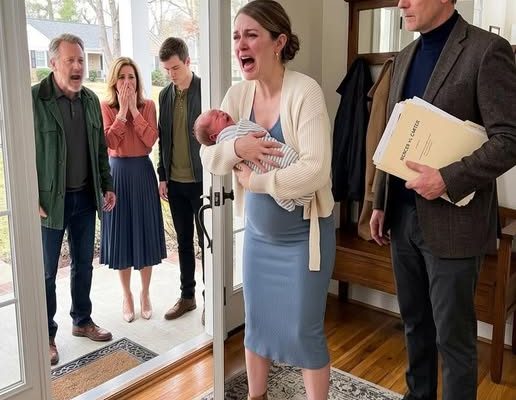
My stepmother demanded I give up my room or leave, setting off a choice that ruined her weekend plans.

“Either give your master bedroom to your sister by tomorrow morning, or pack your bags and get out of this house forever.”

Cynthia didn’t ease into it. She dropped the sentence across the dinner table like she had been waiting years for the chance.

For one long second, the only sound was the ceiling fan clicking overhead.

My father, Daniel, stared down at his plate.

My stepsister Madison, eighteen, leaned back with a faint smile.

I was twenty-five, sitting inside the same Austin house where I had spent most of my childhood. The walnut cabinet behind Cynthia had been chosen by my mother. The scratch beside the doorway came from the day I tried dragging my bicycle inside during a thunderstorm.

Cynthia had lived there for nine years, yet somehow she always made me feel like the guest.

And now Madison wanted **my bedroom**—the biggest room upstairs, with tall windows, hardwood floors, a private balcony, and warm afternoon sunlight. My mother had helped design it during the renovation.

Madison wanted to turn it into a social-media studio.

“You’re barely home,” she said, flicking her hair over one shoulder. “I need natural light. The basement room is fine for you.”

“The basement is my home office.”

Cynthia gave me a cold smile.

“You can work from anywhere.”

“So can Madison.”

Her fork struck her plate.

Dad finally cleared his throat.

“Natalie, maybe just do it for a few months. **Keep the peace.**”

There it was.

The phrase he had used for years.

When Cynthia gave away my mother’s Christmas dishes.

When Madison ruined my clothes.

When Cynthia called me “difficult” because I refused to pay for Madison’s spring-break trip.

I looked at my father.

I wanted one sentence from him.

One moment when he chose me instead of silence.

“Tell her,” I said.

His eyes lifted to mine.

Then dropped.

Something inside me went completely still.

Cynthia stood with both palms pressed against the table.

“I am finished with your attitude. This is my home too. Tomorrow morning, your room becomes Madison’s. If you don’t like it, leave.”

Dad said nothing.

I folded my napkin.

“All right.”

Cynthia blinked.

“What?”

“All right.”

I went upstairs, pulled two hard-shell suitcases from my closet, and packed carefully.

Work clothes.

My laptop.

Important documents.

My mother’s jewelry.

A framed photograph.

And the cedar box I had kept hidden behind winter blankets for years.

Twenty-five minutes later, I carried everything downstairs.

Madison laughed.

“Wow. She’s really doing it.”

Dad sat outside on the porch in the dark.

As I walked past him, he finally spoke.

“Natalie, don’t make this dramatic.”

“I’m not.”

Then I loaded my car and drove away.

Nobody followed.

Forty minutes later, I turned onto a private road in Westlake Hills and pressed the remote clipped inside my car.

A steel gate opened.

Lights illuminated a modern hillside house built from glass, limestone, and cedar, overlooking the Texas Hill Country.

**My house.**

I had bought it six weeks earlier after years of saving and a large bonus from the software company where I worked.

I hadn’t told my family because Cynthia had a way of turning every achievement into either a competition or a request for money.

That night, sitting at the kitchen island in my new home, I opened the cedar box.

Inside was a photograph of Mom, a faded envelope in her handwriting, and a thick stack of estate papers.

I knew my mother had left me an interest in the Austin house, but I had never studied the details closely.

Halfway down the first document, one sentence stopped me.

**“No beneficiary shall be permanently deprived of residence in the property by the surviving occupant.”**

The next morning, I called Arthur Bell, the attorney who had handled Mom’s estate.

After I explained what happened, he went quiet.

“Natalie, bring me everything. Don’t sign anything, and don’t discuss the documents with your father yet.”

At his downtown office, Arthur spread the papers across a conference table.

Eventually, he removed his glasses.

“You believe you own half the house.”

“I thought I did.”

“You do. But that’s not the important part.”

He pulled out an older document.

“Your mother owned the Austin property before she married your father. It was purchased with money from your maternal grandparents’ estate. When she became ill, she placed it into a trust.”

“I know that.”

“Not all of it. Your father was granted a **life estate**—the right to live there after your mother died. Legal title was placed in trust for you.”

I stared at him.

“So Cynthia—”

“Cynthia has never owned one square inch of that house.”

For years, she had rearranged my mother’s furniture, thrown away her belongings, lectured me about gratitude, and treated me like a guest.

But she had been the guest all along.

Arthur tapped another paragraph.

If the surviving occupant **knowingly and permanently excluded the beneficiary**, the life estate could potentially be terminated.

My pulse quickened.

“Dad could lose the house because he let her throw me out?”

“Potentially. We need evidence the exclusion was intentional.”

Then I remembered the dining room security camera.

Dad had installed cameras after a burglary two years earlier. The dining room camera faced the rear doors but also captured most of the table.

By noon, we had the recording.

Cynthia’s voice was perfectly clear:

**“Either give your master bedroom to your sister by tomorrow morning, or pack your bags and get out of this house forever.”**

Then came Dad’s silence.

Arthur watched the recording twice.

“That,” he said, “is evidence.”

Three days after dinner, Arthur and a process server arrived at the Austin house.

I was sitting on the terrace of my hillside home when my phone started vibrating.

Dad.

Cynthia.

Madison.

Dad again.

I answered.

“Natalie,” Dad whispered, “what did you do?”

Cynthia was shouting behind him.

“What I should have done years ago.”

“There’s a lawyer here. He says this house—”

Dad stopped.

“He says this house isn’t mine.”

“It never was.”

Cynthia grabbed the phone.

“You selfish little snake! You’re trying to steal your father’s home!”

I laughed once.

“No, Cynthia. I’m stopping you from stealing my mother’s.”

She hung up.

By evening, Cynthia had told the entire family I was evicting my father out of greed.

Madison posted a tearful video about being “made homeless by a jealous stepsister.”

Messages flooded in.

For one night, I almost broke.

Then headlights swept across my living-room wall.

Cynthia’s SUV stopped outside my gate.

She called six times before I answered.

“Open it.”

“No.”

“Don’t be childish, Natalie. We need to discuss this face-to-face.”

“You had that chance at dinner.”

Her voice suddenly softened.

That frightened me more than the shouting.

“Your father will fall apart if he loses that house.”

I looked through the glass at her silhouette beyond the gate.

“Then maybe you shouldn’t have ordered the legal owner to leave it.”

Silence.

For the first time, Cynthia understood I knew more than she did.

Then she changed tactics.

“Your mother wanted Daniel taken care of.”

“She did.”

“And Madison is his child.”

I tightened my grip on the phone.

At the time, I assumed she was defending Madison.

Later, I would understand she was testing how much I knew.

“You’ve always been jealous of her,” Cynthia continued. “This isn’t about property. You want revenge.”

“No. Revenge would be making you feel the way you made me feel for nine years.”

“And what is this?”

I watched the closed gate between us.

“A boundary.”

Her expression changed beneath the headlights.

“You’ll regret humiliating this family.”

I almost answered.

Instead, I ended the call.

Ten minutes later, she drove away.

The following morning, Arthur told me Cynthia had contacted another attorney and claimed the trust had been “misrepresented” to her.

He sounded almost amused.

“If she signed anything acknowledging the trust,” he said, “that argument gets very difficult.”

Neither of us knew yet how much she had signed.

Then I remembered the sealed envelope inside the cedar box.

I had never opened it.

Across the front, Mom had written:

**For Natalie, when the house stops feeling like home.**

Inside were three pages.

The first line read:

**My darling girl, if you are reading this, then the thing I feared has probably happened.**

Mom explained that during the final year of her illness, she discovered Dad was emotionally involved with another woman.

Cynthia.

They had known each other long before Dad ever admitted it.

Mom had seen messages.

She knew Cynthia resented the house because every room reminded Daniel of his first family.

Then I reached the sentence that made my stomach drop.

**Madison is not entering your life by accident.**

Years earlier, during a separation my parents had hidden from me, Daniel had an affair with Cynthia.

**Madison was his daughter.**

My stepsister was actually my half-sister.

Suddenly, everything fit.

Dad’s endless surrender.

His obsession with “keeping the peace.”

Cynthia’s certainty that Madison deserved anything I had.

Mom had known.

And still, she had allowed Dad to remain in the house.

The final page explained why:

**“Because you loved him, Natalie. And I could not bear to make you lose both parents at once.”**

That was when I cried.

Not over the bedroom.

Not over the house.

I cried for my mother, dying while still using what strength she had left to soften a betrayal for her child.

Her letter ended:

**“Do not confuse forgiveness with surrender.”**

The next afternoon, Dad came to my hillside house alone.

I placed Mom’s letter on the counter.

His face lost all color.

“You knew,” I said.

“Yes.”

“How long?”

“I knew Madison was mine from the beginning.”

“And Mom knew.”

Dad covered his face.

“Yes.”

“You let me think Cynthia appeared after Mom died.”

“I was ashamed.”

“You let her erase Mom piece by piece because you were ashamed?”

He began crying.

For the first time, it didn’t affect me.

“I loved your mother.”

“Maybe. But you didn’t protect her memory. And you didn’t protect me.”

He nodded.

Then he said something unexpected.

“Arthur hasn’t told you everything.”

He placed a small brass key on the counter.

“Your mother gave me this two days before she died. She made me promise not to use it unless the trust was challenged.”

The key opened a safe-deposit box downtown.

The next morning, Arthur and I opened it.

Inside was a notarized affidavit signed by Cynthia twelve years earlier.

Arthur read it twice.

His expression changed.

“Natalie, you need to see this.”

The affidavit confirmed that Cynthia had accepted a private financial settlement from my mother.

In exchange, Cynthia acknowledged that the Austin house belonged to my mother’s trust, that she would never make an ownership claim, and that any attempt to gain an interest through Daniel would constitute fraud.

But the final paragraph was the real bombshell.

Cynthia had sworn that **Daniel was not Madison’s biological father.**

Attached was a DNA laboratory report.

Probability of paternity:

**Excluded.**

I felt the room shift beneath me.

Dad had spent eighteen years believing Madison was his daughter.

My mother knew the truth.

Cynthia knew.

And Cynthia had apparently used Dad’s guilt—and his belief that Madison was his child—to control him for years.

That evening, I gave Dad the report.

He read it twice before sitting down.

“She knew?” he whispered.

“Yes.”

“And your mother?”

“Yes.”

He gave a broken laugh.

“All these years, I thought I was paying for what I did.”

Maybe he was.

Just not in the way he believed.

Two weeks later, the trust formally terminated Dad’s life estate.

I could have forced everyone out immediately.

I didn’t.

I gave Dad sixty days to find an apartment.

I gave Madison a choice.

She could stay temporarily while finishing her first semester of community college, as long as she treated both the house and me with respect.

She burst into tears.

“I didn’t know.”

“I know.”

“What happens to my mom?”

I looked toward the front door.

Cynthia stood there surrounded by suitcases.

The same kind of suitcases I had carried past her while she laughed.

**“She leaves.”**

Cynthia stared at me, waiting for mercy.

I remembered Mom’s final line.

Do not confuse forgiveness with surrender.

I opened the door.

Cynthia walked out.

Dad followed a month later.

Madison stayed until winter break, then moved into a dorm.

We didn’t suddenly become best friends.

Life doesn’t work that neatly.

But we became something neither of us expected.

**Sisters by choice, even after DNA proved we weren’t sisters by blood.**

And the Austin house?

I never moved back.

I stayed in my hillside home.

I restored Mom’s walnut cabinet, repaired the scratched doorway, and turned my former bedroom into a quiet reading room.

Then I did something Cynthia never expected.

I donated use of the Austin house to a local nonprofit providing temporary housing for women and children rebuilding their lives after family displacement.

Arthur asked if I was certain.

I looked through the tall windows my mother had chosen.

**“A house should never be used to make someone feel trapped.”**

Six months after that dinner, an envelope arrived with no return address.

Inside was a photograph.

My mother, years younger, stood on the Austin porch.

Beside her was Cynthia.

They were smiling.

On the back, in Mom’s handwriting, were six words:

**I knew who she was first.**

I sat there for a long time.

Then I understood.

Mom had never been blindsided.

She had met Cynthia before Dad confessed.

She had investigated.

Protected the house.

Protected me.

And even protected the child she believed might belong to Daniel.

She had built a legal wall around my future while everyone else thought she was simply dying.

And years later, when Cynthia ordered me to surrender my bedroom or get out, she unknowingly stepped into a trap created by the woman whose place she had spent nearly a decade trying to erase.

The house had never been Cynthia’s victory.

**It had been my mother’s final act of love.**
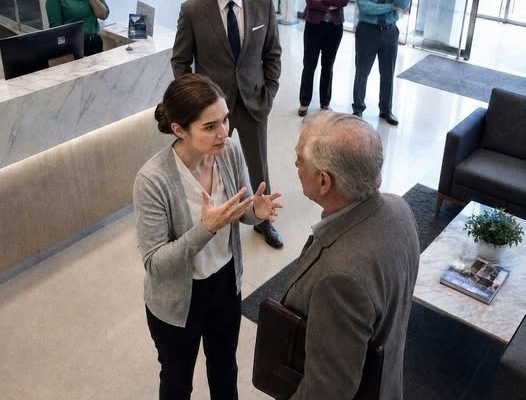
My stepmother demanded I give up my room or leave, setting off a choice that ruined her weekend plans. Read More

I used sign language to help an ignored old man, setting off a moment that changed my internship forever.

I was a shy intern, the kind of person who practiced saying “good morning” before stepping into an elevator.

During my third week at Hawthorne Technologies in Seattle, I noticed an elderly man standing alone in the marble lobby. He wore a faded brown coat, carried an old leather briefcase, and kept looking between the reception desk and the security gate.

The receptionist raised her voice each time he failed to respond.

“Sir, you need an appointment.”

He pointed to his ear and shook his head.

She sighed. “I said, do you have an appointment?”

Two executives passed without slowing down. A security guard moved closer, already reaching toward the man’s elbow.

I knew enough American Sign Language to recognize the fear on his face.

My younger brother, Lucas, had been born Deaf. Our family learned to sign long before I learned to drive.

I left the visitor badges I had been sorting and walked over.

“Hello,” I signed. “Can I help you?”

Rain streaked the glass doors, while everyone inside seemed too busy to notice him.

The old man’s shoulders relaxed.

“My name is Walter,” he signed back. “I came to see Daniel Hawthorne.”

Daniel Hawthorne was our CEO.

“Do you have a meeting?”

Walter opened his briefcase and showed me a sealed envelope marked with the company logo. Before I could read the name written across it, my supervisor, Melissa Grant, rushed over.

“Emma, what are you doing?”

“Helping him.”

“You are an intern. Return to your desk.”

Walter signed, “She cannot understand me.”

I translated.

Melissa looked at his worn coat, then at the busy lobby.

“Tell him Mr. Hawthorne is unavailable.”

“He says the letter is urgent.”

Without asking, she took the envelope from Walter and glanced at the front.

For one second, her expression changed.

Then she pushed it beneath a folder on the reception counter.

“Security,” she said, “escort him outside.”

Walter reached toward the envelope.

The guard grabbed his wrist.

I stepped between them before I had time to think.

“Don’t touch him.”

The lobby went silent.

Melissa stared at me.

“You’re finished here.”

Then the private elevator doors opened.

Daniel Hawthorne stepped out with three board members behind him.

From the glass mezzanine above, he had clearly witnessed everything.

His eyes moved from the guard’s hand around Walter’s wrist to the hidden envelope.

Then Daniel looked directly at the old man and began signing.

“Dad,” he said with his hands, “why are you here?”…

Part 2

Nobody in the lobby moved.

Walter Hawthorne—the man security had almost escorted onto the sidewalk—was the CEO’s father.

Daniel crossed the lobby and removed the guard’s hand from Walter’s wrist.

He never raised his voice.

That somehow made the room feel colder.

“Who ordered this?” he asked.

Melissa answered first.

“There was confusion. He had no appointment.”

Walter began signing quickly.

Daniel watched every movement.

“He says he showed you a letter with his name on it,” I translated quietly.

Daniel turned toward the reception desk.

“Where is it?”

Melissa insisted she had never seen a letter.

I reached beneath the folder and pulled out the sealed envelope.

All the color left her face.

Daniel opened it in front of everyone.

Inside was a handwritten note, a hospital bracelet, and a flash drive.

Walter had spent the previous month visiting Hawthorne offices across three states without revealing who he was.

He wanted to see how employees treated people who struggled to communicate.

Seattle had been his final stop.

The hospital bracelet showed he had left a cardiology appointment only an hour earlier.

It had also been the worst visit.

Daniel invited Walter, the board members, and me upstairs.

Melissa was ordered to stay in the lobby.

Inside the conference room, Walter explained that he had founded Hawthorne Technologies forty-one years earlier.

After losing most of his hearing, he withdrew from public life but retained twenty-two percent of the company’s voting shares.

His visit was not simply a test of manners.

The flash drive contained complaints from Deaf employees, applicants, and customers.

Requests for interpreters had been ignored.

Video meetings had no captions.

One applicant had been rejected after a manager wrote, “Communication risk” beside her name.

That manager was Melissa.

Daniel looked at me.

“Did you know any of this?”

“No, sir.”

“Why did you help him?”

“Because he asked.”

Walter smiled.

Then he signed something to Daniel that the CEO did not translate.

I did.

“He says kindness that appears only after someone is identified is not kindness. It is strategy.”

One board member lowered his eyes.

By noon, Melissa and the security guard had been suspended while an investigation began.

Daniel asked me to remain in the conference room and interpret until a certified interpreter arrived.

I thought the crisis was ending.

Then Walter removed one final document from his briefcase.

It was a board resolution drafted the night before.

The first line proposed removing Daniel Hawthorne as CEO for allowing a culture of discrimination.

The second named the person Walter wanted appointed interim ethics officer.

My name was printed there.

And beneath it was evidence showing someone had deleted sixty-three accessibility complaints before the board could review them.

PART 3

I stared at my name until the letters barely looked real.

“I’m an intern,” I said.

Walter signed, “That means you have not yet learned which truths are profitable to ignore.”

Daniel did not fight the investigation.

He asked the board for forty-eight hours to secure the complaint system, preserve emails, and determine who had erased the records.

By evening, outside counsel had recovered the complaints from a backup server.

Melissa had deleted them using administrator access provided by Chief Operating Officer Richard Vale.

Vale had repeatedly told managers that disability accommodations were “cost centers.”

He approved rejection templates, canceled a captioning service, and instructed Human Resources to resolve complaints without leaving written records.

Daniel had not personally issued those orders.

But the system had developed beneath him while he praised efficiency and trusted reports that made the company appear clean.

The board placed Vale on leave and approved an independent audit.

Daniel remained CEO temporarily, but he lost authority over the investigation.

Walter withdrew the resolution naming me interim ethics officer after I told him that accepting a position I was unqualified for would repeat the company’s mistake—valuing appearances over competence.

Instead, I joined the review team as a paid accessibility liaison working under a certified compliance director.

Melissa was fired after investigators discovered she had altered applicant records and lied about taking Walter’s letter.

The security guard kept his job after retraining because the video showed he had followed Melissa’s order without using unnecessary force.

Vale resigned before the audit concluded, but the company published the findings and referred evidence of falsified compliance reports to regulators.

Hawthorne Technologies paid settlements to affected employees and applicants.

Interpreter services were restored.

Live captions were added to every company meeting.

An independent accommodation office was created.

And complaints became directly visible to the board’s audit committee.

Those changes did not happen because one intern made a heroic gesture.

They happened because Walter had gathered evidence, employees had saved copies, and the company was finally forced to listen to people it had trained itself to overlook.

Daniel apologized publicly.

Then he apologized privately to his father in sign language.

Walter listened without making the moment easier for him.

Months later, Daniel asked why Walter had never told the lobby employees who he was.

Walter signed, “I wanted to know who I became when my name was removed.”

I understood that more deeply than I wanted to.

For years, my shyness had convinced me that being unnoticed was the safest way to move through a room.

That morning taught me something different.

Invisibility can protect the quiet person.

But it can also protect the people causing harm.

I finished my internship and accepted a permanent position in employee accessibility.

Not because Walter owned shares.

Not because Daniel owed me anything.

Because I had learned how costly silence could become.

On my first day in the new position, Walter returned to the lobby.

This time, the receptionist greeted him in sign language before checking his name.

He smiled and looked at me.

“Better,” he signed.

Not perfect.

Better.

The CEO had been watching when I helped a Deaf man everyone else ignored.

But the moment that changed the company wasn’t when Daniel discovered who Walter was.

It was when everyone else finally understood that Walter should never have needed to be important before being treated like a person.

I used sign language to help an ignored old man, setting off a moment that changed my internship forever. Read More

My dad dismissed my labor contractions at dinner, setting off a sudden exit that cut all family ties.

“My contractions have started!” I cried during family dinner. Dad coldly told me to call emergency services and stop disturbing everyone. No one helped. One week later, my parents arrived smiling, expecting to meet their grandchild. I reminded them what they had done. Then the man standing behind me opened the door, and my father’s face instantly lost all color.

At thirty-one weeks pregnant, I already knew better than to expect much tenderness from my family. Still, I never imagined they would leave me sitting at the dinner table while my contractions came five minutes apart.

“Dad,” I cried, gripping the chair. “My contractions have started.”

My father, Richard Hale, barely looked away from the football game.

“Call emergency services and stop disturbing us,” he snapped.

My mother, Denise, sighed as though I had spilled something on the carpet. My younger brother, Caleb, kept eating.

No one moved.

“I can’t drive like this.”

“Then call an ambulance,” Dad said. “You’re an adult, Emily.”

Another contraction ripped through me.

I doubled over, gasping.

Caleb muttered, “Drama queen.”

I grabbed my purse, staggered outside, and called 911 from the driveway. The dispatcher stayed on the line until paramedics arrived.

Through the front window, I could still see my family sitting around the table while strangers helped me onto a stretcher.

Three hours later, at St. Joseph Medical Center in Kansas City, Missouri, I gave birth to my son.

Noah was premature, but he was breathing.

I was alone when a nurse placed him against my chest.

Alone when the doctor explained the complications.

And alone when I signed forms with trembling hands.

I called home twice.

Nobody answered.

Mom read the message announcing Noah’s birth but never replied.

Then I remembered the sealed envelope my grandmother had given me before she died.

Inside was a business card and one sentence:

If your father ever makes you feel trapped, call Daniel Mercer.

Daniel was the attorney who had handled Grandma Evelyn’s estate.

I called him from the hospital the next morning.

He arrived before lunch.

For the next six days, while Noah remained under observation, Daniel helped me understand something I had never fully questioned: why Dad had insisted I move closer after my husband died two years earlier, why he monitored my finances, and why he became furious whenever I mentioned Grandma’s inheritance.

A week after Noah’s birth, someone knocked on the door of my rental house.

Mom stood outside holding a stuffed blue elephant.

Dad wore his best smile.

Caleb waited behind them with his phone ready for pictures.

“We’re here to meet our grandchild,” Mom announced.

I stared at them.

“You abandoned us that night.”

Dad’s smile vanished.

“Don’t exaggerate. You reached the hospital, didn’t you?”

Footsteps sounded behind me.

Daniel Mercer opened the door wider and stepped into view.

Dad went pale.

Daniel carried a thick file with Richard Hale’s name across the front.

My father wasn’t frightened because an attorney had witnessed a family argument.

He was frightened because Grandma Evelyn had left me far more than anyone had ever told me—and Daniel had discovered where the missing money had gone.

Dad’s eyes moved from Daniel to the file, then back to me.

“What is he doing here?” he asked.

Daniel answered first.

“Making sure Emily understands what belongs to her.”

Mom’s smile disappeared.

Caleb lowered his phone.

Dad stepped forward, but Daniel shifted slightly, calmly blocking the doorway.

“This is a family matter,” Dad said.

“No,” I replied. “It became a legal matter when you made it one.”

For years, Dad had told me Grandma Evelyn’s estate was modest.

According to him, medical bills, taxes, and funeral costs had consumed nearly everything.

I believed him because I had been twenty-three, newly married, and grieving.

Daniel’s file told another story.

Grandma had left me an investment account worth $118,000 and a small duplex in Independence, Missouri.

Dad had been named temporary trustee only until I turned twenty-five.

I was twenty-nine.

The duplex had been sold three years earlier.

I had never signed the paperwork.

Daniel obtained copies from the county recorder’s office.

The signature beside my name looked convincing enough to fool a stranger.

It did not fool me.

The sale proceeds had been deposited into an account tied to Hale Home Renovations, the contracting company Dad owned with Caleb.

Dad’s voice hardened.

“Your grandmother wanted the family taken care of.”

“She wrote exactly who she wanted taken care of,” Daniel said. “Emily.”

Mom turned toward Dad.

“Richard?”

He ignored her.

Then he looked at me.

“You think raising you was free? College? Your wedding? Every time you needed help, who paid?”

“My husband and I paid for our wedding,” I said. “I had scholarships for college.”

His jaw tightened.

“And when Mark di:ed?” Dad demanded. “Who handled everything then?”

There it was.

My husband, Mark Carter, had been k:illed by a drunk driver two years earlier.

After his d:eath, I could barely walk through a grocery store without crying.

Dad had stepped in and offered to “take care of the paperwork.”

I gave him access because I trusted him.

Daniel discovered that Dad had used that access to redirect part of an insurance payout into an account I never knew existed.

The amount was $46,000.

My knees nearly buckled when Daniel showed me.

Not because of the money.

Because I remembered Dad sitting beside me after Mark’s funeral, squeezing my shoulder and saying, “You don’t have to think about any of this. I’ll protect you.”

Now I understood.

He had been protecting his access to me.

Dad glanced toward the driveway.

“We’re leaving.”

“No,” Mom said quietly.

Everyone looked at her.

She stared at him as though she were finally seeing him clearly.

“Did you take the insurance money too?”

Dad’s expression changed.

That was answer enough.

Caleb spoke next.

“Dad told me the company loan came from his retirement account.”

Daniel opened the file.

“The transfer records indicate otherwise.”

Caleb went pale.

His name was on the business account.

He hadn’t forged anything, but he had benefited from the money.

Dad pointed at Daniel.

“You have no right to come into my family and poison them against me.”

Daniel stayed calm.

“I didn’t call an ambulance for your daughter while you watched television. I didn’t forge her signature. I didn’t move her money. I documented what you did.”

Dad looked at me again.

For the first time in my life, I saw something beneath his anger.

Fear.

I stepped back and placed one hand on the door.

“You are not meeting Noah today.”

Mom’s eyes filled.

“Emily, please.”

“You had seven days to ask whether he was alive.”

She covered her mouth.

Dad’s face hardened.

“You’ll regret hum:ili:ating me.”

“No,” I said. “I regret trusting you.”

Then I closed the door.

Dad shouted my name once from the other side.

Daniel stood beside me without speaking.

From the bedroom came Noah’s thin, restless cry.

I turned toward him.

For the first time since the ambulance had taken me away from that dinner table, I knew exactly what I had to do.

I was going to protect my son from the people who had taught me that love was something you could demand after refusing to give it.

The next morning, Daniel drove me to the county prosecutor’s office after arranging for my neighbor, Mrs. Alvarez, to stay with Noah for two hours.

I carried copies of the forged deed, bank records Daniel had obtained with my authorization, the original estate documents, and messages Dad had sent me over the previous four years.

Daniel w:arned me nothing would happen immediately.

A suspicious signature on a recorded deed did not automatically put someone in handcuffs.

Investigators would need original records, bank subpoenas, handwriting analysis, interviews, and proof Dad had acted knowingly.

For once, I was grateful the process was slow.

I did not want rev:eng:e fueled by anger.

I wanted facts.

The financial-crimes detective assigned to the case was Teresa Monroe.

She was in her forties, direct and patient.

She asked when I first learned about the inheritance.

“Six days ago.”

“And before that?”

“My father told me there was almost nothing.”

“Did you ever authorize him to sign your name?”

“No.”

“Did you ever authorize him to sell the duplex?”

“No.”

“Did you give him access to the insurance documents after your husband’s de:a:th?”

“Yes. But not permission to move money into an account I didn’t know about.”

Teresa nodded and wrote everything down.

When I left, I felt exhausted but strangely steady.

The real surprise came that afternoon.

Caleb called.

I almost ignored him.

Then I answered.

His voice sounded smaller than I had ever heard it.

“Can we talk?”

“You can talk.”

A long silence followed.

“Dad lied to me.”

I looked at Noah sleeping in the bassinet beside the couch.

“That doesn’t erase what you did at dinner.”

“I know.”

“You laughed while I was in labor.”

“I know.”

“You watched me leave alone.”

“I know.”

His voice cracked.

I did not comfort him.

Caleb explained that Dad had convinced him the company was finally thriving because of a private investment.

He admitted he had never asked where the money came from.

He had simply enjoyed the new truck, larger warehouse, expensive tools, and the respect Dad gave him for joining the business.

Then he told me something Daniel didn’t know.

Dad kept a locked metal box in the Hale Home Renovations office.

Inside were old checkbooks, property documents, and a flash drive.

Years earlier, Caleb had seen Dad place papers from Grandma Evelyn’s estate inside.

“Don’t touch anything,” I told him. “Call Detective Monroe.”

He did.

That decision changed everything.

Two weeks later, investigators executed a search warrant at the company office.

The box contained copies of the duplex sale, drafts of my forged signature, and printed emails between Dad and a real-estate broker.

The flash drive held scans of my driver’s license and Mark’s death certificate.

Worse for Dad, investigators found a spreadsheet.

He had tracked the money.

Grandma’s investment account.

The duplex proceeds.

Part of Mark’s insurance payout.

Transfers into the company.

Payments toward Caleb’s truck.

A down payment on a lake cabin I had never seen.

Dad had documented years of theft with the confidence of someone who never expected to be challenged.

He was arrested in late September.

By then, Noah had gained nearly four pounds and had finally begun sleeping longer than three hours at a time.

I learned about the arrest while warming a bottle in my kitchen.

Mom called.

“Your father was taken away in handcuffs.”

I closed my eyes.

“Okay.”

“That’s all you have to say?”

“What do you want me to say?”

“He’s your father.”

“And I’m his daughter.”

She went silent.

That ended the conversation.

Dad was charged with multiple financial offenses involving forgery, fraudulent transfers, and theft.

Daniel was careful when explaining the case.

Charges were accusations, he reminded me.

The state still had to prove them.

Separately, he helped me file a civil action to recover the property and money that belonged to me.

Dad hired an expensive defense attorney.

Then he started telling relatives his version.

According to him, I was an unstable widow who had become obsessed with money after childbirth.

He claimed Daniel had manipulated me.

He called the disputed funds “family assets.”

He even told Aunt Patricia I had invented the story about being abandoned during labor.

That lie lasted three days.

The paramedics had recorded the pickup location.

The emergency call existed.

And the exterior camera on my parents’ house, installed by Dad to deter package theft, showed the ambulance arriving while he remained inside.

Caleb gave investigators access to the camera account.

The footage showed him briefly stepping onto the porch, watching paramedics load me into the ambulance, then going back inside.

When Daniel showed me the clip, I had to stop the video.

I remembered feeling abandoned.

Seeing it happen was worse.

Mom contacted me again a month later.

This time, she didn’t ask to see Noah.

She asked to meet me alone.

We chose a coffee shop near the hospital.

She looked older.

Her hair was tied back, and she wore no makeup.

For several minutes, she simply held a paper cup between both hands.

“I knew about the duplex,” she finally said.

The confession hit harder than I expected.

“How much did you know?”

“I knew your grandmother left it to you. Richard told me you had agreed to let him sell it.”

“I never did.”

“I know that now.”

“You could have asked me.”

She lowered her eyes.

“I should have.”

“That night, when I said I was in labor, why didn’t you help me?”

Her eyes filled.

“Your father said you were exaggerating. He said if we rushed around every time you panicked, you’d never learn to manage your own life.”

I almost laughed.

Not because it was funny.

Because the logic was so cruelly absurd.

“I was thirty-one weeks pregnant.”

“I know.”

“You watched me leave.”

“I know.”

“Did you know Noah could have died?”

She flinched.

“Yes.”

Silence settled between us.

Then Mom said, “I’m sorry.”

It was the first genuine apology anyone in my family had given me.

But apologies did not restore trust.

“I believe you’re sorry,” I said. “That doesn’t mean you get access to my son.”

She nodded slowly.

“I understand.”

For the first time, she didn’t argue.

That mattered.

Over the next six months, Mom left Dad and moved into a small apartment.

She cooperated with investigators and handed over household records showing Dad had used money from my inheritance for personal expenses.

She started therapy.

Every Sunday, she sent one message without demanding a reply.

Most weeks, I didn’t answer.

Sometimes I did.

Caleb sold his truck and used the money to repay part of what had passed through the business.

He also left Hale Home Renovations and took a salaried job with another contractor.

One evening in January, he came to my house and stood on the porch with his hands in his coat pockets.

“I don’t expect you to forgive me,” he said.

“Good.”

He nodded.

“I just wanted to tell you I’m sorry without explaining it away.”

That was different from Dad.

Dad always had an explanation.

A justification.

A reason every accusation was somehow someone else’s fault.

Caleb simply stood there.

So I listened.

“I treated you like Dad treated you,” he said. “I thought being cruel meant I was strong. At dinner, I knew you were scared. I laughed because he laughed.”

I studied him for a long moment.

Then I said, “You don’t meet Noah today.”

His face fell, but he nodded.

“Okay.”

“Maybe someday.”

He looked surprised.

“Okay.”

That was enough.

The criminal case did not end with a dramatic courtroom confession.

Real life moved slower.

After months of investigation and negotiation, Dad accepted a plea agreement.

He admitted forging documents and unlawfully transferring money that belonged to me.

The agreement required restitution, the sale of certain assets, and a prison sentence followed by supervised release.

The lake cabin was sold.

Equipment purchased with diverted funds was liquidated.

The business collapsed.

I did not attend sentencing for re:ven:ge.

I went because I wanted him to see me sitting upright in the courtroom, no longer asking him to admit what he had done.

When the judge gave me the opportunity to speak, I kept my statement short.

“My father took money from me, but that was not the worst thing he took. He used my grief after my husband died as an opportunity. He taught me to doubt my own judgment so I would keep trusting his. The night my son was born, he showed me exactly how little my safety mattered to him. I am not asking the court to punish him for being a bad father. I am asking the court to recognize the crimes he admitted committing.”

Dad stared straight ahead.

He never looked at me.

That was fine.

I had spent too much of my life trying to make him see me.

A year after Noah’s birth, I moved into a two-bedroom house in Overland Park, Kansas.

Part of the recovered money went into a protected account for Noah.

Part went toward the house.

The rest stayed invested under my own name with an independent financial adviser Daniel recommended.

I also returned to work three days a week as a respiratory therapist.

The first morning I left Noah at daycare, I sat in my car and cried for ten minutes.

Then I went to work.

That evening, I picked him up myself.

It was a small thing.

It felt enormous.

Mom finally met Noah when he was fourteen months old.

We chose a public park.

She arrived early and brought no gifts.

I appreciated that.

She sat on a bench while Noah toddled between us, fascinated by fallen leaves.

She didn’t ask him to call her Grandma.

She didn’t reach for him.

She waited until he reached toward her first.

When he did, she cried.

I watched carefully.

Forgiveness, I learned, wasn’t a door that opened once.

It was a chain of small decisions.

Some people earned another one.

Some didn’t.

Caleb met Noah three months later.

By then, he had repaid more money and spent nearly a year cooperating with the civil case.

He never mocked me again for what happened that night.

Dad sent letters from prison.

The first blamed Daniel.

The second blamed Mom.

The third blamed Caleb.

The fourth blamed me.

I returned all four unopened after Daniel reminded me I had no obligation to stay in contact.

A fifth never came.

On Noah’s second birthday, we held a small party in my backyard.

Blue balloons were tied to the fence.

A grocery-store cake sat on the table under crooked icing.

Noah refused to leave his plastic slide.

Mom came.

Caleb came.

Daniel came with his wife.

So did Maria, the nurse who had held my phone in the hospital while I tried calling home.

At one point, I stood by the kitchen window and watched everyone outside.

Mom knelt beside Noah, helping him stack plastic cups.

Caleb argued with Daniel about whether a two-year-old needed a baseball glove.

Maria laughed nearby.

For a moment, I remembered that other dinner table.

Dad watching television.

Mom staring down.

Caleb smirking.

Me gripping the chair while pain tightened across my abdomen.

For years, I had believed family meant the people allowed to hurt you because they shared your blood.

Noah would never learn that definition from me.

Later that night, after everyone had gone, I carried him upstairs.

He was half asleep against my shoulder, warm and heavy.

I placed him in his crib and listened to him breathe.

On the dresser sat the stuffed blue elephant Mom had brought the day my parents first came to meet him.

I had almost thrown it away.

Instead, I kept it for another reason.

It reminded me of the day Dad arrived expecting the old version of me to open the door.

The frightened daughter.

The grieving widow.

The woman who accepted whatever explanation he gave because challenging him felt impossible.

But that woman had gone to the hospital alone.

She had held a premature baby against her chest.

She had made one phone call to Daniel Mercer.

And when her father finally arrived smiling, expecting access, gratitude, and silence, she had told him no.

That one word did not fix my life.

It started it.

I turned off Noah’s lamp and quietly closed the door.

Downstairs, my phone buzzed.

It was Mom.

Thank you for today. I know I still have work to do.

I read the message twice.

Then I replied:

Keep doing it.

I put the phone down and looked around my quiet house.

No shouting.

No football game drowning out my voice.

No one calling me dramatic.

No one deciding what belonged to me.

The silence no longer felt like abandonment.

It felt like peace.

My dad dismissed my labor contractions at dinner, setting off a sudden exit that cut all family ties. Read More

My Husband Came Home Expecting Forgiveness On My Birthday—Unaware Of What Was Hidden In My Purse

PART 1 — THE THURSDAY SECRET

Every Thursday evening, my childhood friend Patrick took my widowed mother somewhere she simply called “dancing.”

For months, I accepted that explanation.

Then one night, I stopped him in her driveway and demanded the truth.

His answer made me reach for the porch step before my knees gave out.

My father had died three years earlier, and after losing him, Mom seemed to disappear into herself. The house that had once been filled with music became painfully quiet. Her beloved garden grew wild. The piano stayed closed. Even when she smiled, the expression vanished before it reached her eyes.

I tried everything.

Dinner invitations.

Weekend trips.

Gardening groups.

Community activities.

Her answer was always the same.

“Maybe another time, sweetheart.”

Then Patrick began visiting regularly.

He and I had grown up only a few houses apart, so he had known my parents since childhood. After Dad died, Patrick quietly started helping Mom with things around the house. He mowed the lawn, repaired broken fixtures, carried groceries, and sometimes stayed for coffee.

I was grateful.

Then one Thursday evening, I stopped at Mom’s house unexpectedly.

Her car was parked outside, but the house was empty.

Minutes later, Patrick’s vehicle turned into the driveway.

Mom was sitting beside him.

When she stepped out, she was laughing.

Not the polite smile she gave me when I tried to cheer her up.

Real laughter.

Her head tilted back, one hand pressed to her chest, and she looked younger than she had in years.

She was also wearing a blue dress I had not seen since Dad was alive.

Patrick walked her to the door, waited until she was safely inside, and drove away.

I sat in my car staring at the house.

Whatever had happened that evening had brought part of my mother back.

At first, I did not question it.

But the same thing happened the next Thursday.

And the one after that.

Patrick arrived at nearly the same time. Mom emerged wearing dresses that had remained hidden in her closet since Dad’s funeral. Hours later, she returned smiling.

Eventually, I asked her.

“Where do you and Patrick go every Thursday?”

She hung her coat carefully.

“He takes me dancing in the park.”

I felt relieved.

“That sounds wonderful. Maybe I could come watch one evening.”

Her reaction was immediate.

“No.”

I stared at her.

Mom softened her tone.

“I would rather keep it between Patrick and me.”

I tried to laugh.

But something about the answer bothered me.

Why would harmless dancing need to be secret?

My husband thought I was overreacting.

“Maybe she finally has something that belongs only to her.”

I wanted to believe that.

Still, I began noticing things.

Mom never named the park.

She never mentioned other dancers.

She had no photographs.

If I asked what music they played, she changed the subject.

So the following Thursday, I waited across the street.

Patrick returned with Mom after dark. He walked her to the porch and watched until she entered.

Before he could leave, I crossed the driveway.

He lowered his window.

“Rachel? What are you doing here?”

“I need the truth.”

His face changed.

“Where do you take my mother every Thursday?”

Patrick looked down at the steering wheel.

“Patrick?”

Finally, he whispered:

“We don’t go dancing.”

I reached for the porch step.

“Then where do you go?”

He glanced toward Mom’s darkened windows.

“She made me promise not to tell anyone.”

I stared at him.

“Especially you,” he added.

PART 2 — WHERE THEY REALLY WENT

For several seconds, I could not speak.

“Why would my mother hide something from me?”

Patrick rubbed both hands over his face.

“Because she knew you would try to stop her.”

A cold feeling moved through me.

“Stop her from doing what?”

He hesitated.

Then he finally answered.

“Visiting your father.”

I stared at him.

“My father is dead.”

“I know.”

Patrick explained that several months earlier, Mom had asked him to drive her to the cemetery after sunset.

At first, he thought she simply wanted privacy.

But when they arrived, Mom carried a portable speaker, two folding chairs, and an old thermos.

She placed one chair beside Dad’s grave.

The other remained empty.

Then she turned on the music they had danced to when they were young.

“She didn’t dance with me,” Patrick said. “She danced beside his grave.”

My throat tightened.

Every Thursday, Patrick drove her there.

Sometimes Mom danced for only one song.

Sometimes she sat for hours talking to Dad.

She told him about the garden.

About neighbors.

About me.

About grandchildren.

About how angry she still was that he had left first.

Patrick never listened closely.

He usually waited near the car and gave her privacy.

“Why Thursday?” I asked.

He looked at me.

“That was their night.”

I had forgotten.

When I was a child, Thursday evenings belonged to my parents. Dad would move the coffee table aside after dinner, put on an old record, and dance with Mom in the living room.

As I grew older, I stopped paying attention.

But apparently Mom never forgot.

Patrick continued.

“One night it started raining. I told her we should leave.”

Mom refused.

She had stood under the rain beside Dad’s grave until Patrick finally opened an umbrella above her.

That was when she told him the truth.

“She said Thursday was the only night she still felt married.”

My eyes burned.

“Why didn’t she tell me?”

“Because every time you saw her grieving, you tried to fix it.”

I flinched.

Patrick was not accusing me.

That made it worse.

“You invited her places. Found activities. Suggested groups. You were trying to help. But your mother said everyone kept asking her to move forward before she understood how to carry what she’d lost.”

I lowered my face.

Everything I had done had come from love.

But I suddenly understood that I had treated grief like a problem requiring a solution.

Patrick continued quietly.

“A few months ago, something changed.”

I looked up.

“What?”

“She started dancing again.”

At first, Mom had only sat beside Dad’s grave.

Then one Thursday, she stood and played their favorite song.

She moved slowly by herself.

The following week, she did it again.

Soon she began wearing the dresses Dad had loved.

The blue one was his favorite.

“She told me she finally understood that dancing didn’t mean she was refusing to let him go.”

Patrick smiled sadly.

“It meant she was remembering how he taught her to live.”

I looked toward Mom’s house.

For weeks, I had suspected Patrick was helping her hide something shameful.

Instead, he had been protecting something deeply private.

I stood.

“I need to talk to her.”

Patrick caught my arm gently.

“Rachel, don’t confront her like she did something wrong.”

I nodded.

This time, I understood.

PART 3 — THE LAST DANCE I NEVER KNEW ABOUT

The next morning, I visited Mom.

She was watering the plants beside the kitchen window.

For the first time in years, several herbs were growing there again.

I sat at the table.

“I know where you go on Thursdays.”

Her hand stopped.

For several seconds, neither of us spoke.

Then she slowly put down the watering can.

“Patrick told you?”

“I forced him to.”

Mom sighed.

“I asked him not to.”

“I know.”

I expected anger.

Instead, her eyes filled with sadness.

“Were you embarrassed?”

“No.”

“Did you think I would judge you?”

“No.”

“Then why hide it?”

She sat across from me.

“Because you love me too much.”

I almost laughed.

“That doesn’t make sense.”

“It does.”

She reached across the table and touched my hand.

“After your father died, you watched me every time I became quiet. If I cried, you tried to make me smile. If I stayed home, you found somewhere for me to go. If the garden died, you offered to replant it.”

“I was trying to help.”

“I know.”

Her fingers tightened around mine.

“But sometimes I needed permission to be sad without someone trying to rescue me.”

I looked down.

“I’m sorry.”

“You don’t have to be.”

She smiled gently.

“You were grieving too.”

That sentence stopped me.

For three years, I had been so focused on keeping Mom from falling apart that I had barely admitted how much I missed Dad myself.

Mom stood and walked toward a cabinet.

She returned carrying an old photograph.

My parents were young, standing in our former living room.

Dad had one arm around her waist.

Mom was laughing.

“Your father was a terrible dancer,” she said.

I laughed through tears.

“He really was.”

“The worst.”

The following Thursday, Mom surprised me.

“Do you want to come?”

I stared at her.

“To the cemetery?”

She nodded.

Patrick drove us.

When we arrived, he placed two folding chairs near Dad’s grave, then quietly walked away.

Mom set the speaker on the grass.

For a while, neither of us said anything.

Then music began.

Mom stood.

She smoothed the blue dress.

And she danced.

Not dramatically.

Not beautifully.

Just slowly beneath the fading evening light.

Halfway through the song, she held out one hand.

“Come on.”

“I don’t know this dance.”

“Neither did your father.”

I laughed.

Then I took her hand.

For the rest of the song, we moved together beside Dad’s grave.

Mom cried.

So did I.

But neither of us tried to stop the other.

When the song ended, we sat down.

Mom looked at Dad’s headstone.

“I brought Rachel this time,” she said softly. “She finally stopped being nosy long enough to listen.”

I laughed so loudly Patrick turned around from the parking lot.

Something shifted inside me that evening.

For years, I had believed healing meant leaving grief behind.

Mom taught me something different.

Sometimes healing means learning how to carry love after the person you love is gone.

The Thursday visits continued, but they slowly changed.

Mom began returning to her garden.

She opened the piano again.

She accepted dinner invitations.

Eventually, some Thursdays passed without a cemetery visit at all.

Not because Dad mattered less.

Because remembering him no longer required disappearing from the rest of her life.

Months later, I asked whether she still wanted Patrick to take her dancing.

She smiled.

“Sometimes.”

Then she looked toward the garden.

“But I think your father would tell me I’ve spent enough time dancing with ghosts.”

I understood.

Patrick had never been taking my mother away from her family.

He had been quietly helping her find her way back.

And the secret I had been so afraid to discover turned out not to be something shameful.

It was simply the place where my mother had learned how to say goodbye without forgetting how deeply she had loved.

My Husband Came Home Expecting Forgiveness On My Birthday—Unaware Of What Was Hidden In My Purse Read More

They thought I was crying over the stove all evening, unaware of how fast those three documents would ruin them.

PART 1 — THE THURSDAY SECRET

Every Thursday evening, my childhood friend Patrick took my widowed mother somewhere she simply called “dancing.”

For months, I accepted that explanation.

Then one night, I stopped him in her driveway and demanded the truth.

His answer made me reach for the porch step before my knees gave out.

My father had died three years earlier, and after losing him, Mom seemed to disappear into herself. The house that had once been filled with music became painfully quiet. Her beloved garden grew wild. The piano stayed closed. Even when she smiled, the expression vanished before it reached her eyes.

I tried everything.

Dinner invitations.

Weekend trips.

Gardening groups.

Community activities.

Her answer was always the same.

“Maybe another time, sweetheart.”

Then Patrick began visiting regularly.

He and I had grown up only a few houses apart, so he had known my parents since childhood. After Dad died, Patrick quietly started helping Mom with things around the house. He mowed the lawn, repaired broken fixtures, carried groceries, and sometimes stayed for coffee.

I was grateful.

Then one Thursday evening, I stopped at Mom’s house unexpectedly.

Her car was parked outside, but the house was empty.

Minutes later, Patrick’s vehicle turned into the driveway.

Mom was sitting beside him.

When she stepped out, she was laughing.

Not the polite smile she gave me when I tried to cheer her up.

Real laughter.

Her head tilted back, one hand pressed to her chest, and she looked younger than she had in years.

She was also wearing a blue dress I had not seen since Dad was alive.

Patrick walked her to the door, waited until she was safely inside, and drove away.

I sat in my car staring at the house.

Whatever had happened that evening had brought part of my mother back.

At first, I did not question it.

But the same thing happened the next Thursday.

And the one after that.

Patrick arrived at nearly the same time. Mom emerged wearing dresses that had remained hidden in her closet since Dad’s funeral. Hours later, she returned smiling.

Eventually, I asked her.

“Where do you and Patrick go every Thursday?”

She hung her coat carefully.

“He takes me dancing in the park.”

I felt relieved.

“That sounds wonderful. Maybe I could come watch one evening.”

Her reaction was immediate.

“No.”

I stared at her.

Mom softened her tone.

“I would rather keep it between Patrick and me.”

I tried to laugh.

But something about the answer bothered me.

Why would harmless dancing need to be secret?

My husband thought I was overreacting.

“Maybe she finally has something that belongs only to her.”

I wanted to believe that.

Still, I began noticing things.

Mom never named the park.

She never mentioned other dancers.

She had no photographs.

If I asked what music they played, she changed the subject.

So the following Thursday, I waited across the street.

Patrick returned with Mom after dark. He walked her to the porch and watched until she entered.

Before he could leave, I crossed the driveway.

He lowered his window.

“Rachel? What are you doing here?”

“I need the truth.”

His face changed.

“Where do you take my mother every Thursday?”

Patrick looked down at the steering wheel.

“Patrick?”

Finally, he whispered:

“We don’t go dancing.”

I reached for the porch step.

“Then where do you go?”

He glanced toward Mom’s darkened windows.

“She made me promise not to tell anyone.”

I stared at him.

“Especially you,” he added.

PART 2 — WHERE THEY REALLY WENT

For several seconds, I could not speak.

“Why would my mother hide something from me?”

Patrick rubbed both hands over his face.

“Because she knew you would try to stop her.”

A cold feeling moved through me.

“Stop her from doing what?”

He hesitated.

Then he finally answered.

“Visiting your father.”

I stared at him.

“My father is dead.”

“I know.”

Patrick explained that several months earlier, Mom had asked him to drive her to the cemetery after sunset.

At first, he thought she simply wanted privacy.

But when they arrived, Mom carried a portable speaker, two folding chairs, and an old thermos.

She placed one chair beside Dad’s grave.

The other remained empty.

Then she turned on the music they had danced to when they were young.

“She didn’t dance with me,” Patrick said. “She danced beside his grave.”

My throat tightened.

Every Thursday, Patrick drove her there.

Sometimes Mom danced for only one song.

Sometimes she sat for hours talking to Dad.

She told him about the garden.

About neighbors.

About me.

About grandchildren.

About how angry she still was that he had left first.

Patrick never listened closely.

He usually waited near the car and gave her privacy.

“Why Thursday?” I asked.

He looked at me.

“That was their night.”

I had forgotten.

When I was a child, Thursday evenings belonged to my parents. Dad would move the coffee table aside after dinner, put on an old record, and dance with Mom in the living room.

As I grew older, I stopped paying attention.

But apparently Mom never forgot.

Patrick continued.

“One night it started raining. I told her we should leave.”

Mom refused.

She had stood under the rain beside Dad’s grave until Patrick finally opened an umbrella above her.

That was when she told him the truth.

“She said Thursday was the only night she still felt married.”

My eyes burned.

“Why didn’t she tell me?”

“Because every time you saw her grieving, you tried to fix it.”

I flinched.

Patrick was not accusing me.

That made it worse.

“You invited her places. Found activities. Suggested groups. You were trying to help. But your mother said everyone kept asking her to move forward before she understood how to carry what she’d lost.”

I lowered my face.

Everything I had done had come from love.

But I suddenly understood that I had treated grief like a problem requiring a solution.

Patrick continued quietly.

“A few months ago, something changed.”

I looked up.

“What?”

“She started dancing again.”

At first, Mom had only sat beside Dad’s grave.

Then one Thursday, she stood and played their favorite song.

She moved slowly by herself.

The following week, she did it again.

Soon she began wearing the dresses Dad had loved.

The blue one was his favorite.

“She told me she finally understood that dancing didn’t mean she was refusing to let him go.”

Patrick smiled sadly.

“It meant she was remembering how he taught her to live.”

I looked toward Mom’s house.

For weeks, I had suspected Patrick was helping her hide something shameful.

Instead, he had been protecting something deeply private.

I stood.

“I need to talk to her.”

Patrick caught my arm gently.

“Rachel, don’t confront her like she did something wrong.”

I nodded.

This time, I understood.

PART 3 — THE LAST DANCE I NEVER KNEW ABOUT

The next morning, I visited Mom.

She was watering the plants beside the kitchen window.

For the first time in years, several herbs were growing there again.

I sat at the table.

“I know where you go on Thursdays.”

Her hand stopped.

For several seconds, neither of us spoke.

Then she slowly put down the watering can.

“Patrick told you?”

“I forced him to.”

Mom sighed.

“I asked him not to.”

“I know.”

I expected anger.

Instead, her eyes filled with sadness.

“Were you embarrassed?”

“No.”

“Did you think I would judge you?”

“No.”

“Then why hide it?”

She sat across from me.

“Because you love me too much.”

I almost laughed.

“That doesn’t make sense.”

“It does.”

She reached across the table and touched my hand.

“After your father died, you watched me every time I became quiet. If I cried, you tried to make me smile. If I stayed home, you found somewhere for me to go. If the garden died, you offered to replant it.”

“I was trying to help.”

“I know.”

Her fingers tightened around mine.

“But sometimes I needed permission to be sad without someone trying to rescue me.”

I looked down.

“I’m sorry.”

“You don’t have to be.”

She smiled gently.

“You were grieving too.”

That sentence stopped me.

For three years, I had been so focused on keeping Mom from falling apart that I had barely admitted how much I missed Dad myself.

Mom stood and walked toward a cabinet.

She returned carrying an old photograph.

My parents were young, standing in our former living room.

Dad had one arm around her waist.

Mom was laughing.

“Your father was a terrible dancer,” she said.

I laughed through tears.

“He really was.”

“The worst.”

The following Thursday, Mom surprised me.

“Do you want to come?”

I stared at her.

“To the cemetery?”

She nodded.

Patrick drove us.

When we arrived, he placed two folding chairs near Dad’s grave, then quietly walked away.

Mom set the speaker on the grass.

For a while, neither of us said anything.

Then music began.

Mom stood.

She smoothed the blue dress.

And she danced.

Not dramatically.

Not beautifully.

Just slowly beneath the fading evening light.

Halfway through the song, she held out one hand.

“Come on.”

“I don’t know this dance.”

“Neither did your father.”

I laughed.

Then I took her hand.

For the rest of the song, we moved together beside Dad’s grave.

Mom cried.

So did I.

But neither of us tried to stop the other.

When the song ended, we sat down.

Mom looked at Dad’s headstone.

“I brought Rachel this time,” she said softly. “She finally stopped being nosy long enough to listen.”

I laughed so loudly Patrick turned around from the parking lot.

Something shifted inside me that evening.

For years, I had believed healing meant leaving grief behind.

Mom taught me something different.

Sometimes healing means learning how to carry love after the person you love is gone.

The Thursday visits continued, but they slowly changed.

Mom began returning to her garden.

She opened the piano again.

She accepted dinner invitations.

Eventually, some Thursdays passed without a cemetery visit at all.

Not because Dad mattered less.

Because remembering him no longer required disappearing from the rest of her life.

Months later, I asked whether she still wanted Patrick to take her dancing.

She smiled.

“Sometimes.”

Then she looked toward the garden.

“But I think your father would tell me I’ve spent enough time dancing with ghosts.”

I understood.

Patrick had never been taking my mother away from her family.

He had been quietly helping her find her way back.

And the secret I had been so afraid to discover turned out not to be something shameful.

It was simply the place where my mother had learned how to say goodbye without forgetting how deeply she had loved.

They thought I was crying over the stove all evening, unaware of how fast those three documents would ruin them. Read More

His mother smirked while ordering me to clean up the kitchen, unaware of the letter already sitting on the counter.

PART 1 — THE THURSDAY SECRET

Every Thursday evening, my childhood friend Patrick took my widowed mother somewhere she simply called “dancing.”

For months, I accepted that explanation.

Then one night, I stopped him in her driveway and demanded the truth.

His answer made me reach for the porch step before my knees gave out.

My father had died three years earlier, and after losing him, Mom seemed to disappear into herself. The house that had once been filled with music became painfully quiet. Her beloved garden grew wild. The piano stayed closed. Even when she smiled, the expression vanished before it reached her eyes.

I tried everything.

Dinner invitations.

Weekend trips.

Gardening groups.

Community activities.

Her answer was always the same.

“Maybe another time, sweetheart.”

Then Patrick began visiting regularly.

He and I had grown up only a few houses apart, so he had known my parents since childhood. After Dad died, Patrick quietly started helping Mom with things around the house. He mowed the lawn, repaired broken fixtures, carried groceries, and sometimes stayed for coffee.

I was grateful.

Then one Thursday evening, I stopped at Mom’s house unexpectedly.

Her car was parked outside, but the house was empty.

Minutes later, Patrick’s vehicle turned into the driveway.

Mom was sitting beside him.

When she stepped out, she was laughing.

Not the polite smile she gave me when I tried to cheer her up.

Real laughter.

Her head tilted back, one hand pressed to her chest, and she looked younger than she had in years.

She was also wearing a blue dress I had not seen since Dad was alive.

Patrick walked her to the door, waited until she was safely inside, and drove away.

I sat in my car staring at the house.

Whatever had happened that evening had brought part of my mother back.

At first, I did not question it.

But the same thing happened the next Thursday.

And the one after that.

Patrick arrived at nearly the same time. Mom emerged wearing dresses that had remained hidden in her closet since Dad’s funeral. Hours later, she returned smiling.

Eventually, I asked her.

“Where do you and Patrick go every Thursday?”

She hung her coat carefully.

“He takes me dancing in the park.”

I felt relieved.

“That sounds wonderful. Maybe I could come watch one evening.”

Her reaction was immediate.

“No.”

I stared at her.

Mom softened her tone.

“I would rather keep it between Patrick and me.”

I tried to laugh.

But something about the answer bothered me.

Why would harmless dancing need to be secret?

My husband thought I was overreacting.

“Maybe she finally has something that belongs only to her.”

I wanted to believe that.

Still, I began noticing things.

Mom never named the park.

She never mentioned other dancers.

She had no photographs.

If I asked what music they played, she changed the subject.

So the following Thursday, I waited across the street.

Patrick returned with Mom after dark. He walked her to the porch and watched until she entered.

Before he could leave, I crossed the driveway.

He lowered his window.

“Rachel? What are you doing here?”

“I need the truth.”

His face changed.

“Where do you take my mother every Thursday?”

Patrick looked down at the steering wheel.

“Patrick?”

Finally, he whispered:

“We don’t go dancing.”

I reached for the porch step.

“Then where do you go?”

He glanced toward Mom’s darkened windows.

“She made me promise not to tell anyone.”

I stared at him.

“Especially you,” he added.

PART 2 — WHERE THEY REALLY WENT

For several seconds, I could not speak.

“Why would my mother hide something from me?”

Patrick rubbed both hands over his face.

“Because she knew you would try to stop her.”

A cold feeling moved through me.

“Stop her from doing what?”

He hesitated.

Then he finally answered.

“Visiting your father.”

I stared at him.

“My father is dead.”

“I know.”

Patrick explained that several months earlier, Mom had asked him to drive her to the cemetery after sunset.

At first, he thought she simply wanted privacy.

But when they arrived, Mom carried a portable speaker, two folding chairs, and an old thermos.

She placed one chair beside Dad’s grave.

The other remained empty.

Then she turned on the music they had danced to when they were young.

“She didn’t dance with me,” Patrick said. “She danced beside his grave.”

My throat tightened.

Every Thursday, Patrick drove her there.

Sometimes Mom danced for only one song.

Sometimes she sat for hours talking to Dad.

She told him about the garden.

About neighbors.

About me.

About grandchildren.

About how angry she still was that he had left first.

Patrick never listened closely.

He usually waited near the car and gave her privacy.

“Why Thursday?” I asked.

He looked at me.

“That was their night.”

I had forgotten.

When I was a child, Thursday evenings belonged to my parents. Dad would move the coffee table aside after dinner, put on an old record, and dance with Mom in the living room.

As I grew older, I stopped paying attention.

But apparently Mom never forgot.

Patrick continued.

“One night it started raining. I told her we should leave.”

Mom refused.

She had stood under the rain beside Dad’s grave until Patrick finally opened an umbrella above her.

That was when she told him the truth.

“She said Thursday was the only night she still felt married.”

My eyes burned.

“Why didn’t she tell me?”

“Because every time you saw her grieving, you tried to fix it.”

I flinched.

Patrick was not accusing me.

That made it worse.

“You invited her places. Found activities. Suggested groups. You were trying to help. But your mother said everyone kept asking her to move forward before she understood how to carry what she’d lost.”

I lowered my face.

Everything I had done had come from love.

But I suddenly understood that I had treated grief like a problem requiring a solution.

Patrick continued quietly.

“A few months ago, something changed.”

I looked up.

“What?”

“She started dancing again.”

At first, Mom had only sat beside Dad’s grave.

Then one Thursday, she stood and played their favorite song.

She moved slowly by herself.

The following week, she did it again.

Soon she began wearing the dresses Dad had loved.

The blue one was his favorite.

“She told me she finally understood that dancing didn’t mean she was refusing to let him go.”

Patrick smiled sadly.

“It meant she was remembering how he taught her to live.”

I looked toward Mom’s house.

For weeks, I had suspected Patrick was helping her hide something shameful.

Instead, he had been protecting something deeply private.

I stood.

“I need to talk to her.”

Patrick caught my arm gently.

“Rachel, don’t confront her like she did something wrong.”

I nodded.

This time, I understood.

PART 3 — THE LAST DANCE I NEVER KNEW ABOUT

The next morning, I visited Mom.

She was watering the plants beside the kitchen window.

For the first time in years, several herbs were growing there again.

I sat at the table.

“I know where you go on Thursdays.”

Her hand stopped.

For several seconds, neither of us spoke.

Then she slowly put down the watering can.

“Patrick told you?”

“I forced him to.”

Mom sighed.

“I asked him not to.”

“I know.”

I expected anger.

Instead, her eyes filled with sadness.

“Were you embarrassed?”

“No.”

“Did you think I would judge you?”

“No.”

“Then why hide it?”

She sat across from me.

“Because you love me too much.”

I almost laughed.

“That doesn’t make sense.”

“It does.”

She reached across the table and touched my hand.

“After your father died, you watched me every time I became quiet. If I cried, you tried to make me smile. If I stayed home, you found somewhere for me to go. If the garden died, you offered to replant it.”

“I was trying to help.”

“I know.”

Her fingers tightened around mine.

“But sometimes I needed permission to be sad without someone trying to rescue me.”

I looked down.

“I’m sorry.”

“You don’t have to be.”

She smiled gently.

“You were grieving too.”

That sentence stopped me.

For three years, I had been so focused on keeping Mom from falling apart that I had barely admitted how much I missed Dad myself.

Mom stood and walked toward a cabinet.

She returned carrying an old photograph.

My parents were young, standing in our former living room.

Dad had one arm around her waist.

Mom was laughing.

“Your father was a terrible dancer,” she said.

I laughed through tears.

“He really was.”

“The worst.”

The following Thursday, Mom surprised me.

“Do you want to come?”

I stared at her.

“To the cemetery?”

She nodded.

Patrick drove us.

When we arrived, he placed two folding chairs near Dad’s grave, then quietly walked away.

Mom set the speaker on the grass.

For a while, neither of us said anything.

Then music began.

Mom stood.

She smoothed the blue dress.

And she danced.

Not dramatically.

Not beautifully.

Just slowly beneath the fading evening light.

Halfway through the song, she held out one hand.

“Come on.”

“I don’t know this dance.”

“Neither did your father.”

I laughed.

Then I took her hand.

For the rest of the song, we moved together beside Dad’s grave.

Mom cried.

So did I.

But neither of us tried to stop the other.

When the song ended, we sat down.

Mom looked at Dad’s headstone.

“I brought Rachel this time,” she said softly. “She finally stopped being nosy long enough to listen.”

I laughed so loudly Patrick turned around from the parking lot.

Something shifted inside me that evening.

For years, I had believed healing meant leaving grief behind.

Mom taught me something different.

Sometimes healing means learning how to carry love after the person you love is gone.

The Thursday visits continued, but they slowly changed.

Mom began returning to her garden.

She opened the piano again.

She accepted dinner invitations.

Eventually, some Thursdays passed without a cemetery visit at all.

Not because Dad mattered less.

Because remembering him no longer required disappearing from the rest of her life.

Months later, I asked whether she still wanted Patrick to take her dancing.

She smiled.

“Sometimes.”

Then she looked toward the garden.

“But I think your father would tell me I’ve spent enough time dancing with ghosts.”

I understood.

Patrick had never been taking my mother away from her family.

He had been quietly helping her find her way back.

And the secret I had been so afraid to discover turned out not to be something shameful.

It was simply the place where my mother had learned how to say goodbye without forgetting how deeply she had loved.

His mother smirked while ordering me to clean up the kitchen, unaware of the letter already sitting on the counter. Read More

My husband cheated and expected forgiveness over dinner, setting off a swift move that stripped him of every dollar.

PART 1 — THE THURSDAY SECRET

Every Thursday evening, my childhood friend Patrick took my widowed mother somewhere she simply called “dancing.”

For months, I accepted that explanation.

Then one night, I stopped him in her driveway and demanded the truth.

His answer made me reach for the porch step before my knees gave out.

My father had died three years earlier, and after losing him, Mom seemed to disappear into herself. The house that had once been filled with music became painfully quiet. Her beloved garden grew wild. The piano stayed closed. Even when she smiled, the expression vanished before it reached her eyes.

I tried everything.

Dinner invitations.

Weekend trips.

Gardening groups.

Community activities.

Her answer was always the same.

“Maybe another time, sweetheart.”

Then Patrick began visiting regularly.

He and I had grown up only a few houses apart, so he had known my parents since childhood. After Dad died, Patrick quietly started helping Mom with things around the house. He mowed the lawn, repaired broken fixtures, carried groceries, and sometimes stayed for coffee.

I was grateful.

Then one Thursday evening, I stopped at Mom’s house unexpectedly.

Her car was parked outside, but the house was empty.

Minutes later, Patrick’s vehicle turned into the driveway.

Mom was sitting beside him.

When she stepped out, she was laughing.

Not the polite smile she gave me when I tried to cheer her up.

Real laughter.

Her head tilted back, one hand pressed to her chest, and she looked younger than she had in years.

She was also wearing a blue dress I had not seen since Dad was alive.

Patrick walked her to the door, waited until she was safely inside, and drove away.

I sat in my car staring at the house.

Whatever had happened that evening had brought part of my mother back.

At first, I did not question it.

But the same thing happened the next Thursday.

And the one after that.

Patrick arrived at nearly the same time. Mom emerged wearing dresses that had remained hidden in her closet since Dad’s funeral. Hours later, she returned smiling.

Eventually, I asked her.

“Where do you and Patrick go every Thursday?”

She hung her coat carefully.

“He takes me dancing in the park.”

I felt relieved.

“That sounds wonderful. Maybe I could come watch one evening.”

Her reaction was immediate.

“No.”

I stared at her.

Mom softened her tone.

“I would rather keep it between Patrick and me.”

I tried to laugh.

But something about the answer bothered me.

Why would harmless dancing need to be secret?

My husband thought I was overreacting.

“Maybe she finally has something that belongs only to her.”

I wanted to believe that.

Still, I began noticing things.

Mom never named the park.

She never mentioned other dancers.

She had no photographs.

If I asked what music they played, she changed the subject.

So the following Thursday, I waited across the street.

Patrick returned with Mom after dark. He walked her to the porch and watched until she entered.

Before he could leave, I crossed the driveway.

He lowered his window.

“Rachel? What are you doing here?”

“I need the truth.”

His face changed.

“Where do you take my mother every Thursday?”

Patrick looked down at the steering wheel.

“Patrick?”

Finally, he whispered:

“We don’t go dancing.”

I reached for the porch step.

“Then where do you go?”

He glanced toward Mom’s darkened windows.

“She made me promise not to tell anyone.”

I stared at him.

“Especially you,” he added.

PART 2 — WHERE THEY REALLY WENT

For several seconds, I could not speak.

“Why would my mother hide something from me?”

Patrick rubbed both hands over his face.

“Because she knew you would try to stop her.”

A cold feeling moved through me.

“Stop her from doing what?”

He hesitated.

Then he finally answered.

“Visiting your father.”

I stared at him.

“My father is dead.”

“I know.”

Patrick explained that several months earlier, Mom had asked him to drive her to the cemetery after sunset.

At first, he thought she simply wanted privacy.

But when they arrived, Mom carried a portable speaker, two folding chairs, and an old thermos.

She placed one chair beside Dad’s grave.

The other remained empty.

Then she turned on the music they had danced to when they were young.

“She didn’t dance with me,” Patrick said. “She danced beside his grave.”

My throat tightened.

Every Thursday, Patrick drove her there.

Sometimes Mom danced for only one song.

Sometimes she sat for hours talking to Dad.

She told him about the garden.

About neighbors.

About me.

About grandchildren.

About how angry she still was that he had left first.

Patrick never listened closely.

He usually waited near the car and gave her privacy.

“Why Thursday?” I asked.

He looked at me.

“That was their night.”

I had forgotten.

When I was a child, Thursday evenings belonged to my parents. Dad would move the coffee table aside after dinner, put on an old record, and dance with Mom in the living room.

As I grew older, I stopped paying attention.

But apparently Mom never forgot.

Patrick continued.

“One night it started raining. I told her we should leave.”

Mom refused.

She had stood under the rain beside Dad’s grave until Patrick finally opened an umbrella above her.

That was when she told him the truth.

“She said Thursday was the only night she still felt married.”

My eyes burned.

“Why didn’t she tell me?”

“Because every time you saw her grieving, you tried to fix it.”

I flinched.

Patrick was not accusing me.

That made it worse.

“You invited her places. Found activities. Suggested groups. You were trying to help. But your mother said everyone kept asking her to move forward before she understood how to carry what she’d lost.”

I lowered my face.

Everything I had done had come from love.

But I suddenly understood that I had treated grief like a problem requiring a solution.

Patrick continued quietly.

“A few months ago, something changed.”

I looked up.

“What?”

“She started dancing again.”

At first, Mom had only sat beside Dad’s grave.

Then one Thursday, she stood and played their favorite song.

She moved slowly by herself.

The following week, she did it again.

Soon she began wearing the dresses Dad had loved.

The blue one was his favorite.

“She told me she finally understood that dancing didn’t mean she was refusing to let him go.”

Patrick smiled sadly.

“It meant she was remembering how he taught her to live.”

I looked toward Mom’s house.

For weeks, I had suspected Patrick was helping her hide something shameful.

Instead, he had been protecting something deeply private.

I stood.

“I need to talk to her.”

Patrick caught my arm gently.

“Rachel, don’t confront her like she did something wrong.”

I nodded.

This time, I understood.

PART 3 — THE LAST DANCE I NEVER KNEW ABOUT

The next morning, I visited Mom.

She was watering the plants beside the kitchen window.

For the first time in years, several herbs were growing there again.

I sat at the table.

“I know where you go on Thursdays.”

Her hand stopped.

For several seconds, neither of us spoke.

Then she slowly put down the watering can.

“Patrick told you?”

“I forced him to.”

Mom sighed.

“I asked him not to.”

“I know.”

I expected anger.

Instead, her eyes filled with sadness.

“Were you embarrassed?”

“No.”

“Did you think I would judge you?”

“No.”

“Then why hide it?”

She sat across from me.

“Because you love me too much.”

I almost laughed.

“That doesn’t make sense.”

“It does.”

She reached across the table and touched my hand.

“After your father died, you watched me every time I became quiet. If I cried, you tried to make me smile. If I stayed home, you found somewhere for me to go. If the garden died, you offered to replant it.”

“I was trying to help.”

“I know.”

Her fingers tightened around mine.

“But sometimes I needed permission to be sad without someone trying to rescue me.”

I looked down.

“I’m sorry.”

“You don’t have to be.”

She smiled gently.

“You were grieving too.”

That sentence stopped me.

For three years, I had been so focused on keeping Mom from falling apart that I had barely admitted how much I missed Dad myself.

Mom stood and walked toward a cabinet.

She returned carrying an old photograph.

My parents were young, standing in our former living room.

Dad had one arm around her waist.

Mom was laughing.

“Your father was a terrible dancer,” she said.

I laughed through tears.

“He really was.”

“The worst.”

The following Thursday, Mom surprised me.

“Do you want to come?”

I stared at her.

“To the cemetery?”

She nodded.

Patrick drove us.

When we arrived, he placed two folding chairs near Dad’s grave, then quietly walked away.

Mom set the speaker on the grass.

For a while, neither of us said anything.

Then music began.

Mom stood.

She smoothed the blue dress.

And she danced.

Not dramatically.

Not beautifully.

Just slowly beneath the fading evening light.

Halfway through the song, she held out one hand.

“Come on.”

“I don’t know this dance.”

“Neither did your father.”

I laughed.

Then I took her hand.

For the rest of the song, we moved together beside Dad’s grave.

Mom cried.

So did I.

But neither of us tried to stop the other.

When the song ended, we sat down.

Mom looked at Dad’s headstone.

“I brought Rachel this time,” she said softly. “She finally stopped being nosy long enough to listen.”

I laughed so loudly Patrick turned around from the parking lot.

Something shifted inside me that evening.

For years, I had believed healing meant leaving grief behind.

Mom taught me something different.

Sometimes healing means learning how to carry love after the person you love is gone.

The Thursday visits continued, but they slowly changed.

Mom began returning to her garden.

She opened the piano again.

She accepted dinner invitations.

Eventually, some Thursdays passed without a cemetery visit at all.

Not because Dad mattered less.

Because remembering him no longer required disappearing from the rest of her life.

Months later, I asked whether she still wanted Patrick to take her dancing.

She smiled.

“Sometimes.”

Then she looked toward the garden.

“But I think your father would tell me I’ve spent enough time dancing with ghosts.”

I understood.

Patrick had never been taking my mother away from her family.

He had been quietly helping her find her way back.

And the secret I had been so afraid to discover turned out not to be something shameful.

It was simply the place where my mother had learned how to say goodbye without forgetting how deeply she had loved.

My husband cheated and expected forgiveness over dinner, setting off a swift move that stripped him of every dollar. Read More

He thought a simple apology on my birthday would fix everything, bringing his whole double life to a total collapse.

PART 1 — THE THURSDAY SECRET

Every Thursday evening, my childhood friend Patrick took my widowed mother somewhere she simply called “dancing.”

For months, I accepted that explanation.

Then one night, I stopped him in her driveway and demanded the truth.

His answer made me reach for the porch step before my knees gave out.

My father had died three years earlier, and after losing him, Mom seemed to disappear into herself. The house that had once been filled with music became painfully quiet. Her beloved garden grew wild. The piano stayed closed. Even when she smiled, the expression vanished before it reached her eyes.

I tried everything.

Dinner invitations.

Weekend trips.

Gardening groups.

Community activities.

Her answer was always the same.

“Maybe another time, sweetheart.”

Then Patrick began visiting regularly.

He and I had grown up only a few houses apart, so he had known my parents since childhood. After Dad died, Patrick quietly started helping Mom with things around the house. He mowed the lawn, repaired broken fixtures, carried groceries, and sometimes stayed for coffee.

I was grateful.

Then one Thursday evening, I stopped at Mom’s house unexpectedly.

Her car was parked outside, but the house was empty.

Minutes later, Patrick’s vehicle turned into the driveway.

Mom was sitting beside him.

When she stepped out, she was laughing.

Not the polite smile she gave me when I tried to cheer her up.

Real laughter.

Her head tilted back, one hand pressed to her chest, and she looked younger than she had in years.

She was also wearing a blue dress I had not seen since Dad was alive.

Patrick walked her to the door, waited until she was safely inside, and drove away.

I sat in my car staring at the house.

Whatever had happened that evening had brought part of my mother back.

At first, I did not question it.

But the same thing happened the next Thursday.

And the one after that.

Patrick arrived at nearly the same time. Mom emerged wearing dresses that had remained hidden in her closet since Dad’s funeral. Hours later, she returned smiling.

Eventually, I asked her.

“Where do you and Patrick go every Thursday?”

She hung her coat carefully.

“He takes me dancing in the park.”

I felt relieved.

“That sounds wonderful. Maybe I could come watch one evening.”

Her reaction was immediate.

“No.”

I stared at her.

Mom softened her tone.

“I would rather keep it between Patrick and me.”

I tried to laugh.

But something about the answer bothered me.

Why would harmless dancing need to be secret?

My husband thought I was overreacting.

“Maybe she finally has something that belongs only to her.”

I wanted to believe that.

Still, I began noticing things.

Mom never named the park.

She never mentioned other dancers.

She had no photographs.

If I asked what music they played, she changed the subject.

So the following Thursday, I waited across the street.

Patrick returned with Mom after dark. He walked her to the porch and watched until she entered.

Before he could leave, I crossed the driveway.

He lowered his window.

“Rachel? What are you doing here?”

“I need the truth.”

His face changed.

“Where do you take my mother every Thursday?”

Patrick looked down at the steering wheel.

“Patrick?”

Finally, he whispered:

“We don’t go dancing.”

I reached for the porch step.

“Then where do you go?”

He glanced toward Mom’s darkened windows.

“She made me promise not to tell anyone.”

I stared at him.

“Especially you,” he added.

PART 2 — WHERE THEY REALLY WENT

For several seconds, I could not speak.

“Why would my mother hide something from me?”

Patrick rubbed both hands over his face.

“Because she knew you would try to stop her.”

A cold feeling moved through me.

“Stop her from doing what?”

He hesitated.

Then he finally answered.

“Visiting your father.”

I stared at him.

“My father is dead.”

“I know.”

Patrick explained that several months earlier, Mom had asked him to drive her to the cemetery after sunset.

At first, he thought she simply wanted privacy.

But when they arrived, Mom carried a portable speaker, two folding chairs, and an old thermos.

She placed one chair beside Dad’s grave.

The other remained empty.

Then she turned on the music they had danced to when they were young.

“She didn’t dance with me,” Patrick said. “She danced beside his grave.”

My throat tightened.

Every Thursday, Patrick drove her there.

Sometimes Mom danced for only one song.

Sometimes she sat for hours talking to Dad.

She told him about the garden.

About neighbors.

About me.

About grandchildren.

About how angry she still was that he had left first.

Patrick never listened closely.

He usually waited near the car and gave her privacy.

“Why Thursday?” I asked.

He looked at me.

“That was their night.”

I had forgotten.

When I was a child, Thursday evenings belonged to my parents. Dad would move the coffee table aside after dinner, put on an old record, and dance with Mom in the living room.

As I grew older, I stopped paying attention.

But apparently Mom never forgot.

Patrick continued.

“One night it started raining. I told her we should leave.”

Mom refused.

She had stood under the rain beside Dad’s grave until Patrick finally opened an umbrella above her.

That was when she told him the truth.

“She said Thursday was the only night she still felt married.”

My eyes burned.

“Why didn’t she tell me?”

“Because every time you saw her grieving, you tried to fix it.”

I flinched.

Patrick was not accusing me.

That made it worse.

“You invited her places. Found activities. Suggested groups. You were trying to help. But your mother said everyone kept asking her to move forward before she understood how to carry what she’d lost.”

I lowered my face.

Everything I had done had come from love.

But I suddenly understood that I had treated grief like a problem requiring a solution.

Patrick continued quietly.

“A few months ago, something changed.”

I looked up.

“What?”

“She started dancing again.”

At first, Mom had only sat beside Dad’s grave.

Then one Thursday, she stood and played their favorite song.

She moved slowly by herself.

The following week, she did it again.

Soon she began wearing the dresses Dad had loved.

The blue one was his favorite.

“She told me she finally understood that dancing didn’t mean she was refusing to let him go.”

Patrick smiled sadly.

“It meant she was remembering how he taught her to live.”

I looked toward Mom’s house.

For weeks, I had suspected Patrick was helping her hide something shameful.

Instead, he had been protecting something deeply private.

I stood.

“I need to talk to her.”

Patrick caught my arm gently.

“Rachel, don’t confront her like she did something wrong.”

I nodded.

This time, I understood.

PART 3 — THE LAST DANCE I NEVER KNEW ABOUT

The next morning, I visited Mom.

She was watering the plants beside the kitchen window.

For the first time in years, several herbs were growing there again.

I sat at the table.

“I know where you go on Thursdays.”

Her hand stopped.

For several seconds, neither of us spoke.

Then she slowly put down the watering can.

“Patrick told you?”

“I forced him to.”

Mom sighed.

“I asked him not to.”

“I know.”

I expected anger.

Instead, her eyes filled with sadness.

“Were you embarrassed?”

“No.”

“Did you think I would judge you?”

“No.”

“Then why hide it?”

She sat across from me.

“Because you love me too much.”

I almost laughed.

“That doesn’t make sense.”

“It does.”

She reached across the table and touched my hand.

“After your father died, you watched me every time I became quiet. If I cried, you tried to make me smile. If I stayed home, you found somewhere for me to go. If the garden died, you offered to replant it.”

“I was trying to help.”

“I know.”

Her fingers tightened around mine.

“But sometimes I needed permission to be sad without someone trying to rescue me.”

I looked down.

“I’m sorry.”

“You don’t have to be.”

She smiled gently.

“You were grieving too.”

That sentence stopped me.

For three years, I had been so focused on keeping Mom from falling apart that I had barely admitted how much I missed Dad myself.

Mom stood and walked toward a cabinet.

She returned carrying an old photograph.

My parents were young, standing in our former living room.

Dad had one arm around her waist.

Mom was laughing.

“Your father was a terrible dancer,” she said.

I laughed through tears.

“He really was.”

“The worst.”

The following Thursday, Mom surprised me.

“Do you want to come?”

I stared at her.

“To the cemetery?”

She nodded.

Patrick drove us.

When we arrived, he placed two folding chairs near Dad’s grave, then quietly walked away.

Mom set the speaker on the grass.

For a while, neither of us said anything.

Then music began.

Mom stood.

She smoothed the blue dress.

And she danced.

Not dramatically.

Not beautifully.

Just slowly beneath the fading evening light.

Halfway through the song, she held out one hand.

“Come on.”

“I don’t know this dance.”

“Neither did your father.”

I laughed.

Then I took her hand.

For the rest of the song, we moved together beside Dad’s grave.

Mom cried.

So did I.

But neither of us tried to stop the other.

When the song ended, we sat down.

Mom looked at Dad’s headstone.

“I brought Rachel this time,” she said softly. “She finally stopped being nosy long enough to listen.”

I laughed so loudly Patrick turned around from the parking lot.

Something shifted inside me that evening.

For years, I had believed healing meant leaving grief behind.

Mom taught me something different.

Sometimes healing means learning how to carry love after the person you love is gone.

The Thursday visits continued, but they slowly changed.

Mom began returning to her garden.

She opened the piano again.

She accepted dinner invitations.

Eventually, some Thursdays passed without a cemetery visit at all.

Not because Dad mattered less.

Because remembering him no longer required disappearing from the rest of her life.

Months later, I asked whether she still wanted Patrick to take her dancing.

She smiled.

“Sometimes.”

Then she looked toward the garden.

“But I think your father would tell me I’ve spent enough time dancing with ghosts.”

I understood.

Patrick had never been taking my mother away from her family.

He had been quietly helping her find her way back.

And the secret I had been so afraid to discover turned out not to be something shameful.

It was simply the place where my mother had learned how to say goodbye without forgetting how deeply she had loved.

He thought a simple apology on my birthday would fix everything, bringing his whole double life to a total collapse. Read More

When he realized the bank statements exposed his secret life, my husband realized his massive mistake too late.

PART 1 — THE THURSDAY SECRET

Every Thursday evening, my childhood friend Patrick took my widowed mother somewhere she simply called “dancing.”

For months, I accepted that explanation.

Then one night, I stopped him in her driveway and demanded the truth.

His answer made me reach for the porch step before my knees gave out.

My father had died three years earlier, and after losing him, Mom seemed to disappear into herself. The house that had once been filled with music became painfully quiet. Her beloved garden grew wild. The piano stayed closed. Even when she smiled, the expression vanished before it reached her eyes.

I tried everything.

Dinner invitations.

Weekend trips.

Gardening groups.

Community activities.

Her answer was always the same.

“Maybe another time, sweetheart.”

Then Patrick began visiting regularly.

He and I had grown up only a few houses apart, so he had known my parents since childhood. After Dad died, Patrick quietly started helping Mom with things around the house. He mowed the lawn, repaired broken fixtures, carried groceries, and sometimes stayed for coffee.

I was grateful.

Then one Thursday evening, I stopped at Mom’s house unexpectedly.

Her car was parked outside, but the house was empty.

Minutes later, Patrick’s vehicle turned into the driveway.

Mom was sitting beside him.

When she stepped out, she was laughing.

Not the polite smile she gave me when I tried to cheer her up.

Real laughter.

Her head tilted back, one hand pressed to her chest, and she looked younger than she had in years.

She was also wearing a blue dress I had not seen since Dad was alive.

Patrick walked her to the door, waited until she was safely inside, and drove away.

I sat in my car staring at the house.

Whatever had happened that evening had brought part of my mother back.

At first, I did not question it.

But the same thing happened the next Thursday.

And the one after that.

Patrick arrived at nearly the same time. Mom emerged wearing dresses that had remained hidden in her closet since Dad’s funeral. Hours later, she returned smiling.

Eventually, I asked her.

“Where do you and Patrick go every Thursday?”

She hung her coat carefully.

“He takes me dancing in the park.”

I felt relieved.

“That sounds wonderful. Maybe I could come watch one evening.”

Her reaction was immediate.

“No.”

I stared at her.

Mom softened her tone.

“I would rather keep it between Patrick and me.”

I tried to laugh.

But something about the answer bothered me.

Why would harmless dancing need to be secret?

My husband thought I was overreacting.

“Maybe she finally has something that belongs only to her.”

I wanted to believe that.

Still, I began noticing things.

Mom never named the park.

She never mentioned other dancers.

She had no photographs.

If I asked what music they played, she changed the subject.

So the following Thursday, I waited across the street.

Patrick returned with Mom after dark. He walked her to the porch and watched until she entered.

Before he could leave, I crossed the driveway.

He lowered his window.

“Rachel? What are you doing here?”

“I need the truth.”

His face changed.

“Where do you take my mother every Thursday?”

Patrick looked down at the steering wheel.

“Patrick?”

Finally, he whispered:

“We don’t go dancing.”

I reached for the porch step.

“Then where do you go?”

He glanced toward Mom’s darkened windows.

“She made me promise not to tell anyone.”

I stared at him.

“Especially you,” he added.

PART 2 — WHERE THEY REALLY WENT

For several seconds, I could not speak.

“Why would my mother hide something from me?”

Patrick rubbed both hands over his face.

“Because she knew you would try to stop her.”

A cold feeling moved through me.

“Stop her from doing what?”

He hesitated.

Then he finally answered.

“Visiting your father.”

I stared at him.

“My father is dead.”

“I know.”

Patrick explained that several months earlier, Mom had asked him to drive her to the cemetery after sunset.

At first, he thought she simply wanted privacy.

But when they arrived, Mom carried a portable speaker, two folding chairs, and an old thermos.

She placed one chair beside Dad’s grave.

The other remained empty.

Then she turned on the music they had danced to when they were young.

“She didn’t dance with me,” Patrick said. “She danced beside his grave.”

My throat tightened.

Every Thursday, Patrick drove her there.

Sometimes Mom danced for only one song.

Sometimes she sat for hours talking to Dad.

She told him about the garden.

About neighbors.

About me.

About grandchildren.

About how angry she still was that he had left first.

Patrick never listened closely.

He usually waited near the car and gave her privacy.

“Why Thursday?” I asked.

He looked at me.

“That was their night.”

I had forgotten.

When I was a child, Thursday evenings belonged to my parents. Dad would move the coffee table aside after dinner, put on an old record, and dance with Mom in the living room.

As I grew older, I stopped paying attention.

But apparently Mom never forgot.

Patrick continued.

“One night it started raining. I told her we should leave.”

Mom refused.

She had stood under the rain beside Dad’s grave until Patrick finally opened an umbrella above her.

That was when she told him the truth.

“She said Thursday was the only night she still felt married.”

My eyes burned.

“Why didn’t she tell me?”

“Because every time you saw her grieving, you tried to fix it.”

I flinched.

Patrick was not accusing me.

That made it worse.

“You invited her places. Found activities. Suggested groups. You were trying to help. But your mother said everyone kept asking her to move forward before she understood how to carry what she’d lost.”

I lowered my face.

Everything I had done had come from love.

But I suddenly understood that I had treated grief like a problem requiring a solution.

Patrick continued quietly.

“A few months ago, something changed.”

I looked up.

“What?”

“She started dancing again.”

At first, Mom had only sat beside Dad’s grave.

Then one Thursday, she stood and played their favorite song.

She moved slowly by herself.

The following week, she did it again.

Soon she began wearing the dresses Dad had loved.

The blue one was his favorite.

“She told me she finally understood that dancing didn’t mean she was refusing to let him go.”

Patrick smiled sadly.

“It meant she was remembering how he taught her to live.”

I looked toward Mom’s house.

For weeks, I had suspected Patrick was helping her hide something shameful.

Instead, he had been protecting something deeply private.

I stood.

“I need to talk to her.”

Patrick caught my arm gently.

“Rachel, don’t confront her like she did something wrong.”

I nodded.

This time, I understood.

PART 3 — THE LAST DANCE I NEVER KNEW ABOUT

The next morning, I visited Mom.

She was watering the plants beside the kitchen window.

For the first time in years, several herbs were growing there again.

I sat at the table.

“I know where you go on Thursdays.”

Her hand stopped.

For several seconds, neither of us spoke.

Then she slowly put down the watering can.

“Patrick told you?”

“I forced him to.”

Mom sighed.

“I asked him not to.”

“I know.”

I expected anger.

Instead, her eyes filled with sadness.

“Were you embarrassed?”

“No.”

“Did you think I would judge you?”

“No.”

“Then why hide it?”

She sat across from me.

“Because you love me too much.”

I almost laughed.

“That doesn’t make sense.”

“It does.”

She reached across the table and touched my hand.

“After your father died, you watched me every time I became quiet. If I cried, you tried to make me smile. If I stayed home, you found somewhere for me to go. If the garden died, you offered to replant it.”

“I was trying to help.”

“I know.”

Her fingers tightened around mine.

“But sometimes I needed permission to be sad without someone trying to rescue me.”

I looked down.

“I’m sorry.”

“You don’t have to be.”

She smiled gently.

“You were grieving too.”

That sentence stopped me.

For three years, I had been so focused on keeping Mom from falling apart that I had barely admitted how much I missed Dad myself.

Mom stood and walked toward a cabinet.

She returned carrying an old photograph.

My parents were young, standing in our former living room.

Dad had one arm around her waist.

Mom was laughing.

“Your father was a terrible dancer,” she said.

I laughed through tears.

“He really was.”

“The worst.”

The following Thursday, Mom surprised me.

“Do you want to come?”

I stared at her.

“To the cemetery?”

She nodded.

Patrick drove us.

When we arrived, he placed two folding chairs near Dad’s grave, then quietly walked away.

Mom set the speaker on the grass.

For a while, neither of us said anything.

Then music began.

Mom stood.

She smoothed the blue dress.

And she danced.

Not dramatically.

Not beautifully.

Just slowly beneath the fading evening light.

Halfway through the song, she held out one hand.

“Come on.”

“I don’t know this dance.”

“Neither did your father.”

I laughed.

Then I took her hand.

For the rest of the song, we moved together beside Dad’s grave.

Mom cried.

So did I.

But neither of us tried to stop the other.

When the song ended, we sat down.

Mom looked at Dad’s headstone.

“I brought Rachel this time,” she said softly. “She finally stopped being nosy long enough to listen.”

I laughed so loudly Patrick turned around from the parking lot.

Something shifted inside me that evening.

For years, I had believed healing meant leaving grief behind.

Mom taught me something different.

Sometimes healing means learning how to carry love after the person you love is gone.

The Thursday visits continued, but they slowly changed.

Mom began returning to her garden.

She opened the piano again.

She accepted dinner invitations.

Eventually, some Thursdays passed without a cemetery visit at all.

Not because Dad mattered less.

Because remembering him no longer required disappearing from the rest of her life.

Months later, I asked whether she still wanted Patrick to take her dancing.

She smiled.

“Sometimes.”

Then she looked toward the garden.

“But I think your father would tell me I’ve spent enough time dancing with ghosts.”

I understood.

Patrick had never been taking my mother away from her family.

He had been quietly helping her find her way back.

And the secret I had been so afraid to discover turned out not to be something shameful.

It was simply the place where my mother had learned how to say goodbye without forgetting how deeply she had loved.

When he realized the bank statements exposed his secret life, my husband realized his massive mistake too late. Read More

They treated my quiet patience like weak compliance, bringing their comfortable entitlement to a sudden end.

PART 1 — THE THURSDAY SECRET

Every Thursday evening, my childhood friend Patrick took my widowed mother somewhere she simply called “dancing.”

For months, I accepted that explanation.

Then one night, I stopped him in her driveway and demanded the truth.

His answer made me reach for the porch step before my knees gave out.

My father had died three years earlier, and after losing him, Mom seemed to disappear into herself. The house that had once been filled with music became painfully quiet. Her beloved garden grew wild. The piano stayed closed. Even when she smiled, the expression vanished before it reached her eyes.

I tried everything.

Dinner invitations.

Weekend trips.

Gardening groups.

Community activities.

Her answer was always the same.

“Maybe another time, sweetheart.”

Then Patrick began visiting regularly.

He and I had grown up only a few houses apart, so he had known my parents since childhood. After Dad died, Patrick quietly started helping Mom with things around the house. He mowed the lawn, repaired broken fixtures, carried groceries, and sometimes stayed for coffee.

I was grateful.

Then one Thursday evening, I stopped at Mom’s house unexpectedly.

Her car was parked outside, but the house was empty.

Minutes later, Patrick’s vehicle turned into the driveway.

Mom was sitting beside him.

When she stepped out, she was laughing.

Not the polite smile she gave me when I tried to cheer her up.

Real laughter.

Her head tilted back, one hand pressed to her chest, and she looked younger than she had in years.

She was also wearing a blue dress I had not seen since Dad was alive.

Patrick walked her to the door, waited until she was safely inside, and drove away.

I sat in my car staring at the house.

Whatever had happened that evening had brought part of my mother back.

At first, I did not question it.

But the same thing happened the next Thursday.

And the one after that.

Patrick arrived at nearly the same time. Mom emerged wearing dresses that had remained hidden in her closet since Dad’s funeral. Hours later, she returned smiling.

Eventually, I asked her.

“Where do you and Patrick go every Thursday?”

She hung her coat carefully.

“He takes me dancing in the park.”

I felt relieved.

“That sounds wonderful. Maybe I could come watch one evening.”

Her reaction was immediate.

“No.”

I stared at her.

Mom softened her tone.

“I would rather keep it between Patrick and me.”

I tried to laugh.

But something about the answer bothered me.

Why would harmless dancing need to be secret?

My husband thought I was overreacting.

“Maybe she finally has something that belongs only to her.”

I wanted to believe that.

Still, I began noticing things.

Mom never named the park.

She never mentioned other dancers.

She had no photographs.

If I asked what music they played, she changed the subject.

So the following Thursday, I waited across the street.

Patrick returned with Mom after dark. He walked her to the porch and watched until she entered.

Before he could leave, I crossed the driveway.

He lowered his window.

“Rachel? What are you doing here?”

“I need the truth.”

His face changed.

“Where do you take my mother every Thursday?”

Patrick looked down at the steering wheel.

“Patrick?”

Finally, he whispered:

“We don’t go dancing.”

I reached for the porch step.

“Then where do you go?”

He glanced toward Mom’s darkened windows.

“She made me promise not to tell anyone.”

I stared at him.

“Especially you,” he added.

PART 2 — WHERE THEY REALLY WENT

For several seconds, I could not speak.

“Why would my mother hide something from me?”

Patrick rubbed both hands over his face.

“Because she knew you would try to stop her.”

A cold feeling moved through me.

“Stop her from doing what?”

He hesitated.

Then he finally answered.

“Visiting your father.”

I stared at him.

“My father is dead.”

“I know.”

Patrick explained that several months earlier, Mom had asked him to drive her to the cemetery after sunset.

At first, he thought she simply wanted privacy.

But when they arrived, Mom carried a portable speaker, two folding chairs, and an old thermos.

She placed one chair beside Dad’s grave.

The other remained empty.

Then she turned on the music they had danced to when they were young.

“She didn’t dance with me,” Patrick said. “She danced beside his grave.”

My throat tightened.

Every Thursday, Patrick drove her there.

Sometimes Mom danced for only one song.

Sometimes she sat for hours talking to Dad.

She told him about the garden.

About neighbors.

About me.

About grandchildren.

About how angry she still was that he had left first.

Patrick never listened closely.

He usually waited near the car and gave her privacy.

“Why Thursday?” I asked.

He looked at me.

“That was their night.”

I had forgotten.

When I was a child, Thursday evenings belonged to my parents. Dad would move the coffee table aside after dinner, put on an old record, and dance with Mom in the living room.

As I grew older, I stopped paying attention.

But apparently Mom never forgot.

Patrick continued.

“One night it started raining. I told her we should leave.”

Mom refused.

She had stood under the rain beside Dad’s grave until Patrick finally opened an umbrella above her.

That was when she told him the truth.

“She said Thursday was the only night she still felt married.”

My eyes burned.

“Why didn’t she tell me?”

“Because every time you saw her grieving, you tried to fix it.”

I flinched.

Patrick was not accusing me.

That made it worse.

“You invited her places. Found activities. Suggested groups. You were trying to help. But your mother said everyone kept asking her to move forward before she understood how to carry what she’d lost.”

I lowered my face.

Everything I had done had come from love.

But I suddenly understood that I had treated grief like a problem requiring a solution.

Patrick continued quietly.

“A few months ago, something changed.”

I looked up.

“What?”

“She started dancing again.”

At first, Mom had only sat beside Dad’s grave.

Then one Thursday, she stood and played their favorite song.

She moved slowly by herself.

The following week, she did it again.

Soon she began wearing the dresses Dad had loved.

The blue one was his favorite.

“She told me she finally understood that dancing didn’t mean she was refusing to let him go.”

Patrick smiled sadly.

“It meant she was remembering how he taught her to live.”

I looked toward Mom’s house.

For weeks, I had suspected Patrick was helping her hide something shameful.

Instead, he had been protecting something deeply private.

I stood.

“I need to talk to her.”

Patrick caught my arm gently.

“Rachel, don’t confront her like she did something wrong.”

I nodded.

This time, I understood.

PART 3 — THE LAST DANCE I NEVER KNEW ABOUT

The next morning, I visited Mom.

She was watering the plants beside the kitchen window.

For the first time in years, several herbs were growing there again.

I sat at the table.

“I know where you go on Thursdays.”

Her hand stopped.

For several seconds, neither of us spoke.

Then she slowly put down the watering can.

“Patrick told you?”

“I forced him to.”

Mom sighed.

“I asked him not to.”

“I know.”

I expected anger.

Instead, her eyes filled with sadness.

“Were you embarrassed?”

“No.”

“Did you think I would judge you?”

“No.”

“Then why hide it?”

She sat across from me.

“Because you love me too much.”

I almost laughed.

“That doesn’t make sense.”

“It does.”

She reached across the table and touched my hand.

“After your father died, you watched me every time I became quiet. If I cried, you tried to make me smile. If I stayed home, you found somewhere for me to go. If the garden died, you offered to replant it.”

“I was trying to help.”

“I know.”

Her fingers tightened around mine.

“But sometimes I needed permission to be sad without someone trying to rescue me.”

I looked down.

“I’m sorry.”

“You don’t have to be.”

She smiled gently.

“You were grieving too.”

That sentence stopped me.

For three years, I had been so focused on keeping Mom from falling apart that I had barely admitted how much I missed Dad myself.

Mom stood and walked toward a cabinet.

She returned carrying an old photograph.

My parents were young, standing in our former living room.

Dad had one arm around her waist.

Mom was laughing.

“Your father was a terrible dancer,” she said.

I laughed through tears.

“He really was.”

“The worst.”

The following Thursday, Mom surprised me.

“Do you want to come?”

I stared at her.

“To the cemetery?”

She nodded.

Patrick drove us.

When we arrived, he placed two folding chairs near Dad’s grave, then quietly walked away.

Mom set the speaker on the grass.

For a while, neither of us said anything.

Then music began.

Mom stood.

She smoothed the blue dress.

And she danced.

Not dramatically.

Not beautifully.

Just slowly beneath the fading evening light.

Halfway through the song, she held out one hand.

“Come on.”

“I don’t know this dance.”

“Neither did your father.”

I laughed.

Then I took her hand.

For the rest of the song, we moved together beside Dad’s grave.

Mom cried.

So did I.

But neither of us tried to stop the other.

When the song ended, we sat down.

Mom looked at Dad’s headstone.

“I brought Rachel this time,” she said softly. “She finally stopped being nosy long enough to listen.”

I laughed so loudly Patrick turned around from the parking lot.

Something shifted inside me that evening.

For years, I had believed healing meant leaving grief behind.

Mom taught me something different.

Sometimes healing means learning how to carry love after the person you love is gone.

The Thursday visits continued, but they slowly changed.

Mom began returning to her garden.

She opened the piano again.

She accepted dinner invitations.

Eventually, some Thursdays passed without a cemetery visit at all.

Not because Dad mattered less.

Because remembering him no longer required disappearing from the rest of her life.

Months later, I asked whether she still wanted Patrick to take her dancing.

She smiled.

“Sometimes.”

Then she looked toward the garden.

“But I think your father would tell me I’ve spent enough time dancing with ghosts.”

I understood.

Patrick had never been taking my mother away from her family.

He had been quietly helping her find her way back.

And the secret I had been so afraid to discover turned out not to be something shameful.

It was simply the place where my mother had learned how to say goodbye without forgetting how deeply she had loved.

They treated my quiet patience like weak compliance, bringing their comfortable entitlement to a sudden end. Read More