
My family put their dinner ahead of my baby’s delivery, turning their family meal into total disaster.

“My contractions have started!” I cried during family dinner. Dad coldly told me to call emergency services and stop disturbing everyone. No one helped. One week later, my parents arrived smiling, expecting to meet their grandchild. I reminded them what they had done. Then the man standing behind me opened the door, and my father’s face instantly lost all color.

At thirty-one weeks pregnant, I already knew better than to expect much tenderness from my family. Still, I never imagined they would leave me sitting at the dinner table while my contractions came five minutes apart.

“Dad,” I cried, gripping the chair. “My contractions have started.”

My father, Richard Hale, barely looked away from the football game.

“Call emergency services and stop disturbing us,” he snapped.

My mother, Denise, sighed as though I had spilled something on the carpet. My younger brother, Caleb, kept eating.

No one moved.

“I can’t drive like this.”

“Then call an ambulance,” Dad said. “You’re an adult, Emily.”

Another contraction ripped through me.

I doubled over, gasping.

Caleb muttered, “Drama queen.”

I grabbed my purse, staggered outside, and called 911 from the driveway. The dispatcher stayed on the line until paramedics arrived.

Through the front window, I could still see my family sitting around the table while strangers helped me onto a stretcher.

Three hours later, at St. Joseph Medical Center in Kansas City, Missouri, I gave birth to my son.

Noah was premature, but he was breathing.

I was alone when a nurse placed him against my chest.

Alone when the doctor explained the complications.

And alone when I signed forms with trembling hands.

I called home twice.

Nobody answered.

Mom read the message announcing Noah’s birth but never replied.

Then I remembered the sealed envelope my grandmother had given me before she died.

Inside was a business card and one sentence:

If your father ever makes you feel trapped, call Daniel Mercer.

Daniel was the attorney who had handled Grandma Evelyn’s estate.

I called him from the hospital the next morning.

He arrived before lunch.

For the next six days, while Noah remained under observation, Daniel helped me understand something I had never fully questioned: why Dad had insisted I move closer after my husband died two years earlier, why he monitored my finances, and why he became furious whenever I mentioned Grandma’s inheritance.

A week after Noah’s birth, someone knocked on the door of my rental house.

Mom stood outside holding a stuffed blue elephant.

Dad wore his best smile.

Caleb waited behind them with his phone ready for pictures.

“We’re here to meet our grandchild,” Mom announced.

I stared at them.

“You abandoned us that night.”

Dad’s smile vanished.

“Don’t exaggerate. You reached the hospital, didn’t you?”

Footsteps sounded behind me.

Daniel Mercer opened the door wider and stepped into view.

Dad went pale.

Daniel carried a thick file with Richard Hale’s name across the front.

My father wasn’t frightened because an attorney had witnessed a family argument.

He was frightened because Grandma Evelyn had left me far more than anyone had ever told me—and Daniel had discovered where the missing money had gone.

Dad’s eyes moved from Daniel to the file, then back to me.

“What is he doing here?” he asked.

Daniel answered first.

“Making sure Emily understands what belongs to her.”

Mom’s smile disappeared.

Caleb lowered his phone.

Dad stepped forward, but Daniel shifted slightly, calmly blocking the doorway.

“This is a family matter,” Dad said.

“No,” I replied. “It became a legal matter when you made it one.”

For years, Dad had told me Grandma Evelyn’s estate was modest.

According to him, medical bills, taxes, and funeral costs had consumed nearly everything.

I believed him because I had been twenty-three, newly married, and grieving.

Daniel’s file told another story.

Grandma had left me an investment account worth $118,000 and a small duplex in Independence, Missouri.

Dad had been named temporary trustee only until I turned twenty-five.

I was twenty-nine.

The duplex had been sold three years earlier.

I had never signed the paperwork.

Daniel obtained copies from the county recorder’s office.

The signature beside my name looked convincing enough to fool a stranger.

It did not fool me.

The sale proceeds had been deposited into an account tied to Hale Home Renovations, the contracting company Dad owned with Caleb.

Dad’s voice hardened.

“Your grandmother wanted the family taken care of.”

“She wrote exactly who she wanted taken care of,” Daniel said. “Emily.”

Mom turned toward Dad.

“Richard?”

He ignored her.

Then he looked at me.

“You think raising you was free? College? Your wedding? Every time you needed help, who paid?”

“My husband and I paid for our wedding,” I said. “I had scholarships for college.”

His jaw tightened.

“And when Mark di:ed?” Dad demanded. “Who handled everything then?”

There it was.

My husband, Mark Carter, had been k:illed by a drunk driver two years earlier.

After his d:eath, I could barely walk through a grocery store without crying.

Dad had stepped in and offered to “take care of the paperwork.”

I gave him access because I trusted him.

Daniel discovered that Dad had used that access to redirect part of an insurance payout into an account I never knew existed.

The amount was $46,000.

My knees nearly buckled when Daniel showed me.

Not because of the money.

Because I remembered Dad sitting beside me after Mark’s funeral, squeezing my shoulder and saying, “You don’t have to think about any of this. I’ll protect you.”

Now I understood.

He had been protecting his access to me.

Dad glanced toward the driveway.

“We’re leaving.”

“No,” Mom said quietly.

Everyone looked at her.

She stared at him as though she were finally seeing him clearly.

“Did you take the insurance money too?”

Dad’s expression changed.

That was answer enough.

Caleb spoke next.

“Dad told me the company loan came from his retirement account.”

Daniel opened the file.

“The transfer records indicate otherwise.”

Caleb went pale.

His name was on the business account.

He hadn’t forged anything, but he had benefited from the money.

Dad pointed at Daniel.

“You have no right to come into my family and poison them against me.”

Daniel stayed calm.

“I didn’t call an ambulance for your daughter while you watched television. I didn’t forge her signature. I didn’t move her money. I documented what you did.”

Dad looked at me again.

For the first time in my life, I saw something beneath his anger.

Fear.

I stepped back and placed one hand on the door.

“You are not meeting Noah today.”

Mom’s eyes filled.

“Emily, please.”

“You had seven days to ask whether he was alive.”

She covered her mouth.

Dad’s face hardened.

“You’ll regret hum:ili:ating me.”

“No,” I said. “I regret trusting you.”

Then I closed the door.

Dad shouted my name once from the other side.

Daniel stood beside me without speaking.

From the bedroom came Noah’s thin, restless cry.

I turned toward him.

For the first time since the ambulance had taken me away from that dinner table, I knew exactly what I had to do.

I was going to protect my son from the people who had taught me that love was something you could demand after refusing to give it.

The next morning, Daniel drove me to the county prosecutor’s office after arranging for my neighbor, Mrs. Alvarez, to stay with Noah for two hours.

I carried copies of the forged deed, bank records Daniel had obtained with my authorization, the original estate documents, and messages Dad had sent me over the previous four years.

Daniel w:arned me nothing would happen immediately.

A suspicious signature on a recorded deed did not automatically put someone in handcuffs.

Investigators would need original records, bank subpoenas, handwriting analysis, interviews, and proof Dad had acted knowingly.

For once, I was grateful the process was slow.

I did not want rev:eng:e fueled by anger.

I wanted facts.

The financial-crimes detective assigned to the case was Teresa Monroe.

She was in her forties, direct and patient.

She asked when I first learned about the inheritance.

“Six days ago.”

“And before that?”

“My father told me there was almost nothing.”

“Did you ever authorize him to sign your name?”

“No.”

“Did you ever authorize him to sell the duplex?”

“No.”

“Did you give him access to the insurance documents after your husband’s de:a:th?”

“Yes. But not permission to move money into an account I didn’t know about.”

Teresa nodded and wrote everything down.

When I left, I felt exhausted but strangely steady.

The real surprise came that afternoon.

Caleb called.

I almost ignored him.

Then I answered.

His voice sounded smaller than I had ever heard it.

“Can we talk?”

“You can talk.”

A long silence followed.

“Dad lied to me.”

I looked at Noah sleeping in the bassinet beside the couch.

“That doesn’t erase what you did at dinner.”

“I know.”

“You laughed while I was in labor.”

“I know.”

“You watched me leave alone.”

“I know.”

His voice cracked.

I did not comfort him.

Caleb explained that Dad had convinced him the company was finally thriving because of a private investment.

He admitted he had never asked where the money came from.

He had simply enjoyed the new truck, larger warehouse, expensive tools, and the respect Dad gave him for joining the business.

Then he told me something Daniel didn’t know.

Dad kept a locked metal box in the Hale Home Renovations office.

Inside were old checkbooks, property documents, and a flash drive.

Years earlier, Caleb had seen Dad place papers from Grandma Evelyn’s estate inside.

“Don’t touch anything,” I told him. “Call Detective Monroe.”

He did.

That decision changed everything.

Two weeks later, investigators executed a search warrant at the company office.

The box contained copies of the duplex sale, drafts of my forged signature, and printed emails between Dad and a real-estate broker.

The flash drive held scans of my driver’s license and Mark’s death certificate.

Worse for Dad, investigators found a spreadsheet.

He had tracked the money.

Grandma’s investment account.

The duplex proceeds.

Part of Mark’s insurance payout.

Transfers into the company.

Payments toward Caleb’s truck.

A down payment on a lake cabin I had never seen.

Dad had documented years of theft with the confidence of someone who never expected to be challenged.

He was arrested in late September.

By then, Noah had gained nearly four pounds and had finally begun sleeping longer than three hours at a time.

I learned about the arrest while warming a bottle in my kitchen.

Mom called.

“Your father was taken away in handcuffs.”

I closed my eyes.

“Okay.”

“That’s all you have to say?”

“What do you want me to say?”

“He’s your father.”

“And I’m his daughter.”

She went silent.

That ended the conversation.

Dad was charged with multiple financial offenses involving forgery, fraudulent transfers, and theft.

Daniel was careful when explaining the case.

Charges were accusations, he reminded me.

The state still had to prove them.

Separately, he helped me file a civil action to recover the property and money that belonged to me.

Dad hired an expensive defense attorney.

Then he started telling relatives his version.

According to him, I was an unstable widow who had become obsessed with money after childbirth.

He claimed Daniel had manipulated me.

He called the disputed funds “family assets.”

He even told Aunt Patricia I had invented the story about being abandoned during labor.

That lie lasted three days.

The paramedics had recorded the pickup location.

The emergency call existed.

And the exterior camera on my parents’ house, installed by Dad to deter package theft, showed the ambulance arriving while he remained inside.

Caleb gave investigators access to the camera account.

The footage showed him briefly stepping onto the porch, watching paramedics load me into the ambulance, then going back inside.

When Daniel showed me the clip, I had to stop the video.

I remembered feeling abandoned.

Seeing it happen was worse.

Mom contacted me again a month later.

This time, she didn’t ask to see Noah.

She asked to meet me alone.

We chose a coffee shop near the hospital.

She looked older.

Her hair was tied back, and she wore no makeup.

For several minutes, she simply held a paper cup between both hands.

“I knew about the duplex,” she finally said.

The confession hit harder than I expected.

“How much did you know?”

“I knew your grandmother left it to you. Richard told me you had agreed to let him sell it.”

“I never did.”

“I know that now.”

“You could have asked me.”

She lowered her eyes.

“I should have.”

“That night, when I said I was in labor, why didn’t you help me?”

Her eyes filled.

“Your father said you were exaggerating. He said if we rushed around every time you panicked, you’d never learn to manage your own life.”

I almost laughed.

Not because it was funny.

Because the logic was so cruelly absurd.

“I was thirty-one weeks pregnant.”

“I know.”

“You watched me leave.”

“I know.”

“Did you know Noah could have died?”

She flinched.

“Yes.”

Silence settled between us.

Then Mom said, “I’m sorry.”

It was the first genuine apology anyone in my family had given me.

But apologies did not restore trust.

“I believe you’re sorry,” I said. “That doesn’t mean you get access to my son.”

She nodded slowly.

“I understand.”

For the first time, she didn’t argue.

That mattered.

Over the next six months, Mom left Dad and moved into a small apartment.

She cooperated with investigators and handed over household records showing Dad had used money from my inheritance for personal expenses.

She started therapy.

Every Sunday, she sent one message without demanding a reply.

Most weeks, I didn’t answer.

Sometimes I did.

Caleb sold his truck and used the money to repay part of what had passed through the business.

He also left Hale Home Renovations and took a salaried job with another contractor.

One evening in January, he came to my house and stood on the porch with his hands in his coat pockets.

“I don’t expect you to forgive me,” he said.

“Good.”

He nodded.

“I just wanted to tell you I’m sorry without explaining it away.”

That was different from Dad.

Dad always had an explanation.

A justification.

A reason every accusation was somehow someone else’s fault.

Caleb simply stood there.

So I listened.

“I treated you like Dad treated you,” he said. “I thought being cruel meant I was strong. At dinner, I knew you were scared. I laughed because he laughed.”

I studied him for a long moment.

Then I said, “You don’t meet Noah today.”

His face fell, but he nodded.

“Okay.”

“Maybe someday.”

He looked surprised.

“Okay.”

That was enough.

The criminal case did not end with a dramatic courtroom confession.

Real life moved slower.

After months of investigation and negotiation, Dad accepted a plea agreement.

He admitted forging documents and unlawfully transferring money that belonged to me.

The agreement required restitution, the sale of certain assets, and a prison sentence followed by supervised release.

The lake cabin was sold.

Equipment purchased with diverted funds was liquidated.

The business collapsed.

I did not attend sentencing for re:ven:ge.

I went because I wanted him to see me sitting upright in the courtroom, no longer asking him to admit what he had done.

When the judge gave me the opportunity to speak, I kept my statement short.

“My father took money from me, but that was not the worst thing he took. He used my grief after my husband died as an opportunity. He taught me to doubt my own judgment so I would keep trusting his. The night my son was born, he showed me exactly how little my safety mattered to him. I am not asking the court to punish him for being a bad father. I am asking the court to recognize the crimes he admitted committing.”

Dad stared straight ahead.

He never looked at me.

That was fine.

I had spent too much of my life trying to make him see me.

A year after Noah’s birth, I moved into a two-bedroom house in Overland Park, Kansas.

Part of the recovered money went into a protected account for Noah.

Part went toward the house.

The rest stayed invested under my own name with an independent financial adviser Daniel recommended.

I also returned to work three days a week as a respiratory therapist.

The first morning I left Noah at daycare, I sat in my car and cried for ten minutes.

Then I went to work.

That evening, I picked him up myself.

It was a small thing.

It felt enormous.

Mom finally met Noah when he was fourteen months old.

We chose a public park.

She arrived early and brought no gifts.

I appreciated that.

She sat on a bench while Noah toddled between us, fascinated by fallen leaves.

She didn’t ask him to call her Grandma.

She didn’t reach for him.

She waited until he reached toward her first.

When he did, she cried.

I watched carefully.

Forgiveness, I learned, wasn’t a door that opened once.

It was a chain of small decisions.

Some people earned another one.

Some didn’t.

Caleb met Noah three months later.

By then, he had repaid more money and spent nearly a year cooperating with the civil case.

He never mocked me again for what happened that night.

Dad sent letters from prison.

The first blamed Daniel.

The second blamed Mom.

The third blamed Caleb.

The fourth blamed me.

I returned all four unopened after Daniel reminded me I had no obligation to stay in contact.

A fifth never came.

On Noah’s second birthday, we held a small party in my backyard.

Blue balloons were tied to the fence.

A grocery-store cake sat on the table under crooked icing.

Noah refused to leave his plastic slide.

Mom came.

Caleb came.

Daniel came with his wife.

So did Maria, the nurse who had held my phone in the hospital while I tried calling home.

At one point, I stood by the kitchen window and watched everyone outside.

Mom knelt beside Noah, helping him stack plastic cups.

Caleb argued with Daniel about whether a two-year-old needed a baseball glove.

Maria laughed nearby.

For a moment, I remembered that other dinner table.

Dad watching television.

Mom staring down.

Caleb smirking.

Me gripping the chair while pain tightened across my abdomen.

For years, I had believed family meant the people allowed to hurt you because they shared your blood.

Noah would never learn that definition from me.

Later that night, after everyone had gone, I carried him upstairs.

He was half asleep against my shoulder, warm and heavy.

I placed him in his crib and listened to him breathe.

On the dresser sat the stuffed blue elephant Mom had brought the day my parents first came to meet him.

I had almost thrown it away.

Instead, I kept it for another reason.

It reminded me of the day Dad arrived expecting the old version of me to open the door.

The frightened daughter.

The grieving widow.

The woman who accepted whatever explanation he gave because challenging him felt impossible.

But that woman had gone to the hospital alone.

She had held a premature baby against her chest.

She had made one phone call to Daniel Mercer.

And when her father finally arrived smiling, expecting access, gratitude, and silence, she had told him no.

That one word did not fix my life.

It started it.

I turned off Noah’s lamp and quietly closed the door.

Downstairs, my phone buzzed.

It was Mom.

Thank you for today. I know I still have work to do.

I read the message twice.

Then I replied:

Keep doing it.

I put the phone down and looked around my quiet house.

No shouting.

No football game drowning out my voice.

No one calling me dramatic.

No one deciding what belonged to me.

The silence no longer felt like abandonment.

It felt like peace.
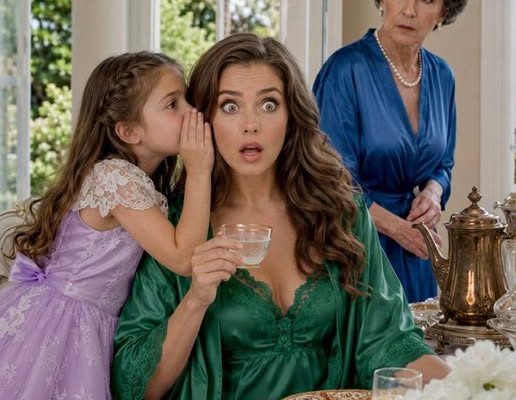
My family put their dinner ahead of my baby’s delivery, turning their family meal into total disaster. Read More

He thought I would sit there in pain quietly, completely unprepared for the boundaries I set next.

“My contractions have started!” I cried during family dinner. Dad coldly told me to call emergency services and stop disturbing everyone. No one helped. One week later, my parents arrived smiling, expecting to meet their grandchild. I reminded them what they had done. Then the man standing behind me opened the door, and my father’s face instantly lost all color.

At thirty-one weeks pregnant, I already knew better than to expect much tenderness from my family. Still, I never imagined they would leave me sitting at the dinner table while my contractions came five minutes apart.

“Dad,” I cried, gripping the chair. “My contractions have started.”

My father, Richard Hale, barely looked away from the football game.

“Call emergency services and stop disturbing us,” he snapped.

My mother, Denise, sighed as though I had spilled something on the carpet. My younger brother, Caleb, kept eating.

No one moved.

“I can’t drive like this.”

“Then call an ambulance,” Dad said. “You’re an adult, Emily.”

Another contraction ripped through me.

I doubled over, gasping.

Caleb muttered, “Drama queen.”

I grabbed my purse, staggered outside, and called 911 from the driveway. The dispatcher stayed on the line until paramedics arrived.

Through the front window, I could still see my family sitting around the table while strangers helped me onto a stretcher.

Three hours later, at St. Joseph Medical Center in Kansas City, Missouri, I gave birth to my son.

Noah was premature, but he was breathing.

I was alone when a nurse placed him against my chest.

Alone when the doctor explained the complications.

And alone when I signed forms with trembling hands.

I called home twice.

Nobody answered.

Mom read the message announcing Noah’s birth but never replied.

Then I remembered the sealed envelope my grandmother had given me before she died.

Inside was a business card and one sentence:

If your father ever makes you feel trapped, call Daniel Mercer.

Daniel was the attorney who had handled Grandma Evelyn’s estate.

I called him from the hospital the next morning.

He arrived before lunch.

For the next six days, while Noah remained under observation, Daniel helped me understand something I had never fully questioned: why Dad had insisted I move closer after my husband died two years earlier, why he monitored my finances, and why he became furious whenever I mentioned Grandma’s inheritance.

A week after Noah’s birth, someone knocked on the door of my rental house.

Mom stood outside holding a stuffed blue elephant.

Dad wore his best smile.

Caleb waited behind them with his phone ready for pictures.

“We’re here to meet our grandchild,” Mom announced.

I stared at them.

“You abandoned us that night.”

Dad’s smile vanished.

“Don’t exaggerate. You reached the hospital, didn’t you?”

Footsteps sounded behind me.

Daniel Mercer opened the door wider and stepped into view.

Dad went pale.

Daniel carried a thick file with Richard Hale’s name across the front.

My father wasn’t frightened because an attorney had witnessed a family argument.

He was frightened because Grandma Evelyn had left me far more than anyone had ever told me—and Daniel had discovered where the missing money had gone.

Dad’s eyes moved from Daniel to the file, then back to me.

“What is he doing here?” he asked.

Daniel answered first.

“Making sure Emily understands what belongs to her.”

Mom’s smile disappeared.

Caleb lowered his phone.

Dad stepped forward, but Daniel shifted slightly, calmly blocking the doorway.

“This is a family matter,” Dad said.

“No,” I replied. “It became a legal matter when you made it one.”

For years, Dad had told me Grandma Evelyn’s estate was modest.

According to him, medical bills, taxes, and funeral costs had consumed nearly everything.

I believed him because I had been twenty-three, newly married, and grieving.

Daniel’s file told another story.

Grandma had left me an investment account worth $118,000 and a small duplex in Independence, Missouri.

Dad had been named temporary trustee only until I turned twenty-five.

I was twenty-nine.

The duplex had been sold three years earlier.

I had never signed the paperwork.

Daniel obtained copies from the county recorder’s office.

The signature beside my name looked convincing enough to fool a stranger.

It did not fool me.

The sale proceeds had been deposited into an account tied to Hale Home Renovations, the contracting company Dad owned with Caleb.

Dad’s voice hardened.

“Your grandmother wanted the family taken care of.”

“She wrote exactly who she wanted taken care of,” Daniel said. “Emily.”

Mom turned toward Dad.

“Richard?”

He ignored her.

Then he looked at me.

“You think raising you was free? College? Your wedding? Every time you needed help, who paid?”

“My husband and I paid for our wedding,” I said. “I had scholarships for college.”

His jaw tightened.

“And when Mark di:ed?” Dad demanded. “Who handled everything then?”

There it was.

My husband, Mark Carter, had been k:illed by a drunk driver two years earlier.

After his d:eath, I could barely walk through a grocery store without crying.

Dad had stepped in and offered to “take care of the paperwork.”

I gave him access because I trusted him.

Daniel discovered that Dad had used that access to redirect part of an insurance payout into an account I never knew existed.

The amount was $46,000.

My knees nearly buckled when Daniel showed me.

Not because of the money.

Because I remembered Dad sitting beside me after Mark’s funeral, squeezing my shoulder and saying, “You don’t have to think about any of this. I’ll protect you.”

Now I understood.

He had been protecting his access to me.

Dad glanced toward the driveway.

“We’re leaving.”

“No,” Mom said quietly.

Everyone looked at her.

She stared at him as though she were finally seeing him clearly.

“Did you take the insurance money too?”

Dad’s expression changed.

That was answer enough.

Caleb spoke next.

“Dad told me the company loan came from his retirement account.”

Daniel opened the file.

“The transfer records indicate otherwise.”

Caleb went pale.

His name was on the business account.

He hadn’t forged anything, but he had benefited from the money.

Dad pointed at Daniel.

“You have no right to come into my family and poison them against me.”

Daniel stayed calm.

“I didn’t call an ambulance for your daughter while you watched television. I didn’t forge her signature. I didn’t move her money. I documented what you did.”

Dad looked at me again.

For the first time in my life, I saw something beneath his anger.

Fear.

I stepped back and placed one hand on the door.

“You are not meeting Noah today.”

Mom’s eyes filled.

“Emily, please.”

“You had seven days to ask whether he was alive.”

She covered her mouth.

Dad’s face hardened.

“You’ll regret hum:ili:ating me.”

“No,” I said. “I regret trusting you.”

Then I closed the door.

Dad shouted my name once from the other side.

Daniel stood beside me without speaking.

From the bedroom came Noah’s thin, restless cry.

I turned toward him.

For the first time since the ambulance had taken me away from that dinner table, I knew exactly what I had to do.

I was going to protect my son from the people who had taught me that love was something you could demand after refusing to give it.

The next morning, Daniel drove me to the county prosecutor’s office after arranging for my neighbor, Mrs. Alvarez, to stay with Noah for two hours.

I carried copies of the forged deed, bank records Daniel had obtained with my authorization, the original estate documents, and messages Dad had sent me over the previous four years.

Daniel w:arned me nothing would happen immediately.

A suspicious signature on a recorded deed did not automatically put someone in handcuffs.

Investigators would need original records, bank subpoenas, handwriting analysis, interviews, and proof Dad had acted knowingly.

For once, I was grateful the process was slow.

I did not want rev:eng:e fueled by anger.

I wanted facts.

The financial-crimes detective assigned to the case was Teresa Monroe.

She was in her forties, direct and patient.

She asked when I first learned about the inheritance.

“Six days ago.”

“And before that?”

“My father told me there was almost nothing.”

“Did you ever authorize him to sign your name?”

“No.”

“Did you ever authorize him to sell the duplex?”

“No.”

“Did you give him access to the insurance documents after your husband’s de:a:th?”

“Yes. But not permission to move money into an account I didn’t know about.”

Teresa nodded and wrote everything down.

When I left, I felt exhausted but strangely steady.

The real surprise came that afternoon.

Caleb called.

I almost ignored him.

Then I answered.

His voice sounded smaller than I had ever heard it.

“Can we talk?”

“You can talk.”

A long silence followed.

“Dad lied to me.”

I looked at Noah sleeping in the bassinet beside the couch.

“That doesn’t erase what you did at dinner.”

“I know.”

“You laughed while I was in labor.”

“I know.”

“You watched me leave alone.”

“I know.”

His voice cracked.

I did not comfort him.

Caleb explained that Dad had convinced him the company was finally thriving because of a private investment.

He admitted he had never asked where the money came from.

He had simply enjoyed the new truck, larger warehouse, expensive tools, and the respect Dad gave him for joining the business.

Then he told me something Daniel didn’t know.

Dad kept a locked metal box in the Hale Home Renovations office.

Inside were old checkbooks, property documents, and a flash drive.

Years earlier, Caleb had seen Dad place papers from Grandma Evelyn’s estate inside.

“Don’t touch anything,” I told him. “Call Detective Monroe.”

He did.

That decision changed everything.

Two weeks later, investigators executed a search warrant at the company office.

The box contained copies of the duplex sale, drafts of my forged signature, and printed emails between Dad and a real-estate broker.

The flash drive held scans of my driver’s license and Mark’s death certificate.

Worse for Dad, investigators found a spreadsheet.

He had tracked the money.

Grandma’s investment account.

The duplex proceeds.

Part of Mark’s insurance payout.

Transfers into the company.

Payments toward Caleb’s truck.

A down payment on a lake cabin I had never seen.

Dad had documented years of theft with the confidence of someone who never expected to be challenged.

He was arrested in late September.

By then, Noah had gained nearly four pounds and had finally begun sleeping longer than three hours at a time.

I learned about the arrest while warming a bottle in my kitchen.

Mom called.

“Your father was taken away in handcuffs.”

I closed my eyes.

“Okay.”

“That’s all you have to say?”

“What do you want me to say?”

“He’s your father.”

“And I’m his daughter.”

She went silent.

That ended the conversation.

Dad was charged with multiple financial offenses involving forgery, fraudulent transfers, and theft.

Daniel was careful when explaining the case.

Charges were accusations, he reminded me.

The state still had to prove them.

Separately, he helped me file a civil action to recover the property and money that belonged to me.

Dad hired an expensive defense attorney.

Then he started telling relatives his version.

According to him, I was an unstable widow who had become obsessed with money after childbirth.

He claimed Daniel had manipulated me.

He called the disputed funds “family assets.”

He even told Aunt Patricia I had invented the story about being abandoned during labor.

That lie lasted three days.

The paramedics had recorded the pickup location.

The emergency call existed.

And the exterior camera on my parents’ house, installed by Dad to deter package theft, showed the ambulance arriving while he remained inside.

Caleb gave investigators access to the camera account.

The footage showed him briefly stepping onto the porch, watching paramedics load me into the ambulance, then going back inside.

When Daniel showed me the clip, I had to stop the video.

I remembered feeling abandoned.

Seeing it happen was worse.

Mom contacted me again a month later.

This time, she didn’t ask to see Noah.

She asked to meet me alone.

We chose a coffee shop near the hospital.

She looked older.

Her hair was tied back, and she wore no makeup.

For several minutes, she simply held a paper cup between both hands.

“I knew about the duplex,” she finally said.

The confession hit harder than I expected.

“How much did you know?”

“I knew your grandmother left it to you. Richard told me you had agreed to let him sell it.”

“I never did.”

“I know that now.”

“You could have asked me.”

She lowered her eyes.

“I should have.”

“That night, when I said I was in labor, why didn’t you help me?”

Her eyes filled.

“Your father said you were exaggerating. He said if we rushed around every time you panicked, you’d never learn to manage your own life.”

I almost laughed.

Not because it was funny.

Because the logic was so cruelly absurd.

“I was thirty-one weeks pregnant.”

“I know.”

“You watched me leave.”

“I know.”

“Did you know Noah could have died?”

She flinched.

“Yes.”

Silence settled between us.

Then Mom said, “I’m sorry.”

It was the first genuine apology anyone in my family had given me.

But apologies did not restore trust.

“I believe you’re sorry,” I said. “That doesn’t mean you get access to my son.”

She nodded slowly.

“I understand.”

For the first time, she didn’t argue.

That mattered.

Over the next six months, Mom left Dad and moved into a small apartment.

She cooperated with investigators and handed over household records showing Dad had used money from my inheritance for personal expenses.

She started therapy.

Every Sunday, she sent one message without demanding a reply.

Most weeks, I didn’t answer.

Sometimes I did.

Caleb sold his truck and used the money to repay part of what had passed through the business.

He also left Hale Home Renovations and took a salaried job with another contractor.

One evening in January, he came to my house and stood on the porch with his hands in his coat pockets.

“I don’t expect you to forgive me,” he said.

“Good.”

He nodded.

“I just wanted to tell you I’m sorry without explaining it away.”

That was different from Dad.

Dad always had an explanation.

A justification.

A reason every accusation was somehow someone else’s fault.

Caleb simply stood there.

So I listened.

“I treated you like Dad treated you,” he said. “I thought being cruel meant I was strong. At dinner, I knew you were scared. I laughed because he laughed.”

I studied him for a long moment.

Then I said, “You don’t meet Noah today.”

His face fell, but he nodded.

“Okay.”

“Maybe someday.”

He looked surprised.

“Okay.”

That was enough.

The criminal case did not end with a dramatic courtroom confession.

Real life moved slower.

After months of investigation and negotiation, Dad accepted a plea agreement.

He admitted forging documents and unlawfully transferring money that belonged to me.

The agreement required restitution, the sale of certain assets, and a prison sentence followed by supervised release.

The lake cabin was sold.

Equipment purchased with diverted funds was liquidated.

The business collapsed.

I did not attend sentencing for re:ven:ge.

I went because I wanted him to see me sitting upright in the courtroom, no longer asking him to admit what he had done.

When the judge gave me the opportunity to speak, I kept my statement short.

“My father took money from me, but that was not the worst thing he took. He used my grief after my husband died as an opportunity. He taught me to doubt my own judgment so I would keep trusting his. The night my son was born, he showed me exactly how little my safety mattered to him. I am not asking the court to punish him for being a bad father. I am asking the court to recognize the crimes he admitted committing.”

Dad stared straight ahead.

He never looked at me.

That was fine.

I had spent too much of my life trying to make him see me.

A year after Noah’s birth, I moved into a two-bedroom house in Overland Park, Kansas.

Part of the recovered money went into a protected account for Noah.

Part went toward the house.

The rest stayed invested under my own name with an independent financial adviser Daniel recommended.

I also returned to work three days a week as a respiratory therapist.

The first morning I left Noah at daycare, I sat in my car and cried for ten minutes.

Then I went to work.

That evening, I picked him up myself.

It was a small thing.

It felt enormous.

Mom finally met Noah when he was fourteen months old.

We chose a public park.

She arrived early and brought no gifts.

I appreciated that.

She sat on a bench while Noah toddled between us, fascinated by fallen leaves.

She didn’t ask him to call her Grandma.

She didn’t reach for him.

She waited until he reached toward her first.

When he did, she cried.

I watched carefully.

Forgiveness, I learned, wasn’t a door that opened once.

It was a chain of small decisions.

Some people earned another one.

Some didn’t.

Caleb met Noah three months later.

By then, he had repaid more money and spent nearly a year cooperating with the civil case.

He never mocked me again for what happened that night.

Dad sent letters from prison.

The first blamed Daniel.

The second blamed Mom.

The third blamed Caleb.

The fourth blamed me.

I returned all four unopened after Daniel reminded me I had no obligation to stay in contact.

A fifth never came.

On Noah’s second birthday, we held a small party in my backyard.

Blue balloons were tied to the fence.

A grocery-store cake sat on the table under crooked icing.

Noah refused to leave his plastic slide.

Mom came.

Caleb came.

Daniel came with his wife.

So did Maria, the nurse who had held my phone in the hospital while I tried calling home.

At one point, I stood by the kitchen window and watched everyone outside.

Mom knelt beside Noah, helping him stack plastic cups.

Caleb argued with Daniel about whether a two-year-old needed a baseball glove.

Maria laughed nearby.

For a moment, I remembered that other dinner table.

Dad watching television.

Mom staring down.

Caleb smirking.

Me gripping the chair while pain tightened across my abdomen.

For years, I had believed family meant the people allowed to hurt you because they shared your blood.

Noah would never learn that definition from me.

Later that night, after everyone had gone, I carried him upstairs.

He was half asleep against my shoulder, warm and heavy.

I placed him in his crib and listened to him breathe.

On the dresser sat the stuffed blue elephant Mom had brought the day my parents first came to meet him.

I had almost thrown it away.

Instead, I kept it for another reason.

It reminded me of the day Dad arrived expecting the old version of me to open the door.

The frightened daughter.

The grieving widow.

The woman who accepted whatever explanation he gave because challenging him felt impossible.

But that woman had gone to the hospital alone.

She had held a premature baby against her chest.

She had made one phone call to Daniel Mercer.

And when her father finally arrived smiling, expecting access, gratitude, and silence, she had told him no.

That one word did not fix my life.

It started it.

I turned off Noah’s lamp and quietly closed the door.

Downstairs, my phone buzzed.

It was Mom.

Thank you for today. I know I still have work to do.

I read the message twice.

Then I replied:

Keep doing it.

I put the phone down and looked around my quiet house.

No shouting.

No football game drowning out my voice.

No one calling me dramatic.

No one deciding what belonged to me.

The silence no longer felt like abandonment.

It felt like peace.
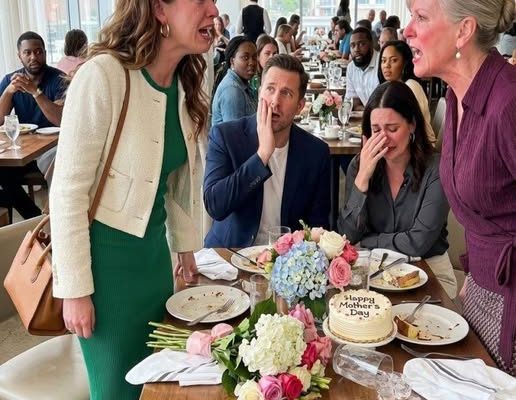
He thought I would sit there in pain quietly, completely unprepared for the boundaries I set next. Read More

When my husband arrived to take me away, my dad’s dismissive attitude turned into complete regret.

“My contractions have started!” I cried during family dinner. Dad coldly told me to call emergency services and stop disturbing everyone. No one helped. One week later, my parents arrived smiling, expecting to meet their grandchild. I reminded them what they had done. Then the man standing behind me opened the door, and my father’s face instantly lost all color.

At thirty-one weeks pregnant, I already knew better than to expect much tenderness from my family. Still, I never imagined they would leave me sitting at the dinner table while my contractions came five minutes apart.

“Dad,” I cried, gripping the chair. “My contractions have started.”

My father, Richard Hale, barely looked away from the football game.

“Call emergency services and stop disturbing us,” he snapped.

My mother, Denise, sighed as though I had spilled something on the carpet. My younger brother, Caleb, kept eating.

No one moved.

“I can’t drive like this.”

“Then call an ambulance,” Dad said. “You’re an adult, Emily.”

Another contraction ripped through me.

I doubled over, gasping.

Caleb muttered, “Drama queen.”

I grabbed my purse, staggered outside, and called 911 from the driveway. The dispatcher stayed on the line until paramedics arrived.

Through the front window, I could still see my family sitting around the table while strangers helped me onto a stretcher.

Three hours later, at St. Joseph Medical Center in Kansas City, Missouri, I gave birth to my son.

Noah was premature, but he was breathing.

I was alone when a nurse placed him against my chest.

Alone when the doctor explained the complications.

And alone when I signed forms with trembling hands.

I called home twice.

Nobody answered.

Mom read the message announcing Noah’s birth but never replied.

Then I remembered the sealed envelope my grandmother had given me before she died.

Inside was a business card and one sentence:

If your father ever makes you feel trapped, call Daniel Mercer.

Daniel was the attorney who had handled Grandma Evelyn’s estate.

I called him from the hospital the next morning.

He arrived before lunch.

For the next six days, while Noah remained under observation, Daniel helped me understand something I had never fully questioned: why Dad had insisted I move closer after my husband died two years earlier, why he monitored my finances, and why he became furious whenever I mentioned Grandma’s inheritance.

A week after Noah’s birth, someone knocked on the door of my rental house.

Mom stood outside holding a stuffed blue elephant.

Dad wore his best smile.

Caleb waited behind them with his phone ready for pictures.

“We’re here to meet our grandchild,” Mom announced.

I stared at them.

“You abandoned us that night.”

Dad’s smile vanished.

“Don’t exaggerate. You reached the hospital, didn’t you?”

Footsteps sounded behind me.

Daniel Mercer opened the door wider and stepped into view.

Dad went pale.

Daniel carried a thick file with Richard Hale’s name across the front.

My father wasn’t frightened because an attorney had witnessed a family argument.

He was frightened because Grandma Evelyn had left me far more than anyone had ever told me—and Daniel had discovered where the missing money had gone.

Dad’s eyes moved from Daniel to the file, then back to me.

“What is he doing here?” he asked.

Daniel answered first.

“Making sure Emily understands what belongs to her.”

Mom’s smile disappeared.

Caleb lowered his phone.

Dad stepped forward, but Daniel shifted slightly, calmly blocking the doorway.

“This is a family matter,” Dad said.

“No,” I replied. “It became a legal matter when you made it one.”

For years, Dad had told me Grandma Evelyn’s estate was modest.

According to him, medical bills, taxes, and funeral costs had consumed nearly everything.

I believed him because I had been twenty-three, newly married, and grieving.

Daniel’s file told another story.

Grandma had left me an investment account worth $118,000 and a small duplex in Independence, Missouri.

Dad had been named temporary trustee only until I turned twenty-five.

I was twenty-nine.

The duplex had been sold three years earlier.

I had never signed the paperwork.

Daniel obtained copies from the county recorder’s office.

The signature beside my name looked convincing enough to fool a stranger.

It did not fool me.

The sale proceeds had been deposited into an account tied to Hale Home Renovations, the contracting company Dad owned with Caleb.

Dad’s voice hardened.

“Your grandmother wanted the family taken care of.”

“She wrote exactly who she wanted taken care of,” Daniel said. “Emily.”

Mom turned toward Dad.

“Richard?”

He ignored her.

Then he looked at me.

“You think raising you was free? College? Your wedding? Every time you needed help, who paid?”

“My husband and I paid for our wedding,” I said. “I had scholarships for college.”

His jaw tightened.

“And when Mark di:ed?” Dad demanded. “Who handled everything then?”

There it was.

My husband, Mark Carter, had been k:illed by a drunk driver two years earlier.

After his d:eath, I could barely walk through a grocery store without crying.

Dad had stepped in and offered to “take care of the paperwork.”

I gave him access because I trusted him.

Daniel discovered that Dad had used that access to redirect part of an insurance payout into an account I never knew existed.

The amount was $46,000.

My knees nearly buckled when Daniel showed me.

Not because of the money.

Because I remembered Dad sitting beside me after Mark’s funeral, squeezing my shoulder and saying, “You don’t have to think about any of this. I’ll protect you.”

Now I understood.

He had been protecting his access to me.

Dad glanced toward the driveway.

“We’re leaving.”

“No,” Mom said quietly.

Everyone looked at her.

She stared at him as though she were finally seeing him clearly.

“Did you take the insurance money too?”

Dad’s expression changed.

That was answer enough.

Caleb spoke next.

“Dad told me the company loan came from his retirement account.”

Daniel opened the file.

“The transfer records indicate otherwise.”

Caleb went pale.

His name was on the business account.

He hadn’t forged anything, but he had benefited from the money.

Dad pointed at Daniel.

“You have no right to come into my family and poison them against me.”

Daniel stayed calm.

“I didn’t call an ambulance for your daughter while you watched television. I didn’t forge her signature. I didn’t move her money. I documented what you did.”

Dad looked at me again.

For the first time in my life, I saw something beneath his anger.

Fear.

I stepped back and placed one hand on the door.

“You are not meeting Noah today.”

Mom’s eyes filled.

“Emily, please.”

“You had seven days to ask whether he was alive.”

She covered her mouth.

Dad’s face hardened.

“You’ll regret hum:ili:ating me.”

“No,” I said. “I regret trusting you.”

Then I closed the door.

Dad shouted my name once from the other side.

Daniel stood beside me without speaking.

From the bedroom came Noah’s thin, restless cry.

I turned toward him.

For the first time since the ambulance had taken me away from that dinner table, I knew exactly what I had to do.

I was going to protect my son from the people who had taught me that love was something you could demand after refusing to give it.

The next morning, Daniel drove me to the county prosecutor’s office after arranging for my neighbor, Mrs. Alvarez, to stay with Noah for two hours.

I carried copies of the forged deed, bank records Daniel had obtained with my authorization, the original estate documents, and messages Dad had sent me over the previous four years.

Daniel w:arned me nothing would happen immediately.

A suspicious signature on a recorded deed did not automatically put someone in handcuffs.

Investigators would need original records, bank subpoenas, handwriting analysis, interviews, and proof Dad had acted knowingly.

For once, I was grateful the process was slow.

I did not want rev:eng:e fueled by anger.

I wanted facts.

The financial-crimes detective assigned to the case was Teresa Monroe.

She was in her forties, direct and patient.

She asked when I first learned about the inheritance.

“Six days ago.”

“And before that?”

“My father told me there was almost nothing.”

“Did you ever authorize him to sign your name?”

“No.”

“Did you ever authorize him to sell the duplex?”

“No.”

“Did you give him access to the insurance documents after your husband’s de:a:th?”

“Yes. But not permission to move money into an account I didn’t know about.”

Teresa nodded and wrote everything down.

When I left, I felt exhausted but strangely steady.

The real surprise came that afternoon.

Caleb called.

I almost ignored him.

Then I answered.

His voice sounded smaller than I had ever heard it.

“Can we talk?”

“You can talk.”

A long silence followed.

“Dad lied to me.”

I looked at Noah sleeping in the bassinet beside the couch.

“That doesn’t erase what you did at dinner.”

“I know.”

“You laughed while I was in labor.”

“I know.”

“You watched me leave alone.”

“I know.”

His voice cracked.

I did not comfort him.

Caleb explained that Dad had convinced him the company was finally thriving because of a private investment.

He admitted he had never asked where the money came from.

He had simply enjoyed the new truck, larger warehouse, expensive tools, and the respect Dad gave him for joining the business.

Then he told me something Daniel didn’t know.

Dad kept a locked metal box in the Hale Home Renovations office.

Inside were old checkbooks, property documents, and a flash drive.

Years earlier, Caleb had seen Dad place papers from Grandma Evelyn’s estate inside.

“Don’t touch anything,” I told him. “Call Detective Monroe.”

He did.

That decision changed everything.

Two weeks later, investigators executed a search warrant at the company office.

The box contained copies of the duplex sale, drafts of my forged signature, and printed emails between Dad and a real-estate broker.

The flash drive held scans of my driver’s license and Mark’s death certificate.

Worse for Dad, investigators found a spreadsheet.

He had tracked the money.

Grandma’s investment account.

The duplex proceeds.

Part of Mark’s insurance payout.

Transfers into the company.

Payments toward Caleb’s truck.

A down payment on a lake cabin I had never seen.

Dad had documented years of theft with the confidence of someone who never expected to be challenged.

He was arrested in late September.

By then, Noah had gained nearly four pounds and had finally begun sleeping longer than three hours at a time.

I learned about the arrest while warming a bottle in my kitchen.

Mom called.

“Your father was taken away in handcuffs.”

I closed my eyes.

“Okay.”

“That’s all you have to say?”

“What do you want me to say?”

“He’s your father.”

“And I’m his daughter.”

She went silent.

That ended the conversation.

Dad was charged with multiple financial offenses involving forgery, fraudulent transfers, and theft.

Daniel was careful when explaining the case.

Charges were accusations, he reminded me.

The state still had to prove them.

Separately, he helped me file a civil action to recover the property and money that belonged to me.

Dad hired an expensive defense attorney.

Then he started telling relatives his version.

According to him, I was an unstable widow who had become obsessed with money after childbirth.

He claimed Daniel had manipulated me.

He called the disputed funds “family assets.”

He even told Aunt Patricia I had invented the story about being abandoned during labor.

That lie lasted three days.

The paramedics had recorded the pickup location.

The emergency call existed.

And the exterior camera on my parents’ house, installed by Dad to deter package theft, showed the ambulance arriving while he remained inside.

Caleb gave investigators access to the camera account.

The footage showed him briefly stepping onto the porch, watching paramedics load me into the ambulance, then going back inside.

When Daniel showed me the clip, I had to stop the video.

I remembered feeling abandoned.

Seeing it happen was worse.

Mom contacted me again a month later.

This time, she didn’t ask to see Noah.

She asked to meet me alone.

We chose a coffee shop near the hospital.

She looked older.

Her hair was tied back, and she wore no makeup.

For several minutes, she simply held a paper cup between both hands.

“I knew about the duplex,” she finally said.

The confession hit harder than I expected.

“How much did you know?”

“I knew your grandmother left it to you. Richard told me you had agreed to let him sell it.”

“I never did.”

“I know that now.”

“You could have asked me.”

She lowered her eyes.

“I should have.”

“That night, when I said I was in labor, why didn’t you help me?”

Her eyes filled.

“Your father said you were exaggerating. He said if we rushed around every time you panicked, you’d never learn to manage your own life.”

I almost laughed.

Not because it was funny.

Because the logic was so cruelly absurd.

“I was thirty-one weeks pregnant.”

“I know.”

“You watched me leave.”

“I know.”

“Did you know Noah could have died?”

She flinched.

“Yes.”

Silence settled between us.

Then Mom said, “I’m sorry.”

It was the first genuine apology anyone in my family had given me.

But apologies did not restore trust.

“I believe you’re sorry,” I said. “That doesn’t mean you get access to my son.”

She nodded slowly.

“I understand.”

For the first time, she didn’t argue.

That mattered.

Over the next six months, Mom left Dad and moved into a small apartment.

She cooperated with investigators and handed over household records showing Dad had used money from my inheritance for personal expenses.

She started therapy.

Every Sunday, she sent one message without demanding a reply.

Most weeks, I didn’t answer.

Sometimes I did.

Caleb sold his truck and used the money to repay part of what had passed through the business.

He also left Hale Home Renovations and took a salaried job with another contractor.

One evening in January, he came to my house and stood on the porch with his hands in his coat pockets.

“I don’t expect you to forgive me,” he said.

“Good.”

He nodded.

“I just wanted to tell you I’m sorry without explaining it away.”

That was different from Dad.

Dad always had an explanation.

A justification.

A reason every accusation was somehow someone else’s fault.

Caleb simply stood there.

So I listened.

“I treated you like Dad treated you,” he said. “I thought being cruel meant I was strong. At dinner, I knew you were scared. I laughed because he laughed.”

I studied him for a long moment.

Then I said, “You don’t meet Noah today.”

His face fell, but he nodded.

“Okay.”

“Maybe someday.”

He looked surprised.

“Okay.”

That was enough.

The criminal case did not end with a dramatic courtroom confession.

Real life moved slower.

After months of investigation and negotiation, Dad accepted a plea agreement.

He admitted forging documents and unlawfully transferring money that belonged to me.

The agreement required restitution, the sale of certain assets, and a prison sentence followed by supervised release.

The lake cabin was sold.

Equipment purchased with diverted funds was liquidated.

The business collapsed.

I did not attend sentencing for re:ven:ge.

I went because I wanted him to see me sitting upright in the courtroom, no longer asking him to admit what he had done.

When the judge gave me the opportunity to speak, I kept my statement short.

“My father took money from me, but that was not the worst thing he took. He used my grief after my husband died as an opportunity. He taught me to doubt my own judgment so I would keep trusting his. The night my son was born, he showed me exactly how little my safety mattered to him. I am not asking the court to punish him for being a bad father. I am asking the court to recognize the crimes he admitted committing.”

Dad stared straight ahead.

He never looked at me.

That was fine.

I had spent too much of my life trying to make him see me.

A year after Noah’s birth, I moved into a two-bedroom house in Overland Park, Kansas.

Part of the recovered money went into a protected account for Noah.

Part went toward the house.

The rest stayed invested under my own name with an independent financial adviser Daniel recommended.

I also returned to work three days a week as a respiratory therapist.

The first morning I left Noah at daycare, I sat in my car and cried for ten minutes.

Then I went to work.

That evening, I picked him up myself.

It was a small thing.

It felt enormous.

Mom finally met Noah when he was fourteen months old.

We chose a public park.

She arrived early and brought no gifts.

I appreciated that.

She sat on a bench while Noah toddled between us, fascinated by fallen leaves.

She didn’t ask him to call her Grandma.

She didn’t reach for him.

She waited until he reached toward her first.

When he did, she cried.

I watched carefully.

Forgiveness, I learned, wasn’t a door that opened once.

It was a chain of small decisions.

Some people earned another one.

Some didn’t.

Caleb met Noah three months later.

By then, he had repaid more money and spent nearly a year cooperating with the civil case.

He never mocked me again for what happened that night.

Dad sent letters from prison.

The first blamed Daniel.

The second blamed Mom.

The third blamed Caleb.

The fourth blamed me.

I returned all four unopened after Daniel reminded me I had no obligation to stay in contact.

A fifth never came.

On Noah’s second birthday, we held a small party in my backyard.

Blue balloons were tied to the fence.

A grocery-store cake sat on the table under crooked icing.

Noah refused to leave his plastic slide.

Mom came.

Caleb came.

Daniel came with his wife.

So did Maria, the nurse who had held my phone in the hospital while I tried calling home.

At one point, I stood by the kitchen window and watched everyone outside.

Mom knelt beside Noah, helping him stack plastic cups.

Caleb argued with Daniel about whether a two-year-old needed a baseball glove.

Maria laughed nearby.

For a moment, I remembered that other dinner table.

Dad watching television.

Mom staring down.

Caleb smirking.

Me gripping the chair while pain tightened across my abdomen.

For years, I had believed family meant the people allowed to hurt you because they shared your blood.

Noah would never learn that definition from me.

Later that night, after everyone had gone, I carried him upstairs.

He was half asleep against my shoulder, warm and heavy.

I placed him in his crib and listened to him breathe.

On the dresser sat the stuffed blue elephant Mom had brought the day my parents first came to meet him.

I had almost thrown it away.

Instead, I kept it for another reason.

It reminded me of the day Dad arrived expecting the old version of me to open the door.

The frightened daughter.

The grieving widow.

The woman who accepted whatever explanation he gave because challenging him felt impossible.

But that woman had gone to the hospital alone.

She had held a premature baby against her chest.

She had made one phone call to Daniel Mercer.

And when her father finally arrived smiling, expecting access, gratitude, and silence, she had told him no.

That one word did not fix my life.

It started it.

I turned off Noah’s lamp and quietly closed the door.

Downstairs, my phone buzzed.

It was Mom.

Thank you for today. I know I still have work to do.

I read the message twice.

Then I replied:

Keep doing it.

I put the phone down and looked around my quiet house.

No shouting.

No football game drowning out my voice.

No one calling me dramatic.

No one deciding what belonged to me.

The silence no longer felt like abandonment.

It felt like peace.

When my husband arrived to take me away, my dad’s dismissive attitude turned into complete regret. Read More

My family refused to help while I was in labor, bringing their heartless attitude to a sudden stop.

“My contractions have started!” I cried during family dinner. Dad coldly told me to call emergency services and stop disturbing everyone. No one helped. One week later, my parents arrived smiling, expecting to meet their grandchild. I reminded them what they had done. Then the man standing behind me opened the door, and my father’s face instantly lost all color.

At thirty-one weeks pregnant, I already knew better than to expect much tenderness from my family. Still, I never imagined they would leave me sitting at the dinner table while my contractions came five minutes apart.

“Dad,” I cried, gripping the chair. “My contractions have started.”

My father, Richard Hale, barely looked away from the football game.

“Call emergency services and stop disturbing us,” he snapped.

My mother, Denise, sighed as though I had spilled something on the carpet. My younger brother, Caleb, kept eating.

No one moved.

“I can’t drive like this.”

“Then call an ambulance,” Dad said. “You’re an adult, Emily.”

Another contraction ripped through me.

I doubled over, gasping.

Caleb muttered, “Drama queen.”

I grabbed my purse, staggered outside, and called 911 from the driveway. The dispatcher stayed on the line until paramedics arrived.

Through the front window, I could still see my family sitting around the table while strangers helped me onto a stretcher.

Three hours later, at St. Joseph Medical Center in Kansas City, Missouri, I gave birth to my son.

Noah was premature, but he was breathing.

I was alone when a nurse placed him against my chest.

Alone when the doctor explained the complications.

And alone when I signed forms with trembling hands.

I called home twice.

Nobody answered.

Mom read the message announcing Noah’s birth but never replied.

Then I remembered the sealed envelope my grandmother had given me before she died.

Inside was a business card and one sentence:

If your father ever makes you feel trapped, call Daniel Mercer.

Daniel was the attorney who had handled Grandma Evelyn’s estate.

I called him from the hospital the next morning.

He arrived before lunch.

For the next six days, while Noah remained under observation, Daniel helped me understand something I had never fully questioned: why Dad had insisted I move closer after my husband died two years earlier, why he monitored my finances, and why he became furious whenever I mentioned Grandma’s inheritance.

A week after Noah’s birth, someone knocked on the door of my rental house.

Mom stood outside holding a stuffed blue elephant.

Dad wore his best smile.

Caleb waited behind them with his phone ready for pictures.

“We’re here to meet our grandchild,” Mom announced.

I stared at them.

“You abandoned us that night.”

Dad’s smile vanished.

“Don’t exaggerate. You reached the hospital, didn’t you?”

Footsteps sounded behind me.

Daniel Mercer opened the door wider and stepped into view.

Dad went pale.

Daniel carried a thick file with Richard Hale’s name across the front.

My father wasn’t frightened because an attorney had witnessed a family argument.

He was frightened because Grandma Evelyn had left me far more than anyone had ever told me—and Daniel had discovered where the missing money had gone.

Dad’s eyes moved from Daniel to the file, then back to me.

“What is he doing here?” he asked.

Daniel answered first.

“Making sure Emily understands what belongs to her.”

Mom’s smile disappeared.

Caleb lowered his phone.

Dad stepped forward, but Daniel shifted slightly, calmly blocking the doorway.

“This is a family matter,” Dad said.

“No,” I replied. “It became a legal matter when you made it one.”

For years, Dad had told me Grandma Evelyn’s estate was modest.

According to him, medical bills, taxes, and funeral costs had consumed nearly everything.

I believed him because I had been twenty-three, newly married, and grieving.

Daniel’s file told another story.

Grandma had left me an investment account worth $118,000 and a small duplex in Independence, Missouri.

Dad had been named temporary trustee only until I turned twenty-five.

I was twenty-nine.

The duplex had been sold three years earlier.

I had never signed the paperwork.

Daniel obtained copies from the county recorder’s office.

The signature beside my name looked convincing enough to fool a stranger.

It did not fool me.

The sale proceeds had been deposited into an account tied to Hale Home Renovations, the contracting company Dad owned with Caleb.

Dad’s voice hardened.

“Your grandmother wanted the family taken care of.”

“She wrote exactly who she wanted taken care of,” Daniel said. “Emily.”

Mom turned toward Dad.

“Richard?”

He ignored her.

Then he looked at me.

“You think raising you was free? College? Your wedding? Every time you needed help, who paid?”

“My husband and I paid for our wedding,” I said. “I had scholarships for college.”

His jaw tightened.

“And when Mark di:ed?” Dad demanded. “Who handled everything then?”

There it was.

My husband, Mark Carter, had been k:illed by a drunk driver two years earlier.

After his d:eath, I could barely walk through a grocery store without crying.

Dad had stepped in and offered to “take care of the paperwork.”

I gave him access because I trusted him.

Daniel discovered that Dad had used that access to redirect part of an insurance payout into an account I never knew existed.

The amount was $46,000.

My knees nearly buckled when Daniel showed me.

Not because of the money.

Because I remembered Dad sitting beside me after Mark’s funeral, squeezing my shoulder and saying, “You don’t have to think about any of this. I’ll protect you.”

Now I understood.

He had been protecting his access to me.

Dad glanced toward the driveway.

“We’re leaving.”

“No,” Mom said quietly.

Everyone looked at her.

She stared at him as though she were finally seeing him clearly.

“Did you take the insurance money too?”

Dad’s expression changed.

That was answer enough.

Caleb spoke next.

“Dad told me the company loan came from his retirement account.”

Daniel opened the file.

“The transfer records indicate otherwise.”

Caleb went pale.

His name was on the business account.

He hadn’t forged anything, but he had benefited from the money.

Dad pointed at Daniel.

“You have no right to come into my family and poison them against me.”

Daniel stayed calm.

“I didn’t call an ambulance for your daughter while you watched television. I didn’t forge her signature. I didn’t move her money. I documented what you did.”

Dad looked at me again.

For the first time in my life, I saw something beneath his anger.

Fear.

I stepped back and placed one hand on the door.

“You are not meeting Noah today.”

Mom’s eyes filled.

“Emily, please.”

“You had seven days to ask whether he was alive.”

She covered her mouth.

Dad’s face hardened.

“You’ll regret hum:ili:ating me.”

“No,” I said. “I regret trusting you.”

Then I closed the door.

Dad shouted my name once from the other side.

Daniel stood beside me without speaking.

From the bedroom came Noah’s thin, restless cry.

I turned toward him.

For the first time since the ambulance had taken me away from that dinner table, I knew exactly what I had to do.

I was going to protect my son from the people who had taught me that love was something you could demand after refusing to give it.

The next morning, Daniel drove me to the county prosecutor’s office after arranging for my neighbor, Mrs. Alvarez, to stay with Noah for two hours.

I carried copies of the forged deed, bank records Daniel had obtained with my authorization, the original estate documents, and messages Dad had sent me over the previous four years.

Daniel w:arned me nothing would happen immediately.

A suspicious signature on a recorded deed did not automatically put someone in handcuffs.

Investigators would need original records, bank subpoenas, handwriting analysis, interviews, and proof Dad had acted knowingly.

For once, I was grateful the process was slow.

I did not want rev:eng:e fueled by anger.

I wanted facts.

The financial-crimes detective assigned to the case was Teresa Monroe.

She was in her forties, direct and patient.

She asked when I first learned about the inheritance.

“Six days ago.”

“And before that?”

“My father told me there was almost nothing.”

“Did you ever authorize him to sign your name?”

“No.”

“Did you ever authorize him to sell the duplex?”

“No.”

“Did you give him access to the insurance documents after your husband’s de:a:th?”

“Yes. But not permission to move money into an account I didn’t know about.”

Teresa nodded and wrote everything down.

When I left, I felt exhausted but strangely steady.

The real surprise came that afternoon.

Caleb called.

I almost ignored him.

Then I answered.

His voice sounded smaller than I had ever heard it.

“Can we talk?”

“You can talk.”

A long silence followed.

“Dad lied to me.”

I looked at Noah sleeping in the bassinet beside the couch.

“That doesn’t erase what you did at dinner.”

“I know.”

“You laughed while I was in labor.”

“I know.”

“You watched me leave alone.”

“I know.”

His voice cracked.

I did not comfort him.

Caleb explained that Dad had convinced him the company was finally thriving because of a private investment.

He admitted he had never asked where the money came from.

He had simply enjoyed the new truck, larger warehouse, expensive tools, and the respect Dad gave him for joining the business.

Then he told me something Daniel didn’t know.

Dad kept a locked metal box in the Hale Home Renovations office.

Inside were old checkbooks, property documents, and a flash drive.

Years earlier, Caleb had seen Dad place papers from Grandma Evelyn’s estate inside.

“Don’t touch anything,” I told him. “Call Detective Monroe.”

He did.

That decision changed everything.

Two weeks later, investigators executed a search warrant at the company office.

The box contained copies of the duplex sale, drafts of my forged signature, and printed emails between Dad and a real-estate broker.

The flash drive held scans of my driver’s license and Mark’s death certificate.

Worse for Dad, investigators found a spreadsheet.

He had tracked the money.

Grandma’s investment account.

The duplex proceeds.

Part of Mark’s insurance payout.

Transfers into the company.

Payments toward Caleb’s truck.

A down payment on a lake cabin I had never seen.

Dad had documented years of theft with the confidence of someone who never expected to be challenged.

He was arrested in late September.

By then, Noah had gained nearly four pounds and had finally begun sleeping longer than three hours at a time.

I learned about the arrest while warming a bottle in my kitchen.

Mom called.

“Your father was taken away in handcuffs.”

I closed my eyes.

“Okay.”

“That’s all you have to say?”

“What do you want me to say?”

“He’s your father.”

“And I’m his daughter.”

She went silent.

That ended the conversation.

Dad was charged with multiple financial offenses involving forgery, fraudulent transfers, and theft.

Daniel was careful when explaining the case.

Charges were accusations, he reminded me.

The state still had to prove them.

Separately, he helped me file a civil action to recover the property and money that belonged to me.

Dad hired an expensive defense attorney.

Then he started telling relatives his version.

According to him, I was an unstable widow who had become obsessed with money after childbirth.

He claimed Daniel had manipulated me.

He called the disputed funds “family assets.”

He even told Aunt Patricia I had invented the story about being abandoned during labor.

That lie lasted three days.

The paramedics had recorded the pickup location.

The emergency call existed.

And the exterior camera on my parents’ house, installed by Dad to deter package theft, showed the ambulance arriving while he remained inside.

Caleb gave investigators access to the camera account.

The footage showed him briefly stepping onto the porch, watching paramedics load me into the ambulance, then going back inside.

When Daniel showed me the clip, I had to stop the video.

I remembered feeling abandoned.

Seeing it happen was worse.

Mom contacted me again a month later.

This time, she didn’t ask to see Noah.

She asked to meet me alone.

We chose a coffee shop near the hospital.

She looked older.

Her hair was tied back, and she wore no makeup.

For several minutes, she simply held a paper cup between both hands.

“I knew about the duplex,” she finally said.

The confession hit harder than I expected.

“How much did you know?”

“I knew your grandmother left it to you. Richard told me you had agreed to let him sell it.”

“I never did.”

“I know that now.”

“You could have asked me.”

She lowered her eyes.

“I should have.”

“That night, when I said I was in labor, why didn’t you help me?”

Her eyes filled.

“Your father said you were exaggerating. He said if we rushed around every time you panicked, you’d never learn to manage your own life.”

I almost laughed.

Not because it was funny.

Because the logic was so cruelly absurd.

“I was thirty-one weeks pregnant.”

“I know.”

“You watched me leave.”

“I know.”

“Did you know Noah could have died?”

She flinched.

“Yes.”

Silence settled between us.

Then Mom said, “I’m sorry.”

It was the first genuine apology anyone in my family had given me.

But apologies did not restore trust.

“I believe you’re sorry,” I said. “That doesn’t mean you get access to my son.”

She nodded slowly.

“I understand.”

For the first time, she didn’t argue.

That mattered.

Over the next six months, Mom left Dad and moved into a small apartment.

She cooperated with investigators and handed over household records showing Dad had used money from my inheritance for personal expenses.

She started therapy.

Every Sunday, she sent one message without demanding a reply.

Most weeks, I didn’t answer.

Sometimes I did.

Caleb sold his truck and used the money to repay part of what had passed through the business.

He also left Hale Home Renovations and took a salaried job with another contractor.

One evening in January, he came to my house and stood on the porch with his hands in his coat pockets.

“I don’t expect you to forgive me,” he said.

“Good.”

He nodded.

“I just wanted to tell you I’m sorry without explaining it away.”

That was different from Dad.

Dad always had an explanation.

A justification.

A reason every accusation was somehow someone else’s fault.

Caleb simply stood there.

So I listened.

“I treated you like Dad treated you,” he said. “I thought being cruel meant I was strong. At dinner, I knew you were scared. I laughed because he laughed.”

I studied him for a long moment.

Then I said, “You don’t meet Noah today.”

His face fell, but he nodded.

“Okay.”

“Maybe someday.”

He looked surprised.

“Okay.”

That was enough.

The criminal case did not end with a dramatic courtroom confession.

Real life moved slower.

After months of investigation and negotiation, Dad accepted a plea agreement.

He admitted forging documents and unlawfully transferring money that belonged to me.

The agreement required restitution, the sale of certain assets, and a prison sentence followed by supervised release.

The lake cabin was sold.

Equipment purchased with diverted funds was liquidated.

The business collapsed.

I did not attend sentencing for re:ven:ge.

I went because I wanted him to see me sitting upright in the courtroom, no longer asking him to admit what he had done.

When the judge gave me the opportunity to speak, I kept my statement short.

“My father took money from me, but that was not the worst thing he took. He used my grief after my husband died as an opportunity. He taught me to doubt my own judgment so I would keep trusting his. The night my son was born, he showed me exactly how little my safety mattered to him. I am not asking the court to punish him for being a bad father. I am asking the court to recognize the crimes he admitted committing.”

Dad stared straight ahead.

He never looked at me.

That was fine.

I had spent too much of my life trying to make him see me.

A year after Noah’s birth, I moved into a two-bedroom house in Overland Park, Kansas.

Part of the recovered money went into a protected account for Noah.

Part went toward the house.

The rest stayed invested under my own name with an independent financial adviser Daniel recommended.

I also returned to work three days a week as a respiratory therapist.

The first morning I left Noah at daycare, I sat in my car and cried for ten minutes.

Then I went to work.

That evening, I picked him up myself.

It was a small thing.

It felt enormous.

Mom finally met Noah when he was fourteen months old.

We chose a public park.

She arrived early and brought no gifts.

I appreciated that.

She sat on a bench while Noah toddled between us, fascinated by fallen leaves.

She didn’t ask him to call her Grandma.

She didn’t reach for him.

She waited until he reached toward her first.

When he did, she cried.

I watched carefully.

Forgiveness, I learned, wasn’t a door that opened once.

It was a chain of small decisions.

Some people earned another one.

Some didn’t.

Caleb met Noah three months later.

By then, he had repaid more money and spent nearly a year cooperating with the civil case.

He never mocked me again for what happened that night.

Dad sent letters from prison.

The first blamed Daniel.

The second blamed Mom.

The third blamed Caleb.

The fourth blamed me.

I returned all four unopened after Daniel reminded me I had no obligation to stay in contact.

A fifth never came.

On Noah’s second birthday, we held a small party in my backyard.

Blue balloons were tied to the fence.

A grocery-store cake sat on the table under crooked icing.

Noah refused to leave his plastic slide.

Mom came.

Caleb came.

Daniel came with his wife.

So did Maria, the nurse who had held my phone in the hospital while I tried calling home.

At one point, I stood by the kitchen window and watched everyone outside.

Mom knelt beside Noah, helping him stack plastic cups.

Caleb argued with Daniel about whether a two-year-old needed a baseball glove.

Maria laughed nearby.

For a moment, I remembered that other dinner table.

Dad watching television.

Mom staring down.

Caleb smirking.

Me gripping the chair while pain tightened across my abdomen.

For years, I had believed family meant the people allowed to hurt you because they shared your blood.

Noah would never learn that definition from me.

Later that night, after everyone had gone, I carried him upstairs.

He was half asleep against my shoulder, warm and heavy.

I placed him in his crib and listened to him breathe.

On the dresser sat the stuffed blue elephant Mom had brought the day my parents first came to meet him.

I had almost thrown it away.

Instead, I kept it for another reason.

It reminded me of the day Dad arrived expecting the old version of me to open the door.

The frightened daughter.

The grieving widow.

The woman who accepted whatever explanation he gave because challenging him felt impossible.

But that woman had gone to the hospital alone.

She had held a premature baby against her chest.

She had made one phone call to Daniel Mercer.

And when her father finally arrived smiling, expecting access, gratitude, and silence, she had told him no.

That one word did not fix my life.

It started it.

I turned off Noah’s lamp and quietly closed the door.

Downstairs, my phone buzzed.

It was Mom.

Thank you for today. I know I still have work to do.

I read the message twice.

Then I replied:

Keep doing it.

I put the phone down and looked around my quiet house.

No shouting.

No football game drowning out my voice.

No one calling me dramatic.

No one deciding what belonged to me.

The silence no longer felt like abandonment.

It felt like peace.

My family refused to help while I was in labor, bringing their heartless attitude to a sudden stop. Read More

They thought my emergency was just an inconvenience, completely oblivious to who was driving me to the hospital.

“My contractions have started!” I cried during family dinner. Dad coldly told me to call emergency services and stop disturbing everyone. No one helped. One week later, my parents arrived smiling, expecting to meet their grandchild. I reminded them what they had done. Then the man standing behind me opened the door, and my father’s face instantly lost all color.

At thirty-one weeks pregnant, I already knew better than to expect much tenderness from my family. Still, I never imagined they would leave me sitting at the dinner table while my contractions came five minutes apart.

“Dad,” I cried, gripping the chair. “My contractions have started.”

My father, Richard Hale, barely looked away from the football game.

“Call emergency services and stop disturbing us,” he snapped.

My mother, Denise, sighed as though I had spilled something on the carpet. My younger brother, Caleb, kept eating.

No one moved.

“I can’t drive like this.”

“Then call an ambulance,” Dad said. “You’re an adult, Emily.”

Another contraction ripped through me.

I doubled over, gasping.

Caleb muttered, “Drama queen.”

I grabbed my purse, staggered outside, and called 911 from the driveway. The dispatcher stayed on the line until paramedics arrived.

Through the front window, I could still see my family sitting around the table while strangers helped me onto a stretcher.

Three hours later, at St. Joseph Medical Center in Kansas City, Missouri, I gave birth to my son.

Noah was premature, but he was breathing.

I was alone when a nurse placed him against my chest.

Alone when the doctor explained the complications.

And alone when I signed forms with trembling hands.

I called home twice.

Nobody answered.

Mom read the message announcing Noah’s birth but never replied.

Then I remembered the sealed envelope my grandmother had given me before she died.

Inside was a business card and one sentence:

If your father ever makes you feel trapped, call Daniel Mercer.

Daniel was the attorney who had handled Grandma Evelyn’s estate.

I called him from the hospital the next morning.

He arrived before lunch.

For the next six days, while Noah remained under observation, Daniel helped me understand something I had never fully questioned: why Dad had insisted I move closer after my husband died two years earlier, why he monitored my finances, and why he became furious whenever I mentioned Grandma’s inheritance.

A week after Noah’s birth, someone knocked on the door of my rental house.

Mom stood outside holding a stuffed blue elephant.

Dad wore his best smile.

Caleb waited behind them with his phone ready for pictures.

“We’re here to meet our grandchild,” Mom announced.

I stared at them.

“You abandoned us that night.”

Dad’s smile vanished.

“Don’t exaggerate. You reached the hospital, didn’t you?”

Footsteps sounded behind me.

Daniel Mercer opened the door wider and stepped into view.

Dad went pale.

Daniel carried a thick file with Richard Hale’s name across the front.

My father wasn’t frightened because an attorney had witnessed a family argument.

He was frightened because Grandma Evelyn had left me far more than anyone had ever told me—and Daniel had discovered where the missing money had gone.

Dad’s eyes moved from Daniel to the file, then back to me.

“What is he doing here?” he asked.

Daniel answered first.

“Making sure Emily understands what belongs to her.”

Mom’s smile disappeared.

Caleb lowered his phone.

Dad stepped forward, but Daniel shifted slightly, calmly blocking the doorway.

“This is a family matter,” Dad said.

“No,” I replied. “It became a legal matter when you made it one.”

For years, Dad had told me Grandma Evelyn’s estate was modest.

According to him, medical bills, taxes, and funeral costs had consumed nearly everything.

I believed him because I had been twenty-three, newly married, and grieving.

Daniel’s file told another story.

Grandma had left me an investment account worth $118,000 and a small duplex in Independence, Missouri.

Dad had been named temporary trustee only until I turned twenty-five.

I was twenty-nine.

The duplex had been sold three years earlier.

I had never signed the paperwork.

Daniel obtained copies from the county recorder’s office.

The signature beside my name looked convincing enough to fool a stranger.

It did not fool me.

The sale proceeds had been deposited into an account tied to Hale Home Renovations, the contracting company Dad owned with Caleb.

Dad’s voice hardened.

“Your grandmother wanted the family taken care of.”

“She wrote exactly who she wanted taken care of,” Daniel said. “Emily.”

Mom turned toward Dad.

“Richard?”

He ignored her.

Then he looked at me.

“You think raising you was free? College? Your wedding? Every time you needed help, who paid?”

“My husband and I paid for our wedding,” I said. “I had scholarships for college.”

His jaw tightened.

“And when Mark di:ed?” Dad demanded. “Who handled everything then?”

There it was.

My husband, Mark Carter, had been k:illed by a drunk driver two years earlier.

After his d:eath, I could barely walk through a grocery store without crying.

Dad had stepped in and offered to “take care of the paperwork.”

I gave him access because I trusted him.

Daniel discovered that Dad had used that access to redirect part of an insurance payout into an account I never knew existed.

The amount was $46,000.

My knees nearly buckled when Daniel showed me.

Not because of the money.

Because I remembered Dad sitting beside me after Mark’s funeral, squeezing my shoulder and saying, “You don’t have to think about any of this. I’ll protect you.”

Now I understood.

He had been protecting his access to me.

Dad glanced toward the driveway.

“We’re leaving.”

“No,” Mom said quietly.

Everyone looked at her.

She stared at him as though she were finally seeing him clearly.

“Did you take the insurance money too?”

Dad’s expression changed.

That was answer enough.

Caleb spoke next.

“Dad told me the company loan came from his retirement account.”

Daniel opened the file.

“The transfer records indicate otherwise.”

Caleb went pale.

His name was on the business account.

He hadn’t forged anything, but he had benefited from the money.

Dad pointed at Daniel.

“You have no right to come into my family and poison them against me.”

Daniel stayed calm.

“I didn’t call an ambulance for your daughter while you watched television. I didn’t forge her signature. I didn’t move her money. I documented what you did.”

Dad looked at me again.

For the first time in my life, I saw something beneath his anger.

Fear.

I stepped back and placed one hand on the door.

“You are not meeting Noah today.”

Mom’s eyes filled.

“Emily, please.”

“You had seven days to ask whether he was alive.”

She covered her mouth.

Dad’s face hardened.

“You’ll regret hum:ili:ating me.”

“No,” I said. “I regret trusting you.”

Then I closed the door.

Dad shouted my name once from the other side.

Daniel stood beside me without speaking.

From the bedroom came Noah’s thin, restless cry.

I turned toward him.

For the first time since the ambulance had taken me away from that dinner table, I knew exactly what I had to do.

I was going to protect my son from the people who had taught me that love was something you could demand after refusing to give it.

The next morning, Daniel drove me to the county prosecutor’s office after arranging for my neighbor, Mrs. Alvarez, to stay with Noah for two hours.

I carried copies of the forged deed, bank records Daniel had obtained with my authorization, the original estate documents, and messages Dad had sent me over the previous four years.

Daniel w:arned me nothing would happen immediately.

A suspicious signature on a recorded deed did not automatically put someone in handcuffs.

Investigators would need original records, bank subpoenas, handwriting analysis, interviews, and proof Dad had acted knowingly.

For once, I was grateful the process was slow.

I did not want rev:eng:e fueled by anger.

I wanted facts.

The financial-crimes detective assigned to the case was Teresa Monroe.

She was in her forties, direct and patient.

She asked when I first learned about the inheritance.

“Six days ago.”

“And before that?”

“My father told me there was almost nothing.”

“Did you ever authorize him to sign your name?”

“No.”

“Did you ever authorize him to sell the duplex?”

“No.”

“Did you give him access to the insurance documents after your husband’s de:a:th?”

“Yes. But not permission to move money into an account I didn’t know about.”

Teresa nodded and wrote everything down.

When I left, I felt exhausted but strangely steady.

The real surprise came that afternoon.

Caleb called.

I almost ignored him.

Then I answered.

His voice sounded smaller than I had ever heard it.

“Can we talk?”

“You can talk.”

A long silence followed.

“Dad lied to me.”

I looked at Noah sleeping in the bassinet beside the couch.

“That doesn’t erase what you did at dinner.”

“I know.”

“You laughed while I was in labor.”

“I know.”

“You watched me leave alone.”

“I know.”

His voice cracked.

I did not comfort him.

Caleb explained that Dad had convinced him the company was finally thriving because of a private investment.

He admitted he had never asked where the money came from.

He had simply enjoyed the new truck, larger warehouse, expensive tools, and the respect Dad gave him for joining the business.

Then he told me something Daniel didn’t know.

Dad kept a locked metal box in the Hale Home Renovations office.

Inside were old checkbooks, property documents, and a flash drive.

Years earlier, Caleb had seen Dad place papers from Grandma Evelyn’s estate inside.

“Don’t touch anything,” I told him. “Call Detective Monroe.”

He did.

That decision changed everything.

Two weeks later, investigators executed a search warrant at the company office.

The box contained copies of the duplex sale, drafts of my forged signature, and printed emails between Dad and a real-estate broker.

The flash drive held scans of my driver’s license and Mark’s death certificate.

Worse for Dad, investigators found a spreadsheet.

He had tracked the money.

Grandma’s investment account.

The duplex proceeds.

Part of Mark’s insurance payout.

Transfers into the company.

Payments toward Caleb’s truck.

A down payment on a lake cabin I had never seen.

Dad had documented years of theft with the confidence of someone who never expected to be challenged.

He was arrested in late September.

By then, Noah had gained nearly four pounds and had finally begun sleeping longer than three hours at a time.

I learned about the arrest while warming a bottle in my kitchen.

Mom called.

“Your father was taken away in handcuffs.”

I closed my eyes.

“Okay.”

“That’s all you have to say?”

“What do you want me to say?”

“He’s your father.”

“And I’m his daughter.”

She went silent.

That ended the conversation.

Dad was charged with multiple financial offenses involving forgery, fraudulent transfers, and theft.

Daniel was careful when explaining the case.

Charges were accusations, he reminded me.

The state still had to prove them.

Separately, he helped me file a civil action to recover the property and money that belonged to me.

Dad hired an expensive defense attorney.

Then he started telling relatives his version.

According to him, I was an unstable widow who had become obsessed with money after childbirth.

He claimed Daniel had manipulated me.

He called the disputed funds “family assets.”

He even told Aunt Patricia I had invented the story about being abandoned during labor.

That lie lasted three days.

The paramedics had recorded the pickup location.

The emergency call existed.

And the exterior camera on my parents’ house, installed by Dad to deter package theft, showed the ambulance arriving while he remained inside.

Caleb gave investigators access to the camera account.

The footage showed him briefly stepping onto the porch, watching paramedics load me into the ambulance, then going back inside.

When Daniel showed me the clip, I had to stop the video.

I remembered feeling abandoned.

Seeing it happen was worse.

Mom contacted me again a month later.

This time, she didn’t ask to see Noah.

She asked to meet me alone.

We chose a coffee shop near the hospital.

She looked older.

Her hair was tied back, and she wore no makeup.

For several minutes, she simply held a paper cup between both hands.

“I knew about the duplex,” she finally said.

The confession hit harder than I expected.

“How much did you know?”

“I knew your grandmother left it to you. Richard told me you had agreed to let him sell it.”

“I never did.”

“I know that now.”

“You could have asked me.”

She lowered her eyes.

“I should have.”

“That night, when I said I was in labor, why didn’t you help me?”

Her eyes filled.

“Your father said you were exaggerating. He said if we rushed around every time you panicked, you’d never learn to manage your own life.”

I almost laughed.

Not because it was funny.

Because the logic was so cruelly absurd.

“I was thirty-one weeks pregnant.”

“I know.”

“You watched me leave.”

“I know.”

“Did you know Noah could have died?”

She flinched.

“Yes.”

Silence settled between us.

Then Mom said, “I’m sorry.”

It was the first genuine apology anyone in my family had given me.

But apologies did not restore trust.

“I believe you’re sorry,” I said. “That doesn’t mean you get access to my son.”

She nodded slowly.

“I understand.”

For the first time, she didn’t argue.

That mattered.

Over the next six months, Mom left Dad and moved into a small apartment.

She cooperated with investigators and handed over household records showing Dad had used money from my inheritance for personal expenses.

She started therapy.

Every Sunday, she sent one message without demanding a reply.

Most weeks, I didn’t answer.

Sometimes I did.

Caleb sold his truck and used the money to repay part of what had passed through the business.

He also left Hale Home Renovations and took a salaried job with another contractor.

One evening in January, he came to my house and stood on the porch with his hands in his coat pockets.

“I don’t expect you to forgive me,” he said.

“Good.”

He nodded.

“I just wanted to tell you I’m sorry without explaining it away.”

That was different from Dad.

Dad always had an explanation.

A justification.

A reason every accusation was somehow someone else’s fault.

Caleb simply stood there.

So I listened.

“I treated you like Dad treated you,” he said. “I thought being cruel meant I was strong. At dinner, I knew you were scared. I laughed because he laughed.”

I studied him for a long moment.

Then I said, “You don’t meet Noah today.”

His face fell, but he nodded.

“Okay.”

“Maybe someday.”

He looked surprised.

“Okay.”

That was enough.

The criminal case did not end with a dramatic courtroom confession.

Real life moved slower.

After months of investigation and negotiation, Dad accepted a plea agreement.

He admitted forging documents and unlawfully transferring money that belonged to me.

The agreement required restitution, the sale of certain assets, and a prison sentence followed by supervised release.

The lake cabin was sold.

Equipment purchased with diverted funds was liquidated.

The business collapsed.

I did not attend sentencing for re:ven:ge.

I went because I wanted him to see me sitting upright in the courtroom, no longer asking him to admit what he had done.

When the judge gave me the opportunity to speak, I kept my statement short.

“My father took money from me, but that was not the worst thing he took. He used my grief after my husband died as an opportunity. He taught me to doubt my own judgment so I would keep trusting his. The night my son was born, he showed me exactly how little my safety mattered to him. I am not asking the court to punish him for being a bad father. I am asking the court to recognize the crimes he admitted committing.”

Dad stared straight ahead.

He never looked at me.

That was fine.

I had spent too much of my life trying to make him see me.

A year after Noah’s birth, I moved into a two-bedroom house in Overland Park, Kansas.

Part of the recovered money went into a protected account for Noah.

Part went toward the house.

The rest stayed invested under my own name with an independent financial adviser Daniel recommended.

I also returned to work three days a week as a respiratory therapist.

The first morning I left Noah at daycare, I sat in my car and cried for ten minutes.

Then I went to work.

That evening, I picked him up myself.

It was a small thing.

It felt enormous.

Mom finally met Noah when he was fourteen months old.

We chose a public park.

She arrived early and brought no gifts.

I appreciated that.

She sat on a bench while Noah toddled between us, fascinated by fallen leaves.

She didn’t ask him to call her Grandma.

She didn’t reach for him.

She waited until he reached toward her first.

When he did, she cried.

I watched carefully.

Forgiveness, I learned, wasn’t a door that opened once.

It was a chain of small decisions.

Some people earned another one.

Some didn’t.

Caleb met Noah three months later.

By then, he had repaid more money and spent nearly a year cooperating with the civil case.

He never mocked me again for what happened that night.

Dad sent letters from prison.

The first blamed Daniel.

The second blamed Mom.

The third blamed Caleb.

The fourth blamed me.

I returned all four unopened after Daniel reminded me I had no obligation to stay in contact.

A fifth never came.

On Noah’s second birthday, we held a small party in my backyard.

Blue balloons were tied to the fence.

A grocery-store cake sat on the table under crooked icing.

Noah refused to leave his plastic slide.

Mom came.

Caleb came.

Daniel came with his wife.

So did Maria, the nurse who had held my phone in the hospital while I tried calling home.

At one point, I stood by the kitchen window and watched everyone outside.

Mom knelt beside Noah, helping him stack plastic cups.

Caleb argued with Daniel about whether a two-year-old needed a baseball glove.

Maria laughed nearby.

For a moment, I remembered that other dinner table.

Dad watching television.

Mom staring down.

Caleb smirking.

Me gripping the chair while pain tightened across my abdomen.

For years, I had believed family meant the people allowed to hurt you because they shared your blood.

Noah would never learn that definition from me.

Later that night, after everyone had gone, I carried him upstairs.

He was half asleep against my shoulder, warm and heavy.

I placed him in his crib and listened to him breathe.

On the dresser sat the stuffed blue elephant Mom had brought the day my parents first came to meet him.

I had almost thrown it away.

Instead, I kept it for another reason.

It reminded me of the day Dad arrived expecting the old version of me to open the door.

The frightened daughter.

The grieving widow.

The woman who accepted whatever explanation he gave because challenging him felt impossible.

But that woman had gone to the hospital alone.

She had held a premature baby against her chest.

She had made one phone call to Daniel Mercer.

And when her father finally arrived smiling, expecting access, gratitude, and silence, she had told him no.

That one word did not fix my life.

It started it.

I turned off Noah’s lamp and quietly closed the door.

Downstairs, my phone buzzed.

It was Mom.

Thank you for today. I know I still have work to do.

I read the message twice.

Then I replied:

Keep doing it.

I put the phone down and looked around my quiet house.

No shouting.

No football game drowning out my voice.

No one calling me dramatic.

No one deciding what belonged to me.

The silence no longer felt like abandonment.

It felt like peace.

They thought my emergency was just an inconvenience, completely oblivious to who was driving me to the hospital. Read More

When I went into labor at the dinner table, my dad’s cold response brought our relationship to a sudden halt.

“My contractions have started!” I cried during family dinner. Dad coldly told me to call emergency services and stop disturbing everyone. No one helped. One week later, my parents arrived smiling, expecting to meet their grandchild. I reminded them what they had done. Then the man standing behind me opened the door, and my father’s face instantly lost all color.

At thirty-one weeks pregnant, I already knew better than to expect much tenderness from my family. Still, I never imagined they would leave me sitting at the dinner table while my contractions came five minutes apart.

“Dad,” I cried, gripping the chair. “My contractions have started.”

My father, Richard Hale, barely looked away from the football game.

“Call emergency services and stop disturbing us,” he snapped.

My mother, Denise, sighed as though I had spilled something on the carpet. My younger brother, Caleb, kept eating.

No one moved.

“I can’t drive like this.”

“Then call an ambulance,” Dad said. “You’re an adult, Emily.”

Another contraction ripped through me.

I doubled over, gasping.

Caleb muttered, “Drama queen.”

I grabbed my purse, staggered outside, and called 911 from the driveway. The dispatcher stayed on the line until paramedics arrived.

Through the front window, I could still see my family sitting around the table while strangers helped me onto a stretcher.

Three hours later, at St. Joseph Medical Center in Kansas City, Missouri, I gave birth to my son.

Noah was premature, but he was breathing.

I was alone when a nurse placed him against my chest.

Alone when the doctor explained the complications.

And alone when I signed forms with trembling hands.

I called home twice.

Nobody answered.

Mom read the message announcing Noah’s birth but never replied.

Then I remembered the sealed envelope my grandmother had given me before she died.

Inside was a business card and one sentence:

If your father ever makes you feel trapped, call Daniel Mercer.

Daniel was the attorney who had handled Grandma Evelyn’s estate.

I called him from the hospital the next morning.

He arrived before lunch.

For the next six days, while Noah remained under observation, Daniel helped me understand something I had never fully questioned: why Dad had insisted I move closer after my husband died two years earlier, why he monitored my finances, and why he became furious whenever I mentioned Grandma’s inheritance.

A week after Noah’s birth, someone knocked on the door of my rental house.

Mom stood outside holding a stuffed blue elephant.

Dad wore his best smile.

Caleb waited behind them with his phone ready for pictures.

“We’re here to meet our grandchild,” Mom announced.

I stared at them.

“You abandoned us that night.”

Dad’s smile vanished.

“Don’t exaggerate. You reached the hospital, didn’t you?”

Footsteps sounded behind me.

Daniel Mercer opened the door wider and stepped into view.

Dad went pale.

Daniel carried a thick file with Richard Hale’s name across the front.

My father wasn’t frightened because an attorney had witnessed a family argument.

He was frightened because Grandma Evelyn had left me far more than anyone had ever told me—and Daniel had discovered where the missing money had gone.

Dad’s eyes moved from Daniel to the file, then back to me.

“What is he doing here?” he asked.

Daniel answered first.

“Making sure Emily understands what belongs to her.”

Mom’s smile disappeared.

Caleb lowered his phone.

Dad stepped forward, but Daniel shifted slightly, calmly blocking the doorway.

“This is a family matter,” Dad said.

“No,” I replied. “It became a legal matter when you made it one.”

For years, Dad had told me Grandma Evelyn’s estate was modest.

According to him, medical bills, taxes, and funeral costs had consumed nearly everything.

I believed him because I had been twenty-three, newly married, and grieving.

Daniel’s file told another story.

Grandma had left me an investment account worth $118,000 and a small duplex in Independence, Missouri.

Dad had been named temporary trustee only until I turned twenty-five.

I was twenty-nine.

The duplex had been sold three years earlier.

I had never signed the paperwork.

Daniel obtained copies from the county recorder’s office.

The signature beside my name looked convincing enough to fool a stranger.

It did not fool me.

The sale proceeds had been deposited into an account tied to Hale Home Renovations, the contracting company Dad owned with Caleb.

Dad’s voice hardened.

“Your grandmother wanted the family taken care of.”

“She wrote exactly who she wanted taken care of,” Daniel said. “Emily.”

Mom turned toward Dad.

“Richard?”

He ignored her.

Then he looked at me.

“You think raising you was free? College? Your wedding? Every time you needed help, who paid?”

“My husband and I paid for our wedding,” I said. “I had scholarships for college.”

His jaw tightened.

“And when Mark di:ed?” Dad demanded. “Who handled everything then?”

There it was.

My husband, Mark Carter, had been k:illed by a drunk driver two years earlier.

After his d:eath, I could barely walk through a grocery store without crying.

Dad had stepped in and offered to “take care of the paperwork.”

I gave him access because I trusted him.

Daniel discovered that Dad had used that access to redirect part of an insurance payout into an account I never knew existed.

The amount was $46,000.

My knees nearly buckled when Daniel showed me.

Not because of the money.

Because I remembered Dad sitting beside me after Mark’s funeral, squeezing my shoulder and saying, “You don’t have to think about any of this. I’ll protect you.”

Now I understood.

He had been protecting his access to me.

Dad glanced toward the driveway.

“We’re leaving.”

“No,” Mom said quietly.

Everyone looked at her.

She stared at him as though she were finally seeing him clearly.

“Did you take the insurance money too?”

Dad’s expression changed.

That was answer enough.

Caleb spoke next.

“Dad told me the company loan came from his retirement account.”

Daniel opened the file.

“The transfer records indicate otherwise.”

Caleb went pale.

His name was on the business account.

He hadn’t forged anything, but he had benefited from the money.

Dad pointed at Daniel.

“You have no right to come into my family and poison them against me.”

Daniel stayed calm.

“I didn’t call an ambulance for your daughter while you watched television. I didn’t forge her signature. I didn’t move her money. I documented what you did.”

Dad looked at me again.

For the first time in my life, I saw something beneath his anger.

Fear.

I stepped back and placed one hand on the door.

“You are not meeting Noah today.”

Mom’s eyes filled.

“Emily, please.”

“You had seven days to ask whether he was alive.”

She covered her mouth.

Dad’s face hardened.

“You’ll regret hum:ili:ating me.”

“No,” I said. “I regret trusting you.”

Then I closed the door.

Dad shouted my name once from the other side.

Daniel stood beside me without speaking.

From the bedroom came Noah’s thin, restless cry.

I turned toward him.

For the first time since the ambulance had taken me away from that dinner table, I knew exactly what I had to do.

I was going to protect my son from the people who had taught me that love was something you could demand after refusing to give it.

The next morning, Daniel drove me to the county prosecutor’s office after arranging for my neighbor, Mrs. Alvarez, to stay with Noah for two hours.

I carried copies of the forged deed, bank records Daniel had obtained with my authorization, the original estate documents, and messages Dad had sent me over the previous four years.

Daniel w:arned me nothing would happen immediately.

A suspicious signature on a recorded deed did not automatically put someone in handcuffs.

Investigators would need original records, bank subpoenas, handwriting analysis, interviews, and proof Dad had acted knowingly.

For once, I was grateful the process was slow.

I did not want rev:eng:e fueled by anger.

I wanted facts.

The financial-crimes detective assigned to the case was Teresa Monroe.

She was in her forties, direct and patient.

She asked when I first learned about the inheritance.

“Six days ago.”

“And before that?”

“My father told me there was almost nothing.”

“Did you ever authorize him to sign your name?”

“No.”

“Did you ever authorize him to sell the duplex?”

“No.”

“Did you give him access to the insurance documents after your husband’s de:a:th?”

“Yes. But not permission to move money into an account I didn’t know about.”

Teresa nodded and wrote everything down.

When I left, I felt exhausted but strangely steady.

The real surprise came that afternoon.

Caleb called.

I almost ignored him.

Then I answered.

His voice sounded smaller than I had ever heard it.

“Can we talk?”

“You can talk.”

A long silence followed.

“Dad lied to me.”

I looked at Noah sleeping in the bassinet beside the couch.

“That doesn’t erase what you did at dinner.”

“I know.”

“You laughed while I was in labor.”

“I know.”

“You watched me leave alone.”

“I know.”

His voice cracked.

I did not comfort him.

Caleb explained that Dad had convinced him the company was finally thriving because of a private investment.

He admitted he had never asked where the money came from.

He had simply enjoyed the new truck, larger warehouse, expensive tools, and the respect Dad gave him for joining the business.

Then he told me something Daniel didn’t know.

Dad kept a locked metal box in the Hale Home Renovations office.

Inside were old checkbooks, property documents, and a flash drive.

Years earlier, Caleb had seen Dad place papers from Grandma Evelyn’s estate inside.

“Don’t touch anything,” I told him. “Call Detective Monroe.”

He did.

That decision changed everything.

Two weeks later, investigators executed a search warrant at the company office.

The box contained copies of the duplex sale, drafts of my forged signature, and printed emails between Dad and a real-estate broker.

The flash drive held scans of my driver’s license and Mark’s death certificate.

Worse for Dad, investigators found a spreadsheet.

He had tracked the money.

Grandma’s investment account.

The duplex proceeds.

Part of Mark’s insurance payout.

Transfers into the company.

Payments toward Caleb’s truck.

A down payment on a lake cabin I had never seen.

Dad had documented years of theft with the confidence of someone who never expected to be challenged.

He was arrested in late September.

By then, Noah had gained nearly four pounds and had finally begun sleeping longer than three hours at a time.

I learned about the arrest while warming a bottle in my kitchen.

Mom called.

“Your father was taken away in handcuffs.”

I closed my eyes.

“Okay.”

“That’s all you have to say?”

“What do you want me to say?”

“He’s your father.”

“And I’m his daughter.”

She went silent.

That ended the conversation.

Dad was charged with multiple financial offenses involving forgery, fraudulent transfers, and theft.

Daniel was careful when explaining the case.

Charges were accusations, he reminded me.

The state still had to prove them.

Separately, he helped me file a civil action to recover the property and money that belonged to me.

Dad hired an expensive defense attorney.

Then he started telling relatives his version.

According to him, I was an unstable widow who had become obsessed with money after childbirth.

He claimed Daniel had manipulated me.

He called the disputed funds “family assets.”

He even told Aunt Patricia I had invented the story about being abandoned during labor.

That lie lasted three days.

The paramedics had recorded the pickup location.

The emergency call existed.

And the exterior camera on my parents’ house, installed by Dad to deter package theft, showed the ambulance arriving while he remained inside.

Caleb gave investigators access to the camera account.

The footage showed him briefly stepping onto the porch, watching paramedics load me into the ambulance, then going back inside.

When Daniel showed me the clip, I had to stop the video.

I remembered feeling abandoned.

Seeing it happen was worse.

Mom contacted me again a month later.

This time, she didn’t ask to see Noah.

She asked to meet me alone.

We chose a coffee shop near the hospital.

She looked older.

Her hair was tied back, and she wore no makeup.

For several minutes, she simply held a paper cup between both hands.

“I knew about the duplex,” she finally said.

The confession hit harder than I expected.

“How much did you know?”

“I knew your grandmother left it to you. Richard told me you had agreed to let him sell it.”

“I never did.”

“I know that now.”

“You could have asked me.”

She lowered her eyes.

“I should have.”

“That night, when I said I was in labor, why didn’t you help me?”

Her eyes filled.

“Your father said you were exaggerating. He said if we rushed around every time you panicked, you’d never learn to manage your own life.”

I almost laughed.

Not because it was funny.

Because the logic was so cruelly absurd.

“I was thirty-one weeks pregnant.”

“I know.”

“You watched me leave.”

“I know.”

“Did you know Noah could have died?”

She flinched.

“Yes.”

Silence settled between us.

Then Mom said, “I’m sorry.”

It was the first genuine apology anyone in my family had given me.

But apologies did not restore trust.

“I believe you’re sorry,” I said. “That doesn’t mean you get access to my son.”

She nodded slowly.

“I understand.”

For the first time, she didn’t argue.

That mattered.

Over the next six months, Mom left Dad and moved into a small apartment.

She cooperated with investigators and handed over household records showing Dad had used money from my inheritance for personal expenses.

She started therapy.

Every Sunday, she sent one message without demanding a reply.

Most weeks, I didn’t answer.

Sometimes I did.

Caleb sold his truck and used the money to repay part of what had passed through the business.

He also left Hale Home Renovations and took a salaried job with another contractor.

One evening in January, he came to my house and stood on the porch with his hands in his coat pockets.

“I don’t expect you to forgive me,” he said.

“Good.”

He nodded.

“I just wanted to tell you I’m sorry without explaining it away.”

That was different from Dad.

Dad always had an explanation.

A justification.

A reason every accusation was somehow someone else’s fault.

Caleb simply stood there.

So I listened.

“I treated you like Dad treated you,” he said. “I thought being cruel meant I was strong. At dinner, I knew you were scared. I laughed because he laughed.”

I studied him for a long moment.

Then I said, “You don’t meet Noah today.”

His face fell, but he nodded.

“Okay.”

“Maybe someday.”

He looked surprised.

“Okay.”

That was enough.

The criminal case did not end with a dramatic courtroom confession.

Real life moved slower.

After months of investigation and negotiation, Dad accepted a plea agreement.

He admitted forging documents and unlawfully transferring money that belonged to me.

The agreement required restitution, the sale of certain assets, and a prison sentence followed by supervised release.

The lake cabin was sold.

Equipment purchased with diverted funds was liquidated.

The business collapsed.

I did not attend sentencing for re:ven:ge.

I went because I wanted him to see me sitting upright in the courtroom, no longer asking him to admit what he had done.

When the judge gave me the opportunity to speak, I kept my statement short.

“My father took money from me, but that was not the worst thing he took. He used my grief after my husband died as an opportunity. He taught me to doubt my own judgment so I would keep trusting his. The night my son was born, he showed me exactly how little my safety mattered to him. I am not asking the court to punish him for being a bad father. I am asking the court to recognize the crimes he admitted committing.”

Dad stared straight ahead.

He never looked at me.

That was fine.

I had spent too much of my life trying to make him see me.

A year after Noah’s birth, I moved into a two-bedroom house in Overland Park, Kansas.

Part of the recovered money went into a protected account for Noah.

Part went toward the house.

The rest stayed invested under my own name with an independent financial adviser Daniel recommended.

I also returned to work three days a week as a respiratory therapist.

The first morning I left Noah at daycare, I sat in my car and cried for ten minutes.

Then I went to work.

That evening, I picked him up myself.

It was a small thing.

It felt enormous.

Mom finally met Noah when he was fourteen months old.

We chose a public park.

She arrived early and brought no gifts.

I appreciated that.

She sat on a bench while Noah toddled between us, fascinated by fallen leaves.

She didn’t ask him to call her Grandma.

She didn’t reach for him.

She waited until he reached toward her first.

When he did, she cried.

I watched carefully.

Forgiveness, I learned, wasn’t a door that opened once.

It was a chain of small decisions.

Some people earned another one.

Some didn’t.

Caleb met Noah three months later.

By then, he had repaid more money and spent nearly a year cooperating with the civil case.

He never mocked me again for what happened that night.

Dad sent letters from prison.

The first blamed Daniel.

The second blamed Mom.

The third blamed Caleb.

The fourth blamed me.

I returned all four unopened after Daniel reminded me I had no obligation to stay in contact.

A fifth never came.

On Noah’s second birthday, we held a small party in my backyard.

Blue balloons were tied to the fence.

A grocery-store cake sat on the table under crooked icing.

Noah refused to leave his plastic slide.

Mom came.

Caleb came.

Daniel came with his wife.

So did Maria, the nurse who had held my phone in the hospital while I tried calling home.

At one point, I stood by the kitchen window and watched everyone outside.

Mom knelt beside Noah, helping him stack plastic cups.

Caleb argued with Daniel about whether a two-year-old needed a baseball glove.

Maria laughed nearby.

For a moment, I remembered that other dinner table.

Dad watching television.

Mom staring down.

Caleb smirking.

Me gripping the chair while pain tightened across my abdomen.

For years, I had believed family meant the people allowed to hurt you because they shared your blood.

Noah would never learn that definition from me.

Later that night, after everyone had gone, I carried him upstairs.

He was half asleep against my shoulder, warm and heavy.

I placed him in his crib and listened to him breathe.

On the dresser sat the stuffed blue elephant Mom had brought the day my parents first came to meet him.

I had almost thrown it away.

Instead, I kept it for another reason.

It reminded me of the day Dad arrived expecting the old version of me to open the door.

The frightened daughter.

The grieving widow.

The woman who accepted whatever explanation he gave because challenging him felt impossible.

But that woman had gone to the hospital alone.

She had held a premature baby against her chest.

She had made one phone call to Daniel Mercer.

And when her father finally arrived smiling, expecting access, gratitude, and silence, she had told him no.

That one word did not fix my life.

It started it.

I turned off Noah’s lamp and quietly closed the door.

Downstairs, my phone buzzed.

It was Mom.

Thank you for today. I know I still have work to do.

I read the message twice.

Then I replied:

Keep doing it.

I put the phone down and looked around my quiet house.

No shouting.

No football game drowning out my voice.

No one calling me dramatic.

No one deciding what belonged to me.

The silence no longer felt like abandonment.

It felt like peace.

When I went into labor at the dinner table, my dad’s cold response brought our relationship to a sudden halt. Read More

My dad dismissed my labor contractions at dinner, setting off a sudden exit that cut all family ties.

“My contractions have started!” I cried during family dinner. Dad coldly told me to call emergency services and stop disturbing everyone. No one helped. One week later, my parents arrived smiling, expecting to meet their grandchild. I reminded them what they had done. Then the man standing behind me opened the door, and my father’s face instantly lost all color.

At thirty-one weeks pregnant, I already knew better than to expect much tenderness from my family. Still, I never imagined they would leave me sitting at the dinner table while my contractions came five minutes apart.

“Dad,” I cried, gripping the chair. “My contractions have started.”

My father, Richard Hale, barely looked away from the football game.

“Call emergency services and stop disturbing us,” he snapped.

My mother, Denise, sighed as though I had spilled something on the carpet. My younger brother, Caleb, kept eating.

No one moved.

“I can’t drive like this.”

“Then call an ambulance,” Dad said. “You’re an adult, Emily.”

Another contraction ripped through me.

I doubled over, gasping.

Caleb muttered, “Drama queen.”

I grabbed my purse, staggered outside, and called 911 from the driveway. The dispatcher stayed on the line until paramedics arrived.

Through the front window, I could still see my family sitting around the table while strangers helped me onto a stretcher.

Three hours later, at St. Joseph Medical Center in Kansas City, Missouri, I gave birth to my son.

Noah was premature, but he was breathing.

I was alone when a nurse placed him against my chest.

Alone when the doctor explained the complications.

And alone when I signed forms with trembling hands.

I called home twice.

Nobody answered.

Mom read the message announcing Noah’s birth but never replied.

Then I remembered the sealed envelope my grandmother had given me before she died.

Inside was a business card and one sentence:

If your father ever makes you feel trapped, call Daniel Mercer.

Daniel was the attorney who had handled Grandma Evelyn’s estate.

I called him from the hospital the next morning.

He arrived before lunch.

For the next six days, while Noah remained under observation, Daniel helped me understand something I had never fully questioned: why Dad had insisted I move closer after my husband died two years earlier, why he monitored my finances, and why he became furious whenever I mentioned Grandma’s inheritance.

A week after Noah’s birth, someone knocked on the door of my rental house.

Mom stood outside holding a stuffed blue elephant.

Dad wore his best smile.

Caleb waited behind them with his phone ready for pictures.

“We’re here to meet our grandchild,” Mom announced.

I stared at them.

“You abandoned us that night.”

Dad’s smile vanished.

“Don’t exaggerate. You reached the hospital, didn’t you?”

Footsteps sounded behind me.

Daniel Mercer opened the door wider and stepped into view.

Dad went pale.

Daniel carried a thick file with Richard Hale’s name across the front.

My father wasn’t frightened because an attorney had witnessed a family argument.

He was frightened because Grandma Evelyn had left me far more than anyone had ever told me—and Daniel had discovered where the missing money had gone.

Dad’s eyes moved from Daniel to the file, then back to me.

“What is he doing here?” he asked.

Daniel answered first.

“Making sure Emily understands what belongs to her.”

Mom’s smile disappeared.

Caleb lowered his phone.

Dad stepped forward, but Daniel shifted slightly, calmly blocking the doorway.

“This is a family matter,” Dad said.

“No,” I replied. “It became a legal matter when you made it one.”

For years, Dad had told me Grandma Evelyn’s estate was modest.

According to him, medical bills, taxes, and funeral costs had consumed nearly everything.

I believed him because I had been twenty-three, newly married, and grieving.

Daniel’s file told another story.

Grandma had left me an investment account worth $118,000 and a small duplex in Independence, Missouri.

Dad had been named temporary trustee only until I turned twenty-five.

I was twenty-nine.

The duplex had been sold three years earlier.

I had never signed the paperwork.

Daniel obtained copies from the county recorder’s office.

The signature beside my name looked convincing enough to fool a stranger.

It did not fool me.

The sale proceeds had been deposited into an account tied to Hale Home Renovations, the contracting company Dad owned with Caleb.

Dad’s voice hardened.

“Your grandmother wanted the family taken care of.”

“She wrote exactly who she wanted taken care of,” Daniel said. “Emily.”

Mom turned toward Dad.

“Richard?”

He ignored her.

Then he looked at me.

“You think raising you was free? College? Your wedding? Every time you needed help, who paid?”

“My husband and I paid for our wedding,” I said. “I had scholarships for college.”

His jaw tightened.

“And when Mark di:ed?” Dad demanded. “Who handled everything then?”

There it was.

My husband, Mark Carter, had been k:illed by a drunk driver two years earlier.

After his d:eath, I could barely walk through a grocery store without crying.

Dad had stepped in and offered to “take care of the paperwork.”

I gave him access because I trusted him.

Daniel discovered that Dad had used that access to redirect part of an insurance payout into an account I never knew existed.

The amount was $46,000.

My knees nearly buckled when Daniel showed me.

Not because of the money.

Because I remembered Dad sitting beside me after Mark’s funeral, squeezing my shoulder and saying, “You don’t have to think about any of this. I’ll protect you.”

Now I understood.

He had been protecting his access to me.

Dad glanced toward the driveway.

“We’re leaving.”

“No,” Mom said quietly.

Everyone looked at her.

She stared at him as though she were finally seeing him clearly.

“Did you take the insurance money too?”

Dad’s expression changed.

That was answer enough.

Caleb spoke next.

“Dad told me the company loan came from his retirement account.”

Daniel opened the file.

“The transfer records indicate otherwise.”

Caleb went pale.

His name was on the business account.

He hadn’t forged anything, but he had benefited from the money.

Dad pointed at Daniel.

“You have no right to come into my family and poison them against me.”

Daniel stayed calm.

“I didn’t call an ambulance for your daughter while you watched television. I didn’t forge her signature. I didn’t move her money. I documented what you did.”

Dad looked at me again.

For the first time in my life, I saw something beneath his anger.

Fear.

I stepped back and placed one hand on the door.

“You are not meeting Noah today.”

Mom’s eyes filled.

“Emily, please.”

“You had seven days to ask whether he was alive.”

She covered her mouth.

Dad’s face hardened.

“You’ll regret hum:ili:ating me.”

“No,” I said. “I regret trusting you.”

Then I closed the door.

Dad shouted my name once from the other side.

Daniel stood beside me without speaking.

From the bedroom came Noah’s thin, restless cry.

I turned toward him.

For the first time since the ambulance had taken me away from that dinner table, I knew exactly what I had to do.

I was going to protect my son from the people who had taught me that love was something you could demand after refusing to give it.

The next morning, Daniel drove me to the county prosecutor’s office after arranging for my neighbor, Mrs. Alvarez, to stay with Noah for two hours.

I carried copies of the forged deed, bank records Daniel had obtained with my authorization, the original estate documents, and messages Dad had sent me over the previous four years.

Daniel w:arned me nothing would happen immediately.

A suspicious signature on a recorded deed did not automatically put someone in handcuffs.

Investigators would need original records, bank subpoenas, handwriting analysis, interviews, and proof Dad had acted knowingly.

For once, I was grateful the process was slow.

I did not want rev:eng:e fueled by anger.

I wanted facts.

The financial-crimes detective assigned to the case was Teresa Monroe.

She was in her forties, direct and patient.

She asked when I first learned about the inheritance.

“Six days ago.”

“And before that?”

“My father told me there was almost nothing.”

“Did you ever authorize him to sign your name?”

“No.”

“Did you ever authorize him to sell the duplex?”

“No.”

“Did you give him access to the insurance documents after your husband’s de:a:th?”

“Yes. But not permission to move money into an account I didn’t know about.”

Teresa nodded and wrote everything down.

When I left, I felt exhausted but strangely steady.

The real surprise came that afternoon.

Caleb called.

I almost ignored him.

Then I answered.

His voice sounded smaller than I had ever heard it.

“Can we talk?”

“You can talk.”

A long silence followed.

“Dad lied to me.”

I looked at Noah sleeping in the bassinet beside the couch.

“That doesn’t erase what you did at dinner.”

“I know.”

“You laughed while I was in labor.”

“I know.”

“You watched me leave alone.”

“I know.”

His voice cracked.

I did not comfort him.

Caleb explained that Dad had convinced him the company was finally thriving because of a private investment.

He admitted he had never asked where the money came from.

He had simply enjoyed the new truck, larger warehouse, expensive tools, and the respect Dad gave him for joining the business.

Then he told me something Daniel didn’t know.

Dad kept a locked metal box in the Hale Home Renovations office.

Inside were old checkbooks, property documents, and a flash drive.

Years earlier, Caleb had seen Dad place papers from Grandma Evelyn’s estate inside.

“Don’t touch anything,” I told him. “Call Detective Monroe.”

He did.

That decision changed everything.

Two weeks later, investigators executed a search warrant at the company office.

The box contained copies of the duplex sale, drafts of my forged signature, and printed emails between Dad and a real-estate broker.

The flash drive held scans of my driver’s license and Mark’s death certificate.

Worse for Dad, investigators found a spreadsheet.

He had tracked the money.

Grandma’s investment account.

The duplex proceeds.

Part of Mark’s insurance payout.

Transfers into the company.

Payments toward Caleb’s truck.

A down payment on a lake cabin I had never seen.

Dad had documented years of theft with the confidence of someone who never expected to be challenged.

He was arrested in late September.

By then, Noah had gained nearly four pounds and had finally begun sleeping longer than three hours at a time.

I learned about the arrest while warming a bottle in my kitchen.

Mom called.

“Your father was taken away in handcuffs.”

I closed my eyes.

“Okay.”

“That’s all you have to say?”

“What do you want me to say?”

“He’s your father.”

“And I’m his daughter.”

She went silent.

That ended the conversation.

Dad was charged with multiple financial offenses involving forgery, fraudulent transfers, and theft.

Daniel was careful when explaining the case.

Charges were accusations, he reminded me.

The state still had to prove them.

Separately, he helped me file a civil action to recover the property and money that belonged to me.

Dad hired an expensive defense attorney.

Then he started telling relatives his version.

According to him, I was an unstable widow who had become obsessed with money after childbirth.

He claimed Daniel had manipulated me.

He called the disputed funds “family assets.”

He even told Aunt Patricia I had invented the story about being abandoned during labor.

That lie lasted three days.

The paramedics had recorded the pickup location.

The emergency call existed.

And the exterior camera on my parents’ house, installed by Dad to deter package theft, showed the ambulance arriving while he remained inside.

Caleb gave investigators access to the camera account.

The footage showed him briefly stepping onto the porch, watching paramedics load me into the ambulance, then going back inside.

When Daniel showed me the clip, I had to stop the video.

I remembered feeling abandoned.

Seeing it happen was worse.

Mom contacted me again a month later.

This time, she didn’t ask to see Noah.

She asked to meet me alone.

We chose a coffee shop near the hospital.

She looked older.

Her hair was tied back, and she wore no makeup.

For several minutes, she simply held a paper cup between both hands.

“I knew about the duplex,” she finally said.

The confession hit harder than I expected.

“How much did you know?”

“I knew your grandmother left it to you. Richard told me you had agreed to let him sell it.”

“I never did.”

“I know that now.”

“You could have asked me.”

She lowered her eyes.

“I should have.”

“That night, when I said I was in labor, why didn’t you help me?”

Her eyes filled.

“Your father said you were exaggerating. He said if we rushed around every time you panicked, you’d never learn to manage your own life.”

I almost laughed.

Not because it was funny.

Because the logic was so cruelly absurd.

“I was thirty-one weeks pregnant.”

“I know.”

“You watched me leave.”

“I know.”

“Did you know Noah could have died?”

She flinched.

“Yes.”

Silence settled between us.

Then Mom said, “I’m sorry.”

It was the first genuine apology anyone in my family had given me.

But apologies did not restore trust.

“I believe you’re sorry,” I said. “That doesn’t mean you get access to my son.”

She nodded slowly.

“I understand.”

For the first time, she didn’t argue.

That mattered.

Over the next six months, Mom left Dad and moved into a small apartment.

She cooperated with investigators and handed over household records showing Dad had used money from my inheritance for personal expenses.

She started therapy.

Every Sunday, she sent one message without demanding a reply.

Most weeks, I didn’t answer.

Sometimes I did.

Caleb sold his truck and used the money to repay part of what had passed through the business.

He also left Hale Home Renovations and took a salaried job with another contractor.

One evening in January, he came to my house and stood on the porch with his hands in his coat pockets.

“I don’t expect you to forgive me,” he said.

“Good.”

He nodded.

“I just wanted to tell you I’m sorry without explaining it away.”

That was different from Dad.

Dad always had an explanation.

A justification.

A reason every accusation was somehow someone else’s fault.

Caleb simply stood there.

So I listened.

“I treated you like Dad treated you,” he said. “I thought being cruel meant I was strong. At dinner, I knew you were scared. I laughed because he laughed.”

I studied him for a long moment.

Then I said, “You don’t meet Noah today.”

His face fell, but he nodded.

“Okay.”

“Maybe someday.”

He looked surprised.

“Okay.”

That was enough.

The criminal case did not end with a dramatic courtroom confession.

Real life moved slower.

After months of investigation and negotiation, Dad accepted a plea agreement.

He admitted forging documents and unlawfully transferring money that belonged to me.

The agreement required restitution, the sale of certain assets, and a prison sentence followed by supervised release.

The lake cabin was sold.

Equipment purchased with diverted funds was liquidated.

The business collapsed.

I did not attend sentencing for re:ven:ge.

I went because I wanted him to see me sitting upright in the courtroom, no longer asking him to admit what he had done.

When the judge gave me the opportunity to speak, I kept my statement short.

“My father took money from me, but that was not the worst thing he took. He used my grief after my husband died as an opportunity. He taught me to doubt my own judgment so I would keep trusting his. The night my son was born, he showed me exactly how little my safety mattered to him. I am not asking the court to punish him for being a bad father. I am asking the court to recognize the crimes he admitted committing.”

Dad stared straight ahead.

He never looked at me.

That was fine.

I had spent too much of my life trying to make him see me.

A year after Noah’s birth, I moved into a two-bedroom house in Overland Park, Kansas.

Part of the recovered money went into a protected account for Noah.

Part went toward the house.

The rest stayed invested under my own name with an independent financial adviser Daniel recommended.

I also returned to work three days a week as a respiratory therapist.

The first morning I left Noah at daycare, I sat in my car and cried for ten minutes.

Then I went to work.

That evening, I picked him up myself.

It was a small thing.

It felt enormous.

Mom finally met Noah when he was fourteen months old.

We chose a public park.

She arrived early and brought no gifts.

I appreciated that.

She sat on a bench while Noah toddled between us, fascinated by fallen leaves.

She didn’t ask him to call her Grandma.

She didn’t reach for him.

She waited until he reached toward her first.

When he did, she cried.

I watched carefully.

Forgiveness, I learned, wasn’t a door that opened once.

It was a chain of small decisions.

Some people earned another one.

Some didn’t.

Caleb met Noah three months later.

By then, he had repaid more money and spent nearly a year cooperating with the civil case.

He never mocked me again for what happened that night.

Dad sent letters from prison.

The first blamed Daniel.

The second blamed Mom.

The third blamed Caleb.

The fourth blamed me.

I returned all four unopened after Daniel reminded me I had no obligation to stay in contact.

A fifth never came.

On Noah’s second birthday, we held a small party in my backyard.

Blue balloons were tied to the fence.

A grocery-store cake sat on the table under crooked icing.

Noah refused to leave his plastic slide.

Mom came.

Caleb came.

Daniel came with his wife.

So did Maria, the nurse who had held my phone in the hospital while I tried calling home.

At one point, I stood by the kitchen window and watched everyone outside.

Mom knelt beside Noah, helping him stack plastic cups.

Caleb argued with Daniel about whether a two-year-old needed a baseball glove.

Maria laughed nearby.

For a moment, I remembered that other dinner table.

Dad watching television.

Mom staring down.

Caleb smirking.

Me gripping the chair while pain tightened across my abdomen.

For years, I had believed family meant the people allowed to hurt you because they shared your blood.

Noah would never learn that definition from me.

Later that night, after everyone had gone, I carried him upstairs.

He was half asleep against my shoulder, warm and heavy.

I placed him in his crib and listened to him breathe.

On the dresser sat the stuffed blue elephant Mom had brought the day my parents first came to meet him.

I had almost thrown it away.

Instead, I kept it for another reason.

It reminded me of the day Dad arrived expecting the old version of me to open the door.

The frightened daughter.

The grieving widow.

The woman who accepted whatever explanation he gave because challenging him felt impossible.

But that woman had gone to the hospital alone.

She had held a premature baby against her chest.

She had made one phone call to Daniel Mercer.

And when her father finally arrived smiling, expecting access, gratitude, and silence, she had told him no.

That one word did not fix my life.

It started it.

I turned off Noah’s lamp and quietly closed the door.

Downstairs, my phone buzzed.

It was Mom.

Thank you for today. I know I still have work to do.

I read the message twice.

Then I replied:

Keep doing it.

I put the phone down and looked around my quiet house.

No shouting.

No football game drowning out my voice.

No one calling me dramatic.

No one deciding what belonged to me.

The silence no longer felt like abandonment.

It felt like peace.

My dad dismissed my labor contractions at dinner, setting off a sudden exit that cut all family ties. Read More

My daughter warned me about my mother-in-law’s tea, setting off a discovery that exposed ten years of deceit.

Part 1

“Mom, Grandma puts white powder in your tea whenever she thinks nobody is looking.”

My eight-year-old daughter, Chloe, whispered those words while I was folding laundry in our San Diego home. My hands immediately froze around one of my husband Julian’s shirts.

“Are you sure, sweetheart?”

Chloe nodded.

“Yes. She takes it from a little white jar, stirs it into your cup, and watches until you finish.”

For ten years, my mother-in-law, Eleanor, had lived under our roof. Because my own mother had passed away while I was in college, I had welcomed Eleanor into my life almost like a second mother. I paid many of her medical expenses, helped with medications and travel, and trusted her completely around Chloe. Eleanor cooked meals, helped around the house, and every morning prepared the same cup of chamomile tea for me.

“Drink it, Nora. It’s good for your stomach.”

Until Chloe spoke, I had always interpreted those words as affection.

That afternoon, I entered the kitchen and saw my usual mug waiting on the table. Tiny pale grains rested near the bottom. Instead of drinking it, I quietly poured everything down the sink. At dinner, Eleanor placed chicken soup in front of me and smiled.

“Eat well, dear. You’ve looked awfully tired lately.”

Her words made me think about the health problems I had developed over the past several years—constant exhaustion, unusual test results, aching joints, and unexplained changes in my skin. Doctors had never been able to identify a clear cause.

After dinner, I pretended to clean the kitchen and noticed a small white porcelain jar behind the tea boxes. I reached toward it, but Eleanor suddenly appeared behind me.

“What are you looking for?”

“Nothing. I thought that was sugar.”

She smiled, but there was no warmth in her eyes.

“Just dried herbs. They smell terrible, so don’t open it.”

I barely slept that night.

At 5:30 the next morning, I waited where Eleanor couldn’t see me. She entered the kitchen, prepared my tea, opened the porcelain jar, and added a measured amount of white powder before stirring until it disappeared.

My stomach dropped.

I left before breakfast and called my closest friend, Sienna, who worked as a chemist at a local hospital. She arranged medical testing immediately. An hour later, she sat across from me looking deeply concerned.

“Nora, your tests show traces of a powerful medication that shouldn’t be in your system. This doesn’t look accidental. It appears you’ve been exposed repeatedly.”

I didn’t cry.

All I could think about were the countless mornings Eleanor had smiled while watching me finish every cup.

Sienna told me not to confront anyone yet. She suggested preserving evidence and seeking professional help. That afternoon, I arranged for discreet video monitoring in the kitchen and safely collected a small sample of the powder. Beneath the jar, I also found a pharmacy receipt bearing the name David Vance—a man I had never heard of.

The next morning, Eleanor placed another mug in front of me.

Just as I lifted it, Chloe rushed into the kitchen.

“Mom, I’m thirsty. Can I have some?”

Eleanor instantly went pale.

“Don’t drink from that cup!”

Julian slowly looked up from breakfast.

“Mom… why can’t Chloe drink Nora’s tea?”

Eleanor stared at the mug.

Then at me.

For the first time in ten years, the gentle expression she had always worn disappeared.

She quickly claimed the tea was simply too hot for a child.

Julian reached over and touched the mug.

It was barely warm.

I changed the subject before the argument could escalate. I still needed time to secure everything I had discovered.

On the drive to school, I made Chloe promise never to accept food or drinks from Eleanor unless I was nearby.

“Is Grandma trying to make you sick, Mommy?”

I saw fear filling her eyes.

“I’m taking care of it, sweetheart. I just need you to trust me.”

After dropping her off, I backed up the recordings and medical information somewhere secure.

That afternoon, my phone alerted me that someone had entered our kitchen.

I opened the video feed.

A man in his fifties stood beside Eleanor. She led him directly toward the porcelain jar. He examined it, handed her a small package, then suddenly looked straight toward the hidden camera.

My heart started racing.

Eleanor followed his gaze.

Seconds later, the video went black.

Part 2

I immediately called Julian, but his phone went straight to voicemail. Sienna urged me to pick Chloe up from school as quickly as possible.

When I rushed into the school office, the principal gave me news that made my entire body go cold.

“Mrs. Vance picked Chloe up about ten minutes ago. She was listed as an authorized guardian.”

Eleanor had taken my daughter.

Julian reached the house at almost the same time I did. Eleanor was gone. So was Chloe. The porcelain jar and the package from the mysterious visitor had disappeared too.

I couldn’t hide the truth from my husband anymore.

I showed him the medical reports.

Then the receipt.

Finally, I played the kitchen recording.

Julian watched his own mother secretly adding something to my morning drink.

He slowly sat down.

“This can’t be real. My mother wouldn’t do this.”

“I believed the same thing for ten years. But right now, we don’t have time to understand why. We have to find Chloe.”

One of Julian’s cousins remembered Eleanor recently asking for directions to an abandoned family chapel in the mountains near Flagstaff. The property had once belonged to Julian’s grandfather and had been unused for decades.

We contacted law enforcement and headed toward the area.

Halfway through the drive, my phone rang from an unknown number.

“Mommy, please come get me. I’m cold and scared.”

“Chloe?”

Before she could say more, someone took the phone.

Eleanor’s voice came through.

“Nora, turn around. Go back home.”

Julian heard her through the speaker.

“Mom, let Chloe go.”

Eleanor’s voice changed completely. The sweet, fragile woman I had known was gone.

She accused me of interfering with family assets and claimed I had never truly belonged in their family. Then she mentioned something that finally made everything connect.

My late grandfather’s trust.

Three years earlier, I had inherited substantial property through an estate structure tied to Julian’s family holdings. Certain provisions could have shifted control of valuable assets after my death, and Eleanor had significant authority within the existing arrangements.

Suddenly, years of unexplained illness made terrible sense.

This had never been simple resentment.

Eleanor had apparently been trying to weaken my health gradually enough that it would look like a natural medical decline. If I became seriously ill or died, she believed control of the assets would eventually move back toward her side of the family.

And David Vance—the name on the pharmacy receipt—appeared to be involved.

Julian gripped the steering wheel.

“The old chapel. That has to be where she went.”

Rain hammered against the windshield as we climbed farther into the mountains. Eventually, an old wooden chapel appeared through the gray weather.

A battered pickup truck stood outside.

I recognized it from the kitchen recording.

Before Julian had completely stopped the SUV, I opened the door and ran toward the building.

“Chloe!”

My voice echoed through the abandoned sanctuary.

At the far end stood Eleanor.

Beside her was David Vance.

And behind the altar was Chloe, wrapped in a blanket and secured to a chair.

“Mommy!”

I moved toward her, but David stepped between us.

“Stay back.”

Julian entered behind me.

“Mom, let her go. The authorities already have the recordings. They have the medical evidence. They know about David. This is finished.”

“It is not finished!”

Eleanor’s composure finally shattered.

She screamed that I had ruined everything. She claimed that if I had simply continued drinking my tea, doctors eventually would have blamed my worsening health on an unexplained illness. She had imagined Julian remaining with Chloe while she regained control of the estate.

Julian stared at his mother in disbelief.

“You did this to my wife for years?”

“She never belonged here!”

Eleanor shouted that I had taken Julian away from her and threatened everything she believed she had spent her life protecting.

While she argued with him, I looked toward Chloe.

Despite her fear, my daughter was watching everything.

And then she gave me the smallest signal.

That was all I needed.

Part 3

The next few moments happened quickly.

Julian moved toward David while I rushed toward Chloe. In the confusion, Eleanor lost her balance near the altar, giving me enough time to reach my daughter and free her.

“I’ve got you, baby. You’re safe.”

I pulled Chloe tightly against me.

Within moments, police sirens sounded outside the chapel. Officers entered, secured the building, and took both Eleanor and David into custody.

As Eleanor was escorted away, she suddenly abandoned the angry voice she had used only minutes earlier. Her expression softened, and she tried to sound like the gentle grandmother I had known for a decade.

“Nora, please. I’m an old woman. Tell them I was confused. Tell them this was a misunderstanding.”

I stood beside Julian with Chloe safely in my arms.

For ten years, this woman had lived in my house.

She had cooked for my daughter.

She had hugged me.

She had smiled across the breakfast table while quietly contributing to years of unexplained illness.

I looked directly at her.

“Take her away.”

The investigation that followed uncovered far more than we expected.

Investigators searched Eleanor’s private space in our home and discovered records documenting years of what she had been doing, along with research related to the symptoms I had experienced. Evidence also connected David Vance to the substances and supplies involved.

David eventually cooperated with prosecutors and provided testimony about Eleanor’s plan. The records showed that she had been paying him for years to help obtain what she needed.

The case against Eleanor became overwhelming.

She faced serious charges connected to the long-term scheme, Chloe’s disappearance, financial misconduct, and the events at the chapel. David also faced major legal consequences for his involvement.

For Julian, the truth was almost impossible to accept.

The woman who raised him had spent years deceiving everyone in his own home.

But once he understood what had happened, he never defended her again.

My recovery was slower.

Doctors monitored me closely for months while my body gradually recovered from years of unexplained exposure. My test results slowly improved. The crushing exhaustion began to disappear, my strength returned, and for the first time in years, I started waking up without feeling as though I had barely slept.

Julian attended every appointment he could.

He worked with our attorneys to restructure the family trust and make sure Eleanor—or anyone connected to her—could never interfere with our property again.

Most importantly, he focused on Chloe.

She had been the person who noticed something adults had missed.

One simple sentence from my eight-year-old daughter had changed everything.

Six months later, we sold the old house.

None of us wanted to remain in a place where every room carried memories of Eleanor’s deception.

We moved to a bright home in La Jolla overlooking the Pacific.

One morning, sunlight poured through the kitchen windows while I stood beside the counter holding a mug of peppermint tea I had prepared myself from leaves growing in our garden.

For the first time in a very long time, holding a cup of tea didn’t make me afraid.

Chloe wandered into the kitchen wearing her favorite yellow dress.

“Good morning, Mommy.”

I smiled as she wrapped her arms around me.

“Good morning, sweetheart.”

Julian entered behind her carrying lunchboxes for Chloe’s summer camp. He wrapped an arm around my waist.

“How are you feeling today?”

I thought about the question.

Then I looked around our new home.

At Julian.

At Chloe.

At the ocean glowing beyond the windows.

“I feel whole.”

Chloe poured herself some orange juice and looked up at us.

“Mommy?”

“Yes?”

“Can we go to the beach after camp?”

I smiled.

“We can go wherever you want.”

Six months earlier, one quiet warning from my daughter had shattered ten years of secrets.

It also gave us the chance to start again.

I lifted my tea toward the morning light and took a slow sip.

For the first time in years, there was nothing hidden inside it.

And there was nothing hidden inside our family anymore.

My daughter warned me about my mother-in-law’s tea, setting off a discovery that exposed ten years of deceit. Read More

My mother rejected me on Mother’s Day, setting off a departure that cut our ties permanently.

On Mother’s Day, my mom looked me straight in the eye and said, “I wish you’d never been my daughter.” I stood, replied, “Then live as if you never had one,” and drove away in my SUV. By the next morning, my phone wouldn’t stop ringing—and suddenly, everyone desperately wanted me to answer.

“I wish you’d never been my daughter.”

My mother, Diane Whitmore, said those words across a table filled with Mother’s Day flowers, untouched cheesecake, and the expensive brunch I had paid for.

She looked directly at me.

For several seconds, I couldn’t move.

My older brother, Ryan, dropped his gaze to his plate. His wife, Melissa, suddenly found her napkin fascinating.

Nobody defended me.

Mom folded her arms.

“You heard me, Emily. Ever since you married Daniel, everything has become about your career, your house, your life. You barely remember this family exists.”

I was thirty-four, a regional operations manager in Charlotte, North Carolina. I worked sixty-hour weeks, helped Mom with her mortgage after Dad died, paid Ryan’s legal fees during his divorce, and had spent the previous Christmas driving four hours through freezing rain because Mom said she “couldn’t bear an empty house.”

Apparently, none of that counted.

“What exactly would have made me a good daughter?” I asked quietly.

“Someone who puts family first.”

Ryan finally looked up.

“Emily, maybe this isn’t the time.”

I gave a short laugh.

Of course.

Whenever I was the one being hurt, there was never a convenient time to discuss it.

Mom pushed back from the table.

“I sacrificed everything for you.”

“And I’ve spent half my adult life paying you back for sacrifices I never asked you to keep using against me.”

Her expression hardened.

Then she said the sentence that ended everything.

“If I could do it again, I wouldn’t have had a daughter at all.”

I reached for my purse.

Daniel touched my wrist. “Em.”

I shook my head.

No yelling.

No tears.

I simply stood.

“Then live as if you never had one.”

Mom blinked.

“What?”

“You wish I’d never been your daughter. Fine. Starting today, you don’t have one.”

Ryan scoffed. “Don’t be dramatic.”

I looked directly at him.

“You’ll understand tomorrow.”

Daniel followed me outside without saying a word.

I climbed into my black SUV, started the engine, and drove away while my mother watched through the restaurant window.

That night, I blocked her number.

Then Ryan’s.

Then Melissa’s.

I slept better than I had in months.

At 6:17 the next morning, my phone started vibrating across the nightstand.

One call.

Then another.

Then six more.

Daniel picked up his phone.

His expression shifted.

“Emily.”

“What?”

He turned the screen toward me.

Twenty-three missed calls.

Three voicemails.

Two messages from Ryan.

The newest read:

Call me NOW. Mom’s bank says her mortgage payment failed. So did the insurance. What did you do?

I stared at the screen.

Another message appeared.

Emily, this isn’t funny. Mom could lose the house.

I slowly sat up.

For the first time in years, I smiled without feeling guilty.

PART 2

What Ryan didn’t understand was that nothing had actually “failed.”

I had simply stopped paying bills that were never mine.

For four years after Dad passed away, Mom told everyone she survived on his modest pension and her Social Security benefits.

Technically, that was true.

What she left out was that I covered the difference.

Every month, $1,460 left my account for her mortgage. Another $310 covered homeowner’s insurance and an escrow shortage. I paid her phone plan, car insurance, and the premium on a supplemental health policy because she constantly worried about getting sick and being unable to afford treatment.

Altogether, I spent nearly $2,400 every month maintaining her lifestyle.

Ryan knew some of it.

He simply preferred not to know exactly how much.

At 7:05 that morning, an unfamiliar number called.

I answered.

Ryan’s voice came through immediately.

“Emily?”

He had borrowed someone else’s phone.

“You blocked me?”

“Yes.”

“What the hell is wrong with you?”

I walked downstairs while Daniel started coffee.

“Good morning to you too.”

Ryan didn’t laugh.

“Mom is losing her mind. Her mortgage account says the automatic payment was removed.”

“It was.”

“You removed it?”

“Yes.”

“Why?”

I stopped beside the kitchen island.

“Because she doesn’t have a daughter anymore.”

Silence.

Then Ryan lowered his voice.

“Come on. She was angry.”

“She was specific.”

“She didn’t mean it.”

“That’s convenient.”

His tone sharpened.

“You can’t punish her financially because of one sentence.”

“I’m not punishing anyone. I’m no longer subsidizing someone who openly wishes I didn’t exist.”

Ryan exhaled loudly.

“You know she can’t afford everything.”

“Then help her.”

Another silence.

And that was the real problem.

Ryan was forty-one, earned nearly ninety thousand dollars a year in commercial sales, drove a new pickup truck, took two vacations every year, and somehow never had money whenever Mom needed help.

Finally, he said, “I’ve got two kids.”

“So?”

“Emily.”

“You told me yesterday I was being dramatic. Today you’re calling before breakfast because my drama costs money.”

He started talking over me.

I disconnected.

By nine, Mom’s best friend had called.

Then my aunt.

Then a cousin I hadn’t spoken to since 2019.

The story was already circulating: Emily had abandoned her grieving mother over a “misunderstanding.”

Strangely, nobody repeated what Mom had actually said.

At noon, an email arrived from her with the subject line, **I hope you’re proud of yourself.**

Three paragraphs about humiliation, sacrifice, and family loyalty.

Not one sentence said, “I’m sorry.”

I forwarded it to Daniel.

He called immediately.

“Don’t answer.”

“I wasn’t planning to.”

He paused.

“You know what she expects, right?”

“Yes.”

“She expects you to panic.”

I looked through my office window at the traffic moving along Interstate 77.

“For once, she can panic.”

That afternoon, I discovered another expense.

The electricity bill was in Mom’s name, but my card had been attached to automatic payments for almost three years.

I removed it.

Then the streaming services.

Then roadside assistance.

Then the pharmacy delivery subscription.

Finally, I opened a spreadsheet.

Not because I was angry.

Because I wanted to know the actual cost of being the daughter my mother claimed she wished she never had.

The yearly total stunned me.

$31,842.

And that didn’t include emergencies, her new water heater, the roof repair, Ryan’s attorney, Mom’s dental implants, or the $8,000 I had transferred when she claimed she was “one disaster away from bankruptcy.”

That evening, Daniel came home with Thai food and found me staring at the spreadsheet.

“How much?” he asked.

“Over thirty-one thousand a year.”

He pulled out the chair beside me.

“You knew it was a lot.”

“I didn’t know I was basically paying another mortgage.”

My phone buzzed.

A message from Aunt Patricia appeared:

**Your mother says you’re trying to make her homeless.**

I typed back:

**No. I stopped paying for a house I don’t own.**

Patricia answered almost instantly:

**She’s your mother.**

I stared at the screen before responding.

**And yesterday she wished she wasn’t.**

No reply came.

For two days, the calls continued.

Wednesday morning, Ryan showed up at my office without an appointment and refused to leave the lobby until security contacted me upstairs.

“Your brother says it’s a family emergency.”

I nearly refused to see him.

Then I changed my mind.

When Ryan entered the conference room, his face was red with anger.

“You need to fix this.”

I leaned back.

“What happened?”

“Mom talked to the bank.”

“And?”

“She has six years left on the mortgage. She can’t refinance on her income.”

“That sounds like information she should have known.”

His voice rose.

“She’ll have to sell.”

I waited.

Ryan stared at me.

And suddenly, I understood.

“That’s why you’re here.”

“What?”

“You don’t care that I’m hurt. You care that if she sells, you lose the house you assumed you’d inherit.”

His expression changed.

And suddenly, the entire family emergency made perfect sense.

PART 3

Ryan’s face changed so quickly he might as well have confessed.

“That’s ridiculous,” he said.

“Is it?”

“Yes.”

I folded my arms.

“Then tell me why you’re here.”

“Because Mom is seventy.”

“She’s sixty-eight.”

“You know what I mean.”

“No, Ryan. I don’t.”

He paced toward the conference room window.

“This family has always taken care of each other.”

I almost laughed.

Instead, I opened my laptop.

“You want to talk about taking care of each other?”

“Emily—”

“No. Sit down.”

Maybe it was my tone.

Maybe it was because we were in my office, where he couldn’t interrupt me and expect everyone else to fall silent.

Whatever the reason, he sat.

I turned the laptop toward him.

The spreadsheet remained open.

Ryan glanced at it.

“What is this?”

“What I’ve paid for Mom during the last twelve months.”

He studied the total.

His eyebrows rose.

“That can’t be right.”

“It is.”

“Thirty-one thousand dollars?”

“Thirty-one thousand eight hundred forty-two.”

He scrolled.

Mortgage.

Insurance.

Phone.

Medical coverage.

Utilities.

Car expenses.

Maintenance.

Subscriptions.

Then I opened another worksheet.

“That’s the previous year.”

$38,109.

Another.

$44,770.

Ryan stopped scrolling.

“What happened that year?”

“Her roof.”

His mouth tightened.

“I thought insurance covered it.”

“It covered part of it.”

“You never told me.”

“I did. You said money was tight.”

“It was.”

“You bought a boat three months later.”

His eyes narrowed.

“That has nothing to do with this.”

“It has everything to do with this.”

He pushed the laptop away.

“Fine. You’ve helped her. A lot. Nobody is denying that.”

“Mom did.”

“What?”

“She told me I don’t put family first.”

“She was emotional.”

“Interesting how her emotions always create obligations for everyone else.”

He stood again.

“This isn’t getting us anywhere.”

“It got me somewhere.”

“Where?”

“Out.”

He stared at me.

“I’m done being the family account.”

“That’s not what you are.”

“Then there shouldn’t be a crisis when I stop paying.”

His jaw tightened.

For the first time, Ryan seemed to understand there was no version of this conversation in which I restarted those automatic payments.

“What do you want?” he asked.

“Nothing.”

“An apology?”

“I don’t want an apology someone gives because the mortgage is due.”

“So you’re just cutting Mom off?”

“I am no longer paying her recurring expenses.”

“That’s cutting her off.”

“No. She has income. She has a house with significant equity. She has a car. She has retirement benefits. She has two adult children.”

Ryan looked irritated.

“Don’t bring me into this.”

There it was.

I leaned forward.

“Why not?”

“Because this was always your arrangement with her.”

“No. This was the arrangement everyone allowed because it was convenient.”

“I never asked you to pay.”

“You also never offered.”

He opened his mouth.

I lifted a hand.

“I don’t care anymore. You don’t have to justify yourself to me. And I don’t have to justify myself to you.”

Security eventually escorted him downstairs when he refused to leave.

By Friday, Mom changed strategies.

The accusations stopped.

An apology arrived.

It came as a voicemail from another number.

“Emily, honey, this is Mom. I know you’re upset. I shouldn’t have said what I said. I was frustrated, and sometimes mothers say things they don’t mean. Please call me so we can straighten this out. I love you.”

I listened twice.

Not because it moved me.

Because something about it felt wrong.

Daniel noticed too.

“She didn’t actually apologize.”

“She said she shouldn’t have said it.”

“That isn’t the same thing.”

I nodded.

She hadn’t said, “I’m sorry I hurt you.”

She had said she shouldn’t have said it.

To someone outside our family, that distinction might sound petty.

Inside ours, it meant everything.

Mom had spent decades treating cruelty like a communication mistake instead of a choice.

She didn’t regret causing the wound.

She regretted the consequences.

I still didn’t respond.

The following week, she came to my house.

Daniel spotted her first through the doorbell camera.

“Your mom’s here.”

I was upstairs changing after work.

“Did she call?”

“No.”

“Of course she didn’t.”

When I came downstairs, Mom stood on the porch holding a paper grocery bag.

For one irrational second, I felt eleven years old again.

I remembered her waiting at the kitchen table after I came home with a B-minus.

The disappointment on her face when I chose a university four hours away.

Being twenty-three and hearing her tell relatives that Ryan “needed help” while I was “independent.”

Eventually, I understood what independence meant in my family.

It was the word they used when they wanted to give me less while asking me for more.

I opened the door without inviting her inside.

“Hi, Mom.”

She looked tired.

Her hair was tied back, and she wore the beige cardigan Dad had bought her years earlier.

“I brought your casserole dish.”

I glanced at the grocery bag.

“You drove two hours to return a casserole dish?”

“I thought we could talk.”

“We can talk here.”

Her mouth tightened.

“On the porch?”

“Yes.”

She looked past me.

“Is Daniel home?”

“He is.”

“I don’t need an audience.”

“You don’t have one.”

She stared at me, then set the bag down.

“I said I was sorry.”

“No. You said you shouldn’t have said it.”

“Oh, for heaven’s sake.”

There was my mother.

Not the gentle voicemail version.

The real one.

I almost smiled.

She noticed.

“What?”

“Nothing.”

“No, say it.”

“You’re angry because apologizing didn’t immediately restore your access to me.”

Her face reddened.

“That’s an ugly thing to say.”

“So was wishing I’d never been your daughter.”

“I told you I didn’t mean it.”

“Didn’t you?”

She looked away.

That hurt more than I expected.

Not because I needed an answer.

Because I suddenly realized I already had one.

Mom loved me.

In her own way.

But she had also resented me for years.

She resented that I left North Carolina for college in Virginia and eventually returned on my terms.

She resented that I earned more than Ryan.

She resented that I made decisions without asking permission.

Most of all, she resented that Dad trusted me with financial matters during his final illness.

After he died, I became both the person she depended on and the person she blamed.

“Mom,” I said, “why do you think I owe you?”

Her eyes snapped toward me.

“I never said you owe me.”

“You remind me constantly that you sacrificed for me.”

“Because I did.”

“You chose to have children.”

“That doesn’t mean it was easy.”

“I never said it was.”

“You have no idea what I gave up.”

“And there it is.”

“What?”

“The bill.”

She frowned.

“What bill?”

“The invisible bill you’ve been handing me my entire life.”

She shook her head.

“You’ve changed.”

“Yes.”

“I don’t know who put these ideas in your head. Daniel, probably.”

I nearly laughed.

Daniel had been part of the family for eight years and somehow became responsible for every boundary I ever established.

“Daniel didn’t make me cancel anything.”

“You canceled my health insurance.”

“No. I stopped paying for the supplemental policy. You still have Medicare.”

“My doctor—”

“Then choose a plan you can afford, or ask Ryan to contribute.”

Her expression sharpened.

“Why are you dragging your brother into this?”

And that answered another question.

“You still protect him.”

“I protect both my children.”

“No. You protect Ryan from responsibility and then call me responsible enough to carry it.”

“That isn’t true.”

“Mom, when Ryan got divorced, who paid his attorney’s retainer?”

She said nothing.

“Who paid your roof deductible?”

Silence.

“Who covered the property tax shortage?”

Her lips tightened.

“Who paid for Dad’s funeral deposit while Ryan said he needed time to move money around?”

“Stop keeping score.”

“I never kept score before. That was my mistake.”

She stepped closer.

“So this is about money.”

“No. Money is just the part you noticed when I disappeared.”

That landed.

She looked at me differently.

For the first time since arriving, she seemed uncertain.

“You didn’t call Monday morning because you missed me. Ryan didn’t drive to my office because he cared that you hurt me. Everyone panicked because automatic payments stopped.”

Tears gathered in her eyes.

Normally, that would have ended the argument.

I would have softened.

Apologized for making her cry.

Written another check just to restore the peace.

I felt the old reflex rise.

Then I let it go.

“I am your mother,” she whispered.

“Yes.”

“You only get one.”

“And you only had one daughter.”

Her eyes closed briefly.

I hadn’t said it cruelly.

That somehow made it heavier.

She picked up the grocery bag.

“What happens now?”

“You make a budget.”

“I mean us.”

I looked at her.

“I don’t know.”

“Are you saying you never want to see me again?”

“No.”

She seemed surprised.

“I’m saying the old relationship is over.”

“What does that mean?”

“It means I won’t accept insults because you’re upset. I won’t pay bills because you refuse to adjust your lifestyle. I won’t rescue Ryan. And I won’t sit at family dinners while everyone acts like my value is measured by what I provide.”

She wiped her cheek.

“And if I can’t accept that?”

“Then we won’t have much of a relationship.”

Mom left without hugging me.

Three weeks later, she put the house on the market.

Ryan called Daniel instead of me.

Daniel told him not to involve him.

Mom listed the property for $489,000.

She owed less than $76,000.

Suddenly, the woman everyone claimed was about to become homeless had plenty of options.

Two months later, she accepted an offer.

After fees and the remaining mortgage were paid, she walked away with enough money to buy a smaller two-bedroom townhome outside Greensboro in cash and still keep substantial savings.

Ryan was furious.

Not publicly.

Publicly, he supported Mom’s decision.

Privately, he accused me of having “destroyed Dad’s legacy.”

What he really meant was that the large family house would no longer become his someday.

Mom moved in September.

I didn’t help.

That shocked everyone too.

Ryan rented a truck.

Melissa packed the kitchen.

Aunt Patricia organized boxes.

Mom hired movers for the heavy furniture.

And somehow, everything still got done.

The world continued turning without Emily solving every problem.

That may have been the most important lesson our family learned.

In October, Mom called from her own number.

I had unblocked her weeks earlier without telling her.

I answered.

“Hello?”

“It’s me.”

“I know.”

A pause.

“I made chicken pot pie.”

“Okay.”

“I made too much.”

I understood what she was asking.

“When?”

“Sunday?”

I looked at Daniel, who was reading on the sofa.

He glanced up.

I mouthed, Mom.

He shrugged gently, leaving the decision to me.

“Sunday is fine.”

Her new home was smaller than I expected.

Not depressing.

Just smaller.

Clean.

Quiet.

Affordable.

She gave me a tour.

“This room is mine. That one is for guests. There’s a little patio out back.”

“It’s nice.”

“I miss the old kitchen.”

“I’m sure.”

“But this one is easier to clean.”

We ate at a round table near the window.

No flowers.

No audience.

No Ryan.

Halfway through dinner, Mom set down her fork.

“I’ve been seeing a counselor.”

That surprised me.

I stayed quiet.

“She asked me why I said what I said to you.”

“And?”

Mom stared down at her plate.

“I told her because I was angry.”

I waited.

“She kept asking why.”

Then she looked at me.

“I think I wanted to hurt you.”

The words settled between us.

Strangely, they hurt less than all her excuses had.

“Why?”

“Because you can leave.”

I frowned.

“What?”

“You can walk away from things. Jobs. People. Situations you don’t like. Your father could do that too, emotionally. I never could.”

“That doesn’t explain—”

“I know.”

She rubbed her thumb along the edge of her napkin.

“When your father died, I felt abandoned. Then you started handling everything. Bills. Contractors. Insurance. I needed you. And I hated needing you.”

I looked at her.

It was the first truly honest thing she had said about our relationship in years.

“So you punished me for helping?”

“I think I did.”

She looked embarrassed.

“I’m not proud of it.”

I didn’t rush to comfort her.

That wasn’t my responsibility.

“I also treated Ryan differently.”

“Yes.”

“He reminds me of myself.”

“That explains a lot.”

She almost smiled.

Then she surprised me again.

“I told him I’m changing my will.”

I set down my glass.

“This isn’t about inheritance.”

“I know. Let me finish.”

I waited.

“The money left after I’m gone will be divided equally.”

“It should be.”

“But the important part is that he knows there won’t be a house waiting for him. He has to handle his own life.”

I nodded.

“He won’t like that.”

“He doesn’t.”

We both laughed.

It was small.

Awkward.

But genuine.

Our relationship didn’t magically repair itself.

There was no dramatic embrace.

No speech about forgiveness.

For months, we were careful with each other.

Mom sometimes slipped back into old habits.

The first time she complained that I hadn’t called enough, I said, “If you miss me, you can call too.”

She went quiet.

Three days later, she called.

When her car needed new tires, she told me the price.

I waited for the request.

It never came.

She paid for them herself.

When Ryan asked me for $6,000 for what he called a temporary business problem, I refused.

He didn’t speak to me for four months.

I survived.

So did he.

By the next Mother’s Day, Mom and I had built something different.

Not the relationship we used to have.

Something more honest.

Daniel and I drove to Greensboro and took her to lunch.

No Ryan.

No Melissa.

Just the three of us.

When dessert arrived, Mom looked across the table.

“One year.”

I nodded.

“One year.”

“I think about that day all the time.”

“So do I.”

She swallowed.

“I really am sorry, Emily.”

This time, nothing followed it.

No excuse.

No “but.”

No reminder of everything she had sacrificed.

No demand that I forgive her.

I believed her.

“I know.”

She reached across the table.

I let her take my hand.

Then she said something I never expected.

“Losing your money probably saved our relationship.”

Daniel nearly choked on his coffee.

I laughed.

Mom laughed too.

She squeezed my hand.

“I mean it. As long as you were fixing everything, none of us had to look at what we were doing to you.”

I thought back to the morning after Mother’s Day.

The frantic calls.

The accusations.

The panic over payments that hadn’t actually failed.

At the time, I thought stopping the money was revenge.

It wasn’t.

It was information.

The moment I stopped paying, everyone revealed exactly what mattered to them.

Ryan valued security.

Mom valued control.

The extended family valued keeping conflict away from themselves.

And I had valued being needed because somewhere along the way, I confused being useful with being loved.

That year changed all of us.

Mom learned to live within her means.

Ryan learned I wasn’t his emergency fund.

Daniel learned he no longer had to watch me sacrifice our future to finance everyone else’s comfort.

And I learned the hardest lesson of all.

Walking away doesn’t always mean ending a relationship.

Sometimes it is the only way to discover whether that relationship can survive without fear, guilt, obligation, and money holding it together.

When we left the restaurant, Mom hugged me beside my SUV.

One year earlier, I had climbed into that same vehicle after telling her to live as though she had no daughter.

Now she stepped back and smiled.

“Drive safely.”

“I will.”

“Text me when you get home.”

I raised an eyebrow.

She laughed.

“Request, not command.”

“Better.”

Daniel opened the passenger door.

Before I climbed inside, Mom called after me.

“Emily?”

I turned.

“I’m glad you’re my daughter.”

I studied her face.

A year earlier, those words would have broken me.

Now they didn’t.

I no longer needed them the way I once had.

Maybe that was exactly why I could finally accept them.

“I’m glad you’re my mother,” I said.

Then I added, “Most days.”

She laughed.

“Fair enough.”

I climbed into the SUV.

As we pulled onto the road, Daniel looked over at me.

“You okay?”

I watched Mom disappear in the side mirror.

“Yeah.”

And this time, I meant it.

My mother rejected me on Mother’s Day, setting off a departure that cut our ties permanently. Read More

My ex-wife tore up my $5M Treasury warrant at the bank, setting off a confrontation when her superior arrived.

Part 1: The Check She Tore Apart

The steady beep of the heart monitor was the only thing keeping me grounded.

I sat beside my mother’s hospital bed at Seattle General, watching her sleep beneath harsh white lights. My mother, Evelyn Carter, was a Gold Star widow. She had survived losing my father twenty years earlier when his helicopter went down overseas. I refused to let a failing heart valve be what took her from me.

“Forty-eight hours, Miles,” Dr. Rowan told me at dawn. “We need the deposit to reserve the surgical team. If the money doesn’t clear, they’ll move to another case. Your mother doesn’t have time.”

I looked at my scarred hands. Years ago, they had held a rifle. More recently, they had held tools in my cold garage while I built the one thing I hoped could make meaning out of the worst day of my life.

After my medical discharge, I disappeared into work. I had lost a man I could not save, and that helplessness followed me home. So I built something designed to stop catastrophic bleeding fast: the Sentinel Hemostatic Matrix.

For years, people saw me as a broken veteran tinkering with strange equipment. My ex-wife, Vanessa, saw even less. She called me delusional during our divorce and said I was hiding from real life behind “garage inventions.”

But the invention was real.

DARPA had validated it. The Department of Defense had purchased exclusive military distribution rights. In my jacket pocket was a United States Treasury warrant for five million dollars, the first payment of a defense contract.

More importantly, it was my mother’s surgery.

The problem was the account tied to my family trust was held at Meridian National Bank.

The same branch where Vanessa had just been promoted to managing director.

I walked into the polished lobby in combat boots and a faded field jacket. The marble, glass, and tailored suits made me feel like rust in a room full of silver.

Vanessa looked up from her desk and frowned.

“If this is about alimony—”

“It’s not about you,” I said. “I need to deposit a large federal warrant and wire the funds to Seattle General immediately.”

She glanced at my clothes and smirked.

“Did someone finally buy your scrap-metal toys?”

I placed the warrant on her desk.

She saw the amount.

$5,000,000.

Then she saw my name.

For three seconds, she froze.

Then she smiled cruelly.

“Faking a federal document now, Miles?”

“It’s real. Call the issuing authority. Verify it.”

But she didn’t.

Instead, she tore the Treasury warrant in half.

Then tore it again.

The pieces fell across her polished desk like my mother’s life had just become trash.

“There,” Vanessa said. “Now stop pretending you’re a savior and get psychiatric help.”

I stared at the shredded paper.

“You just destroyed a valid federal instrument.”

She pressed the security button.

“No,” she said. “I protected my bank from fraud.”

When security moved toward me, Vanessa laughed.

“What are you looking at? Imaginary friends coming to rescue you?”

I heard the distant thunder of rotors above Seattle.

“No,” I said quietly. “The people who wrote the check.”

Part 2: The People Who Wrote the Check

Traffic outside stopped as three black armored SUVs pulled up to the bank. Military Police entered the lobby with controlled precision, followed by a four-star general in dress uniform.

General Adrian Cole, head of DARPA’s medical division, walked straight into Vanessa’s office and saluted me.

“Sergeant Carter.”

I returned the salute.

“General.”

Vanessa went pale.

General Cole explained that the Pentagon had flagged an unusual routing issue and came personally because my mother’s surgery could not wait.

Then he looked at the torn Treasury warrant on the desk.

“Did you destroy that document?”

Vanessa stammered that it was a forgery.

General Cole’s voice turned cold.

“What Sergeant Carter built in his garage is now a battlefield trauma technology that has already saved American soldiers in classified testing. The government purchased the rights for twenty-five million dollars. That paper was his first five-million-dollar payment.”

The bank’s regional counsel rushed in, horrified.

Before she could arrange a replacement, the general said the funds had already been wired directly to Seattle General’s surgical trust.

For the first time in weeks, I could breathe.

Mom was safe.

But General Cole was not finished.

An FBI agent stepped forward and revealed that Vanessa had abused her position before. Eighteen months earlier, she had used her bank credentials to freeze my VA disability deposits by falsely labeling my account suspicious.

She had cut off my income for ninety days.

Vanessa began to cry.

“Miles, please. Tell them it was a bad divorce. Tell them I made a mistake.”

I looked at the woman who had mocked my pain, tried to block my mother’s surgery, and treated cruelty like policy.

“You didn’t make a mistake,” I said. “You finally picked a fight with someone who could fight back.”

The FBI agent placed her in handcuffs.

General Cole put a hand on my shoulder.

“Come on, Sergeant. We’re going to the hospital.”

Part 3: The Surgery

At Seattle General, Dr. Rowan met us in the lobby.

“The funds cleared twenty minutes ago,” he said. “We’re taking your mother into surgery now.”

I had two minutes with her before the operation.

Her eyes were heavy from medication, but she smiled when she saw me.

“Miles,” she whispered. “Did the invention work?”

Tears finally broke through.

“It worked, Mom. You’re going to be okay.”

She squeezed my hand weakly.

“I always knew you would, my brave boy.”

Then the doors closed, and I waited.

One hour.

Two.

Three.

Then the surgical doors flew open, and a nurse ran out calling for emergency support.

Dr. Rowan appeared, his face tight with fear.

“Miles, she’s bleeding internally. We can’t stop it.”

My body moved before my mind caught up.

“Use it.”

General Cole understood instantly. He removed a temperature-controlled canister from his case and handed it to Dr. Rowan.

“This is the Sentinel Matrix,” he said. “Emergency authorization was granted last week. Apply it directly. Now.”

Dr. Rowan hesitated only once.

Then he disappeared back into the OR.

For fifteen minutes, I stood by the scrub sink, trapped between prayer and terror.

Then the alarms changed.

The long warning tone broke into a steady rhythm.

Beep.

Beep.

Beep.

Dr. Rowan came out exhausted, shaken, and stunned.

“It sealed the tear,” he whispered. “In seconds. Your mother is stable. Her heart is beating on its own.”

I slid down the wall as years of pressure finally left my body.

My mother lived.

And the invention I had built because I failed to save one life had just saved hers.

Part 4: The Institute

Six months later, I stood at a podium outside the new Carter-Miller Institute for Hemostatic Research.

The building rose on the same plot of land where my freezing rented garage once stood. Now it was glass, steel, sunlight, and purpose.

My mother sat in the front row, healthy and proud, her Gold Star pin over a heart that beat strongly. Beside her sat General Cole.

The Sentinel Matrix was now standard issue in frontline trauma kits, and its civilian version had been approved for major trauma centers nationwide. I used my first payments to create a foundation covering emergency surgeries for uninsured veterans and their families.

No one else would have to beg in a marble bank lobby while someone petty held power over a loved one’s life.

Then my phone buzzed.

Vanessa had pleaded guilty to federal fraud, abuse of fiduciary authority, and interference with protected veteran benefits. She was sentenced to five years, ordered to pay restitution, and permanently barred from holding any fiduciary license.

Her letter was attached.

It was not an apology.

She wanted me to use my “new influence” to help reduce her sentence.

I deleted it.

Then I placed a photograph into an envelope addressed to her inmate number. In the picture, I stood beside my healthy mother while General Cole saluted.

On the back, I wrote one sentence:

Real power is used to heal the broken, Vanessa, not to trample the people who bled for you.

I sealed the envelope, handed it to my assistant, and stepped into the sunlight where my mother was waiting.

For the first time in years, I was not surviving the past.

I was building what came next.

My ex-wife tore up my $5M Treasury warrant at the bank, setting off a confrontation when her superior arrived. Read More