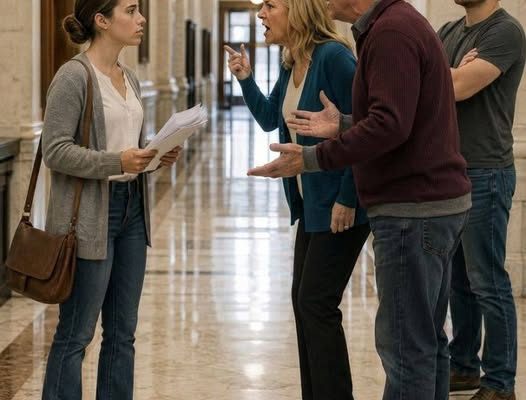
My husband vanished with my sister on my 35th birthday, setting off a trap when I pulled up the camera footage.

PART 1

My thirty-fifth birthday ended less than half an hour after dessert was served. I had stepped away from my party for only a few minutes when I saw my husband, Ethan, standing beside his SUV in the parking garage with my younger sister, Madison. They were kissing. For one frozen second, I could not move. But what hurt even more than seeing Ethan’s hand disappear beneath Madison’s coat was the way she looked at me afterward. There was no panic in her face. No shame. Only confidence.

“Claire,” she whispered, “please don’t ruin your own birthday.”

For one blazing moment, I wanted to scream loudly enough for every person upstairs to hear—our parents, our relatives, my employees, everyone gathered at Lark & Pine beneath gold balloons and birthday decorations. Instead, I looked at Ethan. His mouth opened, but nothing came out. That told me enough. I turned around, walked back to the elevator, and returned to the private dining room where twenty people were waiting for me.

“Everything all right?” my mother asked.

“Perfect,” I said.

Then I sat down, cut my cake, thanked everyone for coming, and posed for photographs while leaving an empty place beside me where my husband should have been. Ten minutes later, Ethan texted that Madison wasn’t feeling well and he was driving her home. I stared at the message for several seconds, then replied with a heart.

After the final guest left, I found Sonia Patel, the restaurant manager.

“Do your parking garage cameras cover Level Three?”

Her expression changed immediately.

“What happened?”

“I need footage from around 9:20.”

Sonia studied my face but didn’t ask anything else. She led me into a small back office and pulled up the security recordings. Forty-three seconds. That was all it took to destroy twelve years of marriage. There was Ethan. There was Madison. The kiss, the touching, and the hurried look toward the elevators afterward. I watched it once, then again. Sonia was about to close the video when she suddenly paused.

“Wait.”

“What?”

“That corner,” she said. “I remember seeing that vehicle before.”

She searched through older footage, and suddenly my problem became much larger. Ethan and Madison had parked together in that same corner twice during the previous month. On both nights, the cameras showed them arriving together.

“I can preserve these recordings,” Sonia said carefully. “But if you want copies released, I’ll need a formal written request.”

I sent one from my phone before leaving the office. At midnight, I returned home and found Ethan asleep in our bed, still wearing the shirt I had bought him. I stood in the doorway and watched him breathe peacefully, then walked to the dresser and photographed his company credit card. I didn’t wake him. Instead, I carried my laptop downstairs.

Ethan wasn’t only my husband. He was also the chief operating officer of Morgan Events Group. Madison ran vendor relations. And I was the quiet sister everyone assumed simply handled contracts. What most people forgot was that my grandmother’s trust gave me fifty-two percent ownership of the company.

I compared the last four digits of Ethan’s corporate card with a stack of expenses still waiting for my approval. Restaurant bills, hotel deposits, luxury dinners labeled as “client entertainment.” By sunrise, the questionable charges totaled $38,600.

At seven in the morning, I asked my parents to meet me for breakfast. They arrived looking confused. I placed my tablet between their coffee cups and pressed play. Neither of them spoke while the parking garage footage ran. My mother slowly lost all color in her face. My father watched it twice before leaning back in his seat.

“What are you going to do?”

I slid the expense report across the table.

“First, I’m going to find out whether they only betrayed me—or whether they stole from the entire family.”

At that exact moment, the diner door opened. Ethan walked in with Madison beside him. Both were smiling as though they believed this could still be explained away.

PART 2

Ethan pulled out the chair beside me without asking. Madison sat across from my mother and folded her hands in her lap like a frightened child.

“Claire,” Ethan began carefully, “you saw one emotional mistake.”

“Three recorded meetings,” I replied. “And $38,600 in unexplained corporate charges.”

His expression changed instantly. Madison reached toward my tablet, but I moved it away before she could touch it.

“Those were vendor expenses,” she snapped.

“Good. Then tell me which vendors.”

Silence followed. My mother lowered her voice and suggested we discuss the situation privately, but I looked around the nearly empty diner.

“It’s seven-thirty in the morning, Mom. There are no birthday guests here. No balloons. No audience. You don’t get to ask for privacy after they used my birthday party as camouflage.”

Dad turned toward Ethan.

“Did you use company money for hotel rooms?”

“That question is insulting,” Ethan said.

That was the moment I understood something important. He still believed being my husband gave him power over me. He had forgotten how Morgan Events Group actually worked. My grandmother’s trust made me the majority owner. Our shareholder agreement allowed immediate suspension whenever financial misconduct was suspected, and every company laptop, account, email, and shared drive was backed up off-site.

I stood.

“Your corporate cards have been frozen.”

“Claire—”

“Your system access is suspended. A forensic accountant starts today.”

Under the table, Ethan suddenly grabbed my wrist.

“Don’t do this,” he said quietly.

I looked down at his hand until my father noticed.

“Let go of her.”

Ethan released me. I picked up my tablet and walked out.

Over the next thirty-six hours, their panic did more damage than any confession could have. Ethan tried deleting a folder named M-Consulting from the company drive, but our IT director restored it before breakfast. Madison entered the office after midnight using an old key and removed two boxes of receipts. Unfortunately for her, the alarm system recorded her badge, the loading-bay camera captured her car, and the security footage showed exactly when she arrived and left.

Then we discovered what M-Consulting actually was: an LLC created eight months earlier and connected to Ethan and Madison. They had been routing fake vendor deposits into it, using Morgan Events Group credit cards to pay for private weekends, and submitting reimbursement requests containing a digital copy of my signature. As the forensic accountant followed the transactions, the amount kept rising until the total reached $87,430.

Ethan called me twenty-one times. I answered none of them. Madison sent our parents a long message claiming I was using the company to punish them because I was jealous. I ignored that too. Instead, I hired a family-law attorney. On legal advice, I transferred half of the legitimate joint funds into a protected account and filed for legal separation. At the same time, our corporate attorney received the complete audit packet.

By Thursday, I scheduled an emergency board meeting in Morgan Events Group’s glass conference room. My parents owned the remaining shares, so all three of us had voting power. They arrived looking exhausted. My mother seemed twenty years older than she had on my birthday, and Dad barely spoke. Madison entered wearing cream silk and pearls, dressed like someone preparing to be photographed as the victim. Ethan arrived last in a navy suit with a perfect tie and the same polished confidence he used during major contract negotiations.

Our attorney placed a sealed evidence binder in front of every seat. Ethan leaned toward me until his voice was low enough that only I could hear.

“You’re going to lose your husband and your family today.”

I reached for the remote and switched on the wall display. The first frame of the parking garage footage appeared behind me.

“No, Ethan. Today I’m finding out which members of my family I still have.”

PART 3

The first slide showed Ethan and Madison in the parking garage. The next displayed hotel invoices, restaurant charges, credit-card statements, access logs, company transfers, and records connected to M-Consulting. I spoke for eleven minutes without ever raising my voice. Ethan interrupted twice. Madison started crying before I even reached the forged approvals.

When the digital copy of my signature appeared on the screen, Madison immediately leaned forward.

“Claire told me I could sign things for her.”

“No.”

I clicked to the next slide, revealing the timestamp.

“This approval was submitted from your laptop. At the exact time it was approved, I was speaking at a conference in Boston.”

Another click brought up my flight record, the conference recording, and the company login report.

“You were in the office.”

Dad slowly closed his evidence binder. Mom stared at Madison as though she were looking at a stranger. Our attorney finally explained that the board needed to vote on three matters: termination for cause, a civil demand requiring repayment of the misused company funds, and referral of the audit findings to law enforcement.

Ethan actually laughed before turning toward my parents.

“You’re not seriously going to destroy Madison’s life because Claire’s pride is hurt.”

Dad spoke first.

“I vote yes. Yes to all three.”

My mother’s hands were shaking.

“So do I.”

Madison stopped pretending to cry. She stared at them and began calling them cowards, traitors, and terrible parents. Ethan suddenly stood and reached across the table toward my tablet.

“This is fake.”

I pulled the device back, but he grabbed my forearm and shoved me. My hip hit the edge of a chair, and I stumbled sideways into the conference table. The tablet fell onto the carpet while the garage footage continued playing on its screen. Dad came around the table as Ethan raised his hand again, but before anything else could happen, building security entered the conference room.

As they moved between us, I looked toward the ceiling and noticed the conference room camera. For weeks, Ethan had insisted the evidence against him was misleading. Now, in front of the entire board, he had created another piece of evidence himself.

I requested charges. Security removed him, and the corporate audit was sent to the district attorney that same afternoon. For once, I did not ask my parents to protect Madison, and for once, they didn’t try.

The consequences didn’t arrive as dramatically as the confrontation, but they came. Ethan eventually pleaded guilty to misdemeanor assault and felony unauthorized computer access. He received three years of probation and signed a restitution agreement covering his share of the missing funds. A judge issued a protective order, and during our divorce, the documented misuse of corporate money made it impossible for him to claim those expenses were ordinary marital spending.

Madison pleaded guilty to falsifying business records. She received probation, community service, and joint responsibility for restitution. Morgan Events Group terminated her. She lost membership in her professional association, and vendors who once returned every one of her calls stopped answering altogether.

My parents sold part of their company shares to help cover the immediate losses. Later, they began counseling, and so did I. But forgiveness did not mean returning everything to the way it had been. Trust had to be rebuilt. Access to my life was no longer automatic simply because someone shared my blood.

One year later, Morgan Events Group had recovered every dollar through restitution, insurance, and the sale of M-Consulting’s remaining assets. I promoted the IT director who had preserved our backups, finalized my divorce, and bought a bright townhouse with tall windows and no memories attached to it.

On my thirty-sixth birthday, I returned to Lark & Pine. Sonia brought out a small chocolate cake. There were no gold balloons this time, no husband missing from the photographs, and no sister whispering that I should stay quiet to keep the peace. Just people I trusted.

I closed my eyes before blowing out the candle and made one wish: never again would I mistake silence for strength, and never again would I preserve someone else’s comfort by surrendering my own power.

Because on my thirty-fifth birthday, I thought I had lost my marriage and my family. What I actually lost was the illusion that keeping everyone happy was the same thing as protecting myself.

And losing that illusion turned out to be the best birthday gift I ever received.

My husband vanished with my sister on my 35th birthday, setting off a trap when I pulled up the camera footage. Read More

My husband brought home his secretary and secret twins, setting off a move when my envelope was opened.

Part 1

My husband walked through our front door carrying a diaper bag—and the life he had apparently built with another woman. A few steps behind him came his secretary, Leah Mason, cradling two sleeping newborn boys against her chest. My mother-in-law, Margaret Rowan, followed them into our Austin home with the calm confidence of a woman arriving for a family celebration rather than helping dismantle a twelve-year marriage. I stood beneath the crystal chandelier while Evan leaned toward one of the babies and kissed his forehead.

“Claire, these are my sons.”

There was no apology in his voice. No hesitation. Leah looked down as though she were trying to appear embarrassed, but the small smile at the corner of her mouth never disappeared. Margaret placed her expensive handbag on my dining table, opened it, and pulled out a check. The amount written across it was eighty million dollars, signed neatly in blue ink.

“Take the money, leave Austin, and never come back. The Rowan family finally has the heirs it deserves.”

For twelve years, I had worked beside Evan to transform Rowan Meridian from his father’s struggling investment firm into one of the country’s fastest-growing real-estate funds. I negotiated financing, created the compliance department, recruited senior executives, and stabilized the company during two difficult market cycles. What Margaret never bothered to mention was that my late father’s trust controlled fifty-one percent of Rowan Meridian’s voting shares. Legally, I held more power than Evan ever had. Yet at every charity dinner, Margaret introduced me simply as “Evan’s wife.” Recently, Evan had started introducing Leah as the most valuable person in the company. Looking at the twins in her arms, I finally understood why.

The babies were innocent. They were asleep beneath matching cream blankets, unaware of the adults around them or the lies that had brought them into my living room. Whatever Leah and Evan had done, I had no intention of using two newborns as weapons.

“Congratulations.”

Evan stared at me. He had clearly expected screaming, accusations, perhaps even begging. Margaret looked almost disappointed by my calm response, while Leah’s confident expression faltered for the first time. I pushed the eighty-million-dollar check back across the marble table.

“You can keep it.”

I went upstairs and packed a single navy suitcase. I took several changes of clothing, my passport, my mother’s watch, and an encrypted drive my attorney had repeatedly warned me never to leave unsecured. From downstairs, I could hear Evan laughing as though my departure had already proven his victory. What he did not know was that I had discovered his affair nearly three months earlier. I knew about the luxury penthouse he had rented for Leah. I knew Rowan Meridian’s corporate card had covered part of her medical expenses. I also knew someone had created fake consulting invoices to disguise those payments. I had said nothing because anger could be denied. Documents could not.

Before closing my suitcase, I opened the safe in my closet and removed one sealed medical envelope. Two years earlier, after eighteen months of unsuccessful attempts to have a child, Evan and I had undergone fertility testing. I attended every appointment. Evan skipped the final consultation and later refused to discuss the results.

“Never bring that appointment up again.”

I had obeyed—at least publicly. The original report had remained sealed in my safe ever since. Now I wrote Evan’s name across the envelope and placed it beside Margaret’s check on the dining table. I was halfway to the open front door when Evan noticed it. He picked it up with an irritated laugh and tore through the seal.

“What is this supposed to be?”

I said nothing. His eyes traveled across the first page. The amusement vanished from his face. His hands began to shake. Seconds later, Evan dropped to his knees on the limestone floor.

“No… no, this can’t be right.”

Part 2

The fertility report contained the results of two separate laboratory analyses, along with the specialist’s final conclusion. Evan had non-obstructive azoospermia. Neither sample had contained sperm, and additional genetic testing had identified a Y-chromosome deletion that made natural conception extraordinarily unlikely. The clinic had recommended further treatment, counseling, and additional testing. Evan had refused all of it, apparently preferring to pretend the diagnosis had never existed. From the doorway, I watched him repeatedly compare the date, his patient number, and the doctor’s signature while the twins suddenly began crying in Leah’s arms.

“What does that report say?” Margaret demanded.

Evan slowly lifted his head and looked directly at Leah.

“Who is their father?”

Her face changed immediately.

“You are. Evan, of course you are. We were together constantly.”

“That isn’t what I asked.”

His voice cracked. Margaret grabbed the papers from his hand, scanned the report, and went pale. Leah stepped backward and held both babies more tightly. I wanted the truth to reach the adults responsible for this mess, not the children caught inside it.

“Get an independent paternity test. And this time, pay for it from your own bank account.”

I rolled my suitcase outside, where a black SUV waited at the curb. My attorney, Nadia Brooks, sat in the back seat beside a banker’s box filled with copies of financial records. As the driver pulled away from the house, Nadia handed me a tablet. An emergency filing was already prepared. It requested preservation of Rowan Meridian’s records, suspension of suspicious transfers, and an injunction preventing Evan from borrowing against or transferring assets he had no authority to control.

“Are you absolutely sure you want to file this now?” Nadia asked.

I signed electronically.

“Yes.”

By that evening, Rowan Meridian’s independent directors had received the first forensic audit package. The questionable invoices already totaled more than $6.4 million. Some of the money had paid for Leah’s apartment, medical bills, private nursing care, and travel. Other payments had moved through a shell company connected to Margaret’s longtime accountant.

More disturbing was a draft board resolution claiming I had agreed to surrender my voting rights in exchange for Margaret’s eighty-million-dollar payment. There was only one problem with their plan: I had never signed anything. Better still, our dining-room security camera had recorded Margaret offering me the check and ordering me to disappear.

Evan called me forty-three times that night. His messages followed a predictable progression. First came anger. Then threats. Then apologies. Finally, desperation.

“We can still fix this.”

Seven minutes later:

“The babies need someone to be their father.”

Then:

“If you go through with this, I’ll tell the board you’ve become unstable.”

I forwarded every message to Nadia without replying. The following morning, Evan arrived at Rowan Meridian’s headquarters with Leah and attempted to order security to remove me from the executive floor. Instead, outside counsel met him in the lobby. His access badge had already been disabled. His company phone and laptop were collected, and he was formally placed on administrative leave while the forensic audit continued.

Margaret called shortly afterward.

“Cash the check, Claire. We’ll increase it to one hundred million.”

“The check is evidence now.”

For once, Margaret Rowan had nothing to say.

The paternity testing process took six days. During that week, Leah claimed my fertility report had been manufactured. Evan accused the clinic of confusing his samples with another patient’s. Margaret allegedly contacted someone connected to the testing laboratory through an intermediary, apparently hoping influence might succeed where denial had failed. Nadia documented every communication.

On the seventh morning, Evan asked for a private meeting. He believed he was coming to negotiate the price of my silence and arrange my departure from Rowan Meridian. He had no idea that the independent board members, outside counsel, forensic auditors, Margaret, and Leah would all be waiting in the conference room when the laboratory courier arrived.

Part 3

The meeting took place in Rowan Meridian’s executive conference room overlooking downtown Austin. Evan wore the dark suit he normally reserved for investor interviews, but sweat had already darkened the collar of his shirt. Margaret sat beside him with perfect posture, though her hands were locked tightly together. Leah stood near the windows. The twins were not there; thankfully, she had left them with her sister.

Evan pushed a settlement folder toward me.

“Eighty million dollars, the Austin house, and a mutual confidentiality agreement. You resign from the company today, and none of this becomes public.”

I left the folder untouched.

“You still believe this is a divorce negotiation.”

Before he could respond, the courier arrived with the laboratory results. Evan had provided his sample under independent supervision, and both babies had undergone witnessed cheek-swab testing. Outside counsel opened the reports and read the conclusion aloud. Evan Rowan was excluded as the biological father of both children.

Nobody spoke. For several seconds, the only sound in the room came from the ventilation system. Evan slowly turned toward Leah.

“Tell me who their father is.”

Leah began to cry. Eventually, she admitted that the biological father was Daniel Price, a married director at one of Rowan Meridian’s major lending institutions. When Leah became pregnant, Daniel had refused to leave his wife and children. Evan, desperate to prove he could produce the heirs Margaret constantly demanded, had been far easier to manipulate.

Margaret slammed her palm against the conference table.

“You deceived my son!”

Leah’s tears turned into anger.

“Don’t pretend you were innocent. You offered me five million dollars to bring the twins into Claire’s house before she could stop the trust amendment.”

The room went completely still. Margaret’s expression collapsed. The forensic auditor connected a laptop to the conference-room screen and displayed a timeline of suspicious payments, false invoices, and draft corporate documents. Among them was an amendment designed to transfer additional company interests to any biological son produced by Evan. The amendment could never legally reach the shares held by my father’s trust without my consent, but Margaret and Evan had planned to use the newborn twins—and the enormous buyout offer—to pressure me into signing away my control.

I looked at both of them.

“You mistook my silence for weakness. Worse, you mistook it for permission.”

The board acted that afternoon. Evan was removed as chief executive for cause. Margaret lost her advisory role and all access to company facilities. Rowan Meridian referred the forged documents, diverted funds, suspicious transfers, and attempted coercion to investigators. I filed for divorce. I made no financial or legal claim against the twins because they had done nothing wrong and deserved a future untouched by the adults’ choices.

Leah eventually agreed to cooperate with investigators. She provided records, admitted her role in the false invoices, and returned what remained of the money she had received. Daniel’s employer terminated him after learning what had happened, and family court later ordered him to provide financial support for his sons.

Evan fought every consequence. He claimed I had abandoned our marriage without warning. The security footage proved otherwise. He insisted Margaret’s eighty-million-dollar check had been a legitimate settlement offer. The recorded conversation showed exactly what it had been intended to accomplish. As auditors examined additional years of transactions, they uncovered even more irregularities. Eventually, Evan and Margaret both entered guilty pleas connected to the financial scheme. Restitution orders followed, along with prison sentences and public disgrace that no amount of Rowan money could erase.

I sold the Austin house shortly after the divorce became final. Rowan Meridian received a new name, a fully independent board chair, stricter financial controls, and expanded employee ownership. Most of the diverted money was eventually recovered. For the first time since my marriage, every decision I made belonged entirely to me.

Eighteen months later, I stood before employees and investors at our annual meeting overlooking the Colorado River. Revenue had increased, employee participation was stronger than ever, and the company had emerged from the scandal healthier than before. When I walked onto the stage, nobody introduced me as Evan Rowan’s wife. Nobody described me as the quiet woman standing behind someone else’s success. They simply introduced me by my own name.

That night, I went home to a smaller house filled with books, music, and the kind of silence that no longer felt lonely. I stepped onto the balcony with a glass of wine while my mother’s watch rested against my wrist. For years, Evan had treated that sealed medical envelope like a secret capable of destroying him. In the end, the envelope had not destroyed his future. It had only exposed the lie he had built around it.

And leaving that doorway with one suitcase had not cost me a family.

It had given me my life back.

My husband brought home his secretary and secret twins, setting off a move when my envelope was opened. Read More

My daughter warned me about my mother-in-law’s tea, setting off a discovery that exposed ten years of deceit.

Part 1

“Mom, Grandma puts white powder in your tea whenever she thinks nobody is looking.”

My eight-year-old daughter, Chloe, whispered those words while I was folding laundry in our San Diego home. My hands immediately froze around one of my husband Julian’s shirts.

“Are you sure, sweetheart?”

Chloe nodded.

“Yes. She takes it from a little white jar, stirs it into your cup, and watches until you finish.”

For ten years, my mother-in-law, Eleanor, had lived under our roof. Because my own mother had passed away while I was in college, I had welcomed Eleanor into my life almost like a second mother. I paid many of her medical expenses, helped with medications and travel, and trusted her completely around Chloe. Eleanor cooked meals, helped around the house, and every morning prepared the same cup of chamomile tea for me.

“Drink it, Nora. It’s good for your stomach.”

Until Chloe spoke, I had always interpreted those words as affection.

That afternoon, I entered the kitchen and saw my usual mug waiting on the table. Tiny pale grains rested near the bottom. Instead of drinking it, I quietly poured everything down the sink. At dinner, Eleanor placed chicken soup in front of me and smiled.

“Eat well, dear. You’ve looked awfully tired lately.”

Her words made me think about the health problems I had developed over the past several years—constant exhaustion, unusual test results, aching joints, and unexplained changes in my skin. Doctors had never been able to identify a clear cause.

After dinner, I pretended to clean the kitchen and noticed a small white porcelain jar behind the tea boxes. I reached toward it, but Eleanor suddenly appeared behind me.

“What are you looking for?”

“Nothing. I thought that was sugar.”

She smiled, but there was no warmth in her eyes.

“Just dried herbs. They smell terrible, so don’t open it.”

I barely slept that night.

At 5:30 the next morning, I waited where Eleanor couldn’t see me. She entered the kitchen, prepared my tea, opened the porcelain jar, and added a measured amount of white powder before stirring until it disappeared.

My stomach dropped.

I left before breakfast and called my closest friend, Sienna, who worked as a chemist at a local hospital. She arranged medical testing immediately. An hour later, she sat across from me looking deeply concerned.

“Nora, your tests show traces of a powerful medication that shouldn’t be in your system. This doesn’t look accidental. It appears you’ve been exposed repeatedly.”

I didn’t cry.

All I could think about were the countless mornings Eleanor had smiled while watching me finish every cup.

Sienna told me not to confront anyone yet. She suggested preserving evidence and seeking professional help. That afternoon, I arranged for discreet video monitoring in the kitchen and safely collected a small sample of the powder. Beneath the jar, I also found a pharmacy receipt bearing the name David Vance—a man I had never heard of.

The next morning, Eleanor placed another mug in front of me.

Just as I lifted it, Chloe rushed into the kitchen.

“Mom, I’m thirsty. Can I have some?”

Eleanor instantly went pale.

“Don’t drink from that cup!”

Julian slowly looked up from breakfast.

“Mom… why can’t Chloe drink Nora’s tea?”

Eleanor stared at the mug.

Then at me.

For the first time in ten years, the gentle expression she had always worn disappeared.

She quickly claimed the tea was simply too hot for a child.

Julian reached over and touched the mug.

It was barely warm.

I changed the subject before the argument could escalate. I still needed time to secure everything I had discovered.

On the drive to school, I made Chloe promise never to accept food or drinks from Eleanor unless I was nearby.

“Is Grandma trying to make you sick, Mommy?”

I saw fear filling her eyes.

“I’m taking care of it, sweetheart. I just need you to trust me.”

After dropping her off, I backed up the recordings and medical information somewhere secure.

That afternoon, my phone alerted me that someone had entered our kitchen.

I opened the video feed.

A man in his fifties stood beside Eleanor. She led him directly toward the porcelain jar. He examined it, handed her a small package, then suddenly looked straight toward the hidden camera.

My heart started racing.

Eleanor followed his gaze.

Seconds later, the video went black.

Part 2

I immediately called Julian, but his phone went straight to voicemail. Sienna urged me to pick Chloe up from school as quickly as possible.

When I rushed into the school office, the principal gave me news that made my entire body go cold.

“Mrs. Vance picked Chloe up about ten minutes ago. She was listed as an authorized guardian.”

Eleanor had taken my daughter.

Julian reached the house at almost the same time I did. Eleanor was gone. So was Chloe. The porcelain jar and the package from the mysterious visitor had disappeared too.

I couldn’t hide the truth from my husband anymore.

I showed him the medical reports.

Then the receipt.

Finally, I played the kitchen recording.

Julian watched his own mother secretly adding something to my morning drink.

He slowly sat down.

“This can’t be real. My mother wouldn’t do this.”

“I believed the same thing for ten years. But right now, we don’t have time to understand why. We have to find Chloe.”

One of Julian’s cousins remembered Eleanor recently asking for directions to an abandoned family chapel in the mountains near Flagstaff. The property had once belonged to Julian’s grandfather and had been unused for decades.

We contacted law enforcement and headed toward the area.

Halfway through the drive, my phone rang from an unknown number.

“Mommy, please come get me. I’m cold and scared.”

“Chloe?”

Before she could say more, someone took the phone.

Eleanor’s voice came through.

“Nora, turn around. Go back home.”

Julian heard her through the speaker.

“Mom, let Chloe go.”

Eleanor’s voice changed completely. The sweet, fragile woman I had known was gone.

She accused me of interfering with family assets and claimed I had never truly belonged in their family. Then she mentioned something that finally made everything connect.

My late grandfather’s trust.

Three years earlier, I had inherited substantial property through an estate structure tied to Julian’s family holdings. Certain provisions could have shifted control of valuable assets after my death, and Eleanor had significant authority within the existing arrangements.

Suddenly, years of unexplained illness made terrible sense.

This had never been simple resentment.

Eleanor had apparently been trying to weaken my health gradually enough that it would look like a natural medical decline. If I became seriously ill or died, she believed control of the assets would eventually move back toward her side of the family.

And David Vance—the name on the pharmacy receipt—appeared to be involved.

Julian gripped the steering wheel.

“The old chapel. That has to be where she went.”

Rain hammered against the windshield as we climbed farther into the mountains. Eventually, an old wooden chapel appeared through the gray weather.

A battered pickup truck stood outside.

I recognized it from the kitchen recording.

Before Julian had completely stopped the SUV, I opened the door and ran toward the building.

“Chloe!”

My voice echoed through the abandoned sanctuary.

At the far end stood Eleanor.

Beside her was David Vance.

And behind the altar was Chloe, wrapped in a blanket and secured to a chair.

“Mommy!”

I moved toward her, but David stepped between us.

“Stay back.”

Julian entered behind me.

“Mom, let her go. The authorities already have the recordings. They have the medical evidence. They know about David. This is finished.”

“It is not finished!”

Eleanor’s composure finally shattered.

She screamed that I had ruined everything. She claimed that if I had simply continued drinking my tea, doctors eventually would have blamed my worsening health on an unexplained illness. She had imagined Julian remaining with Chloe while she regained control of the estate.

Julian stared at his mother in disbelief.

“You did this to my wife for years?”

“She never belonged here!”

Eleanor shouted that I had taken Julian away from her and threatened everything she believed she had spent her life protecting.

While she argued with him, I looked toward Chloe.

Despite her fear, my daughter was watching everything.

And then she gave me the smallest signal.

That was all I needed.

Part 3

The next few moments happened quickly.

Julian moved toward David while I rushed toward Chloe. In the confusion, Eleanor lost her balance near the altar, giving me enough time to reach my daughter and free her.

“I’ve got you, baby. You’re safe.”

I pulled Chloe tightly against me.

Within moments, police sirens sounded outside the chapel. Officers entered, secured the building, and took both Eleanor and David into custody.

As Eleanor was escorted away, she suddenly abandoned the angry voice she had used only minutes earlier. Her expression softened, and she tried to sound like the gentle grandmother I had known for a decade.

“Nora, please. I’m an old woman. Tell them I was confused. Tell them this was a misunderstanding.”

I stood beside Julian with Chloe safely in my arms.

For ten years, this woman had lived in my house.

She had cooked for my daughter.

She had hugged me.

She had smiled across the breakfast table while quietly contributing to years of unexplained illness.

I looked directly at her.

“Take her away.”

The investigation that followed uncovered far more than we expected.

Investigators searched Eleanor’s private space in our home and discovered records documenting years of what she had been doing, along with research related to the symptoms I had experienced. Evidence also connected David Vance to the substances and supplies involved.

David eventually cooperated with prosecutors and provided testimony about Eleanor’s plan. The records showed that she had been paying him for years to help obtain what she needed.

The case against Eleanor became overwhelming.

She faced serious charges connected to the long-term scheme, Chloe’s disappearance, financial misconduct, and the events at the chapel. David also faced major legal consequences for his involvement.

For Julian, the truth was almost impossible to accept.

The woman who raised him had spent years deceiving everyone in his own home.

But once he understood what had happened, he never defended her again.

My recovery was slower.

Doctors monitored me closely for months while my body gradually recovered from years of unexplained exposure. My test results slowly improved. The crushing exhaustion began to disappear, my strength returned, and for the first time in years, I started waking up without feeling as though I had barely slept.

Julian attended every appointment he could.

He worked with our attorneys to restructure the family trust and make sure Eleanor—or anyone connected to her—could never interfere with our property again.

Most importantly, he focused on Chloe.

She had been the person who noticed something adults had missed.

One simple sentence from my eight-year-old daughter had changed everything.

Six months later, we sold the old house.

None of us wanted to remain in a place where every room carried memories of Eleanor’s deception.

We moved to a bright home in La Jolla overlooking the Pacific.

One morning, sunlight poured through the kitchen windows while I stood beside the counter holding a mug of peppermint tea I had prepared myself from leaves growing in our garden.

For the first time in a very long time, holding a cup of tea didn’t make me afraid.

Chloe wandered into the kitchen wearing her favorite yellow dress.

“Good morning, Mommy.”

I smiled as she wrapped her arms around me.

“Good morning, sweetheart.”

Julian entered behind her carrying lunchboxes for Chloe’s summer camp. He wrapped an arm around my waist.

“How are you feeling today?”

I thought about the question.

Then I looked around our new home.

At Julian.

At Chloe.

At the ocean glowing beyond the windows.

“I feel whole.”

Chloe poured herself some orange juice and looked up at us.

“Mommy?”

“Yes?”

“Can we go to the beach after camp?”

I smiled.

“We can go wherever you want.”

Six months earlier, one quiet warning from my daughter had shattered ten years of secrets.

It also gave us the chance to start again.

I lifted my tea toward the morning light and took a slow sip.

For the first time in years, there was nothing hidden inside it.

And there was nothing hidden inside our family anymore.

My daughter warned me about my mother-in-law’s tea, setting off a discovery that exposed ten years of deceit. Read More

My mother rejected me on Mother’s Day, setting off a departure that cut our ties permanently.

On Mother’s Day, my mom looked me straight in the eye and said, “I wish you’d never been my daughter.” I stood, replied, “Then live as if you never had one,” and drove away in my SUV. By the next morning, my phone wouldn’t stop ringing—and suddenly, everyone desperately wanted me to answer.

“I wish you’d never been my daughter.”

My mother, Diane Whitmore, said those words across a table filled with Mother’s Day flowers, untouched cheesecake, and the expensive brunch I had paid for.

She looked directly at me.

For several seconds, I couldn’t move.

My older brother, Ryan, dropped his gaze to his plate. His wife, Melissa, suddenly found her napkin fascinating.

Nobody defended me.

Mom folded her arms.

“You heard me, Emily. Ever since you married Daniel, everything has become about your career, your house, your life. You barely remember this family exists.”

I was thirty-four, a regional operations manager in Charlotte, North Carolina. I worked sixty-hour weeks, helped Mom with her mortgage after Dad died, paid Ryan’s legal fees during his divorce, and had spent the previous Christmas driving four hours through freezing rain because Mom said she “couldn’t bear an empty house.”

Apparently, none of that counted.

“What exactly would have made me a good daughter?” I asked quietly.

“Someone who puts family first.”

Ryan finally looked up.

“Emily, maybe this isn’t the time.”

I gave a short laugh.

Of course.

Whenever I was the one being hurt, there was never a convenient time to discuss it.

Mom pushed back from the table.

“I sacrificed everything for you.”

“And I’ve spent half my adult life paying you back for sacrifices I never asked you to keep using against me.”

Her expression hardened.

Then she said the sentence that ended everything.

“If I could do it again, I wouldn’t have had a daughter at all.”

I reached for my purse.

Daniel touched my wrist. “Em.”

I shook my head.

No yelling.

No tears.

I simply stood.

“Then live as if you never had one.”

Mom blinked.

“What?”

“You wish I’d never been your daughter. Fine. Starting today, you don’t have one.”

Ryan scoffed. “Don’t be dramatic.”

I looked directly at him.

“You’ll understand tomorrow.”

Daniel followed me outside without saying a word.

I climbed into my black SUV, started the engine, and drove away while my mother watched through the restaurant window.

That night, I blocked her number.

Then Ryan’s.

Then Melissa’s.

I slept better than I had in months.

At 6:17 the next morning, my phone started vibrating across the nightstand.

One call.

Then another.

Then six more.

Daniel picked up his phone.

His expression shifted.

“Emily.”

“What?”

He turned the screen toward me.

Twenty-three missed calls.

Three voicemails.

Two messages from Ryan.

The newest read:

Call me NOW. Mom’s bank says her mortgage payment failed. So did the insurance. What did you do?

I stared at the screen.

Another message appeared.

Emily, this isn’t funny. Mom could lose the house.

I slowly sat up.

For the first time in years, I smiled without feeling guilty.

PART 2

What Ryan didn’t understand was that nothing had actually “failed.”

I had simply stopped paying bills that were never mine.

For four years after Dad passed away, Mom told everyone she survived on his modest pension and her Social Security benefits.

Technically, that was true.

What she left out was that I covered the difference.

Every month, $1,460 left my account for her mortgage. Another $310 covered homeowner’s insurance and an escrow shortage. I paid her phone plan, car insurance, and the premium on a supplemental health policy because she constantly worried about getting sick and being unable to afford treatment.

Altogether, I spent nearly $2,400 every month maintaining her lifestyle.

Ryan knew some of it.

He simply preferred not to know exactly how much.

At 7:05 that morning, an unfamiliar number called.

I answered.

Ryan’s voice came through immediately.

“Emily?”

He had borrowed someone else’s phone.

“You blocked me?”

“Yes.”

“What the hell is wrong with you?”

I walked downstairs while Daniel started coffee.

“Good morning to you too.”

Ryan didn’t laugh.

“Mom is losing her mind. Her mortgage account says the automatic payment was removed.”

“It was.”

“You removed it?”

“Yes.”

“Why?”

I stopped beside the kitchen island.

“Because she doesn’t have a daughter anymore.”

Silence.

Then Ryan lowered his voice.

“Come on. She was angry.”

“She was specific.”

“She didn’t mean it.”

“That’s convenient.”

His tone sharpened.

“You can’t punish her financially because of one sentence.”

“I’m not punishing anyone. I’m no longer subsidizing someone who openly wishes I didn’t exist.”

Ryan exhaled loudly.

“You know she can’t afford everything.”

“Then help her.”

Another silence.

And that was the real problem.

Ryan was forty-one, earned nearly ninety thousand dollars a year in commercial sales, drove a new pickup truck, took two vacations every year, and somehow never had money whenever Mom needed help.

Finally, he said, “I’ve got two kids.”

“So?”

“Emily.”

“You told me yesterday I was being dramatic. Today you’re calling before breakfast because my drama costs money.”

He started talking over me.

I disconnected.

By nine, Mom’s best friend had called.

Then my aunt.

Then a cousin I hadn’t spoken to since 2019.

The story was already circulating: Emily had abandoned her grieving mother over a “misunderstanding.”

Strangely, nobody repeated what Mom had actually said.

At noon, an email arrived from her with the subject line, **I hope you’re proud of yourself.**

Three paragraphs about humiliation, sacrifice, and family loyalty.

Not one sentence said, “I’m sorry.”

I forwarded it to Daniel.

He called immediately.

“Don’t answer.”

“I wasn’t planning to.”

He paused.

“You know what she expects, right?”

“Yes.”

“She expects you to panic.”

I looked through my office window at the traffic moving along Interstate 77.

“For once, she can panic.”

That afternoon, I discovered another expense.

The electricity bill was in Mom’s name, but my card had been attached to automatic payments for almost three years.

I removed it.

Then the streaming services.

Then roadside assistance.

Then the pharmacy delivery subscription.

Finally, I opened a spreadsheet.

Not because I was angry.

Because I wanted to know the actual cost of being the daughter my mother claimed she wished she never had.

The yearly total stunned me.

$31,842.

And that didn’t include emergencies, her new water heater, the roof repair, Ryan’s attorney, Mom’s dental implants, or the $8,000 I had transferred when she claimed she was “one disaster away from bankruptcy.”

That evening, Daniel came home with Thai food and found me staring at the spreadsheet.

“How much?” he asked.

“Over thirty-one thousand a year.”

He pulled out the chair beside me.

“You knew it was a lot.”

“I didn’t know I was basically paying another mortgage.”

My phone buzzed.

A message from Aunt Patricia appeared:

**Your mother says you’re trying to make her homeless.**

I typed back:

**No. I stopped paying for a house I don’t own.**

Patricia answered almost instantly:

**She’s your mother.**

I stared at the screen before responding.

**And yesterday she wished she wasn’t.**

No reply came.

For two days, the calls continued.

Wednesday morning, Ryan showed up at my office without an appointment and refused to leave the lobby until security contacted me upstairs.

“Your brother says it’s a family emergency.”

I nearly refused to see him.

Then I changed my mind.

When Ryan entered the conference room, his face was red with anger.

“You need to fix this.”

I leaned back.

“What happened?”

“Mom talked to the bank.”

“And?”

“She has six years left on the mortgage. She can’t refinance on her income.”

“That sounds like information she should have known.”

His voice rose.

“She’ll have to sell.”

I waited.

Ryan stared at me.

And suddenly, I understood.

“That’s why you’re here.”

“What?”

“You don’t care that I’m hurt. You care that if she sells, you lose the house you assumed you’d inherit.”

His expression changed.

And suddenly, the entire family emergency made perfect sense.

PART 3

Ryan’s face changed so quickly he might as well have confessed.

“That’s ridiculous,” he said.

“Is it?”

“Yes.”

I folded my arms.

“Then tell me why you’re here.”

“Because Mom is seventy.”

“She’s sixty-eight.”

“You know what I mean.”

“No, Ryan. I don’t.”

He paced toward the conference room window.

“This family has always taken care of each other.”

I almost laughed.

Instead, I opened my laptop.

“You want to talk about taking care of each other?”

“Emily—”

“No. Sit down.”

Maybe it was my tone.

Maybe it was because we were in my office, where he couldn’t interrupt me and expect everyone else to fall silent.

Whatever the reason, he sat.

I turned the laptop toward him.

The spreadsheet remained open.

Ryan glanced at it.

“What is this?”

“What I’ve paid for Mom during the last twelve months.”

He studied the total.

His eyebrows rose.

“That can’t be right.”

“It is.”

“Thirty-one thousand dollars?”

“Thirty-one thousand eight hundred forty-two.”

He scrolled.

Mortgage.

Insurance.

Phone.

Medical coverage.

Utilities.

Car expenses.

Maintenance.

Subscriptions.

Then I opened another worksheet.

“That’s the previous year.”

$38,109.

Another.

$44,770.

Ryan stopped scrolling.

“What happened that year?”

“Her roof.”

His mouth tightened.

“I thought insurance covered it.”

“It covered part of it.”

“You never told me.”

“I did. You said money was tight.”

“It was.”

“You bought a boat three months later.”

His eyes narrowed.

“That has nothing to do with this.”

“It has everything to do with this.”

He pushed the laptop away.

“Fine. You’ve helped her. A lot. Nobody is denying that.”

“Mom did.”

“What?”

“She told me I don’t put family first.”

“She was emotional.”

“Interesting how her emotions always create obligations for everyone else.”

He stood again.

“This isn’t getting us anywhere.”

“It got me somewhere.”

“Where?”

“Out.”

He stared at me.

“I’m done being the family account.”

“That’s not what you are.”

“Then there shouldn’t be a crisis when I stop paying.”

His jaw tightened.

For the first time, Ryan seemed to understand there was no version of this conversation in which I restarted those automatic payments.

“What do you want?” he asked.

“Nothing.”

“An apology?”

“I don’t want an apology someone gives because the mortgage is due.”

“So you’re just cutting Mom off?”

“I am no longer paying her recurring expenses.”

“That’s cutting her off.”

“No. She has income. She has a house with significant equity. She has a car. She has retirement benefits. She has two adult children.”

Ryan looked irritated.

“Don’t bring me into this.”

There it was.

I leaned forward.

“Why not?”

“Because this was always your arrangement with her.”

“No. This was the arrangement everyone allowed because it was convenient.”

“I never asked you to pay.”

“You also never offered.”

He opened his mouth.

I lifted a hand.

“I don’t care anymore. You don’t have to justify yourself to me. And I don’t have to justify myself to you.”

Security eventually escorted him downstairs when he refused to leave.

By Friday, Mom changed strategies.

The accusations stopped.

An apology arrived.

It came as a voicemail from another number.

“Emily, honey, this is Mom. I know you’re upset. I shouldn’t have said what I said. I was frustrated, and sometimes mothers say things they don’t mean. Please call me so we can straighten this out. I love you.”

I listened twice.

Not because it moved me.

Because something about it felt wrong.

Daniel noticed too.

“She didn’t actually apologize.”

“She said she shouldn’t have said it.”

“That isn’t the same thing.”

I nodded.

She hadn’t said, “I’m sorry I hurt you.”

She had said she shouldn’t have said it.

To someone outside our family, that distinction might sound petty.

Inside ours, it meant everything.

Mom had spent decades treating cruelty like a communication mistake instead of a choice.

She didn’t regret causing the wound.

She regretted the consequences.

I still didn’t respond.

The following week, she came to my house.

Daniel spotted her first through the doorbell camera.

“Your mom’s here.”

I was upstairs changing after work.

“Did she call?”

“No.”

“Of course she didn’t.”

When I came downstairs, Mom stood on the porch holding a paper grocery bag.

For one irrational second, I felt eleven years old again.

I remembered her waiting at the kitchen table after I came home with a B-minus.

The disappointment on her face when I chose a university four hours away.

Being twenty-three and hearing her tell relatives that Ryan “needed help” while I was “independent.”

Eventually, I understood what independence meant in my family.

It was the word they used when they wanted to give me less while asking me for more.

I opened the door without inviting her inside.

“Hi, Mom.”

She looked tired.

Her hair was tied back, and she wore the beige cardigan Dad had bought her years earlier.

“I brought your casserole dish.”

I glanced at the grocery bag.

“You drove two hours to return a casserole dish?”

“I thought we could talk.”

“We can talk here.”

Her mouth tightened.

“On the porch?”

“Yes.”

She looked past me.

“Is Daniel home?”

“He is.”

“I don’t need an audience.”

“You don’t have one.”

She stared at me, then set the bag down.

“I said I was sorry.”

“No. You said you shouldn’t have said it.”

“Oh, for heaven’s sake.”

There was my mother.

Not the gentle voicemail version.

The real one.

I almost smiled.

She noticed.

“What?”

“Nothing.”

“No, say it.”

“You’re angry because apologizing didn’t immediately restore your access to me.”

Her face reddened.

“That’s an ugly thing to say.”

“So was wishing I’d never been your daughter.”

“I told you I didn’t mean it.”

“Didn’t you?”

She looked away.

That hurt more than I expected.

Not because I needed an answer.

Because I suddenly realized I already had one.

Mom loved me.

In her own way.

But she had also resented me for years.

She resented that I left North Carolina for college in Virginia and eventually returned on my terms.

She resented that I earned more than Ryan.

She resented that I made decisions without asking permission.

Most of all, she resented that Dad trusted me with financial matters during his final illness.

After he died, I became both the person she depended on and the person she blamed.

“Mom,” I said, “why do you think I owe you?”

Her eyes snapped toward me.

“I never said you owe me.”

“You remind me constantly that you sacrificed for me.”

“Because I did.”

“You chose to have children.”

“That doesn’t mean it was easy.”

“I never said it was.”

“You have no idea what I gave up.”

“And there it is.”

“What?”

“The bill.”

She frowned.

“What bill?”

“The invisible bill you’ve been handing me my entire life.”

She shook her head.

“You’ve changed.”

“Yes.”

“I don’t know who put these ideas in your head. Daniel, probably.”

I nearly laughed.

Daniel had been part of the family for eight years and somehow became responsible for every boundary I ever established.

“Daniel didn’t make me cancel anything.”

“You canceled my health insurance.”

“No. I stopped paying for the supplemental policy. You still have Medicare.”

“My doctor—”

“Then choose a plan you can afford, or ask Ryan to contribute.”

Her expression sharpened.

“Why are you dragging your brother into this?”

And that answered another question.

“You still protect him.”

“I protect both my children.”

“No. You protect Ryan from responsibility and then call me responsible enough to carry it.”

“That isn’t true.”

“Mom, when Ryan got divorced, who paid his attorney’s retainer?”

She said nothing.

“Who paid your roof deductible?”

Silence.

“Who covered the property tax shortage?”

Her lips tightened.

“Who paid for Dad’s funeral deposit while Ryan said he needed time to move money around?”

“Stop keeping score.”

“I never kept score before. That was my mistake.”

She stepped closer.

“So this is about money.”

“No. Money is just the part you noticed when I disappeared.”

That landed.

She looked at me differently.

For the first time since arriving, she seemed uncertain.

“You didn’t call Monday morning because you missed me. Ryan didn’t drive to my office because he cared that you hurt me. Everyone panicked because automatic payments stopped.”

Tears gathered in her eyes.

Normally, that would have ended the argument.

I would have softened.

Apologized for making her cry.

Written another check just to restore the peace.

I felt the old reflex rise.

Then I let it go.

“I am your mother,” she whispered.

“Yes.”

“You only get one.”

“And you only had one daughter.”

Her eyes closed briefly.

I hadn’t said it cruelly.

That somehow made it heavier.

She picked up the grocery bag.

“What happens now?”

“You make a budget.”

“I mean us.”

I looked at her.

“I don’t know.”

“Are you saying you never want to see me again?”

“No.”

She seemed surprised.

“I’m saying the old relationship is over.”

“What does that mean?”

“It means I won’t accept insults because you’re upset. I won’t pay bills because you refuse to adjust your lifestyle. I won’t rescue Ryan. And I won’t sit at family dinners while everyone acts like my value is measured by what I provide.”

She wiped her cheek.

“And if I can’t accept that?”

“Then we won’t have much of a relationship.”

Mom left without hugging me.

Three weeks later, she put the house on the market.

Ryan called Daniel instead of me.

Daniel told him not to involve him.

Mom listed the property for $489,000.

She owed less than $76,000.

Suddenly, the woman everyone claimed was about to become homeless had plenty of options.

Two months later, she accepted an offer.

After fees and the remaining mortgage were paid, she walked away with enough money to buy a smaller two-bedroom townhome outside Greensboro in cash and still keep substantial savings.

Ryan was furious.

Not publicly.

Publicly, he supported Mom’s decision.

Privately, he accused me of having “destroyed Dad’s legacy.”

What he really meant was that the large family house would no longer become his someday.

Mom moved in September.

I didn’t help.

That shocked everyone too.

Ryan rented a truck.

Melissa packed the kitchen.

Aunt Patricia organized boxes.

Mom hired movers for the heavy furniture.

And somehow, everything still got done.

The world continued turning without Emily solving every problem.

That may have been the most important lesson our family learned.

In October, Mom called from her own number.

I had unblocked her weeks earlier without telling her.

I answered.

“Hello?”

“It’s me.”

“I know.”

A pause.

“I made chicken pot pie.”

“Okay.”

“I made too much.”

I understood what she was asking.

“When?”

“Sunday?”

I looked at Daniel, who was reading on the sofa.

He glanced up.

I mouthed, Mom.

He shrugged gently, leaving the decision to me.

“Sunday is fine.”

Her new home was smaller than I expected.

Not depressing.

Just smaller.

Clean.

Quiet.

Affordable.

She gave me a tour.

“This room is mine. That one is for guests. There’s a little patio out back.”

“It’s nice.”

“I miss the old kitchen.”

“I’m sure.”

“But this one is easier to clean.”

We ate at a round table near the window.

No flowers.

No audience.

No Ryan.

Halfway through dinner, Mom set down her fork.

“I’ve been seeing a counselor.”

That surprised me.

I stayed quiet.

“She asked me why I said what I said to you.”

“And?”

Mom stared down at her plate.

“I told her because I was angry.”

I waited.

“She kept asking why.”

Then she looked at me.

“I think I wanted to hurt you.”

The words settled between us.

Strangely, they hurt less than all her excuses had.

“Why?”

“Because you can leave.”

I frowned.

“What?”

“You can walk away from things. Jobs. People. Situations you don’t like. Your father could do that too, emotionally. I never could.”

“That doesn’t explain—”

“I know.”

She rubbed her thumb along the edge of her napkin.

“When your father died, I felt abandoned. Then you started handling everything. Bills. Contractors. Insurance. I needed you. And I hated needing you.”

I looked at her.

It was the first truly honest thing she had said about our relationship in years.

“So you punished me for helping?”

“I think I did.”

She looked embarrassed.

“I’m not proud of it.”

I didn’t rush to comfort her.

That wasn’t my responsibility.

“I also treated Ryan differently.”

“Yes.”

“He reminds me of myself.”

“That explains a lot.”

She almost smiled.

Then she surprised me again.

“I told him I’m changing my will.”

I set down my glass.

“This isn’t about inheritance.”

“I know. Let me finish.”

I waited.

“The money left after I’m gone will be divided equally.”

“It should be.”

“But the important part is that he knows there won’t be a house waiting for him. He has to handle his own life.”

I nodded.

“He won’t like that.”

“He doesn’t.”

We both laughed.

It was small.

Awkward.

But genuine.

Our relationship didn’t magically repair itself.

There was no dramatic embrace.

No speech about forgiveness.

For months, we were careful with each other.

Mom sometimes slipped back into old habits.

The first time she complained that I hadn’t called enough, I said, “If you miss me, you can call too.”

She went quiet.

Three days later, she called.

When her car needed new tires, she told me the price.

I waited for the request.

It never came.

She paid for them herself.

When Ryan asked me for $6,000 for what he called a temporary business problem, I refused.

He didn’t speak to me for four months.

I survived.

So did he.

By the next Mother’s Day, Mom and I had built something different.

Not the relationship we used to have.

Something more honest.

Daniel and I drove to Greensboro and took her to lunch.

No Ryan.

No Melissa.

Just the three of us.

When dessert arrived, Mom looked across the table.

“One year.”

I nodded.

“One year.”

“I think about that day all the time.”

“So do I.”

She swallowed.

“I really am sorry, Emily.”

This time, nothing followed it.

No excuse.

No “but.”

No reminder of everything she had sacrificed.

No demand that I forgive her.

I believed her.

“I know.”

She reached across the table.

I let her take my hand.

Then she said something I never expected.

“Losing your money probably saved our relationship.”

Daniel nearly choked on his coffee.

I laughed.

Mom laughed too.

She squeezed my hand.

“I mean it. As long as you were fixing everything, none of us had to look at what we were doing to you.”

I thought back to the morning after Mother’s Day.

The frantic calls.

The accusations.

The panic over payments that hadn’t actually failed.

At the time, I thought stopping the money was revenge.

It wasn’t.

It was information.

The moment I stopped paying, everyone revealed exactly what mattered to them.

Ryan valued security.

Mom valued control.

The extended family valued keeping conflict away from themselves.

And I had valued being needed because somewhere along the way, I confused being useful with being loved.

That year changed all of us.

Mom learned to live within her means.

Ryan learned I wasn’t his emergency fund.

Daniel learned he no longer had to watch me sacrifice our future to finance everyone else’s comfort.

And I learned the hardest lesson of all.

Walking away doesn’t always mean ending a relationship.

Sometimes it is the only way to discover whether that relationship can survive without fear, guilt, obligation, and money holding it together.

When we left the restaurant, Mom hugged me beside my SUV.

One year earlier, I had climbed into that same vehicle after telling her to live as though she had no daughter.

Now she stepped back and smiled.

“Drive safely.”

“I will.”

“Text me when you get home.”

I raised an eyebrow.

She laughed.

“Request, not command.”

“Better.”

Daniel opened the passenger door.

Before I climbed inside, Mom called after me.

“Emily?”

I turned.

“I’m glad you’re my daughter.”

I studied her face.

A year earlier, those words would have broken me.

Now they didn’t.

I no longer needed them the way I once had.

Maybe that was exactly why I could finally accept them.

“I’m glad you’re my mother,” I said.

Then I added, “Most days.”

She laughed.

“Fair enough.”

I climbed into the SUV.

As we pulled onto the road, Daniel looked over at me.

“You okay?”

I watched Mom disappear in the side mirror.

“Yeah.”

And this time, I meant it.

My mother rejected me on Mother’s Day, setting off a departure that cut our ties permanently. Read More

My parents sued me to take my home for my brother, setting off a trial where one document exposed the truth.

The first time my mother screamed, “You stole his future!”, we were standing in a courthouse hallway while strangers pretended not to stare.

But my life had truly split apart months earlier, on an ordinary Tuesday afternoon.

I was twenty-two, standing on the porch of the little two-bedroom fixer-upper I had bought outside Nashville, holding drywall anchors in one hand and a paint scraper in the other.

The house wasn’t impressive.

The kitchen cabinets were outdated. The porch tilted slightly left. A crack stretched down the guest-room wall, and one bathroom faucet shrieked whenever I turned it on.

But it belonged to me.

Every chipped tile, crooked doorway, and ugly cabinet represented eight years of work.

I started babysitting at fourteen.

Then came mowing lawns.

Tutoring.

Computer repairs.

Freelance bookkeeping.

By college, I worked before class, after class, and nearly every weekend.

I earned a full academic scholarship, graduated debt-free, built a small online bookkeeping business, and saved almost everything I could.

At twenty-two, I bought my first house.

No trust fund.

No hidden inheritance.

No rescue.

That Tuesday, a man in a gray polo walked up my driveway.

“Evelyn Carter?”

“Yes?”

He handed me a thick envelope.

“You’ve been served.”

I laughed at first.

Then I opened it.

And stopped breathing.

Thomas and Linda Carter versus Evelyn Carter.

My own parents.

They were suing me.

The complaint accused me of fraud, unjust enrichment, interference with economic opportunity, and, most absurdly, “breach of familial duty.”

According to them, I had benefited from family resources while deliberately refusing to help my older brother, Mason.

They wanted $250,000.

And my house.

The lawsuit described transferring my home to Mason as “restitution for opportunities stolen.”

My phone rang before I finished reading.

Mom.

“What is this?” I asked.

“Don’t use that tone with me.”

“You’re suing me.”

“You know why.”

“No, actually, I don’t.”

Her voice hardened.

“You’ve been selfish toward Mason for years.”

Then Dad took the phone.

“Settle reasonably, Evelyn, or we’ll see you in court.”

“Settle for what? I worked for everything I have.”

“You sabotaged your brother.”

I nearly dropped the phone.

“How?”

“You never shared what you knew.”

“I offered to help Mason write a business plan.”

I heard movement behind him.

Then Mason shouted, “That house was supposed to be mine!”

I stared at my front door.

My house.

The walls I had painted myself.

The place I had sacrificed vacations, new clothes, dinners out, and sleep to afford.

“Mason, you’re twenty-six and you live in Mom and Dad’s basement.”

“You got secret money from Grandma!”

“What?”

“You heard me!”

“Grandma left both of us two thousand dollars.”

“You’re lying!”

Mom grabbed the phone again.

“You stole his future. You knew he was the entrepreneur in this family.”

I gave a bitter laugh.

“He failed three businesses after you gave him a hundred thousand dollars.”

“He needed support!”

“And I didn’t?”

Silence.

Then Dad said something I would never forget.

“You never needed anything.”

That sentence explained my entire childhood better than he understood.

When I was fourteen, I asked Dad for forty dollars to join robotics club.

“Money doesn’t grow on trees,” he said. “Earn it.”

That same week, Mason got five hundred dollars for an entrepreneurship camp.

He quit after four days.

At sixteen, I received an eighty-dollar used bicycle for my birthday.

Mason got a brand-new truck because he “needed transportation for opportunities.”

He wrecked it.

They bought him another.

When I earned my scholarship, Mom said, “That’s good, sweetie.”

When Mason got into an expensive private business school, they threw him a catered party.

By graduation, I had saved fifteen thousand dollars.

Mason had accumulated more than two hundred thousand dollars in student loans my parents had co-signed.

And somehow, I was the thief.

That evening, I sat on my porch until the sunset turned the boards orange.

Then I called my best friend, Naomi.

“My parents are suing me because I’m more successful than my brother.”

She went silent.

Then:

“Please tell me you’re fighting.”

I looked through the open doorway at everything I had built.

“Yes.”

That night, I found attorney Daniel Mercer.

He specialized in ab:us:ive civil litigation.

At 11:47 p.m., I left him a message.

“My family wants my house because my brother thinks my life should’ve been his. I want to f:ight.”

Daniel called at eight the next morning.

I told him everything.

When I finished, he asked one question.

“Evelyn, do you want to simply win?”

I hesitated.

“Or do you want the court to understand exactly what your family did?”

Something shifted inside me.

“I want them to understand.”

Daniel started digging.

And within two weeks, my parents’ story began falling apart.

Their own records documented years of financial support for Mason.

Private tuition.

Cars.

Rent.

Business loans.

Credit-card bills.

Marketing expenses.

Equipment.

A failed food-delivery startup.

A failed clothing brand.

A cryptocurrency “consulting business” that survived six weeks.

My parents had given Mason well over $100,000 in direct support, excluding his education.

What they had given me after age fourteen could nearly fit on one sheet of paper.

Birthday money.

Christmas money.

And Grandma’s $2,000 inheritance.

Exactly the same amount Mason had supposedly received.

Then Daniel found an email.

Dad had sent it to Mason six months before the lawsuit.

Evelyn has done well for herself. Maybe we can convince her to help you get back on your feet.

Mason replied:

She owes me more than help. She has the life I was supposed to have.

My stomach tightened when I read it.

“They knew,” I whispered.

Daniel nodded.

“They knew you didn’t steal anything.”

“So why sue me?”

“Pressure.”

“For money?”

“Maybe.”

He studied the printout.

“But I think there’s more.”

Three months later, we entered court.

Mom avoided my eyes.

Dad sat rigidly beside her.

Mason looked relaxed.

Almost smug.

Their attorney spoke first.

He described Mason as a “promising entrepreneur whose access to family support and business knowledge had been unfairly obstructed.”

Then he described me as someone who had “leveraged family advantages for exclusive personal gain.”

Daniel leaned toward me.

“Don’t react.”

I whispered, “He’s lying.”

“I know.”

Then their lawyer said something that made my blood boil.

“Ms. Carter’s success cannot be viewed separately from the opportunities provided by the Carter family.”

Daniel stood.

“Your Honor, before we respond, we would like to introduce Exhibit 17.”

Dad looked at the document in Daniel’s hand.

His face went white.

It wasn’t the email.

It was a bank statement.

Daniel approached the witness stand.

“Mr. Carter, do you recognize this account?”

Dad swallowed.

“Yes.”

“Whose account is it?”

“My mother’s.”

My grandmother.

Grandma June.

She had d:ied two years earlier.

Daniel continued.

“Were you executor of her estate?”

“Yes.”

“And did her will leave two thousand dollars each to Evelyn and Mason?”

“Yes.”

Mason leaned back in his chair.

Daniel turned toward the judge.

“Your Honor, that is what Mr. Carter told both children.”

My father’s attorney shot to his feet.

“Objection.”

“Basis?”

“Relevance.”

Daniel smiled faintly.

“Extremely relevant.”

The judge allowed him to continue.

Daniel placed another document beside the bank statement.

“This is a copy of June Carter’s actual will.”

Mom turned sharply toward Dad.

I froze.

I had never seen it.

Daniel glanced at me, then returned his attention to my father.

“Mr. Carter, please read paragraph twelve.”

Dad remained still.

The judge spoke.

“Mr. Carter?”

His hands trembled as he lifted the paper.

Finally, he read:

“‘I leave my residence and all proceeds from its future sale to my granddaughter, Evelyn Carter.’”

My heart seemed to stop.

I stared at Daniel.

“What?”

Nobody answered.

Daniel continued.

“And what was that residence worth when Mrs. Carter d:ied?”

Dad stayed silent.

“Mr. Carter?”

“Approximately…”

He swallowed.

“Three hundred and eighty thousand.”

The courtroom tilted around me.

Grandma had left me a house worth nearly $380,000.

Not two thousand dollars.

A house.

I looked toward my parents.

Mom appeared genuinely stunned.

“Mason?” she whispered.

He stared down at the table.

Daniel placed another statement in front of Dad.

“After June Carter d:ied, what happened to the house?”

Another objection.

Overruled.

Dad’s answer was barely audible.

“It was sold.”

“For how much?”

“Four hundred and twelve thousand.”

My chest tightened.

“And where did the money go?”

Nothing.

Daniel repeated the question.

“Where did Evelyn Carter’s inheritance go?”

Dad finally looked at Mason.

And I knew.

No.

I whispered, “No.”

Daniel raised the account records.

Grandma’s house had been sold, and more than $300,000 from the proceeds had gone into accounts connected to Mason.

The courtroom erupted.

Mom jumped to her feet.

“Thomas!”

The judge ordered everyone seated.

Sound seemed to disappear around me.

My hands had gone cold.

Daniel leaned closer.

“Evelyn, stay with me.”

I stared at Dad.

“You stole my inheritance?”

He said nothing.

Mason suddenly spoke.

“It wasn’t stealing.”

The judge snapped, “Mr. Carter, you will remain silent unless called.”

But Mason kept going.

“She didn’t need it!”

Something inside me broke.

I looked at him.

“What did you say?”

“You always succeed! Everything works out for you!”

Daniel rested a hand lightly on my arm.

Mason’s expression twisted.

“I had ideas. I had plans. Grandma never believed in me.”

“So you took what she left me?”

“Dad said we’d balance it out later!”

Mom stared at my father as if he were a stranger.

“You told me June’s estate barely had anything left after medical expenses.”

Dad closed his eyes.

And that was the second shock.

My mother hadn’t known.

At least not the full truth.

Dad had lied to her too.

Daniel requested a short recess.

The moment we entered the hallway, Mom rushed toward me.

“Evelyn—”

I stepped back.

“Don’t.”

“I didn’t know about the house.”

“But you knew about this lawsuit.”

She froze.

“You stood there and demanded my home.”

Her face crumpled.

“I thought—”

“You thought what? That because I managed to build something without you, I should hand it to Mason?”

She couldn’t answer.

Dad came out behind her.

For the first time in my life, he looked old.

“Evelyn.”

I turned away.

He said, “I was trying to keep the family together.”

Daniel actually laughed.

“By committing what appears to be estate fraud?”

Dad flinched.

“You don’t understand.”

“Then explain it.”

Dad looked at me.

“Mason was struggling.”

“And I wasn’t your child?”

“You were strong.”

There it was again.

The excuse they had used all my life.

You were strong.

As if competence meant I deserved less.

As if responsibility meant I could be robbed.

As if surviving neglect gave them permission to neglect me again.

We returned to court.

Daniel called Mason to testify.

Under oath, the story became even worse.

Grandma had always been troubled by how my parents favored him.

So she secretly changed her will.

She left the house to me because she feared I would otherwise receive nothing.

Dad discovered the change after her death.

Instead of honoring it, he sold the property.

Most of the money went into Mason’s businesses.

When those businesses failed, Dad panicked.

Then I bought my own home.

Mason became furious.

He argued that if Grandma’s property had been “family wealth,” then my success meant I had somehow benefited twice.

So they created the lawsuit.

It had never really been about my little fixer-upper.

It was about forcing me to surrender enough property or money to cover what they had already taken.

Their plan was astonishing.

If I settled, they could claim the family dispute had been resolved privately.

If I signed over my house, Mason received another asset.

And if I paid cash, they hoped I would unknowingly sign a release broad enough to waive any future claims involving Grandma’s estate.

Daniel had discovered that language in an early settlement draft.

The judge stared at my father.

“Mr. Carter, are you telling this court that you initiated litigation against the beneficiary of an estate after diverting assets from that same beneficiary?”

Dad lowered his eyes.

Nobody spoke.

Then came a twist even Daniel hadn’t expected.

A woman stood at the back of the courtroom.

She looked to be in her late sixties and wore a navy suit.

“Your Honor?”

The judge frowned.

“Who are you?”

“My name is Margaret Hale.”

Dad’s head snapped up.

For the first time, he looked genuinely terrified.

Margaret held a folder.

“I was June Carter’s attorney.”

Daniel stared at her.

“You drafted the will?”

“Yes.”

Dad whispered, “You said those records were destroyed.”

Margaret looked directly at him.

“No, Thomas. You hoped they were.”

The courtroom went silent again.

Margaret explained that Grandma had anticipated exactly this possibility.

She feared Dad might try to hide or redirect the estate.

So she had created a sealed trust document.

One that would become relevant if anyone interfered with my inheritance.

The judge reviewed it privately.

When she looked up, her expression had changed.

Grandma hadn’t only left me the house.

She had also placed nearly $900,000 in investment accounts into a protected trust.

But there was a condition.

If Dad administered the estate honestly, the trust would eventually be divided between Mason and me.

If he concealed assets, falsified the distribution, or tried to deprive me of my inheritance…

Mason forfeited his entire share.

Everything passed to me.

Mason turned toward Dad.

“What?”

Dad looked sick.

Margaret continued.

“June knew Thomas would sacrifice Evelyn to protect Mason. So she wrote the trust to make that choice impossible without consequences.”

Mason shot to his feet.

“You lost me nine hundred thousand dollars?”

The judge ordered him to sit.

He ignored her.

“You told me Evelyn stole my future!”

Dad shouted, “I did everything for you!”

Mason stared at him.

Then the final truth exploded into the courtroom.

“I never asked you to steal Grandma’s house!”

Dad froze.

Daniel’s expression sharpened.

I looked at Mason.

“What?”

The color drained from his face.

“I thought Dad gave me his money. I didn’t know where it came from until last year.”

Dad shouted, “Stop talking!”

Mason continued anyway.

“When I found out, I wanted him to fix it.”

I struggled to breathe.

“So the lawsuit?”

Mason looked at me.

“He said if we scared you into signing the settlement, nobody would ever find out.”

Mom covered her mouth.

Dad had manipulated all of us.

He convinced Mom that I was selfish.

He convinced Mason that I owed him.

He convinced me Grandma had barely left anything behind.

And when the lies began collapsing, he turned his own children against each other to protect himself.

The lawsuit was dismissed.

The judge referred the estate matter for investigation.

Within months, Dad faced civil judgments and criminal charges involving fraud and misappropriation of estate assets.

Mom filed for divorce.

I recovered the proceeds from Grandma’s house, plus damages.

The trust became mine.

But the strangest moment came six months later.

Mason appeared at my house.

No expensive clothes.

No smug expression.

Just jeans, a faded T-shirt, and an envelope.

“I’m not asking for money,” he said immediately.

I stayed in the doorway.

“What do you want?”

He handed me the envelope.

Inside was a cashier’s check.

Twenty-eight thousand dollars.

“What is this?”

“The only money I have left.”

I stared at him.

“Mason—”

“I don’t deserve forgiveness.”

His voice cracked.

“But I benefited from what Dad took from you.”

He glanced toward the cracked porch railing.

“I spent my whole life thinking you were lucky.”

I almost laughed.

“Lucky?”

“I know.”

He wiped his face.

“I thought every time you succeeded, it proved I had failed.”

For the first time, he looked more like my brother than my rival.

“I kept waiting for someone to build my life for me.”

He swallowed.

“And you were right.”

“About what?”

He met my eyes.

“I never even tried to build one.”

I didn’t forgive him that day.

Maybe forgiveness doesn’t happen in one perfect moment.

Maybe sometimes it begins with leaving the door slightly open.

A year later, I renovated the guest room.

I repaired the crack.

Replaced the flooring.

Painted the walls.

And above the desk, I framed one piece of paper.

Not the lawsuit.

Not the settlement.

Not even Grandma’s trust.

It was a note Margaret had found inside Grandma’s estate file.

Five words in my grandmother’s handwriting.

“For Evelyn. She builds things.”

I cried when I read it.

Because after years of being told I needed less because I was strong, someone had understood the truth.

I had never been strong because I needed nothing.

I became strong because nobody gave me what I needed.

For years, my family mistook that strength for permission.

Permission to overlook me.

Permission to take from me.

Permission to hand my victories to someone else.

They were wrong.

My house still wasn’t glamorous.

The porch still leaned slightly.

The faucet still made a strange noise when I turned it too quickly.

But every morning, I unlocked my front door and stepped into a life no one could claim I had stolen.

Because the truth was simple.

I hadn’t stolen anyone’s future.

I had built my own.

And in the end, the person who tried hardest to take it from me was the one who lost everything.

My parents sued me to take my home for my brother, setting off a trial where one document exposed the truth. Read More

My ex-wife tore up my $5M Treasury warrant at the bank, setting off a confrontation when her superior arrived.

Part 1: The Check She Tore Apart

The steady beep of the heart monitor was the only thing keeping me grounded.

I sat beside my mother’s hospital bed at Seattle General, watching her sleep beneath harsh white lights. My mother, Evelyn Carter, was a Gold Star widow. She had survived losing my father twenty years earlier when his helicopter went down overseas. I refused to let a failing heart valve be what took her from me.

“Forty-eight hours, Miles,” Dr. Rowan told me at dawn. “We need the deposit to reserve the surgical team. If the money doesn’t clear, they’ll move to another case. Your mother doesn’t have time.”

I looked at my scarred hands. Years ago, they had held a rifle. More recently, they had held tools in my cold garage while I built the one thing I hoped could make meaning out of the worst day of my life.

After my medical discharge, I disappeared into work. I had lost a man I could not save, and that helplessness followed me home. So I built something designed to stop catastrophic bleeding fast: the Sentinel Hemostatic Matrix.

For years, people saw me as a broken veteran tinkering with strange equipment. My ex-wife, Vanessa, saw even less. She called me delusional during our divorce and said I was hiding from real life behind “garage inventions.”

But the invention was real.

DARPA had validated it. The Department of Defense had purchased exclusive military distribution rights. In my jacket pocket was a United States Treasury warrant for five million dollars, the first payment of a defense contract.

More importantly, it was my mother’s surgery.

The problem was the account tied to my family trust was held at Meridian National Bank.

The same branch where Vanessa had just been promoted to managing director.

I walked into the polished lobby in combat boots and a faded field jacket. The marble, glass, and tailored suits made me feel like rust in a room full of silver.

Vanessa looked up from her desk and frowned.

“If this is about alimony—”

“It’s not about you,” I said. “I need to deposit a large federal warrant and wire the funds to Seattle General immediately.”

She glanced at my clothes and smirked.

“Did someone finally buy your scrap-metal toys?”

I placed the warrant on her desk.

She saw the amount.

$5,000,000.

Then she saw my name.

For three seconds, she froze.

Then she smiled cruelly.

“Faking a federal document now, Miles?”

“It’s real. Call the issuing authority. Verify it.”

But she didn’t.

Instead, she tore the Treasury warrant in half.

Then tore it again.

The pieces fell across her polished desk like my mother’s life had just become trash.

“There,” Vanessa said. “Now stop pretending you’re a savior and get psychiatric help.”

I stared at the shredded paper.

“You just destroyed a valid federal instrument.”

She pressed the security button.

“No,” she said. “I protected my bank from fraud.”

When security moved toward me, Vanessa laughed.

“What are you looking at? Imaginary friends coming to rescue you?”

I heard the distant thunder of rotors above Seattle.

“No,” I said quietly. “The people who wrote the check.”

Part 2: The People Who Wrote the Check

Traffic outside stopped as three black armored SUVs pulled up to the bank. Military Police entered the lobby with controlled precision, followed by a four-star general in dress uniform.

General Adrian Cole, head of DARPA’s medical division, walked straight into Vanessa’s office and saluted me.

“Sergeant Carter.”

I returned the salute.

“General.”

Vanessa went pale.

General Cole explained that the Pentagon had flagged an unusual routing issue and came personally because my mother’s surgery could not wait.

Then he looked at the torn Treasury warrant on the desk.

“Did you destroy that document?”

Vanessa stammered that it was a forgery.

General Cole’s voice turned cold.

“What Sergeant Carter built in his garage is now a battlefield trauma technology that has already saved American soldiers in classified testing. The government purchased the rights for twenty-five million dollars. That paper was his first five-million-dollar payment.”

The bank’s regional counsel rushed in, horrified.

Before she could arrange a replacement, the general said the funds had already been wired directly to Seattle General’s surgical trust.

For the first time in weeks, I could breathe.

Mom was safe.

But General Cole was not finished.

An FBI agent stepped forward and revealed that Vanessa had abused her position before. Eighteen months earlier, she had used her bank credentials to freeze my VA disability deposits by falsely labeling my account suspicious.

She had cut off my income for ninety days.

Vanessa began to cry.

“Miles, please. Tell them it was a bad divorce. Tell them I made a mistake.”

I looked at the woman who had mocked my pain, tried to block my mother’s surgery, and treated cruelty like policy.

“You didn’t make a mistake,” I said. “You finally picked a fight with someone who could fight back.”

The FBI agent placed her in handcuffs.

General Cole put a hand on my shoulder.

“Come on, Sergeant. We’re going to the hospital.”

Part 3: The Surgery

At Seattle General, Dr. Rowan met us in the lobby.

“The funds cleared twenty minutes ago,” he said. “We’re taking your mother into surgery now.”

I had two minutes with her before the operation.

Her eyes were heavy from medication, but she smiled when she saw me.

“Miles,” she whispered. “Did the invention work?”

Tears finally broke through.

“It worked, Mom. You’re going to be okay.”

She squeezed my hand weakly.

“I always knew you would, my brave boy.”

Then the doors closed, and I waited.

One hour.

Two.

Three.

Then the surgical doors flew open, and a nurse ran out calling for emergency support.

Dr. Rowan appeared, his face tight with fear.

“Miles, she’s bleeding internally. We can’t stop it.”

My body moved before my mind caught up.

“Use it.”

General Cole understood instantly. He removed a temperature-controlled canister from his case and handed it to Dr. Rowan.

“This is the Sentinel Matrix,” he said. “Emergency authorization was granted last week. Apply it directly. Now.”

Dr. Rowan hesitated only once.

Then he disappeared back into the OR.

For fifteen minutes, I stood by the scrub sink, trapped between prayer and terror.

Then the alarms changed.

The long warning tone broke into a steady rhythm.

Beep.

Beep.

Beep.

Dr. Rowan came out exhausted, shaken, and stunned.

“It sealed the tear,” he whispered. “In seconds. Your mother is stable. Her heart is beating on its own.”

I slid down the wall as years of pressure finally left my body.

My mother lived.

And the invention I had built because I failed to save one life had just saved hers.

Part 4: The Institute

Six months later, I stood at a podium outside the new Carter-Miller Institute for Hemostatic Research.

The building rose on the same plot of land where my freezing rented garage once stood. Now it was glass, steel, sunlight, and purpose.

My mother sat in the front row, healthy and proud, her Gold Star pin over a heart that beat strongly. Beside her sat General Cole.

The Sentinel Matrix was now standard issue in frontline trauma kits, and its civilian version had been approved for major trauma centers nationwide. I used my first payments to create a foundation covering emergency surgeries for uninsured veterans and their families.

No one else would have to beg in a marble bank lobby while someone petty held power over a loved one’s life.

Then my phone buzzed.

Vanessa had pleaded guilty to federal fraud, abuse of fiduciary authority, and interference with protected veteran benefits. She was sentenced to five years, ordered to pay restitution, and permanently barred from holding any fiduciary license.

Her letter was attached.

It was not an apology.

She wanted me to use my “new influence” to help reduce her sentence.

I deleted it.

Then I placed a photograph into an envelope addressed to her inmate number. In the picture, I stood beside my healthy mother while General Cole saluted.

On the back, I wrote one sentence:

Real power is used to heal the broken, Vanessa, not to trample the people who bled for you.

I sealed the envelope, handed it to my assistant, and stepped into the sunlight where my mother was waiting.

For the first time in years, I was not surviving the past.

I was building what came next.

My ex-wife tore up my $5M Treasury warrant at the bank, setting off a confrontation when her superior arrived. Read More

My mother-in-law forced me to walk two miles injured, setting off a confrontation when my dad arrived.

Part 1: The General at the Curb

My name is Elena Brooks, and my husband’s family had no idea the man who stopped to help me was a four-star Army general.

My ankle was swollen so badly that every step felt like punishment. My baby son, Caleb, rested against my shoulder, too young to understand why I kept pausing for breath. The grocery bags cut into my fingers, but I kept walking because I wanted to reach home before my mother-in-law found another reason to criticize me.

Then a black SUV slowed beside the curb.

The driver’s window rolled down.

“Elena?”

I froze.

“Dad…”

General Robert Hayes stepped out immediately. Even in jeans and a polo shirt, he carried the quiet authority of a man who had spent decades commanding soldiers.

His eyes moved from my ankle to his grandson, then to the grocery bags in my hands.

“What happened?”

“I’m fine,” I said weakly.

He didn’t believe me.

“Where’s your car?”

I hesitated.

“My mother-in-law took it.”

“The SUV you bought after Caleb was born?”

I nodded.

“It’s registered under Aaron’s name. She says since we live in her house, she decides who gets to use it.”

For a long moment, Dad said nothing. His jaw tightened.

“Let me understand this,” he said quietly. “You bought that SUV, you’re making the payments, and you’re walking home with my grandson because someone decided you don’t deserve your own vehicle?”

I looked down.

“Aaron lost his job six months ago,” I whispered. “We couldn’t afford our apartment. His parents said we could stay until we got back on our feet.”

Dad’s face changed.

“And this is how they treat you?”

I couldn’t answer.

The silence answered for me.

He took the bags from my hands, lifted Caleb into his arms, and opened the passenger door.

“Get in.”

“Dad…”

“No argument.”

After I sat down, he added, “This stopped being an argument when someone made my daughter limp home while driving the car she paid for.”

Tears filled my eyes.

“What if they get angry?”

“Then they’ll be angry,” he said. “But tonight, they’re going to learn something.”

As he drove toward my in-laws’ house, the military access pass hanging beneath the mirror caught my eye.

To them, he was just my father.

They had no idea he had spent thirty-five years leading soldiers.

And they had no idea that one phone call from him could bring every resource needed to protect his family.

Part 2: The House That Looked Peaceful

From the street, the Harrison house looked warm and harmless. Light glowed behind the curtains, flowers lined the walkway, and wind chimes moved softly on the porch.

Inside those walls, I had spent six months shrinking myself.

I had apologized for using too much detergent. I had swallowed comments about how I held Caleb too often. I had smiled when Aaron’s mother, Diane, told friends I was “learning real family life.”

Dad parked but did not turn off the engine.

“Before we go in,” he said, “are you safe here?”

The answer I had trained myself to give rose instantly.

Yes. I’m fine.

But this was my father.

“I don’t know anymore,” I whispered.

His face became still.

“Has anyone touched you?”

“No.”

“Threatened you?”

“Not exactly. Diane says if I don’t follow her rules, she’ll tell Aaron to make me leave. She says Caleb stays because this is his home.”

Dad’s expression hardened.

“And Aaron?”

“He says she doesn’t mean it. He says we need to keep the peace until he finds work.”

Dad nodded slowly.

“And what do you say?”

No one had asked me that in months.

“I say I’m tired.”

He covered my hand for one second.

“Then tonight is not about shouting. It is about truth. And it is about a plan.”

He carried Caleb to the door while I limped beside him.

Diane opened it before I could knock. She looked from me to my father to the sleeping baby in his arms.

“Oh,” she said with a social smile. “Elena. You’re later than expected.”

Dad introduced himself calmly.

Diane glanced over his casual clothes and clearly remained unimpressed.

Then Aaron appeared in the hallway.

“Elena? What happened?”

“I walked from the market.”

“With Caleb?”

Diane sighed. “She’s making it sound worse than it is. The market isn’t that far.”

“It’s two miles,” Dad said.

Her smile tightened.

“Mr. Hayes, this is a family matter.”

“I agree,” he said.

And then he stepped inside.

Part 3: The Car in the Garage

Dad set Caleb gently in the portable crib, then turned to Diane.

“Where is the SUV?”

She blinked.

“In the garage.”

Aaron stared at her.

“Mom, you said you needed it for errands.”

“I did.”

“All day?”

Diane folded her arms.

“I don’t appreciate being interrogated in my own home.”

Dad’s voice stayed even.

“Why was my daughter walking with an injured ankle while the car she pays for sat in your garage?”

Diane laughed shortly.

“Elena has been dramatic lately. The car is in Aaron’s name, and while they live here, we are helping them make responsible choices.”

“Responsible?” Dad repeated.

“She spends too much. Goes out too often. She needs structure.”

“I go to the grocery store,” I said. “And Caleb’s appointments.”

“You also had lunch with your friend last week.”

“It was her birthday.”

“And you bought coffee.”

“It was three dollars.”

“It adds up.”

Dad looked at Aaron.

“Do you agree with this?”

Aaron opened his mouth, then closed it.

That hurt more than Diane’s words.

Finally, he asked, “Mom, why did you take the car?”

“Because someone has to maintain order.”

I heard my own voice rise.

“I changed everything. I moved into your house, sold our furniture, stopped working weekends, cook, clean, care for your grandson, apply for remote jobs during naps, and pretend not to hear you telling your friends I don’t understand sacrifice.”

Diane tried to deny it.

“You said it yesterday in the kitchen,” I said.

Then I looked at Aaron.

“And you heard her.”

His face went pale.

“I should have said something.”

“Yes,” I said.

Diane turned on him, but Aaron finally found his voice.

“You took us in, Mom. Then you started treating my wife like a guest who overstayed.”

For the first time, Diane looked shaken.

Part 4: The First Boundary

Aaron’s father, Peter, came from the study, confused by the raised voices. When he learned Diane had taken my car and left me to walk with Caleb, embarrassment crossed his face.

“Elena, I’m sorry,” he said quietly.

Diane snapped his name, but he surprised everyone.

“No, Diane. This has gone too far.”

Caleb stirred in the crib, and Aaron reached him first.

“It’s okay, buddy,” he murmured, lifting him carefully.

Diane softened when she looked at her grandson.

“I love him,” she said.

“I know,” I replied. “But loving Caleb cannot mean controlling his mother.”

Dad sat down across from Diane.

“What outcome are you trying to create?”

She insisted she wanted Aaron employed, Caleb stable, and the family secure. Then her voice cracked.

“I want us to stop pretending everything is fine when bills are piling up.”

That was the first honest thing she had said all night.

Dad leaned forward.

“Then say you’re scared. Say you don’t know how to help without taking over. But do not put that fear on Elena until she cannot walk home safely.”

Aaron sat beside me.

“I’m not helping either,” he admitted. “I keep saying I lost my job like it explains everything. Every rejection makes me feel smaller, and every time Mom takes over, part of me is relieved because then I don’t have to decide.”

He looked at me.

“I thought I was keeping peace. I was keeping my comfort.”

Dad nodded.

“That is a beginning.”

When everyone looked to me, I finally spoke.

“I’m not staying here tonight.”

Aaron nodded, hurt but quiet.

“I’m going to Dad’s house. Tomorrow, you and I will talk privately. Not with parents in the room.”

Then I looked at Diane.

“I need the car keys.”

She placed them on the coffee table.

Dad picked them up and handed them to me.

Part 5: The Secret Behind the Job Loss

At Dad’s house, my stepmother, Mara, opened the door in pajamas and wrapped me in her arms without asking questions.

For the first time in months, I cried without hiding.

The next morning, Aaron arrived with a notebook.

He had found a counselor, written down job applications, drafted a budget, and listed boundaries for his parents.

No taking our car.

No decisions about Caleb without both parents.

No comments about my parenting.

No using housing as leverage.

No entering our room without permission.

Each rule sounded obvious.

Each one felt enormous.

Then Dad’s phone rang.

He stepped into the hallway, answered with his military voice, and returned with a changed expression.

“Elena, do you know a woman named Marisol Vega?”

The name meant nothing to me.

But Aaron went white.

Dad explained that Marisol had contacted his office through an official channel. She was a former compliance employee at Halberd Defense Systems, the company where Aaron had worked.

She claimed Aaron had not lost his job because of layoffs.

He had been terminated after an internal investigation.

I turned to my husband.

“You lied?”

Aaron closed his eyes.

“Yes.”

He admitted he had approved vendor paperwork he knew was questionable. His supervisor had pressured him, using subtle threats about his new position, our rising rent, and the fact that we were expecting Caleb.

Then Marisol began investigating.

Aaron cooperated for two weeks.

Then someone left photographs under our apartment door.

Pictures of me.

Pregnant.

Walking.

Driving.

Living my life while someone watched.

Aaron panicked and destroyed the envelope.

I stood, shaking.

“You found photos of your pregnant wife being followed, and you said nothing?”

“I thought I was protecting you.”

“You don’t get to use that word yet.”

His face crumpled.

“I know.”

Part 6: File 417

Aaron said he stopped cooperating after the photos. Two months later, his company blamed him for the irregular documents and gave him a choice: resign quietly or be terminated.

He chose termination because resigning felt like admitting he had acted alone.

Before I could process that, Diane called.

Her voice was different.

She admitted that after we left, she and Peter had talked all night. She said Aaron had come to their house late the week before he lost his job and asked about Peter’s old floor safe.

Then came the part none of us expected.

“You put something inside,” she said.

Aaron stared at the phone.

“I don’t remember.”

Peter checked the safe that morning.

Whatever Aaron had hidden was gone.

Only a brass key and a slip of paper remained.

On the paper was one number.

Dad went still.

The name Thomas Harrison surfaced next. Aaron’s uncle had known the safe combination and had worked in government contracting, including briefly at Halberd.

Dad recognized his name from an old inspector general review, but he could not discuss protected material.

Then Marisol sent a photograph.

It showed Aaron in a parking garage five days before he lost his job.

Behind him, reflected in a car window, stood Thomas Harrison, holding a folder marked 417.

Diane’s voice broke through the speaker.

“You saw him that week.”

Aaron denied it.

“He came to our house after you left,” Diane said. “He said you forgot something.”

Dad warned us not to jump past evidence.

Then my phone rang.

Unknown number.

I answered.

“My name is Marisol Vega,” the woman said. “Something changed.”

She had received an alert from an old secure account.

Someone had accessed File 417.

Part 7: Sentinel

Marisol explained that when Aaron cooperated with her, he created a dead-drop archive for evidence he feared would be deleted. She could not open it because the final authentication required a physical key.

The brass key.

But she warned us not to use it.

Opening the archive would alert whoever built the secondary access monitor.

Then she revealed the terrifying part.

The login attempt came from inside a government network.

A message had been attached:

Carter is involved now. Move the family before he remembers Sentinel.

For the first time that night, my father looked shaken.

“What is Sentinel?” Aaron asked.

Dad went pale.

He finally told us Sentinel was an investigation he had worked eighteen years earlier. It involved a network that manipulated defense contracts by placing trusted people inside procurement offices. Careers had been destroyed. Evidence had vanished. The investigation was shut down before they could prove who was behind it.

Then he looked at the image of Thomas.

“Thomas Harrison was not a suspect,” Dad said.

Aaron’s relief lasted less than a second.

“He was one of our confidential sources.”

Diane began to cry.

Then she revealed the truth that shattered Aaron completely.

Thomas was not Aaron’s uncle.

He was his biological father.

Aaron stood frozen, unable to speak.

From the guest room, Caleb woke and called, “Dada.”

I moved toward Aaron and held him, not because I needed him to be strong, but because the story of his life had just broken open.

Then Dad’s phone buzzed again.

A message appeared from Marisol’s secure account.

But Marisol was still on the phone.

She had not sent it.

The message read:

THOMAS HARRISON DIED ELEVEN YEARS AGO.

Then a second line appeared.

SO WHO WAS STANDING BESIDE AARON FIVE DAYS BEFORE HE LOST HIS JOB?

My mother-in-law forced me to walk two miles injured, setting off a confrontation when my dad arrived. Read More

My mom set me up with an arrogant officer, setting off a moment that brought his commands to a sudden halt.

Part 1: The Date That Wasn’t a Date

The first thing Commander Adrian Vale did when I arrived at the restaurant was look at his watch. Not glance—look. “Seven minutes late,” he said. I stood beside the white-clothed table, still holding my coat. Behind him, the Harbor Room windows reflected amber lights along the Chesapeake Bay. The restaurant smelled of grilled lemons, polished wood, and expensive seafood.

“There was an accident near the bridge,” I said.

Adrian leaned back. “A disciplined person plans for contingencies.” He smiled as if the smile turned the insult into charm.

I smiled too. “Then I’m lucky you’ve already found my first flaw.” His eyes flickered; he could not decide whether I had submitted or mocked him. That hesitation told me enough.

My mother had sent me Adrian’s résumé before his phone number: Navy commander, destroyer executive officer, Annapolis graduate, medals, promotion board soon, divorced, no children, “traditional values.” She had underlined the last part. Two nights earlier, she pressed a red dress against my chest, saying, “He’s exactly what you need, Serena. A strong man. Decisive.” To my family, my Department of Defense work was a vague clerical embarrassment. My mother imagined gray offices, filing cabinets, and me carrying coffee for decorated men. I stopped correcting her years ago. That night, I wore the red dress—not because she had won, but because people reveal more when they think you dressed for their approval.

Adrian kissed the air near my cheek and guided me to my chair with his hand at my back, using slightly more pressure than necessary. “Your mother says you work somewhere around the Pentagon.”

“Near it.”

“Administrative?”

“Sometimes.”

He laughed. “That usually means yes.”

When the waiter came, Adrian waved away one menu. “She’ll have the sea bass. No butter. Reserve Chardonnay.”

The waiter looked at me. “I’m allergic to sea bass,” I said.

Adrian’s smile tightened. “Since when?”

“Since my immune system formed an opinion.”

His face went briefly empty, then polite again. “Fine. She’ll have salmon.”

“I’ll order for myself.” The waiter escaped.

For twenty minutes, Adrian explained leadership to me. He called his crew “kids,” his department heads “soft,” and newer officers “fragile.” “They run to counselors and inspectors every time someone raises his voice.”

“Inspectors?”

“Professional parasites.”

I lifted my water glass to hide my expression. He leaned forward. “Most investigators have never commanded anything more complicated than an office printer.”

“Have you been investigated?” I asked.

His eyes sharpened. “Why would you ask that?”

“Because you sound familiar with the process.”

A cold smile returned. “You ask a lot of questions for a clerk.” Before I could answer, his phone lit beside his plate—only for a second, but long enough for me to read: HARBOR MASTER: She still won’t withdraw it. Says she kept copies.

Adrian flipped the phone facedown and placed his hand over mine. His palm was warm, his grip firm enough to feel like restraint. “Tonight,” he said quietly, “I’d prefer you let me lead.”

I looked at his hand, then his face. Somewhere near the bar, a camera shutter clicked. When I turned, a woman in a navy coat was already walking out the door.

Part 2: The Warning

Adrian either did not notice the woman leave, or pretended not to. His hand remained over mine as the waiter poured wine. The pressure increased whenever I shifted—a small correction disguised as intimacy.

“Tell me what you actually do,” he said.

“I review problems.”

“What kind?”

“The kind people create when they think no one important is watching.”

He laughed. “Dramatic.”

“Most paperwork is, when you know what it means.”

My phone vibrated in my purse—one short pulse, then two. That pattern belonged to exactly three people. I ignored it.

Adrian lifted his glass. “To new beginnings.”

“To clear expectations.”

He watched me over the rim. “Your mother warned me you were independent.”

“She makes it sound contagious.”

Then he said gently, “Linda thinks you’ve wasted your potential.” That was his method: establish hierarchy, frame judgment as concern, and wait for gratitude.

“And what do you think?” I asked.

“A woman like you needs structure.”

“A woman like me?”

“Smart. Guarded. Overlooked. You’ve built an identity around not needing anyone. That usually comes from disappointment.” It was close enough to truth that it might have unsettled me—if I had not spent ten years interviewing men who mistook manipulation for insight.

My phone vibrated again. Adrian glanced toward my purse. “Are you expecting someone?”

“No.”

“Then turn it off. Phones are rude at dinner,” he added with a smile.

“So is ordering for someone without asking.”

His jaw flexed. “Are we revisiting every small mistake?”

“Depends. Are they mistakes or habits?”

His phone lit again. He snatched it up so fast his fork scraped the plate. I saw one word: Reassigned. He typed beneath the table, then excused himself. “Stay here.” The phrase was automatic.

I waited until he disappeared, then checked my phone. The message was from Jonas Vale, a senior analyst who could rebuild fraud schemes from shipping labels and cafeteria receipts: Unknown female photographed Mercer at 19:42. Facial match pending. Separate development: junior officer from Harwood requested emergency contact with us. Says Mercer knows someone is reviewing him. A second message appeared: He may believe tonight is a loyalty test arranged by your mother.

I read that twice. My mother knew Adrian through a military spouses’ charity. She collected officers the way other women collected antique china. But she had pushed this date with unusual force: selected my clothes, chosen the restaurant, told me not to discuss work. Maybe she only wanted to impress him. Or maybe Adrian believed she had promised him something.

When he returned, the charm was still there, but tension pulled at its edges. “Everything all right?” I asked.

“Crew issue.” He poured more wine. “My officers sometimes forget where loyalty belongs.”

“To the Navy?”

His eyes settled on mine. “To their commander.” Then he reached across the table and turned my purse so the clasp faced away from me. It was tiny, almost childish. But it told me he knew exactly where I kept my phone—and maybe far more about me than he was pretending.

Part 3: The Missing Coin

My mother called at seven the next morning.

She did not ask how I was.

She asked what I had done to Adrian.

I stood barefoot in my kitchen while rain crawled down the windows.

“What did he say I did?”

“He said you interrogated him.”

“He ordered my dinner and told me to turn off my phone.”

“Serena, men like Adrian are used to respect.”

“Women like me are too.”

She sighed.

Then she mentioned a reception that night at Fort Severn for Rear Admiral Curtis Blake, an old friend of my father’s. She had not told me Adrian would be there.

“He said it might help you understand his world,” she said.

“I understand his world.”

“No, sweetheart. You understand forms. Adrian understands responsibility.”

I asked exactly what she had told him about me.

She admitted she sent him my public résumé—the bland one that listed program analysis, compliance coordination, and administrative oversight, but not my clearance authorities or operational assignments.

Then I asked about my father.

She hesitated.

“I may have shown him a photograph.”

My father, Chief Daniel Mercer, had left me a cedar footlocker after he died. One photograph inside was not harmless. It showed him aboard a carrier with a small group whose names rarely appeared together in public records.

On the back, in his handwriting, were six words:

Truth is rank no one outranks.

“Where is the photograph now?” I asked.

“Grant—Adrian—has it. He wanted it restored.”

“You gave it to him?”

“You never cared about those old things.”

My secure phone buzzed.

Jonas’s voice came through.

“We identified the woman from the restaurant. Lieutenant Naomi Bell. Former navigation officer aboard Harwood. Transferred six months ago after filing a complaint against Mercer.”

“Why was she photographing him?”

“She says she was documenting contact between Mercer and you.”

“Why would she care?”

“Because Mercer keeps a private list of people he thinks are investigating him.”

A chill moved through me.

“Am I on it?”

“No. Your father is.”

I looked toward the cedar footlocker beneath my living room window.

It had been locked since the day he died.

That morning, for the first time in twenty-three years, the lid stood open.

Part 4: My Father’s Warning

I crossed the apartment without saying goodbye to my mother.

The brass latch on the footlocker hung crooked. Splinters marked the wood near the lock.

Someone had forced it.

Nothing else in my apartment looked touched. Whoever entered knew exactly what they wanted.

My father’s dress blues remained folded beneath yellowed tissue. His ribbons sat in a velvet case. Deployment letters were tied with blue cord. But the photograph was gone.

So was the narrow mahogany coin box.

My pulse changed.

Jonas heard my silence.

“What was in the box?”

“Coins. Mostly.”

“Mostly?”

“Get building security footage before it’s overwritten.”

Then I called my supervisor, Deputy Inspector General Helen Cross.

I did not call ordinary police first. Whoever had done this might be waiting for exactly that kind of paper trail.

Helen answered on the second ring.

“Talk.”

I explained the break-in, the photo, the missing box, and my mother’s role.

Helen asked one question.

“Was the gold coin inside?”

“Yes.”

A silence.

Then: “Come in.”

At headquarters, Helen waited in a conference room with three photos of Adrian Vale.

One showed him boarding the Harwood. One showed him at a reception with my mother. The third showed him outside my apartment building three weeks earlier, speaking to Martin Cole, my mother’s neighbor.

Martin had installed my apartment lock after a string of break-ins.

Helen slid me a page.

“Cole served under Mercer eight years ago. He left the Navy after a sealed disciplinary action.”

“What kind?”

“Evidence tampering.”

Then she asked about the coin.

My father had once worked as an enlisted liaison for a classified assessment cell. Its members entered commands without warning, tested vulnerabilities, and exposed failures before enemies could exploit them.

The cell no longer officially existed.

Its insignia—a red compass over a black wave—was stamped into a handful of solid gold coins.

The bearer did not outrank officers ceremonially.

But the authority attached to that coin could stop deployments, freeze promotions, and open doors no commander wanted opened.

“My father gave it to me before he died,” I said.

Helen pushed a sealed envelope toward me.

My name was written in my father’s hand.

“I found this in a restricted archive this morning. It was scheduled to be delivered only if that coin disappeared.”

Inside was one line:

Serena, if someone takes the coin, it means the wrong man finally learned what it can unlock.

Beneath it was a number sequence.

No explanation.

No signature.

My father had trusted me to understand.

At first, I did not.

Then I broke it into dates: August 14, November 3, September 20.

Unofficial records showed my father entered Fort Severn on August 14, boarded the Harwood’s predecessor vessel on November 3, and met Admiral Blake on September 20.

Tonight’s reception was for Blake.

Adrian had invited my mother.

“Mercer doesn’t want the coin for symbolism,” I said.

“No,” Helen replied.

“He thinks it opens something at Fort Severn.”

“Or he knows it does.”

Then Jonas entered with the apartment footage: Martin Cole entering with a contractor credential and leaving with a tool case.

He also showed us Naomi Bell’s photo of Adrian’s private list.

Near the bottom was a name that should not have been there:

S. Blackwood.

My operational alias.

Very few people knew it.

My mother certainly did not.

Helen said, “You cannot attend that reception as planned.”

“I have to.”

“Mercer knows who you are.”

“Then why go through with the date?”

“Maybe he was testing you.”

“Or confirming whether I knew he had the coin.”

Helen studied me.

“You’re emotionally involved.”

“He used my mother.”

“Your mother volunteered.”

The truth landed without softness.

Then Helen added one more thing.

“Your father died because he asked questions too often.”

My father supposedly died in a highway accident caused by ice.

Helen’s expression told me the road had never been the whole story.

Part 5: The Box in My Mother’s House

At 5:30, I arrived at my mother’s house in a charcoal suit.

The red dress stayed untouched in my closet.

She opened the door and frowned.

“You’re wearing that?”

“I am.”

“The invitation says cocktail attire.”

“This is appropriate.”

“You look like someone’s attorney.”

“Sometimes that’s useful.”

Inside, the house smelled of vanilla candles and lemon polish. A framed photograph of my father sat on the coffee table, but the original frame had been replaced.

I asked about the photo from his trunk.

She stiffened.

I asked whether she gave Martin Cole a key, whether Adrian had asked about my father’s coins.

Her eyes flicked toward the staircase.

That was enough.

Upstairs, in the guest room, three garment bags and two gift baskets lay on the bed. Beside them sat a cardboard file box with Adrian’s name across the lid.

My mother rushed past me and placed both hands on it.

“He asked me to store old records.”

“Open it.”

“No.”

“Then I will.”

For most of my life, my mother’s anger had been weather. Everyone else closed windows and waited for it to pass.

That evening, I simply said, “Move.”

Something in my voice made her step aside.

Inside were personnel evaluations, ship rosters, charity photographs, and notes identifying officers’ spouses, children, habits, and weaknesses.

My mother’s handwriting.

One page read:

Admiral Blake: sentimental about deceased personnel. Likely to respond to Daniel Mercer memorabilia.

Another described me:

Serena: lonely, defensive, insecure about being unmarried. Works low-level DoD compliance. Can be pressured through family obligation. Still keeps Daniel’s trunk.

I looked up.

“You wrote this?”

Tears gathered in her eyes.

“Adrian said it was for a leadership study.”

“You gave him psychological profiles of your own family.”

“He respects me.”

The desperation in her voice was worse than denial.

“He invited me to sit with senior officers tonight. Do you know what that means after years of being treated like a forgotten widow?”

“It means he needed access to Admiral Blake.”

“He likes my company.”

“He cataloged your grief.”

She slapped me.

The sound cracked through the room.

My cheek burned.

Then the front doorbell rang.

A man’s voice called through the house.

“Linda? It’s Adrian.”

I closed the box, but first I took the diagram hidden at the bottom: Fort Severn’s ceremonial hall, a secure archive room circled in red behind the stage.

Beside it were four words:

Coin confirms legacy access.

Part 6: Fort Severn

Adrian stood in the foyer wearing a dark blue dress uniform, ribbons precise, shoes reflecting the chandelier. He carried flowers for my mother.

His eyes dropped immediately to my cheek.

“What happened?”

“I learned something about family loyalty.”

My mother rushed between us.

“She bumped into the door.”

He did not believe her.

He did not care.

He noticed my suit.

“I thought we agreed on the red dress.”

“We didn’t agree.”

He asked my mother to give us a minute. She obeyed, and that single movement showed exactly where she had placed him in the hierarchy.

When she left, Adrian stepped closer.

“You went through my records.”

“You stored them in my mother’s guest room.”

“They were confidential.”

“They were leverage profiles.”

His eyes rested on mine.

“You’re more perceptive than your résumé suggests.”

The performance was over.

“Who told you about Blackwood?” I asked.

No reaction.

But his breathing changed.

He closed the front door.

“You should be careful with restricted accusations.”

“Is that what you told Lieutenant Bell?”

His face hardened.

“Bell is unstable.”

“She filed a complaint.”

“She invented abuse because she couldn’t handle correction.”

He stepped closer and quietly described me as unmarried, isolated, suspicious, and bitter. He had practiced the structure: name a wound, claim authority over it, then offer submission as the cure.

“You researched me,” I said.

“I prepared.”

“For a date?”

“For risk.”

Then he grabbed my wrist, hidden between our bodies.

“You’re going to the reception,” he said. “You’re going to smile. And if Admiral Blake asks, you’ll say your father gave me the coin before he died.”

The room contracted.

“So you do have it.”

He realized the mistake instantly.

His grip tightened.

“Your father stole something that never belonged to him.”

“My father was authorized to carry it.”

“Your father was an enlisted courier who confused access with importance.”

My anger became very quiet.

“What does the coin open?”

He leaned closer.

“Tonight, it opens a future neither of us can afford to lose.”

My mother returned with flowers in a vase.

Adrian released me.

“Ready?”

I rubbed my wrist.

“Almost.”

She beamed, unaware or unwilling to see what had happened.

Adrian offered me his arm.

I took it—not because he had won.

Because my fingers had already pressed the emergency transmitter sewn beneath my jacket lining.

Somewhere outside, a team was now listening.

Part 7: The Legacy Archive

Fort Severn’s ceremonial hall had once been an aircraft hangar. That night, silk banners hid steel beams, chandeliers hung from industrial rafters, and Admiral Blake’s portrait stood beside a ship’s bell and medal display.

Adrian kept one hand against my back as we entered.

To anyone watching, we looked like a couple.

To me, each touch was a directional command.

My mother walked on his other side, glowing beneath the attention of officers whose biographies she had memorized.

Adrian soon disappeared toward the stage.

I scanned the room. Two members of Helen’s team were near the catering doors. Jonas stood at the audiovisual station in a technician’s badge. Naomi Bell sat at a rear table with an untouched glass.

My mother whispered, “Please don’t embarrass me tonight.”

I looked at her hand until she removed it.

Then I told her what she had done: given Adrian the key, location, photograph, and pressure profile.

Her face crumpled.

“He said it would protect your father’s legacy.”

“He told you what you needed to hear.”

Before she could answer, Admiral Blake approached.

“Serena Mercer,” he said.

I had met him once at my father’s funeral. I had been fourteen and furious at every adult who called my father’s death honorable without explaining why he had been driving alone on an icy road at two in the morning.

“You have Daniel’s eyes,” he said.

“People say that when they want me to trust them.”

His hand remained between us for a moment, then dropped.

“You’re right not to.”

My mother mentioned Adrian preparing a memorial display using my father’s things.

Blake’s gaze sharpened.

“What memorial?”

The room tilted.

Behind the stage, an alarm chirped once and stopped.

Blake turned toward the curtain.

“What did you give him, Linda?”

I answered.

“A red-cell coin.”

For the first time, the retired admiral looked afraid.

“Then Mercer isn’t trying to enter an archive,” he said. “He’s trying to destroy one.”

We pushed through the curtain into a narrow concrete corridor. At the end, a security door stood open.

Blake explained quickly: in the late 1990s, a covert naval assessment cell investigated commanders accused of abuse, retaliation, and negligence. The cell reported outside ordinary chains because high-ranking officers were protecting one another.

My father had served as its enlisted investigator and evidence custodian.

Inside the archive room, through a reinforced window, I saw Adrian and Martin Cole at a terminal, feeding documents into a portable scanner. Three evidence containers sat open.

One bore my father’s name.

Adrian turned and lifted a folder so I could read:

MERCER, DANIEL—FATAL INCIDENT REVIEW.

Then the lights went out.

Emergency red flooded the corridor.

Smoke curled inside the archive.

“He’s burning the records,” Blake said.

Jonas and two agents attacked the door with a hydraulic spreader. Grant and Martin retreated through another exit.

“Where does that lead?” I asked.

“Service tunnel. Parking structure.”

I wanted to chase him.

Helen’s voice cut through my earpiece.

“Negative. Do not pursue alone.”

She was right.

Emotion had narrowed me to one man and one object.

That was how targets escaped.

I forced myself to step back.

“Seal all vehicle exits,” I said. “Check fire doors and utility access. Cole used to be an electrician. He’ll avoid standard routes.”

The door opened, and smoke rolled out. Agents rushed in with extinguishers.

Most of my father’s container was gone.

But beneath a fallen metal panel, protected from the fire, I found a clear evidence sleeve.

Inside was an old photograph of my father standing beside Adrian.

Adrian could not have been more than seventeen.

On the back, in my father’s handwriting, were four words:

He knows what happened.

Part 8: The Tape

By midnight, the reception had been evacuated, the fire contained, and Martin Cole arrested in a utility conduit under the parking structure.

Adrian had escaped in a maintenance vehicle registered to a private contractor.

His apartment was empty.

His phone had been dumped in a storm drain.

In an interview room, Admiral Blake finally told me the truth.

Adrian’s father, Vice Admiral Thomas Vale, had been investigated by the red cell for retaliation, falsified readiness reports, coercion, and preventable training deaths.

My father had found the evidence others buried.

Then he died while driving to meet a federal prosecutor.

The official report said ice.

The official report lied.

Blake admitted they never proved murder because key evidence disappeared after my father’s death.

Adrian had contacted my father a week before the crash and warned him that Martin Cole had been ordered to tamper with the car.

“Adrian warned him?” I asked.

“We believe so.”

“Then why destroy evidence now?”

“Because warning your father did not make Adrian brave. It made him terrified. He recanted after the crash and spent his life proving loyalty to Thomas Vale.”

Then Helen placed a recovered file on the table: a map of an abandoned naval communications station in the Blue Ridge Mountains, owned by a shell company connected to Thomas Vale’s estate.

One note marked a building:

FINAL RECORD—D.M.

My mother’s voice sounded from the hallway.

“I know where that is.”

She entered without invitation, mascara streaked.

Adrian had taken her there last month, saying he wanted to show her where my father had served. He opened a storage locker beneath the communications building and played part of a videotape.

“What was on it?” I asked.

Her face collapsed.

“Your father. The night before he died.”

“And you told no one?”

“Adrian said releasing it would destroy his promotion and reopen wounds.”

“So you protected him.”

“I thought I was protecting you.”

“No. You were protecting your invitation into his world.”

Jonas interrupted with a message Adrian had sent to my personal number.

The screen showed Adrian inside a dark concrete building. Behind him, an old television played grainy footage of my father.

Adrian looked into the camera.

“Come alone, Serena,” he said. “Or the truth dies with me.”

We did not go alone.

Adrian expected surveillance, so we gave him surveillance to detect: a marked vehicle from the south, a helicopter over the ridge, agents deliberately transmitting on unsecured channels.

Meanwhile, Helen, Jonas, and I entered through a drainage culvert half a mile east.

Inside the abandoned station, Adrian waited in a black sweater and rain jacket. On the table beside him sat the gold coin, my father’s recorder, and an old videotape.

A handgun rested near his right hand.

Behind him, a boxy television displayed my father’s frozen face.

“Sit,” he said.

I stayed standing.

I placed the old photograph on the table.

“You warned him.”

His expression changed slightly.

“My father liked tests,” Adrian said. “He believed loyalty was proved by destroying whatever threatened the family.”

“Did he order Cole to tamper with the car?”

“He ordered me to carry the message.”

“And when my father refused?”

“Cole handled the rest.”

Adrian had spent twenty-three years proving loyalty to the man who terrified him.

Then he turned on a side monitor.

My mother sat bound in another room.

“Give me access,” he said, “and she walks away.”

I looked at my mother on the screen, then the coin in his hand.

“You made one mistake.”

“What mistake?”

“You think threatening her gives you control over me.”

I stepped closer.

“My mother already chose you over me.”

His confidence faltered.

Then, beneath the floor, a lock released.

Part 9: The Record Survives

The lights went out.

Adrian grabbed the handgun.

Emergency lamps flooded the room red. I dropped behind the steel table as he fired toward the hallway.

Helen’s voice rang out.

“Federal agents! Drop the weapon!”

Adrian overturned the table and moved for the side exit. The videotape slid across the floor.

I caught it.

He saw me and lunged.

His shoulder drove me down. Pain flashed through my ribs. He seized my wrist exactly as he had in the restaurant.

“You ruin everything you touch,” he hissed.

“No,” I said. “I document it.”

I drove my palm beneath his chin. The gun clattered away. He struck me and reached for the tape, but I pulled him sideways as Helen entered. Jonas came through the other door and tackled him against the wall.

Even restrained, Adrian screamed that they had no authority.

“Do you know who my father was?”

Helen tightened the cuffs.

“Yes,” she said. “That’s why we’re here.”

Agents found my mother frightened but uninjured. When they brought her in, she looked first at Adrian.

Not at me.

Adrian sat against the wall, blood at his mouth.

“Tell them,” he said. “Tell them she planned this because she hates me.”

For one terrible second, I thought my mother might obey.

Then her gaze dropped to the gold coin on the floor.

“He used me,” she whispered.

Adrian laughed.

“You begged to be useful.”

Her face twisted.

“I trusted you.”

“No. You wanted a uniform beside you at every table. I gave you one.”

I felt no satisfaction.

Only exhaustion.

At headquarters, technicians transferred the videotape under controlled conditions.

My father appeared on-screen, sitting in the same communications room, rain rattling faintly behind him.

“If Serena is watching this,” he began, “then I failed to get home.”

He explained the Vale investigation, the threats, and missing evidence. He named Thomas Vale and Martin Cole. He said Adrian’s warning came from fear, not courage.

Then my father leaned toward the camera.

“Fear explains many things. It excuses fewer than people think.”

I stopped breathing.

“You may grow up surrounded by people who ask you to shrink so they can remain comfortable. They may call obedience love and silence loyalty. Do not believe them.”

My mother began to cry across the room.

“Rank is not authority without integrity. Family is not love without respect. And forgiveness is not a debt the injured owe to those who harmed them.”

He looked directly into the camera, across twenty-three years.

“If they ever make you choose between belonging and telling the truth, tell the truth. The right people will find you afterward.”

The recording ended.

My mother reached toward me.

“Serena—”

I stepped away.

Adrian had been arrested. My father’s truth had survived. The case that shaped my life had reopened.

But exposing one commander would be easier than accepting what my mother had willingly done.

Part 10: The Woman in Charge

The investigation lasted nine months.

Adrian Vale was removed from command before sunrise after his arrest. His promotion vanished. The Navy opened formal proceedings involving retaliation, obstruction, assault, mishandling protected information, unlawful access to restricted records, and conspiracy to destroy evidence.

Martin Cole accepted a plea deal and testified about the tampering that caused my father’s crash.

Thomas Vale died before facing court.

I used to think that would feel like justice denied.

It did not.

Justice was not one dramatic moment. It was a corrected record, a lie stripped of protection, and a frightened lieutenant hearing an official say, “We believe you.”

Naomi Bell returned to active service in a different command. Her evaluations were restored. More officers and sailors came forward.

Adrian had spent years convincing each victim they were alone.

The case ended the moment they found one another.

He eventually pleaded guilty to several charges rather than face every witness in open court. His sentence took his freedom, pension, and the title he had used as permission to hurt people.

At the final hearing, he looked at me without a uniform.

“You destroyed my life.”

I thought of the restaurant, his hand around my wrist, the gold coin, his certainty before he understood authority existed beyond him.

“No,” I said. “I introduced your choices to consequences.”

My mother attended without telling me. Afterward, she waited outside holding my father’s restored photograph.

She looked smaller.

“I’ve been seeing a counselor,” she said.

I nodded.

“I joined a group for families manipulated by abusive people.”

“That may help you.”

“I sold the house.”

I did not ask why.

She searched my face for the old version of me—the daughter who rushed to fill silences and rescue her from consequences.

“I’m trying to change.”

“I hope you do.”

“Could we have dinner?”

“No.”

Her mouth trembled.

“Not ever?”

“I don’t know what forever looks like. I know what today looks like.”

She said Adrian manipulated her.

He had.

She said she was lonely.

I knew.

She said she thought she was helping me.

I did not accept that.

“You gave him my private records, my father’s belongings, a key to my home, and a map of my weaknesses. Then you slapped me when I confronted you.”

Tears slid down her face.

“I’m sorry.”

“I believe you’re sorry.”

“Then why can’t you forgive me?”

I looked at my father’s photograph in her hands.

“Because regret is not repair. And forgiveness is not access.”

I did not hug her.

I did not promise to call.

I walked away without hatred, which was more peace than I expected.

A year after the Harbor Room date, I moved into a new office overlooking the Potomac. My title was Deputy Director for Command Accountability, though titles mattered less than the team behind the door.

Jonas still treated sleep like an administrative error. Helen retired and immediately began sending policy corrections from a fishing cabin in Maine. Naomi Bell joined an advisory panel protecting service members from retaliation.

On my desk sat my father’s gold coin.

The scratches remained.

One Friday, a new investigator stopped at my door.

“Ma’am, there’s an officer downstairs demanding to speak with whoever is in charge. He keeps reminding everyone he’s a captain.”

I picked up the file.

Allegations: intimidation, manipulated evaluations, retaliatory transfers.

Familiar patterns.

I entered the interview room. The captain stayed seated, saw no uniform, and frowned.

“I asked for the person in charge.”

I closed the door.

“You found her.”

He leaned back with a dismissive smile.

“I don’t think you understand who I am.”

The old me might have explained.

The woman my mother wanted would have apologized for making him uncomfortable.

Instead, I placed his file on the table and sat across from him.

“I understand exactly who you are,” I said. “That’s why you should be worried.”

Outside the window, sunlight flashed across the river like a blade.

My mother had spent years hoping a powerful officer would choose me.

She never imagined I would become the woman powerful officers feared being chosen by.

My mom set me up with an arrogant officer, setting off a moment that brought his commands to a sudden halt. Read More

My parents accused me of stealing my brother’s future, setting off a courtroom moment that shut them down.

““You stole your brother’s future!” my parents shouted across the courtroom after I bought my first house at twenty-two—with money I had earned myself.

They demanded that I hand over my savings because “family comes first.”

I looked straight at them and asked, “Who exactly did he steal it from? He never even tried to build one.”

The judge’s expression changed immediately.

And what happened next stunned everyone.

My name is Ethan Walker, and at twenty-two, I bought my first home without borrowing a single dollar from my family.

I worked two jobs through college, earned an engineering degree, shared a tiny apartment with two roommates, drove a twelve-year-old pickup truck, and invested nearly every extra paycheck.

While my friends traveled, I worked weekends.

While my younger brother, Ryan, quit jobs every few months because they were “too stressful,” I kept saving.

The day I received the keys, I thought my parents might finally be proud of me.

Instead, they arrived furious.

“You should’ve bought Ryan a house first,” my mother snapped.

My father nodded. “You’re the successful one. He’s struggling.”

I laughed because I genuinely thought they were joking.

They weren’t.

Within weeks, they were demanding that I refinance the house and give Ryan half its value so he could “start his life.”

I refused.

Ryan never even asked me directly.

He stood behind our parents and let them fight for him, just as they always had.

Then things became even more absurd.

My parents filed a civil lawsuit claiming I had “morally deprived” Ryan of financial opportunities by refusing to support him despite having the means.

Even their attorney admitted there was no contract requiring me to give Ryan anything.

Instead, he argued that because my parents had supported me while I was growing up, I now had a responsibility to financially support the family.

The unusual lawsuit quickly attracted local media.

Outside the courthouse, reporters asked whether I regretted buying my house.

“My home isn’t the problem,” I answered calmly.

“Expecting someone else to build your future is.”

Inside the courtroom, my mother suddenly pointed at me.

“You stole his future!”

Several people in the gallery reacted.

I slowly stood.

“No,” I replied.

“I built mine.”

Then I looked directly at Ryan.

“Tell everyone one thing you’ve done to earn the house you’re demanding.”

His mouth opened.

Nothing came out.

The courtroom went completely silent.

## PART 2

Ryan stared at the floor for nearly twenty seconds.

Finally, he whispered, “Mom… Dad…”

They immediately began answering for him.

“He’s had anxiety.”

“He just needed more time.”

“He hasn’t found the right opportunity.”

The judge listened patiently.

Then he asked Ryan a simple question.

“How long have you been unemployed?”

Ryan hesitated.

“Almost three years.”

“And during that time?”

“My parents paid my rent.”

“Your food?”

“Yes.”

“Your car?”

“Yes.”

The judge nodded, then turned toward me.

“Mr. Walker, how did you purchase your home?”

My attorney presented my bank statements, employment records, tax returns, and mortgage documents.

Every dollar used for the purchase came from my own income.

No family gifts.

No loans from my parents.

No inheritance.

The evidence was straightforward.

Then my attorney introduced something nobody expected.

Years of text messages from my parents.

One message from my mother read:

“Don’t worry about Ryan. You’ll help him when you’re rich.”

Another said:

“Everything you accomplish belongs to the family.”

The courtroom became noticeably quieter.

My father shifted in his chair.

The judge asked whether my parents had contributed financially toward my house.

“No,” my attorney answered.

“Did they co-sign the mortgage?”

“No.”

“Are their names on the deed?”

“No.”

The judge folded his hands.

“Then what legal ownership are they claiming?”

Their attorney struggled to answer.

Eventually, he admitted that the case rested entirely on the belief that relatives should share major financial success.

The judge looked directly at my parents.

“That’s a moral opinion.”

He paused.

“It is not a legal claim.”

Then he turned to Ryan.

“Your brother’s achievements do not become your property because you’re related.”

Ryan finally looked at me.

For the first time in years, I didn’t see resentment.

I saw embarrassment.

Then he quietly admitted something that changed the entire situation.

He had never wanted the lawsuit.

“I just told Mom and Dad I wished I could own a house someday.”

Our parents had transformed one frustrated comment into a courtroom battle.

That was when I realized the case had never really been about Ryan.

It was about years of favoritism finally colliding with reality.

## PART 3

The judge dismissed the lawsuit.

Before ending the hearing, he said something that seemed to stay with everyone in the room.

“Parents should encourage responsibility, not entitlement.”

Nobody applauded.

The silence said enough.

Outside the courthouse, reporters surrounded us again.

This time, I refused every interview.

Winning wasn’t something I wanted to celebrate.

It felt more like watching my family finally confront problems that had existed for years.

A week later, Ryan unexpectedly knocked on my front door.

“I owe you an apology.”

I let him inside.

He looked around my modest living room.

“This isn’t what Mom described.”

I laughed.

“What did she tell you?”

“She said you were living like a millionaire.”

I pointed toward my secondhand couch, scratched dining table, and tiny kitchen.

“I still budget every month.”

Ryan smiled awkwardly.

“I never realized how much work you actually put into everything.”

We talked for four hours.

For the first time since childhood, we had a conversation without our parents speaking for either of us.

A month later, Ryan enrolled in a skilled-trades apprenticeship.

He moved into a cheaper apartment, sold his expensive financed car, and began rebuilding his finances one paycheck at a time.

It wasn’t easy.

But for the first time, the progress belonged to him.

Our parents took much longer to change.

They insisted they had only wanted both sons to succeed equally.

Eventually, through family counseling, they admitted they had confused equality with dependency.

Instead of helping Ryan become independent, they had taught him to wait for someone else to solve his problems.

That realization changed all of us.

Today, Ryan owns a small townhouse that he bought himself.

The day he received the keys, he called me immediately.

“I get it now,” he said.

“It feels different when you earn it.”

“It always does,” I answered.

Looking back, buying my first house wasn’t my greatest accomplishment.

Learning to protect my boundaries was.

Helping someone doesn’t mean surrendering everything you worked for.

Real support helps people grow.

It doesn’t teach them to depend forever.

Ryan and I are closer now than we ever were growing up because our relationship is finally based on mutual respect instead of expectation.

So what do you think?

Was Ethan right to refuse his parents’ demands—or should successful family members be expected to financially support relatives who are struggling?

My parents accused me of stealing my brother’s future, setting off a courtroom moment that shut them down. Read More

My Sister Mocked Me On Christmas—Unaware Of Who Actually Owned Her House At Midnight

My mother lifted her wineglass on Christmas night and smiled at me as though she were about to give a blessing.

Instead, she passed judgment.

“Your sister just bought a beautiful house,” she announced. “A proper house.”

The word proper hit harder than it should have.

Around the long dining table, candlelight glimmered over silver serving dishes, crystal glasses, and my mother’s carefully arranged Christmas centerpiece. Pine branches wound around red berries and ivory candles. Outside, snow pressed softly against the windows of my parents’ Connecticut home.

Inside, the atmosphere tightened.

My father dropped his gaze to his plate.

My cousin David suddenly found his mashed potatoes fascinating.

My aunt reached for her wine.

And Vanessa?

My sister sat directly across from me in a cream cashmere sweater, perfect blond hair draped over one shoulder, one manicured hand beside her plate.

She smiled.

Not widely.

Vanessa never had to.

Her satisfaction was always more refined than that.

My mother turned to me.

“Isn’t it wonderful, Claire?”

“Wonderful,” I said.

“It’s reassuring to know that one of my daughters has finally become truly settled.”

One of my daughters.

A few relatives murmured in agreement.

Vanessa lowered her eyes with false modesty.

“Mom, please.”

She did not want Mom to stop.

My mother continued.

“A home says something about a person. Responsibility. Commitment. Vision.”

Then came the part everyone expected.

She looked at me.

“I don’t want you to feel pressured, sweetheart. Everyone reaches milestones at different times. You’re certainly talented.”

The pause was intentional.

“But talent and stability aren’t the same thing.”

I cut through the same piece of turkey twice.

It was an old habit.

Whenever anger rose, I focused on something small and physical.

Cut.

Breathe.

Cut.

Breathe.

Vanessa dabbed her mouth with her napkin.

“Claire’s always been more artistic than practical.”

A few people laughed.

Not because it was funny.

They laughed because Vanessa said everything with the confidence of someone who had never been forced to question her place in the family.

“She’s constantly going from one project to another,” Vanessa continued. “I honestly couldn’t live like that.”

I looked at her.

Perfect sweater.

Perfect posture.

Perfect life.

At least according to my mother.

Vanessa worked as a regional marketing director for a large insurance company. She had a salary, a company car, quarterly bonuses, and a LinkedIn page my mother displayed like a family heirloom.

I restored historic furniture.

Not refinished.

Restored.

There was a difference.

My clients included private collectors, preservation societies, hotels, estates, museums, and people wealthy enough to spend more on an eighteenth-century secretary desk than most Americans spent on a car.

I had restored Federal-era dining sets, early American chests, hand-carved Georgian cabinets, and once spent fourteen weeks repairing a mahogany writing desk that had belonged to a nineteenth-century senator.

My company employed six people.

We had a waiting list.

We had a reputation.

My mother summarized all of it as:

“Claire works with old furniture.”

For years, I corrected her.

Eventually, I stopped.

Because there is a special kind of exhaustion that comes from repeatedly proving your life is real to people who benefit from pretending it is not.

Vanessa enjoyed being the successful daughter.

My mother enjoyed having one successful daughter.

And apparently, I had been assigned the opposite role.

Free-spirited.

Unsettled.

Talented but unreliable.

The family artist.

The woman who would eventually “figure things out.”

What no one at the table knew was that six months earlier, I had figured out something far bigger than any of them could imagine.

Only one person knew.

Grandma Rose.

She sat near the far end of the table in a navy dress, watching quietly.

When I glanced at her, she gave me the smallest nod.

Three days earlier, she had called.

“Are you going for Christmas?”

“I haven’t decided.”

“Go.”

I laughed bitterly.

“So Mom and Vanessa can explain adulthood to me again?”

Grandma’s voice turned firm.

“No. Go because you need to stop walking into rooms expecting other people to tell you who you are.”

That sentence stayed with me during the four-hour drive south from Maine.

I carried something else too.

A brass key.

It rested in the pocket of my coat in the hallway.

When I arrived that afternoon, Mom looked down at my boots.

“Claire, honestly. You always look like you just repaired a dock.”

“I came straight from home.”

She barely listened.

Vanessa arrived five minutes later and instantly became the center of the day.

Her house had closed twelve days earlier.

A colonial in West Hartford.

Four bedrooms.

Three bathrooms.

Original hardwood floors.

Renovated kitchen.

Window seat.

Stone patio.

Good school district.

She had no children.

But apparently, that did not matter.

Before appetizers, my mother gave three separate tours of the photos on Vanessa’s phone.

By dinner, everyone knew the square footage.

“Two thousand eight hundred,” Aunt Diane said admiringly.

“Almost twenty-nine,” Vanessa corrected.

Naturally.

Then Mom lifted her glass again.

“Your sister has just purchased a wonderful house,” she said. “And I suppose I’m simply wondering, Claire…”

I knew the sentence before she finished it.

“When are you finally going to settle down?”

Vanessa smiled.

“Yes. When are you going to stop drifting around and start creating a real life?”

At that moment, something inside me went quiet.

Not angry.

Quiet.

They had repeated the same story so many times that they no longer recognized it as cruelty.

Everyone waited for my usual response.

A joke.

A shrug.

A quick subject change.

I placed my fork beside my plate.

Tap.

The sound seemed enormous.

“I already have.”

Vanessa’s smile froze.

Mom blinked.

“What?”

“I said, I already settled down.”

No one moved.

I folded my hands.

Then looked directly at Vanessa.

“I just didn’t invite anyone who never believed in me.”

Her smirk vanished.

Mom lowered her wineglass.

Vanessa leaned closer.

“What did you just say?”

I stood.

“Excuse me.”

I walked into the hallway.

My hand reached into my coat pocket.

The brass key felt heavy in my palm.

When I returned, every face followed me.

I placed the key beside my plate.

Vanessa frowned.

“What is that supposed to prove?”

“Six months ago,” I said, “I bought a property in Maine.”

Mom visibly relaxed.

“Oh.”

That tiny sound told me everything.

She was already imagining a cottage.

Maybe a cabin.

Something charming but insignificant.

She smiled.

“That’s lovely, sweetheart.”

Grandma Rose began laughing.

Mom turned toward her.

“What?”

I sat down.

“It’s not a cottage.”

Vanessa folded her arms.

“What is it?”

“A restored 1871 coastal estate.”

The room fell silent.

“Twelve acres,” I continued. “Private shoreline. Guesthouse. Carriage house. Workshop. Eight bedrooms in the main house.”

David stopped chewing.

My father finally looked up.

Vanessa gave a small laugh.

“Okay.”

“What?”

“That sounds… dramatic.”

“It is.”

“How much did you pay?”

I glanced toward Grandma.

Her eyes sparkled.

“Tell them,” she said.

I lifted my wine.

“Four point eight million.”

Someone inhaled sharply.

Mom stared at me.

Vanessa’s expression changed.

“Four million?”

“Four point eight.”

My father spoke for the first time.

“Claire, how?”

There was no accusation in his voice.

Only stunned curiosity.

“I built a business.”

Vanessa laughed once.

Too fast.

“No. Seriously.”

I looked at her.

“That is the serious answer.”

Her cheeks reddened.

“You expect us to believe your furniture business bought you a five-million-dollar estate?”

“My business revenue crossed three million last year.”

Silence filled the room again.

Mom looked genuinely confused.

“That can’t be right.”

“Why?”

“You never said…”

“I did.”

She stopped.

Then, slowly and visibly, she remembered.

The dinners where I mentioned expansion.

The workshop lease.

Hiring employees.

Private commissions.

Traveling for clients.

The preservation contract in Boston.

Every story she had reduced to “Claire’s little projects.”

My father lowered his head.

“Jesus.”

Vanessa stared at me.

Then her expression hardened.

“Well, congratulations.”

The words seemed painful for her.

Mom tried to recover.

“That’s certainly impressive.”

“Certainly?”

She looked embarrassed.

“I mean extremely.”

Grandma Rose smiled into her glass.

Vanessa pointed toward the key.

“So why keep it a secret?”

I held her gaze.

“I didn’t keep it secret. You simply never asked.”

That landed harder than anything else.

Aunt Diane looked away.

David coughed.

My mother whispered, “Claire…”

Vanessa shoved her chair backward.

“This is ridiculous.”

“What is?”

“You clearly planned this.”

“I planned to eat Christmas dinner.”

“You wanted to embarrass me.”

I almost laughed.

“You spent the entire evening comparing your house to a life you never bothered learning about.”

Her face flushed.

“That’s not what happened.”

Grandma Rose spoke quietly.

“It’s exactly what happened.”

Vanessa snapped toward her.

“Grandma, stay out of it.”

The atmosphere changed instantly.

Grandma Rose did not raise her voice.

“Don’t speak to me that way.”

Vanessa looked aside.

Mom stepped in.

“Everyone is emotional. Let’s not ruin Christmas.”

I stared at her.

“Christmas was fine when I was the punch line.”

Her face fell.

“Claire, that isn’t fair.”

“No?”

I stood.

“You’ve spent fifteen years telling people I’m irresponsible because my career doesn’t look like Vanessa’s.”

“I worried about you.”

“You dismissed me.”

“I’m your mother.”

“That doesn’t make those two things different.”

Silence.

Then Vanessa said something that changed the entire night.

“At least my house is mine.”

I turned slowly.

“What?”

She seemed bolder now.

“I said my house is mine. I bought it myself. Nobody handed it to me.”

Grandma Rose’s expression shifted.

Only slightly.

But I noticed.

My stomach tightened.

“Vanessa,” Dad said.

“No. She wants to make everyone feel stupid because she bought some giant estate. Fine. But I worked for what I have.”

“So did I.”

“Did you?”

She glanced toward Grandma.

And suddenly I understood her accusation.

“You think Grandma gave me the money?”

Vanessa shrugged.

“Wouldn’t shock me.”

Grandma set down her glass.

“I did not give Claire one penny for that house.”

Vanessa smiled tightly.

“Fine.”

Then Grandma added:

“But perhaps we should discuss who did receive help purchasing a house.”

Vanessa became completely still.

Mom’s face drained of color.

My father closed his eyes.

I looked between them.

“What does that mean?”

Vanessa stood.

“Nothing.”

Grandma did not look at her.

She looked at me.

“Your sister didn’t buy that house alone.”

Mom whispered, “Rose.”

“No.”

Grandma’s voice sharpened.

“This has gone far enough.”

Vanessa grabbed her purse.

“I’m leaving.”

“Sit down,” Dad said.

The force in his voice shocked everyone.

Vanessa froze.

Grandma continued.

“Your mother gave Vanessa the down payment.”

I stared at Mom.

“How much?”

She did not answer.

“Mom.”

Her lips parted.

“One hundred eighty thousand.”

My chest tightened.

Not because Vanessa had received help.

That did not bother me.

Families helped one another.

What hurt was the hypocrisy.

For years, they had used Vanessa’s financial achievements to judge me.

All while quietly financing them.

A soft laugh escaped me.

Vanessa glared.

“Don’t.”

“I’m not laughing at the money.”

“Then what?”

“I’m laughing because you spent three hours explaining independence to me from a house Mom helped buy.”

Her face twisted.

“At least she wanted to help me.”

The sentence struck the room like a slap.

Mom whispered, “Vanessa.”

But Vanessa was angry now.

And anger often exposes truths people spend years protecting.

“She helped because I’m responsible. She knew I’d do something meaningful with it.”

I looked at Mom.

“Did you ever consider helping me?”

She dropped her eyes.

That was the answer.

Grandma Rose exhaled.

Then said, “There’s more.”

My father looked alarmed.

“Rose.”

“No. Claire deserves the truth.”

A cold feeling spread through me.

“What truth?”

Grandma reached into the handbag beside her chair.

She pulled out a folded envelope.

My name was written across the front.

“Your grandfather left this for you.”

Everyone stopped breathing.

My grandfather had died nine years earlier.

He had been a master cabinetmaker.

The man who taught me to identify walnut by its grain, repair a dovetail joint without harming the original wood, and understand that restoration was not the same as making something new.

He was the reason I chose my career.

I took the envelope with shaking hands.

“Why do you have this?”

Grandma looked at my mother.

Mom’s face had gone white.

My heart began pounding.

“What is happening?”

Grandma answered carefully.

“Your grandfather left you his workshop property in Maine.”

I stopped breathing.

“What?”

“The original property.”

My thoughts raced.

Grandpa’s old workshop had been sold after he died.

At least that was what I had been told.

Mom whispered, “Rose, please.”

Grandma’s eyes filled with tears.

“He left it specifically to Claire.”

I looked at Mom.

“You told me he sold it.”

No answer.

“Mom.”

She began to cry.

And suddenly I understood.

She had lied.

Grandma continued.

“Your mother convinced your father that you were too young and unstable to manage it. They sold it through the estate.”

Her voice sounded far away.

“How much?”

Dad answered.

“Four hundred twenty thousand.”

My stomach dropped.

“What happened to the money?”

Silence.

Then I looked at Vanessa.

She had stopped moving.

No.

I shook my head.

No.

Mom covered her mouth.

Grandma said it anyway.

“A large portion eventually became Vanessa’s first condominium down payment.”

The room vanished around me.

I remembered that condo.

Vanessa bought it at twenty-six.

Mom threw a party.

There was champagne.

A cake shaped like a house key.

I arrived late because I had spent eleven hours repairing a nineteenth-century wardrobe for a client.

Vanessa joked that one day I might own something too if I stopped “playing carpenter.”

Everyone laughed.

I stared at my mother.

“You took what Grandpa left me?”

She sobbed.

“We thought we were protecting you.”

“You sold the place he left me.”

“You were twenty-three!”

“And?”

“You had no stable income!”

“I was building one!”

Dad stepped forward.

“Claire—”

“No.”

My voice cracked.

“You let me believe Grandpa forgot me.”

Dad’s face collapsed.

That was the worst part.

Not the money.

Not the land.

For nine years, I had believed the person who understood me best had left me nothing.

Grandma Rose reached across the table and squeezed my hand.

“He did not forget you.”

I looked down at the envelope.

Inside was a letter.

Grandpa’s handwriting.

Claire,

If you are reading this, I am no longer around to remind you of something you already know.

People will confuse safe choices with good ones.

Do not.

You understand wood because you listen before you cut.

Do the same with your life.

The workshop is yours because I know what you will build from it.

—Grandpa

I could not finish reading aloud.

My vision blurred.

Vanessa whispered, “I didn’t know.”

I looked at her.

For once, I believed her.

Mom cried openly.

“I thought I was helping everyone.”

“You were choosing.”

“I thought Vanessa needed stability.”

“And I didn’t?”

“You always seemed strong.”

I laughed through my tears.

“That’s your excuse?”

Grandma Rose stood.

“No more.”

Everyone turned toward her.

“This family spent years rewarding the child who demanded proof of love and punishing the child who survived without asking.”

No one spoke.

Then Grandma faced me.

“There is one final thing.”

I wiped my eyes.

“What?”

A strange smile appeared on her face.

“The estate you purchased in Maine.”

My heartbeat slowed.

“What about it?”

“When Claire told me the address six months ago,” Grandma said, “I recognized it.”

Mom frowned.

“I don’t understand.”

Grandma looked at me.

“Neither did Claire.”

I stared at her.

“Recognized what?”

Grandma took my hand.

“That estate sits on the land adjoining your grandfather’s original workshop property.”

I froze.

“That’s impossible.”

“No.”

She smiled through tears.

“The estate was once part of the same nineteenth-century parcel. The workshop land was divided off decades later.”

A chill moved across my skin.

I remembered the old stone wall at the edge of my land.

The abandoned foundation beyond the north pasture.

The small building my realtor said belonged to a neighboring parcel recently purchased by a preservation trust.

Grandma continued.

“I bought the workshop parcel back three years ago.”

Mom gasped.

“You what?”

“I used my own money.”

She looked at me.

“And six months ago, when Claire unknowingly purchased the estate beside it, I decided perhaps your grandfather was getting his way after all.”

I stared at her.

Grandma reached into her bag again.

She removed another key.

Old.

Iron.

Worn smooth with age.

She placed it beside my brass one.

“Merry Christmas, Claire.”

My knees nearly gave out.

“The workshop?”

“Yours.”

I covered my mouth.

“You bought it back?”

She nodded.

“And I restored the roof. Nothing else. I thought you’d want to do that yourself.”

I began crying.

Not politely.

Not quietly.

It was the kind of crying that comes when grief and love collide after nearly a decade.

I wrapped my arms around her.

She held me tightly.

Over her shoulder, I saw Mom.

Broken.

Vanessa.

Silent.

Dad.

Ashamed.

And something inside me finally released.

Not because I had won.

Not because my house was larger.

Not because Vanessa had been exposed.

Because the story I had carried for nine years had been wrong.

Grandpa had believed in me.

He always had.

The next morning, Vanessa found me beside my car.

Snow covered the driveway.

“Claire.”

I turned.

She pushed her hands into her coat pockets.

“I really didn’t know about Grandpa’s property.”

“I believe you.”

Her eyes filled.

“I was awful last night.”

“You’ve been awful for years.”

She gave a miserable laugh.

“Fair.”

I waited.

Then she said, “I think I liked being the successful one.”

“I know.”

“Because if you were actually doing better than me, I didn’t know who I was.”

Her honesty surprised me.

I nodded.

“You should probably figure that out.”

She looked toward the house.

“Are you going to forgive Mom?”

“Not today.”

“Dad?”

“Not today.”

“Me?”

I looked at her.

“Maybe someday.”

She nodded.

It was the first conversation we had ever shared without pretending.

I opened the car door.

“Claire?”

I looked back.

She smiled faintly.

“Four point eight million?”

I smiled.

“Four point eight.”

She shook her head.

“Unbelievable.”

“No.”

I glanced toward the road leading north.

Toward Maine.

Toward the estate.

Toward Grandpa’s workshop.

Toward the life they had spent years insisting I had failed to build.

“You just weren’t paying attention.”

My Sister Mocked Me On Christmas—Unaware Of Who Actually Owned Her House At Midnight Read More