
My parents treated my grandfather’s passing like a quick payday, turning their court appearance into total disaster.

My millionaire grandfather left me everything, and suddenly the parents who had ignored me for years wanted a share of it. They dragged me into court, convinced they had the advantage. Then I walked into the courtroom. My mother rolled her eyes, but the judge stopped cold. “Wait… the charges are against you?” That was the moment everything began to change.

My grandfather, Walter Bennett, died on a bitter February morning in Connecticut, three weeks after turning eighty-two.

He left me his home, his investment accounts, his shares in two manufacturing companies, and a trust valued at a little over eleven million dollars.

My parents had barely spoken to me in fifteen years.

They called six times the day the will was read.

My mother, Diane, cried about “family unity.”

My father, Richard, immediately demanded copies of every financial statement.

When I refused, their concern transformed into accusations.

Within two weeks, they claimed I had manipulated Grandpa while he was ill, forged changes to his trust, and concealed money from the estate.

Then they filed a petition accusing me of financial exploitation and asking the probate court to freeze my inheritance.

They expected me to panic.

I didn’t.

I hired local counsel, turned over my records, and walked into the Hartford courthouse wearing a navy suit with one thin folder under my arm.

Mom was already seated behind her attorney.

She looked me up and down, rolled her eyes, then whispered something to Dad that made him smirk.

Their attorney, Martin Kessler, stood when the judge entered.

“Your Honor, this matter concerns serious allegations against Ms. Claire Bennett—”

Judge Samuel Whitmore glanced at the case caption.

Then he looked at me.

He stopped.

For one full second, the courtroom was completely silent.

“Wait,” he said. “The charges are against you?”

Mom’s smile vanished.

Kessler looked from the judge to me.

“Your Honor?”

Judge Whitmore leaned back.

“Ms. Bennett, are you the same Claire Bennett who served as lead forensic counsel in United States v. Halpern Financial and testified before the state banking committee last year?”

“Yes, Your Honor.”

Dad stared at me as though I had spoken in another language.

I had stopped telling my parents about my life years ago.

They missed my law-school graduation.

They ignored my appointment to the financial crimes unit.

They never learned that I later became a partner at one of New York’s largest forensic litigation firms.

My work involved tracing shell companies, fraudulent transfers, forged signatures, and manipulated trusts.

Exactly the crimes they were now accusing me of committing.

Judge Whitmore’s expression hardened—not because he had already taken my side, but because of the absurdity of the situation.

“Professional reputation is not evidence,” he said. “But given the allegations, I assume both sides are prepared to produce actual records.”

“I am,” I replied.

Kessler hesitated.

That hesitation was the first crack.

My parents thought the inheritance itself had made me powerful.

What they didn’t understand was that the money had never been my greatest advantage.

The records were.

And I had already discovered something they never expected me to find.

Three nights before the hearing, my attorney, Rebecca Sloan, forwarded the exhibits my parents intended to use against me.

Most were ordinary.

Photographs of Grandpa and me.

Bank statements showing transfers he had authorized.

Medical records from the last year of his life.

But hidden behind one physician’s report was a document I had never seen.

A “family loan memorandum” dated eighteen months before Grandpa died.

According to the document, Walter Bennett had loaned Richard and Diane Bennett $1.8 million to buy commercial property in Florida.

It claimed the debt had later been forgiven.

Grandpa had never mentioned any Florida property to me.

The signature looked convincing.

Almost too convincing.

I had spent years examining forged signatures.

Amateurs usually copied shape.

Experienced forgers copied rhythm.

This signature had the correct curves, but the pressure looked wrong—as though someone had traced it from another document.

I asked Rebecca to subpoena the original.

At the next hearing, Kessler portrayed my parents as concerned children trying to protect an elderly father from an opportunistic granddaughter.

“My clients were excluded from Mr. Bennett’s final years,” he argued. “Ms. Bennett controlled access to him.”

That was almost funny.

Nobody had excluded my parents.

They had simply stopped visiting after Grandpa refused to finance yet another business venture.

Rebecca stood.

“We have no objection to reviewing every transfer Ms. Bennett received. In return, we request equal disclosure of all transfers, loans, gifts, and property transactions involving the petitioners.”

Kessler’s expression tightened.

Judge Whitmore granted the request.

Within ten days, the entire case shifted.

The Florida property was real.

A limited liability company named RD Coastal Holdings had purchased a warehouse complex outside Tampa for $2.4 million.

The down payment came directly from Grandpa’s account.

There was no evidence he had forgiven the loan.

There was, however, a promissory note requiring repayment over seven years.

My father had made exactly two payments.

Then he stopped.

And that wasn’t the worst part.

The following year, RD Coastal Holdings refinanced the warehouse.

My parents received nearly $900,000 in cash from the refinancing and moved most of it into their personal accounts.

Rebecca stared at the transaction chart I had built across the wall of her conference room.

“They sued you to freeze the estate,” she said slowly, “while they owe the estate almost two million dollars.”

“More than that,” I said.

I pointed toward three withdrawals from Grandpa’s checking account.

All three had occurred within six weeks while he was recovering from hip surgery.

Each was just under $50,000.

Each had been transferred to a consulting company registered to my mother.

Rebecca turned toward me.

“Did Walter authorize these?”

“I don’t know yet.”

The bank did.

Its archived authorization records showed that the transfers had been initiated using electronic signatures through Grandpa’s online banking account.

The login history showed access from an IP address connected to my parents’ home in New Jersey.

Grandpa had been inside a rehabilitation center in Connecticut on every one of those dates.

When the report arrived, I didn’t feel victorious.

I felt clarity.

My parents had not accused me because they truly believed I had stolen from Grandpa.

They accused me because whoever controlled the estate would also control the investigation into what they had done.

At the next hearing, Kessler requested a private conference with Rebecca.

Twenty minutes later, he withdrew as my parents’ attorney.

Mom confronted me outside the courtroom.

“You think you’re so clever,” she hissed. “You always did.”

I looked directly at her.

“No,” I said. “You just never knew me well enough to know what I could do.”

Her expression changed.

Not to guilt.

Fear.

Because for the first time, she understood this was no longer merely a fight over Grandpa’s money.

It was an accounting.

Kessler’s withdrawal did not end the case.

It only made my parents more reckless.

They retained a new attorney, Elaine Mercer, who was known for handling difficult estate disputes and pushing opponents toward settlements through sheer persistence.

Unlike Kessler, Elaine didn’t present my parents’ version as established fact.

She reviewed the bank records.

The Florida loan.

The alleged forgiveness memorandum.

Then she changed their strategy.

My parents stopped asking the court to declare me financially abusive.

Instead, they argued that Grandpa had intended to forgive their debt and that the missing documentation resulted from his declining health.

They also claimed the three transfers to my mother’s consulting company had been legitimate payments for “administrative assistance.”

There was one problem.

My mother’s company had never provided Grandpa with administrative services.

It was an interior-design business.

There was another problem.

Grandpa documented everything.

He had spent forty-two years building Bennett Precision Components from a six-person machine shop into a regional supplier.

He saved contracts.

Receipts.

Tax returns.

Correspondence.

Handwritten meeting notes.

Even old airline confirmations.

As a teenager, I used to tease him about the labeled storage boxes stacked in his basement.

“Paper remembers what people decide to forget,” he would tell me.

After his death, I finally understood why he had kept so much.

Rebecca and I spent an entire Saturday going through those boxes.

Near midnight, I found a red accordion folder labeled:

RICHARD — LOANS.

Inside were copies of the Florida promissory note.

Two payment receipts.

Three letters Grandpa had sent my father demanding that payments resume.

And a draft letter to his accountant.

The final paragraph made me sit down.

Richard has again asked me to cancel the balance. I have refused. I am concerned that he and Diane believe my assets will eventually belong to them regardless of my wishes. Please make sure the debt remains listed as an asset of my estate.

Rebecca read it twice.

“This is dated four months before the supposed forgiveness memorandum.”

“I know.”

The following morning, we found something even stronger.

Grandpa had mailed the completed letter to his accountant, Helen Park.

Helen still had it.

She also had an email Grandpa sent nine days after the date on the alleged forgiveness memorandum.

The message was brief:

Richard brought me another paper to sign about the Florida loan. I told him no. I do not want the loan forgiven.

For the first time since the case began, I felt real anger.

Not because my parents had challenged my inheritance.

Because I could hear Grandpa inside those words.

He had known they were pressuring him.

And he had deliberately created a trail strong enough for someone to follow.

At the evidentiary hearing, Elaine Mercer already looked exhausted before testimony began.

Helen testified first.

She described Grandpa’s bookkeeping habits, identified his letters, authenticated the email, and confirmed that the Florida loan remained listed on his year-end financial statement.

Then the bank’s records custodian testified about the three payments made to my mother’s company.

Rebecca displayed the login records.

“Can you identify the location associated with these sessions?”

“The customer’s registered home network in Ridgewood, New Jersey.”

“Was Mr. Walter Bennett residing there?”

“No.”

“Where was he?”

“According to the bank’s fraud review, he was in a rehabilitation facility in Connecticut.”

My mother’s jaw tightened.

Elaine objected when Rebecca asked who had possession of Grandpa’s authentication device.

Judge Whitmore sustained the objection.

Rebecca calmly rephrased.

“Did the bank receive any report from Mr. Bennett authorizing Diane Bennett to use his online credentials?”

“No.”

“Any power of attorney permitting her to make transfers?”

“No.”

“Any invoice from Diane Bennett’s company supporting these payments?”

“No.”

That left the forgiveness memorandum.

Our document examiner, Dr. Marcus Feld, testified that the signature was likely reproduced from a scanned source.

Microscopic examination revealed uniform toner distribution that was inconsistent with an original ink signature.

But the most important detail was even smaller.

A tiny printing defect appeared in exactly the same location on both the disputed memorandum and a shareholder letter Grandpa had signed and sent to my father two years earlier.

The defect functioned almost like a fingerprint.

Someone had copied Grandpa’s signature from that letter.

Elaine requested a recess.

When we returned, my parents were no longer sitting beside each other.

Dad stared down at the table.

Mom stared directly at me.

Judge Whitmore called the attorneys forward.

After a quiet discussion, Elaine announced that her clients wished to withdraw their petition challenging the estate plan.

Rebecca stood immediately.

“Your Honor, we do not consent to dismissal without resolution of the estate’s counterclaims.”

My father finally raised his head.

That was the moment he understood that abandoning the original case would not erase everything discovery had exposed.

The estate demanded repayment of the Florida loan.

Return of the three unauthorized transfers.

Accrued interest.

Legal fees where permitted.

And a formal declaration that the alleged forgiveness memorandum was invalid.

Judge Whitmore scheduled the remaining claims for trial.

Outside the courtroom, Dad approached me alone.

He somehow looked smaller than I remembered.

“Claire,” he said, “this has gone far enough.”

I almost laughed.

“You filed the case.”

“We were upset.”

“You accused me of exploiting Grandpa.”

“We thought you’d settle.”

There it was.

Not confusion.

Not grief.

A strategy.

“How much?” I asked.

He hesitated.

“What?”

“How much did you expect me to pay you to disappear?”

His face reddened.

“Your mother thought three million would be fair.”

“Fair for what?”

“We’re his children.”

“And I’m the beneficiary he chose.”

“He wasn’t thinking clearly.”

“You just spent two months arguing that he was thinking clearly enough to forgive your loan.”

Dad opened his mouth.

Then closed it again.

For years, I had imagined what I might say if my parents ever acknowledged that the missed birthdays, forgotten graduations, long silences, and sudden demands were not accidents.

I used to think I would want an apology.

Standing there, I realized I wanted something simpler.

Accuracy.

“You didn’t lose Grandpa’s money,” I told him. “It was never yours.”

He walked away without answering.

Two weeks before trial, the state attorney’s office contacted Rebecca.

The probate court had transmitted portions of the record involving the disputed signature and unauthorized electronic transfers.

Investigators were considering whether criminal charges were appropriate.

That investigation was separate from the estate case, and nobody could guarantee what would happen.

Suddenly, my parents wanted mediation.

We agreed.

Not because I wanted to protect them.

Because the estate had a duty to recover assets efficiently, and a civil settlement could return money faster than years of additional litigation.

The mediation lasted eleven hours.

By the end, my parents agreed to sell the Florida warehouse complex.

The estate would receive the unpaid principal on the loan, accrued interest, and a negotiated portion of the refinancing proceeds.

My mother agreed to repay the three unauthorized transfers.

They also withdrew every allegation against me in writing and acknowledged that they had no evidence I had forged documents, coerced Grandpa, or improperly influenced him.

They never apologized.

I never asked them to.

The settlement recovered slightly more than $2.6 million for the estate.

The probate judge approved it after confirming that its terms would not interfere with any government investigation.

Several months later, the criminal matter ended in a way far less dramatic than people online probably would have wanted.

Prosecutors charged my mother with one count involving unauthorized electronic access and my father with one count related to the false loan document.

Both eventually accepted plea agreements that required restitution, probation, and financial-crime compliance conditions.

Neither went to prison.

Real courtrooms rarely end with dramatic speeches.

They usually end with signed orders, payment schedules, and clerks stamping dates onto paper.

The final time I saw my parents together was at the last probate hearing.

Mom did not roll her eyes.

Dad barely looked at me.

Judge Whitmore reviewed the settlement, confirmed that the estate accounts balanced, and approved the final distribution.

Before ending the hearing, he looked toward me.

“Ms. Bennett, I want the record to be clear about something. At our first hearing, I recognized you from prior professional proceedings. That recognition had no bearing on this court’s findings. The findings are based on the evidence introduced here.”

“I understand, Your Honor.”

He nodded.

That mattered.

I had not won because of a title my parents never knew I had.

I had not won because the judge recognized my name.

I won because Grandpa kept records.

Because the bank preserved login data.

Because an accountant saved an email.

Because a printer left behind a microscopic defect.

And because my parents believed an accusation was the same thing as evidence.

After the hearing, I drove alone to Grandpa’s house.

The estate legally belonged to me now, but the place still felt like his.

His reading glasses remained inside the desk drawer.

A faded company mug still sat beside the kitchen sink.

In the garage, the old green toolbox he had owned since the seventies still had his initials scratched into the lid.

I took the red accordion folder from my bag and placed it on his desk.

For months, everyone had focused on the eleven million dollars.

Reporters who noticed the public filings called it an inheritance battle.

My parents called it family property.

The lawyers called it the estate.

Banks called it assets under management.

Grandpa had once called money something else.

Options.

“Money doesn’t make you important, Claire,” he told me when I was twenty-three and terrified about law-school debt. “It gives you options. What you do with them tells me more.”

So I made choices.

I kept the controlling shares in Bennett Precision Components instead of selling them to a private equity buyer.

I appointed an independent board member with manufacturing experience.

I created a tuition program for employees pursuing technical certifications.

Six months later, I sold Grandpa’s oversized house.

I kept his toolbox.

I also created a small legal-aid fund through a Connecticut nonprofit to help elderly people obtain independent legal advice before signing major financial documents.

I did not name it after myself.

I called it the Walter Bennett Financial Independence Fund.

My parents discovered it through the annual report.

Dad sent me one email.

You always needed to prove you were better than us.

I read it once.

Then I archived it.

He was still trying to turn my life into a competition I had never agreed to enter.

The truth was far simpler.

Throughout most of my childhood, my parents treated attention like a reward.

When I was useful, impressive, or convenient, they noticed me.

When I wasn’t, they disappeared into their own lives.

Grandpa was different.

He asked what I was reading.

He remembered my interviews.

He attended my graduation.

When I lost my first major case, he drove two hours just to have dinner with me and never once asked whether losing would damage my career.

By the time I became successful, I no longer needed my parents to witness it.

That was why they knew so little.

They thought the quiet daughter they had ignored was still waiting for permission to matter.

They believed a few accusations would scare me into surrendering part of my inheritance.

They thought the courtroom would humiliate me.

Instead, it introduced them to the woman I had become while they weren’t paying attention.

One year after the final hearing, I visited Grandpa’s grave on his birthday.

I brought no flowers.

He had always hated cut flowers.

Instead, I carried a small brass plate from the first group of Bennett Precision employees who had completed the new tuition program.

Their names were engraved beneath the company logo.

I rested it against his headstone and sat down on the grass.

“I found the folder,” I said.

The cemetery was quiet except for distant traffic beyond the stone wall.

There was no answer.

Of course there wasn’t.

I didn’t need one.

I thought again about that first courtroom hearing.

Mom rolling her eyes.

Dad smirking.

Judge Whitmore looking up in surprise.

For months, I had remembered that as the moment my parents finally discovered who I was.

Eventually, I realized I had been wrong.

They had discovered my résumé.

Who I was had been visible all along.

They simply had never bothered to look.

My parents treated my grandfather’s passing like a quick payday, turning their court appearance into total disaster. Read More

They thought I was still an easy target to push around, completely unprepared for the legal team my grandfather left behind.

My millionaire grandfather left me everything, and suddenly the parents who had ignored me for years wanted a share of it. They dragged me into court, convinced they had the advantage. Then I walked into the courtroom. My mother rolled her eyes, but the judge stopped cold. “Wait… the charges are against you?” That was the moment everything began to change.

My grandfather, Walter Bennett, died on a bitter February morning in Connecticut, three weeks after turning eighty-two.

He left me his home, his investment accounts, his shares in two manufacturing companies, and a trust valued at a little over eleven million dollars.

My parents had barely spoken to me in fifteen years.

They called six times the day the will was read.

My mother, Diane, cried about “family unity.”

My father, Richard, immediately demanded copies of every financial statement.

When I refused, their concern transformed into accusations.

Within two weeks, they claimed I had manipulated Grandpa while he was ill, forged changes to his trust, and concealed money from the estate.

Then they filed a petition accusing me of financial exploitation and asking the probate court to freeze my inheritance.

They expected me to panic.

I didn’t.

I hired local counsel, turned over my records, and walked into the Hartford courthouse wearing a navy suit with one thin folder under my arm.

Mom was already seated behind her attorney.

She looked me up and down, rolled her eyes, then whispered something to Dad that made him smirk.

Their attorney, Martin Kessler, stood when the judge entered.

“Your Honor, this matter concerns serious allegations against Ms. Claire Bennett—”

Judge Samuel Whitmore glanced at the case caption.

Then he looked at me.

He stopped.

For one full second, the courtroom was completely silent.

“Wait,” he said. “The charges are against you?”

Mom’s smile vanished.

Kessler looked from the judge to me.

“Your Honor?”

Judge Whitmore leaned back.

“Ms. Bennett, are you the same Claire Bennett who served as lead forensic counsel in United States v. Halpern Financial and testified before the state banking committee last year?”

“Yes, Your Honor.”

Dad stared at me as though I had spoken in another language.

I had stopped telling my parents about my life years ago.

They missed my law-school graduation.

They ignored my appointment to the financial crimes unit.

They never learned that I later became a partner at one of New York’s largest forensic litigation firms.

My work involved tracing shell companies, fraudulent transfers, forged signatures, and manipulated trusts.

Exactly the crimes they were now accusing me of committing.

Judge Whitmore’s expression hardened—not because he had already taken my side, but because of the absurdity of the situation.

“Professional reputation is not evidence,” he said. “But given the allegations, I assume both sides are prepared to produce actual records.”

“I am,” I replied.

Kessler hesitated.

That hesitation was the first crack.

My parents thought the inheritance itself had made me powerful.

What they didn’t understand was that the money had never been my greatest advantage.

The records were.

And I had already discovered something they never expected me to find.

Three nights before the hearing, my attorney, Rebecca Sloan, forwarded the exhibits my parents intended to use against me.

Most were ordinary.

Photographs of Grandpa and me.

Bank statements showing transfers he had authorized.

Medical records from the last year of his life.

But hidden behind one physician’s report was a document I had never seen.

A “family loan memorandum” dated eighteen months before Grandpa died.

According to the document, Walter Bennett had loaned Richard and Diane Bennett $1.8 million to buy commercial property in Florida.

It claimed the debt had later been forgiven.

Grandpa had never mentioned any Florida property to me.

The signature looked convincing.

Almost too convincing.

I had spent years examining forged signatures.

Amateurs usually copied shape.

Experienced forgers copied rhythm.

This signature had the correct curves, but the pressure looked wrong—as though someone had traced it from another document.

I asked Rebecca to subpoena the original.

At the next hearing, Kessler portrayed my parents as concerned children trying to protect an elderly father from an opportunistic granddaughter.

“My clients were excluded from Mr. Bennett’s final years,” he argued. “Ms. Bennett controlled access to him.”

That was almost funny.

Nobody had excluded my parents.

They had simply stopped visiting after Grandpa refused to finance yet another business venture.

Rebecca stood.

“We have no objection to reviewing every transfer Ms. Bennett received. In return, we request equal disclosure of all transfers, loans, gifts, and property transactions involving the petitioners.”

Kessler’s expression tightened.

Judge Whitmore granted the request.

Within ten days, the entire case shifted.

The Florida property was real.

A limited liability company named RD Coastal Holdings had purchased a warehouse complex outside Tampa for $2.4 million.

The down payment came directly from Grandpa’s account.

There was no evidence he had forgiven the loan.

There was, however, a promissory note requiring repayment over seven years.

My father had made exactly two payments.

Then he stopped.

And that wasn’t the worst part.

The following year, RD Coastal Holdings refinanced the warehouse.

My parents received nearly $900,000 in cash from the refinancing and moved most of it into their personal accounts.

Rebecca stared at the transaction chart I had built across the wall of her conference room.

“They sued you to freeze the estate,” she said slowly, “while they owe the estate almost two million dollars.”

“More than that,” I said.

I pointed toward three withdrawals from Grandpa’s checking account.

All three had occurred within six weeks while he was recovering from hip surgery.

Each was just under $50,000.

Each had been transferred to a consulting company registered to my mother.

Rebecca turned toward me.

“Did Walter authorize these?”

“I don’t know yet.”

The bank did.

Its archived authorization records showed that the transfers had been initiated using electronic signatures through Grandpa’s online banking account.

The login history showed access from an IP address connected to my parents’ home in New Jersey.

Grandpa had been inside a rehabilitation center in Connecticut on every one of those dates.

When the report arrived, I didn’t feel victorious.

I felt clarity.

My parents had not accused me because they truly believed I had stolen from Grandpa.

They accused me because whoever controlled the estate would also control the investigation into what they had done.

At the next hearing, Kessler requested a private conference with Rebecca.

Twenty minutes later, he withdrew as my parents’ attorney.

Mom confronted me outside the courtroom.

“You think you’re so clever,” she hissed. “You always did.”

I looked directly at her.

“No,” I said. “You just never knew me well enough to know what I could do.”

Her expression changed.

Not to guilt.

Fear.

Because for the first time, she understood this was no longer merely a fight over Grandpa’s money.

It was an accounting.

Kessler’s withdrawal did not end the case.

It only made my parents more reckless.

They retained a new attorney, Elaine Mercer, who was known for handling difficult estate disputes and pushing opponents toward settlements through sheer persistence.

Unlike Kessler, Elaine didn’t present my parents’ version as established fact.

She reviewed the bank records.

The Florida loan.

The alleged forgiveness memorandum.

Then she changed their strategy.

My parents stopped asking the court to declare me financially abusive.

Instead, they argued that Grandpa had intended to forgive their debt and that the missing documentation resulted from his declining health.

They also claimed the three transfers to my mother’s consulting company had been legitimate payments for “administrative assistance.”

There was one problem.

My mother’s company had never provided Grandpa with administrative services.

It was an interior-design business.

There was another problem.

Grandpa documented everything.

He had spent forty-two years building Bennett Precision Components from a six-person machine shop into a regional supplier.

He saved contracts.

Receipts.

Tax returns.

Correspondence.

Handwritten meeting notes.

Even old airline confirmations.

As a teenager, I used to tease him about the labeled storage boxes stacked in his basement.

“Paper remembers what people decide to forget,” he would tell me.

After his death, I finally understood why he had kept so much.

Rebecca and I spent an entire Saturday going through those boxes.

Near midnight, I found a red accordion folder labeled:

RICHARD — LOANS.

Inside were copies of the Florida promissory note.

Two payment receipts.

Three letters Grandpa had sent my father demanding that payments resume.

And a draft letter to his accountant.

The final paragraph made me sit down.

Richard has again asked me to cancel the balance. I have refused. I am concerned that he and Diane believe my assets will eventually belong to them regardless of my wishes. Please make sure the debt remains listed as an asset of my estate.

Rebecca read it twice.

“This is dated four months before the supposed forgiveness memorandum.”

“I know.”

The following morning, we found something even stronger.

Grandpa had mailed the completed letter to his accountant, Helen Park.

Helen still had it.

She also had an email Grandpa sent nine days after the date on the alleged forgiveness memorandum.

The message was brief:

Richard brought me another paper to sign about the Florida loan. I told him no. I do not want the loan forgiven.

For the first time since the case began, I felt real anger.

Not because my parents had challenged my inheritance.

Because I could hear Grandpa inside those words.

He had known they were pressuring him.

And he had deliberately created a trail strong enough for someone to follow.

At the evidentiary hearing, Elaine Mercer already looked exhausted before testimony began.

Helen testified first.

She described Grandpa’s bookkeeping habits, identified his letters, authenticated the email, and confirmed that the Florida loan remained listed on his year-end financial statement.

Then the bank’s records custodian testified about the three payments made to my mother’s company.

Rebecca displayed the login records.

“Can you identify the location associated with these sessions?”

“The customer’s registered home network in Ridgewood, New Jersey.”

“Was Mr. Walter Bennett residing there?”

“No.”

“Where was he?”

“According to the bank’s fraud review, he was in a rehabilitation facility in Connecticut.”

My mother’s jaw tightened.

Elaine objected when Rebecca asked who had possession of Grandpa’s authentication device.

Judge Whitmore sustained the objection.

Rebecca calmly rephrased.

“Did the bank receive any report from Mr. Bennett authorizing Diane Bennett to use his online credentials?”

“No.”

“Any power of attorney permitting her to make transfers?”

“No.”

“Any invoice from Diane Bennett’s company supporting these payments?”

“No.”

That left the forgiveness memorandum.

Our document examiner, Dr. Marcus Feld, testified that the signature was likely reproduced from a scanned source.

Microscopic examination revealed uniform toner distribution that was inconsistent with an original ink signature.

But the most important detail was even smaller.

A tiny printing defect appeared in exactly the same location on both the disputed memorandum and a shareholder letter Grandpa had signed and sent to my father two years earlier.

The defect functioned almost like a fingerprint.

Someone had copied Grandpa’s signature from that letter.

Elaine requested a recess.

When we returned, my parents were no longer sitting beside each other.

Dad stared down at the table.

Mom stared directly at me.

Judge Whitmore called the attorneys forward.

After a quiet discussion, Elaine announced that her clients wished to withdraw their petition challenging the estate plan.

Rebecca stood immediately.

“Your Honor, we do not consent to dismissal without resolution of the estate’s counterclaims.”

My father finally raised his head.

That was the moment he understood that abandoning the original case would not erase everything discovery had exposed.

The estate demanded repayment of the Florida loan.

Return of the three unauthorized transfers.

Accrued interest.

Legal fees where permitted.

And a formal declaration that the alleged forgiveness memorandum was invalid.

Judge Whitmore scheduled the remaining claims for trial.

Outside the courtroom, Dad approached me alone.

He somehow looked smaller than I remembered.

“Claire,” he said, “this has gone far enough.”

I almost laughed.

“You filed the case.”

“We were upset.”

“You accused me of exploiting Grandpa.”

“We thought you’d settle.”

There it was.

Not confusion.

Not grief.

A strategy.

“How much?” I asked.

He hesitated.

“What?”

“How much did you expect me to pay you to disappear?”

His face reddened.

“Your mother thought three million would be fair.”

“Fair for what?”

“We’re his children.”

“And I’m the beneficiary he chose.”

“He wasn’t thinking clearly.”

“You just spent two months arguing that he was thinking clearly enough to forgive your loan.”

Dad opened his mouth.

Then closed it again.

For years, I had imagined what I might say if my parents ever acknowledged that the missed birthdays, forgotten graduations, long silences, and sudden demands were not accidents.

I used to think I would want an apology.

Standing there, I realized I wanted something simpler.

Accuracy.

“You didn’t lose Grandpa’s money,” I told him. “It was never yours.”

He walked away without answering.

Two weeks before trial, the state attorney’s office contacted Rebecca.

The probate court had transmitted portions of the record involving the disputed signature and unauthorized electronic transfers.

Investigators were considering whether criminal charges were appropriate.

That investigation was separate from the estate case, and nobody could guarantee what would happen.

Suddenly, my parents wanted mediation.

We agreed.

Not because I wanted to protect them.

Because the estate had a duty to recover assets efficiently, and a civil settlement could return money faster than years of additional litigation.

The mediation lasted eleven hours.

By the end, my parents agreed to sell the Florida warehouse complex.

The estate would receive the unpaid principal on the loan, accrued interest, and a negotiated portion of the refinancing proceeds.

My mother agreed to repay the three unauthorized transfers.

They also withdrew every allegation against me in writing and acknowledged that they had no evidence I had forged documents, coerced Grandpa, or improperly influenced him.

They never apologized.

I never asked them to.

The settlement recovered slightly more than $2.6 million for the estate.

The probate judge approved it after confirming that its terms would not interfere with any government investigation.

Several months later, the criminal matter ended in a way far less dramatic than people online probably would have wanted.

Prosecutors charged my mother with one count involving unauthorized electronic access and my father with one count related to the false loan document.

Both eventually accepted plea agreements that required restitution, probation, and financial-crime compliance conditions.

Neither went to prison.

Real courtrooms rarely end with dramatic speeches.

They usually end with signed orders, payment schedules, and clerks stamping dates onto paper.

The final time I saw my parents together was at the last probate hearing.

Mom did not roll her eyes.

Dad barely looked at me.

Judge Whitmore reviewed the settlement, confirmed that the estate accounts balanced, and approved the final distribution.

Before ending the hearing, he looked toward me.

“Ms. Bennett, I want the record to be clear about something. At our first hearing, I recognized you from prior professional proceedings. That recognition had no bearing on this court’s findings. The findings are based on the evidence introduced here.”

“I understand, Your Honor.”

He nodded.

That mattered.

I had not won because of a title my parents never knew I had.

I had not won because the judge recognized my name.

I won because Grandpa kept records.

Because the bank preserved login data.

Because an accountant saved an email.

Because a printer left behind a microscopic defect.

And because my parents believed an accusation was the same thing as evidence.

After the hearing, I drove alone to Grandpa’s house.

The estate legally belonged to me now, but the place still felt like his.

His reading glasses remained inside the desk drawer.

A faded company mug still sat beside the kitchen sink.

In the garage, the old green toolbox he had owned since the seventies still had his initials scratched into the lid.

I took the red accordion folder from my bag and placed it on his desk.

For months, everyone had focused on the eleven million dollars.

Reporters who noticed the public filings called it an inheritance battle.

My parents called it family property.

The lawyers called it the estate.

Banks called it assets under management.

Grandpa had once called money something else.

Options.

“Money doesn’t make you important, Claire,” he told me when I was twenty-three and terrified about law-school debt. “It gives you options. What you do with them tells me more.”

So I made choices.

I kept the controlling shares in Bennett Precision Components instead of selling them to a private equity buyer.

I appointed an independent board member with manufacturing experience.

I created a tuition program for employees pursuing technical certifications.

Six months later, I sold Grandpa’s oversized house.

I kept his toolbox.

I also created a small legal-aid fund through a Connecticut nonprofit to help elderly people obtain independent legal advice before signing major financial documents.

I did not name it after myself.

I called it the Walter Bennett Financial Independence Fund.

My parents discovered it through the annual report.

Dad sent me one email.

You always needed to prove you were better than us.

I read it once.

Then I archived it.

He was still trying to turn my life into a competition I had never agreed to enter.

The truth was far simpler.

Throughout most of my childhood, my parents treated attention like a reward.

When I was useful, impressive, or convenient, they noticed me.

When I wasn’t, they disappeared into their own lives.

Grandpa was different.

He asked what I was reading.

He remembered my interviews.

He attended my graduation.

When I lost my first major case, he drove two hours just to have dinner with me and never once asked whether losing would damage my career.

By the time I became successful, I no longer needed my parents to witness it.

That was why they knew so little.

They thought the quiet daughter they had ignored was still waiting for permission to matter.

They believed a few accusations would scare me into surrendering part of my inheritance.

They thought the courtroom would humiliate me.

Instead, it introduced them to the woman I had become while they weren’t paying attention.

One year after the final hearing, I visited Grandpa’s grave on his birthday.

I brought no flowers.

He had always hated cut flowers.

Instead, I carried a small brass plate from the first group of Bennett Precision employees who had completed the new tuition program.

Their names were engraved beneath the company logo.

I rested it against his headstone and sat down on the grass.

“I found the folder,” I said.

The cemetery was quiet except for distant traffic beyond the stone wall.

There was no answer.

Of course there wasn’t.

I didn’t need one.

I thought again about that first courtroom hearing.

Mom rolling her eyes.

Dad smirking.

Judge Whitmore looking up in surprise.

For months, I had remembered that as the moment my parents finally discovered who I was.

Eventually, I realized I had been wrong.

They had discovered my résumé.

Who I was had been visible all along.

They simply had never bothered to look.
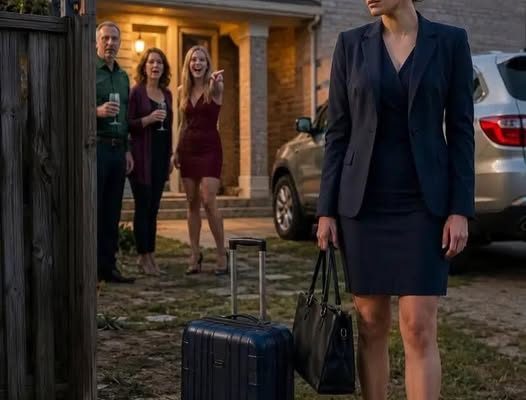
They thought I was still an easy target to push around, completely unprepared for the legal team my grandfather left behind. Read More

When the probate judge opened the sealed clause from my grandfather, my parents’ arrogant lawyer turned into complete panic.

My millionaire grandfather left me everything, and suddenly the parents who had ignored me for years wanted a share of it. They dragged me into court, convinced they had the advantage. Then I walked into the courtroom. My mother rolled her eyes, but the judge stopped cold. “Wait… the charges are against you?” That was the moment everything began to change.

My grandfather, Walter Bennett, died on a bitter February morning in Connecticut, three weeks after turning eighty-two.

He left me his home, his investment accounts, his shares in two manufacturing companies, and a trust valued at a little over eleven million dollars.

My parents had barely spoken to me in fifteen years.

They called six times the day the will was read.

My mother, Diane, cried about “family unity.”

My father, Richard, immediately demanded copies of every financial statement.

When I refused, their concern transformed into accusations.

Within two weeks, they claimed I had manipulated Grandpa while he was ill, forged changes to his trust, and concealed money from the estate.

Then they filed a petition accusing me of financial exploitation and asking the probate court to freeze my inheritance.

They expected me to panic.

I didn’t.

I hired local counsel, turned over my records, and walked into the Hartford courthouse wearing a navy suit with one thin folder under my arm.

Mom was already seated behind her attorney.

She looked me up and down, rolled her eyes, then whispered something to Dad that made him smirk.

Their attorney, Martin Kessler, stood when the judge entered.

“Your Honor, this matter concerns serious allegations against Ms. Claire Bennett—”

Judge Samuel Whitmore glanced at the case caption.

Then he looked at me.

He stopped.

For one full second, the courtroom was completely silent.

“Wait,” he said. “The charges are against you?”

Mom’s smile vanished.

Kessler looked from the judge to me.

“Your Honor?”

Judge Whitmore leaned back.

“Ms. Bennett, are you the same Claire Bennett who served as lead forensic counsel in United States v. Halpern Financial and testified before the state banking committee last year?”

“Yes, Your Honor.”

Dad stared at me as though I had spoken in another language.

I had stopped telling my parents about my life years ago.

They missed my law-school graduation.

They ignored my appointment to the financial crimes unit.

They never learned that I later became a partner at one of New York’s largest forensic litigation firms.

My work involved tracing shell companies, fraudulent transfers, forged signatures, and manipulated trusts.

Exactly the crimes they were now accusing me of committing.

Judge Whitmore’s expression hardened—not because he had already taken my side, but because of the absurdity of the situation.

“Professional reputation is not evidence,” he said. “But given the allegations, I assume both sides are prepared to produce actual records.”

“I am,” I replied.

Kessler hesitated.

That hesitation was the first crack.

My parents thought the inheritance itself had made me powerful.

What they didn’t understand was that the money had never been my greatest advantage.

The records were.

And I had already discovered something they never expected me to find.

Three nights before the hearing, my attorney, Rebecca Sloan, forwarded the exhibits my parents intended to use against me.

Most were ordinary.

Photographs of Grandpa and me.

Bank statements showing transfers he had authorized.

Medical records from the last year of his life.

But hidden behind one physician’s report was a document I had never seen.

A “family loan memorandum” dated eighteen months before Grandpa died.

According to the document, Walter Bennett had loaned Richard and Diane Bennett $1.8 million to buy commercial property in Florida.

It claimed the debt had later been forgiven.

Grandpa had never mentioned any Florida property to me.

The signature looked convincing.

Almost too convincing.

I had spent years examining forged signatures.

Amateurs usually copied shape.

Experienced forgers copied rhythm.

This signature had the correct curves, but the pressure looked wrong—as though someone had traced it from another document.

I asked Rebecca to subpoena the original.

At the next hearing, Kessler portrayed my parents as concerned children trying to protect an elderly father from an opportunistic granddaughter.

“My clients were excluded from Mr. Bennett’s final years,” he argued. “Ms. Bennett controlled access to him.”

That was almost funny.

Nobody had excluded my parents.

They had simply stopped visiting after Grandpa refused to finance yet another business venture.

Rebecca stood.

“We have no objection to reviewing every transfer Ms. Bennett received. In return, we request equal disclosure of all transfers, loans, gifts, and property transactions involving the petitioners.”

Kessler’s expression tightened.

Judge Whitmore granted the request.

Within ten days, the entire case shifted.

The Florida property was real.

A limited liability company named RD Coastal Holdings had purchased a warehouse complex outside Tampa for $2.4 million.

The down payment came directly from Grandpa’s account.

There was no evidence he had forgiven the loan.

There was, however, a promissory note requiring repayment over seven years.

My father had made exactly two payments.

Then he stopped.

And that wasn’t the worst part.

The following year, RD Coastal Holdings refinanced the warehouse.

My parents received nearly $900,000 in cash from the refinancing and moved most of it into their personal accounts.

Rebecca stared at the transaction chart I had built across the wall of her conference room.

“They sued you to freeze the estate,” she said slowly, “while they owe the estate almost two million dollars.”

“More than that,” I said.

I pointed toward three withdrawals from Grandpa’s checking account.

All three had occurred within six weeks while he was recovering from hip surgery.

Each was just under $50,000.

Each had been transferred to a consulting company registered to my mother.

Rebecca turned toward me.

“Did Walter authorize these?”

“I don’t know yet.”

The bank did.

Its archived authorization records showed that the transfers had been initiated using electronic signatures through Grandpa’s online banking account.

The login history showed access from an IP address connected to my parents’ home in New Jersey.

Grandpa had been inside a rehabilitation center in Connecticut on every one of those dates.

When the report arrived, I didn’t feel victorious.

I felt clarity.

My parents had not accused me because they truly believed I had stolen from Grandpa.

They accused me because whoever controlled the estate would also control the investigation into what they had done.

At the next hearing, Kessler requested a private conference with Rebecca.

Twenty minutes later, he withdrew as my parents’ attorney.

Mom confronted me outside the courtroom.

“You think you’re so clever,” she hissed. “You always did.”

I looked directly at her.

“No,” I said. “You just never knew me well enough to know what I could do.”

Her expression changed.

Not to guilt.

Fear.

Because for the first time, she understood this was no longer merely a fight over Grandpa’s money.

It was an accounting.

Kessler’s withdrawal did not end the case.

It only made my parents more reckless.

They retained a new attorney, Elaine Mercer, who was known for handling difficult estate disputes and pushing opponents toward settlements through sheer persistence.

Unlike Kessler, Elaine didn’t present my parents’ version as established fact.

She reviewed the bank records.

The Florida loan.

The alleged forgiveness memorandum.

Then she changed their strategy.

My parents stopped asking the court to declare me financially abusive.

Instead, they argued that Grandpa had intended to forgive their debt and that the missing documentation resulted from his declining health.

They also claimed the three transfers to my mother’s consulting company had been legitimate payments for “administrative assistance.”

There was one problem.

My mother’s company had never provided Grandpa with administrative services.

It was an interior-design business.

There was another problem.

Grandpa documented everything.

He had spent forty-two years building Bennett Precision Components from a six-person machine shop into a regional supplier.

He saved contracts.

Receipts.

Tax returns.

Correspondence.

Handwritten meeting notes.

Even old airline confirmations.

As a teenager, I used to tease him about the labeled storage boxes stacked in his basement.

“Paper remembers what people decide to forget,” he would tell me.

After his death, I finally understood why he had kept so much.

Rebecca and I spent an entire Saturday going through those boxes.

Near midnight, I found a red accordion folder labeled:

RICHARD — LOANS.

Inside were copies of the Florida promissory note.

Two payment receipts.

Three letters Grandpa had sent my father demanding that payments resume.

And a draft letter to his accountant.

The final paragraph made me sit down.

Richard has again asked me to cancel the balance. I have refused. I am concerned that he and Diane believe my assets will eventually belong to them regardless of my wishes. Please make sure the debt remains listed as an asset of my estate.

Rebecca read it twice.

“This is dated four months before the supposed forgiveness memorandum.”

“I know.”

The following morning, we found something even stronger.

Grandpa had mailed the completed letter to his accountant, Helen Park.

Helen still had it.

She also had an email Grandpa sent nine days after the date on the alleged forgiveness memorandum.

The message was brief:

Richard brought me another paper to sign about the Florida loan. I told him no. I do not want the loan forgiven.

For the first time since the case began, I felt real anger.

Not because my parents had challenged my inheritance.

Because I could hear Grandpa inside those words.

He had known they were pressuring him.

And he had deliberately created a trail strong enough for someone to follow.

At the evidentiary hearing, Elaine Mercer already looked exhausted before testimony began.

Helen testified first.

She described Grandpa’s bookkeeping habits, identified his letters, authenticated the email, and confirmed that the Florida loan remained listed on his year-end financial statement.

Then the bank’s records custodian testified about the three payments made to my mother’s company.

Rebecca displayed the login records.

“Can you identify the location associated with these sessions?”

“The customer’s registered home network in Ridgewood, New Jersey.”

“Was Mr. Walter Bennett residing there?”

“No.”

“Where was he?”

“According to the bank’s fraud review, he was in a rehabilitation facility in Connecticut.”

My mother’s jaw tightened.

Elaine objected when Rebecca asked who had possession of Grandpa’s authentication device.

Judge Whitmore sustained the objection.

Rebecca calmly rephrased.

“Did the bank receive any report from Mr. Bennett authorizing Diane Bennett to use his online credentials?”

“No.”

“Any power of attorney permitting her to make transfers?”

“No.”

“Any invoice from Diane Bennett’s company supporting these payments?”

“No.”

That left the forgiveness memorandum.

Our document examiner, Dr. Marcus Feld, testified that the signature was likely reproduced from a scanned source.

Microscopic examination revealed uniform toner distribution that was inconsistent with an original ink signature.

But the most important detail was even smaller.

A tiny printing defect appeared in exactly the same location on both the disputed memorandum and a shareholder letter Grandpa had signed and sent to my father two years earlier.

The defect functioned almost like a fingerprint.

Someone had copied Grandpa’s signature from that letter.

Elaine requested a recess.

When we returned, my parents were no longer sitting beside each other.

Dad stared down at the table.

Mom stared directly at me.

Judge Whitmore called the attorneys forward.

After a quiet discussion, Elaine announced that her clients wished to withdraw their petition challenging the estate plan.

Rebecca stood immediately.

“Your Honor, we do not consent to dismissal without resolution of the estate’s counterclaims.”

My father finally raised his head.

That was the moment he understood that abandoning the original case would not erase everything discovery had exposed.

The estate demanded repayment of the Florida loan.

Return of the three unauthorized transfers.

Accrued interest.

Legal fees where permitted.

And a formal declaration that the alleged forgiveness memorandum was invalid.

Judge Whitmore scheduled the remaining claims for trial.

Outside the courtroom, Dad approached me alone.

He somehow looked smaller than I remembered.

“Claire,” he said, “this has gone far enough.”

I almost laughed.

“You filed the case.”

“We were upset.”

“You accused me of exploiting Grandpa.”

“We thought you’d settle.”

There it was.

Not confusion.

Not grief.

A strategy.

“How much?” I asked.

He hesitated.

“What?”

“How much did you expect me to pay you to disappear?”

His face reddened.

“Your mother thought three million would be fair.”

“Fair for what?”

“We’re his children.”

“And I’m the beneficiary he chose.”

“He wasn’t thinking clearly.”

“You just spent two months arguing that he was thinking clearly enough to forgive your loan.”

Dad opened his mouth.

Then closed it again.

For years, I had imagined what I might say if my parents ever acknowledged that the missed birthdays, forgotten graduations, long silences, and sudden demands were not accidents.

I used to think I would want an apology.

Standing there, I realized I wanted something simpler.

Accuracy.

“You didn’t lose Grandpa’s money,” I told him. “It was never yours.”

He walked away without answering.

Two weeks before trial, the state attorney’s office contacted Rebecca.

The probate court had transmitted portions of the record involving the disputed signature and unauthorized electronic transfers.

Investigators were considering whether criminal charges were appropriate.

That investigation was separate from the estate case, and nobody could guarantee what would happen.

Suddenly, my parents wanted mediation.

We agreed.

Not because I wanted to protect them.

Because the estate had a duty to recover assets efficiently, and a civil settlement could return money faster than years of additional litigation.

The mediation lasted eleven hours.

By the end, my parents agreed to sell the Florida warehouse complex.

The estate would receive the unpaid principal on the loan, accrued interest, and a negotiated portion of the refinancing proceeds.

My mother agreed to repay the three unauthorized transfers.

They also withdrew every allegation against me in writing and acknowledged that they had no evidence I had forged documents, coerced Grandpa, or improperly influenced him.

They never apologized.

I never asked them to.

The settlement recovered slightly more than $2.6 million for the estate.

The probate judge approved it after confirming that its terms would not interfere with any government investigation.

Several months later, the criminal matter ended in a way far less dramatic than people online probably would have wanted.

Prosecutors charged my mother with one count involving unauthorized electronic access and my father with one count related to the false loan document.

Both eventually accepted plea agreements that required restitution, probation, and financial-crime compliance conditions.

Neither went to prison.

Real courtrooms rarely end with dramatic speeches.

They usually end with signed orders, payment schedules, and clerks stamping dates onto paper.

The final time I saw my parents together was at the last probate hearing.

Mom did not roll her eyes.

Dad barely looked at me.

Judge Whitmore reviewed the settlement, confirmed that the estate accounts balanced, and approved the final distribution.

Before ending the hearing, he looked toward me.

“Ms. Bennett, I want the record to be clear about something. At our first hearing, I recognized you from prior professional proceedings. That recognition had no bearing on this court’s findings. The findings are based on the evidence introduced here.”

“I understand, Your Honor.”

He nodded.

That mattered.

I had not won because of a title my parents never knew I had.

I had not won because the judge recognized my name.

I won because Grandpa kept records.

Because the bank preserved login data.

Because an accountant saved an email.

Because a printer left behind a microscopic defect.

And because my parents believed an accusation was the same thing as evidence.

After the hearing, I drove alone to Grandpa’s house.

The estate legally belonged to me now, but the place still felt like his.

His reading glasses remained inside the desk drawer.

A faded company mug still sat beside the kitchen sink.

In the garage, the old green toolbox he had owned since the seventies still had his initials scratched into the lid.

I took the red accordion folder from my bag and placed it on his desk.

For months, everyone had focused on the eleven million dollars.

Reporters who noticed the public filings called it an inheritance battle.

My parents called it family property.

The lawyers called it the estate.

Banks called it assets under management.

Grandpa had once called money something else.

Options.

“Money doesn’t make you important, Claire,” he told me when I was twenty-three and terrified about law-school debt. “It gives you options. What you do with them tells me more.”

So I made choices.

I kept the controlling shares in Bennett Precision Components instead of selling them to a private equity buyer.

I appointed an independent board member with manufacturing experience.

I created a tuition program for employees pursuing technical certifications.

Six months later, I sold Grandpa’s oversized house.

I kept his toolbox.

I also created a small legal-aid fund through a Connecticut nonprofit to help elderly people obtain independent legal advice before signing major financial documents.

I did not name it after myself.

I called it the Walter Bennett Financial Independence Fund.

My parents discovered it through the annual report.

Dad sent me one email.

You always needed to prove you were better than us.

I read it once.

Then I archived it.

He was still trying to turn my life into a competition I had never agreed to enter.

The truth was far simpler.

Throughout most of my childhood, my parents treated attention like a reward.

When I was useful, impressive, or convenient, they noticed me.

When I wasn’t, they disappeared into their own lives.

Grandpa was different.

He asked what I was reading.

He remembered my interviews.

He attended my graduation.

When I lost my first major case, he drove two hours just to have dinner with me and never once asked whether losing would damage my career.

By the time I became successful, I no longer needed my parents to witness it.

That was why they knew so little.

They thought the quiet daughter they had ignored was still waiting for permission to matter.

They believed a few accusations would scare me into surrendering part of my inheritance.

They thought the courtroom would humiliate me.

Instead, it introduced them to the woman I had become while they weren’t paying attention.

One year after the final hearing, I visited Grandpa’s grave on his birthday.

I brought no flowers.

He had always hated cut flowers.

Instead, I carried a small brass plate from the first group of Bennett Precision employees who had completed the new tuition program.

Their names were engraved beneath the company logo.

I rested it against his headstone and sat down on the grass.

“I found the folder,” I said.

The cemetery was quiet except for distant traffic beyond the stone wall.

There was no answer.

Of course there wasn’t.

I didn’t need one.

I thought again about that first courtroom hearing.

Mom rolling her eyes.

Dad smirking.

Judge Whitmore looking up in surprise.

For months, I had remembered that as the moment my parents finally discovered who I was.

Eventually, I realized I had been wrong.

They had discovered my résumé.

Who I was had been visible all along.

They simply had never bothered to look.
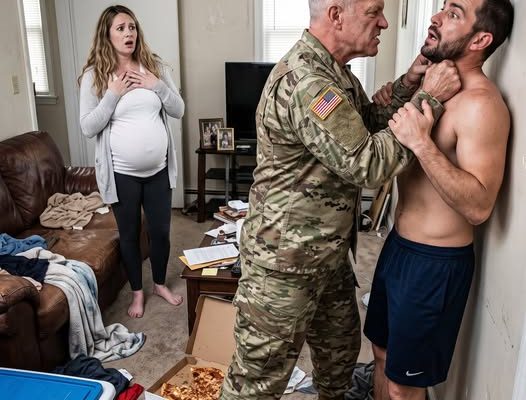
When the probate judge opened the sealed clause from my grandfather, my parents’ arrogant lawyer turned into complete panic. Read More

My estranged parents tried to sue me for my grandfather’s money, bringing their greedy scheme to a sudden stop.

My millionaire grandfather left me everything, and suddenly the parents who had ignored me for years wanted a share of it. They dragged me into court, convinced they had the advantage. Then I walked into the courtroom. My mother rolled her eyes, but the judge stopped cold. “Wait… the charges are against you?” That was the moment everything began to change.

My grandfather, Walter Bennett, died on a bitter February morning in Connecticut, three weeks after turning eighty-two.

He left me his home, his investment accounts, his shares in two manufacturing companies, and a trust valued at a little over eleven million dollars.

My parents had barely spoken to me in fifteen years.

They called six times the day the will was read.

My mother, Diane, cried about “family unity.”

My father, Richard, immediately demanded copies of every financial statement.

When I refused, their concern transformed into accusations.

Within two weeks, they claimed I had manipulated Grandpa while he was ill, forged changes to his trust, and concealed money from the estate.

Then they filed a petition accusing me of financial exploitation and asking the probate court to freeze my inheritance.

They expected me to panic.

I didn’t.

I hired local counsel, turned over my records, and walked into the Hartford courthouse wearing a navy suit with one thin folder under my arm.

Mom was already seated behind her attorney.

She looked me up and down, rolled her eyes, then whispered something to Dad that made him smirk.

Their attorney, Martin Kessler, stood when the judge entered.

“Your Honor, this matter concerns serious allegations against Ms. Claire Bennett—”

Judge Samuel Whitmore glanced at the case caption.

Then he looked at me.

He stopped.

For one full second, the courtroom was completely silent.

“Wait,” he said. “The charges are against you?”

Mom’s smile vanished.

Kessler looked from the judge to me.

“Your Honor?”

Judge Whitmore leaned back.

“Ms. Bennett, are you the same Claire Bennett who served as lead forensic counsel in United States v. Halpern Financial and testified before the state banking committee last year?”

“Yes, Your Honor.”

Dad stared at me as though I had spoken in another language.

I had stopped telling my parents about my life years ago.

They missed my law-school graduation.

They ignored my appointment to the financial crimes unit.

They never learned that I later became a partner at one of New York’s largest forensic litigation firms.

My work involved tracing shell companies, fraudulent transfers, forged signatures, and manipulated trusts.

Exactly the crimes they were now accusing me of committing.

Judge Whitmore’s expression hardened—not because he had already taken my side, but because of the absurdity of the situation.

“Professional reputation is not evidence,” he said. “But given the allegations, I assume both sides are prepared to produce actual records.”

“I am,” I replied.

Kessler hesitated.

That hesitation was the first crack.

My parents thought the inheritance itself had made me powerful.

What they didn’t understand was that the money had never been my greatest advantage.

The records were.

And I had already discovered something they never expected me to find.

Three nights before the hearing, my attorney, Rebecca Sloan, forwarded the exhibits my parents intended to use against me.

Most were ordinary.

Photographs of Grandpa and me.

Bank statements showing transfers he had authorized.

Medical records from the last year of his life.

But hidden behind one physician’s report was a document I had never seen.

A “family loan memorandum” dated eighteen months before Grandpa died.

According to the document, Walter Bennett had loaned Richard and Diane Bennett $1.8 million to buy commercial property in Florida.

It claimed the debt had later been forgiven.

Grandpa had never mentioned any Florida property to me.

The signature looked convincing.

Almost too convincing.

I had spent years examining forged signatures.

Amateurs usually copied shape.

Experienced forgers copied rhythm.

This signature had the correct curves, but the pressure looked wrong—as though someone had traced it from another document.

I asked Rebecca to subpoena the original.

At the next hearing, Kessler portrayed my parents as concerned children trying to protect an elderly father from an opportunistic granddaughter.

“My clients were excluded from Mr. Bennett’s final years,” he argued. “Ms. Bennett controlled access to him.”

That was almost funny.

Nobody had excluded my parents.

They had simply stopped visiting after Grandpa refused to finance yet another business venture.

Rebecca stood.

“We have no objection to reviewing every transfer Ms. Bennett received. In return, we request equal disclosure of all transfers, loans, gifts, and property transactions involving the petitioners.”

Kessler’s expression tightened.

Judge Whitmore granted the request.

Within ten days, the entire case shifted.

The Florida property was real.

A limited liability company named RD Coastal Holdings had purchased a warehouse complex outside Tampa for $2.4 million.

The down payment came directly from Grandpa’s account.

There was no evidence he had forgiven the loan.

There was, however, a promissory note requiring repayment over seven years.

My father had made exactly two payments.

Then he stopped.

And that wasn’t the worst part.

The following year, RD Coastal Holdings refinanced the warehouse.

My parents received nearly $900,000 in cash from the refinancing and moved most of it into their personal accounts.

Rebecca stared at the transaction chart I had built across the wall of her conference room.

“They sued you to freeze the estate,” she said slowly, “while they owe the estate almost two million dollars.”

“More than that,” I said.

I pointed toward three withdrawals from Grandpa’s checking account.

All three had occurred within six weeks while he was recovering from hip surgery.

Each was just under $50,000.

Each had been transferred to a consulting company registered to my mother.

Rebecca turned toward me.

“Did Walter authorize these?”

“I don’t know yet.”

The bank did.

Its archived authorization records showed that the transfers had been initiated using electronic signatures through Grandpa’s online banking account.

The login history showed access from an IP address connected to my parents’ home in New Jersey.

Grandpa had been inside a rehabilitation center in Connecticut on every one of those dates.

When the report arrived, I didn’t feel victorious.

I felt clarity.

My parents had not accused me because they truly believed I had stolen from Grandpa.

They accused me because whoever controlled the estate would also control the investigation into what they had done.

At the next hearing, Kessler requested a private conference with Rebecca.

Twenty minutes later, he withdrew as my parents’ attorney.

Mom confronted me outside the courtroom.

“You think you’re so clever,” she hissed. “You always did.”

I looked directly at her.

“No,” I said. “You just never knew me well enough to know what I could do.”

Her expression changed.

Not to guilt.

Fear.

Because for the first time, she understood this was no longer merely a fight over Grandpa’s money.

It was an accounting.

Kessler’s withdrawal did not end the case.

It only made my parents more reckless.

They retained a new attorney, Elaine Mercer, who was known for handling difficult estate disputes and pushing opponents toward settlements through sheer persistence.

Unlike Kessler, Elaine didn’t present my parents’ version as established fact.

She reviewed the bank records.

The Florida loan.

The alleged forgiveness memorandum.

Then she changed their strategy.

My parents stopped asking the court to declare me financially abusive.

Instead, they argued that Grandpa had intended to forgive their debt and that the missing documentation resulted from his declining health.

They also claimed the three transfers to my mother’s consulting company had been legitimate payments for “administrative assistance.”

There was one problem.

My mother’s company had never provided Grandpa with administrative services.

It was an interior-design business.

There was another problem.

Grandpa documented everything.

He had spent forty-two years building Bennett Precision Components from a six-person machine shop into a regional supplier.

He saved contracts.

Receipts.

Tax returns.

Correspondence.

Handwritten meeting notes.

Even old airline confirmations.

As a teenager, I used to tease him about the labeled storage boxes stacked in his basement.

“Paper remembers what people decide to forget,” he would tell me.

After his death, I finally understood why he had kept so much.

Rebecca and I spent an entire Saturday going through those boxes.

Near midnight, I found a red accordion folder labeled:

RICHARD — LOANS.

Inside were copies of the Florida promissory note.

Two payment receipts.

Three letters Grandpa had sent my father demanding that payments resume.

And a draft letter to his accountant.

The final paragraph made me sit down.

Richard has again asked me to cancel the balance. I have refused. I am concerned that he and Diane believe my assets will eventually belong to them regardless of my wishes. Please make sure the debt remains listed as an asset of my estate.

Rebecca read it twice.

“This is dated four months before the supposed forgiveness memorandum.”

“I know.”

The following morning, we found something even stronger.

Grandpa had mailed the completed letter to his accountant, Helen Park.

Helen still had it.

She also had an email Grandpa sent nine days after the date on the alleged forgiveness memorandum.

The message was brief:

Richard brought me another paper to sign about the Florida loan. I told him no. I do not want the loan forgiven.

For the first time since the case began, I felt real anger.

Not because my parents had challenged my inheritance.

Because I could hear Grandpa inside those words.

He had known they were pressuring him.

And he had deliberately created a trail strong enough for someone to follow.

At the evidentiary hearing, Elaine Mercer already looked exhausted before testimony began.

Helen testified first.

She described Grandpa’s bookkeeping habits, identified his letters, authenticated the email, and confirmed that the Florida loan remained listed on his year-end financial statement.

Then the bank’s records custodian testified about the three payments made to my mother’s company.

Rebecca displayed the login records.

“Can you identify the location associated with these sessions?”

“The customer’s registered home network in Ridgewood, New Jersey.”

“Was Mr. Walter Bennett residing there?”

“No.”

“Where was he?”

“According to the bank’s fraud review, he was in a rehabilitation facility in Connecticut.”

My mother’s jaw tightened.

Elaine objected when Rebecca asked who had possession of Grandpa’s authentication device.

Judge Whitmore sustained the objection.

Rebecca calmly rephrased.

“Did the bank receive any report from Mr. Bennett authorizing Diane Bennett to use his online credentials?”

“No.”

“Any power of attorney permitting her to make transfers?”

“No.”

“Any invoice from Diane Bennett’s company supporting these payments?”

“No.”

That left the forgiveness memorandum.

Our document examiner, Dr. Marcus Feld, testified that the signature was likely reproduced from a scanned source.

Microscopic examination revealed uniform toner distribution that was inconsistent with an original ink signature.

But the most important detail was even smaller.

A tiny printing defect appeared in exactly the same location on both the disputed memorandum and a shareholder letter Grandpa had signed and sent to my father two years earlier.

The defect functioned almost like a fingerprint.

Someone had copied Grandpa’s signature from that letter.

Elaine requested a recess.

When we returned, my parents were no longer sitting beside each other.

Dad stared down at the table.

Mom stared directly at me.

Judge Whitmore called the attorneys forward.

After a quiet discussion, Elaine announced that her clients wished to withdraw their petition challenging the estate plan.

Rebecca stood immediately.

“Your Honor, we do not consent to dismissal without resolution of the estate’s counterclaims.”

My father finally raised his head.

That was the moment he understood that abandoning the original case would not erase everything discovery had exposed.

The estate demanded repayment of the Florida loan.

Return of the three unauthorized transfers.

Accrued interest.

Legal fees where permitted.

And a formal declaration that the alleged forgiveness memorandum was invalid.

Judge Whitmore scheduled the remaining claims for trial.

Outside the courtroom, Dad approached me alone.

He somehow looked smaller than I remembered.

“Claire,” he said, “this has gone far enough.”

I almost laughed.

“You filed the case.”

“We were upset.”

“You accused me of exploiting Grandpa.”

“We thought you’d settle.”

There it was.

Not confusion.

Not grief.

A strategy.

“How much?” I asked.

He hesitated.

“What?”

“How much did you expect me to pay you to disappear?”

His face reddened.

“Your mother thought three million would be fair.”

“Fair for what?”

“We’re his children.”

“And I’m the beneficiary he chose.”

“He wasn’t thinking clearly.”

“You just spent two months arguing that he was thinking clearly enough to forgive your loan.”

Dad opened his mouth.

Then closed it again.

For years, I had imagined what I might say if my parents ever acknowledged that the missed birthdays, forgotten graduations, long silences, and sudden demands were not accidents.

I used to think I would want an apology.

Standing there, I realized I wanted something simpler.

Accuracy.

“You didn’t lose Grandpa’s money,” I told him. “It was never yours.”

He walked away without answering.

Two weeks before trial, the state attorney’s office contacted Rebecca.

The probate court had transmitted portions of the record involving the disputed signature and unauthorized electronic transfers.

Investigators were considering whether criminal charges were appropriate.

That investigation was separate from the estate case, and nobody could guarantee what would happen.

Suddenly, my parents wanted mediation.

We agreed.

Not because I wanted to protect them.

Because the estate had a duty to recover assets efficiently, and a civil settlement could return money faster than years of additional litigation.

The mediation lasted eleven hours.

By the end, my parents agreed to sell the Florida warehouse complex.

The estate would receive the unpaid principal on the loan, accrued interest, and a negotiated portion of the refinancing proceeds.

My mother agreed to repay the three unauthorized transfers.

They also withdrew every allegation against me in writing and acknowledged that they had no evidence I had forged documents, coerced Grandpa, or improperly influenced him.

They never apologized.

I never asked them to.

The settlement recovered slightly more than $2.6 million for the estate.

The probate judge approved it after confirming that its terms would not interfere with any government investigation.

Several months later, the criminal matter ended in a way far less dramatic than people online probably would have wanted.

Prosecutors charged my mother with one count involving unauthorized electronic access and my father with one count related to the false loan document.

Both eventually accepted plea agreements that required restitution, probation, and financial-crime compliance conditions.

Neither went to prison.

Real courtrooms rarely end with dramatic speeches.

They usually end with signed orders, payment schedules, and clerks stamping dates onto paper.

The final time I saw my parents together was at the last probate hearing.

Mom did not roll her eyes.

Dad barely looked at me.

Judge Whitmore reviewed the settlement, confirmed that the estate accounts balanced, and approved the final distribution.

Before ending the hearing, he looked toward me.

“Ms. Bennett, I want the record to be clear about something. At our first hearing, I recognized you from prior professional proceedings. That recognition had no bearing on this court’s findings. The findings are based on the evidence introduced here.”

“I understand, Your Honor.”

He nodded.

That mattered.

I had not won because of a title my parents never knew I had.

I had not won because the judge recognized my name.

I won because Grandpa kept records.

Because the bank preserved login data.

Because an accountant saved an email.

Because a printer left behind a microscopic defect.

And because my parents believed an accusation was the same thing as evidence.

After the hearing, I drove alone to Grandpa’s house.

The estate legally belonged to me now, but the place still felt like his.

His reading glasses remained inside the desk drawer.

A faded company mug still sat beside the kitchen sink.

In the garage, the old green toolbox he had owned since the seventies still had his initials scratched into the lid.

I took the red accordion folder from my bag and placed it on his desk.

For months, everyone had focused on the eleven million dollars.

Reporters who noticed the public filings called it an inheritance battle.

My parents called it family property.

The lawyers called it the estate.

Banks called it assets under management.

Grandpa had once called money something else.

Options.

“Money doesn’t make you important, Claire,” he told me when I was twenty-three and terrified about law-school debt. “It gives you options. What you do with them tells me more.”

So I made choices.

I kept the controlling shares in Bennett Precision Components instead of selling them to a private equity buyer.

I appointed an independent board member with manufacturing experience.

I created a tuition program for employees pursuing technical certifications.

Six months later, I sold Grandpa’s oversized house.

I kept his toolbox.

I also created a small legal-aid fund through a Connecticut nonprofit to help elderly people obtain independent legal advice before signing major financial documents.

I did not name it after myself.

I called it the Walter Bennett Financial Independence Fund.

My parents discovered it through the annual report.

Dad sent me one email.

You always needed to prove you were better than us.

I read it once.

Then I archived it.

He was still trying to turn my life into a competition I had never agreed to enter.

The truth was far simpler.

Throughout most of my childhood, my parents treated attention like a reward.

When I was useful, impressive, or convenient, they noticed me.

When I wasn’t, they disappeared into their own lives.

Grandpa was different.

He asked what I was reading.

He remembered my interviews.

He attended my graduation.

When I lost my first major case, he drove two hours just to have dinner with me and never once asked whether losing would damage my career.

By the time I became successful, I no longer needed my parents to witness it.

That was why they knew so little.

They thought the quiet daughter they had ignored was still waiting for permission to matter.

They believed a few accusations would scare me into surrendering part of my inheritance.

They thought the courtroom would humiliate me.

Instead, it introduced them to the woman I had become while they weren’t paying attention.

One year after the final hearing, I visited Grandpa’s grave on his birthday.

I brought no flowers.

He had always hated cut flowers.

Instead, I carried a small brass plate from the first group of Bennett Precision employees who had completed the new tuition program.

Their names were engraved beneath the company logo.

I rested it against his headstone and sat down on the grass.

“I found the folder,” I said.

The cemetery was quiet except for distant traffic beyond the stone wall.

There was no answer.

Of course there wasn’t.

I didn’t need one.

I thought again about that first courtroom hearing.

Mom rolling her eyes.

Dad smirking.

Judge Whitmore looking up in surprise.

For months, I had remembered that as the moment my parents finally discovered who I was.

Eventually, I realized I had been wrong.

They had discovered my résumé.

Who I was had been visible all along.

They simply had never bothered to look.

My estranged parents tried to sue me for my grandfather’s money, bringing their greedy scheme to a sudden stop. Read More

They thought they could ignore me for years and then claim my inheritance, completely oblivious to what was written in the trust.

My millionaire grandfather left me everything, and suddenly the parents who had ignored me for years wanted a share of it. They dragged me into court, convinced they had the advantage. Then I walked into the courtroom. My mother rolled her eyes, but the judge stopped cold. “Wait… the charges are against you?” That was the moment everything began to change.

My grandfather, Walter Bennett, died on a bitter February morning in Connecticut, three weeks after turning eighty-two.

He left me his home, his investment accounts, his shares in two manufacturing companies, and a trust valued at a little over eleven million dollars.

My parents had barely spoken to me in fifteen years.

They called six times the day the will was read.

My mother, Diane, cried about “family unity.”

My father, Richard, immediately demanded copies of every financial statement.

When I refused, their concern transformed into accusations.

Within two weeks, they claimed I had manipulated Grandpa while he was ill, forged changes to his trust, and concealed money from the estate.

Then they filed a petition accusing me of financial exploitation and asking the probate court to freeze my inheritance.

They expected me to panic.

I didn’t.

I hired local counsel, turned over my records, and walked into the Hartford courthouse wearing a navy suit with one thin folder under my arm.

Mom was already seated behind her attorney.

She looked me up and down, rolled her eyes, then whispered something to Dad that made him smirk.

Their attorney, Martin Kessler, stood when the judge entered.

“Your Honor, this matter concerns serious allegations against Ms. Claire Bennett—”

Judge Samuel Whitmore glanced at the case caption.

Then he looked at me.

He stopped.

For one full second, the courtroom was completely silent.

“Wait,” he said. “The charges are against you?”

Mom’s smile vanished.

Kessler looked from the judge to me.

“Your Honor?”

Judge Whitmore leaned back.

“Ms. Bennett, are you the same Claire Bennett who served as lead forensic counsel in United States v. Halpern Financial and testified before the state banking committee last year?”

“Yes, Your Honor.”

Dad stared at me as though I had spoken in another language.

I had stopped telling my parents about my life years ago.

They missed my law-school graduation.

They ignored my appointment to the financial crimes unit.

They never learned that I later became a partner at one of New York’s largest forensic litigation firms.

My work involved tracing shell companies, fraudulent transfers, forged signatures, and manipulated trusts.

Exactly the crimes they were now accusing me of committing.

Judge Whitmore’s expression hardened—not because he had already taken my side, but because of the absurdity of the situation.

“Professional reputation is not evidence,” he said. “But given the allegations, I assume both sides are prepared to produce actual records.”

“I am,” I replied.

Kessler hesitated.

That hesitation was the first crack.

My parents thought the inheritance itself had made me powerful.

What they didn’t understand was that the money had never been my greatest advantage.

The records were.

And I had already discovered something they never expected me to find.

Three nights before the hearing, my attorney, Rebecca Sloan, forwarded the exhibits my parents intended to use against me.

Most were ordinary.

Photographs of Grandpa and me.

Bank statements showing transfers he had authorized.

Medical records from the last year of his life.

But hidden behind one physician’s report was a document I had never seen.

A “family loan memorandum” dated eighteen months before Grandpa died.

According to the document, Walter Bennett had loaned Richard and Diane Bennett $1.8 million to buy commercial property in Florida.

It claimed the debt had later been forgiven.

Grandpa had never mentioned any Florida property to me.

The signature looked convincing.

Almost too convincing.

I had spent years examining forged signatures.

Amateurs usually copied shape.

Experienced forgers copied rhythm.

This signature had the correct curves, but the pressure looked wrong—as though someone had traced it from another document.

I asked Rebecca to subpoena the original.

At the next hearing, Kessler portrayed my parents as concerned children trying to protect an elderly father from an opportunistic granddaughter.

“My clients were excluded from Mr. Bennett’s final years,” he argued. “Ms. Bennett controlled access to him.”

That was almost funny.

Nobody had excluded my parents.

They had simply stopped visiting after Grandpa refused to finance yet another business venture.

Rebecca stood.

“We have no objection to reviewing every transfer Ms. Bennett received. In return, we request equal disclosure of all transfers, loans, gifts, and property transactions involving the petitioners.”

Kessler’s expression tightened.

Judge Whitmore granted the request.

Within ten days, the entire case shifted.

The Florida property was real.

A limited liability company named RD Coastal Holdings had purchased a warehouse complex outside Tampa for $2.4 million.

The down payment came directly from Grandpa’s account.

There was no evidence he had forgiven the loan.

There was, however, a promissory note requiring repayment over seven years.

My father had made exactly two payments.

Then he stopped.

And that wasn’t the worst part.

The following year, RD Coastal Holdings refinanced the warehouse.

My parents received nearly $900,000 in cash from the refinancing and moved most of it into their personal accounts.

Rebecca stared at the transaction chart I had built across the wall of her conference room.

“They sued you to freeze the estate,” she said slowly, “while they owe the estate almost two million dollars.”

“More than that,” I said.

I pointed toward three withdrawals from Grandpa’s checking account.

All three had occurred within six weeks while he was recovering from hip surgery.

Each was just under $50,000.

Each had been transferred to a consulting company registered to my mother.

Rebecca turned toward me.

“Did Walter authorize these?”

“I don’t know yet.”

The bank did.

Its archived authorization records showed that the transfers had been initiated using electronic signatures through Grandpa’s online banking account.

The login history showed access from an IP address connected to my parents’ home in New Jersey.

Grandpa had been inside a rehabilitation center in Connecticut on every one of those dates.

When the report arrived, I didn’t feel victorious.

I felt clarity.

My parents had not accused me because they truly believed I had stolen from Grandpa.

They accused me because whoever controlled the estate would also control the investigation into what they had done.

At the next hearing, Kessler requested a private conference with Rebecca.

Twenty minutes later, he withdrew as my parents’ attorney.

Mom confronted me outside the courtroom.

“You think you’re so clever,” she hissed. “You always did.”

I looked directly at her.

“No,” I said. “You just never knew me well enough to know what I could do.”

Her expression changed.

Not to guilt.

Fear.

Because for the first time, she understood this was no longer merely a fight over Grandpa’s money.

It was an accounting.

Kessler’s withdrawal did not end the case.

It only made my parents more reckless.

They retained a new attorney, Elaine Mercer, who was known for handling difficult estate disputes and pushing opponents toward settlements through sheer persistence.

Unlike Kessler, Elaine didn’t present my parents’ version as established fact.

She reviewed the bank records.

The Florida loan.

The alleged forgiveness memorandum.

Then she changed their strategy.

My parents stopped asking the court to declare me financially abusive.

Instead, they argued that Grandpa had intended to forgive their debt and that the missing documentation resulted from his declining health.

They also claimed the three transfers to my mother’s consulting company had been legitimate payments for “administrative assistance.”

There was one problem.

My mother’s company had never provided Grandpa with administrative services.

It was an interior-design business.

There was another problem.

Grandpa documented everything.

He had spent forty-two years building Bennett Precision Components from a six-person machine shop into a regional supplier.

He saved contracts.

Receipts.

Tax returns.

Correspondence.

Handwritten meeting notes.

Even old airline confirmations.

As a teenager, I used to tease him about the labeled storage boxes stacked in his basement.

“Paper remembers what people decide to forget,” he would tell me.

After his death, I finally understood why he had kept so much.

Rebecca and I spent an entire Saturday going through those boxes.

Near midnight, I found a red accordion folder labeled:

RICHARD — LOANS.

Inside were copies of the Florida promissory note.

Two payment receipts.

Three letters Grandpa had sent my father demanding that payments resume.

And a draft letter to his accountant.

The final paragraph made me sit down.

Richard has again asked me to cancel the balance. I have refused. I am concerned that he and Diane believe my assets will eventually belong to them regardless of my wishes. Please make sure the debt remains listed as an asset of my estate.

Rebecca read it twice.

“This is dated four months before the supposed forgiveness memorandum.”

“I know.”

The following morning, we found something even stronger.

Grandpa had mailed the completed letter to his accountant, Helen Park.

Helen still had it.

She also had an email Grandpa sent nine days after the date on the alleged forgiveness memorandum.

The message was brief:

Richard brought me another paper to sign about the Florida loan. I told him no. I do not want the loan forgiven.

For the first time since the case began, I felt real anger.

Not because my parents had challenged my inheritance.

Because I could hear Grandpa inside those words.

He had known they were pressuring him.

And he had deliberately created a trail strong enough for someone to follow.

At the evidentiary hearing, Elaine Mercer already looked exhausted before testimony began.

Helen testified first.

She described Grandpa’s bookkeeping habits, identified his letters, authenticated the email, and confirmed that the Florida loan remained listed on his year-end financial statement.

Then the bank’s records custodian testified about the three payments made to my mother’s company.

Rebecca displayed the login records.

“Can you identify the location associated with these sessions?”

“The customer’s registered home network in Ridgewood, New Jersey.”

“Was Mr. Walter Bennett residing there?”

“No.”

“Where was he?”

“According to the bank’s fraud review, he was in a rehabilitation facility in Connecticut.”

My mother’s jaw tightened.

Elaine objected when Rebecca asked who had possession of Grandpa’s authentication device.

Judge Whitmore sustained the objection.

Rebecca calmly rephrased.

“Did the bank receive any report from Mr. Bennett authorizing Diane Bennett to use his online credentials?”

“No.”

“Any power of attorney permitting her to make transfers?”

“No.”

“Any invoice from Diane Bennett’s company supporting these payments?”

“No.”

That left the forgiveness memorandum.

Our document examiner, Dr. Marcus Feld, testified that the signature was likely reproduced from a scanned source.

Microscopic examination revealed uniform toner distribution that was inconsistent with an original ink signature.

But the most important detail was even smaller.

A tiny printing defect appeared in exactly the same location on both the disputed memorandum and a shareholder letter Grandpa had signed and sent to my father two years earlier.

The defect functioned almost like a fingerprint.

Someone had copied Grandpa’s signature from that letter.

Elaine requested a recess.

When we returned, my parents were no longer sitting beside each other.

Dad stared down at the table.

Mom stared directly at me.

Judge Whitmore called the attorneys forward.

After a quiet discussion, Elaine announced that her clients wished to withdraw their petition challenging the estate plan.

Rebecca stood immediately.

“Your Honor, we do not consent to dismissal without resolution of the estate’s counterclaims.”

My father finally raised his head.

That was the moment he understood that abandoning the original case would not erase everything discovery had exposed.

The estate demanded repayment of the Florida loan.

Return of the three unauthorized transfers.

Accrued interest.

Legal fees where permitted.

And a formal declaration that the alleged forgiveness memorandum was invalid.

Judge Whitmore scheduled the remaining claims for trial.

Outside the courtroom, Dad approached me alone.

He somehow looked smaller than I remembered.

“Claire,” he said, “this has gone far enough.”

I almost laughed.

“You filed the case.”

“We were upset.”

“You accused me of exploiting Grandpa.”

“We thought you’d settle.”

There it was.

Not confusion.

Not grief.

A strategy.

“How much?” I asked.

He hesitated.

“What?”

“How much did you expect me to pay you to disappear?”

His face reddened.

“Your mother thought three million would be fair.”

“Fair for what?”

“We’re his children.”

“And I’m the beneficiary he chose.”

“He wasn’t thinking clearly.”

“You just spent two months arguing that he was thinking clearly enough to forgive your loan.”

Dad opened his mouth.

Then closed it again.

For years, I had imagined what I might say if my parents ever acknowledged that the missed birthdays, forgotten graduations, long silences, and sudden demands were not accidents.

I used to think I would want an apology.

Standing there, I realized I wanted something simpler.

Accuracy.

“You didn’t lose Grandpa’s money,” I told him. “It was never yours.”

He walked away without answering.

Two weeks before trial, the state attorney’s office contacted Rebecca.

The probate court had transmitted portions of the record involving the disputed signature and unauthorized electronic transfers.

Investigators were considering whether criminal charges were appropriate.

That investigation was separate from the estate case, and nobody could guarantee what would happen.

Suddenly, my parents wanted mediation.

We agreed.

Not because I wanted to protect them.

Because the estate had a duty to recover assets efficiently, and a civil settlement could return money faster than years of additional litigation.

The mediation lasted eleven hours.

By the end, my parents agreed to sell the Florida warehouse complex.

The estate would receive the unpaid principal on the loan, accrued interest, and a negotiated portion of the refinancing proceeds.

My mother agreed to repay the three unauthorized transfers.

They also withdrew every allegation against me in writing and acknowledged that they had no evidence I had forged documents, coerced Grandpa, or improperly influenced him.

They never apologized.

I never asked them to.

The settlement recovered slightly more than $2.6 million for the estate.

The probate judge approved it after confirming that its terms would not interfere with any government investigation.

Several months later, the criminal matter ended in a way far less dramatic than people online probably would have wanted.

Prosecutors charged my mother with one count involving unauthorized electronic access and my father with one count related to the false loan document.

Both eventually accepted plea agreements that required restitution, probation, and financial-crime compliance conditions.

Neither went to prison.

Real courtrooms rarely end with dramatic speeches.

They usually end with signed orders, payment schedules, and clerks stamping dates onto paper.

The final time I saw my parents together was at the last probate hearing.

Mom did not roll her eyes.

Dad barely looked at me.

Judge Whitmore reviewed the settlement, confirmed that the estate accounts balanced, and approved the final distribution.

Before ending the hearing, he looked toward me.

“Ms. Bennett, I want the record to be clear about something. At our first hearing, I recognized you from prior professional proceedings. That recognition had no bearing on this court’s findings. The findings are based on the evidence introduced here.”

“I understand, Your Honor.”

He nodded.

That mattered.

I had not won because of a title my parents never knew I had.

I had not won because the judge recognized my name.

I won because Grandpa kept records.

Because the bank preserved login data.

Because an accountant saved an email.

Because a printer left behind a microscopic defect.

And because my parents believed an accusation was the same thing as evidence.

After the hearing, I drove alone to Grandpa’s house.

The estate legally belonged to me now, but the place still felt like his.

His reading glasses remained inside the desk drawer.

A faded company mug still sat beside the kitchen sink.

In the garage, the old green toolbox he had owned since the seventies still had his initials scratched into the lid.

I took the red accordion folder from my bag and placed it on his desk.

For months, everyone had focused on the eleven million dollars.

Reporters who noticed the public filings called it an inheritance battle.

My parents called it family property.

The lawyers called it the estate.

Banks called it assets under management.

Grandpa had once called money something else.

Options.

“Money doesn’t make you important, Claire,” he told me when I was twenty-three and terrified about law-school debt. “It gives you options. What you do with them tells me more.”

So I made choices.

I kept the controlling shares in Bennett Precision Components instead of selling them to a private equity buyer.

I appointed an independent board member with manufacturing experience.

I created a tuition program for employees pursuing technical certifications.

Six months later, I sold Grandpa’s oversized house.

I kept his toolbox.

I also created a small legal-aid fund through a Connecticut nonprofit to help elderly people obtain independent legal advice before signing major financial documents.

I did not name it after myself.

I called it the Walter Bennett Financial Independence Fund.

My parents discovered it through the annual report.

Dad sent me one email.

You always needed to prove you were better than us.

I read it once.

Then I archived it.

He was still trying to turn my life into a competition I had never agreed to enter.

The truth was far simpler.

Throughout most of my childhood, my parents treated attention like a reward.

When I was useful, impressive, or convenient, they noticed me.

When I wasn’t, they disappeared into their own lives.

Grandpa was different.

He asked what I was reading.

He remembered my interviews.

He attended my graduation.

When I lost my first major case, he drove two hours just to have dinner with me and never once asked whether losing would damage my career.

By the time I became successful, I no longer needed my parents to witness it.

That was why they knew so little.

They thought the quiet daughter they had ignored was still waiting for permission to matter.

They believed a few accusations would scare me into surrendering part of my inheritance.

They thought the courtroom would humiliate me.

Instead, it introduced them to the woman I had become while they weren’t paying attention.

One year after the final hearing, I visited Grandpa’s grave on his birthday.

I brought no flowers.

He had always hated cut flowers.

Instead, I carried a small brass plate from the first group of Bennett Precision employees who had completed the new tuition program.

Their names were engraved beneath the company logo.

I rested it against his headstone and sat down on the grass.

“I found the folder,” I said.

The cemetery was quiet except for distant traffic beyond the stone wall.

There was no answer.

Of course there wasn’t.

I didn’t need one.

I thought again about that first courtroom hearing.

Mom rolling her eyes.

Dad smirking.

Judge Whitmore looking up in surprise.

For months, I had remembered that as the moment my parents finally discovered who I was.

Eventually, I realized I had been wrong.

They had discovered my résumé.

Who I was had been visible all along.

They simply had never bothered to look.

They thought they could ignore me for years and then claim my inheritance, completely oblivious to what was written in the trust. Read More

When the parents who abandoned me demanded his millions, my grandfather’s final video recording brought their lawsuit to a sudden halt.

My millionaire grandfather left me everything, and suddenly the parents who had ignored me for years wanted a share of it. They dragged me into court, convinced they had the advantage. Then I walked into the courtroom. My mother rolled her eyes, but the judge stopped cold. “Wait… the charges are against you?” That was the moment everything began to change.

My grandfather, Walter Bennett, died on a bitter February morning in Connecticut, three weeks after turning eighty-two.

He left me his home, his investment accounts, his shares in two manufacturing companies, and a trust valued at a little over eleven million dollars.

My parents had barely spoken to me in fifteen years.

They called six times the day the will was read.

My mother, Diane, cried about “family unity.”

My father, Richard, immediately demanded copies of every financial statement.

When I refused, their concern transformed into accusations.

Within two weeks, they claimed I had manipulated Grandpa while he was ill, forged changes to his trust, and concealed money from the estate.

Then they filed a petition accusing me of financial exploitation and asking the probate court to freeze my inheritance.

They expected me to panic.

I didn’t.

I hired local counsel, turned over my records, and walked into the Hartford courthouse wearing a navy suit with one thin folder under my arm.

Mom was already seated behind her attorney.

She looked me up and down, rolled her eyes, then whispered something to Dad that made him smirk.

Their attorney, Martin Kessler, stood when the judge entered.

“Your Honor, this matter concerns serious allegations against Ms. Claire Bennett—”

Judge Samuel Whitmore glanced at the case caption.

Then he looked at me.

He stopped.

For one full second, the courtroom was completely silent.

“Wait,” he said. “The charges are against you?”

Mom’s smile vanished.

Kessler looked from the judge to me.

“Your Honor?”

Judge Whitmore leaned back.

“Ms. Bennett, are you the same Claire Bennett who served as lead forensic counsel in United States v. Halpern Financial and testified before the state banking committee last year?”

“Yes, Your Honor.”

Dad stared at me as though I had spoken in another language.

I had stopped telling my parents about my life years ago.

They missed my law-school graduation.

They ignored my appointment to the financial crimes unit.

They never learned that I later became a partner at one of New York’s largest forensic litigation firms.

My work involved tracing shell companies, fraudulent transfers, forged signatures, and manipulated trusts.

Exactly the crimes they were now accusing me of committing.

Judge Whitmore’s expression hardened—not because he had already taken my side, but because of the absurdity of the situation.

“Professional reputation is not evidence,” he said. “But given the allegations, I assume both sides are prepared to produce actual records.”

“I am,” I replied.

Kessler hesitated.

That hesitation was the first crack.

My parents thought the inheritance itself had made me powerful.

What they didn’t understand was that the money had never been my greatest advantage.

The records were.

And I had already discovered something they never expected me to find.

Three nights before the hearing, my attorney, Rebecca Sloan, forwarded the exhibits my parents intended to use against me.

Most were ordinary.

Photographs of Grandpa and me.

Bank statements showing transfers he had authorized.

Medical records from the last year of his life.

But hidden behind one physician’s report was a document I had never seen.

A “family loan memorandum” dated eighteen months before Grandpa died.

According to the document, Walter Bennett had loaned Richard and Diane Bennett $1.8 million to buy commercial property in Florida.

It claimed the debt had later been forgiven.

Grandpa had never mentioned any Florida property to me.

The signature looked convincing.

Almost too convincing.

I had spent years examining forged signatures.

Amateurs usually copied shape.

Experienced forgers copied rhythm.

This signature had the correct curves, but the pressure looked wrong—as though someone had traced it from another document.

I asked Rebecca to subpoena the original.

At the next hearing, Kessler portrayed my parents as concerned children trying to protect an elderly father from an opportunistic granddaughter.

“My clients were excluded from Mr. Bennett’s final years,” he argued. “Ms. Bennett controlled access to him.”

That was almost funny.

Nobody had excluded my parents.

They had simply stopped visiting after Grandpa refused to finance yet another business venture.

Rebecca stood.

“We have no objection to reviewing every transfer Ms. Bennett received. In return, we request equal disclosure of all transfers, loans, gifts, and property transactions involving the petitioners.”

Kessler’s expression tightened.

Judge Whitmore granted the request.

Within ten days, the entire case shifted.

The Florida property was real.

A limited liability company named RD Coastal Holdings had purchased a warehouse complex outside Tampa for $2.4 million.

The down payment came directly from Grandpa’s account.

There was no evidence he had forgiven the loan.

There was, however, a promissory note requiring repayment over seven years.

My father had made exactly two payments.

Then he stopped.

And that wasn’t the worst part.

The following year, RD Coastal Holdings refinanced the warehouse.

My parents received nearly $900,000 in cash from the refinancing and moved most of it into their personal accounts.

Rebecca stared at the transaction chart I had built across the wall of her conference room.

“They sued you to freeze the estate,” she said slowly, “while they owe the estate almost two million dollars.”

“More than that,” I said.

I pointed toward three withdrawals from Grandpa’s checking account.

All three had occurred within six weeks while he was recovering from hip surgery.

Each was just under $50,000.

Each had been transferred to a consulting company registered to my mother.

Rebecca turned toward me.

“Did Walter authorize these?”

“I don’t know yet.”

The bank did.

Its archived authorization records showed that the transfers had been initiated using electronic signatures through Grandpa’s online banking account.

The login history showed access from an IP address connected to my parents’ home in New Jersey.

Grandpa had been inside a rehabilitation center in Connecticut on every one of those dates.

When the report arrived, I didn’t feel victorious.

I felt clarity.

My parents had not accused me because they truly believed I had stolen from Grandpa.

They accused me because whoever controlled the estate would also control the investigation into what they had done.

At the next hearing, Kessler requested a private conference with Rebecca.

Twenty minutes later, he withdrew as my parents’ attorney.

Mom confronted me outside the courtroom.

“You think you’re so clever,” she hissed. “You always did.”

I looked directly at her.

“No,” I said. “You just never knew me well enough to know what I could do.”

Her expression changed.

Not to guilt.

Fear.

Because for the first time, she understood this was no longer merely a fight over Grandpa’s money.

It was an accounting.

Kessler’s withdrawal did not end the case.

It only made my parents more reckless.

They retained a new attorney, Elaine Mercer, who was known for handling difficult estate disputes and pushing opponents toward settlements through sheer persistence.

Unlike Kessler, Elaine didn’t present my parents’ version as established fact.

She reviewed the bank records.

The Florida loan.

The alleged forgiveness memorandum.

Then she changed their strategy.

My parents stopped asking the court to declare me financially abusive.

Instead, they argued that Grandpa had intended to forgive their debt and that the missing documentation resulted from his declining health.

They also claimed the three transfers to my mother’s consulting company had been legitimate payments for “administrative assistance.”

There was one problem.

My mother’s company had never provided Grandpa with administrative services.

It was an interior-design business.

There was another problem.

Grandpa documented everything.

He had spent forty-two years building Bennett Precision Components from a six-person machine shop into a regional supplier.

He saved contracts.

Receipts.

Tax returns.

Correspondence.

Handwritten meeting notes.

Even old airline confirmations.

As a teenager, I used to tease him about the labeled storage boxes stacked in his basement.

“Paper remembers what people decide to forget,” he would tell me.

After his death, I finally understood why he had kept so much.

Rebecca and I spent an entire Saturday going through those boxes.

Near midnight, I found a red accordion folder labeled:

RICHARD — LOANS.

Inside were copies of the Florida promissory note.

Two payment receipts.

Three letters Grandpa had sent my father demanding that payments resume.

And a draft letter to his accountant.

The final paragraph made me sit down.

Richard has again asked me to cancel the balance. I have refused. I am concerned that he and Diane believe my assets will eventually belong to them regardless of my wishes. Please make sure the debt remains listed as an asset of my estate.

Rebecca read it twice.

“This is dated four months before the supposed forgiveness memorandum.”

“I know.”

The following morning, we found something even stronger.

Grandpa had mailed the completed letter to his accountant, Helen Park.

Helen still had it.

She also had an email Grandpa sent nine days after the date on the alleged forgiveness memorandum.

The message was brief:

Richard brought me another paper to sign about the Florida loan. I told him no. I do not want the loan forgiven.

For the first time since the case began, I felt real anger.

Not because my parents had challenged my inheritance.

Because I could hear Grandpa inside those words.

He had known they were pressuring him.

And he had deliberately created a trail strong enough for someone to follow.

At the evidentiary hearing, Elaine Mercer already looked exhausted before testimony began.

Helen testified first.

She described Grandpa’s bookkeeping habits, identified his letters, authenticated the email, and confirmed that the Florida loan remained listed on his year-end financial statement.

Then the bank’s records custodian testified about the three payments made to my mother’s company.

Rebecca displayed the login records.

“Can you identify the location associated with these sessions?”

“The customer’s registered home network in Ridgewood, New Jersey.”

“Was Mr. Walter Bennett residing there?”

“No.”

“Where was he?”

“According to the bank’s fraud review, he was in a rehabilitation facility in Connecticut.”

My mother’s jaw tightened.

Elaine objected when Rebecca asked who had possession of Grandpa’s authentication device.

Judge Whitmore sustained the objection.

Rebecca calmly rephrased.

“Did the bank receive any report from Mr. Bennett authorizing Diane Bennett to use his online credentials?”

“No.”

“Any power of attorney permitting her to make transfers?”

“No.”

“Any invoice from Diane Bennett’s company supporting these payments?”

“No.”

That left the forgiveness memorandum.

Our document examiner, Dr. Marcus Feld, testified that the signature was likely reproduced from a scanned source.

Microscopic examination revealed uniform toner distribution that was inconsistent with an original ink signature.

But the most important detail was even smaller.

A tiny printing defect appeared in exactly the same location on both the disputed memorandum and a shareholder letter Grandpa had signed and sent to my father two years earlier.

The defect functioned almost like a fingerprint.

Someone had copied Grandpa’s signature from that letter.

Elaine requested a recess.

When we returned, my parents were no longer sitting beside each other.

Dad stared down at the table.

Mom stared directly at me.

Judge Whitmore called the attorneys forward.

After a quiet discussion, Elaine announced that her clients wished to withdraw their petition challenging the estate plan.

Rebecca stood immediately.

“Your Honor, we do not consent to dismissal without resolution of the estate’s counterclaims.”

My father finally raised his head.

That was the moment he understood that abandoning the original case would not erase everything discovery had exposed.

The estate demanded repayment of the Florida loan.

Return of the three unauthorized transfers.

Accrued interest.

Legal fees where permitted.

And a formal declaration that the alleged forgiveness memorandum was invalid.

Judge Whitmore scheduled the remaining claims for trial.

Outside the courtroom, Dad approached me alone.

He somehow looked smaller than I remembered.

“Claire,” he said, “this has gone far enough.”

I almost laughed.

“You filed the case.”

“We were upset.”

“You accused me of exploiting Grandpa.”

“We thought you’d settle.”

There it was.

Not confusion.

Not grief.

A strategy.

“How much?” I asked.

He hesitated.

“What?”

“How much did you expect me to pay you to disappear?”

His face reddened.

“Your mother thought three million would be fair.”

“Fair for what?”

“We’re his children.”

“And I’m the beneficiary he chose.”

“He wasn’t thinking clearly.”

“You just spent two months arguing that he was thinking clearly enough to forgive your loan.”

Dad opened his mouth.

Then closed it again.

For years, I had imagined what I might say if my parents ever acknowledged that the missed birthdays, forgotten graduations, long silences, and sudden demands were not accidents.

I used to think I would want an apology.

Standing there, I realized I wanted something simpler.

Accuracy.

“You didn’t lose Grandpa’s money,” I told him. “It was never yours.”

He walked away without answering.

Two weeks before trial, the state attorney’s office contacted Rebecca.

The probate court had transmitted portions of the record involving the disputed signature and unauthorized electronic transfers.

Investigators were considering whether criminal charges were appropriate.

That investigation was separate from the estate case, and nobody could guarantee what would happen.

Suddenly, my parents wanted mediation.

We agreed.

Not because I wanted to protect them.

Because the estate had a duty to recover assets efficiently, and a civil settlement could return money faster than years of additional litigation.

The mediation lasted eleven hours.

By the end, my parents agreed to sell the Florida warehouse complex.

The estate would receive the unpaid principal on the loan, accrued interest, and a negotiated portion of the refinancing proceeds.

My mother agreed to repay the three unauthorized transfers.

They also withdrew every allegation against me in writing and acknowledged that they had no evidence I had forged documents, coerced Grandpa, or improperly influenced him.

They never apologized.

I never asked them to.

The settlement recovered slightly more than $2.6 million for the estate.

The probate judge approved it after confirming that its terms would not interfere with any government investigation.

Several months later, the criminal matter ended in a way far less dramatic than people online probably would have wanted.

Prosecutors charged my mother with one count involving unauthorized electronic access and my father with one count related to the false loan document.

Both eventually accepted plea agreements that required restitution, probation, and financial-crime compliance conditions.

Neither went to prison.

Real courtrooms rarely end with dramatic speeches.

They usually end with signed orders, payment schedules, and clerks stamping dates onto paper.

The final time I saw my parents together was at the last probate hearing.

Mom did not roll her eyes.

Dad barely looked at me.

Judge Whitmore reviewed the settlement, confirmed that the estate accounts balanced, and approved the final distribution.

Before ending the hearing, he looked toward me.

“Ms. Bennett, I want the record to be clear about something. At our first hearing, I recognized you from prior professional proceedings. That recognition had no bearing on this court’s findings. The findings are based on the evidence introduced here.”

“I understand, Your Honor.”

He nodded.

That mattered.

I had not won because of a title my parents never knew I had.

I had not won because the judge recognized my name.

I won because Grandpa kept records.

Because the bank preserved login data.

Because an accountant saved an email.

Because a printer left behind a microscopic defect.

And because my parents believed an accusation was the same thing as evidence.

After the hearing, I drove alone to Grandpa’s house.

The estate legally belonged to me now, but the place still felt like his.

His reading glasses remained inside the desk drawer.

A faded company mug still sat beside the kitchen sink.

In the garage, the old green toolbox he had owned since the seventies still had his initials scratched into the lid.

I took the red accordion folder from my bag and placed it on his desk.

For months, everyone had focused on the eleven million dollars.

Reporters who noticed the public filings called it an inheritance battle.

My parents called it family property.

The lawyers called it the estate.

Banks called it assets under management.

Grandpa had once called money something else.

Options.

“Money doesn’t make you important, Claire,” he told me when I was twenty-three and terrified about law-school debt. “It gives you options. What you do with them tells me more.”

So I made choices.

I kept the controlling shares in Bennett Precision Components instead of selling them to a private equity buyer.

I appointed an independent board member with manufacturing experience.

I created a tuition program for employees pursuing technical certifications.

Six months later, I sold Grandpa’s oversized house.

I kept his toolbox.

I also created a small legal-aid fund through a Connecticut nonprofit to help elderly people obtain independent legal advice before signing major financial documents.

I did not name it after myself.

I called it the Walter Bennett Financial Independence Fund.

My parents discovered it through the annual report.

Dad sent me one email.

You always needed to prove you were better than us.

I read it once.

Then I archived it.

He was still trying to turn my life into a competition I had never agreed to enter.

The truth was far simpler.

Throughout most of my childhood, my parents treated attention like a reward.

When I was useful, impressive, or convenient, they noticed me.

When I wasn’t, they disappeared into their own lives.

Grandpa was different.

He asked what I was reading.

He remembered my interviews.

He attended my graduation.

When I lost my first major case, he drove two hours just to have dinner with me and never once asked whether losing would damage my career.

By the time I became successful, I no longer needed my parents to witness it.

That was why they knew so little.

They thought the quiet daughter they had ignored was still waiting for permission to matter.

They believed a few accusations would scare me into surrendering part of my inheritance.

They thought the courtroom would humiliate me.

Instead, it introduced them to the woman I had become while they weren’t paying attention.

One year after the final hearing, I visited Grandpa’s grave on his birthday.

I brought no flowers.

He had always hated cut flowers.

Instead, I carried a small brass plate from the first group of Bennett Precision employees who had completed the new tuition program.

Their names were engraved beneath the company logo.

I rested it against his headstone and sat down on the grass.

“I found the folder,” I said.

The cemetery was quiet except for distant traffic beyond the stone wall.

There was no answer.

Of course there wasn’t.

I didn’t need one.

I thought again about that first courtroom hearing.

Mom rolling her eyes.

Dad smirking.

Judge Whitmore looking up in surprise.

For months, I had remembered that as the moment my parents finally discovered who I was.

Eventually, I realized I had been wrong.

They had discovered my résumé.

Who I was had been visible all along.

They simply had never bothered to look.

When the parents who abandoned me demanded his millions, my grandfather’s final video recording brought their lawsuit to a sudden halt. Read More

My absent parents dragged me to court for my grandfather’s fortune, setting off a quiet counter-lawsuit that ruined them.

My millionaire grandfather left me everything, and suddenly the parents who had ignored me for years wanted a share of it. They dragged me into court, convinced they had the advantage. Then I walked into the courtroom. My mother rolled her eyes, but the judge stopped cold. “Wait… the charges are against you?” That was the moment everything began to change.

My grandfather, Walter Bennett, died on a bitter February morning in Connecticut, three weeks after turning eighty-two.

He left me his home, his investment accounts, his shares in two manufacturing companies, and a trust valued at a little over eleven million dollars.

My parents had barely spoken to me in fifteen years.

They called six times the day the will was read.

My mother, Diane, cried about “family unity.”

My father, Richard, immediately demanded copies of every financial statement.

When I refused, their concern transformed into accusations.

Within two weeks, they claimed I had manipulated Grandpa while he was ill, forged changes to his trust, and concealed money from the estate.

Then they filed a petition accusing me of financial exploitation and asking the probate court to freeze my inheritance.

They expected me to panic.

I didn’t.

I hired local counsel, turned over my records, and walked into the Hartford courthouse wearing a navy suit with one thin folder under my arm.

Mom was already seated behind her attorney.

She looked me up and down, rolled her eyes, then whispered something to Dad that made him smirk.

Their attorney, Martin Kessler, stood when the judge entered.

“Your Honor, this matter concerns serious allegations against Ms. Claire Bennett—”

Judge Samuel Whitmore glanced at the case caption.

Then he looked at me.

He stopped.

For one full second, the courtroom was completely silent.

“Wait,” he said. “The charges are against you?”

Mom’s smile vanished.

Kessler looked from the judge to me.

“Your Honor?”

Judge Whitmore leaned back.

“Ms. Bennett, are you the same Claire Bennett who served as lead forensic counsel in United States v. Halpern Financial and testified before the state banking committee last year?”

“Yes, Your Honor.”

Dad stared at me as though I had spoken in another language.

I had stopped telling my parents about my life years ago.

They missed my law-school graduation.

They ignored my appointment to the financial crimes unit.

They never learned that I later became a partner at one of New York’s largest forensic litigation firms.

My work involved tracing shell companies, fraudulent transfers, forged signatures, and manipulated trusts.

Exactly the crimes they were now accusing me of committing.

Judge Whitmore’s expression hardened—not because he had already taken my side, but because of the absurdity of the situation.

“Professional reputation is not evidence,” he said. “But given the allegations, I assume both sides are prepared to produce actual records.”

“I am,” I replied.

Kessler hesitated.

That hesitation was the first crack.

My parents thought the inheritance itself had made me powerful.

What they didn’t understand was that the money had never been my greatest advantage.

The records were.

And I had already discovered something they never expected me to find.

Three nights before the hearing, my attorney, Rebecca Sloan, forwarded the exhibits my parents intended to use against me.

Most were ordinary.

Photographs of Grandpa and me.

Bank statements showing transfers he had authorized.

Medical records from the last year of his life.

But hidden behind one physician’s report was a document I had never seen.

A “family loan memorandum” dated eighteen months before Grandpa died.

According to the document, Walter Bennett had loaned Richard and Diane Bennett $1.8 million to buy commercial property in Florida.

It claimed the debt had later been forgiven.

Grandpa had never mentioned any Florida property to me.

The signature looked convincing.

Almost too convincing.

I had spent years examining forged signatures.

Amateurs usually copied shape.

Experienced forgers copied rhythm.

This signature had the correct curves, but the pressure looked wrong—as though someone had traced it from another document.

I asked Rebecca to subpoena the original.

At the next hearing, Kessler portrayed my parents as concerned children trying to protect an elderly father from an opportunistic granddaughter.

“My clients were excluded from Mr. Bennett’s final years,” he argued. “Ms. Bennett controlled access to him.”

That was almost funny.

Nobody had excluded my parents.

They had simply stopped visiting after Grandpa refused to finance yet another business venture.

Rebecca stood.

“We have no objection to reviewing every transfer Ms. Bennett received. In return, we request equal disclosure of all transfers, loans, gifts, and property transactions involving the petitioners.”

Kessler’s expression tightened.

Judge Whitmore granted the request.

Within ten days, the entire case shifted.

The Florida property was real.

A limited liability company named RD Coastal Holdings had purchased a warehouse complex outside Tampa for $2.4 million.

The down payment came directly from Grandpa’s account.

There was no evidence he had forgiven the loan.

There was, however, a promissory note requiring repayment over seven years.

My father had made exactly two payments.

Then he stopped.

And that wasn’t the worst part.

The following year, RD Coastal Holdings refinanced the warehouse.

My parents received nearly $900,000 in cash from the refinancing and moved most of it into their personal accounts.

Rebecca stared at the transaction chart I had built across the wall of her conference room.

“They sued you to freeze the estate,” she said slowly, “while they owe the estate almost two million dollars.”

“More than that,” I said.

I pointed toward three withdrawals from Grandpa’s checking account.

All three had occurred within six weeks while he was recovering from hip surgery.

Each was just under $50,000.

Each had been transferred to a consulting company registered to my mother.

Rebecca turned toward me.

“Did Walter authorize these?”

“I don’t know yet.”

The bank did.

Its archived authorization records showed that the transfers had been initiated using electronic signatures through Grandpa’s online banking account.

The login history showed access from an IP address connected to my parents’ home in New Jersey.

Grandpa had been inside a rehabilitation center in Connecticut on every one of those dates.

When the report arrived, I didn’t feel victorious.

I felt clarity.

My parents had not accused me because they truly believed I had stolen from Grandpa.

They accused me because whoever controlled the estate would also control the investigation into what they had done.

At the next hearing, Kessler requested a private conference with Rebecca.

Twenty minutes later, he withdrew as my parents’ attorney.

Mom confronted me outside the courtroom.

“You think you’re so clever,” she hissed. “You always did.”

I looked directly at her.

“No,” I said. “You just never knew me well enough to know what I could do.”

Her expression changed.

Not to guilt.

Fear.

Because for the first time, she understood this was no longer merely a fight over Grandpa’s money.

It was an accounting.

Kessler’s withdrawal did not end the case.

It only made my parents more reckless.

They retained a new attorney, Elaine Mercer, who was known for handling difficult estate disputes and pushing opponents toward settlements through sheer persistence.

Unlike Kessler, Elaine didn’t present my parents’ version as established fact.

She reviewed the bank records.

The Florida loan.

The alleged forgiveness memorandum.

Then she changed their strategy.

My parents stopped asking the court to declare me financially abusive.

Instead, they argued that Grandpa had intended to forgive their debt and that the missing documentation resulted from his declining health.

They also claimed the three transfers to my mother’s consulting company had been legitimate payments for “administrative assistance.”

There was one problem.

My mother’s company had never provided Grandpa with administrative services.

It was an interior-design business.

There was another problem.

Grandpa documented everything.

He had spent forty-two years building Bennett Precision Components from a six-person machine shop into a regional supplier.

He saved contracts.

Receipts.

Tax returns.

Correspondence.

Handwritten meeting notes.

Even old airline confirmations.

As a teenager, I used to tease him about the labeled storage boxes stacked in his basement.

“Paper remembers what people decide to forget,” he would tell me.

After his death, I finally understood why he had kept so much.

Rebecca and I spent an entire Saturday going through those boxes.

Near midnight, I found a red accordion folder labeled:

RICHARD — LOANS.

Inside were copies of the Florida promissory note.

Two payment receipts.

Three letters Grandpa had sent my father demanding that payments resume.

And a draft letter to his accountant.

The final paragraph made me sit down.

Richard has again asked me to cancel the balance. I have refused. I am concerned that he and Diane believe my assets will eventually belong to them regardless of my wishes. Please make sure the debt remains listed as an asset of my estate.

Rebecca read it twice.

“This is dated four months before the supposed forgiveness memorandum.”

“I know.”

The following morning, we found something even stronger.

Grandpa had mailed the completed letter to his accountant, Helen Park.

Helen still had it.

She also had an email Grandpa sent nine days after the date on the alleged forgiveness memorandum.

The message was brief:

Richard brought me another paper to sign about the Florida loan. I told him no. I do not want the loan forgiven.

For the first time since the case began, I felt real anger.

Not because my parents had challenged my inheritance.

Because I could hear Grandpa inside those words.

He had known they were pressuring him.

And he had deliberately created a trail strong enough for someone to follow.

At the evidentiary hearing, Elaine Mercer already looked exhausted before testimony began.

Helen testified first.

She described Grandpa’s bookkeeping habits, identified his letters, authenticated the email, and confirmed that the Florida loan remained listed on his year-end financial statement.

Then the bank’s records custodian testified about the three payments made to my mother’s company.

Rebecca displayed the login records.

“Can you identify the location associated with these sessions?”

“The customer’s registered home network in Ridgewood, New Jersey.”

“Was Mr. Walter Bennett residing there?”

“No.”

“Where was he?”

“According to the bank’s fraud review, he was in a rehabilitation facility in Connecticut.”

My mother’s jaw tightened.

Elaine objected when Rebecca asked who had possession of Grandpa’s authentication device.

Judge Whitmore sustained the objection.

Rebecca calmly rephrased.

“Did the bank receive any report from Mr. Bennett authorizing Diane Bennett to use his online credentials?”

“No.”

“Any power of attorney permitting her to make transfers?”

“No.”

“Any invoice from Diane Bennett’s company supporting these payments?”

“No.”

That left the forgiveness memorandum.

Our document examiner, Dr. Marcus Feld, testified that the signature was likely reproduced from a scanned source.

Microscopic examination revealed uniform toner distribution that was inconsistent with an original ink signature.

But the most important detail was even smaller.

A tiny printing defect appeared in exactly the same location on both the disputed memorandum and a shareholder letter Grandpa had signed and sent to my father two years earlier.

The defect functioned almost like a fingerprint.

Someone had copied Grandpa’s signature from that letter.

Elaine requested a recess.

When we returned, my parents were no longer sitting beside each other.

Dad stared down at the table.

Mom stared directly at me.

Judge Whitmore called the attorneys forward.

After a quiet discussion, Elaine announced that her clients wished to withdraw their petition challenging the estate plan.

Rebecca stood immediately.

“Your Honor, we do not consent to dismissal without resolution of the estate’s counterclaims.”

My father finally raised his head.

That was the moment he understood that abandoning the original case would not erase everything discovery had exposed.

The estate demanded repayment of the Florida loan.

Return of the three unauthorized transfers.

Accrued interest.

Legal fees where permitted.

And a formal declaration that the alleged forgiveness memorandum was invalid.

Judge Whitmore scheduled the remaining claims for trial.

Outside the courtroom, Dad approached me alone.

He somehow looked smaller than I remembered.

“Claire,” he said, “this has gone far enough.”

I almost laughed.

“You filed the case.”

“We were upset.”

“You accused me of exploiting Grandpa.”

“We thought you’d settle.”

There it was.

Not confusion.

Not grief.

A strategy.

“How much?” I asked.

He hesitated.

“What?”

“How much did you expect me to pay you to disappear?”

His face reddened.

“Your mother thought three million would be fair.”

“Fair for what?”

“We’re his children.”

“And I’m the beneficiary he chose.”

“He wasn’t thinking clearly.”

“You just spent two months arguing that he was thinking clearly enough to forgive your loan.”

Dad opened his mouth.

Then closed it again.

For years, I had imagined what I might say if my parents ever acknowledged that the missed birthdays, forgotten graduations, long silences, and sudden demands were not accidents.

I used to think I would want an apology.

Standing there, I realized I wanted something simpler.

Accuracy.

“You didn’t lose Grandpa’s money,” I told him. “It was never yours.”

He walked away without answering.

Two weeks before trial, the state attorney’s office contacted Rebecca.

The probate court had transmitted portions of the record involving the disputed signature and unauthorized electronic transfers.

Investigators were considering whether criminal charges were appropriate.

That investigation was separate from the estate case, and nobody could guarantee what would happen.

Suddenly, my parents wanted mediation.

We agreed.

Not because I wanted to protect them.

Because the estate had a duty to recover assets efficiently, and a civil settlement could return money faster than years of additional litigation.

The mediation lasted eleven hours.

By the end, my parents agreed to sell the Florida warehouse complex.

The estate would receive the unpaid principal on the loan, accrued interest, and a negotiated portion of the refinancing proceeds.

My mother agreed to repay the three unauthorized transfers.

They also withdrew every allegation against me in writing and acknowledged that they had no evidence I had forged documents, coerced Grandpa, or improperly influenced him.

They never apologized.

I never asked them to.

The settlement recovered slightly more than $2.6 million for the estate.

The probate judge approved it after confirming that its terms would not interfere with any government investigation.

Several months later, the criminal matter ended in a way far less dramatic than people online probably would have wanted.

Prosecutors charged my mother with one count involving unauthorized electronic access and my father with one count related to the false loan document.

Both eventually accepted plea agreements that required restitution, probation, and financial-crime compliance conditions.

Neither went to prison.

Real courtrooms rarely end with dramatic speeches.

They usually end with signed orders, payment schedules, and clerks stamping dates onto paper.

The final time I saw my parents together was at the last probate hearing.

Mom did not roll her eyes.

Dad barely looked at me.

Judge Whitmore reviewed the settlement, confirmed that the estate accounts balanced, and approved the final distribution.

Before ending the hearing, he looked toward me.

“Ms. Bennett, I want the record to be clear about something. At our first hearing, I recognized you from prior professional proceedings. That recognition had no bearing on this court’s findings. The findings are based on the evidence introduced here.”

“I understand, Your Honor.”

He nodded.

That mattered.

I had not won because of a title my parents never knew I had.

I had not won because the judge recognized my name.

I won because Grandpa kept records.

Because the bank preserved login data.

Because an accountant saved an email.

Because a printer left behind a microscopic defect.

And because my parents believed an accusation was the same thing as evidence.

After the hearing, I drove alone to Grandpa’s house.

The estate legally belonged to me now, but the place still felt like his.

His reading glasses remained inside the desk drawer.

A faded company mug still sat beside the kitchen sink.

In the garage, the old green toolbox he had owned since the seventies still had his initials scratched into the lid.

I took the red accordion folder from my bag and placed it on his desk.

For months, everyone had focused on the eleven million dollars.

Reporters who noticed the public filings called it an inheritance battle.

My parents called it family property.

The lawyers called it the estate.

Banks called it assets under management.

Grandpa had once called money something else.

Options.

“Money doesn’t make you important, Claire,” he told me when I was twenty-three and terrified about law-school debt. “It gives you options. What you do with them tells me more.”

So I made choices.

I kept the controlling shares in Bennett Precision Components instead of selling them to a private equity buyer.

I appointed an independent board member with manufacturing experience.

I created a tuition program for employees pursuing technical certifications.

Six months later, I sold Grandpa’s oversized house.

I kept his toolbox.

I also created a small legal-aid fund through a Connecticut nonprofit to help elderly people obtain independent legal advice before signing major financial documents.

I did not name it after myself.

I called it the Walter Bennett Financial Independence Fund.

My parents discovered it through the annual report.

Dad sent me one email.

You always needed to prove you were better than us.

I read it once.

Then I archived it.

He was still trying to turn my life into a competition I had never agreed to enter.

The truth was far simpler.

Throughout most of my childhood, my parents treated attention like a reward.

When I was useful, impressive, or convenient, they noticed me.

When I wasn’t, they disappeared into their own lives.

Grandpa was different.

He asked what I was reading.

He remembered my interviews.

He attended my graduation.

When I lost my first major case, he drove two hours just to have dinner with me and never once asked whether losing would damage my career.

By the time I became successful, I no longer needed my parents to witness it.

That was why they knew so little.

They thought the quiet daughter they had ignored was still waiting for permission to matter.

They believed a few accusations would scare me into surrendering part of my inheritance.

They thought the courtroom would humiliate me.

Instead, it introduced them to the woman I had become while they weren’t paying attention.

One year after the final hearing, I visited Grandpa’s grave on his birthday.

I brought no flowers.

He had always hated cut flowers.

Instead, I carried a small brass plate from the first group of Bennett Precision employees who had completed the new tuition program.

Their names were engraved beneath the company logo.

I rested it against his headstone and sat down on the grass.

“I found the folder,” I said.

The cemetery was quiet except for distant traffic beyond the stone wall.

There was no answer.

Of course there wasn’t.

I didn’t need one.

I thought again about that first courtroom hearing.

Mom rolling her eyes.

Dad smirking.

Judge Whitmore looking up in surprise.

For months, I had remembered that as the moment my parents finally discovered who I was.

Eventually, I realized I had been wrong.

They had discovered my résumé.

Who I was had been visible all along.

They simply had never bothered to look.

My absent parents dragged me to court for my grandfather’s fortune, setting off a quiet counter-lawsuit that ruined them. Read More

My parents favored my sister my whole life, setting off a Thanksgiving reveal that ruined their Golden Child narrative.

My parents spent my entire life treating my sister like she could do no wrong—until Thanksgiving night, when she discovered I was worth $15 million. She slammed her glass down and shouted, **“You have fifteen million dollars and never told us?!”** My mother immediately demanded, **“After everything we’ve done for you, you owe this family!”** I stayed silent until my father finally asked one question that completely changed my sister’s face.

I was thirty-two when my family finally discovered I had become wealthy, and the worst part wasn’t their surprise.

It was how quickly they decided my money somehow belonged to them.

Growing up in suburban Illinois, I had always been the “easy” daughter.

My older sister, Lauren, was the star.

She got the new car at sixteen, the expensive apartment during college, and endless second chances whenever she made a mess of something.

I got told, “You’re independent. You’ll figure it out.”

So I did.

After college, I moved to Seattle and joined a small software company. Five years later, the company was acquired, and the stock options I had accumulated suddenly became worth more money than I had ever imagined.

After taxes and careful investments, my net worth was around fifteen million dollars.

I told almost no one.

I still drove a used Subaru, rented a modest townhouse, and continued working because I genuinely liked the life I had built.

That Thanksgiving, I flew home to spend the holiday with my parents, Richard and Diane, and Lauren.

Dinner had barely begun when Lauren noticed an article about the acquisition on her phone.

My name was mentioned as one of the company’s early employees.

She looked across the table at me.

“Wait. How much did you make?”

I probably should have lied.

But I was tired of hiding it.

“About fifteen million,” I said.

Her fork hit the plate.

“Fifteen million dollars?” she shouted. “And you never told us?”

Mom stared at me as though I had confessed to a crime.

Dad went completely still.

Lauren gave a short laugh, but there was nothing funny about it.

“So while I’ve been struggling with my mortgage, you’ve been sitting on fifteen million dollars?”

“That money has nothing to do with your mortgage.”

Mom leaned toward me.

“After everything this family has done for you, I can’t believe you’d say that.”

Something cold settled in my chest.

Then Lauren slammed her palm against the table.

“You could pay off my house tomorrow and barely even notice the money was gone!”

Dad finally looked at her.

For years, he had defended Lauren more than anyone.

But this time, he asked quietly:

“Lauren, why exactly do you think her money is yours?”

The entire table went silent.

And Lauren’s expression changed.

Lauren stared at Dad as though he had betrayed her.

“I didn’t say it was mine,” she snapped. “I said family helps family.”

Dad didn’t look away.

“That’s not what you said.”

Mom immediately stepped in.

“Richard, don’t turn this into a fight.”

“It already is one,” I said.

For once, I didn’t soften my voice just to keep everyone comfortable.

I reminded them of the pattern I had spent years pretending didn’t bother me.

When Lauren wanted a car, Dad co-signed the loan.

When she dropped out of college for a semester, Mom covered her rent.

When I needed help paying tuition, they told me to take out more student loans because I was “better with money.”

Lauren rolled her eyes.

“So this is about childhood jealousy?”

“No,” I said. “It’s about you hearing that I have money and immediately deciding I owe you some of it.”

She pushed her chair back.

“You have fifteen million dollars. Do you even understand how ridiculous you sound?”

I did.

That was exactly what made me angry.

To Lauren, the size of my savings erased everything else.

It didn’t matter that I had earned the money, paid taxes on it, invested it carefully, and built my entire adult life without asking my parents to rescue me.

She only saw a number large enough to solve her problems.

Mom’s expression hardened.

“Your sister has children. You don’t. Maybe you should think about what really matters.”

That sentence landed harder than I expected.

I had spent years watching my parents use Lauren’s choices as reasons she deserved more.

Now motherhood had become another one.

I stood.

“What matters is that I get to decide what happens to my money.”

Lauren laughed bitterly.

“Fine. Keep all of it. But don’t pretend you care about this family.”

Dad suddenly put down his napkin.

“Enough.”

Everyone looked at him.

He turned to Lauren.

“Do you remember the twenty-five thousand dollars we gave you for the down payment on your house?”

She froze.

Then he looked toward Mom.

“And the college debt we paid off for her?”

Mom’s face went pale.

I stared at both of them.

I had never known about either.

Dad continued, his voice slightly unsteady.

“We’ve spent years telling Emily she needed less because she complained less.”

Then he looked at me.

“That was our mistake.”

Lauren stood so quickly her chair scraped loudly across the floor.

“You’re taking her side because she’s rich now!”

“No,” Dad said. “I’m taking responsibility because I should have done it years ago.”

Then he turned back toward me.

And what he said next surprised me even more.

“There’s something else about your sister’s finances you need to know.”

Dad told me Lauren had been borrowing money from my parents for almost six years.

Not once in a while.

Constantly.

They had covered missed mortgage payments, credit-card bills, private school tuition, and even losses from an online boutique Lauren had started with a friend.

Altogether, Dad estimated that they had given or loaned her more than one hundred eighty thousand dollars.

Mom looked furious that he had said it out loud.

“Richard, that is private.”

Dad looked at her.

“So was Emily’s money.”

Lauren’s face turned red.

“I was going to pay you back.”

Dad asked, “With what?”

She had no answer.

For the first time, I understood why my parents had reacted so strongly to learning about my fifteen million dollars.

Lauren wasn’t the only one who saw my wealth as a solution.

Mom did too.

They had spent years quietly financing Lauren’s life, and now they were older, tired, and worried about retirement.

I felt sympathy for them.

But I also knew sympathy was how I had been pulled into unfair situations before.

“I’m not paying Lauren’s debts,” I said. “And I’m not replacing the money you chose to give her.”

Mom started crying.

“So you’re just going to watch us struggle?”

“No. I’ll help you meet with a financial planner. I’ll make sure you understand your retirement options. But I’m not writing a blank check.”

Dad nodded slowly.

Lauren grabbed her coat and left before dessert.

For almost four months, she refused to speak to me.

Mom called several times to tell me I was being too harsh.

My answer stayed the same every time.

I was willing to help with advice, planning, and genuine emergencies.

I was not willing to become the family bank.

Eventually, Mom and Dad met with a financial adviser.

They sold a vacation property they rarely used, adjusted their retirement plan, and finally stopped sending Lauren money every month.

Lauren was forced to refinance her debt and return to full-time work.

For a while, she hated me.

A year later, she called.

“I still think you could have helped more,” she admitted. “But I also know I expected you to fix everything.”

It wasn’t a perfect apology.

But it was the first honest thing she had said about that Thanksgiving.

Lauren and I still aren’t especially close.

But we’re more honest with each other now.

And my relationship with my parents changed too.

They finally understood something they should have realized years earlier:

The child who asks for less doesn’t necessarily need less.

For years, they had rewarded Lauren for making every problem visible while assuming I was fine because I handled mine quietly.

My money didn’t create that imbalance.

It exposed it.

That Thanksgiving also taught me something important.

Having enough money to solve someone else’s problems does not automatically make those problems your responsibility.

I still help my family.

But now I decide when, why, and how.

Money didn’t destroy my family.

It simply revealed expectations that had been there all along.

And I learned that generosity means far less when it is demanded instead of freely given.

My parents favored my sister my whole life, setting off a Thanksgiving reveal that ruined their Golden Child narrative. Read More

My family threw my suitcases into the backyard and kicked me out, setting off a final envelope reveal that ruined their livelihood.

The note fluttered from the handle of my suitcase like a tiny white surrender flag.

**YOU ARE NOT NEEDED HERE ANYMORE.**

I stood in my parents’ backyard, still wearing the navy dress I had put on nearly twenty hours earlier in Singapore, and read those six words twice.

Then once more.

Not because I misunderstood them.

Because I recognized the handwriting.

Brooke.

My younger sister had always pressed too hard with a pen. Even as a child, her handwriting left impressions through the next several pages.

Now those same angry grooves sat beneath a sentence telling me I apparently no longer belonged in my own family.

One suitcase stood beside the gate.

The other lay on its side in the grass, the zipper broken and my clothes spilling through the opening.

I had shipped that suitcase home a week earlier after finishing a two-month commercial redevelopment project overseas.

Someone had gone through it.

Several things were missing.

One wheel was covered in mud.

Through the living-room curtains, I could see warm light.

Someone laughed.

Glasses clinked.

The smell of grilled steak drifted through an open window.

They were all inside.

Mom.

Dad.

Brooke.

And probably Brooke’s boyfriend, Evan, judging by the silver SUV in the driveway.

Three days earlier, I had sent everyone my flight number.

Mom replied with a heart.

Dad wrote, *Drive safe from the airport.*

Brooke ignored it.

Nobody had forgotten I was coming.

My humiliation had been planned.

For several seconds, I imagined marching inside.

I imagined slamming Brooke’s note onto the kitchen counter.

I imagined reminding Dad who had covered the mortgage when his company nearly collapsed.

I imagined reminding Mom who paid the property taxes the year she spent nearly all her savings helping Brooke survive another “temporary crisis.”

I imagined finally saying everything I had swallowed for years.

Then I heard Brooke through the open window.

“She’ll make a whole production out of it,” she said.

I went still.

Mom murmured something I couldn’t hear.

Brooke laughed.

“Just don’t engage.”

Then she said the sentence that changed everything.

**“She always comes back. Where else would she go?”**

Something cold and clear settled inside me.

They didn’t think I stayed because I loved them.

They thought I stayed because I had nowhere else.

That was their mistake.

I folded the note carefully and slipped it into my handbag.

Then I picked up both suitcases.

No screaming.

No knocking.

No tears.

I walked through the gate, loaded everything into my rental car, and drove away.

Nobody came outside.

Nobody called my name.

—

The apartment was twenty-eight minutes away, above a closed tailor shop near the river.

Nobody in my family knew it existed.

I had rented it nearly a year earlier through a small holding company, when I finally started preparing for the possibility that one day I might need somewhere that belonged only to me.

It was modest.

One bedroom.

Gray laminate floors.

Bare white walls.

A narrow kitchen.

Three bottles of water in the refrigerator and a jar of mustard that had expired months earlier.

But when I put my key into the lock, it turned.

And when the door closed behind me, **nobody could throw me out.**

I sat at the little kitchen table and opened my laptop.

My family thought the apartment was the secret.

It wasn’t.

The apartment was simply where I kept the bigger ones.

I opened a folder labeled CEDAR.

Inside were mortgage records, ownership documents, insurance policies, account statements, loan guarantees, and copies of financial agreements my parents had barely understood when they signed them.

Years earlier, Dad’s construction company had suffered a devastating cash-flow crisis.

Two major clients went bankrupt within months.

Banks stopped extending credit.

Dad was days away from losing both his company and the house.

I stepped in.

Quietly.

I was twenty-nine then and doing far better professionally than my family realized.

I created Cedar Grove Holdings, paid the overdue balance on the house, assumed the mortgage, and leased the property back to my parents for a symbolic amount.

Dad hated discussing money, so he signed wherever his attorney told him.

Mom simply said, “You saved us.”

Brooke was too busy complaining that nobody would help with her car payment.

Eventually, everyone forgot the technical details.

Everyone except me.

Then there was Dad’s business.

When the bank threatened to call its loan five years ago, I guaranteed the debt through another company I controlled.

Again, Dad signed.

Again, I rescued him.

Again, the family behaved as if some invisible force had fixed everything.

That invisible force had always been me.

My phone lit up.

Brooke.

*Where are you?*

Then:

*Mom says your stuff is gone.*

Then:

*Don’t be dramatic.*

I almost laughed.

Instead, I made the first phone call.

Then the second.

Then the third.

I didn’t destroy anything.

I didn’t take anything that wasn’t legally mine.

I simply stopped protecting people who had just made it clear how little protection they believed I deserved.

By 11:42 p.m., I had suspended every optional family expense connected to my personal accounts.

Brooke’s car insurance.

Her phone plan.

The emergency credit card Mom kept “for household needs.”

Two subscriptions.

The landscaping service.

The storage unit.

Several recurring transfers Dad had apparently forgotten came from me.

Then I sent instructions to my attorney.

I slept better that night than I had in years.

—

At 7:16 the next morning, someone pounded on my door.

“Rachel!”

Brooke.

I checked my phone.

**Seventeen missed calls.**

Twenty-six unread messages.

Then Dad’s voice.

“Rachel, open the door.”

I walked over and opened it.

Brooke stood closest, still wearing yesterday’s clothes.

Mom’s eyes were swollen.

Dad held papers in one trembling hand.

Beside them stood my attorney, Nathan Cole.

Brooke shoved her phone toward me.

“What did you do?”

Her insurance portal showed a canceled autopay.

Her phone provider had sent a warning.

Then I looked at Dad.

“Good morning.”

“Don’t play games,” he snapped. “Nathan says something about the house.”

Nathan opened his folder.

“Mr. and Mrs. Carter, the Willow Creek property is legally owned by Cedar Grove Holdings.”

Brooke frowned.

“So?”

Nathan continued.

“Ms. Carter is the sole owner of Cedar Grove Holdings.”

Silence.

Mom stared at me.

Dad shook his head.

“No. The house is mine.”

“The property was transferred twelve years ago during the refinancing settlement,” Nathan said. “You retained occupancy through a family lease.”

Dad’s face reddened.

“That was temporary.”

“No,” Nathan replied evenly. “It wasn’t.”

Brooke looked at me.

“You own the house?”

I said nothing.

Her mouth opened.

Then the anger returned.

“You let us think it belonged to Dad?”

“I never told you that.”

“You never corrected us!”

“Why would I? You were living there for almost nothing.”

Dad stepped forward.

“Rachel, whatever point you’re trying to make—”

“I’m not trying to make a point.”

I met his eyes.

“I came home and found my belongings in the yard.”

Mom whispered, “Brooke said you were moving.”

Brooke spun toward her.

“Mom!”

I looked at my mother.

“You believed her?”

Mom started crying.

“She told me you wanted your room cleared because you were taking another international assignment.”

I reached into my handbag and unfolded the note.

Then I handed it to her.

Mom read it.

Her face changed.

Dad took it next.

Brooke’s confidence wavered.

“It was just a note.”

Dad turned toward her.

“You wrote this?”

Brooke crossed her arms.

“She’s never there! Evan and I need space. She has money. She could live anywhere.”

That sentence almost made me smile.

Finally, she had said the quiet part aloud.

Nathan cleared his throat.

“There is another matter.”

Dad looked at him.

Nathan removed a second document.

Across the top was the name of Dad’s company:

**CARTER & SONS DEVELOPMENT.**

Dad went pale.

“What is that?”

“The loan guarantee.”

Brooke rolled her eyes.

“What does that have to do with Rachel?”

Nathan answered.

“Everything.”

Dad sat down without being invited.

Years earlier, when his business was collapsing, I had guaranteed a $1.8 million line of credit.

The bank agreed only because my holding company provided collateral.

Dad’s business eventually recovered.

But he never refinanced independently.

He had simply kept operating under my guarantee.

Which meant that once I withdrew from the arrangement, the bank could demand new collateral.

Dad rubbed both hands over his face.

“How long do I have?”

“Thirty days,” Nathan said.

Mom gasped.

Brooke immediately turned to me.

“You can’t do this.”

I stared at her.

“I already did.”

“You’ll destroy Dad’s company!”

“No. I stopped guaranteeing Dad’s company.”

“That’s the same thing!”

“No, Brooke. It isn’t.”

I had spent years confusing help with obligation.

That morning, the difference became painfully clear.

Dad looked devastated.

“Rachel, I didn’t put your suitcases outside.”

“I know.”

“Then why punish me?”

I paused.

“Because you were inside.”

He looked up.

“You heard her say I wasn’t needed. You knew my things were in the yard. And you stayed inside.”

That hurt him more than shouting would have.

Mom covered her mouth.

Dad looked away.

—

The next two weeks were chaos.

Brooke called constantly.

When I blocked her number, she found new ones.

Her messages swung between anger and desperation.

*You’re ruining the family.*

*Dad can’t sleep.*

*Mom is sick over this.*

*I’ll put your room back exactly how it was.*

Then:

*Evan thinks you’re unstable.*

That one made me laugh.

I moved permanently into the apartment and hired movers to collect the rest of my belongings.

Dad asked for meetings.

Mom sent apologies.

I declined both.

Not forever.

Just until I could hear their voices without immediately turning back into the person who fixed everything.

Then something unexpected happened.

Dad found outside financing.

A local investor agreed to replace my guarantee.

I was genuinely relieved.

The house was more complicated, but I gave my parents six months to relocate or negotiate a legitimate purchase.

Brooke, however, refused to leave.

“This is my childhood home,” she announced during a family meeting Nathan arranged.

“So was it mine.”

“But you don’t live there.”

“Neither does the bank that owns your credit card.”

She glared at me.

Evan sat beside her, silent.

He had barely spoken during the meeting.

Then Nathan slid another packet across the table.

“I need everyone to look at this.”

I frowned.

It wasn’t one of my documents.

“What is it?”

Nathan looked at Dad.

Dad looked at Mom.

Brooke suddenly went rigid.

That was when I realized something was wrong.

Nathan said, “While reviewing the property records, we found a lien application submitted four months ago.”

“A lien?”

“An attempted home-equity transaction.”

My stomach tightened.

“That’s impossible. Nobody can borrow against Cedar Grove without authorization.”

“Correct.”

Nathan turned the document toward me.

“There was authorization.”

My name appeared on the page.

**Rachel Carter.**

Under it was a signature.

A remarkably convincing imitation of mine.

I stared at it.

“What is this?”

Brooke shot to her feet.

“I’m leaving.”

Dad blocked her path.

“No.”

Evan lowered his head.

Nathan continued.

“The transaction was never completed because the lender found inconsistencies in the ownership structure.”

I looked directly at Brooke.

“You forged my signature?”

She said nothing.

Mom whispered, “Brooke…”

“It wasn’t like that!”

Her voice cracked.

“I was going to tell her.”

“Tell me what?”

She looked toward Evan.

He refused to meet her eyes.

Then she burst.

“We needed money!”

“For what?”

“An investment.”

Dad stared at her.

“What investment?”

Brooke began crying.

“Evan had an opportunity.”

Evan finally spoke.

“It wasn’t my idea.”

Brooke spun toward him.

“You said it was guaranteed!”

Nathan’s expression sharpened.

“Guaranteed by whom?”

Nobody answered.

I looked at Evan.

He looked terrified.

Nathan pulled another sheet from the packet.

Bank transfers.

Three of them.

Totaling **$286,000.**

My parents gasped.

Dad stood.

“Where did that money come from?”

Brooke wiped her face.

“My account.”

“You don’t have that kind of money,” Dad said.

Nathan looked toward me.

And suddenly I understood why he had seemed uneasy when I arrived.

The money hadn’t come from Brooke.

It had come from an account in my name.

An old joint-access family reserve account I had opened years ago for emergencies.

I rarely checked it because almost nothing ever moved through it.

Except someone had been draining it for nine months.

Not Brooke.

The authorization code belonged to—

I turned toward my mother.

Her face went white.

“Mom?”

Brooke stopped crying.

Dad slowly turned.

Mom sank into a chair.

“I was going to put it back.”

The room seemed to disappear around me.

“You took the money?”

Her hands trembled.

“Brooke said it was temporary.”

Brooke shouted, “You agreed!”

Mom began sobbing.

“She told me Evan’s investment would double it within six months. She said Rachel had so much money she would never notice.”

I felt sick.

Dad looked as if someone had struck him.

“You stole from your daughter?”

Mom whispered, “I thought I was helping both my girls.”

“No.”

My voice sounded strangely distant.

“You helped one daughter steal from the other.”

Brooke slammed both palms against the table.

“Stop acting like you’re poor! You make more in a year than most people make in ten!”

The room fell silent.

I stared at her.

There it was.

The belief underneath every betrayal.

Because I had more, taking from me somehow didn’t count as stealing.

Nathan began collecting the documents.

“I strongly recommend we stop this discussion until—”

“No.”

The voice came from beside us.

Evan.

He had stood.

His face was gray.

“No. She needs to know everything.”

Brooke stared at him.

“Evan, shut up.”

He reached inside his jacket.

Brooke lunged.

“Don’t!”

Dad grabbed her arm.

Evan placed a sealed envelope on the table.

My name was written across it.

I didn’t recognize the handwriting.

“What is that?”

Evan swallowed.

“The investment was never real.”

Brooke screamed.

“SHUT UP!”

Mom froze.

Evan looked directly at me.

“Brooke didn’t need the money for an investment.”

He pushed the envelope toward me.

“She needed it because someone was blackmailing her.”

Nathan narrowed his eyes.

“Who?”

Evan didn’t answer.

I opened the envelope.

Inside were photographs.

Old ones.

My father.

My mother.

A hospital.

And a newborn baby wrapped in a yellow blanket.

On the back of the first photograph was a date.

Thirty-four years earlier.

My birthday.

My hands began to shake.

“What is this?”

Nobody answered.

Underneath the photographs was a birth certificate.

But the mother listed on it wasn’t Linda Carter.

It was **Rebecca Hayes.**

I looked at Mom.

“Who is Rebecca?”

She broke.

A sound came from her that I had never heard before.

Dad sat down as if his legs had given out.

Brooke whispered, “This is what I was trying to keep buried.”

I stared between them.

“Who is Rebecca?”

Dad finally spoke.

His voice barely existed.

“Your mother’s sister.”

I stared at him.

“Aunt Rebecca died before I was born.”

Mom shook her head.

“No.”

My heart slammed against my ribs.

Dad closed his eyes.

“She died giving birth to you.”

The room tilted.

I gripped the edge of the table.

“No.”

Mom reached toward me.

I stepped back.

She stopped.

Dad continued.

“Rebecca was nineteen. Your biological father disappeared after she became pregnant. We had already agreed to raise you from birth.”

My vision blurred.

“So you’re not my mother?”

Mom cried harder.

“I am your mother.”

“You lied to me for thirty-four years.”

“We raised you!”

I turned to Brooke.

“And she knew?”

Nobody answered.

I stared at my sister.

“When?”

Her face crumpled.

“Two years ago.”

“How?”

“Grandma’s storage boxes.”

Suddenly, several things made horrible sense.

Brooke’s resentment.

The way it had intensified.

The way she had started calling me “basically a guest” whenever she was angry.

The way she insisted the house belonged to “real family.”

But one question remained.

“Who was blackmailing you?”

Evan looked toward Brooke.

She shook her head desperately.

“Don’t.”

I opened the final folded page.

It was a handwritten letter.

From my grandmother.

Addressed to me.

Beneath it was a copy of a trust.

My eyes moved over the words.

Then stopped.

The house wasn’t the real inheritance.

Neither was Dad’s company.

My biological mother, Rebecca, had inherited shares in a regional land-development company from my grandfather.

When she died, those shares passed to me.

My parents placed them in trust.

Over thirty-four years, mergers and land sales had transformed their value.

I looked at Nathan.

He had already done the calculation.

“Approximately eighty-six million dollars,” he said quietly.

Brooke made a broken sound.

I stared at her.

That was why someone had been blackmailing her.

Not simply to hide the adoption.

To keep **me from discovering the trust.**

“Who?” I whispered.

Brooke covered her face.

Evan answered.

“Your uncle.”

Dad looked up sharply.

“My brother?”

Evan nodded.

“He discovered Brooke knew. He told her that if Rachel learned about the trust, he’d lose control of the company shares he had been managing illegally for years.”

Nathan went completely still.

Dad whispered, “Oh my God.”

Brooke sobbed.

“He said if I kept Rachel distracted and helped replace her signature on some documents, he’d pay me.”

I stared at her.

“You threw my belongings into the yard because he told you to?”

She shook her head.

“No.”

Tears ran down her cheeks.

“That part was me.”

The honesty hurt more than another lie would have.

She looked at me desperately.

“I hated that everything always worked out for you. I thought you were the favorite. Then I found out you weren’t even—”

She stopped.

“Even what?”

Brooke looked down.

“Even Mom and Dad’s biological daughter.”

My chest tightened.

Mom stood.

“She is our daughter.”

Brooke laughed bitterly through her tears.

“Then why did you spend thirty-four years lying to her?”

Nobody answered.

I looked around the table.

At my parents.

My sister.

The forged signature.

The stolen money.

The photographs of a nineteen-year-old woman I had never known holding me for a few minutes before she died.

Then I reached into my handbag.

The note was still there.

**YOU ARE NOT NEEDED HERE ANYMORE.**

Slowly, I placed it on top of the trust documents.

Brooke stared at it.

“I’m sorry.”

I believed she meant it.

But apologies don’t reverse choices.

I stood.

Nathan asked quietly, “Rachel, what do you want to do?”

Everyone looked at me.

Thirty-four years of secrets.

Twelve years of financial rescue.

Nine months of theft.

One forged signature.

One backyard.

One note.

I should have wanted revenge.

Instead, I felt something stranger.

Freedom.

“I want an independent forensic audit of the trust,” I said. “Every transaction. Every property. Every signature.”

Nathan nodded.

“And the criminal issues?”

I looked at Brooke.

Then Mom.

Then Dad.

“Follow the evidence.”

Brooke collapsed back into her chair.

I picked up the photograph of Rebecca holding me.

For the first time in my life, I saw my own eyes in another person’s face.

At the door, Dad called after me.

“Rachel.”

I turned.

He was crying.

“You were needed.”

I looked at him for a long moment.

“That was never the question.”

Then I left.

Six months later, my uncle was indicted for fraud, embezzlement, and falsifying trust documents.

Mom repaid every dollar she had taken.

Dad refinanced his company without me and eventually bought the family house back from Cedar Grove at fair market value.

Brooke accepted a plea agreement for her role in the forged loan application.

Evan testified.

And I finally learned the truth about Rebecca.

She had named me Rachel before she died.

She had also written one sentence in a letter my grandmother kept hidden for decades:

**“Please make sure she grows up knowing that she was wanted.”**

I read that sentence alone in my apartment above the abandoned tailor shop.

And I cried harder than I had the day I found my suitcases outside.

Not because I had lost a family.

Because after thirty-four years, I finally understood something they had never been able to teach me.

Being needed was never the same as being loved.

Being useful was never the same as belonging.

And sometimes the cruelest rejection of your life is simply the door that finally forces you to discover the truth waiting on the other side.

My family threw my suitcases into the backyard and kicked me out, setting off a final envelope reveal that ruined their livelihood. Read More

My son-in-law made my pregnant daughter scrub floors, setting off a boot camp lesson that ruined his easy life.

PART 1 — THE DAY I SAW WHAT MY DAUGHTER WAS HIDING

For most of my adult life, I trained Marines to remain functional when fear, exhaustion, and chaos stripped everything else away. But after retirement, I wanted that part of Frank Vance to stay buried; to my daughter Sarah, I wanted to be Dad, and to the baby she was carrying, I wanted to become Pops, not the former Master Sergeant whose voice could make an entire platoon straighten its spine.

That Tuesday afternoon, I arrived at Sarah’s suburban home carrying a yellow gift bag with a teddy bear for my future grandson. Sarah was eight months pregnant, and I had come to help assemble the crib, but the moment she greeted me, I sensed something was wrong; her skin felt clammy, her eyes kept drifting nervously toward the living room, and she seemed afraid to speak above the explosions coming from Derek’s video game.

“Did you ask him about the crib? I can assemble it today.”

“He’s busy, Dad. He’s… in a tournament. It’s important. Online rankings.”

Derek, my thirty-year-old son-in-law, was stretched across the sectional surrounded by empty energy-drink cans and snack bags. Without even looking away from the television, he ordered his heavily pregnant wife to bring him another drink, and Sarah immediately obeyed despite her swollen ankles and obvious discomfort.

“And Sarah! Get me a Mountain Dew. The red one. Now!”

I followed her into the kitchen and offered to reach a glass from the upper cabinet. Sarah quickly tried to pull her sleeve down, but not before I noticed concealer smeared across her upper arm, revealing several fading marks arranged in a pattern that looked disturbingly like someone had grabbed her.

“Sarah, what is that?”

“Nothing. I bumped into the pantry door. I’m clumsy, you know that.”

Before I could question her further, Derek shouted from the living room for his drink. Sarah flinched automatically, grabbed the soda, and hurried back to him with her head lowered, and that reaction frightened me more than the marks themselves.

Derek had paused his game because he had noticed a small scuff near the baseboard. Instead of cleaning it himself, he pointed toward a scrub brush and ordered Sarah to get down on the floor, telling her she would have to earn dinner if she wanted to eat.

“I said clean, Sarah. Not spread dirt around. You want dinner? Earn it. Miss a spot and you don’t eat.”

Tears appeared on my daughter’s face as she began awkwardly lowering her eight-month-pregnant body toward the floor. I had spent years teaching myself when not to react, but watching Sarah reach for that brush ended whatever patience I still possessed.

I walked directly to the entertainment center and pulled Derek’s gaming console from the power source. The television went black, the simulated gunfire disappeared, and for the first time since I entered the house, everything became quiet.

“You crazy old fool! Do you know how much that costs? That was a ranked match!”

Derek jumped from the couch and charged toward me, apparently believing that being younger and larger meant he could intimidate me as easily as he intimidated Sarah. He swung wildly, but years of training returned before I consciously thought about them, and within seconds I had stopped his attack and forced him back against the wall.

The confidence vanished from his face.

I looked directly into his eyes.

“Listen closely, maggot. Boot camp starts now.”

For the first time that afternoon, Derek was silent. And behind me, Sarah finally stopped looking at the floor.

PART 2 — WHEN THE BULLY LOST CONTROL

I released Derek and let him drop back to the floor, where he immediately started coughing and threatening to call the police. He scrambled toward the coffee table for his phone, but the arrogance in his voice had already weakened because, for perhaps the first time in years, intimidation had failed to give him control of the room.

“You assa:ulted me! I’m calling the cops.”

I stopped him from continuing the confrontation and ordered him to stand. Then I turned toward Sarah, who was still trembling beside the couch, and told her to sit down, elevate her swollen feet, and stop doing anything for Derek.

“Dad…”

“Sit down, Sarah. Put your feet up.”

She obeyed, although she kept watching her husband as though expecting him to explode at any moment. I understood then how deeply Derek had conditioned her to anticipate his moods; even with me standing between them, Sarah was still behaving as though his anger determined what everyone else was allowed to do.

I pointed toward the scrub brush Derek had ordered her to use.

“You wanted the floor clean? Then you clean it.”

Derek tried to remind me that it was his house and insisted I had no authority over him, but his bravado disappeared when I refused to move. Eventually, he picked up the brush and began cleaning the same baseboards he had demanded his pregnant wife scrub.

For the next several hours, I made him finish the household work he had treated as Sarah’s obligation. He cleaned the hallway, kitchen, bathroom, and living room while complaining about his knees and back, and every complaint sounded more ridiculous when compared with what he had demanded from a woman eight months into pregnancy.

“My back hurts.”

“Sarah’s been carrying your child for eight months. Keep cleaning.”

At first, Sarah didn’t seem relieved. She sat rigidly on the couch, repeatedly glancing toward Derek and the front door, as though she couldn’t believe there wouldn’t eventually be consequences for defying him.

Gradually, however, something changed in her expression. She watched the man who had controlled their household through shouting and threats complain about ordinary chores, and the terrifying image Derek had constructed around himself began shrinking into something much less impressive.

By around eight that evening, Derek finally collapsed in the kitchen and begged Sarah to intervene. He looked toward her expecting the same frightened wife who had spent years trying to prevent his anger, but when she stood and approached him, her voice was steady.

“Babe, tell him to stop! He’s crazy! Help me!”

Sarah looked down at the floor.

“He missed a spot, Dad.”

The change in Derek was immediate. He understood that the fear he had relied upon was disappearing, and instead of recognizing what he had done to his wife, he became furious that she was no longer protecting his authority.

He shouted an insult at Sarah and lunged toward the kitchen counter. Before either of us could calm the situation, Derek grabbed a large carving knife and threatened both of us, then moved toward Sarah while she instinctively protected her stomach.

“I’m done playing! Get out of my house, old man, or I’ll hurt her!”

Everything became frighteningly clear at that moment. This was no longer an argument about a video game, housework, or even Derek’s bruised ego; my daughter and unborn grandson were facing an immediate threat.

I intercepted Derek before he could reach Sarah, controlled the arm holding the knife, and forced him onto the kitchen floor. Once the weapon was away from him, I restrained him there while Sarah stared at the man she had spent years fearing.

“Dad!”

Her voice pulled my attention back to her.

I looked at Sarah and remembered exactly where I was. This wasn’t a battlefield, and Derek wasn’t someone I needed to punish; he simply needed to be prevented from hurting her until authorities arrived.

“Sarah, call 911.”

She hesitated only briefly before reaching for the phone.

Then, for the first time that day, my daughter walked past Derek without asking his permission.

PART 3 — THE MOMENT SARAH FINALLY SPOKE

Sarah called 911 while I kept Derek restrained on the kitchen floor and made sure the carving knife remained well beyond his reach. He continued shouting that I had attacked him in his own home, but every few seconds his anger shifted toward Sarah, as though he still expected his wife to defend him and restore the control he had enjoyed for years.

“You’re going to let him do this to me? Sarah, tell him! Tell them your crazy father attacked me!”

Sarah stood near the kitchen counter with one hand protecting her stomach. She was still trembling, but instead of rushing to comfort Derek, she told the dispatcher that her husband had threatened her with a knife and that her father had intervened to stop him.

When the police arrived, flashing red and blue lights filled the living room. Two officers entered and found Derek restrained while I sat nearby, and one of them quickly recognized from the way I handled the situation that my background probably involved more than retirement and gardening.

“Military?”

“Retired Master Sergeant Frank Vance, USMC.”

The officer nodded.

“Semper Fi, Sergeant.”

“Semper Fi.”

Then the sergeant told me something that made my stomach tighten. Police had received previous calls involving that address, including noise complaints and reports of supposed accidental falls, but nobody had ever been willing to open the door and provide enough information for them to act.

I looked toward Sarah.

For years, Derek had apparently managed to keep what happened inside their marriage hidden behind a closed front door. But that night, Sarah stepped into the room and made a decision nobody could make for her.

“I’m opening it now.”

She told the officers everything. She described Derek’s emotional intimidation, the financial control, the way he used anger to make her obey him, and the physical incidents she had repeatedly explained away as accidents; then she described the knife and made it clear that I had intervened only after Derek threatened her.

“He tried to hurt me. My father stopped him.”

The officers took Derek into custody while he continued insisting the entire situation was somehow everyone else’s fault. Even as they escorted him toward the front door, he shouted threats at Sarah, apparently believing fear might still pull her back under his control.

But Sarah didn’t answer him.

I watched my daughter instead. Her shoulders slowly lowered as the tension she had carried for years seemed to leave her body in one long breath, and although she was still shaken, she no longer looked like the frightened woman who had hurried to fetch Derek a soda only hours earlier.

Once the police vehicles disappeared, the house became quiet again. The adrenaline began wearing off, my knees started aching, and for the first time I became aware of what Sarah had witnessed me do.

I had spent years hiding that part of myself from her. She knew I had served in the Marines, but I had never wanted my daughter to see how quickly decades of training could return when someone I loved was threatened.

So I picked up my bag and walked toward the door.

“Dad?”

I stopped.

“Where are you going?”

“I didn’t want you to see me like that, Sarah. I didn’t want you to see what I’m capable of.”

For a moment, she said nothing. Then I felt her arms wrap carefully around me from behind, her pregnant belly pressing gently against my back.

“You’re not a monster, Dad. You’re a shield. Don’t go. Please.”

Those words dismantled me more completely than anything Derek could have done. I turned around and hugged my daughter, careful of her stomach and the fading marks on her arm, and for the first time that evening I allowed myself to cry.

But getting Derek out of the house was only the beginning.

Now Sarah had to decide whether she was ready to tell the full truth about the three years she had spent hiding what happened behind that closed door.

PART 4 — THE THREE YEARS SARAH HAD KEPT HIDDEN

The following morning, Sarah finally began telling me what her marriage had really been like. Derek hadn’t become controlling overnight; it had happened gradually, beginning with criticism about money and household chores before expanding into rules about where she went, who she spoke to, and how she was expected to behave whenever he was angry.

At first, Sarah had convinced herself that Derek was simply stressed. Every time he apologized, he promised he would change, and whenever another incident happened, she found herself searching for an explanation that made staying seem easier than admitting how frightened she had become.

“I kept thinking if I could just stop making him angry, everything would go back to normal.”

I hated hearing her blame herself, but I let her finish. She explained that the marks I had noticed on her arm weren’t the first injuries she had hidden, and the previous police visits Derek had dismissed as misunderstandings had followed arguments that frightened neighbors enough to call for help.

“He always calmed down before they got to the door. Then he’d tell me that if I said anything, we’d lose the house and I’d have nowhere to go.”

Pregnancy had made Derek’s behavior worse because Sarah became increasingly dependent on him financially and physically. He controlled more of their money, complained about medical expenses, and treated ordinary needs as privileges she had to earn, which explained why ordering her to scrub the floor before dinner hadn’t seemed unusual to her until I witnessed it myself.

That realization hurt. I had spent my life believing I could recognize danger quickly, yet my own daughter had been living with it while I visited, drank coffee in her kitchen, and accepted every carefully constructed explanation she gave me.

Sarah must have seen the guilt on my face.

“Dad, I hid it from you because I knew exactly what you would do.”

“What did you think I would do?”

She gave me a tired smile.

“Pretty much what you did.”

For the first time since the previous afternoon, we both laughed. It lasted only seconds, but hearing Sarah laugh inside that house mattered because Derek had spent years teaching her that every sound, decision, and emotion needed to be measured against his reaction.

Over the following weeks, Sarah cooperated with investigators and documented what she had previously concealed. The old marks, earlier calls to the house, financial restrictions, her statement about Derek’s intimidation, and especially his threat with the knife created a history that could no longer be dismissed as a private marital disagreement.

Derek continued blaming everyone else. Through lawyers and relatives, he portrayed me as a violent former Marine who had invaded his home and humiliated him, but that argument couldn’t erase Sarah’s testimony or the circumstances that caused me to intervene.

More importantly, Sarah stopped protecting him.

She changed the locks, separated her finances, removed Derek’s belongings, and transformed the house piece by piece. The piles of gaming equipment disappeared from the living room, along with the empty cans and snack wrappers that had surrounded the couch like permanent furniture.

Then we finally assembled the crib.

I opened the yellow gift bag I had carried into the house that first afternoon and removed the teddy bear intended for my grandson. The paper had torn when I first noticed Sarah’s injury, but the bear inside remained untouched.

Sarah watched me place it inside the finished crib.

“You still think you’re ready to be Pops?”

“That depends.”

“On what?”

“Whether this kid respects the chain of command.”

Sarah laughed again, this time without immediately checking whether someone else approved.

Three months after the afternoon that changed everything, I returned to the same house. The living room was quiet again, but now the silence felt completely different; sunlight came through open windows, colorful children’s books had replaced Derek’s gaming console, and the air smelled of coffee and baby powder.

Sarah met me at the doorway looking exhausted.

But she was smiling. And in her arms was the reason I had originally come to that house carrying a yellow gift bag. My grandson had finally arrived.

PART 5 — THE HOUSE THAT FINALLY FELT SAFE

Three months later, the house was quiet again, but it was nothing like the silence I had encountered on that Tuesday afternoon. The windows were open, sunlight stretched across the living-room floor, and the space where Derek’s gaming equipment had once dominated the room now held a bookshelf filled with colorful children’s books.

I sat in a rocking chair beside the window with my newborn grandson wrapped in a blue blanket against my chest. His name was Michael, and although he weighed almost nothing compared with the equipment I had carried during my military years, holding him somehow made my scarred hands feel enormous.

Michael opened his eyes and wrapped his tiny fingers around my thumb.

“You’ve got a strong grip, little man. That’s good. You’ll need it.”

Sarah entered from the kitchen carrying two mugs of coffee. She looked tired, but the exhaustion on her face came from feeding a newborn at impossible hours rather than spending every day anticipating her husband’s anger, and that difference meant more to me than I could explain.

“Is he giving you trouble, Sergeant?”

“Negative. We’re discussing the rules of engagement.”

Sarah smiled and handed me the coffee before sitting on the arm of the chair. Three months earlier, I had watched her lower her eyes whenever Derek spoke; now she teased me freely, laughed when she wanted, and moved through her own home without listening for someone else’s footsteps.

Derek’s arrest hadn’t magically erased what happened during their marriage. Sarah still had difficult days, legal matters remained to be handled, and rebuilding her independence required more than simply changing the locks, but she no longer carried those responsibilities alone.

Most importantly, she had stopped believing Derek’s behavior reflected something she had failed to do correctly. She didn’t need to become quieter, cleaner, more obedient, or more careful to deserve respect; the problem had never been her inability to satisfy him.

I looked down at Michael.

“Rule number one: respect your mother. She is the strongest person you will ever know.”

Michael responded with a tiny sound while Sarah rested her head against my shoulder. I continued the ridiculous briefing because being Pops apparently gave me permission to turn grandfatherly advice into Marine regulations.

“Rule number two: never quit. No matter how difficult things become, you keep moving forward.”

“And rule number three?”

I kissed Michael gently on the forehead.

“Family protects family. Always.”

Sarah became quiet after that, and I knew we were both remembering the afternoon when I arrived carrying a teddy bear and discovered what she had been hiding. I still wished I had noticed sooner, but I had learned there was little value in punishing myself for signs Sarah had worked desperately to conceal.

The teddy bear now rested inside Michael’s crib.

My old identity had changed too. For years, I thought protecting my family meant hiding the part of myself forged during decades in uniform, because I never wanted Sarah to associate her father with the man who had trained Marines for combat.

That night, when I tried to leave because I was ashamed of what she had witnessed, Sarah gave me another way to understand it.

“You’re not a monster, Dad. You’re a shield.”

I never forgot those words.

As Michael settled against my chest, I looked around the living room and realized I didn’t need to be Master Sergeant Vance anymore. There were no recruits waiting for commands, no enemy to defeat, and no frightened daughter silently asking me to notice what was happening.

“Boot camp is over, little man. Welcome to the unit.”

Outside, ordinary neighborhood life continued beneath the afternoon sun. Inside, Sarah leaned against me while Michael breathed softly against my chest, and for the first time in months, nobody in that house was waiting for an angry voice from the next room.

I closed my eyes and listened to my daughter and grandson breathing.

The house was secure. My family was safe. And finally, I could rest.

My son-in-law made my pregnant daughter scrub floors, setting off a boot camp lesson that ruined his easy life. Read More