My brother refused his surrogate baby after seeing her back, setting off a medical reveal that ruined his marriage.

PART 1 — THE DAUGHTER MY BROTHER WOULDN’T TAKE HOME

For nearly nine months, I believed becoming a surrogate for my twin brother Ryan and his wife Melissa was the greatest gift I could ever give them. They had spent six painful years trying to become parents, enduring fertility treatments, two rounds of IVF, and a pregnancy loss, so when they finally asked whether I would carry their baby, I agreed before Ryan could even finish the question.

“Yes.”

Ryan stared at me in disbelief.

“Ivy, you don’t have to—”

“I know. But yes.”

I already had my seven-year-old son, Gabriel, and understood how completely loving a child could transform a life. Ryan wasn’t only my brother but my twin and closest friend, the person who had supported me after our parents died and helped me raise Gabriel after his father left, so carrying his child felt like a way to give something beautiful back to him.

The pregnancy initially seemed almost perfect. Ryan and Melissa attended every appointment, Melissa documented nearly everything the doctors said, and Ryan sat beside me during blood draws because he remembered how much I hated needles. When we discovered they were having a daughter, Melissa placed her hand against my stomach with tears in her eyes.

“Thank you, Ivy.”

As the due date approached, however, I began noticing changes in Ryan. He became distracted during appointments, frequently checked his phone, and strangely refused to enter the nursery when Melissa proudly showed me the crib, clothes, blankets, and tiny felt stars she had prepared for their daughter.

“Everything’s fine.”

That was always his answer whenever I asked what was bothering him, so I convinced myself he was simply overwhelmed by becoming a father after years of disappointment. Even during our final ultrasound, when the technician briefly paused while examining the baby’s back and Ryan became unusually quiet afterward, I ignored the uneasy feeling that followed me home.

Then came the delivery.

After an exhausting labor, the room finally filled with my niece’s cries, and the nurse placed the tiny newborn against my chest. Melissa immediately began crying with happiness while I looked toward Ryan, expecting to see the same overwhelming joy on my twin brother’s face.

“Go meet your daughter.”

The nurse wrapped the baby and carefully placed her in Ryan’s arms. Instead of smiling, he became completely still, then turned the newborn slightly and stared at a small reddish raised area near the base of her spine.

“Ryan, what’s wrong?”

He looked at me with genuine fear.

“I can’t take her home.”

At first, I thought exhaustion had made me misunderstand him. Melissa’s happiness vanished as Ryan repeated that he couldn’t take the baby, then handed the daughter he had spent six years praying for directly back to me.

“She’s your daughter.”

Melissa stepped toward him, visibly shaken.

“What do you mean you can’t take her? Ryan, explain yourself.”

Ryan refused to meet her eyes.

“Look at her back.”

When I carefully moved the blanket, I saw the small abnormality he had noticed. The possibility immediately crossed my mind.

“Spina bifida.”

Melissa broke down.

“No. They told us everything was fine. They said she was fine!”

Nurses hurried into the room while Ryan stood frozen for another moment. Then, without explaining himself, my twin brother turned around and walked out of the hospital room, leaving his devastated wife behind and placing his newborn daughter in my arms.

I looked down at the tiny girl sleeping against me and felt something protective take over. Whatever medical challenges awaited her, I refused to let the first message she received from our family be that she had become unwanted the moment something wasn’t perfect.

“You aren’t being abandoned. Not while I’m here.”

For the next three days, I cared for the little girl I began calling Hope while doctors evaluated her condition and Melissa struggled to understand what had happened to her husband. Then Ryan finally appeared at my house.

I expected an apology. Instead, my brother revealed a secret he had been hiding for four months. And suddenly, I realized Hope’s condition wasn’t the real reason he had walked away.

PART 2 — THE SECRET RYAN HAD BEEN HIDING

Three days after Hope’s birth, Ryan finally appeared at my house. I was exhausted from recovering after delivery while caring for a newborn, and Melissa was barely speaking to him after what happened at the hospital, so I had no patience left for excuses.

“You don’t get to walk into my house as though nothing happened.”

“I know.”

“No, I don’t think you do. I’ve been feeding and comforting the daughter you spent six years praying for because you handed her to me and walked away.”

Ryan admitted that hearing the doctors discuss possible surgery, therapy, specialists, braces, and years of appointments had overwhelmed him. His explanation only made me angrier because Hope was still his daughter regardless of what medical care she might need.

“You held her for seconds, Ryan. Seconds. Then you acted as though someone had handed you something you didn’t order.”

“That wasn’t why.”

“Then tell me why.”

Ryan finally sat down at my kitchen counter and admitted the secret behind months of strange behavior. Four months earlier, shortly after our second-trimester scan, he had lost his job and never told Melissa.

“I lost my job.”

“What?”

“Four months ago.”

Every morning since then, Ryan had dressed for work and left the house at his normal time, but instead of going to an office, he spent his days sitting in coffee shops submitting applications. He had attended only two interviews, neither had produced an offer, and Melissa still believed their finances were secure.

“The nursery?”

“Credit cards.”

“She thinks you still have savings.”

“We don’t.”

Suddenly, the warning signs I had ignored during my pregnancy made sense. Ryan had been checking his phone during medical appointments because he was searching for work, and he couldn’t bring himself to enter Hope’s beautifully decorated nursery because almost everything inside it represented debt Melissa didn’t know existed.

Then I understood what had happened in the delivery room. When doctors began discussing Hope’s potential medical needs, Ryan hadn’t simply seen a diagnosis; he had seen hospital bills, specialists, therapy, and expenses he was terrified he could no longer provide.

“So when the doctors started talking about treatment…”

“All I heard was money. Bills. Specialists. Surgery. Everything I couldn’t provide.”

“And that made you abandon your daughter?”

Ryan shook his head.

“No. It made me see a way to escape.”

That confession disturbed me more than his financial problems ever could. Ryan admitted that if everyone believed he had rejected Hope because of her condition, Melissa would despise him, but she might never discover that he had already spent four months lying about his job and their finances.

“I thought I was protecting her.”

“From what?”

“From me.”

I stared at my twin brother, the man who had always taught me that family meant staying when life became difficult. He hadn’t been protecting Melissa at all; he had used Hope’s diagnosis as an escape route because admitting the truth about himself felt more frightening than allowing everyone to believe he had rejected his own daughter.

“No, Ryan. You were protecting yourself from telling the truth.”

Hope stirred in the bassinet nearby, and both of us looked toward her. Watching that tiny baby sleep while Ryan admitted what he had done made my anger sharper because she had unknowingly been turned into a shield for an adult secret.

“You used your daughter as an exit.”

Ryan’s eyes filled with tears.

“Ivy…”

“Say it. Say what you did.”

For several seconds, my brother couldn’t answer. Then his face finally crumpled.

“I used Hope as a way to escape because I was drowning, and I was too ashamed to tell Melissa.”

It was painful, selfish, and ugly, but at least it was finally true. I had carried Hope for nine months, and I had protected her after Ryan walked away, but I wasn’t going to carry my brother’s secret too.

“You’re telling Melissa.”

His expression changed immediately.

“She’ll leave me.”

“Maybe. But you don’t get to make that decision for her.”

I told him he would confess everything that night: the lost job, the depleted savings, the credit cards, the fake workdays, and the real reason he abandoned Hope in the hospital.

Ryan finally nodded.

“Okay.”

I picked up my keys.

“I’m coming with you.”

That evening, I would carry Hope into the nursery her mother had prepared for her. And Ryan would finally tell his wife the truth.

PART 3 — MELISSA LEARNS THE TRUTH

That evening, I carried Hope up the walkway toward Ryan and Melissa’s house while Ryan followed beside me. During the pregnancy, I had imagined this homecoming dozens of times, always with balloons, photographs, happy tears, and two exhausted parents welcoming the daughter they had waited six years to meet, but instead I approached their front door wondering whether their marriage would survive the night.

Melissa was sitting on the couch when we entered, and the moment she saw Hope in my arms, her expression changed. Love, grief, and longing appeared all at once, but I didn’t allow Ryan to delay what he had come there to do.

“Tell her.”

Ryan sat across from his wife and struggled to begin. Eventually, he admitted that he had lost his job four months earlier and had spent every weekday pretending to leave for work while actually sitting in coffee shops applying for new positions.

“I never told you. Every morning when you thought I was going to work, I was going to a coffee shop. I’ve been applying for jobs.”

Melissa stared at him.

“You lied to me for four months.”

“Yes.”

“Every day?”

Ryan nodded before admitting that their savings were gone and much of Hope’s nursery had been purchased with credit cards. Melissa’s face went pale as she realized the financial security she thought they possessed had disappeared months earlier.

Then she asked about the hospital.

Ryan explained that when he noticed the abnormality on Hope’s back and heard doctors discussing surgery, specialists, and therapy, his fear about money overwhelmed him. Instead of admitting that he had lost his job and hidden their financial problems, he saw an opportunity to make everyone believe he was walking away because he couldn’t accept his daughter’s condition.

“I was ashamed.”

Melissa stood, her hands trembling.

“You thought I’d rather lose my daughter than know you lost your job?”

She told him she would have sold their furniture, taken another job, moved into a smaller home, or asked family for help if that was what they needed. Losing money frightened her far less than discovering that her husband had spent four months deciding she couldn’t be trusted with the truth.

“We could have started over. But you didn’t give me a choice.”

Ryan lowered his head.

“You didn’t trust me enough to fail beside me.”

That sentence seemed to hurt him more than anything I had said. His deception had never truly been about unemployment; it was about shame convincing him that hiding failure was safer than allowing his wife to face it with him.

Melissa then looked toward Hope.

“Can I hold her?”

I immediately placed the baby into her arms. Melissa pressed her daughter against her chest and began crying, kissing Hope’s forehead repeatedly while Ryan watched from across the room.

“My baby.”

I finally shared the medical update we had received. Doctors believed Hope’s condition appeared relatively mild and that although she would likely require surgery and continued treatment, she had an excellent chance of living a full and active life.

Ryan covered his face and cried.

After several quiet minutes, Melissa looked at him again. She wasn’t ready to forgive him, but she also wasn’t prepared to decide the future of their marriage while emotions were still raw.

“I need time.”

“I know.”

“I can understand panic. I can understand fear. What I cannot live with is silence like this again.”

Melissa made one condition absolutely clear: if they remained together, there would be no more secret debts, fake workdays, or decisions disguised as protection. Whatever happened next, they would face it with the truth between them.

“And never again use our daughter as an excuse to run from something you’re afraid to face.”

“I won’t.”

Melissa didn’t forgive him that evening, and I was glad she didn’t pretend one confession could repair four months of deception. Trust would have to be rebuilt slowly, if it could be rebuilt at all.

Then Melissa shifted Hope slightly toward Ryan. My brother stared at his daughter. For the first time since the delivery room, he reached for her.

PART 4 — LEARNING HOW TO STAY

Ryan held Hope carefully, almost as though he were afraid she might sense that he had once walked away from her. For several minutes, nobody spoke, and Melissa watched from the couch while my brother studied the tiny face of the daughter he had spent years hoping to meet.

“I’m sorry, Hope.”

Melissa’s expression tightened.

“She doesn’t need promises tonight. She needs you to show up tomorrow.”

Ryan nodded because there was nothing else he could say. An apology could acknowledge what he had done, but it couldn’t erase the hospital room, the months of deception, or the moment Melissa had watched her husband hand their daughter away because he was too frightened to admit that his life was falling apart.

Over the following weeks, Ryan began trying to repair what he had damaged. He stopped pretending everything was under control, showed Melissa every account and credit-card balance, continued applying for work, and accepted temporary jobs while they reorganized their finances around Hope’s medical care.

Melissa didn’t make the process easy for him, nor should she have. She attended Hope’s appointments and allowed Ryan to come, but whenever doctors discussed treatment costs or possible complications, she watched carefully to see whether he would retreat into silence again.

At one appointment, the surgeon explained that Hope would need a procedure followed by regular monitoring. Ryan immediately asked about insurance coverage, payment plans, and financial assistance, but this time he did it openly instead of hiding his fear.

In the parking lot afterward, Melissa stopped beside the car.

“You were scared in there.”

“Yes.”

“Why didn’t you pretend you weren’t?”

Ryan looked toward Hope sleeping in her carrier.

“Because pretending is what got us here.”

That answer didn’t restore Melissa’s trust, but it showed her something had begun to change. Ryan was finally learning that courage wasn’t the absence of fear; for him, it meant allowing the people closest to him to see when he was frightened instead of disappearing behind lies.

Hope underwent surgery several weeks later. Ryan and Melissa sat together in the waiting room while I stayed nearby, and when the surgeon finally returned with good news, Ryan broke down before Melissa did.

“She did well. We’ll continue monitoring her development, but right now we’re very encouraged.”

Ryan covered his face.

“Thank God.”

Hope recovered steadily, and the frightening future Ryan had imagined in the delivery room gradually became something more manageable. There would be specialists, therapy, follow-up appointments, and uncertainty, but there would also be ordinary things: bottles at midnight, tiny socks disappearing in the laundry, exhausted mornings, and photographs filling Melissa’s phone.

Then Ryan received a job offer.

The salary was lower than what he had earned before, and accepting it meant giving up some of the status he had once associated with success. He accepted immediately.

When he told Melissa, she smiled but didn’t celebrate the salary.

“You told me before accepting.”

Ryan nodded.

“I wanted us to decide together.”

That mattered more to her than the job itself.

Months after Hope’s birth, I visited their house and found Ryan sitting beneath the felt stars in the nursery he had once been unable to enter. Hope was asleep against his chest while Melissa folded clothes nearby, and the room no longer represented debt or failure to him.

Before I left, Ryan followed me to the door.

“You saved my family.”

I shook my head.

“No. I made you tell the truth. What you do with it is up to you.”

He looked back toward Melissa and Hope.

“I almost lost all of this because I was ashamed of losing a job.”

“You almost lost it because you decided everyone else was better off believing a lie.”

Ryan nodded slowly. He had finally understood the difference. But rebuilding his marriage was only part of what remained unresolved. Hope was still legally Ryan and Melissa’s daughter, yet after everything that had happened at her birth, there was one question none of us had addressed.

If Ryan ever ran again, who would protect her?

This time, I wanted that answer in writing.

PART 5 — THE PROMISE WE PUT IN WRITING

After everything that happened, I could no longer treat Hope’s future as something protected only by good intentions. Ryan loved his daughter, but I had already watched fear convince him to walk away once, so I wanted a plan that would protect Hope regardless of what happened to her parents or their marriage.

I raised the subject with Ryan and Melissa several weeks later. Melissa understood immediately, while Ryan looked uncomfortable when I explained that I wanted them to establish clear legal guardianship arrangements naming me as Hope’s guardian if they ever became unable to care for her.

“You think I’m going to abandon her again.”

“I think Hope deserves certainty.”

Ryan lowered his eyes.

“And you don’t trust me.”

“Not completely. Not yet.”

The answer hurt him, but I refused to soften it simply because he was my twin. Trust wasn’t something Ryan could demand after what happened in the delivery room; it was something he would have to rebuild through hundreds of ordinary choices.

Melissa reached across the table and took his hand.

“I want Ivy named too.”

Ryan looked at her.

“You agree with her?”

“I agree that our daughter should always know where home is.”

A few weeks later, the paperwork was completed. The documents didn’t replace Ryan or Melissa as Hope’s parents, but they established what would happen if circumstances ever prevented them from caring for her, and seeing my name written there gave me a sense of peace I hadn’t realized I needed.

Ryan continued working at his new job while Melissa returned to work part-time. They sold several expensive possessions, reduced their debt, and moved through Hope’s medical appointments one at a time instead of allowing fear about the future to consume them.

More importantly, Ryan stopped hiding bad news.

When an unexpected medical bill arrived, he placed it on the kitchen table instead of burying it in a drawer. When his hours at work were temporarily reduced, Melissa knew that evening rather than four months later.

“I’m scared we’re going to fall behind again.”

Melissa studied the bills.

“So am I.”

Ryan waited.

“That’s it?”

“What were you expecting?”

“I don’t know. Anger.”

Melissa shook her head.

“I was never angry because you lost your job, Ryan. I was angry because you decided I couldn’t handle knowing.”

That distinction finally seemed to settle somewhere permanent inside him.

Hope continued making progress as the months passed. Her doctors remained optimistic, and although she needed ongoing monitoring and therapy, she became a cheerful baby who seemed determined to grab everything within reach.

On her first birthday, the family gathered beneath the same felt stars Ryan had once been unable to look at. Hope sat in a high chair wearing a crooked paper crown while Gabriel entertained her by making ridiculous faces across the table.

Ryan eventually came to stand beside me.

“One year.”

“One year.”

He watched Hope destroy a piece of birthday cake with both hands.

“I still think about that hospital room.”

“So do I.”

“I wish I could take it back.”

“You can’t.”

Ryan nodded.

“But I can make sure it never defines her.”

That was the first time I believed he truly understood what redemption required. He couldn’t rewrite the moment he handed Hope back to me, but he could make sure every year afterward contained thousands of moments when he chose to stay.

Later that evening, Melissa handed me a small envelope. Inside was a photograph taken shortly after Hope’s birth, showing me holding her in the hospital while she slept against my chest.

On the back, Melissa had written a short message.

You carried her when I couldn’t. Then you stayed when he couldn’t. She will always know that.

I had spent months wondering what my role in Hope’s life would become after the surrogacy ended. I wasn’t her mother, and I never wanted to replace Melissa, but carrying her had created a bond that didn’t disappear simply because the pregnancy was over.

I was her aunt. I was her backup plan. And if she ever needed me, I would be there.

Before I left the party, Ryan placed Hope in my arms. She grabbed my necklace, laughed, and immediately tried to pull it into her mouth.

“You know,” Ryan said, “she wouldn’t be here without you.”

I looked down at the little girl I had carried for nine months.

“That’s not the important part.”

“What is?”

I handed Hope back to her father.

“That you’re here now.”

Ryan held his daughter against his chest while she rested her head beneath his chin. A year earlier, fear had convinced him that running away was easier than admitting he needed help.

Now he finally understood what Hope had needed from him from the beginning. Not perfection. Just a father willing to stay.

My brother refused his surrogate baby after seeing her back, setting off a medical reveal that ruined his marriage. Read More

My husband ordered me to bathe a homeless woman to humiliate me, setting off a birthmark discovery that ruined his life.

“I want you to help her bathe in our bathtub. And don’t call any of the staff. I want you to do it yourself.”

For a moment, I honestly thought my husband had lost his mind.

My name is Mariana. I’m thirty-six years old, and until that afternoon, I believed there was nothing left for me to discover about the man I had been married to for fifteen years.

My husband, Alejandro, owned several successful commercial construction companies throughout Chicago. We had more money than we could reasonably spend, but Alejandro had one habit that occasionally drove me crazy.

Whenever he became passionate about helping someone, there was almost no stopping him.

That particular week, he had decided to volunteer personally at a soup kitchen near the downtown bus terminal.

He told me he had grown tired of signing enormous charity checks while executives took photographs for publicity.

“I want to actually meet the people we’re supposed to be helping,” he said.

I wasn’t nearly as enthusiastic.

That morning over coffee, I had even made a comment I would later deeply regret.

“Some people genuinely need help,” I said dismissively. “But others are probably perfectly happy living that way.”

Looking back, I’m ashamed at how casually those words left my mouth.

I was sitting inside a climate-controlled mansion while our cook prepared breakfast and a private driver waited outside.

I knew absolutely nothing about the lives I was judging.

Late that afternoon, I returned home from lunch with friends and walked into our foyer.

Alejandro was standing there.

Beside him was a woman who looked as though she had been surviving outdoors for decades.

Her hair was badly tangled.

Layers of dirt covered her skin.

She wore an old, threadbare coat that smelled so strongly that I instinctively stepped backward and covered my nose.

“What is she doing in our house?” I demanded.

The woman immediately lowered her eyes.

Alejandro remained frustratingly calm.

“Her name is Lucy.”

I frowned.

“Is that actually her name, or did you decide to call her that?”

“She doesn’t remember her real name, Mariana.”

At first, I thought he was joking.

Then the woman spoke.

Her voice was rough, yet there was something surprisingly gentle and educated beneath it.

She explained that she had spent roughly twenty years moving between parks, train stations, shelters, and abandoned buildings.

Her oldest clear memory was waking among construction debris about two decades earlier.

She remembered nothing before that.

No surname.

No family.

No address.

Nothing.

Alejandro had met her while serving food at the soup kitchen.

“I’m going to help her figure out who she is,” he announced. “We’ll find identification records and eventually somewhere safe for her to live. Until then, she can use our guest suite.”

“Our house?” I snapped.

Lucy immediately moved toward the door.

“I don’t want to cause problems. I can leave.”

Alejandro gently stopped her.

“No. You’re staying.”

Then he looked directly at me.

“I filled the large bathtub upstairs. Mariana, take her up and help her wash.”

I stared at him.

“Me?”

“Yes.”

“We employ an entire household staff!”

“That’s exactly why I’m asking you.”

His expression hardened.

“If you truly believe helping people matters, then begin by treating her like a person instead of something unpleasant that another employee should clean up.”

His words hit harder than I wanted to admit.

Angry and embarrassed, I led Lucy upstairs.

Before helping her, I pulled on a pair of thick rubber cleaning gloves.

“Put those clothes directly into this bag,” I said coldly. “They’re going in the trash.”

“I can bathe myself,” she replied politely.

“I’d rather make sure the marble doesn’t get damaged.”

Even now, remembering the way I spoke to her fills me with shame.

Lucy stepped into the warm bath.

Within moments, the clear water became dark and cloudy.

Trying to ignore my discomfort, I picked up a sponge and began washing the dirt from her shoulder.

Then I stopped.

Beneath the layers of grime was a tiny birthmark.

A crescent.

The sponge slipped from my hand.

My chest tightened.

“Turn around,” I whispered.

Lucy looked confused.

“Is something wrong?”

I grabbed a wet cloth and began cleaning her face much faster.

As the dirt disappeared, an older, exhausted face slowly emerged.

To anyone else, she would have been an unrecognizable stranger.

But something about her features struck me like lightning.

My hands began shaking.

I rushed toward my vanity, opened a drawer, and pulled out a tarnished gold locket I had kept hidden for twenty years.

Inside was an old photograph.

A beautiful young woman smiled into the camera while hugging a ten-year-old girl.

I held it beside Lucy.

Tears filled my eyes.

“That woman was my mother,” I whispered. “And she had the exact same crescent-shaped mark on her shoulder.”

Lucy stared at the photograph.

Then at herself in the mirror.

My entire body trembled as I spoke a name I hadn’t said aloud in two decades.

“Mom…”

My voice broke.

“Your name is Lucile.”

Lucile didn’t suddenly throw her arms around me.

She didn’t burst into joyful tears.

Instead, she sat silently in the bathtub, holding the old locket between trembling fingers and staring at the photograph.

Finally, she whispered,

“I’m sorry. I don’t remember that little girl.”

Those words shattered me.

For twenty years, I had believed my mother died in a devastating fire that destroyed our childhood home.

Firefighters never recovered her body, but almost nothing remained of the building, so everyone assumed she couldn’t possibly have escaped.

I had been ten years old.

Afterward, my aunt raised me.

Years passed.

I eventually met Alejandro when I was twenty-one, built a life, got married, and tried to accept that my parents were gone.

But some part of me had always wondered what happened that night.

Now my mother was alive.

Sitting inside my bathtub.

And she had absolutely no idea who I was.

When we went downstairs, Alejandro was waiting.

I immediately confronted him.

“You knew!”

He looked startled.

“You brought her here because you knew she was my mother!”

Alejandro shook his head.

“I suspected it. I wasn’t certain.”

He explained that at the soup kitchen he had noticed two things.

Lucy appeared to be about the same age my mother would have been.

And she had a long burn scar along her left wrist.

Years earlier, I had once told Alejandro that my mother carried a similar scar after accidentally burning herself while cooking.

“It could have been a coincidence,” he said. “I didn’t want to tell you and give you hope if I was wrong. I needed you to see her first.”

I collapsed against him and cried.

The next morning, Alejandro arranged an appointment with a respected neurologist.

After extensive evaluations and scans, the doctor believed my mother had experienced severe trauma that resulted in profound psychogenic amnesia.

“Do not pressure her to remember,” he warned us. “Use photographs, familiar places, sounds, smells, music—anything connected to her old life. Memories may return naturally.”

So that was exactly what I did.

For weeks, I turned our home into a recreation of my childhood.

I brought out every surviving family photograph.

I baked cinnamon rolls because my mother used to make them every Sunday.

I played the old jazz albums she once listened to while cleaning.

I took her to the park where she used to buy me ice cream after school.

Nothing worked.

She smiled politely.

She listened.

But there was never recognition in her eyes.

One afternoon, she noticed an old black-and-white photograph on the fireplace.

A young man was standing beside her younger self.

She pointed toward him.

“Who is that?”

My throat tightened.

“My father. Robert.”

She studied the picture.

“Where is he now?”

I couldn’t answer.

“Mariana?”

I quickly turned the photograph facedown.

“Not yet, Mom.”

There was one truth I wasn’t ready to discuss.

For twenty years, I had believed my father’s death was my fault.

A week later, I decided to take my mother back to our old neighborhood.

Our childhood home no longer existed.

A pharmacy and several stores now stood on the property.

Lucile stared through the car window.

“I’m sorry,” she whispered. “None of this looks familiar.”

“It’s okay.”

But inside, my heart sank.

We got out and began walking toward a nearby park.

Then everything happened at once.

A truck horn blasted.

Tires screamed against the pavement.

A pickup had jumped the curb and was racing directly toward us.

I froze.

Before I could move, Lucile lunged toward me.

She shoved me aside with surprising strength.

I crashed onto the pavement.

The truck missed us by inches before slamming into a utility pole farther down the street.

When I looked up, Lucile was on her knees.

Her entire body was shaking.

Then she started crying.

Not because of the truck.

Not because we had nearly been hit.

She stared directly at me.

“Marianita…”

My heart seemed to stop.

No one had called me Marianita since I was ten years old.

My mother clutched her head.

Tears streamed down her cheeks.

“I remember,” she gasped.

I crawled toward her.

“What?”

She looked into my eyes.

“I remember what happened to your father.”

“Your father did not die because of you, Marianita.”

Those were the first words my mother spoke as twenty years of buried memories began rushing back.

I was still sitting on the sidewalk, shaken from our near collision with the truck.

“Mom…”

Lucile reached for my face.

Her eyes looked different now.

Focused.

Present.

The distant expression I had seen since she entered our home was gone.

For the first time, I felt as though my mother was truly looking at me.

“You were only ten,” she whispered. “You were just a little girl.”

Then she told me what happened.

Twenty years earlier, my father, Robert, had picked me up from elementary school.

We were walking when I spotted my mother waiting outside a grocery store across a busy road.

I became excited.

When the pedestrian signal changed, I ran into the crosswalk.

A driver ignored a red light.

My father noticed the speeding vehicle before I did.

He ran after me.

At the last second, he threw himself forward and pushed me out of the vehicle’s path.

I struck my head against the curb and lost consciousness.

My father took the impact.

He died before emergency workers could save him.

My mother had witnessed everything from across the street.

For twenty years, I had carried the guilt of believing my childish impatience caused my father’s death.

My mother took my hands.

“Your father saved you because you were everything to him,” she whispered. “He would never want the love that made him protect you to become something you used to punish yourself.”

I buried my face against her shoulder and cried like the ten-year-old girl I had once been.

Eventually, another question came.

“The fire, Mom. What happened that night?”

Lucile closed her eyes.

More memories returned.

After my father died, she fell into severe depression.

Still, she continued working because she had a daughter to support.

On the night of the house fire, I had been sleeping at my aunt’s home.

My mother had been working late at a bakery.

When she returned earlier than expected, smoke was pouring from the kitchen.

She ran inside because she wanted to retrieve a metal box containing our identification documents, photographs, and the few belongings we had left from my father.

Then a gas explosion tore through the room.

The force threw her against a wall.

Burned, confused, and struggling from smoke inhalation, she managed to escape through a broken rear window.

But instead of finding help, she wandered away in shock.

A long-haul truck driver later discovered her unconscious near an interstate rest area.

He transported her to a small rural clinic.

She had no identification.

When she eventually woke up, she couldn’t remember her name.

From there began twenty years of wandering.

Shelters.

Temporary work.

Cold nights.

Strangers who exploited her vulnerability.

Different towns.

Different states.

A woman without documents or memories simply slipping through every gap in the system.

Eventually, something she couldn’t explain drew her back toward Chicago.

“Maybe some part of me knew you were here,” she whispered.

The thought broke my heart.

For years, my mother and I had apparently lived less than an hour apart.

Neither of us knew it.

When Alejandro saw us returning home hand in hand, he hurried toward the driveway.

“What happened?”

I was crying, but this time the tears were joyful.

“She came back.”

He looked confused.

“Who?”

I turned toward my mother.

Lucile smiled warmly at him.

“My mother,” I whispered. “Lucile came back.”

Over the following months, more pieces of her old life returned.

Some memories were small.

But to me, they were priceless.

She remembered that I hated cilantro.

She remembered the lullaby she sang whenever I had a fever.

She remembered hiding coins inside an old coffee can so she could afford new school shoes for me every autumn.

And while my mother recovered pieces of herself, I was forced to confront something uncomfortable about myself.

Only weeks earlier, I had looked at a homeless woman standing inside my foyer and treated her as though her poverty made her less human.

That woman had turned out to be my own mother.

The realization changed me.

One morning, I asked Alejandro to bring me back to the soup kitchen.

I didn’t wear designer clothes.

There were no photographers.

No social media posts.

I simply put on an apron and began serving meals.

Eventually, a woman approached the counter.

Her clothing was torn.

Her hair looked unwashed.

For an instant, I remembered the way I had recoiled from my mother.

The memory made my chest ache.

I smiled at the woman.

“Would you like some extra stew?”

Her tired eyes brightened.

“If it isn’t too much trouble.”

“It isn’t.”

I filled her bowl generously.

Across the room, Alejandro looked at me.

Neither of us needed to say anything.

But my mother’s story wasn’t finished.

One evening during dinner, Lucile suddenly put down her spoon.

“There’s someone I need to find.”

“Who?”

“Theresa.”

For the previous three years, Theresa had worked overnight cleaning bathrooms at the central bus terminal.

She lived in a poor basement apartment and earned very little.

Yet during some of my mother’s hardest years, Theresa had protected her.

She saved leftover bread.

She secretly let Lucile sleep inside a warm supply room during dangerous winter nights.

She brought her coffee.

Most importantly, Theresa was the person who had encouraged Lucile to visit Alejandro’s soup kitchen.

“If she hadn’t told me to go get something warm to eat,” my mother said, “I never would have met Alejandro.”

My husband immediately put down his fork.

“Then we’re finding Theresa.”

The following day, we drove to the terminal.

Lucile walked through the building until she spotted an older woman pushing a mop bucket.

“Theresa!”

The woman turned.

At first, she didn’t recognize the clean, well-dressed woman approaching her.

Then Lucile laughed.

“What? You don’t recognize the old woman who used to beg you for coffee?”

Theresa’s mop dropped onto the floor.

“Lucy?!”

The two women rushed into each other’s arms.

Theresa began crying.

“I looked everywhere! I thought something happened to you!”

Lucile hugged her tightly.

“Something did happen.”

She pulled back and smiled.

“I found my daughter.”

Theresa looked at me.

Then at Alejandro.

When she realized who my husband was, she seemed completely overwhelmed.

Alejandro stepped forward.

“Theresa, we want to thank you for looking after my mother-in-law.”

She quickly shook her head.

“I didn’t do anything special. I only did what anyone should have done.”

But Alejandro had already quietly researched Theresa’s background.

He discovered that years earlier, she had been a talented seamstress.

She repaired clothes for neighbors and friends but never earned enough money to buy professional machines or rent her own shop.

So Alejandro didn’t simply give her cash.

He gave her an opportunity.

He leased a small storefront in a busy neighborhood.

He purchased two industrial sewing machines.

He arranged a contract allowing her to alter uniforms for nearby schools.

And he covered the first year of rent on a clean apartment close to her new business.

When Theresa saw everything, she covered her face and cried.

“I can’t accept this. I didn’t do enough to deserve it.”

My mother wrapped her arms around her.

“You shared bread with me when you barely had enough for yourself. Let me share what I have now.”

Watching them together changed something inside me permanently.

For years, I had assumed homelessness was largely caused by poor decisions.

My mother taught me how wrong that assumption could be.

A person’s life can collapse in a single night.

An accident.

An illness.

Trauma.

Loss.

And sometimes the difference between disappearing completely and rebuilding a life is simply whether another human being chooses to care.

Alejandro and I eventually created a nonprofit organization focused on helping unhoused people recover identification documents, locate missing relatives, and access medical assistance.

But despite everything she had endured, my mother never tried to erase the twenty years she had lost.

At first, I wanted to compensate for those years.

I bought expensive clothes.

Jewelry.

Anything I thought might make her feel cared for.

Eventually, she stopped me.

“I don’t need twenty years of luxury to compensate for twenty years of sleeping outside.”

“I just want to spoil you.”

She smiled.

“Then sit down and have breakfast with me.”

That simple request humbled me.

My mother didn’t want diamonds.

She wanted time.

Sunday dinners.

Morning conversations.

Stories about the years she had missed.

She wanted to know how I met Alejandro.

She wanted to hear about the woman I had become.

A year later, we returned together to the street corner where the truck had nearly struck us.

We stood on the sidewalk holding hands.

“This is where I finally woke up,” she said.

“And where I nearly lost you again.”

She smiled.

“No, Marianita. This is where both of us finally came home.”

My father had lost his life protecting mine.

My mother had lost her identity while trying to survive unimaginable trauma.

Alejandro had entered a soup kitchen because he wanted to understand the people he was helping.

Theresa had shared what little she had without expecting anything back.

And I had once stood in my own foyer covering my nose in disgust at a woman who turned out to be the person who had given me life.

None of us had lived perfectly.

We had all carried pain.

We had all made mistakes.

What mattered was what we chose to do once we finally understood the truth.

Before we left that street corner, my mother suddenly looked at me mischievously.

“Marianita?”

“Yes, Mom?”

“Do you remember the first time you gave me a bath?”

I groaned.

“Please don’t bring that up.”

She started laughing.

“You wore rubber gloves!”

“Mom! I know! I was horrible. I’ve apologized a hundred times.”

She grinned.

“Well, one hundred and one wouldn’t hurt.”

We both burst out laughing.

Alejandro was waiting beside the car and shook his head.

“What are you two laughing about?”

My mother called back,

“Your wife! She discovered the homeless stranger she refused to touch was the same woman who carried her for nine months!”

My face turned red.

But this time, I laughed too.

Some truths are painful.

Some are humiliating.

And a rare few arrive precisely when we need them most.

The exhausted woman who entered my home that afternoon never needed my pity.

She needed someone willing to look beyond the dirt long enough to see the human being underneath.

And now, whenever I notice someone sitting alone on a cold bench or walking down the street in worn-out clothes, I remember what my mother taught me.

You have no idea what story exists beneath someone’s appearance.

You don’t know who might still be searching for them.

You don’t know what tragedy put them there.

Sometimes, changing a life doesn’t begin with millions of dollars.

Sometimes it begins with a hot meal.

An open door.

A little dignity.

Or simply a warm bath and someone willing to look closely enough to recognize the person everyone else stopped seeing.

My husband ordered me to bathe a homeless woman to humiliate me, setting off a birthmark discovery that ruined his life. Read More
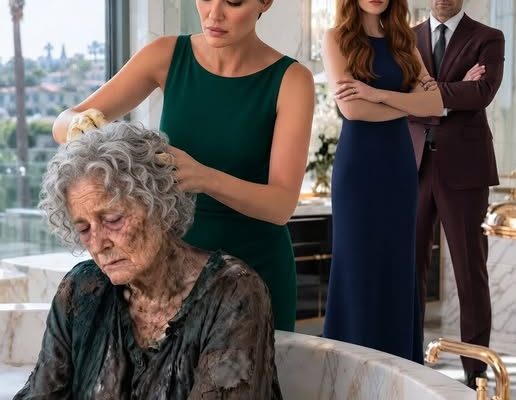
My mom refused to help after my apartment burned down, setting off an investigator’s finding that exposed her secret plot.

PART 1: THE KEY IN THE ASHES

My hands were shaking so badly I could barely hold my phone as firefighters moved through what remained of my second-floor apartment in Portland. The windows were blackened, smoke still drifted from the building, and my neighbor sat nearby wrapped in a blanket while I called the people I thought would care that I had just lost my home.

“Mom, there was a fire. My apartment is gone.”

There was a long pause before my mother, Patricia, finally answered.

“Not our problem. Should’ve been more careful.”

I stared at the ruined building, struggling to understand how she could sound so indifferent when everything I owned had just burned. When I told her I had lost everything, her response was even colder.

“You always make drama, Claire. Call your brother. He has real responsibilities.”

Then she hung up. My brother Miles didn’t answer at all, which wasn’t unusual; he rarely returned my calls unless he needed money.

A few minutes later, a man wearing a navy jacket approached and introduced himself as Fire Investigator Daniel Reyes. I assumed he was going to tell me an electrical problem or some terrible accident had caused the fire, but his hesitation immediately made me uneasy.

“Do you know who had access to your apartment last week? Because we found something at the scene.”

He opened a clear evidence bag. Inside was a small brass key attached to a partially melted purple tag, and despite the damage, I recognized it immediately.

It was the spare key I’d given my mother three years earlier after surgery. Two months ago, following a bitter argument over my grandmother Evelyn’s inheritance, I’d demanded that she return it, and Patricia had thrown what I believed was that key across her kitchen table.

“That was my mother’s key. But she gave it back.”

Reyes studied me.

“Did she?”

I looked more carefully at the evidence bag. Beneath the melted plastic was a hardware-store duplicate tag dated only six days before the fire.

Reyes took me toward a police cruiser while paramedics checked my breathing. He asked whether Patricia knew I was supposed to be away that evening, and my stomach tightened because that morning I’d posted a photo from the airport before leaving for a work conference in San Diego.

The flight had been canceled because of bad weather, so I’d unexpectedly returned home. Only my coworker Jasmine knew.

“She may have thought I was gone.”

Reyes then asked about the argument over my inheritance. Grandma Evelyn had died months earlier and left me her Ashland house along with roughly $180,000, but my parents believed the inheritance should have gone to Miles because he had children and significant debt.

“My grandmother raised me half the time. She knew what they were like.”

“What were they like?”

I looked toward my destroyed apartment.

“They treated love like a bill. If I didn’t pay it exactly the way they wanted, they cut me off.”

Before Reyes could ask another question, an officer approached carrying a second evidence bag. Inside was a warped nozzle from a red gas container.

“We found accelerant traces near the kitchen doorway and outside the bedroom. The fire started in two separate locations.”

My hands tightened around the edge of the cruiser.

“Someone set it?”

“That is what it looks like.”

Then I remembered Oliver.

My orange tabby had been inside the apartment when the fire started. He always hid beneath my bed whenever he was frightened, and the moment I mentioned him, the officer beside Reyes looked away.

I didn’t need anyone to explain what that meant.

My clothes, computer, photographs, and grandmother’s letters could eventually be replaced or mourned. Oliver had been alive, and whoever started the fire had knowingly left him trapped inside.

My phone suddenly vibrated.

It was Miles.

“Mom says stop accusing people. You’re embarrassing the family.”

I stared at the message because I hadn’t accused anyone yet. Slowly, I turned the phone toward Reyes, and his expression changed as soon as he read it.

“Claire, do not respond. Do not warn them.”

Before I could answer, another message appeared.

This time it was from Patricia.

“Insurance fraud is a crime. Think carefully before you lie.”

I read the sentence twice.

My mother had refused to help me. My brother already knew I was supposedly accusing the family. And now Patricia was warning me about insurance fraud when I hadn’t said a single word to her about filing an insurance claim.

I looked at Investigator Reyes.

“I never mentioned insurance.”

He said nothing, but the expression on his face told me he understood exactly why that mattered.

Standing outside the ruins of my home, I finally realized the burned duplicate key might not be the most frightening evidence investigators had found.

Because whoever started that fire had expected me to be hundreds of miles away.

And somehow, my family already seemed to know far more about what had happened than I had told them.

PART 2: THE CAMERA THAT CAUGHT MY BROTHER

By sunrise, I was sitting in a cheap hotel near the airport wearing a borrowed sweatshirt, with a pharmacy bag of toiletries beside me and a police report number scribbled on a business card. I hadn’t slept; every time I closed my eyes, I saw the flames climbing through my apartment, Oliver hiding beneath the bed, and my mother’s handwriting on the burned purple key tag.

At 7:12 that morning, Jasmine called after seeing the fire on the news.

“Oh my God, Claire. I just saw the news. Are you okay?”

“No. But I’m alive.”

She didn’t offer excuses or tell me I was being dramatic. She simply asked what I needed, and that ordinary kindness almost hurt more than my mother’s cruelty.

“Tell me what you need.”

“I need clothes. And I need you to check something.”

“Anything.”

“Did you tell anyone my flight was canceled?”

Jasmine immediately said no. When I explained that investigators believed whoever started the fire probably thought I was in San Diego, she went silent before revealing something that changed the investigation.

“Claire, you need to hear something. Yesterday afternoon, while you were supposed to be gone, I saw your brother outside your building.”

I sat upright.

“What?”

Jasmine had been picking up lunch nearby around 4:30 p.m. when she spotted Miles near the alley beside my apartment. She hadn’t thought much of it at the time because she assumed he might have been visiting me.

“Miles told me he was at work yesterday.”

“Then he lied.”

I called Investigator Reyes immediately, and within hours detectives began collecting surveillance footage from businesses and traffic cameras around my building. By that afternoon, they had assembled a timeline that made Miles’s story increasingly difficult to explain.

His silver Ford Explorer had circled my block twice before parking in the alley. At 4:27 p.m., a camera captured him getting out with a grocery bag and entering the area behind my building; eleven minutes later, he left without the bag.

Then he returned that night.

At 9:02 p.m., another camera recorded Miles entering through the rear stairwell wearing a different jacket. Nine minutes later, he ran out, and at 9:18, the first emergency call reporting the fire was placed.

Detective Laura Kim later showed me a still image in an interview room at the Portland Police Bureau.

“Is this your brother?”

I stared at his partially hidden face, then at the familiar limp from an old football injury.

“Yes.”

“Are you willing to provide a formal statement about the family conflict?”

This time, my voice didn’t shake.

“Yes.”

The following day, police searched Miles’s home in Beaverton. Hanging from a hook in his garage was my original spare apartment key, proving that the key Patricia had supposedly returned to me wasn’t the one she’d possessed all those years.

Investigators also found a hardware-store receipt dated six days before the fire. It listed a duplicated key, a red plastic gas can, and black work gloves.

Miles insisted there had been a misunderstanding.

Then detectives recovered the family group chat.

Patricia had apparently believed deleting messages would make them disappear permanently. Instead, investigators recovered conversations between her, Miles, and my father, Grant, showing exactly how angry they had become over Grandma Evelyn’s inheritance.

My father rarely contributed more than short replies.

“Handle it.”

“Don’t drag me into this.”

But Patricia’s messages were different. She repeatedly called me greedy and ungrateful, insisting Grandma had been confused when she changed her will even though her attorney had confirmed she was fully competent.

Then investigators found an exchange about the Ashland house.

“She won’t sell the Ashland house. She said no again,” Miles wrote.

Patricia answered:

“Then scare her.”

“What does that mean?”

“People understand loss when they feel it.”

I felt sick reading those words, but Detective Kim continued until we reached messages sent only two days before the fire.

“What if she’s home?” Miles had asked.

“She posted the conference. She won’t be.”

Then came the question I wished I had never read.

“And the cat?”

Patricia’s answer contained only three words.

“It’s a cat.”

I stared at the screen until the letters blurred. In that moment, something inside me finally separated from the idea that these people were still my family.

There was no dramatic breakdown. It felt quieter than that, almost like hearing a door lock permanently from the other side.

Police arrested Miles first. That evening, Patricia called me seventeen times, but I ignored every call until she finally left a voicemail.

“Claire, this has gone too far. Your brother made a mistake. You know how stressed he’s been. If you ruin his life, that’s on you. You have always been dramatic, always selfish. Call me back before you make this worse.”

I didn’t call her back. I saved the recording and sent it directly to Detective Kim. Two days later, the police came for my mother.

PART 3: THE MESSAGES THEY COULDN’T ERASE

Patricia was arrested two days after Miles. Investigators charged her with conspiracy, solicitation of arson, and offenses connected to a plan to portray the fire as insurance fraud, and a search of her home office uncovered printed articles about renters insurance, inheritance disputes, and even how pets were treated in civil claims.

My father, Grant, was charged later for helping conceal evidence and misleading investigators. He insisted he had believed Patricia and Miles were only trying to “teach me a lesson,” a phrase that perfectly summarized how my family had always disguised cruelty as something supposedly done for my benefit.

“A lesson,” Detective Kim repeated when she heard his explanation.

That was the language I’d grown up with. Neglect became toughness, threats became concern, and cruelty became discipline; even after my apartment had been deliberately burned, they were still searching for words that made them sound like the reasonable ones.

The case took eleven months to reach trial. During that time, I stayed first with Jasmine and later moved into a small rental near work, while my grandmother’s house in Ashland remained empty as my parents unsuccessfully challenged the inheritance and tried to freeze the estate.

What frightened me most was how simple the evidence was. There had been no sophisticated conspiracy, only resentment over money, a copied key, a gas can, surveillance footage, and a family convinced that frightening me would make me easier to control.

Eventually, Miles accepted a plea deal after his wife filed for divorce. He agreed to testify about Patricia’s involvement and admitted entering my apartment twice, first to place gasoline in concealed areas and later to ignite the fire.

He claimed he believed I was safely in San Diego.

“I never meant to hurt her.”

Then the prosecutor asked about Oliver.

Miles lowered his eyes.

“I didn’t think about the cat.”

I sat silently in the gallery. The recovered messages had already shown otherwise, especially the exchange where he’d specifically asked Patricia about Oliver before the fire.

“And the cat?”

“It’s a cat.”

Patricia refused every plea agreement. She insisted that she was the victim of a conspiracy involving me, the police, Grandma Evelyn’s attorney, and various “jealous outsiders,” then arrived in court wearing pearls and a cream blazer as though looking respectable could somehow erase her own words.

The prosecutor simply read those words aloud.

“People understand loss when they feel it.”

Then another message.

“She posted the conference. She won’t be.”

Finally:

“It’s a cat.”

Patricia stared straight ahead without answering. For most of my life, she’d controlled every family argument by deciding which version of events everyone was expected to accept, but now her own messages were speaking for her.

When the time came for my victim impact statement, I walked to the podium and faced my mother. I’d imagined that moment countless times and expected anger to overwhelm me, yet when I finally looked at her, I felt remarkably calm.

“You told me the fire was not your problem. For the first time, you were right. It is not my problem anymore. It is yours.”

Something shifted in Patricia’s expression, but I continued.

“You wanted me scared. You wanted me broke. You wanted me blamed. Instead, you gave me proof. You showed everyone exactly what I had spent my life trying to explain.”

The courtroom remained completely silent.

“You destroyed my home. You killed my cat. You tried to frame me. But you also ended the last lie I believed about you.”

The sentences were eventually handed down. Miles received fourteen years in prison, Patricia received twenty-two, and my father was sentenced to four years for concealing evidence and lying to investigators.

When I stepped outside the courthouse, Jasmine was waiting in the afternoon sunlight with a cup of coffee. She didn’t ask whether I was okay because after eleven months beside me, she understood there wasn’t a simple answer to that question.

Instead, she handed me the cup.

“Ashland?”

I looked at her and nodded.

“Ashland.”

Two months later, I finally moved into the house my grandmother had left me. It was the same inheritance my family had tried to frighten me into surrendering, but what I would discover inside that house would matter far more than the property itself.

PART 4: THE LETTER GRANDMA LEFT BEHIND

Two months after the sentencing, I moved into Grandma Evelyn’s house in Ashland. It was a quiet white Craftsman with blue shutters, creaking wooden floors, and an old vegetable garden that had been neglected while lawyers fought over the estate, but for the first time in months, I had a place that actually felt like it belonged to me.

During my first week there, I climbed into the attic to sort through several boxes Grandma had left behind. Beneath old decorations and household records, I discovered one marked in her careful handwriting:

CLAIRE—SCHOOL THINGS

Inside were report cards, childhood drawings, birthday cards, and photographs I had assumed my parents had thrown away years earlier. Grandma had quietly preserved pieces of my childhood that nobody else had considered worth keeping.

At the bottom of the box was an envelope.

I recognized Grandma’s handwriting immediately.

My darling Claire,

My hands began trembling before I’d finished the first paragraph. Then I reached the lines that made me sit down on the attic floor.

“One day, they may try to convince you that love must be earned by obedience. That is not love. That is ownership.”

I stopped reading for several seconds.

Then came the final sentence.

“Build a life they cannot enter.”

I cried until the afternoon light shifted across the attic floor. These tears were different from the ones I’d shed outside my burned apartment because they weren’t fueled by shock or fear; they came from finally realizing Grandma had understood my family long before I was ready to admit the truth myself.

She hadn’t left me the Ashland house simply because she preferred me over Miles. She had given me a place where Patricia, Grant, and Miles could no longer decide whether I deserved security based on how obedient I was.

So I followed Grandma’s advice.

A year after the fire, I adopted two cats from a shelter in Medford. Pepper was a loud, fearless gray female who immediately behaved as though she owned the house, while August was a shy orange male who spent his first three days hiding beneath the couch before cautiously deciding I could be trusted.

Oliver’s collar remained in a small wooden box on the mantel.

I didn’t replace him because that wasn’t possible. Pepper and August weren’t substitutes for what I’d lost; they were proof that grief hadn’t taken away my ability to care about something again.

After the criminal case closed, the insurance company finally paid my claim. I used part of the money to restore Grandma’s garden, but another portion went toward something my family never could have anticipated.

I created a legal assistance fund for people dealing with financial abuse by relatives.

Jasmine helped me build the website, and when a local newspaper eventually published an article about the project, Detective Kim sent me a short message.

“Proud of you. Keep the locks changed.”

I smiled when I read it.

“I did.”

Every lock in Grandma’s house was replaced. I installed security cameras as well, but gradually I learned that protecting myself wasn’t the same thing as living frightened.

Fear told me they might return.

Caution reminded me they no longer had a key.

Sometimes people asked whether I missed my family, and for a long time I didn’t know how to answer. Eventually, I realized I did miss them, just not the people they had actually been.

I missed the mother I had spent decades hoping Patricia might become, the woman who should have heard that her daughter’s apartment burned and immediately asked whether I was safe. I missed the imaginary brother who would have run toward the flames instead of entering my apartment with a copied key.

And I missed the father who should have chosen his daughter over protecting everyone else’s lies.

But those people had never existed.

The real Patricia had answered my desperate phone call with:

“Not our problem. Should’ve been more careful.”

The real Miles had entered my home twice, knowing I was supposed to be hundreds of miles away.

And the real Grant had known enough to understand something was wrong but decided silence was easier than stopping it.

I didn’t miss those people.

What I missed was the family I’d spent my entire life waiting for them to become.

One evening, I stood in Grandma’s restored garden while Pepper prowled between the plants and August watched cautiously from the porch. Through the window, I could see the wooden box containing Oliver’s collar sitting safely on the mantel.

The night of the fire, I’d believed everything important had been taken from me.

Now I understood that something else had burned with that apartment.

The illusion that if I remained patient, generous, useful, and obedient long enough, my family would eventually love me the way I’d always wanted them to.

Grandma had understood the truth years before I did.

That is not love. That is ownership.

And as I stood outside the house my family had tried to force me to surrender, I finally understood the second half of her message too.

I was building a life they could no longer enter.

PART 5: WHAT SURVIVED THE FIRE

Life in Ashland slowly became quieter. I restored Grandma Evelyn’s garden, worked from the little room overlooking the backyard, and learned to recognize the sounds of Pepper racing through the hallway and August cautiously following behind her.

Oliver’s collar remained inside the wooden box on the mantel. I still missed him, and there were evenings when remembering what happened inside that apartment brought back an anger I couldn’t completely erase, but I no longer allowed that night to define every day that followed.

The legal fund Jasmine and I created also began receiving messages from people trapped in situations that felt painfully familiar. Some had parents controlling their bank accounts, siblings pressuring them over inheritances, or relatives who treated financial support as the price of belonging.

Helping them changed the way I understood my own experience. For years, Patricia had convinced me that setting boundaries was selfish, while Miles treated whatever I owned as something the family could claim whenever he needed it.

Grandma had recognized the pattern long before I did.

“One day, they may try to convince you that love must be earned by obedience. That is not love. That is ownership.”

Her letter remained in my desk, and whenever old guilt returned, I read those words again.

“Build a life they cannot enter.”

So that was exactly what I did.

I changed every lock and installed cameras, but eventually those precautions stopped feeling like evidence that I was afraid. They became reminders that access to my life was something I controlled now.

Fear said:

“They might come back.”

Caution answered:

“They no longer get in.”

People occasionally asked whether I missed my family. The answer was more complicated than simply saying no, because there were versions of them I still mourned.

I missed the mother I’d spent years hoping Patricia would become, the one who would have heard that her daughter’s home had burned and immediately asked:

“Are you safe?”

I missed the brother I wished Miles had been, someone who would have rushed toward my burning apartment instead of being the reason it burned. And somewhere inside me, I even missed the father I had wanted Grant to become, a man who would have chosen his daughter over protecting his wife’s lies.

But those weren’t the people I’d actually lost.

They were people I’d imagined.

The real Patricia had heard me say my apartment was gone and answered:

“Not our problem. Should’ve been more careful.”

The real Miles had copied a key, entered my home, and deliberately started the fire. The real Grant had known enough to intervene but chose to remain on the sidelines until the consequences reached him too.

I didn’t miss them.

I missed the family I had spent most of my life waiting for them to become.

Months passed, and Ashland finally began feeling less like Grandma’s house and more like mine. Pepper claimed the windowsill overlooking the garden, August eventually stopped hiding whenever someone knocked, and Jasmine visited often enough that she stopped asking where the coffee mugs were.

One afternoon, I received another message from Detective Kim after she saw an article about the legal fund.

“Proud of you. Keep the locks changed.”

I smiled.

“Always.”

The irony wasn’t lost on me. A copied key had helped investigators uncover what my family had done, while changing the locks became part of how I reclaimed the life they’d tried to control.

The night my apartment burned, I believed I’d lost everything. My home was destroyed, Oliver was gone, my possessions had disappeared into smoke, and the people I called family had revealed that my suffering mattered less to them than an inheritance they believed belonged to them.

But the fire had destroyed something else too.

It burned away the belief that if I kept giving enough, forgiving enough, and making myself useful enough, Patricia, Miles, and Grant would eventually become the family I wanted.

They never would.

And accepting that truth didn’t leave me empty.

It finally made room for something better.

I had Grandma’s house, Jasmine’s friendship, two ridiculous cats, work that mattered to me, and a life whose doors opened only for people I chose to trust. Most importantly, I no longer needed my family’s approval to believe I deserved any of it.

Sometimes I still stood beside the mantel and touched the wooden box containing Oliver’s collar. I couldn’t change what happened to him, and I couldn’t recover the home I’d lost, but I could decide what happened after the ashes cooled.

My family had wanted fear to make me surrender Grandma’s inheritance.

Instead, their plan gave investigators the evidence that exposed everything.

The duplicate key. The surveillance footage. The hardware-store receipt. The recovered messages. Their own words.

The night of the fire, I thought all I had left was ruin.

I was wrong. I had lost the illusion that I was still waiting to be loved by people who only wanted access to my life.

And beneath the smoke, the betrayal, and everything they had tried to destroy, I was left with the one thing my family never expected me to keep.

Proof.

My mom refused to help after my apartment burned down, setting off an investigator’s finding that exposed her secret plot. Read More

My mom demanded I bring dessert while my baby was in the NICU, setting off a hallway scene that ruined her daughter’s party.

Part 1 – My Newborn Was on a Ventilator, but My Mother Wanted Me at My Sister’s Gender Reveal

Three days after an emergency C-section, my newborn daughter Rosalie was lying in the NICU on a ventilator because her lungs were not ready to work on their own. While I sat beside her incubator wondering whether she would keep improving, my mother texted me about my sister Courtney’s gender reveal and ordered me to bring dessert as though nothing happening inside that hospital mattered.

Rosalie had arrived six weeks early at only four pounds, two ounces. I had seen her for seconds before the medical team rushed her away, and by the time I reached the NICU, tubes covered her tiny face while a machine breathed for her.

My six-year-old daughter, Brooklyn, stayed beside me whenever she could. She watched every nurse who approached her sister and whispered through the incubator wall as though speaking too loudly might somehow disturb her.

“Hi, Rosie. I’m your big sister.”

That afternoon, my phone buzzed three times. The messages were from my mother.

“Gender reveal is at 5 tomorrow.”

“Bring the chocolate mousse cake from Molina’s.”

“Don’t show up empty-handed and useless like last time.”

Before Rosalie’s premature birth, I had planned to attend Courtney’s party and help with everything. In my family, Courtney was usually the person being celebrated while I was expected to make things easier, but I assumed even my mother would understand that this time was different.

I typed back.

“I’m at the hospital with Rosalie. She’s still on the ventilator. I can’t come tomorrow.”

Her response arrived almost immediately.

“Priorities. Show up or stay out of our lives.”

Then my father joined in.

“Your sister’s day is more important than your drama. Don’t ruin this for her.”

Courtney followed with her own message.

“Always making everything about yourself.”

I stared at the three responses while a ventilator breathed for my newborn daughter a few feet away. Brooklyn noticed my shaking hand and asked whether Grandma was coming to see Rosalie, but I could not bring myself to explain why she apparently cared more about a party.

“She’s busy helping Aunt Courtney.”

I blocked all three numbers.

When Kevin returned from the cafeteria, I showed him the messages. He read them quietly before putting my phone aside and telling me I did not have to deal with any of them that night.

Hours later, our nurse Gloria brought the first hopeful news we had received all day. Rosalie’s numbers were improving, and if that continued, the doctors might begin discussing reducing her ventilator support within several days.

Then Gloria stopped at the door.

“The front desk says an older woman with silver hair is asking about the baby. She says she’s the grandmother.”

Every muscle in my body tightened.

“She is not authorized. Do not let her in.”

Gloria promised to update the visitor log. Twenty minutes passed without an argument in the hallway, and eventually Kevin checked outside and told me my mother seemed to have left.

That should have reassured me.

It didn’t.

My mother had never accepted the word no easily.

Sometime after two in the morning, exhaustion finally pulled me to sleep beside Rosalie’s incubator. When I woke, the machines were still running normally, and for a moment I believed the night had passed without anything happening.

Then Brooklyn woke beside me.

Her face immediately filled with fear.

“Mom…”

“What is it, pumpkin?”

She clutched her blanket.

“Grandma came here last night.”

I felt my stomach tighten.

“What do you mean?”

“The door made a little sound, and I woke up. I pretended I was asleep because I didn’t want her to make me leave.”

I forced myself not to put words into Brooklyn’s mouth.

“What did Grandma do?”

“She looked at you first. Then she went to Rosalie’s bed.”

Brooklyn stared toward the ventilator.

“She looked at the machine…”

Then my six-year-old stopped talking.

And the fear on her face told me that whatever my mother had done next was something Brooklyn had been lying awake all morning afraid to tell me.

Part 2 – My Six-Year-Old Saw Grandma Standing Beside the Ventilator

Brooklyn kept staring at the machine beside Rosalie’s incubator, and I could see how carefully she was choosing her words. I wanted answers immediately, but frightening her with my own panic would only make it harder for her to tell me what she remembered.

“What happened after Grandma went to Rosalie’s bed?”

Brooklyn pulled the blanket tighter around herself.

“She looked at the machine, and then she touched something.”

My heart started pounding, but I kept my voice steady.

“What did she touch?”

“I don’t know. The tube thing. Then the machine started making a different noise.”

I pressed the call button immediately.

Gloria entered moments later, and I told her exactly what Brooklyn had said without adding my own conclusions. Her expression changed when she heard that an unauthorized visitor might have approached Rosalie’s equipment during the night.

Kevin returned while Gloria was checking the ventilator and tubing. When I explained what Brooklyn had witnessed, he looked toward the door and asked the question already running through my mind.

“How did her mother get in here?”

Gloria did not speculate. She contacted the charge nurse, asked that the visitor records be reviewed, and told us the medical team would examine Rosalie’s chart for any unusual changes during the night.

Brooklyn reached for my hand.

“Am I in trouble?”

“No, baby. You did nothing wrong.”

“I didn’t stop Grandma.”

The guilt in her voice hurt almost as much as what she had described.

“You’re six years old. It was never your job to stop an adult.”

Brooklyn’s eyes filled with tears.

“I was scared she’d see me.”

I pulled her close carefully, still feeling the pain from my C-section. My daughter had spent the night pretending to sleep because an adult she once trusted had made her afraid inside the one place where she should have felt protected.

Kevin crouched beside us.

“You did exactly what you needed to do. You stayed safe.”

A short time later, the charge nurse came into the room. She confirmed that my mother had been denied entry at the front desk earlier that night, which meant Brooklyn’s account raised an obvious question: if she had later entered the NICU, someone needed to determine how she got past the restriction.

Then the medical review revealed something else.

Rosalie’s ventilator had registered an alarm during the period Brooklyn described.

My stomach dropped.

“What kind of alarm?”

The nurse explained that they still needed to review the records before determining what caused it. Rosalie had stabilized quickly, and nothing they had seen yet proved that anyone had deliberately interfered with her equipment.

That distinction mattered.

I was furious, but I was not going to turn Brooklyn’s memory into something she had not actually said. She saw Grandma approach the incubator, touch something near the tubing, and then heard the machine change; everything beyond that needed to be established by people who understood the equipment and could review the hospital records.

Kevin took my phone and checked the blocked-call notifications.

My mother had tried repeatedly to contact me overnight.

Then he found a voicemail.

I put it on speaker.

“You’re really going to keep me away from my own granddaughter because you’re angry about Courtney’s party? Stop being ridiculous. I came all this way to remind you that this family does not revolve around you.”

Brooklyn immediately recognized the voice.

“That’s what Grandma was wearing when she came in. She had her long coat.”

Kevin saved the message.

The charge nurse asked us not to contact my mother while the hospital reviewed what happened. Security was being notified, access records would be checked, and Rosalie’s care remained the immediate priority.

Then Gloria returned with another update.

There was a camera covering part of the corridor outside the NICU.

If my mother had entered after being denied access, the footage might show when she arrived and how she got inside.

For the first time since Brooklyn spoke, I felt as though we might get an answer that did not depend entirely on asking a frightened six-year-old to remember more.

But before security could return with the footage, my phone displayed a new voicemail notification.

It was from my father.

I listened to the first few seconds and felt Kevin’s expression change beside me.

“Your mother told us what happened at the hospital,” he said. “Before you start accusing her of anything, you need to understand why she went into that room.”

I stopped the recording.

My mother had not merely admitted to my father that she had gotten inside.

She had apparently already given him an explanation for what she did beside Rosalie’s incubator.

And whatever that explanation was, my father thought I needed to hear it before I saw the security footage.

Part 3 – The Security Footage Revealed How My Mother Got Into the NICU

I did not finish my father’s voicemail because I wanted the hospital to establish what happened before my family supplied another explanation. My mother had already been denied access, Brooklyn said she later entered the room and approached Rosalie’s ventilator, and the machine had registered an alarm during the same period, so there were now facts that could be checked without forcing my six-year-old to keep reliving what frightened her.

Security arrived with the charge nurse less than an hour later. They explained that the cameras did not cover the inside of Rosalie’s room, but footage from the corridor could establish whether my mother had returned after being denied entry and how she reached an area she was never authorized to enter.

The recording showed my mother leaving the main desk shortly after Gloria warned us she had arrived. Nearly an hour later, however, another camera captured her returning through a different corridor and following closely behind a group of visitors as they passed through a secured doorway.

Kevin stared at the screen.

“So she knew she wasn’t allowed inside.”

The security officer remained careful.

“The footage confirms she entered an area after being denied access. We still need to determine exactly what happened afterward.”

A later clip showed my mother approaching Rosalie’s room shortly after two in the morning. She remained inside for several minutes before leaving quickly, and the timestamp closely matched the ventilator alarm recorded in Rosalie’s chart.

I looked at Brooklyn.

She was telling the truth.

My daughter had woken in the darkness, recognized her grandmother, and stayed motionless beneath her blanket because she was afraid of being noticed. Whatever happened beside the incubator, Brooklyn had carried that fear alone until morning.

The hospital began a formal review while a respiratory specialist examined the ventilator records. She explained that an alarm alone could have several causes, so nobody was going to claim deliberate interference without evidence.

That was exactly what I wanted.

I did not need the worst possible interpretation.

I needed the truth.

Then I finished listening to my father’s voicemail.

“Your mother told us what happened at the hospital. She went into the room because she thought you were keeping the baby from the family. She says she only wanted to see Rosalie and touched the tubing because she thought something looked wrong.”

Kevin shook his head.

“She thought something looked wrong, so she touched medical equipment?”

My father continued.

“She didn’t mean any harm. Don’t turn this into another attack on your mother.”

There it was again.

My newborn was on a ventilator, my mother had bypassed a visitor restriction and approached equipment she had no permission to touch, yet somehow my reaction was already becoming the family problem.

I saved the voicemail.

A few hours later, the respiratory specialist returned with the most important update. The ventilator data showed a brief disruption consistent with the alarm Brooklyn remembered, but Rosalie had stabilized quickly after staff responded.

I felt sick.

“Could someone touching the tubing have caused it?”

“It’s possible, but the records alone cannot tell us exactly what a person did.”

That answer was enough for me.

My mother had no medical reason to be beside Rosalie’s equipment in the first place.

Kevin and I requested that her visitor restriction be strengthened and that no relative outside our approved list receive information about Rosalie. The hospital agreed while continuing its internal review.

That afternoon, Brooklyn sat beside the incubator again.

“Mommy, is Grandma mad at me?”

“No.”

“But I told you.”

“You were supposed to tell me.”

She looked uncertain.

“Even when it’s family?”

I squeezed her hand.

“Especially when something makes you scared or feels wrong.”

For years, I had protected my mother’s image because admitting what she was really like seemed more painful than making excuses. Now my six-year-old was teaching me what that silence could cost.

Then Kevin’s phone rang.

It was Courtney.

He almost ignored it, but I asked him to answer on speaker.

My sister was crying.

“I need to tell you something about Mom.”

I waited.

Courtney took a shaky breath.

“She didn’t go to the hospital just because you blocked her.”

My stomach tightened.

“What are you talking about?”

“She was furious about the gender reveal, but before she left, she said she was going to make you understand what happens when you choose that baby over this family.”

Kevin and I looked at each other.

Then Courtney added the part that changed everything.

“And I think Dad knew she was going.”

My mother’s visit had already stopped looking like an impulsive attempt by an emotional grandmother to see her newborn granddaughter.

Now I had to find out whether my parents had discussed what she planned to do before she ever entered the NICU.

Part 4 – Courtney Admitted My Parents Had Discussed the NICU Before My Mother Ever Arrived

Courtney’s confession changed the way I understood my mother’s visit. Until then, there was still a possibility that she had driven to the hospital in anger and made a reckless decision after being denied access, but my sister was now telling me that both our parents had discussed Rosalie before my mother ever left for the NICU.

“What exactly did Mom say?”

Courtney hesitated.

“She kept saying you were using Rosalie to punish everyone because you didn’t want to come to my gender reveal.”

“My newborn is on a ventilator.”

“I know.”

For once, Courtney did not defend herself.

She admitted that after receiving my message, Mom became furious because I had refused her in front of the rest of the family. Dad agreed that I was being dramatic, and instead of reminding her that I had undergone emergency surgery three days earlier, he encouraged her to confront me.

“Did Dad know she was coming here?”

“Yes.”

Kevin’s jaw tightened beside me.

“What did they expect her to do?”

Courtney said she did not know exactly, but she remembered Mom saying that I needed to be reminded that having a sick baby did not give me permission to disrespect the family. Dad told her to handle it however she needed to, then promised he would support her if I caused another scene.

I saved the call.

Courtney began crying.

“I didn’t know she would go near Rosalie’s equipment.”

“Neither did Brooklyn.”

My sister became quiet.

“My six-year-old daughter watched Mom beside the ventilator while Kevin and I were asleep.”

Courtney whispered that she was sorry, but I was no longer interested in apologies that required me to make everyone else feel better. My priority was Rosalie’s safety and making sure Brooklyn understood she had done nothing wrong by telling me what she witnessed.

Later that afternoon, hospital security informed us that my mother would not be permitted back into the restricted area. The incident had also been formally documented, including her unauthorized entry, the timing of the ventilator alarm, and Brooklyn’s account.

The medical staff remained careful about what could actually be proven. Nobody could say from the available records precisely what my mother had done to the tubing, but they could confirm she had no authorization to enter the room or touch Rosalie’s equipment.

That distinction mattered to me.

I did not need to invent something worse than the truth.

The truth was already enough.

That evening, Rosalie remained stable. Gloria even told us her numbers continued moving in the right direction, although the doctors were not ready to make promises about when she could breathe without assistance.

Brooklyn sat beside me drawing a picture for her sister.

“Mommy?”

“Yes, baby?”

“Are we still a family if Grandma is mad at us?”

I looked at Kevin, then at Rosalie inside the incubator.

“Yes. Family isn’t only Grandma and Grandpa.”

Brooklyn considered that before adding Kevin, Rosalie, and herself to the picture.

Then she drew me beside them.

For the first time, I realized how much of my adult life had been spent believing my parents could decide whether I belonged. My mother’s message—show up or stay out of our lives—had worked because she expected exclusion to frighten me back into obedience.

It did not anymore.

The following morning, Rosalie’s doctor gave us the news we had been waiting for. If her progress continued, they could soon begin reducing some of the ventilator support and see whether her lungs were ready to do more work independently.

I was holding Brooklyn when my phone displayed a voicemail notification from an unfamiliar number.

Kevin played it beside me.

My mother’s voice came through.

“You’ve told everyone your version. Now I’m going to tell mine.”

She claimed she had already spoken to people about what happened and intended to prove I was twisting an innocent grandmother’s visit into something sinister. Then she said one final thing before the recording ended.

“You should ask Courtney what she left out.”

I immediately looked at Kevin.

Courtney had already admitted our parents discussed the hospital before Mom arrived.

But apparently, there was still something my sister had not told me.

And when I called Courtney back, the first words out of her mouth made me realize my mother was right about one thing.

There was another part of that night I still did not know.

Part 5 – Courtney’s Final Confession Changed What I Thought My Mother Had Come to the NICU to Do

Courtney was silent for several seconds after answering my call, and I immediately knew my mother had been telling the truth about one thing: my sister had left something out. She had already admitted our parents discussed confronting me before Mom came to the hospital, but there had been another conversation after I blocked their numbers that Courtney had been too ashamed to tell me about.

“Mom wasn’t only angry because you missed my gender reveal.”

I tightened my grip on the phone.

“Then why did she come?”

Courtney explained that Mom saw my decision to stay with Rosalie as another example of me choosing Kevin and my daughters over the family. After I blocked everyone, she apparently became determined to prove that I could not simply shut her out whenever I disagreed with her.

“She said she was going to make you listen.”

“Did she say anything about Rosalie?”

Courtney hesitated.

“She said if you were so obsessed with sitting beside that machine, she would go there herself.”

That sentence made Kevin look toward the incubator.

Courtney insisted she never heard Mom say she intended to harm Rosalie or interfere with the ventilator. What she did hear was Dad encouraging her to confront me and promising they would support each other afterward if I accused Mom of crossing a line.

That explained their behavior the following morning.

Before I even knew my mother had entered the NICU, my parents had already begun building the argument that I was dramatic, selfish, and twisting an innocent visit into something malicious.

“I should have warned you,” Courtney whispered.

“Yes. You should have.”

For once, I did not soften the truth to make my sister comfortable.

Courtney apologized for her messages about the gender reveal and admitted she had spent years accepting our family’s pattern because being the favored daughter benefited her. I appreciated that she finally acknowledged it, but I told her an apology would not automatically restore trust.

The hospital’s review eventually established what could and could not be proven. My mother had knowingly bypassed a visitor restriction, entered Rosalie’s room while we slept, approached her incubator, and was present around the time the ventilator registered an alarm.

What the available evidence could not establish was exactly what she intended when she touched something near the tubing.

I accepted that uncertainty.

I did not need to transform what happened into something more dramatic to justify protecting my children. An adult who had already been told she could not enter had secretly approached my medically fragile newborn’s equipment, and my six-year-old had been frightened enough to pretend she was asleep.

That was enough.

My parents continued trying to contact us through other relatives, but Kevin and I stopped participating in arguments about whether Mom “meant well.” We kept the hospital restrictions in place and made decisions based on what gave Brooklyn and Rosalie the safest, calmest environment.

Several days later, the doctors began gradually reducing Rosalie’s ventilator support.

I stood beside her incubator with Kevin while Brooklyn watched from her chair.

“Is Rosie getting better?”

“She’s trying really hard.”

Brooklyn smiled.

“I knew she could do it.”

Progress came slowly, but Rosalie continued improving. Each small change felt enormous, and for the first time since her birth, I began allowing myself to imagine carrying her outside the hospital.

One afternoon, Brooklyn climbed onto the chair beside me.

“Mommy?”

“Yes?”

“Are you mad I told you about Grandma?”

I turned toward her immediately.

“No. I’m glad you told me.”

“Even though she’s your mom?”

I took her hand.

“Especially then. If an adult does something that scares you or feels wrong, you can always tell me. You never have to protect someone just because they’re family.”

Brooklyn nodded and leaned against me.

That was when I realized how different I wanted her childhood to be from mine.

I had spent years protecting my mother’s image, explaining away her cruelty, and believing that keeping the family together required someone to absorb whatever everyone else refused to confront. Brooklyn had broken that pattern simply by telling the truth about what she saw.

Weeks later, Rosalie was finally strong enough to leave the NICU.

Kevin carried our bags while I held her against my chest, and Brooklyn walked beside me proudly announcing to every nurse who smiled at us that she was Rosalie’s big sister.

My mother was not waiting outside.

Neither were my father or Courtney.

For once, their absence did not feel like rejection.

It felt peaceful.

My mother had once texted that I needed to choose my priorities.

Standing outside the hospital with one daughter holding my hand and the other sleeping safely against my chest, I realized she had accidentally given me the easiest decision of my life.

I chose my children.

And unlike the family I grew up trying desperately to please, I would never make them wonder whether they had to earn the right to be chosen.

My mom demanded I bring dessert while my baby was in the NICU, setting off a hallway scene that ruined her daughter’s party. Read More

My Daughter Banned Me From My Hand-Built Lake House For Her Boyfriend—Unaware Of The Sold Sign Waiting On The Lawn

My daughter told me, “Mom, stay away this summer. Derek wants my lake house only for us.”

The problem?

It wasn’t her lake house.

I had built that place into a home with my own hands.

So before they arrived, I sold it.

“Mom, stay away this year,” Lauren said over the phone. “Derek wants the lake house just for us. We need privacy.”

I stood in my kitchen in Madison, Wisconsin, staring at the framed photograph hanging beside the refrigerator.

My lake house.

Not hers.

I had bought the wooded property on Lake Geneva fifteen years earlier after my husband died. I spent countless weekends sanding floors, painting walls, carrying tile in the back of my Subaru, and arguing with contractors until a drafty two-bedroom cottage became the place where I finally learned how to breathe again.

Lauren had always been welcome.

Apparently, somewhere along the way, welcome had turned into ownership.

“Derek says it’s uncomfortable when you drop in,” she added. “He wants this summer to feel like our place.”

Our place.

In the background, I heard Derek asking whether I had agreed.

They planned to arrive in six weeks and stay through Labor Day.

“Of course,” I said.

Lauren sounded relieved. “Thanks for understanding.”

I understood perfectly.

The next morning, I called Nancy Cole, the realtor who had spent two years asking whether I might ever sell.

The retired couple next door wanted the property for their daughter and had already made an unsolicited cash offer months earlier.

Until then, I had always refused.

That morning, I asked Nancy whether they were still interested.

They were.

Three weeks later, after the inspection, title work, and attorney review, I signed the closing papers for $842,000.

I removed everything except one blue ceramic bowl my husband had made in a pottery class before he became sick.

Then I changed my mailing address, canceled the utilities in my name, and told Lauren nothing.

On June 14, the lake house doorbell camera sent me one final alert before the new owners replaced the system.

Lauren and Derek had arrived.

Their SUV was loaded with suitcases, paddleboards, groceries, and two folding kayaks.

They approached the front door laughing.

Then Lauren stopped.

A red SOLD sign stood beside the driveway.

Derek stared at it.

Lauren immediately called me.

“Mom,” she screamed, “what did you do?”

I looked at the blue ceramic bowl sitting on the shelf of my new apartment.

“I respected your boundary,” I said.

Then a woman I had never seen stepped out of their SUV holding a folder marked SUMMER RENTALS.

 PART 2

The woman holding the folder wasn’t a friend.

Her name was Melissa Crane, and she had driven from Milwaukee believing she was meeting the owners of a lakefront vacation property she had helped rent for the summer.

Ten minutes later, the new owner, Thomas Reed, called me.

“Evelyn,” he said carefully, “there are people here claiming they have reservations.”

Reservations.

Plural.

I drove to Lake Geneva with Nancy and my attorney, Rebecca Shaw.

By the time we arrived, three families were standing near the driveway holding printed confirmation emails.

One family had paid $6,400 for two weeks in July.

Another had placed a $3,200 deposit for August.

Every confirmation listed Lauren Bennett as property manager.

Derek had created the rental account.

My daughter had collected the money.

Lauren stood beside the SUV with her arms crossed.

“We were going to tell you.”

“When?”

“After summer.”

Derek stepped forward.

“This is being exaggerated. We were covering maintenance costs.”

“You charged strangers to stay in a house you didn’t own.”

“It was family property.”

“No,” I said. “It was property owned by a member of your family.”

Rebecca asked Melissa for the rental paperwork.

The records showed that more than $31,000 in deposits had been collected over five months.

Some of the money had paid for patio furniture, a boat lift, and new appliances.

The rest had been transferred into an account belonging to Derek’s consulting company.

Lauren’s expression changed when Rebecca read that aloud.

“You said it was all in the house account.”

Derek snapped, “Not now.”

That was when I first realized Lauren might not know everything.

Then Melissa handed us another document.

It was a “future ownership authorization” claiming I had agreed to transfer the lake house to Lauren after the summer season.

My name appeared at the bottom.

The signature looked close.

Not close enough.

Lauren stared at it.

“Mom signed that,” Derek said quickly.

“I did not.”

Lauren turned toward him.

“You told me she signed it in March.”

Derek’s jaw tightened.

Rebecca photographed every page.

Nancy contacted the title company.

Thomas and his wife allowed the families to remain outside while we worked through the situation, but nobody entered the house.

Then my phone buzzed.

An email had arrived from my bank’s fraud department.

Someone had recently applied for a $275,000 home-equity loan using the lake house as collateral.

The application had been denied because ownership of the property had already transferred.

The applicant’s name was mine.

The contact phone number belonged to Derek.

Lauren read the screen over my shoulder.

For the first time that day, she stopped defending him.

Then she quietly asked,

“What else did you use Mom’s name for?”

PART 3

Lauren didn’t get an answer that afternoon.

She asked Derek again.

He walked away.

Rebecca helped me file a police report and notified the lender that the home-equity application was fraudulent.

The rental platform froze the remaining deposits before Derek could transfer them.

Investigators later discovered that he had uploaded a copy of my driver’s license, an old property-tax statement, and the forged authorization to make himself appear entitled to manage the house.

He had also opened a business credit line using the lake house address.

Lauren knew about the rentals.

She did not know about the loan application or the forged signature.

But she had still agreed to rent out my property without asking me.

“I thought eventually you’d give it to me,” she said.

“Why?”

“Because I’m your daughter.”

I looked at her for a long moment.

“That made you welcome there. It did not make you the owner.”

The summer reservations were canceled.

The families received their deposits back from the frozen account, and Lauren used $12,300 from her savings to replace money Derek had already taken and couldn’t immediately repay.

Thomas and his wife later offered two displaced families discounted stays.

That was their kindness.

It wasn’t my obligation.

The sale remained final.

I did not reverse it.

Lauren kept reminding me that the lake house was where we celebrated birthdays, scattered part of her father’s ashes, taught her to swim, and spent Christmas after my cancer scare.

Those memories mattered.

But memories are not deeds.

Over the next four months, investigators traced the loan application, forged authorization, and credit line back to Derek.

He eventually pleaded guilty to identity-related fraud and falsifying financial documents.

He was ordered to repay the remaining losses and received probation after cooperating and having no prior convictions.

His consulting business collapsed.

Lauren separated from him before Thanksgiving.

Consequences didn’t erase the damage.

For a while, Lauren and I barely spoke.

Then one Sunday, she drove to Madison alone and placed a small cardboard box on my table.

Inside were two lake-house keys, a garage remote, and the old spare key I had given her years earlier.

“I should have returned these before you ever had to ask,” she said.

I picked them up.

“You should have remembered they were borrowed.”

She nodded.

A year later, Thomas invited me back to the lake house for coffee.

His daughter had planted lavender beside the porch.

The dock had been repaired.

Children’s life jackets hung near the shed.

For a moment, grief tightened around my chest.

Then I realized the house hadn’t betrayed me.

It had simply continued being a house.

Before leaving, I walked to the end of the dock with the blue ceramic bowl under my arm.

I had brought it thinking I might leave it there.

I changed my mind.

That bowl belonged with me.

So did the part of my life I had rebuilt after losing my husband.

Lauren once told me to stay away from the home I created because Derek wanted it “for us.”

Selling it wasn’t revenge.

It taught me something I should have understood much earlier:

Generosity without boundaries can eventually teach people to mistake love for ownership.

I loved my daughter.

I simply stopped confusing that love with permission.

My Daughter Banned Me From My Hand-Built Lake House For Her Boyfriend—Unaware Of The Sold Sign Waiting On The Lawn Read More

They thought I would sit home quietly while they enjoyed my hard work, unaware of how fast the escrow had already cleared.

My daughter told me, “Mom, stay away this summer. Derek wants my lake house only for us.”

The problem?

It wasn’t her lake house.

I had built that place into a home with my own hands.

So before they arrived, I sold it.

“Mom, stay away this year,” Lauren said over the phone. “Derek wants the lake house just for us. We need privacy.”

I stood in my kitchen in Madison, Wisconsin, staring at the framed photograph hanging beside the refrigerator.

My lake house.

Not hers.

I had bought the wooded property on Lake Geneva fifteen years earlier after my husband died. I spent countless weekends sanding floors, painting walls, carrying tile in the back of my Subaru, and arguing with contractors until a drafty two-bedroom cottage became the place where I finally learned how to breathe again.

Lauren had always been welcome.

Apparently, somewhere along the way, welcome had turned into ownership.

“Derek says it’s uncomfortable when you drop in,” she added. “He wants this summer to feel like our place.”

Our place.

In the background, I heard Derek asking whether I had agreed.

They planned to arrive in six weeks and stay through Labor Day.

“Of course,” I said.

Lauren sounded relieved. “Thanks for understanding.”

I understood perfectly.

The next morning, I called Nancy Cole, the realtor who had spent two years asking whether I might ever sell.

The retired couple next door wanted the property for their daughter and had already made an unsolicited cash offer months earlier.

Until then, I had always refused.

That morning, I asked Nancy whether they were still interested.

They were.

Three weeks later, after the inspection, title work, and attorney review, I signed the closing papers for $842,000.

I removed everything except one blue ceramic bowl my husband had made in a pottery class before he became sick.

Then I changed my mailing address, canceled the utilities in my name, and told Lauren nothing.

On June 14, the lake house doorbell camera sent me one final alert before the new owners replaced the system.

Lauren and Derek had arrived.

Their SUV was loaded with suitcases, paddleboards, groceries, and two folding kayaks.

They approached the front door laughing.

Then Lauren stopped.

A red SOLD sign stood beside the driveway.

Derek stared at it.

Lauren immediately called me.

“Mom,” she screamed, “what did you do?”

I looked at the blue ceramic bowl sitting on the shelf of my new apartment.

“I respected your boundary,” I said.

Then a woman I had never seen stepped out of their SUV holding a folder marked SUMMER RENTALS.

 PART 2

The woman holding the folder wasn’t a friend.

Her name was Melissa Crane, and she had driven from Milwaukee believing she was meeting the owners of a lakefront vacation property she had helped rent for the summer.

Ten minutes later, the new owner, Thomas Reed, called me.

“Evelyn,” he said carefully, “there are people here claiming they have reservations.”

Reservations.

Plural.

I drove to Lake Geneva with Nancy and my attorney, Rebecca Shaw.

By the time we arrived, three families were standing near the driveway holding printed confirmation emails.

One family had paid $6,400 for two weeks in July.

Another had placed a $3,200 deposit for August.

Every confirmation listed Lauren Bennett as property manager.

Derek had created the rental account.

My daughter had collected the money.

Lauren stood beside the SUV with her arms crossed.

“We were going to tell you.”

“When?”

“After summer.”

Derek stepped forward.

“This is being exaggerated. We were covering maintenance costs.”

“You charged strangers to stay in a house you didn’t own.”

“It was family property.”

“No,” I said. “It was property owned by a member of your family.”

Rebecca asked Melissa for the rental paperwork.

The records showed that more than $31,000 in deposits had been collected over five months.

Some of the money had paid for patio furniture, a boat lift, and new appliances.

The rest had been transferred into an account belonging to Derek’s consulting company.

Lauren’s expression changed when Rebecca read that aloud.

“You said it was all in the house account.”

Derek snapped, “Not now.”

That was when I first realized Lauren might not know everything.

Then Melissa handed us another document.

It was a “future ownership authorization” claiming I had agreed to transfer the lake house to Lauren after the summer season.

My name appeared at the bottom.

The signature looked close.

Not close enough.

Lauren stared at it.

“Mom signed that,” Derek said quickly.

“I did not.”

Lauren turned toward him.

“You told me she signed it in March.”

Derek’s jaw tightened.

Rebecca photographed every page.

Nancy contacted the title company.

Thomas and his wife allowed the families to remain outside while we worked through the situation, but nobody entered the house.

Then my phone buzzed.

An email had arrived from my bank’s fraud department.

Someone had recently applied for a $275,000 home-equity loan using the lake house as collateral.

The application had been denied because ownership of the property had already transferred.

The applicant’s name was mine.

The contact phone number belonged to Derek.

Lauren read the screen over my shoulder.

For the first time that day, she stopped defending him.

Then she quietly asked,

“What else did you use Mom’s name for?”

PART 3

Lauren didn’t get an answer that afternoon.

She asked Derek again.

He walked away.

Rebecca helped me file a police report and notified the lender that the home-equity application was fraudulent.

The rental platform froze the remaining deposits before Derek could transfer them.

Investigators later discovered that he had uploaded a copy of my driver’s license, an old property-tax statement, and the forged authorization to make himself appear entitled to manage the house.

He had also opened a business credit line using the lake house address.

Lauren knew about the rentals.

She did not know about the loan application or the forged signature.

But she had still agreed to rent out my property without asking me.

“I thought eventually you’d give it to me,” she said.

“Why?”

“Because I’m your daughter.”

I looked at her for a long moment.

“That made you welcome there. It did not make you the owner.”

The summer reservations were canceled.

The families received their deposits back from the frozen account, and Lauren used $12,300 from her savings to replace money Derek had already taken and couldn’t immediately repay.

Thomas and his wife later offered two displaced families discounted stays.

That was their kindness.

It wasn’t my obligation.

The sale remained final.

I did not reverse it.

Lauren kept reminding me that the lake house was where we celebrated birthdays, scattered part of her father’s ashes, taught her to swim, and spent Christmas after my cancer scare.

Those memories mattered.

But memories are not deeds.

Over the next four months, investigators traced the loan application, forged authorization, and credit line back to Derek.

He eventually pleaded guilty to identity-related fraud and falsifying financial documents.

He was ordered to repay the remaining losses and received probation after cooperating and having no prior convictions.

His consulting business collapsed.

Lauren separated from him before Thanksgiving.

Consequences didn’t erase the damage.

For a while, Lauren and I barely spoke.

Then one Sunday, she drove to Madison alone and placed a small cardboard box on my table.

Inside were two lake-house keys, a garage remote, and the old spare key I had given her years earlier.

“I should have returned these before you ever had to ask,” she said.

I picked them up.

“You should have remembered they were borrowed.”

She nodded.

A year later, Thomas invited me back to the lake house for coffee.

His daughter had planted lavender beside the porch.

The dock had been repaired.

Children’s life jackets hung near the shed.

For a moment, grief tightened around my chest.

Then I realized the house hadn’t betrayed me.

It had simply continued being a house.

Before leaving, I walked to the end of the dock with the blue ceramic bowl under my arm.

I had brought it thinking I might leave it there.

I changed my mind.

That bowl belonged with me.

So did the part of my life I had rebuilt after losing my husband.

Lauren once told me to stay away from the home I created because Derek wanted it “for us.”

Selling it wasn’t revenge.

It taught me something I should have understood much earlier:

Generosity without boundaries can eventually teach people to mistake love for ownership.

I loved my daughter.

I simply stopped confusing that love with permission.

They thought I would sit home quietly while they enjoyed my hard work, unaware of how fast the escrow had already cleared. Read More

She smirked while warning me not to show up at the lake, unaware of the closing documents sitting at the bank.

My daughter told me, “Mom, stay away this summer. Derek wants my lake house only for us.”

The problem?

It wasn’t her lake house.

I had built that place into a home with my own hands.

So before they arrived, I sold it.

“Mom, stay away this year,” Lauren said over the phone. “Derek wants the lake house just for us. We need privacy.”

I stood in my kitchen in Madison, Wisconsin, staring at the framed photograph hanging beside the refrigerator.

My lake house.

Not hers.

I had bought the wooded property on Lake Geneva fifteen years earlier after my husband died. I spent countless weekends sanding floors, painting walls, carrying tile in the back of my Subaru, and arguing with contractors until a drafty two-bedroom cottage became the place where I finally learned how to breathe again.

Lauren had always been welcome.

Apparently, somewhere along the way, welcome had turned into ownership.

“Derek says it’s uncomfortable when you drop in,” she added. “He wants this summer to feel like our place.”

Our place.

In the background, I heard Derek asking whether I had agreed.

They planned to arrive in six weeks and stay through Labor Day.

“Of course,” I said.

Lauren sounded relieved. “Thanks for understanding.”

I understood perfectly.

The next morning, I called Nancy Cole, the realtor who had spent two years asking whether I might ever sell.

The retired couple next door wanted the property for their daughter and had already made an unsolicited cash offer months earlier.

Until then, I had always refused.

That morning, I asked Nancy whether they were still interested.

They were.

Three weeks later, after the inspection, title work, and attorney review, I signed the closing papers for $842,000.

I removed everything except one blue ceramic bowl my husband had made in a pottery class before he became sick.

Then I changed my mailing address, canceled the utilities in my name, and told Lauren nothing.

On June 14, the lake house doorbell camera sent me one final alert before the new owners replaced the system.

Lauren and Derek had arrived.

Their SUV was loaded with suitcases, paddleboards, groceries, and two folding kayaks.

They approached the front door laughing.

Then Lauren stopped.

A red SOLD sign stood beside the driveway.

Derek stared at it.

Lauren immediately called me.

“Mom,” she screamed, “what did you do?”

I looked at the blue ceramic bowl sitting on the shelf of my new apartment.

“I respected your boundary,” I said.

Then a woman I had never seen stepped out of their SUV holding a folder marked SUMMER RENTALS.

 PART 2

The woman holding the folder wasn’t a friend.

Her name was Melissa Crane, and she had driven from Milwaukee believing she was meeting the owners of a lakefront vacation property she had helped rent for the summer.

Ten minutes later, the new owner, Thomas Reed, called me.

“Evelyn,” he said carefully, “there are people here claiming they have reservations.”

Reservations.

Plural.

I drove to Lake Geneva with Nancy and my attorney, Rebecca Shaw.

By the time we arrived, three families were standing near the driveway holding printed confirmation emails.

One family had paid $6,400 for two weeks in July.

Another had placed a $3,200 deposit for August.

Every confirmation listed Lauren Bennett as property manager.

Derek had created the rental account.

My daughter had collected the money.

Lauren stood beside the SUV with her arms crossed.

“We were going to tell you.”

“When?”

“After summer.”

Derek stepped forward.

“This is being exaggerated. We were covering maintenance costs.”

“You charged strangers to stay in a house you didn’t own.”

“It was family property.”

“No,” I said. “It was property owned by a member of your family.”

Rebecca asked Melissa for the rental paperwork.

The records showed that more than $31,000 in deposits had been collected over five months.

Some of the money had paid for patio furniture, a boat lift, and new appliances.

The rest had been transferred into an account belonging to Derek’s consulting company.

Lauren’s expression changed when Rebecca read that aloud.

“You said it was all in the house account.”

Derek snapped, “Not now.”

That was when I first realized Lauren might not know everything.

Then Melissa handed us another document.

It was a “future ownership authorization” claiming I had agreed to transfer the lake house to Lauren after the summer season.

My name appeared at the bottom.

The signature looked close.

Not close enough.

Lauren stared at it.

“Mom signed that,” Derek said quickly.

“I did not.”

Lauren turned toward him.

“You told me she signed it in March.”

Derek’s jaw tightened.

Rebecca photographed every page.

Nancy contacted the title company.

Thomas and his wife allowed the families to remain outside while we worked through the situation, but nobody entered the house.

Then my phone buzzed.

An email had arrived from my bank’s fraud department.

Someone had recently applied for a $275,000 home-equity loan using the lake house as collateral.

The application had been denied because ownership of the property had already transferred.

The applicant’s name was mine.

The contact phone number belonged to Derek.

Lauren read the screen over my shoulder.

For the first time that day, she stopped defending him.

Then she quietly asked,

“What else did you use Mom’s name for?”

PART 3

Lauren didn’t get an answer that afternoon.

She asked Derek again.

He walked away.

Rebecca helped me file a police report and notified the lender that the home-equity application was fraudulent.

The rental platform froze the remaining deposits before Derek could transfer them.

Investigators later discovered that he had uploaded a copy of my driver’s license, an old property-tax statement, and the forged authorization to make himself appear entitled to manage the house.

He had also opened a business credit line using the lake house address.

Lauren knew about the rentals.

She did not know about the loan application or the forged signature.

But she had still agreed to rent out my property without asking me.

“I thought eventually you’d give it to me,” she said.

“Why?”

“Because I’m your daughter.”

I looked at her for a long moment.

“That made you welcome there. It did not make you the owner.”

The summer reservations were canceled.

The families received their deposits back from the frozen account, and Lauren used $12,300 from her savings to replace money Derek had already taken and couldn’t immediately repay.

Thomas and his wife later offered two displaced families discounted stays.

That was their kindness.

It wasn’t my obligation.

The sale remained final.

I did not reverse it.

Lauren kept reminding me that the lake house was where we celebrated birthdays, scattered part of her father’s ashes, taught her to swim, and spent Christmas after my cancer scare.

Those memories mattered.

But memories are not deeds.

Over the next four months, investigators traced the loan application, forged authorization, and credit line back to Derek.

He eventually pleaded guilty to identity-related fraud and falsifying financial documents.

He was ordered to repay the remaining losses and received probation after cooperating and having no prior convictions.

His consulting business collapsed.

Lauren separated from him before Thanksgiving.

Consequences didn’t erase the damage.

For a while, Lauren and I barely spoke.

Then one Sunday, she drove to Madison alone and placed a small cardboard box on my table.

Inside were two lake-house keys, a garage remote, and the old spare key I had given her years earlier.

“I should have returned these before you ever had to ask,” she said.

I picked them up.

“You should have remembered they were borrowed.”

She nodded.

A year later, Thomas invited me back to the lake house for coffee.

His daughter had planted lavender beside the porch.

The dock had been repaired.

Children’s life jackets hung near the shed.

For a moment, grief tightened around my chest.

Then I realized the house hadn’t betrayed me.

It had simply continued being a house.

Before leaving, I walked to the end of the dock with the blue ceramic bowl under my arm.

I had brought it thinking I might leave it there.

I changed my mind.

That bowl belonged with me.

So did the part of my life I had rebuilt after losing my husband.

Lauren once told me to stay away from the home I created because Derek wanted it “for us.”

Selling it wasn’t revenge.

It taught me something I should have understood much earlier:

Generosity without boundaries can eventually teach people to mistake love for ownership.

I loved my daughter.

I simply stopped confusing that love with permission.

She smirked while warning me not to show up at the lake, unaware of the closing documents sitting at the bank. Read More

My daughter banned me from the home I built with my own hands, setting off a swift move that cashed out the whole property.

My daughter told me, “Mom, stay away this summer. Derek wants my lake house only for us.”

The problem?

It wasn’t her lake house.

I had built that place into a home with my own hands.

So before they arrived, I sold it.

“Mom, stay away this year,” Lauren said over the phone. “Derek wants the lake house just for us. We need privacy.”

I stood in my kitchen in Madison, Wisconsin, staring at the framed photograph hanging beside the refrigerator.

My lake house.

Not hers.

I had bought the wooded property on Lake Geneva fifteen years earlier after my husband died. I spent countless weekends sanding floors, painting walls, carrying tile in the back of my Subaru, and arguing with contractors until a drafty two-bedroom cottage became the place where I finally learned how to breathe again.

Lauren had always been welcome.

Apparently, somewhere along the way, welcome had turned into ownership.

“Derek says it’s uncomfortable when you drop in,” she added. “He wants this summer to feel like our place.”

Our place.

In the background, I heard Derek asking whether I had agreed.

They planned to arrive in six weeks and stay through Labor Day.

“Of course,” I said.

Lauren sounded relieved. “Thanks for understanding.”

I understood perfectly.

The next morning, I called Nancy Cole, the realtor who had spent two years asking whether I might ever sell.

The retired couple next door wanted the property for their daughter and had already made an unsolicited cash offer months earlier.

Until then, I had always refused.

That morning, I asked Nancy whether they were still interested.

They were.

Three weeks later, after the inspection, title work, and attorney review, I signed the closing papers for $842,000.

I removed everything except one blue ceramic bowl my husband had made in a pottery class before he became sick.

Then I changed my mailing address, canceled the utilities in my name, and told Lauren nothing.

On June 14, the lake house doorbell camera sent me one final alert before the new owners replaced the system.

Lauren and Derek had arrived.

Their SUV was loaded with suitcases, paddleboards, groceries, and two folding kayaks.

They approached the front door laughing.

Then Lauren stopped.

A red SOLD sign stood beside the driveway.

Derek stared at it.

Lauren immediately called me.

“Mom,” she screamed, “what did you do?”

I looked at the blue ceramic bowl sitting on the shelf of my new apartment.

“I respected your boundary,” I said.

Then a woman I had never seen stepped out of their SUV holding a folder marked SUMMER RENTALS.

 PART 2

The woman holding the folder wasn’t a friend.

Her name was Melissa Crane, and she had driven from Milwaukee believing she was meeting the owners of a lakefront vacation property she had helped rent for the summer.

Ten minutes later, the new owner, Thomas Reed, called me.

“Evelyn,” he said carefully, “there are people here claiming they have reservations.”

Reservations.

Plural.

I drove to Lake Geneva with Nancy and my attorney, Rebecca Shaw.

By the time we arrived, three families were standing near the driveway holding printed confirmation emails.

One family had paid $6,400 for two weeks in July.

Another had placed a $3,200 deposit for August.

Every confirmation listed Lauren Bennett as property manager.

Derek had created the rental account.

My daughter had collected the money.

Lauren stood beside the SUV with her arms crossed.

“We were going to tell you.”

“When?”

“After summer.”

Derek stepped forward.

“This is being exaggerated. We were covering maintenance costs.”

“You charged strangers to stay in a house you didn’t own.”

“It was family property.”

“No,” I said. “It was property owned by a member of your family.”

Rebecca asked Melissa for the rental paperwork.

The records showed that more than $31,000 in deposits had been collected over five months.

Some of the money had paid for patio furniture, a boat lift, and new appliances.

The rest had been transferred into an account belonging to Derek’s consulting company.

Lauren’s expression changed when Rebecca read that aloud.

“You said it was all in the house account.”

Derek snapped, “Not now.”

That was when I first realized Lauren might not know everything.

Then Melissa handed us another document.

It was a “future ownership authorization” claiming I had agreed to transfer the lake house to Lauren after the summer season.

My name appeared at the bottom.

The signature looked close.

Not close enough.

Lauren stared at it.

“Mom signed that,” Derek said quickly.

“I did not.”

Lauren turned toward him.

“You told me she signed it in March.”

Derek’s jaw tightened.

Rebecca photographed every page.

Nancy contacted the title company.

Thomas and his wife allowed the families to remain outside while we worked through the situation, but nobody entered the house.

Then my phone buzzed.

An email had arrived from my bank’s fraud department.

Someone had recently applied for a $275,000 home-equity loan using the lake house as collateral.

The application had been denied because ownership of the property had already transferred.

The applicant’s name was mine.

The contact phone number belonged to Derek.

Lauren read the screen over my shoulder.

For the first time that day, she stopped defending him.

Then she quietly asked,

“What else did you use Mom’s name for?”

PART 3

Lauren didn’t get an answer that afternoon.

She asked Derek again.

He walked away.

Rebecca helped me file a police report and notified the lender that the home-equity application was fraudulent.

The rental platform froze the remaining deposits before Derek could transfer them.

Investigators later discovered that he had uploaded a copy of my driver’s license, an old property-tax statement, and the forged authorization to make himself appear entitled to manage the house.

He had also opened a business credit line using the lake house address.

Lauren knew about the rentals.

She did not know about the loan application or the forged signature.

But she had still agreed to rent out my property without asking me.

“I thought eventually you’d give it to me,” she said.

“Why?”

“Because I’m your daughter.”

I looked at her for a long moment.

“That made you welcome there. It did not make you the owner.”

The summer reservations were canceled.

The families received their deposits back from the frozen account, and Lauren used $12,300 from her savings to replace money Derek had already taken and couldn’t immediately repay.

Thomas and his wife later offered two displaced families discounted stays.

That was their kindness.

It wasn’t my obligation.

The sale remained final.

I did not reverse it.

Lauren kept reminding me that the lake house was where we celebrated birthdays, scattered part of her father’s ashes, taught her to swim, and spent Christmas after my cancer scare.

Those memories mattered.

But memories are not deeds.

Over the next four months, investigators traced the loan application, forged authorization, and credit line back to Derek.

He eventually pleaded guilty to identity-related fraud and falsifying financial documents.

He was ordered to repay the remaining losses and received probation after cooperating and having no prior convictions.

His consulting business collapsed.

Lauren separated from him before Thanksgiving.

Consequences didn’t erase the damage.

For a while, Lauren and I barely spoke.

Then one Sunday, she drove to Madison alone and placed a small cardboard box on my table.

Inside were two lake-house keys, a garage remote, and the old spare key I had given her years earlier.

“I should have returned these before you ever had to ask,” she said.

I picked them up.

“You should have remembered they were borrowed.”

She nodded.

A year later, Thomas invited me back to the lake house for coffee.

His daughter had planted lavender beside the porch.

The dock had been repaired.

Children’s life jackets hung near the shed.

For a moment, grief tightened around my chest.

Then I realized the house hadn’t betrayed me.

It had simply continued being a house.

Before leaving, I walked to the end of the dock with the blue ceramic bowl under my arm.

I had brought it thinking I might leave it there.

I changed my mind.

That bowl belonged with me.

So did the part of my life I had rebuilt after losing my husband.

Lauren once told me to stay away from the home I created because Derek wanted it “for us.”

Selling it wasn’t revenge.

It taught me something I should have understood much earlier:

Generosity without boundaries can eventually teach people to mistake love for ownership.

I loved my daughter.

I simply stopped confusing that love with permission.

My daughter banned me from the home I built with my own hands, setting off a swift move that cashed out the whole property. Read More

She thought taking over my self-built cabin was easy, bringing her whole summer vacation to a total collapse.

My daughter told me, “Mom, stay away this summer. Derek wants my lake house only for us.”

The problem?

It wasn’t her lake house.

I had built that place into a home with my own hands.

So before they arrived, I sold it.

“Mom, stay away this year,” Lauren said over the phone. “Derek wants the lake house just for us. We need privacy.”

I stood in my kitchen in Madison, Wisconsin, staring at the framed photograph hanging beside the refrigerator.

My lake house.

Not hers.

I had bought the wooded property on Lake Geneva fifteen years earlier after my husband died. I spent countless weekends sanding floors, painting walls, carrying tile in the back of my Subaru, and arguing with contractors until a drafty two-bedroom cottage became the place where I finally learned how to breathe again.

Lauren had always been welcome.

Apparently, somewhere along the way, welcome had turned into ownership.

“Derek says it’s uncomfortable when you drop in,” she added. “He wants this summer to feel like our place.”

Our place.

In the background, I heard Derek asking whether I had agreed.

They planned to arrive in six weeks and stay through Labor Day.

“Of course,” I said.

Lauren sounded relieved. “Thanks for understanding.”

I understood perfectly.

The next morning, I called Nancy Cole, the realtor who had spent two years asking whether I might ever sell.

The retired couple next door wanted the property for their daughter and had already made an unsolicited cash offer months earlier.

Until then, I had always refused.

That morning, I asked Nancy whether they were still interested.

They were.

Three weeks later, after the inspection, title work, and attorney review, I signed the closing papers for $842,000.

I removed everything except one blue ceramic bowl my husband had made in a pottery class before he became sick.

Then I changed my mailing address, canceled the utilities in my name, and told Lauren nothing.

On June 14, the lake house doorbell camera sent me one final alert before the new owners replaced the system.

Lauren and Derek had arrived.

Their SUV was loaded with suitcases, paddleboards, groceries, and two folding kayaks.

They approached the front door laughing.

Then Lauren stopped.

A red SOLD sign stood beside the driveway.

Derek stared at it.

Lauren immediately called me.

“Mom,” she screamed, “what did you do?”

I looked at the blue ceramic bowl sitting on the shelf of my new apartment.

“I respected your boundary,” I said.

Then a woman I had never seen stepped out of their SUV holding a folder marked SUMMER RENTALS.

 PART 2

The woman holding the folder wasn’t a friend.

Her name was Melissa Crane, and she had driven from Milwaukee believing she was meeting the owners of a lakefront vacation property she had helped rent for the summer.

Ten minutes later, the new owner, Thomas Reed, called me.

“Evelyn,” he said carefully, “there are people here claiming they have reservations.”

Reservations.

Plural.

I drove to Lake Geneva with Nancy and my attorney, Rebecca Shaw.

By the time we arrived, three families were standing near the driveway holding printed confirmation emails.

One family had paid $6,400 for two weeks in July.

Another had placed a $3,200 deposit for August.

Every confirmation listed Lauren Bennett as property manager.

Derek had created the rental account.

My daughter had collected the money.

Lauren stood beside the SUV with her arms crossed.

“We were going to tell you.”

“When?”

“After summer.”

Derek stepped forward.

“This is being exaggerated. We were covering maintenance costs.”

“You charged strangers to stay in a house you didn’t own.”

“It was family property.”

“No,” I said. “It was property owned by a member of your family.”

Rebecca asked Melissa for the rental paperwork.

The records showed that more than $31,000 in deposits had been collected over five months.

Some of the money had paid for patio furniture, a boat lift, and new appliances.

The rest had been transferred into an account belonging to Derek’s consulting company.

Lauren’s expression changed when Rebecca read that aloud.

“You said it was all in the house account.”

Derek snapped, “Not now.”

That was when I first realized Lauren might not know everything.

Then Melissa handed us another document.

It was a “future ownership authorization” claiming I had agreed to transfer the lake house to Lauren after the summer season.

My name appeared at the bottom.

The signature looked close.

Not close enough.

Lauren stared at it.

“Mom signed that,” Derek said quickly.

“I did not.”

Lauren turned toward him.

“You told me she signed it in March.”

Derek’s jaw tightened.

Rebecca photographed every page.

Nancy contacted the title company.

Thomas and his wife allowed the families to remain outside while we worked through the situation, but nobody entered the house.

Then my phone buzzed.

An email had arrived from my bank’s fraud department.

Someone had recently applied for a $275,000 home-equity loan using the lake house as collateral.

The application had been denied because ownership of the property had already transferred.

The applicant’s name was mine.

The contact phone number belonged to Derek.

Lauren read the screen over my shoulder.

For the first time that day, she stopped defending him.

Then she quietly asked,

“What else did you use Mom’s name for?”

PART 3

Lauren didn’t get an answer that afternoon.

She asked Derek again.

He walked away.

Rebecca helped me file a police report and notified the lender that the home-equity application was fraudulent.

The rental platform froze the remaining deposits before Derek could transfer them.

Investigators later discovered that he had uploaded a copy of my driver’s license, an old property-tax statement, and the forged authorization to make himself appear entitled to manage the house.

He had also opened a business credit line using the lake house address.

Lauren knew about the rentals.

She did not know about the loan application or the forged signature.

But she had still agreed to rent out my property without asking me.

“I thought eventually you’d give it to me,” she said.

“Why?”

“Because I’m your daughter.”

I looked at her for a long moment.

“That made you welcome there. It did not make you the owner.”

The summer reservations were canceled.

The families received their deposits back from the frozen account, and Lauren used $12,300 from her savings to replace money Derek had already taken and couldn’t immediately repay.

Thomas and his wife later offered two displaced families discounted stays.

That was their kindness.

It wasn’t my obligation.

The sale remained final.

I did not reverse it.

Lauren kept reminding me that the lake house was where we celebrated birthdays, scattered part of her father’s ashes, taught her to swim, and spent Christmas after my cancer scare.

Those memories mattered.

But memories are not deeds.

Over the next four months, investigators traced the loan application, forged authorization, and credit line back to Derek.

He eventually pleaded guilty to identity-related fraud and falsifying financial documents.

He was ordered to repay the remaining losses and received probation after cooperating and having no prior convictions.

His consulting business collapsed.

Lauren separated from him before Thanksgiving.

Consequences didn’t erase the damage.

For a while, Lauren and I barely spoke.

Then one Sunday, she drove to Madison alone and placed a small cardboard box on my table.

Inside were two lake-house keys, a garage remote, and the old spare key I had given her years earlier.

“I should have returned these before you ever had to ask,” she said.

I picked them up.

“You should have remembered they were borrowed.”

She nodded.

A year later, Thomas invited me back to the lake house for coffee.

His daughter had planted lavender beside the porch.

The dock had been repaired.

Children’s life jackets hung near the shed.

For a moment, grief tightened around my chest.

Then I realized the house hadn’t betrayed me.

It had simply continued being a house.

Before leaving, I walked to the end of the dock with the blue ceramic bowl under my arm.

I had brought it thinking I might leave it there.

I changed my mind.

That bowl belonged with me.

So did the part of my life I had rebuilt after losing my husband.

Lauren once told me to stay away from the home I created because Derek wanted it “for us.”

Selling it wasn’t revenge.

It taught me something I should have understood much earlier:

Generosity without boundaries can eventually teach people to mistake love for ownership.

I loved my daughter.

I simply stopped confusing that love with permission.

She thought taking over my self-built cabin was easy, bringing her whole summer vacation to a total collapse. Read More

When her boyfriend realized the lake house was sold for cash, my ungrateful daughter realized her massive mistake too late.

My daughter told me, “Mom, stay away this summer. Derek wants my lake house only for us.”

The problem?

It wasn’t her lake house.

I had built that place into a home with my own hands.

So before they arrived, I sold it.

“Mom, stay away this year,” Lauren said over the phone. “Derek wants the lake house just for us. We need privacy.”

I stood in my kitchen in Madison, Wisconsin, staring at the framed photograph hanging beside the refrigerator.

My lake house.

Not hers.

I had bought the wooded property on Lake Geneva fifteen years earlier after my husband died. I spent countless weekends sanding floors, painting walls, carrying tile in the back of my Subaru, and arguing with contractors until a drafty two-bedroom cottage became the place where I finally learned how to breathe again.

Lauren had always been welcome.

Apparently, somewhere along the way, welcome had turned into ownership.

“Derek says it’s uncomfortable when you drop in,” she added. “He wants this summer to feel like our place.”

Our place.

In the background, I heard Derek asking whether I had agreed.

They planned to arrive in six weeks and stay through Labor Day.

“Of course,” I said.

Lauren sounded relieved. “Thanks for understanding.”

I understood perfectly.

The next morning, I called Nancy Cole, the realtor who had spent two years asking whether I might ever sell.

The retired couple next door wanted the property for their daughter and had already made an unsolicited cash offer months earlier.

Until then, I had always refused.

That morning, I asked Nancy whether they were still interested.

They were.

Three weeks later, after the inspection, title work, and attorney review, I signed the closing papers for $842,000.

I removed everything except one blue ceramic bowl my husband had made in a pottery class before he became sick.

Then I changed my mailing address, canceled the utilities in my name, and told Lauren nothing.

On June 14, the lake house doorbell camera sent me one final alert before the new owners replaced the system.

Lauren and Derek had arrived.

Their SUV was loaded with suitcases, paddleboards, groceries, and two folding kayaks.

They approached the front door laughing.

Then Lauren stopped.

A red SOLD sign stood beside the driveway.

Derek stared at it.

Lauren immediately called me.

“Mom,” she screamed, “what did you do?”

I looked at the blue ceramic bowl sitting on the shelf of my new apartment.

“I respected your boundary,” I said.

Then a woman I had never seen stepped out of their SUV holding a folder marked SUMMER RENTALS.

 PART 2

The woman holding the folder wasn’t a friend.

Her name was Melissa Crane, and she had driven from Milwaukee believing she was meeting the owners of a lakefront vacation property she had helped rent for the summer.

Ten minutes later, the new owner, Thomas Reed, called me.

“Evelyn,” he said carefully, “there are people here claiming they have reservations.”

Reservations.

Plural.

I drove to Lake Geneva with Nancy and my attorney, Rebecca Shaw.

By the time we arrived, three families were standing near the driveway holding printed confirmation emails.

One family had paid $6,400 for two weeks in July.

Another had placed a $3,200 deposit for August.

Every confirmation listed Lauren Bennett as property manager.

Derek had created the rental account.

My daughter had collected the money.

Lauren stood beside the SUV with her arms crossed.

“We were going to tell you.”

“When?”

“After summer.”

Derek stepped forward.

“This is being exaggerated. We were covering maintenance costs.”

“You charged strangers to stay in a house you didn’t own.”

“It was family property.”

“No,” I said. “It was property owned by a member of your family.”

Rebecca asked Melissa for the rental paperwork.

The records showed that more than $31,000 in deposits had been collected over five months.

Some of the money had paid for patio furniture, a boat lift, and new appliances.

The rest had been transferred into an account belonging to Derek’s consulting company.

Lauren’s expression changed when Rebecca read that aloud.

“You said it was all in the house account.”

Derek snapped, “Not now.”

That was when I first realized Lauren might not know everything.

Then Melissa handed us another document.

It was a “future ownership authorization” claiming I had agreed to transfer the lake house to Lauren after the summer season.

My name appeared at the bottom.

The signature looked close.

Not close enough.

Lauren stared at it.

“Mom signed that,” Derek said quickly.

“I did not.”

Lauren turned toward him.

“You told me she signed it in March.”

Derek’s jaw tightened.

Rebecca photographed every page.

Nancy contacted the title company.

Thomas and his wife allowed the families to remain outside while we worked through the situation, but nobody entered the house.

Then my phone buzzed.

An email had arrived from my bank’s fraud department.

Someone had recently applied for a $275,000 home-equity loan using the lake house as collateral.

The application had been denied because ownership of the property had already transferred.

The applicant’s name was mine.

The contact phone number belonged to Derek.

Lauren read the screen over my shoulder.

For the first time that day, she stopped defending him.

Then she quietly asked,

“What else did you use Mom’s name for?”

PART 3

Lauren didn’t get an answer that afternoon.

She asked Derek again.

He walked away.

Rebecca helped me file a police report and notified the lender that the home-equity application was fraudulent.

The rental platform froze the remaining deposits before Derek could transfer them.

Investigators later discovered that he had uploaded a copy of my driver’s license, an old property-tax statement, and the forged authorization to make himself appear entitled to manage the house.

He had also opened a business credit line using the lake house address.

Lauren knew about the rentals.

She did not know about the loan application or the forged signature.

But she had still agreed to rent out my property without asking me.

“I thought eventually you’d give it to me,” she said.

“Why?”

“Because I’m your daughter.”

I looked at her for a long moment.

“That made you welcome there. It did not make you the owner.”

The summer reservations were canceled.

The families received their deposits back from the frozen account, and Lauren used $12,300 from her savings to replace money Derek had already taken and couldn’t immediately repay.

Thomas and his wife later offered two displaced families discounted stays.

That was their kindness.

It wasn’t my obligation.

The sale remained final.

I did not reverse it.

Lauren kept reminding me that the lake house was where we celebrated birthdays, scattered part of her father’s ashes, taught her to swim, and spent Christmas after my cancer scare.

Those memories mattered.

But memories are not deeds.

Over the next four months, investigators traced the loan application, forged authorization, and credit line back to Derek.

He eventually pleaded guilty to identity-related fraud and falsifying financial documents.

He was ordered to repay the remaining losses and received probation after cooperating and having no prior convictions.

His consulting business collapsed.

Lauren separated from him before Thanksgiving.

Consequences didn’t erase the damage.

For a while, Lauren and I barely spoke.

Then one Sunday, she drove to Madison alone and placed a small cardboard box on my table.

Inside were two lake-house keys, a garage remote, and the old spare key I had given her years earlier.

“I should have returned these before you ever had to ask,” she said.

I picked them up.

“You should have remembered they were borrowed.”

She nodded.

A year later, Thomas invited me back to the lake house for coffee.

His daughter had planted lavender beside the porch.

The dock had been repaired.

Children’s life jackets hung near the shed.

For a moment, grief tightened around my chest.

Then I realized the house hadn’t betrayed me.

It had simply continued being a house.

Before leaving, I walked to the end of the dock with the blue ceramic bowl under my arm.

I had brought it thinking I might leave it there.

I changed my mind.

That bowl belonged with me.

So did the part of my life I had rebuilt after losing my husband.

Lauren once told me to stay away from the home I created because Derek wanted it “for us.”

Selling it wasn’t revenge.

It taught me something I should have understood much earlier:

Generosity without boundaries can eventually teach people to mistake love for ownership.

I loved my daughter.

I simply stopped confusing that love with permission.

When her boyfriend realized the lake house was sold for cash, my ungrateful daughter realized her massive mistake too late. Read More