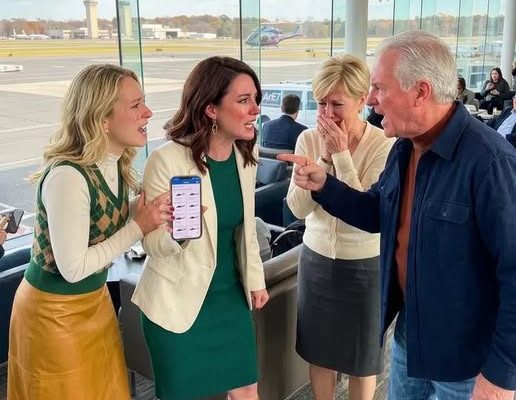
My family mocked my public transit pass while praising my sister’s 3 cars, setting off a reveal that ruined their holiday.

At Thanksgiving, Mom mocked me for still using public transportation while my sister owned three cars. Dad called me “pathetic,” and everyone waited for me to react.

I didn’t.

I simply checked my watch.

Then the airport called with a message nobody at the table expected:

“Ma’am, your helicopter fleet is approaching…”

Suddenly, no one was laughing.

“Still taking public transport?” Mom asked from across the Thanksgiving table, her smile sharp. “Your sister has three cars.”

My younger sister, Vanessa, raised her wineglass and gave a satisfied little laugh.

Dad sliced another piece of turkey and smirked.

“Pathetic.”

I stayed quiet.

That bothered them more than any argument could have.

For the past eight years, my family had treated my silence as proof that I had failed.

I was thirty-four, unmarried, and living in a modest apartment in Seattle. Whenever I flew home to Connecticut, I usually took the train from the airport instead of renting a car.

To my family, those few facts apparently told them everything they needed to know about me.

Vanessa, thirty-one, had a Mercedes, a Range Rover, and a Porsche her husband had given her for their anniversary. She frequently reminded everyone that the monthly payments were “basically nothing.”

Mom turned back toward me.

“Rachel, when are you finally going to start living like an adult?”

I glanced at my watch.

5:42 p.m.

“Soon,” I said.

Dad laughed.

“You’ve been saying that since graduate school.”

My phone vibrated against the table.

Bradley International Airport Operations.

I stood up.

Vanessa rolled her eyes.

“Let me guess. Your Uber is lost?”

I answered the call.

“Rachel Bennett.”

A calm male voice came through the phone.

“Ms. Bennett, this is Daniel Ortiz with Bradley operations. Your helicopter fleet is approaching the airport. First aircraft is seven minutes out, the remaining two are following behind. Your ground crew requested confirmation that Hangar Four is cleared.”

The dining room went completely silent.

I looked through the glass doors at the Connecticut sky growing darker outside.

“Hangar Four is confirmed,” I said. “Have Captain Mercer call me after landing.”

“Yes, ma’am.”

I ended the call.

Mom had gone pale.

Dad slowly lowered the carving knife.

Vanessa stared at me.

“Your what?”

“My helicopters.”

Dad frowned.

“What kind of joke is this?”

“It isn’t.”

A faint mechanical thumping sounded somewhere beyond the neighborhood.

The helicopters were not coming to my parents’ house. Their property was nowhere near suitable for a landing.

But a few moments later, navigation lights appeared far off in the evening sky as the aircraft headed toward Bradley.

Mom left her chair and walked toward the window.

Vanessa pushed hers back.

“You own helicopters?”

“Six,” I said. “Three are arriving tonight.”

Dad’s expression shifted immediately.

The amusement disappeared.

Now he was calculating.

“Six?”

I picked up my coat.

My company handled executive transportation, emergency logistics, and aircraft leasing across twelve states. During the previous quarter, we had signed a federal subcontract worth more than my parents’ house, Vanessa’s three vehicles, and every investment Dad had ever bragged about combined.

My family knew none of that.

Not because I had hidden it.

Because they had never bothered asking what I actually did.

Mom looked at me.

“Rachel… why are helicopters coming here?”

I checked my watch once more.

“Because tomorrow morning, I’m buying the airport company Dad has spent twenty years trying to impress.”

For the first time that Thanksgiving, nobody laughed.

Dad followed me into the foyer.

“Buying what company?”

I slipped into my coat.

“Northeast Aero Services.”

His face tightened.

That name meant something to him.

For twenty-one years, Dad had owned Bennett Precision Components, a small manufacturer that produced specialized brackets and housings for aviation maintenance firms.

Northeast Aero Services was one of the biggest potential customers in the region.

Dad had spent years attending charity dinners, golf tournaments, and aviation conferences trying to land a significant contract with them.

He never had.

Vanessa entered the hallway behind him.

“You can’t just buy a company like that.”

“No,” I said. “It took eighteen months.”

Mom joined us.

“Rachel, why didn’t you tell us?”

I looked at her.

“Tell you when?”

Nobody replied.

The truth was, I had tried.

When I was twenty-six, I called Dad after landing my first commercial aviation contract.

Thirty seconds into the conversation, he interrupted me because Vanessa had just leased her first BMW.

At twenty-nine, I told Mom that my logistics business had expanded into Oregon and Nevada.

She immediately asked whether I had considered dating Vanessa’s husband’s accountant.

At thirty-two, I mentioned that I had bought my first helicopter.

Dad assumed I meant a model aircraft and laughed before I could explain.

After a while, I simply stopped trying.

My phone rang again.

Captain Elena Mercer.

“Fleet is down safely,” she said. “Maintenance team is checking Aircraft Two. Your 7:30 meeting tomorrow remains confirmed.”

“Good. I’ll be there at seven.”

I ended the call.

Dad spoke more quietly now.

“How much is Northeast worth?”

“Enough.”

“That isn’t an answer.”

“It’s the only answer you need tonight.”

His jaw tightened.

Then Vanessa laughed.

This time, she wasn’t amused.

She was nervous.

“You expect us to believe you secretly became some billionaire?”

“I’m not a billionaire.”

She blinked.

“And nothing was secret,” I continued. “Bennett Air Mobility is registered publicly. Our contracts are public. We employ over four hundred people. You simply never bothered looking.”

Mom lowered herself onto the staircase.

“Bennett Air Mobility?”

Dad pulled out his phone.

I watched him search.

Within seconds, his expression changed.

Company profiles.

Aircraft registrations.

Trade publications.

State contracts.

Photos from industry conferences.

One photograph showed me beside Governor Mark Ellison at the opening of a medical transport base in Spokane.

Dad stared at his screen.

“That’s you.”

“Yes.”

He kept scrolling.

Vanessa hurried back to the dining room for her phone and began searching too.

Within minutes, the entire atmosphere of the house had shifted.

The daughter they had treated like an embarrassment had not taken the train because she couldn’t afford a car.

I simply didn’t enjoy driving in unfamiliar cities.

The woman they thought was unsuccessful had spent the last decade turning a two-person dispatch operation into a regional aviation network.

Dad glanced toward the garage.

“So the train…”

“Was convenient.”

“And your apartment?”

“I like it.”

Vanessa stared at me.

“You could afford a mansion.”

“Probably.”

“Then why don’t you have one?”

“Because I don’t want one.”

She looked as if the concept made no sense to her.

Dad folded his arms.

“Tomorrow’s acquisition. Is it finalized?”

“Almost.”

“And what happens to suppliers?”

There it was.

Not congratulations.

Not curiosity about my life.

Business.

More specifically, his business.

I opened the front door, and cold November air swept into the hallway.

“That depends on performance.”

Dad stepped closer.

“Rachel, Bennett Precision could supply Northeast. You know our capabilities.”

“I do.”

His voice softened immediately.

“We should talk.”

I glanced back at the Thanksgiving table.

My untouched plate remained beside Vanessa’s expensive handbag.

“We had eight years to talk.”

Then I walked outside.

At 6:52 the following morning, I entered Hangar Four at Bradley International Airport.

The Connecticut dawn was gray and bitterly cold.

Bright hangar lights reflected off the polished floor and illuminated three dark-blue helicopters marked with the silver Bennett Air Mobility logo.

Captain Elena Mercer stood beside the nearest aircraft with a tablet in her hand.

“Morning, boss.”

“Morning.”

“Aircraft Two had a minor sensor fault. Maintenance cleared it at 2:10 a.m.”

“Documentation?”

“In your inbox.”

That was why Elena had worked with me for five years.

No unnecessary drama.

No excuses.

Just facts.

Daniel Ortiz from airport operations approached and shook my hand.

“Ms. Bennett. Northeast representatives arrived twenty minutes ago.”

“Perfect.”

Elena glanced toward the hangar entrance as we started walking.

“You have visitors.”

I turned.

Dad stood behind the security barrier.

Vanessa was beside him.

I stopped.

Elena lifted an eyebrow.

“Expected?”

“No.”

Dad raised one hand.

For a moment, I considered continuing toward the meeting.

Instead, I walked over.

“How did you get in?”

“I didn’t,” he said. “Security wouldn’t let us through.”

“Good.”

Vanessa hugged her coat around herself against the cold.

The designer Thanksgiving outfit was gone. She wore jeans, boots, and a wool coat.

Dad looked exhausted.

“I need five minutes.”

“I have a meeting.”

“Rachel.”

His voice sounded different.

Not commanding.

Almost pleading.

I checked my watch.

“Three.”

He nodded.

Vanessa looked at the helicopters.

For once, her expression held genuine admiration instead of competition.

“These really belong to you?”

“To the company.”

“But you own the company.”

“Seventy-eight percent.”

She stared at the aircraft again.

Dad cleared his throat.

“I looked into Bennett Air Mobility last night.”

“I assumed you would.”

“I read everything I could find.”

“That must have taken longer than asking me.”

He accepted the remark without arguing.

“You built something extraordinary.”

Hearing those words felt strange.

For years, I had imagined Dad saying them.

I thought I would feel vindicated.

Instead, I felt almost nothing.

Recognition that arrived only after financial proof wasn’t the same thing as respect.

Dad continued.

“I handled yesterday badly.”

“Yesterday?”

He looked down.

“And maybe the years before that.”

Vanessa shifted beside him.

“I did too.”

I looked at her.

She swallowed.

“I thought you were jealous of me.”

“Why?”

“Because Mom and Dad were always talking about my house, my cars, David’s income.”

“I wasn’t jealous.”

“I know that now.”

“No,” I said. “You know I have money now. That’s different.”

She started to answer, then stopped.

Dad looked uncomfortable.

“Rachel, can we discuss Northeast?”

Several yards behind me, Elena suddenly became very interested in her tablet.

I almost smiled.

“You have one minute left.”

Dad stepped nearer to the barrier.

“Bennett Precision has been trying to get Northeast’s component contract for years.”

“I know.”

“Our quality ratings are excellent.”

“Your delivery reliability isn’t.”

His face changed.

“You know our numbers?”

“I reviewed every major supplier during due diligence.”

“Our late deliveries were caused by equipment upgrades.”

“Some were. Others were caused by your refusal to modernize inventory management.”

Dad stared at me.

“You’re running a thirty-million-dollar manufacturer using processes designed for a company one-third that size. Your defect rate is competitive. Your engineering team is strong. But your scheduling system is outdated, your procurement chain is concentrated among too few vendors, and your operations director has warned you about it repeatedly.”

He looked genuinely stunned.

“You talked to Peter?”

“My acquisition team interviewed senior suppliers and regional manufacturers.”

Vanessa glanced between us.

“This is weird.”

Dad ignored her.

“So you’re rejecting us.”

“I didn’t say that.”

Hope appeared on his face instantly.

I hated how quickly it happened.

“Then Bennett Precision has a chance?”

“Every qualified supplier has a chance.”

“I’m your father.”

“And?”

His expression hardened slightly.

For a moment, I saw the same man who had called me pathetic the previous evening.

“You could help your family.”

“I can.”

“Then why make us compete?”

“Because four hundred employees depend on me making decisions based on performance instead of Thanksgiving seating arrangements.”

Dad looked away.

The answer hurt him.

But professionally, at least, I could tell he understood it.

Elena stepped closer.

“Rachel, Northeast board is ready.”

I nodded.

Dad quickly asked, “What would we need to do?”

I stopped.

Finally.

That was the right question.

“Upgrade inventory control. Diversify two critical suppliers. Replace your manual production scheduling. Improve on-time delivery above ninety-seven percent for two consecutive quarters.”

Dad listened without interrupting.

“And then?”

“Then submit a bid.”

“No guarantee?”

“No.”

He took a slow breath.

“All right.”

I expected resistance.

There was none.

Instead, he extended his hand through the barrier.

Not as my father.

As the owner of a manufacturing company.

I shook it.

“I’ll earn it,” he said.

“I hope you do.”

The meeting started at 7:31.

Northeast Aero Services had a conference suite overlooking the runway.

Most of the acquisition had already received board approval, but the final signatures still depended on regulatory disclosures, debt restructuring, and two last-minute employment guarantees.

For the next four hours, lawyers exchanged revisions.

At 11:46, the transaction was signed.

Bennett Air Mobility acquired seventy-two percent of Northeast Aero Services.

The remaining shares stayed with three senior executives under a five-year retention arrangement.

After the final signature, Northeast chairman Martin Hale leaned back in his chair.

“Congratulations, Rachel.”

“Thank you.”

“You realize your father has been trying to sell us components since before you graduated college?”

“I’m aware.”

Martin laughed.

“He cornered me at a golf tournament in 2019.”

“That sounds like him.”

“He’s persistent.”

“That also sounds like him.”

Martin studied me for a moment.

“Any pressure to put Bennett Precision on the preferred vendor list?”

“No.”

“Good.”

He closed the acquisition folder.

“Then I think we’ll work well together.”

That afternoon, I flew back toward Seattle.

There was no need for a dramatic exit.

I simply had meetings on Monday morning.

Thanksgiving had never been important enough to rearrange the company calendar.

Three months passed.

My parents started calling more often.

At first, those conversations were awkward.

Mom asked questions that showed just how little she understood about my life.

“How many helicopters do you personally fly?”

“None.”

“Do you have pilots available all day?”

“We operate schedules, Mom. They aren’t chauffeurs.”

“Do famous people use your company?”

“Sometimes.”

Eventually, though, she stopped asking about money.

She started asking about me.

What I ate while traveling.

Whether I liked Seattle winters.

Which projects I enjoyed most.

Those conversations mattered far more.

Vanessa took longer to change.

For years, she had built her identity around visible signs of success.

Cars.

Vacations.

Designer clothes.

Photos from expensive restaurants.

Once she discovered that my income was several times higher than David’s, she became unusually quiet.

Then one evening she called.

“I sold the Porsche.”

I laughed.

“Why?”

“I barely drove it.”

“Okay.”

“And the Range Rover.”

That surprised me.

“Everything all right?”

“Yeah.”

She hesitated.

“I realized I was spending almost four thousand dollars a month maintaining an image for people I don’t even like.”

“That sounds expensive.”

She laughed.

For the first time in years, our conversation felt like two sisters talking instead of two competitors.

Dad took longer.

But he kept his word.

Bennett Precision installed a modern production-planning system.

He replaced two unreliable suppliers.

He promoted Peter Wallace—the operations director whose warnings he had ignored for years—to chief operating officer.

Six months after Thanksgiving, Bennett Precision’s on-time delivery rate reached 97.8 percent.

Three months later, it climbed to 98.4.

Then Dad formally submitted a bid to Northeast.

I removed myself from the vendor committee.

He won the contract anyway.

Not because he was my father.

Because his company had finally earned it.

He called after receiving the decision.

“We got it.”

“I heard.”

A brief silence followed.

Then he said, “Thank you.”

“I didn’t choose you.”

“I know.”

“Then why thank me?”

“Because you told me what was wrong.”

That meant more to me than an apology.

A year after that Thanksgiving dinner, I returned to Connecticut.

Once again, I took the train.

Dad met me at the station in his twelve-year-old pickup truck.

When I climbed inside, he glanced at my suitcase.

“No helicopter?”

“Not for a twenty-minute train ride.”

He nodded seriously.

“Efficient.”

I stared at him.

Then we both started laughing.

When we reached the house, Vanessa was already there.

Only one car was parked behind Dad’s truck.

Mom opened the front door.

“There she is.”

No comments about public transportation.

No comparisons.

No jokes.

The Thanksgiving table looked nearly identical to the year before.

Same dining room.

Same family photos.

Same ridiculous ceramic turkey Mom had owned since 1998.

But the conversation was completely different.

Dad asked about a medical transport expansion we were planning in Arizona.

Vanessa told us she was opening a small interior-design studio after leaving the real estate office she had hated.

Mom said she had begun volunteering twice a week with a local literacy program.

Nobody mentioned net worth.

Nobody talked about cars.

Nobody questioned why I still rented my apartment.

During dinner, Dad raised his glass.

“I want to make a toast.”

Vanessa groaned.

“Please don’t make it embarrassing.”

“I’m your father. That’s contractually required.”

Mom laughed.

Dad looked at me.

“A year ago, I thought success was something you could see parked in a driveway.”

I raised an eyebrow.

Vanessa muttered, “Here we go.”

Dad continued.

“I was wrong.”

There was no dramatic speech.

No long confession about regret.

That wouldn’t have been Dad.

Instead, he said something simple.

“I’m proud of both my daughters.”

Vanessa looked at me.

I looked back at her.

Neither of us joked.

After dinner, Dad and I stepped onto the back porch.

The November air was cold enough that our breath appeared white.

He leaned against the railing.

“Do you remember what I called you last year?”

“Yes.”

He winced.

“I wish you didn’t.”

“I have a good memory.”

“I noticed.”

We stood quietly for a few seconds.

Then he asked, “Were you planning that helicopter call?”

I turned toward him.

“What?”

“At dinner. The timing. Three aircraft arriving right after we insulted you. It was almost theatrical.”

I laughed.

“No. They were repositioning for the Northeast acquisition.”

“So pure coincidence?”

“Completely.”

He shook his head.

“Terrible luck for me.”

“Excellent timing for me.”

He laughed.

Mom called from inside that dessert was ready.

Dad opened the door, then paused.

“Rachel?”

“Yeah?”

“You know, if you ever want Bennett Precision to manufacture anything for your western operations—”

I stared at him.

He grinned.

“Formal bid. Competitive process. I know.”

“Good.”

We went back inside.

My phone buzzed on the kitchen counter.

Vanessa glanced at it.

“Airport?”

“No.”

“Federal contract?”

“No.”

“Governor?”

I checked the screen.

“It’s my landlord. The washing machine downstairs is broken again.”

Everyone stared at me for two seconds.

Then Vanessa burst out laughing.

“You own six helicopters and your building has a broken washing machine?”

“Seven helicopters now.”

Dad nearly dropped his pie.

“Seven?”

I picked up my phone and started typing a reply.

Mom shook her head.

“Rachel Bennett, you are the strangest successful person I have ever met.”

I smiled.

“That’s because you finally learned enough about me to notice.”

And that was the real difference.

Not the helicopters.

Not the acquisition.

Not the contracts.

Not the money.

For the first time, my family finally knew the person who had been sitting at their Thanksgiving table all along.


My family mocked my public transit pass while praising my sister’s 3 cars, setting off a reveal that ruined their holiday. Read More

My brother collapsed my son and shrugged it off, setting off a paramedic’s reveal that ruined my family’s decades of lies.

Part 1: The Night Everything Changed

The last echoes of my company’s year-end party were still in my head when I pulled into my driveway that night. My company badge still hung around my neck, my lipstick had faded, and everything outside looked painfully ordinary, from the buzzing porch light to the little American flag Eli had tucked into the planter beside the steps.

The moment I entered the house, however, I knew something was wrong. The silence wasn’t peaceful or familiar, and before I could call Eli’s name, my heel touched something soft near the entrance.

I looked down and found my nine-year-old son collapsed on the tile. His cheek rested against the floor, one hand curled near his throat, his breathing was shallow, and a dark bruise marked his jaw where there had been nothing when I’d kissed him goodbye that morning.

“Eli.”

I dropped beside him and touched his shoulder. He was warm, but frighteningly limp, and when I begged him to open his eyes, his lashes barely fluttered.

“Baby, open your eyes. Eli, look at me.”

Then I realized we weren’t alone. My brother Ryan stood against the hallway wall watching us with the same detached expression he’d worn whenever someone else’s suffering became inconvenient, while my parents emerged from the living room looking disturbingly composed.

“About time.”

I stared at Ryan.

“What did you do?”

He gave a casual shrug.

“Just disciplined him.”

My mother answered from behind him without the slightest hesitation.

“He deserved it.”

Something inside me became terrifyingly clear. I’d spent my childhood being taught that Ryan’s cruelty was strength and that questioning him made me difficult, but motherhood erased those old rules the moment I saw my son lying helpless on the floor.

I pulled out my phone and dialed 911.

“Who are you calling?”

“Help.”

Ryan pushed away from the wall and immediately tried to minimize what had happened.

“Don’t be ridiculous. He’s fine.”

“No, he’s not.”

I gave the dispatcher my address and clearly explained that my child was unconscious, bruised, and struggling to breathe. Ryan tried using the same language he’d always used to justify himself, but this time I refused to let him rewrite what was happening in front of me.

“Hannah, you’re overreacting. You don’t know how to raise a boy. Somebody has to be firm.”

For one moment, I wanted to turn around and unleash every ounce of anger I felt on him. Then Eli’s breathing hitched beneath my hand, reminding me that my son needed me more than Ryan needed my rage.

Paramedics arrived with a police officer minutes later and immediately began examining Eli. While one paramedic fitted oxygen over his face, the other checked his pulse, eyes, and ribs until Eli made a weak sound that nearly broke me.

Then something strange happened.

The male paramedic looked up and saw Ryan.

His entire expression changed.

For less than a second, he simply stared at my brother, but there was no confusion in his eyes. It was unmistakable recognition, sharp enough that Ryan went still and even my parents suddenly seemed uneasy.

The paramedic leaned closer to me.

“Ma’am, is that really your brother?”

“Yes.”

He swallowed and looked at Ryan again.

“Because actually…”

He stopped himself.

“No. Never mind. We need to move your son now.”

At the hospital, doctors confirmed that Eli had suffered a concussion, significant bruising, and fractured rib cartilage. A nurse carefully used the phrase “non-accidental trauma,” while police and a social worker began taking statements from me about Ryan and my parents.

Around three that morning, I suddenly remembered the security cameras I’d installed months earlier after noticing that Eli sometimes became frightened whenever Ryan visited. I opened my laptop beside my son’s hospital bed and loaded the hallway footage.

The recording showed Ryan entering my home with the spare key my mother had insisted family should possess. Moments later, Eli appeared in the hallway, and what happened next destroyed every excuse my family had ever made for my brother.

Ryan struck him.

Then he did it again before shoving him and dragging him toward the door. What disturbed me most wasn’t uncontrolled rage but how calmly he did everything, while Eli folded inward as though this wasn’t the first time he’d learned how to survive his uncle.

When Eli finally woke the next morning, he didn’t look at me first. His frightened eyes immediately moved toward the hospital-room door.

“Mom…”

“I’m here.”

“Is Uncle Ryan coming?”

“No.”

The relief on his face made my stomach twist.

I carefully took his hand.

“Has he hurt you before?”

Eli began crying.

“Sometimes.”

“When?”

His next words changed everything I thought I knew about my family.

“When you were at work. Grandma said it was for my own good. He said if I told you, you’d get mad at me. Like she does.”

That was when I understood this hadn’t begun the night of my company party. It was simply the first night I’d arrived home early enough to discover it.

I handed the security footage to police and repeated everything Ryan and my mother had said. But while investigators began building the case, I couldn’t stop thinking about the paramedic’s reaction when he’d first seen my brother.

He hadn’t looked at Ryan like a stranger who seemed vaguely familiar.

He had looked at him like someone he’d seen before.

Later that afternoon, the paramedic returned to the hospital and introduced himself as Mark. He asked to speak with me privately because there was something he could no longer keep to himself.

“I need to tell you why I reacted the way I did.”

Years earlier, Mark had worked as an EMT in a neighboring county where one case had haunted emergency workers for decades. A newborn boy had disappeared from a hospital during the night, and although investigators had pursued several leads, the baby had never been found.

“When I saw your brother, I thought I was looking at one of those images grown up.”

My mouth went dry.

“Do you remember the baby’s name?”

Mark nodded.

“Noah Turner.”

Suddenly, Ryan hurting my son was no longer the only secret threatening to tear my family apart.

Because the paramedic wasn’t suggesting that he’d merely recognized my brother.

He was suggesting that Ryan might never have been my brother at all.

Part 2: The Secret Behind Ryan’s Identity

Mark’s words followed me long after he left the hospital. That night, while Eli slept beside me, I searched through old news archives and found the case he had described: Noah Turner, a newborn who disappeared from a hospital less than twenty miles from where my parents had been living at the time.

The dates made the coincidence even harder to ignore. Noah disappeared in March, while Ryan’s birth certificate claimed he had been born in May, leaving only two months between the disappearance of one baby and the supposed arrival of another.

I started remembering details from childhood that had never made sense. There was a missing period in our family photographs, my parents always avoided telling stories about Ryan’s birth, and whenever anyone commented that he looked nothing like us, my mother responded with the same rehearsed phrases instead of actual memories.

“He was perfect from the beginning.”

“He was meant for us.”

“God gave him to us when we needed him.”

Desperate for answers, I called my Aunt Celia and told her what Ryan had done to Eli. She became frighteningly quiet before saying something that made my fingers tighten around the phone.

“Oh God. So it finally reached a child.”

“What do you mean finally?”

Celia hesitated before explaining that my mother had supposedly lost a baby before Ryan arrived, but nobody in the family had ever understood the timeline. My mother disappeared for months, my father aggressively discouraged questions, and then suddenly they had a baby everyone was expected to accept without explanation.

“Are you saying Ryan might not be…”

“I’m saying your parents built their lives around secrets. And secrets don’t stay buried. They just wait for a child to get hurt.”

The following morning, I took everything to Detective Alvarez: the security footage showing Ryan hurting Eli, Mark’s statement, Aunt Celia’s account, the old article about Noah Turner, and the suspicious timeline surrounding Ryan’s supposed birth. The detective listened carefully, and instead of dismissing the theory as impossible, his expression became more serious with every detail.

“We can pursue the assault immediately. And we will start digging into the identity question.”

“Do it.”

That evening, my mother arrived at my house while my father waited in the car. She stood beneath the porch light expecting me to open the door simply because she’d always believed being my mother gave her unlimited access to my life.

“Hannah, we need to talk.”

I kept the door locked.

“No. You need to leave.”

Her expression hardened immediately.

“Ryan was correcting him. Boys need discipline.”

“He fractured my son’s ribs.”

My father climbed out of the car and approached the porch with the same authority he’d used to intimidate me since childhood.

“You’re making a spectacle. Dragging police into family matters.”

For the first time, his disapproval meant nothing to me.

“You made it a police matter when you let a grown man beat a child in my house.”

My mother lowered her voice.

“You can’t keep Eli from us.”

“Watch me.”

Then I finally said what I’d spent years being too frightened to admit.

“You don’t know what love is. You know possession.”

My father’s expression changed, and the carefully controlled mask I’d known all my life briefly disappeared.

“If you continue with this, you’ll regret it.”

Normally, that threat would have been enough to make me question myself. This time, I simply raised my phone and reminded him that I had security footage, hospital records, police documentation, copies of everything, and a protective order already being pursued.

Ryan was arrested the following Tuesday. Detective Alvarez called to tell me officers were at my parents’ home with a warrant connected to Eli’s assault and potentially falsified records, and I drove there because I needed to see for myself that my family could no longer protect him from consequences.

Ryan initially appeared almost amused when officers brought him outside. He looked at me and silently mouthed a single word.

“Traitor.”

Then he noticed Mark standing beside one of the patrol vehicles giving a formal statement. For the first time in my life, genuine fear appeared in Ryan’s eyes.

My mother rushed forward.

“He’s our son!”

Detective Alvarez answered without raising his voice.

“That remains to be seen.”

Even my father froze.

Over the following days, investigators began pulling apart a family history my parents had spent decades keeping sealed. Old hospital logs were requested, neighbors were interviewed, records were reopened, and investigators eventually discovered the name of a retired nurse connected to the original disappearance.

Then Detective Alvarez located Lydia Turner.

Noah’s mother was still alive.

She had spent decades wondering what had happened to the newborn taken from her, and before agreeing to DNA testing, she asked to meet me. We chose a quiet coffee shop halfway between our towns, where two women who had never met sat across from each other because of a secret neither of us had created.

“You’re telling me the man who hurt your son may be the baby they stole from me.”

“Yes.”

Lydia closed her eyes briefly. When she opened them again, tears filled them, but her voice remained steady.

“Then your boy saved the truth by surviving it.”

I told her everything: what Ryan had done to Eli, how my parents had always defended him, how they called cruelty discipline, and how Ryan had grown up believing consequences were something other people faced.

After listening quietly, Lydia asked me something I hadn’t expected.

“Was he ever kind?”

The question forced me back into childhood. I remembered Ryan carrying me on his back, telling me family was the safest place in the world, and moments when I’d genuinely believed he loved me.

“Sometimes. But I don’t know anymore whether it was kindness or practice.”

Three days later, DNA samples were collected. While we waited for the results, Eli finally came home from the hospital and began therapy, slowly trying to understand why people he’d been taught to trust had hurt him and then blamed him for it.

One night, he looked at me carefully.

“Are Grandma and Grandpa mad?”

“Yes. But that’s not your problem anymore.”

He remained quiet for several seconds.

“You picked me.”

Those three words nearly broke me.

“Always.”

Three weeks later, Detective Alvarez arrived at my house carrying a folder. The expression on his face told me the waiting was over, and when he placed the file on my kitchen table, I saw a name printed across the first page.

It wasn’t Ryan. It was Noah Turner.

The detective looked directly at me before explaining what the DNA results had confirmed.

The man I’d called my brother my entire life was the missing child Lydia Turner had spent decades searching for.

And now investigators had to determine exactly how Noah Turner had become Ryan.

Part 3: The Truth, the Consequences, and Healing

The DNA results confirmed what had once sounded impossible. Ryan was biologically Lydia Turner’s missing son, Noah, the newborn taken from a hospital decades earlier, which meant the man I’d grown up calling my brother had entered our family through a secret my parents had protected for most of my life.

Knowing his real identity didn’t excuse what Ryan had done to Eli, and it didn’t magically transform him into a different person. The assault case continued first, while the investigation into Noah’s disappearance moved more slowly because detectives had to reconstruct events buried beneath decades of missing records, silence, and fear.

Investigators questioned my parents and reopened old files connected to the hospital. The retired nurse who had surfaced earlier became increasingly difficult for them to explain away, and every recovered document seemed to pull another thread from the story my parents had spent years carefully maintaining.

Lydia received the truth she’d waited decades to hear, but there was nothing simple or joyful about it. She had finally found her missing child, yet Noah was now an adult named Ryan, shaped by another family and facing consequences for hurting my son.

The truth didn’t return the baby Lydia had lost, nor did it erase the person Ryan had become. My parents didn’t suddenly acknowledge the damage they’d caused simply because DNA had exposed what they had hidden, and I eventually understood that discovering the truth wasn’t the same thing as repairing everything.

My responsibility was no longer to repair them anyway.

It was Eli.

After leaving the hospital, he began therapy and stayed close to me while ordinary things slowly became safe again. For a while, he slept in my bed, startled easily, and watched doors more carefully than any nine-year-old should have needed to.

One evening, he returned to the question that mattered most to him.

“Are Grandma and Grandpa mad?”

“Yes. But that’s not your problem anymore.”

He studied my face for a moment.

“You picked me.”

“Always.”

That conversation changed something between us. For most of my life, my parents had taught me that protecting family meant tolerating whatever family did, but Eli showed me the opposite: sometimes protecting your family means refusing to give dangerous people another opportunity to hurt them.

Recovery didn’t happen dramatically. There was no morning when Eli woke up completely fearless or when everything that happened suddenly stopped mattering; instead, progress arrived through tiny decisions that probably looked meaningless to everyone except me.

At first, Eli couldn’t sleep unless my bedroom door remained open. Eventually, he returned to his own room and slept with his door open, and then, months later, he quietly closed it himself.

That was when I knew something inside him was beginning to heal.

A closed door had once meant danger because adults could hide terrible things behind family authority. Now my son could close one because it simply meant privacy, and that small act mattered more to me than any public confrontation or courtroom victory ever could.

The little American flag Eli had brought home from school remained in the planter beside our porch long after its paper edges began fading. He had put it there because, in his words, every house should have something outside reminding people that whoever lived inside was supposed to be safe.

For months, looking at that flag brought me back to the night I’d returned from the company party and found Eli collapsed near the door. I remembered Ryan watching from the hallway, my mother saying Eli deserved what happened, and my father behaving as though protecting the family reputation mattered more than protecting his grandson.

But eventually the flag began meaning something different.

It reminded me that the cycle had stopped at my front door.

Ryan might spend the rest of his life trying to understand how Noah Turner became the man he was. Lydia might spend hers grieving the childhood with her son that someone stole from her, while my parents would have to face whatever consequences came from the secret they’d spent decades protecting.

None of that belonged to Eli.

His future didn’t have to be built around their choices.

One evening, I stood on the porch watching him through the window as he worked on his homework. He looked ordinary again, which after everything we’d survived felt extraordinary.

I thought about something I’d understood the night I found him on the floor: a family can teach someone to apologize even while they’re the one being hurt. Mine had spent years teaching me exactly that.

Motherhood untaught me in a single night.

And whenever I remembered Eli looking at me with that careful expression and whispering those three words, I knew exactly what the rest of my life needed to prove.

“You picked me.”

Yes.

I had.

And I always would.

My brother collapsed my son and shrugged it off, setting off a paramedic’s reveal that ruined my family’s decades of lies. Read More

My 10-year-old daughter called me crying before going silent, setting off a police check that ruined my husband’s secret.

Part 1: The Call at 3:17

The call came at exactly 3:17 on a weekday afternoon while I was sitting in the middle of a budget meeting, staring at numbers projected across a conference-room screen. My coffee had already gone cold when my phone vibrated against the table, and I almost silenced it until I saw my ten-year-old daughter Chloe’s smartwatch calling me.

Chloe knew she wasn’t supposed to call during work unless something was genuinely wrong. Normally, she sent me little messages or ridiculous voice notes from the school bus, but this time all I heard when I answered was rapid, trembling breathing.

“Mom, please help. Come home right now.”

I was out of my chair before I’d even processed the words.

“Chloe? What happened?”

There was a slow scraping noise somewhere behind her. When Chloe finally answered, her voice sounded weaker than I’d ever heard it.

“Dad fell down. And I feel weird.”

Daniel worked from home several days a week, and Chloe normally arrived from school shortly after three. For eight years, my husband had been the calm, cautious person in our family, the man who checked smoke detectors, labeled the breaker box, and taught Chloe what to do during emergencies.

I rushed from the office and drove home while repeatedly trying to call Chloe and Daniel. Neither answered, and by the time I reached our neighborhood, the ordinary sight of school buses, trash cans, and familiar houses somehow made my fear worse.

The front door was unlocked when I arrived. The moment I stepped inside, I noticed a strange sweet chemical odor hidden beneath the smell of cinnamon, and the air inside the house felt unusually heavy.

“Chloe!”

Nobody answered.

I ran into the kitchen and nearly slipped on pieces of a shattered coffee mug. Daniel was lying unconscious beside the island with one arm underneath him, while Chloe was collapsed several feet away near the den, still wearing her school jacket with her pink backpack hanging from one shoulder.

“Baby, stay with me.”

Chloe was breathing, although her breaths were shallow and uneven. Daniel also had a weak pulse, so I called 911 and told the dispatcher that my husband and daughter were both unconscious and that there was an unexplained chemical smell inside the house.

Within minutes, police officers and paramedics filled our kitchen. Chloe and Daniel were placed on stretchers while officers began examining everything around them, including the broken mug, the cinnamon plug-in near the hallway, the unlocked front door, and Daniel’s laptop still open on the kitchen island.

One officer asked whether anyone else had access to our house. I explained that my mother had a key but was out of state, while the garage camera had been offline for two weeks because Daniel had said our router needed replacing.

“No obvious forced entry.”

Those words immediately made my stomach tighten. If nobody had broken into the house, then whoever had caused this might have entered without needing to.

Then an officer searching near the laundry room suddenly stopped. His flashlight moved toward the interior garage door before another officer returned holding a small evidence bag containing something I immediately recognized.

Daniel’s spare car fob.

We kept it hidden beneath the felt lining of the brass key dish for emergencies. Only three people knew where it was: Daniel, Chloe, and me.

The officers exchanged looks before one of them leaned closer.

“Ma’am, you may not believe the reason…”

Before he could finish, the mechanical hum behind the garage door suddenly changed. An officer cautiously lifted the door several inches and shined his flashlight through the opening.

Inside, his beam caught Daniel’s car, several storage boxes, and a folded sheet of paper taped to the garage door where nobody inside the kitchen could have noticed it. He pulled on gloves before carefully removing the page.

Then a dark SUV stopped behind the police cruiser outside.

The driver’s door opened, and my stomach dropped when I recognized the woman climbing out.

It was Lauren.

My younger sister.

Lauren had been staying at our house several nights a week for the previous two months after claiming she was struggling financially and having problems with her apartment. Daniel had welcomed her into our home, while Chloe adored the aunt who painted her nails and brought her strawberry gum.

Lauren knew our routines.

She knew when Chloe’s school bus arrived.

And she knew exactly where Daniel kept that spare car fob.

“I can explain.”

An officer ordered Lauren to remain near her SUV, but she immediately began crying. Then she looked through the open doorway at Daniel and Chloe being treated by paramedics and said something that made everyone around her go silent.

“I didn’t know Chloe would come in.”

I stared at my sister.

“What did you do?”

Lauren looked toward Daniel before lowering her eyes.

“I only meant for him to sleep.”

The officer holding the paper from the garage unfolded it and began reading. His expression hardened almost immediately.

Whatever had happened inside my house hadn’t been an accident.

And my sister already knew why.

Part 2: Three Minutes Changed Everything

Police moved Lauren away from the house while paramedics prepared Daniel and Chloe for transport. I wanted to follow my daughter immediately, but officers needed to determine whether the strange air inside the house was still dangerous and understand what Lauren had just admitted.

“I didn’t know Chloe would come in.”

Those words kept repeating in my head. Lauren hadn’t said she didn’t know what happened; she’d said she hadn’t expected my daughter to be there.

“What did you do?”

Lauren looked through the doorway at Daniel, who was receiving oxygen, and then at Chloe lying motionless on the stretcher. Her composure finally collapsed.

“I only meant for him to sleep.”

An officer unfolded the paper recovered from inside the garage while another began questioning Lauren separately. Piece by piece, the explanation emerged, and every detail made the betrayal harder to comprehend.

Lauren owed money and had become involved with a man who convinced her Daniel could solve her problems. When Daniel refused to give her money two days earlier, the man suggested another way: get inside our house, incapacitate Daniel, and access his work laptop.

Daniel had never told me Lauren had asked him for money. According to her, he’d refused because helping her would require lying to me and potentially using financial accounts connected to my name.

“He told me he loved me but would not lie to you or open accounts in your name.”

I stared toward my unconscious husband. Daniel had tried to protect me from a problem I didn’t even know existed, but by keeping it secret, neither of us had realized how desperate Lauren had become.

The plan was disturbingly simple. Lauren used the hidden spare fob to access the garage and left Daniel’s car running long enough for fumes to accumulate before allowing some of them to enter the house, claiming she only wanted to make him dizzy enough to get to his laptop.

The cinnamon plug-in had been used to disguise the unusual smell. The paper taped inside the garage wasn’t a confession either; it contained instructions from the man Lauren had been seeing.

Use the fob. Keep the door closed. Get the laptop. Leave before the bus.

That final instruction shattered whatever composure Lauren still had.

“Leave before the bus.”

Chloe’s school bus had arrived three minutes early that afternoon. Instead of entering an empty house after Lauren was gone, my ten-year-old daughter walked directly into the situation she’d never been meant to witness.

Three minutes had changed everything.

Lauren folded forward and began sobbing, but I couldn’t comfort her. Whatever she had intended, my daughter and husband were now being rushed to a hospital because someone we’d trusted with our home had decided desperation justified betrayal.

At 4:26 p.m., an officer drove me to the hospital because my hands were shaking too badly to drive myself. Daniel and Chloe were both receiving treatment, and doctors eventually told me something I desperately needed to hear.

They were alive.

Daniel had suffered greater exposure because he’d been inside longer, while Chloe had apparently moved toward the den after calling me. The doctor described both of them as fortunate, a word I initially hated until I realized he was trying to give me something hopeful to hold onto.

Daniel regained consciousness shortly after six. His first word wasn’t my name or a question about where he was.

“Chloe?”

“She’s alive.”

Only then did he begin crying. I held his hand and told him enough about Lauren for him to understand what police believed had happened.

Daniel turned his face away.

“I should have told you she asked for money.”

“Yes.”

He nodded slowly.

“I thought I was keeping it from becoming your burden.”

There were a thousand things I could have said, but only one mattered.

“Never do that again.”

Daniel reached for my hand, and this time I let him hold it.

Chloe woke less than an hour later. She became frightened when she saw the IV and cried even harder when she remembered watching her father collapse.

“I called you.”

“You saved your dad.”

Her lower lip trembled.

“I was scared.”

“I know.”

Then she asked the question that finally broke through everything I’d been holding inside.

“Did I do it right?”

I leaned over her hospital bed and pressed my face into her hair.

“You did everything right.”

Two days later, police gave us the report. The evidence confirmed the timeline, including Chloe’s smartwatch call, the school bus arriving early, the spare fob, the garage setup, and the instructions Lauren had received.

Lauren was charged.

So was the man who had given her those instructions.

But when investigators showed me the final evidence recovered from our house, I realized something even more painful than the crime itself.

Lauren hadn’t chosen our home randomly.

She had been living with us long enough to study exactly how our family worked.

Part 3: The Investigation, Consequences, and Recovery

The investigation eventually revealed how carefully Lauren had studied our household during the months she stayed with us. She knew when I left for work, which days Daniel worked from home, when Chloe’s bus normally arrived, where we kept the spare car fob, and even which scent we used in the hallway.

None of those details had seemed dangerous because Lauren was family. We had given her access to our lives because we believed she needed somewhere safe to recover, never imagining she was quietly learning the routines that would later make her plan possible.

Detectives also recovered messages between Lauren and the man she’d been seeing. He had pressured her about her debts and repeatedly told her that Daniel’s work laptop could provide access to financial information valuable enough to solve their problems.

One message from Lauren was especially difficult to read.

Daniel trusts me. He won’t suspect anything.

Another message had been sent shortly before she entered our garage.

Chloe doesn’t get home until after 3:20. We have enough time.

But they hadn’t had enough time. Chloe’s bus arrived three minutes earlier than expected, and those three minutes were the reason my daughter walked into the house while Daniel was already unconscious.

Lauren eventually admitted that when she realized Chloe had arrived, she panicked and fled instead of calling for help. She convinced herself that Chloe would notice something was wrong, leave the house, and find a neighbor.

She was wrong.

Instead, my ten-year-old daughter entered the kitchen, found her father collapsed beside the island, and tried to help him. By the time she realized she was becoming dizzy too, she barely had enough strength left to use her smartwatch.

“Mom, please help. Come home right now.”

That call probably saved both their lives.

Daniel remained hospitalized longer than Chloe, but both eventually recovered. When we finally brought Chloe home, she stopped at the front door and stared inside for several seconds before reaching for my hand.

“Is Aunt Lauren here?”

“No.”

“Is she coming back?”

“No, sweetheart.”

Chloe looked up at me.

“Promise?”

“I promise.”

Only then did she step inside.

The weeks afterward were harder than the doctors had prepared us for. Chloe became frightened whenever she smelled cinnamon, refused to stay home alone even for a few minutes, and checked repeatedly to make sure Daniel was breathing whenever he fell asleep on the couch.

Daniel struggled with guilt of his own. He kept replaying the moment Lauren had asked him for money and wondering whether telling me immediately might have prevented everything.

“I should’ve told you.”

“Yes, you should have.”

“I thought I was protecting you.”

“I know.”

I took his hand.

“But protecting someone doesn’t mean deciding what they’re allowed to know.”

Daniel nodded, and that became one of the hardest lessons our marriage had ever learned. Secrets intended to protect a family could still create blind spots large enough for someone else to exploit.

Lauren eventually accepted responsibility for what she’d done. The man who had helped plan it faced charges as well, and the digital messages recovered from their phones made it impossible to portray what happened as an accident.

Months later, I received a letter from Lauren. She apologized to Daniel and me, but most of the letter was addressed to Chloe.

I didn’t give it to my daughter.

Not yet.

Maybe one day Chloe would want to read what her aunt had written, but forgiveness belonged to her, and I wasn’t going to turn Lauren’s guilt into another burden my daughter had to carry.

Nearly a year later, I was making breakfast when Chloe came downstairs wearing her backpack. She grabbed a piece of toast, kissed Daniel on the cheek, and headed toward the door before suddenly stopping.

“Mom?”

“What?”

“Remember when I called you from my watch?”

My chest tightened.

“I remember.”

“I thought you wouldn’t answer because you were working.”

“I’ll always answer.”

She smiled.

“I know that now.”

Then she ran outside toward the school bus.

I stood at the window watching her leave while Daniel came up beside me. Neither of us said anything for a while because we both understood how differently our lives could have ended that afternoon.

Lauren had known our schedules, our house, and almost every detail of our routine. She had calculated when Daniel would be alone and exactly how much time she had before Chloe returned.

But there was one thing she hadn’t calculated correctly.

She thought three minutes wouldn’t matter.

Those three minutes nearly destroyed our family.

And they were also the reason my daughter was able to save it.

My 10-year-old daughter called me crying before going silent, setting off a police check that ruined my husband’s secret. Read More

My Husband Left Me Kneeling For Refusing To Hand Over My Paycheck—Unaware Of Who Actually Paid The Rent

“Get on your knees and apologize.”

Ethan’s hand struck between my shoulder blades before I could turn, and the marble floor rushed up beneath me.

Pain shot through both knees.

Around the dining table, glasses trembled, but nobody moved to help. My husband stood over me with one palm still extended. His father, Richard, watched with the bored impatience of a man waiting for a late payment. His mother, Diane, folded her napkin and smiled.

“Apologize for disrespecting your husband,” she ordered. “Then hand him the paycheck.”

My paycheck was a bonus from Brookstone Risk Partners, the commercial finance firm I had built before marrying Ethan Mercer.

He called it family money.

In practice, family money meant funding his failing construction company, his parents’ luxury cars, and the lake house they had remodeled twice in three years.

Ethan crouched beside me.

“You promised to support my vision.”

“I guaranteed a credit line,” I said. “I did not promise you my salary.”

His fingers tightened around my upper arm.

“Same thing.”

Six months earlier, I might have argued.

Three months earlier, I might have cried.

But that evening, I noticed everything.

The tiny nick on Ethan’s wedding ring.

The red wine stain beside Diane’s plate.

And the security light glowing above the pantry door.

I had installed that camera after Ethan threw my laptop against a wall.

He had forgotten it existed.

I placed one hand on the table and slowly stood.

My knees burned, but my voice stayed steady.

“Actually, I came to say goodbye.”

I opened my handbag and placed three cream envelopes in a neat row before him.

Ethan laughed.

“What is this, another performance?”

“Divorce papers,” I said, touching the first. “A notice terminating your family’s right to occupy this house.”

I touched the second.

“And confirmation from First Commonwealth that every revolving loan secured by my guarantees will be canceled before the next draw period.”

Richard’s glass stopped halfway to his mouth.

Diane ripped open the eviction notice.

“You can’t evict us from our son’s home.”

“It was my grandmother’s home. It belongs to Brooks Residential LLC, which belongs solely to me. Your son signed the prenuptial agreement in this room.”

Ethan grabbed the divorce petition and tore the first page in half.

“Then it’s gone.”

I watched the pieces fall beside his plate.

“That was your courtesy copy.”

The doorbell rang.

Through the blue-lit glass doors, a process server stood beside my attorney.

Diane looked again at the company name printed on the notice.

This time, she recognized it.

It was the same name printed on every property-tax bill she had ordered me to pay.

For the first time that evening, her smile disappeared.

Part 2

Ethan blocked the foyer before I could reach the door.

“Nobody comes into my house until I say so.”

My attorney, Rachel Kim, stood outside holding a sealed folder.

Service had already been completed at Ethan’s office.

This visit was for the remaining notices.

“Move,” I said.

He lowered his voice.

“You think some paperwork makes you powerful? I know every password. I can empty Brookstone before breakfast.”

That threat was exactly why I had waited.

For four years, Ethan had treated my signature like a family asset.

I had guaranteed a $1.8 million credit facility when Mercer Custom Homes still had legitimate contracts.

Then he began diverting deposits from unfinished houses into a development owned by one of his friends.

When I questioned the missing cash, Ethan called me disloyal.

The last “family meeting” ended with him crushing my phone.

I replaced it.

Backed up the messages.

And started preparing.

Brookstone was protected by inheritance law and our prenup.

Ethan had no account authority.

The passwords he believed gave him access actually opened a decoy portal created after we discovered his attempted logins.

Every click had been recorded.

I stepped around him and opened the door.

Rachel entered.

Her expression sharpened when she noticed dust on my dress and the red mark forming above my elbow.

“Did he touch you?” she asked.

“He pushed me onto the floor. The pantry camera captured it.”

Ethan’s confidence flickered.

“She slipped.”

Richard entered from the dining room waving the bank letter.

“This is bluffing. Banks don’t cancel good customers because a wife throws a tantrum.”

“Correct,” Rachel said. “They cancel borrowers who breach covenants, divert construction funds, and lose the guarantor whose pledged assets made the facility possible.”

Diane followed him.

“We already drew the money.”

“Not the final eight hundred thousand,” I said.

Her face drained.

The last draw was scheduled for Friday.

Without it, the development couldn’t pay subcontractors, and the Mercers couldn’t hide the shortages from the earlier projects.

Ethan lunged toward my handbag but stopped when Rachel stepped between us and the process server identified himself as a witness.

Ethan’s voice suddenly softened.

“Natalie, please. We’re married. You can’t destroy my parents because we had one argument.”

“This was not one argument.”

I lifted my bruised arm.

“And I am not destroying them. I am refusing to finance what they chose.”

Richard pointed at me.

“Without that draw, forty employees lose their jobs.”

“Your payroll shows six,” Rachel replied.

Silence filled the foyer.

I had discovered those records while reviewing his guarantee-renewal documents.

Invoices and careless emails revealed the rest.

Rachel placed the sealed folder on the marble table.

“These are preservation notices,” she said. “No one deletes a message, moves a dollar, sells equipment, or alters a ledger. The bank’s fraud counsel will be here in ten minutes.”

Outside, headlights swept across the windows.

Ethan stared at the black sedan pulling into the drive.

Only then did he understand.

The envelopes had never been a warning.

They were the final courtesy before consequences arrived.

Part 3

The woman who entered with bank counsel was Marisol Vega, head of special assets.

Six weeks earlier, Ethan had told her I was too emotional to understand finance.

“Mrs. Brooks,” Marisol said to me, deliberately using my legal name, “we secured the accounts at five this afternoon.”

Ethan gripped the back of a chair.

“You froze my company?”

“We restricted transfers pending investigation,” she replied. “After receiving evidence of diverted borrower funds and false draw certifications.”

Richard stepped forward.

“Evidence from her? She wants a divorce. She’ll say anything.”

Marisol turned her tablet toward him.

It showed transfers from Mercer Custom Homes to Ethan’s friend’s development, Richard’s equipment dealer, and Diane’s decorator through a fake supplier.

“Natalie signed those,” Ethan said.

“No,” I answered. “You copied my signature from the 2023 guarantee.”

He looked toward his mother.

Diane took one step away from him.

The doorbell rang again.

Two police officers entered after Rachel explained what had happened and showed them the pantry recording on her phone.

The video clearly showed Ethan pushing me down.

It also captured Diane ordering me to apologize while I knelt on the marble floor.

Ethan watched himself on-screen and seemed offended by how clearly it showed everything.

“She provoked me,” he said.

One officer asked whether I wanted to make a report.

“Yes.”

That single word ended the marriage more completely than the divorce papers.

While an officer separated us, Rachel served the formal copies.

The petition invoked the prenup, demanded reimbursement, and barred Ethan from Brookstone’s systems.

His parents had thirty days to leave.

The recording supported my request for exclusive possession and a protective order.

Diane began crying.

“Where are we supposed to go?”

I looked at the woman who had ordered me to kneel inside my own home.

“Perhaps the lake house.”

Richard closed his eyes.

They had pledged it as collateral.

Real consequences arrived through audits, hearings, and deadlines the Mercers could no longer bully away.

First Commonwealth accelerated the misused debt and referred the forged requests to prosecutors.

Mercer Custom Homes entered restructuring, while another builder retained its six actual employees.

Richard sold cars and equipment.

Diane’s decorator sued her.

Ethan pleaded guilty after investigators matched the forged signatures to his laptop.

The assault resulted in probation, counseling, and a protective order.

The prenup held.

He left with his belongings, his verified share of marital savings, and his debts.

Thirty days after that dinner, movers carried the Mercers’ furniture through the front doors.

Diane paused beside me on the porch.

“Are you happy now?” she asked.

“I’m safe now,” I said. “That is better.”

Eight months later, I converted the dining room into an office offering free financial counseling to women preparing to leave controlling partners.

I kept the marble floor.

On the first morning we opened, sunlight crossed the exact place where Ethan had forced me down.

I walked across it in red heels, placed fresh flowers on the table, and never lowered my eyes.

My Husband Left Me Kneeling For Refusing To Hand Over My Paycheck—Unaware Of Who Actually Paid The Rent Read More

They thought I would stay on my knees and hand over my card, unaware of how fast the locks were being changed outside.

“Get on your knees and apologize.”

Ethan’s hand struck between my shoulder blades before I could turn, and the marble floor rushed up beneath me.

Pain shot through both knees.

Around the dining table, glasses trembled, but nobody moved to help. My husband stood over me with one palm still extended. His father, Richard, watched with the bored impatience of a man waiting for a late payment. His mother, Diane, folded her napkin and smiled.

“Apologize for disrespecting your husband,” she ordered. “Then hand him the paycheck.”

My paycheck was a bonus from Brookstone Risk Partners, the commercial finance firm I had built before marrying Ethan Mercer.

He called it family money.

In practice, family money meant funding his failing construction company, his parents’ luxury cars, and the lake house they had remodeled twice in three years.

Ethan crouched beside me.

“You promised to support my vision.”

“I guaranteed a credit line,” I said. “I did not promise you my salary.”

His fingers tightened around my upper arm.

“Same thing.”

Six months earlier, I might have argued.

Three months earlier, I might have cried.

But that evening, I noticed everything.

The tiny nick on Ethan’s wedding ring.

The red wine stain beside Diane’s plate.

And the security light glowing above the pantry door.

I had installed that camera after Ethan threw my laptop against a wall.

He had forgotten it existed.

I placed one hand on the table and slowly stood.

My knees burned, but my voice stayed steady.

“Actually, I came to say goodbye.”

I opened my handbag and placed three cream envelopes in a neat row before him.

Ethan laughed.

“What is this, another performance?”

“Divorce papers,” I said, touching the first. “A notice terminating your family’s right to occupy this house.”

I touched the second.

“And confirmation from First Commonwealth that every revolving loan secured by my guarantees will be canceled before the next draw period.”

Richard’s glass stopped halfway to his mouth.

Diane ripped open the eviction notice.

“You can’t evict us from our son’s home.”

“It was my grandmother’s home. It belongs to Brooks Residential LLC, which belongs solely to me. Your son signed the prenuptial agreement in this room.”

Ethan grabbed the divorce petition and tore the first page in half.

“Then it’s gone.”

I watched the pieces fall beside his plate.

“That was your courtesy copy.”

The doorbell rang.

Through the blue-lit glass doors, a process server stood beside my attorney.

Diane looked again at the company name printed on the notice.

This time, she recognized it.

It was the same name printed on every property-tax bill she had ordered me to pay.

For the first time that evening, her smile disappeared.

Part 2

Ethan blocked the foyer before I could reach the door.

“Nobody comes into my house until I say so.”

My attorney, Rachel Kim, stood outside holding a sealed folder.

Service had already been completed at Ethan’s office.

This visit was for the remaining notices.

“Move,” I said.

He lowered his voice.

“You think some paperwork makes you powerful? I know every password. I can empty Brookstone before breakfast.”

That threat was exactly why I had waited.

For four years, Ethan had treated my signature like a family asset.

I had guaranteed a $1.8 million credit facility when Mercer Custom Homes still had legitimate contracts.

Then he began diverting deposits from unfinished houses into a development owned by one of his friends.

When I questioned the missing cash, Ethan called me disloyal.

The last “family meeting” ended with him crushing my phone.

I replaced it.

Backed up the messages.

And started preparing.

Brookstone was protected by inheritance law and our prenup.

Ethan had no account authority.

The passwords he believed gave him access actually opened a decoy portal created after we discovered his attempted logins.

Every click had been recorded.

I stepped around him and opened the door.

Rachel entered.

Her expression sharpened when she noticed dust on my dress and the red mark forming above my elbow.

“Did he touch you?” she asked.

“He pushed me onto the floor. The pantry camera captured it.”

Ethan’s confidence flickered.

“She slipped.”

Richard entered from the dining room waving the bank letter.

“This is bluffing. Banks don’t cancel good customers because a wife throws a tantrum.”

“Correct,” Rachel said. “They cancel borrowers who breach covenants, divert construction funds, and lose the guarantor whose pledged assets made the facility possible.”

Diane followed him.

“We already drew the money.”

“Not the final eight hundred thousand,” I said.

Her face drained.

The last draw was scheduled for Friday.

Without it, the development couldn’t pay subcontractors, and the Mercers couldn’t hide the shortages from the earlier projects.

Ethan lunged toward my handbag but stopped when Rachel stepped between us and the process server identified himself as a witness.

Ethan’s voice suddenly softened.

“Natalie, please. We’re married. You can’t destroy my parents because we had one argument.”

“This was not one argument.”

I lifted my bruised arm.

“And I am not destroying them. I am refusing to finance what they chose.”

Richard pointed at me.

“Without that draw, forty employees lose their jobs.”

“Your payroll shows six,” Rachel replied.

Silence filled the foyer.

I had discovered those records while reviewing his guarantee-renewal documents.

Invoices and careless emails revealed the rest.

Rachel placed the sealed folder on the marble table.

“These are preservation notices,” she said. “No one deletes a message, moves a dollar, sells equipment, or alters a ledger. The bank’s fraud counsel will be here in ten minutes.”

Outside, headlights swept across the windows.

Ethan stared at the black sedan pulling into the drive.

Only then did he understand.

The envelopes had never been a warning.

They were the final courtesy before consequences arrived.

Part 3

The woman who entered with bank counsel was Marisol Vega, head of special assets.

Six weeks earlier, Ethan had told her I was too emotional to understand finance.

“Mrs. Brooks,” Marisol said to me, deliberately using my legal name, “we secured the accounts at five this afternoon.”

Ethan gripped the back of a chair.

“You froze my company?”

“We restricted transfers pending investigation,” she replied. “After receiving evidence of diverted borrower funds and false draw certifications.”

Richard stepped forward.

“Evidence from her? She wants a divorce. She’ll say anything.”

Marisol turned her tablet toward him.

It showed transfers from Mercer Custom Homes to Ethan’s friend’s development, Richard’s equipment dealer, and Diane’s decorator through a fake supplier.

“Natalie signed those,” Ethan said.

“No,” I answered. “You copied my signature from the 2023 guarantee.”

He looked toward his mother.

Diane took one step away from him.

The doorbell rang again.

Two police officers entered after Rachel explained what had happened and showed them the pantry recording on her phone.

The video clearly showed Ethan pushing me down.

It also captured Diane ordering me to apologize while I knelt on the marble floor.

Ethan watched himself on-screen and seemed offended by how clearly it showed everything.

“She provoked me,” he said.

One officer asked whether I wanted to make a report.

“Yes.”

That single word ended the marriage more completely than the divorce papers.

While an officer separated us, Rachel served the formal copies.

The petition invoked the prenup, demanded reimbursement, and barred Ethan from Brookstone’s systems.

His parents had thirty days to leave.

The recording supported my request for exclusive possession and a protective order.

Diane began crying.

“Where are we supposed to go?”

I looked at the woman who had ordered me to kneel inside my own home.

“Perhaps the lake house.”

Richard closed his eyes.

They had pledged it as collateral.

Real consequences arrived through audits, hearings, and deadlines the Mercers could no longer bully away.

First Commonwealth accelerated the misused debt and referred the forged requests to prosecutors.

Mercer Custom Homes entered restructuring, while another builder retained its six actual employees.

Richard sold cars and equipment.

Diane’s decorator sued her.

Ethan pleaded guilty after investigators matched the forged signatures to his laptop.

The assault resulted in probation, counseling, and a protective order.

The prenup held.

He left with his belongings, his verified share of marital savings, and his debts.

Thirty days after that dinner, movers carried the Mercers’ furniture through the front doors.

Diane paused beside me on the porch.

“Are you happy now?” she asked.

“I’m safe now,” I said. “That is better.”

Eight months later, I converted the dining room into an office offering free financial counseling to women preparing to leave controlling partners.

I kept the marble floor.

On the first morning we opened, sunlight crossed the exact place where Ethan had forced me down.

I walked across it in red heels, placed fresh flowers on the table, and never lowered my eyes.

They thought I would stay on my knees and hand over my card, unaware of how fast the locks were being changed outside. Read More

He smirked while demanding my money in front of his parents, unaware of whose credit score was holding up his lifestyle.

“Get on your knees and apologize.”

Ethan’s hand struck between my shoulder blades before I could turn, and the marble floor rushed up beneath me.

Pain shot through both knees.

Around the dining table, glasses trembled, but nobody moved to help. My husband stood over me with one palm still extended. His father, Richard, watched with the bored impatience of a man waiting for a late payment. His mother, Diane, folded her napkin and smiled.

“Apologize for disrespecting your husband,” she ordered. “Then hand him the paycheck.”

My paycheck was a bonus from Brookstone Risk Partners, the commercial finance firm I had built before marrying Ethan Mercer.

He called it family money.

In practice, family money meant funding his failing construction company, his parents’ luxury cars, and the lake house they had remodeled twice in three years.

Ethan crouched beside me.

“You promised to support my vision.”

“I guaranteed a credit line,” I said. “I did not promise you my salary.”

His fingers tightened around my upper arm.

“Same thing.”

Six months earlier, I might have argued.

Three months earlier, I might have cried.

But that evening, I noticed everything.

The tiny nick on Ethan’s wedding ring.

The red wine stain beside Diane’s plate.

And the security light glowing above the pantry door.

I had installed that camera after Ethan threw my laptop against a wall.

He had forgotten it existed.

I placed one hand on the table and slowly stood.

My knees burned, but my voice stayed steady.

“Actually, I came to say goodbye.”

I opened my handbag and placed three cream envelopes in a neat row before him.

Ethan laughed.

“What is this, another performance?”

“Divorce papers,” I said, touching the first. “A notice terminating your family’s right to occupy this house.”

I touched the second.

“And confirmation from First Commonwealth that every revolving loan secured by my guarantees will be canceled before the next draw period.”

Richard’s glass stopped halfway to his mouth.

Diane ripped open the eviction notice.

“You can’t evict us from our son’s home.”

“It was my grandmother’s home. It belongs to Brooks Residential LLC, which belongs solely to me. Your son signed the prenuptial agreement in this room.”

Ethan grabbed the divorce petition and tore the first page in half.

“Then it’s gone.”

I watched the pieces fall beside his plate.

“That was your courtesy copy.”

The doorbell rang.

Through the blue-lit glass doors, a process server stood beside my attorney.

Diane looked again at the company name printed on the notice.

This time, she recognized it.

It was the same name printed on every property-tax bill she had ordered me to pay.

For the first time that evening, her smile disappeared.

Part 2

Ethan blocked the foyer before I could reach the door.

“Nobody comes into my house until I say so.”

My attorney, Rachel Kim, stood outside holding a sealed folder.

Service had already been completed at Ethan’s office.

This visit was for the remaining notices.

“Move,” I said.

He lowered his voice.

“You think some paperwork makes you powerful? I know every password. I can empty Brookstone before breakfast.”

That threat was exactly why I had waited.

For four years, Ethan had treated my signature like a family asset.

I had guaranteed a $1.8 million credit facility when Mercer Custom Homes still had legitimate contracts.

Then he began diverting deposits from unfinished houses into a development owned by one of his friends.

When I questioned the missing cash, Ethan called me disloyal.

The last “family meeting” ended with him crushing my phone.

I replaced it.

Backed up the messages.

And started preparing.

Brookstone was protected by inheritance law and our prenup.

Ethan had no account authority.

The passwords he believed gave him access actually opened a decoy portal created after we discovered his attempted logins.

Every click had been recorded.

I stepped around him and opened the door.

Rachel entered.

Her expression sharpened when she noticed dust on my dress and the red mark forming above my elbow.

“Did he touch you?” she asked.

“He pushed me onto the floor. The pantry camera captured it.”

Ethan’s confidence flickered.

“She slipped.”

Richard entered from the dining room waving the bank letter.

“This is bluffing. Banks don’t cancel good customers because a wife throws a tantrum.”

“Correct,” Rachel said. “They cancel borrowers who breach covenants, divert construction funds, and lose the guarantor whose pledged assets made the facility possible.”

Diane followed him.

“We already drew the money.”

“Not the final eight hundred thousand,” I said.

Her face drained.

The last draw was scheduled for Friday.

Without it, the development couldn’t pay subcontractors, and the Mercers couldn’t hide the shortages from the earlier projects.

Ethan lunged toward my handbag but stopped when Rachel stepped between us and the process server identified himself as a witness.

Ethan’s voice suddenly softened.

“Natalie, please. We’re married. You can’t destroy my parents because we had one argument.”

“This was not one argument.”

I lifted my bruised arm.

“And I am not destroying them. I am refusing to finance what they chose.”

Richard pointed at me.

“Without that draw, forty employees lose their jobs.”

“Your payroll shows six,” Rachel replied.

Silence filled the foyer.

I had discovered those records while reviewing his guarantee-renewal documents.

Invoices and careless emails revealed the rest.

Rachel placed the sealed folder on the marble table.

“These are preservation notices,” she said. “No one deletes a message, moves a dollar, sells equipment, or alters a ledger. The bank’s fraud counsel will be here in ten minutes.”

Outside, headlights swept across the windows.

Ethan stared at the black sedan pulling into the drive.

Only then did he understand.

The envelopes had never been a warning.

They were the final courtesy before consequences arrived.

Part 3

The woman who entered with bank counsel was Marisol Vega, head of special assets.

Six weeks earlier, Ethan had told her I was too emotional to understand finance.

“Mrs. Brooks,” Marisol said to me, deliberately using my legal name, “we secured the accounts at five this afternoon.”

Ethan gripped the back of a chair.

“You froze my company?”

“We restricted transfers pending investigation,” she replied. “After receiving evidence of diverted borrower funds and false draw certifications.”

Richard stepped forward.

“Evidence from her? She wants a divorce. She’ll say anything.”

Marisol turned her tablet toward him.

It showed transfers from Mercer Custom Homes to Ethan’s friend’s development, Richard’s equipment dealer, and Diane’s decorator through a fake supplier.

“Natalie signed those,” Ethan said.

“No,” I answered. “You copied my signature from the 2023 guarantee.”

He looked toward his mother.

Diane took one step away from him.

The doorbell rang again.

Two police officers entered after Rachel explained what had happened and showed them the pantry recording on her phone.

The video clearly showed Ethan pushing me down.

It also captured Diane ordering me to apologize while I knelt on the marble floor.

Ethan watched himself on-screen and seemed offended by how clearly it showed everything.

“She provoked me,” he said.

One officer asked whether I wanted to make a report.

“Yes.”

That single word ended the marriage more completely than the divorce papers.

While an officer separated us, Rachel served the formal copies.

The petition invoked the prenup, demanded reimbursement, and barred Ethan from Brookstone’s systems.

His parents had thirty days to leave.

The recording supported my request for exclusive possession and a protective order.

Diane began crying.

“Where are we supposed to go?”

I looked at the woman who had ordered me to kneel inside my own home.

“Perhaps the lake house.”

Richard closed his eyes.

They had pledged it as collateral.

Real consequences arrived through audits, hearings, and deadlines the Mercers could no longer bully away.

First Commonwealth accelerated the misused debt and referred the forged requests to prosecutors.

Mercer Custom Homes entered restructuring, while another builder retained its six actual employees.

Richard sold cars and equipment.

Diane’s decorator sued her.

Ethan pleaded guilty after investigators matched the forged signatures to his laptop.

The assault resulted in probation, counseling, and a protective order.

The prenup held.

He left with his belongings, his verified share of marital savings, and his debts.

Thirty days after that dinner, movers carried the Mercers’ furniture through the front doors.

Diane paused beside me on the porch.

“Are you happy now?” she asked.

“I’m safe now,” I said. “That is better.”

Eight months later, I converted the dining room into an office offering free financial counseling to women preparing to leave controlling partners.

I kept the marble floor.

On the first morning we opened, sunlight crossed the exact place where Ethan had forced me down.

I walked across it in red heels, placed fresh flowers on the table, and never lowered my eyes.

He smirked while demanding my money in front of his parents, unaware of whose credit score was holding up his lifestyle. Read More

My husband tried to humiliate me over my own salary, setting off a swift move that revoked his access to my assets.

“Get on your knees and apologize.”

Ethan’s hand struck between my shoulder blades before I could turn, and the marble floor rushed up beneath me.

Pain shot through both knees.

Around the dining table, glasses trembled, but nobody moved to help. My husband stood over me with one palm still extended. His father, Richard, watched with the bored impatience of a man waiting for a late payment. His mother, Diane, folded her napkin and smiled.

“Apologize for disrespecting your husband,” she ordered. “Then hand him the paycheck.”

My paycheck was a bonus from Brookstone Risk Partners, the commercial finance firm I had built before marrying Ethan Mercer.

He called it family money.

In practice, family money meant funding his failing construction company, his parents’ luxury cars, and the lake house they had remodeled twice in three years.

Ethan crouched beside me.

“You promised to support my vision.”

“I guaranteed a credit line,” I said. “I did not promise you my salary.”

His fingers tightened around my upper arm.

“Same thing.”

Six months earlier, I might have argued.

Three months earlier, I might have cried.

But that evening, I noticed everything.

The tiny nick on Ethan’s wedding ring.

The red wine stain beside Diane’s plate.

And the security light glowing above the pantry door.

I had installed that camera after Ethan threw my laptop against a wall.

He had forgotten it existed.

I placed one hand on the table and slowly stood.

My knees burned, but my voice stayed steady.

“Actually, I came to say goodbye.”

I opened my handbag and placed three cream envelopes in a neat row before him.

Ethan laughed.

“What is this, another performance?”

“Divorce papers,” I said, touching the first. “A notice terminating your family’s right to occupy this house.”

I touched the second.

“And confirmation from First Commonwealth that every revolving loan secured by my guarantees will be canceled before the next draw period.”

Richard’s glass stopped halfway to his mouth.

Diane ripped open the eviction notice.

“You can’t evict us from our son’s home.”

“It was my grandmother’s home. It belongs to Brooks Residential LLC, which belongs solely to me. Your son signed the prenuptial agreement in this room.”

Ethan grabbed the divorce petition and tore the first page in half.

“Then it’s gone.”

I watched the pieces fall beside his plate.

“That was your courtesy copy.”

The doorbell rang.

Through the blue-lit glass doors, a process server stood beside my attorney.

Diane looked again at the company name printed on the notice.

This time, she recognized it.

It was the same name printed on every property-tax bill she had ordered me to pay.

For the first time that evening, her smile disappeared.

Part 2

Ethan blocked the foyer before I could reach the door.

“Nobody comes into my house until I say so.”

My attorney, Rachel Kim, stood outside holding a sealed folder.

Service had already been completed at Ethan’s office.

This visit was for the remaining notices.

“Move,” I said.

He lowered his voice.

“You think some paperwork makes you powerful? I know every password. I can empty Brookstone before breakfast.”

That threat was exactly why I had waited.

For four years, Ethan had treated my signature like a family asset.

I had guaranteed a $1.8 million credit facility when Mercer Custom Homes still had legitimate contracts.

Then he began diverting deposits from unfinished houses into a development owned by one of his friends.

When I questioned the missing cash, Ethan called me disloyal.

The last “family meeting” ended with him crushing my phone.

I replaced it.

Backed up the messages.

And started preparing.

Brookstone was protected by inheritance law and our prenup.

Ethan had no account authority.

The passwords he believed gave him access actually opened a decoy portal created after we discovered his attempted logins.

Every click had been recorded.

I stepped around him and opened the door.

Rachel entered.

Her expression sharpened when she noticed dust on my dress and the red mark forming above my elbow.

“Did he touch you?” she asked.

“He pushed me onto the floor. The pantry camera captured it.”

Ethan’s confidence flickered.

“She slipped.”

Richard entered from the dining room waving the bank letter.

“This is bluffing. Banks don’t cancel good customers because a wife throws a tantrum.”

“Correct,” Rachel said. “They cancel borrowers who breach covenants, divert construction funds, and lose the guarantor whose pledged assets made the facility possible.”

Diane followed him.

“We already drew the money.”

“Not the final eight hundred thousand,” I said.

Her face drained.

The last draw was scheduled for Friday.

Without it, the development couldn’t pay subcontractors, and the Mercers couldn’t hide the shortages from the earlier projects.

Ethan lunged toward my handbag but stopped when Rachel stepped between us and the process server identified himself as a witness.

Ethan’s voice suddenly softened.

“Natalie, please. We’re married. You can’t destroy my parents because we had one argument.”

“This was not one argument.”

I lifted my bruised arm.

“And I am not destroying them. I am refusing to finance what they chose.”

Richard pointed at me.

“Without that draw, forty employees lose their jobs.”

“Your payroll shows six,” Rachel replied.

Silence filled the foyer.

I had discovered those records while reviewing his guarantee-renewal documents.

Invoices and careless emails revealed the rest.

Rachel placed the sealed folder on the marble table.

“These are preservation notices,” she said. “No one deletes a message, moves a dollar, sells equipment, or alters a ledger. The bank’s fraud counsel will be here in ten minutes.”

Outside, headlights swept across the windows.

Ethan stared at the black sedan pulling into the drive.

Only then did he understand.

The envelopes had never been a warning.

They were the final courtesy before consequences arrived.

Part 3

The woman who entered with bank counsel was Marisol Vega, head of special assets.

Six weeks earlier, Ethan had told her I was too emotional to understand finance.

“Mrs. Brooks,” Marisol said to me, deliberately using my legal name, “we secured the accounts at five this afternoon.”

Ethan gripped the back of a chair.

“You froze my company?”

“We restricted transfers pending investigation,” she replied. “After receiving evidence of diverted borrower funds and false draw certifications.”

Richard stepped forward.

“Evidence from her? She wants a divorce. She’ll say anything.”

Marisol turned her tablet toward him.

It showed transfers from Mercer Custom Homes to Ethan’s friend’s development, Richard’s equipment dealer, and Diane’s decorator through a fake supplier.

“Natalie signed those,” Ethan said.

“No,” I answered. “You copied my signature from the 2023 guarantee.”

He looked toward his mother.

Diane took one step away from him.

The doorbell rang again.

Two police officers entered after Rachel explained what had happened and showed them the pantry recording on her phone.

The video clearly showed Ethan pushing me down.

It also captured Diane ordering me to apologize while I knelt on the marble floor.

Ethan watched himself on-screen and seemed offended by how clearly it showed everything.

“She provoked me,” he said.

One officer asked whether I wanted to make a report.

“Yes.”

That single word ended the marriage more completely than the divorce papers.

While an officer separated us, Rachel served the formal copies.

The petition invoked the prenup, demanded reimbursement, and barred Ethan from Brookstone’s systems.

His parents had thirty days to leave.

The recording supported my request for exclusive possession and a protective order.

Diane began crying.

“Where are we supposed to go?”

I looked at the woman who had ordered me to kneel inside my own home.

“Perhaps the lake house.”

Richard closed his eyes.

They had pledged it as collateral.

Real consequences arrived through audits, hearings, and deadlines the Mercers could no longer bully away.

First Commonwealth accelerated the misused debt and referred the forged requests to prosecutors.

Mercer Custom Homes entered restructuring, while another builder retained its six actual employees.

Richard sold cars and equipment.

Diane’s decorator sued her.

Ethan pleaded guilty after investigators matched the forged signatures to his laptop.

The assault resulted in probation, counseling, and a protective order.

The prenup held.

He left with his belongings, his verified share of marital savings, and his debts.

Thirty days after that dinner, movers carried the Mercers’ furniture through the front doors.

Diane paused beside me on the porch.

“Are you happy now?” she asked.

“I’m safe now,” I said. “That is better.”

Eight months later, I converted the dining room into an office offering free financial counseling to women preparing to leave controlling partners.

I kept the marble floor.

On the first morning we opened, sunlight crossed the exact place where Ethan had forced me down.

I walked across it in red heels, placed fresh flowers on the table, and never lowered my eyes.

My husband tried to humiliate me over my own salary, setting off a swift move that revoked his access to my assets. Read More

They thought demanding my hard-earned money had zero consequences, bringing their whole household finance to a total collapse.

“Get on your knees and apologize.”

Ethan’s hand struck between my shoulder blades before I could turn, and the marble floor rushed up beneath me.

Pain shot through both knees.

Around the dining table, glasses trembled, but nobody moved to help. My husband stood over me with one palm still extended. His father, Richard, watched with the bored impatience of a man waiting for a late payment. His mother, Diane, folded her napkin and smiled.

“Apologize for disrespecting your husband,” she ordered. “Then hand him the paycheck.”

My paycheck was a bonus from Brookstone Risk Partners, the commercial finance firm I had built before marrying Ethan Mercer.

He called it family money.

In practice, family money meant funding his failing construction company, his parents’ luxury cars, and the lake house they had remodeled twice in three years.

Ethan crouched beside me.

“You promised to support my vision.”

“I guaranteed a credit line,” I said. “I did not promise you my salary.”

His fingers tightened around my upper arm.

“Same thing.”

Six months earlier, I might have argued.

Three months earlier, I might have cried.

But that evening, I noticed everything.

The tiny nick on Ethan’s wedding ring.

The red wine stain beside Diane’s plate.

And the security light glowing above the pantry door.

I had installed that camera after Ethan threw my laptop against a wall.

He had forgotten it existed.

I placed one hand on the table and slowly stood.

My knees burned, but my voice stayed steady.

“Actually, I came to say goodbye.”

I opened my handbag and placed three cream envelopes in a neat row before him.

Ethan laughed.

“What is this, another performance?”

“Divorce papers,” I said, touching the first. “A notice terminating your family’s right to occupy this house.”

I touched the second.

“And confirmation from First Commonwealth that every revolving loan secured by my guarantees will be canceled before the next draw period.”

Richard’s glass stopped halfway to his mouth.

Diane ripped open the eviction notice.

“You can’t evict us from our son’s home.”

“It was my grandmother’s home. It belongs to Brooks Residential LLC, which belongs solely to me. Your son signed the prenuptial agreement in this room.”

Ethan grabbed the divorce petition and tore the first page in half.

“Then it’s gone.”

I watched the pieces fall beside his plate.

“That was your courtesy copy.”

The doorbell rang.

Through the blue-lit glass doors, a process server stood beside my attorney.

Diane looked again at the company name printed on the notice.

This time, she recognized it.

It was the same name printed on every property-tax bill she had ordered me to pay.

For the first time that evening, her smile disappeared.

Part 2

Ethan blocked the foyer before I could reach the door.

“Nobody comes into my house until I say so.”

My attorney, Rachel Kim, stood outside holding a sealed folder.

Service had already been completed at Ethan’s office.

This visit was for the remaining notices.

“Move,” I said.

He lowered his voice.

“You think some paperwork makes you powerful? I know every password. I can empty Brookstone before breakfast.”

That threat was exactly why I had waited.

For four years, Ethan had treated my signature like a family asset.

I had guaranteed a $1.8 million credit facility when Mercer Custom Homes still had legitimate contracts.

Then he began diverting deposits from unfinished houses into a development owned by one of his friends.

When I questioned the missing cash, Ethan called me disloyal.

The last “family meeting” ended with him crushing my phone.

I replaced it.

Backed up the messages.

And started preparing.

Brookstone was protected by inheritance law and our prenup.

Ethan had no account authority.

The passwords he believed gave him access actually opened a decoy portal created after we discovered his attempted logins.

Every click had been recorded.

I stepped around him and opened the door.

Rachel entered.

Her expression sharpened when she noticed dust on my dress and the red mark forming above my elbow.

“Did he touch you?” she asked.

“He pushed me onto the floor. The pantry camera captured it.”

Ethan’s confidence flickered.

“She slipped.”

Richard entered from the dining room waving the bank letter.

“This is bluffing. Banks don’t cancel good customers because a wife throws a tantrum.”

“Correct,” Rachel said. “They cancel borrowers who breach covenants, divert construction funds, and lose the guarantor whose pledged assets made the facility possible.”

Diane followed him.

“We already drew the money.”

“Not the final eight hundred thousand,” I said.

Her face drained.

The last draw was scheduled for Friday.

Without it, the development couldn’t pay subcontractors, and the Mercers couldn’t hide the shortages from the earlier projects.

Ethan lunged toward my handbag but stopped when Rachel stepped between us and the process server identified himself as a witness.

Ethan’s voice suddenly softened.

“Natalie, please. We’re married. You can’t destroy my parents because we had one argument.”

“This was not one argument.”

I lifted my bruised arm.

“And I am not destroying them. I am refusing to finance what they chose.”

Richard pointed at me.

“Without that draw, forty employees lose their jobs.”

“Your payroll shows six,” Rachel replied.

Silence filled the foyer.

I had discovered those records while reviewing his guarantee-renewal documents.

Invoices and careless emails revealed the rest.

Rachel placed the sealed folder on the marble table.

“These are preservation notices,” she said. “No one deletes a message, moves a dollar, sells equipment, or alters a ledger. The bank’s fraud counsel will be here in ten minutes.”

Outside, headlights swept across the windows.

Ethan stared at the black sedan pulling into the drive.

Only then did he understand.

The envelopes had never been a warning.

They were the final courtesy before consequences arrived.

Part 3

The woman who entered with bank counsel was Marisol Vega, head of special assets.

Six weeks earlier, Ethan had told her I was too emotional to understand finance.

“Mrs. Brooks,” Marisol said to me, deliberately using my legal name, “we secured the accounts at five this afternoon.”

Ethan gripped the back of a chair.

“You froze my company?”

“We restricted transfers pending investigation,” she replied. “After receiving evidence of diverted borrower funds and false draw certifications.”

Richard stepped forward.

“Evidence from her? She wants a divorce. She’ll say anything.”

Marisol turned her tablet toward him.

It showed transfers from Mercer Custom Homes to Ethan’s friend’s development, Richard’s equipment dealer, and Diane’s decorator through a fake supplier.

“Natalie signed those,” Ethan said.

“No,” I answered. “You copied my signature from the 2023 guarantee.”

He looked toward his mother.

Diane took one step away from him.

The doorbell rang again.

Two police officers entered after Rachel explained what had happened and showed them the pantry recording on her phone.

The video clearly showed Ethan pushing me down.

It also captured Diane ordering me to apologize while I knelt on the marble floor.

Ethan watched himself on-screen and seemed offended by how clearly it showed everything.

“She provoked me,” he said.

One officer asked whether I wanted to make a report.

“Yes.”

That single word ended the marriage more completely than the divorce papers.

While an officer separated us, Rachel served the formal copies.

The petition invoked the prenup, demanded reimbursement, and barred Ethan from Brookstone’s systems.

His parents had thirty days to leave.

The recording supported my request for exclusive possession and a protective order.

Diane began crying.

“Where are we supposed to go?”

I looked at the woman who had ordered me to kneel inside my own home.

“Perhaps the lake house.”

Richard closed his eyes.

They had pledged it as collateral.

Real consequences arrived through audits, hearings, and deadlines the Mercers could no longer bully away.

First Commonwealth accelerated the misused debt and referred the forged requests to prosecutors.

Mercer Custom Homes entered restructuring, while another builder retained its six actual employees.

Richard sold cars and equipment.

Diane’s decorator sued her.

Ethan pleaded guilty after investigators matched the forged signatures to his laptop.

The assault resulted in probation, counseling, and a protective order.

The prenup held.

He left with his belongings, his verified share of marital savings, and his debts.

Thirty days after that dinner, movers carried the Mercers’ furniture through the front doors.

Diane paused beside me on the porch.

“Are you happy now?” she asked.

“I’m safe now,” I said. “That is better.”

Eight months later, I converted the dining room into an office offering free financial counseling to women preparing to leave controlling partners.

I kept the marble floor.

On the first morning we opened, sunlight crossed the exact place where Ethan had forced me down.

I walked across it in red heels, placed fresh flowers on the table, and never lowered my eyes.

They thought demanding my hard-earned money had zero consequences, bringing their whole household finance to a total collapse. Read More

When my husband realized my paycheck was paying their entire rent, he realized his massive mistake too late.

“Get on your knees and apologize.”

Ethan’s hand struck between my shoulder blades before I could turn, and the marble floor rushed up beneath me.

Pain shot through both knees.

Around the dining table, glasses trembled, but nobody moved to help. My husband stood over me with one palm still extended. His father, Richard, watched with the bored impatience of a man waiting for a late payment. His mother, Diane, folded her napkin and smiled.

“Apologize for disrespecting your husband,” she ordered. “Then hand him the paycheck.”

My paycheck was a bonus from Brookstone Risk Partners, the commercial finance firm I had built before marrying Ethan Mercer.

He called it family money.

In practice, family money meant funding his failing construction company, his parents’ luxury cars, and the lake house they had remodeled twice in three years.

Ethan crouched beside me.

“You promised to support my vision.”

“I guaranteed a credit line,” I said. “I did not promise you my salary.”

His fingers tightened around my upper arm.

“Same thing.”

Six months earlier, I might have argued.

Three months earlier, I might have cried.

But that evening, I noticed everything.

The tiny nick on Ethan’s wedding ring.

The red wine stain beside Diane’s plate.

And the security light glowing above the pantry door.

I had installed that camera after Ethan threw my laptop against a wall.

He had forgotten it existed.

I placed one hand on the table and slowly stood.

My knees burned, but my voice stayed steady.

“Actually, I came to say goodbye.”

I opened my handbag and placed three cream envelopes in a neat row before him.

Ethan laughed.

“What is this, another performance?”

“Divorce papers,” I said, touching the first. “A notice terminating your family’s right to occupy this house.”

I touched the second.

“And confirmation from First Commonwealth that every revolving loan secured by my guarantees will be canceled before the next draw period.”

Richard’s glass stopped halfway to his mouth.

Diane ripped open the eviction notice.

“You can’t evict us from our son’s home.”

“It was my grandmother’s home. It belongs to Brooks Residential LLC, which belongs solely to me. Your son signed the prenuptial agreement in this room.”

Ethan grabbed the divorce petition and tore the first page in half.

“Then it’s gone.”

I watched the pieces fall beside his plate.

“That was your courtesy copy.”

The doorbell rang.

Through the blue-lit glass doors, a process server stood beside my attorney.

Diane looked again at the company name printed on the notice.

This time, she recognized it.

It was the same name printed on every property-tax bill she had ordered me to pay.

For the first time that evening, her smile disappeared.

Part 2

Ethan blocked the foyer before I could reach the door.

“Nobody comes into my house until I say so.”

My attorney, Rachel Kim, stood outside holding a sealed folder.

Service had already been completed at Ethan’s office.

This visit was for the remaining notices.

“Move,” I said.

He lowered his voice.

“You think some paperwork makes you powerful? I know every password. I can empty Brookstone before breakfast.”

That threat was exactly why I had waited.

For four years, Ethan had treated my signature like a family asset.

I had guaranteed a $1.8 million credit facility when Mercer Custom Homes still had legitimate contracts.

Then he began diverting deposits from unfinished houses into a development owned by one of his friends.

When I questioned the missing cash, Ethan called me disloyal.

The last “family meeting” ended with him crushing my phone.

I replaced it.

Backed up the messages.

And started preparing.

Brookstone was protected by inheritance law and our prenup.

Ethan had no account authority.

The passwords he believed gave him access actually opened a decoy portal created after we discovered his attempted logins.

Every click had been recorded.

I stepped around him and opened the door.

Rachel entered.

Her expression sharpened when she noticed dust on my dress and the red mark forming above my elbow.

“Did he touch you?” she asked.

“He pushed me onto the floor. The pantry camera captured it.”

Ethan’s confidence flickered.

“She slipped.”

Richard entered from the dining room waving the bank letter.

“This is bluffing. Banks don’t cancel good customers because a wife throws a tantrum.”

“Correct,” Rachel said. “They cancel borrowers who breach covenants, divert construction funds, and lose the guarantor whose pledged assets made the facility possible.”

Diane followed him.

“We already drew the money.”

“Not the final eight hundred thousand,” I said.

Her face drained.

The last draw was scheduled for Friday.

Without it, the development couldn’t pay subcontractors, and the Mercers couldn’t hide the shortages from the earlier projects.

Ethan lunged toward my handbag but stopped when Rachel stepped between us and the process server identified himself as a witness.

Ethan’s voice suddenly softened.

“Natalie, please. We’re married. You can’t destroy my parents because we had one argument.”

“This was not one argument.”

I lifted my bruised arm.

“And I am not destroying them. I am refusing to finance what they chose.”

Richard pointed at me.

“Without that draw, forty employees lose their jobs.”

“Your payroll shows six,” Rachel replied.

Silence filled the foyer.

I had discovered those records while reviewing his guarantee-renewal documents.

Invoices and careless emails revealed the rest.

Rachel placed the sealed folder on the marble table.

“These are preservation notices,” she said. “No one deletes a message, moves a dollar, sells equipment, or alters a ledger. The bank’s fraud counsel will be here in ten minutes.”

Outside, headlights swept across the windows.

Ethan stared at the black sedan pulling into the drive.

Only then did he understand.

The envelopes had never been a warning.

They were the final courtesy before consequences arrived.

Part 3

The woman who entered with bank counsel was Marisol Vega, head of special assets.

Six weeks earlier, Ethan had told her I was too emotional to understand finance.

“Mrs. Brooks,” Marisol said to me, deliberately using my legal name, “we secured the accounts at five this afternoon.”

Ethan gripped the back of a chair.

“You froze my company?”

“We restricted transfers pending investigation,” she replied. “After receiving evidence of diverted borrower funds and false draw certifications.”

Richard stepped forward.

“Evidence from her? She wants a divorce. She’ll say anything.”

Marisol turned her tablet toward him.

It showed transfers from Mercer Custom Homes to Ethan’s friend’s development, Richard’s equipment dealer, and Diane’s decorator through a fake supplier.

“Natalie signed those,” Ethan said.

“No,” I answered. “You copied my signature from the 2023 guarantee.”

He looked toward his mother.

Diane took one step away from him.

The doorbell rang again.

Two police officers entered after Rachel explained what had happened and showed them the pantry recording on her phone.

The video clearly showed Ethan pushing me down.

It also captured Diane ordering me to apologize while I knelt on the marble floor.

Ethan watched himself on-screen and seemed offended by how clearly it showed everything.

“She provoked me,” he said.

One officer asked whether I wanted to make a report.

“Yes.”

That single word ended the marriage more completely than the divorce papers.

While an officer separated us, Rachel served the formal copies.

The petition invoked the prenup, demanded reimbursement, and barred Ethan from Brookstone’s systems.

His parents had thirty days to leave.

The recording supported my request for exclusive possession and a protective order.

Diane began crying.

“Where are we supposed to go?”

I looked at the woman who had ordered me to kneel inside my own home.

“Perhaps the lake house.”

Richard closed his eyes.

They had pledged it as collateral.

Real consequences arrived through audits, hearings, and deadlines the Mercers could no longer bully away.

First Commonwealth accelerated the misused debt and referred the forged requests to prosecutors.

Mercer Custom Homes entered restructuring, while another builder retained its six actual employees.

Richard sold cars and equipment.

Diane’s decorator sued her.

Ethan pleaded guilty after investigators matched the forged signatures to his laptop.

The assault resulted in probation, counseling, and a protective order.

The prenup held.

He left with his belongings, his verified share of marital savings, and his debts.

Thirty days after that dinner, movers carried the Mercers’ furniture through the front doors.

Diane paused beside me on the porch.

“Are you happy now?” she asked.

“I’m safe now,” I said. “That is better.”

Eight months later, I converted the dining room into an office offering free financial counseling to women preparing to leave controlling partners.

I kept the marble floor.

On the first morning we opened, sunlight crossed the exact place where Ethan had forced me down.

I walked across it in red heels, placed fresh flowers on the table, and never lowered my eyes.

When my husband realized my paycheck was paying their entire rent, he realized his massive mistake too late. Read More

They treated my quiet contributions like total weakness, bringing their comfortable free-ride living to a sudden end.

“Get on your knees and apologize.”

Ethan’s hand struck between my shoulder blades before I could turn, and the marble floor rushed up beneath me.

Pain shot through both knees.

Around the dining table, glasses trembled, but nobody moved to help. My husband stood over me with one palm still extended. His father, Richard, watched with the bored impatience of a man waiting for a late payment. His mother, Diane, folded her napkin and smiled.

“Apologize for disrespecting your husband,” she ordered. “Then hand him the paycheck.”

My paycheck was a bonus from Brookstone Risk Partners, the commercial finance firm I had built before marrying Ethan Mercer.

He called it family money.

In practice, family money meant funding his failing construction company, his parents’ luxury cars, and the lake house they had remodeled twice in three years.

Ethan crouched beside me.

“You promised to support my vision.”

“I guaranteed a credit line,” I said. “I did not promise you my salary.”

His fingers tightened around my upper arm.

“Same thing.”

Six months earlier, I might have argued.

Three months earlier, I might have cried.

But that evening, I noticed everything.

The tiny nick on Ethan’s wedding ring.

The red wine stain beside Diane’s plate.

And the security light glowing above the pantry door.

I had installed that camera after Ethan threw my laptop against a wall.

He had forgotten it existed.

I placed one hand on the table and slowly stood.

My knees burned, but my voice stayed steady.

“Actually, I came to say goodbye.”

I opened my handbag and placed three cream envelopes in a neat row before him.

Ethan laughed.

“What is this, another performance?”

“Divorce papers,” I said, touching the first. “A notice terminating your family’s right to occupy this house.”

I touched the second.

“And confirmation from First Commonwealth that every revolving loan secured by my guarantees will be canceled before the next draw period.”

Richard’s glass stopped halfway to his mouth.

Diane ripped open the eviction notice.

“You can’t evict us from our son’s home.”

“It was my grandmother’s home. It belongs to Brooks Residential LLC, which belongs solely to me. Your son signed the prenuptial agreement in this room.”

Ethan grabbed the divorce petition and tore the first page in half.

“Then it’s gone.”

I watched the pieces fall beside his plate.

“That was your courtesy copy.”

The doorbell rang.

Through the blue-lit glass doors, a process server stood beside my attorney.

Diane looked again at the company name printed on the notice.

This time, she recognized it.

It was the same name printed on every property-tax bill she had ordered me to pay.

For the first time that evening, her smile disappeared.

Part 2

Ethan blocked the foyer before I could reach the door.

“Nobody comes into my house until I say so.”

My attorney, Rachel Kim, stood outside holding a sealed folder.

Service had already been completed at Ethan’s office.

This visit was for the remaining notices.

“Move,” I said.

He lowered his voice.

“You think some paperwork makes you powerful? I know every password. I can empty Brookstone before breakfast.”

That threat was exactly why I had waited.

For four years, Ethan had treated my signature like a family asset.

I had guaranteed a $1.8 million credit facility when Mercer Custom Homes still had legitimate contracts.

Then he began diverting deposits from unfinished houses into a development owned by one of his friends.

When I questioned the missing cash, Ethan called me disloyal.

The last “family meeting” ended with him crushing my phone.

I replaced it.

Backed up the messages.

And started preparing.

Brookstone was protected by inheritance law and our prenup.

Ethan had no account authority.

The passwords he believed gave him access actually opened a decoy portal created after we discovered his attempted logins.

Every click had been recorded.

I stepped around him and opened the door.

Rachel entered.

Her expression sharpened when she noticed dust on my dress and the red mark forming above my elbow.

“Did he touch you?” she asked.

“He pushed me onto the floor. The pantry camera captured it.”

Ethan’s confidence flickered.

“She slipped.”

Richard entered from the dining room waving the bank letter.

“This is bluffing. Banks don’t cancel good customers because a wife throws a tantrum.”

“Correct,” Rachel said. “They cancel borrowers who breach covenants, divert construction funds, and lose the guarantor whose pledged assets made the facility possible.”

Diane followed him.

“We already drew the money.”

“Not the final eight hundred thousand,” I said.

Her face drained.

The last draw was scheduled for Friday.

Without it, the development couldn’t pay subcontractors, and the Mercers couldn’t hide the shortages from the earlier projects.

Ethan lunged toward my handbag but stopped when Rachel stepped between us and the process server identified himself as a witness.

Ethan’s voice suddenly softened.

“Natalie, please. We’re married. You can’t destroy my parents because we had one argument.”

“This was not one argument.”

I lifted my bruised arm.

“And I am not destroying them. I am refusing to finance what they chose.”

Richard pointed at me.

“Without that draw, forty employees lose their jobs.”

“Your payroll shows six,” Rachel replied.

Silence filled the foyer.

I had discovered those records while reviewing his guarantee-renewal documents.

Invoices and careless emails revealed the rest.

Rachel placed the sealed folder on the marble table.

“These are preservation notices,” she said. “No one deletes a message, moves a dollar, sells equipment, or alters a ledger. The bank’s fraud counsel will be here in ten minutes.”

Outside, headlights swept across the windows.

Ethan stared at the black sedan pulling into the drive.

Only then did he understand.

The envelopes had never been a warning.

They were the final courtesy before consequences arrived.

Part 3

The woman who entered with bank counsel was Marisol Vega, head of special assets.

Six weeks earlier, Ethan had told her I was too emotional to understand finance.

“Mrs. Brooks,” Marisol said to me, deliberately using my legal name, “we secured the accounts at five this afternoon.”

Ethan gripped the back of a chair.

“You froze my company?”

“We restricted transfers pending investigation,” she replied. “After receiving evidence of diverted borrower funds and false draw certifications.”

Richard stepped forward.

“Evidence from her? She wants a divorce. She’ll say anything.”

Marisol turned her tablet toward him.

It showed transfers from Mercer Custom Homes to Ethan’s friend’s development, Richard’s equipment dealer, and Diane’s decorator through a fake supplier.

“Natalie signed those,” Ethan said.

“No,” I answered. “You copied my signature from the 2023 guarantee.”

He looked toward his mother.

Diane took one step away from him.

The doorbell rang again.

Two police officers entered after Rachel explained what had happened and showed them the pantry recording on her phone.

The video clearly showed Ethan pushing me down.

It also captured Diane ordering me to apologize while I knelt on the marble floor.

Ethan watched himself on-screen and seemed offended by how clearly it showed everything.

“She provoked me,” he said.

One officer asked whether I wanted to make a report.

“Yes.”

That single word ended the marriage more completely than the divorce papers.

While an officer separated us, Rachel served the formal copies.

The petition invoked the prenup, demanded reimbursement, and barred Ethan from Brookstone’s systems.

His parents had thirty days to leave.

The recording supported my request for exclusive possession and a protective order.

Diane began crying.

“Where are we supposed to go?”

I looked at the woman who had ordered me to kneel inside my own home.

“Perhaps the lake house.”

Richard closed his eyes.

They had pledged it as collateral.

Real consequences arrived through audits, hearings, and deadlines the Mercers could no longer bully away.

First Commonwealth accelerated the misused debt and referred the forged requests to prosecutors.

Mercer Custom Homes entered restructuring, while another builder retained its six actual employees.

Richard sold cars and equipment.

Diane’s decorator sued her.

Ethan pleaded guilty after investigators matched the forged signatures to his laptop.

The assault resulted in probation, counseling, and a protective order.

The prenup held.

He left with his belongings, his verified share of marital savings, and his debts.

Thirty days after that dinner, movers carried the Mercers’ furniture through the front doors.

Diane paused beside me on the porch.

“Are you happy now?” she asked.

“I’m safe now,” I said. “That is better.”

Eight months later, I converted the dining room into an office offering free financial counseling to women preparing to leave controlling partners.

I kept the marble floor.

On the first morning we opened, sunlight crossed the exact place where Ethan had forced me down.

I walked across it in red heels, placed fresh flowers on the table, and never lowered my eyes.

They treated my quiet contributions like total weakness, bringing their comfortable free-ride living to a sudden end. Read More